
Artwork Preparation: File Specs for Bulk Custom Playing Cards
- Preparing Artwork for Reliable Production — customized playing cards bulk
- Standard Card Sizes and Layouts — customized playing cards bulk
- File Resolution and Raster Requirements — customized playing cards bulk
- Color Mode and ICC Profiles — customized playing cards bulk
- File Formats and Export Standards — customized playing cards bulk
- Fonts, Vector Art, and Text Treatment — customized playing cards bulk
- Bleed, Safe Area and Crop Marks — customized playing cards bulk
- Die Lines, Cut Files and Corner Radius — customized playing cards bulk
- Special Finishes and How They Affect Artwork — customized playing cards bulk
- Paper Stock, GSM and Coating Options — customized playing cards bulk
- Registration, Tolerances and Mass Production Considerations — customized playing cards bulk
- Proofing Options and Recommended Workflow — customized playing cards bulk
- Packaging, Tuck Box and Palletization Specs — customized playing cards bulk
- Common Artwork Pitfalls and How to Avoid Them — customized playing cards bulk
- Preflight Checklist for Bulk Orders — customized playing cards bulk
- Turnaround Times, Minimum Orders and Sample Options — customized playing cards bulk
- Partner Profile: Guangdong Yuhua Playing Cards Co., Ltd. — customized playing cards bulk
- FAQ — customized playing cards bulk
- 1. What file format should I submit for a bulk custom playing cards order?
- 2. How much bleed and safe area do I need for customized playing cards bulk?
- 3. Can I use Pantone colors for brand matching in bulk orders?
- 4. What proofs should I request before approving a mass run?
- 5. What are typical tolerances and defect expectations for large production runs?
- 6. Do I need to supply dielines for tuck boxes and packaging?
- 7. How do special finishes affect artwork files?
- Contact & Next Steps — customized playing cards bulk
- References
Preparing Artwork for Reliable Production — customized playing cards bulk
Ordering customized playing cards bulk requires precise artwork preparation to ensure print accuracy, consistent color, and defect-free mass production. This guide walks through the practical file specifications, color management, dielines, finishing options, proofing, and packaging details printers and buyers routinely use to avoid delays and extra costs. Each section includes recommended settings and real-world tolerances for high-volume card manufacture.
Standard Card Sizes and Layouts — customized playing cards bulk
Before building artwork, choose the standard card size used by your market or game format. Using standard sizes ensures compatibility with existing shuffling machines, tuck boxes, and accessories.
- Poker (standard): 63 mm × 88 mm (2.48 × 3.46)
- Bridge: 57 mm × 88 mm (2.24 × 3.46)
- Tarot/Oracle (common): 70 mm × 120 mm (varies by publisher)
Design each card at final trim size with bleed and safe zone. For bulk printing, typical bleed is 3 mm (0.125) on all sides and safe zone 3 mm inward from trim to keep critical elements away from cut tolerance.
File Resolution and Raster Requirements — customized playing cards bulk
Raster images must be high-resolution to avoid pixelation on coated card stock. Follow these requirements:
- Minimum effective resolution: 300 PPI at final trimmed size (higher for fine halftones or detailed photos).
- Avoid upscaling small images; recreate or source higher-resolution assets when necessary.
- For photographic areas intended for heavy screening or large-format inserts, 350–400 PPI can improve results.
Color Mode and ICC Profiles — customized playing cards bulk
Playing cards are printed in CMYK (offset or digital) with possible spot colors (Pantone) for metallics or brand inks. Use correct color profiles to achieve consistent results:
- Convert all artwork to CMYK before export unless spot colors are intentionally used.
- Recommended profiles: ISO Coated v2 (FOGRA39) for Europe, GRACoL/FOGRA for North America. Ask your supplier for the exact ICC profile they use — variability exists between presses.
- Supply Pantone spot references for brand colors when absolute color matching is required; note that metallics/metalized foils cannot be replicated in CMYK and will need specialized processes.
File Formats and Export Standards — customized playing cards bulk
Use print-industry standard file formats that preserve color, fonts, and transparency handling. Recommended formats and their practical uses are summarized below.
| Format | Best Use | Supports CMYK | Transparency / Layers | Recommended |
|---|---|---|---|---|
| PDF/X-1a | Reliable print-ready submission, flattens transparencies | Yes | Flattened | Highly recommended for offset print runs |
| PDF/X-4 | Retains live transparency and layers, modern workflows | Yes | Supported | Good when printer supports PDF/X-4 |
| TIFF | Raster images (CMYK), high-quality photos | Yes | None | Use for large bitmap elements with LZW compression off |
| AI / EPS | Vector artwork and logos | Yes (if saved CMYK) | Limited | Supply alongside PDF if complex vectors / spot colors used |
Source: Adobe PDF/X specifications (ISO 15930 family) and industry practice (see references).
Fonts, Vector Art, and Text Treatment — customized playing cards bulk
Fonts and vector artwork must be handled to avoid substitution or rasterization artifacts:
- Embed or outline all fonts in final PDFs. If fonts are outlined, keep editable files (AI/EPS) for future edits.
- Use vector paths for logos, icons, and line art. Strokes should be expanded if you are uncertain about rasterization.
- Avoid hairline strokes (thin < 0.25 pt) and small text (<6 pt) on coated stocks as they may trap ink or appear faint.
Bleed, Safe Area and Crop Marks — customized playing cards bulk
Consistent crop and bleed setup reduces edge faults on die-cut cards:
- Bleed: 3 mm (0.125) recommended; confirm with your printer if they require 5 mm for heavy varnish/foil work.
- Safe area: 3 mm from trim inside (do not place critical elements or text nearer than safe area).
- Include crop marks and a 3–5 mm white registration area outside the crop to show bleed and trimming alignment.
Die Lines, Cut Files and Corner Radius — customized playing cards bulk
Provide accurate dielines as a separate, non-printing layer (vector) with precise naming (e.g., DIELINE_CUT and DIE_FOLD). Details:
- Die lines must be vector, hairline stroke (usually 0.25 pt) in a spot color named DIELINE set to overprint.
- Specify corner radius for card corners; common radii are 3.5 mm (poker), 2.5–3.0 mm (bridge). Confirm with vendor's tooling.
- For tuck boxes and packaging, include dielines with glue flaps and fold marks; provide face-up mockups for verification.
Special Finishes and How They Affect Artwork — customized playing cards bulk
Special finishes (lamination, varnish, UV spot, foil, embossing) change file requirements:
- Spot UV/Varnish: Supply a separate spot-channel layer indicating varnish areas in 100% of a named spot color (e.g., SPOTUV).
- Foil and metallics: Require separate die and often a separate varnish layer; color proofing is limited—trial presses or metallic swatches are recommended.
- Lamination (matte/gloss): Affects perceived color (matte reduces saturation). If critical, request laminated press proofs.
- Emboss/Deboss: Provide emboss registration layer; tolerance can be ±0.5–1.0 mm depending on tool and paper.
Paper Stock, GSM and Coating Options — customized playing cards bulk
Card feel and durability depend on stock and coatings. Typical options include:
| Product | GSM / Thickness | Properties | Typical Use |
|---|---|---|---|
| Standard Playing Card Board | 300–330 GSM (plastic-coated stock) | Durable, good snap, widely used | Casino-style decks, mass-market cards |
| High Quality PVC / Plastic | ~350–500 GSM equivalent (plastic) | Waterproof, longer life | Collectible decks, outdoor games |
| Uncoated Cardboard | 240–300 GSM | Matte look, less slick | Flashcards, learning cards |
Many manufacturers use FSC® certified materials for sustainability and offer multiple coatings. Ask for physical samples to evaluate hand-feel and shuffle performance before finalizing runs.
Registration, Tolerances and Mass Production Considerations — customized playing cards bulk
Bulk runs are susceptible to small variances. Typical production tolerances and expectations:
- Cutting tolerance: ±0.3–0.5 mm per cut line for well-calibrated die-cutting on coated stocks.
- Color variation: Expect small delta (ΔE) differences between proof and production; ISO/GRACoL targets help minimize variance.
- Defect rates: High-quality factories target defect rates below 0.5% for bulk card runs; verify through sample inspections and QC reports.
- Batch consistency: For very large runs, request split production records (e.g., color readings for first, midpoint, and last sheets) to ensure consistency.
Proofing Options and Recommended Workflow — customized playing cards bulk
Proofing reduces risk; choose a proof level that matches your tolerance for cost and time:
- Soft proof: PDF proof for layout checks (fast, inexpensive). Not reliable for final color decisions.
- Contract digital proof: Color-managed proof printed on calibrated devices (better color estimate).
- Press proof / trimmed sample: A small run on actual press and stock—best guarantee for color, varnish, and die registration.
Recommended workflow: design → internal review → preflight check → PDF/X export → soft proof → supplier color proof (if color critical) → press proof for final approval.
Packaging, Tuck Box and Palletization Specs — customized playing cards bulk
Design tuck boxes and outer packaging with the same rigor as cards. Include dielines at true scale and consider palletization for shipping:
- Tuck box dielines should include glue panels, folds and bleeds; supply dielines as vectors on a separate layer.
- Provide box artwork at 1:1 scale with crop marks and a clear label for UPC or logistic barcodes if needed.
- Palletization: For mass orders, vendors typically specify cartons per pallet and units per carton. Confirm weight limits and export packaging requirements for customs.
Common Artwork Pitfalls and How to Avoid Them — customized playing cards bulk
Most production delays originate from common mistakes:
- Missing bleed or using insufficient bleed causes white edges after trimming.
- Unembedded fonts lead to font substitution and layout shifts.
- Incorrect color mode (RGB) for production; always convert to CMYK or check with the printer's profile.
- Varnish/spot layers not separated correctly; printers need named spot color channels for special finishes.
- Low-resolution images lead to soft or pixelated prints—always supply 300 PPI or higher at final size.
Preflight Checklist for Bulk Orders — customized playing cards bulk
Use this checklist before submitting artwork to your supplier:
- Artwork built at final trim size with 3 mm bleed and 3 mm safe zone.
- All colors converted to CMYK; spot colors specified in separate channels if used.
- Fonts embedded or outlined; linked images included and at ≥300 PPI.
- Dielines in a named spot color layer set to overprint; no dielines on print layers.
- Exported as PDF/X-1a or PDF/X-4 (confirm with printer); include native vector files if requested.
- Proof approval documented (soft proof and/or press proof) and signed off before mass production.
Turnaround Times, Minimum Orders and Sample Options — customized playing cards bulk
Bulk production lead times depend on finish complexity and order quantity. Typical timelines:
- Standard offset printed decks (no special finishes): 12–25 business days after proof approval for large-scale runs.
- Special finishes (foil, emboss, metallic inks): add 7–14 days for tooling and careful press setup.
- Pre-production samples / press proofs: 3–7 business days depending on process and shipping.
Always confirm lead times with your supplier and allow buffer time for proofing and tooling adjustments.
Partner Profile: Guangdong Yuhua Playing Cards Co., Ltd. — customized playing cards bulk
For customers seeking reliable mass custom production of playing cards, Guangdong Yuhua Playing Cards Co., Ltd. (founded 2014) provides turn-key OEM and ODM capabilities. Yuhua specializes in the R&D, design, and mass custom production of playing cards, game cards, and color-printed packaging. Their 6,000㎡ intelligent facility features advanced automated card production lines with capacity exceeding 1,000,000 units per month. Core strengths include the use of FSC® certified materials, ISO 9001 quality control systems, a defect rate under 0.5%, and more than 20 patents. Yuhua’s High Quality brand uses imported materials and serves global markets for casinos, tabletop games, education, and promotional decks—offering fast, high-quality results with professional support.
Yuhua’s main product and OEM advantages include:
- OEM Playing Card production at scale with consistent QC and low defect rates.
- ODM Tarot cards with design and tooling support for unique formats.
- Custom Game cards and Learning Flash cards tailored for educational publishers and game studios.
- Technical competencies in automated production, multiple finishing processes (lamination, spot UV, foil, emboss), and strict material sourcing (FSC®).
Choosing a factory like Yuhua reduces risk on large orders: they provide production documentation, QC reports, and sample approvals to ensure your customized playing cards bulk meet specifications and delivery schedules. We are committed to providing customers with high-quality and efficient playing card production services.
FAQ — customized playing cards bulk
1. What file format should I submit for a bulk custom playing cards order?
Submit a print-ready PDF in PDF/X-1a or PDF/X-4 (ask your printer which one they prefer). Include native vector files (AI/EPS) if you use spot colors or complex vectors. Ensure all fonts are embedded or outlined and images are at least 300 PPI at final size.
2. How much bleed and safe area do I need for customized playing cards bulk?
Use 3 mm (0.125) bleed on all sides and a 3 mm safe area inside the trim. Confirm with your supplier if they require greater bleed for heavy varnish or specialty finishes.
3. Can I use Pantone colors for brand matching in bulk orders?
Yes. Specify Pantone spot colors in a separate spot channel. Note that metallic or neon Pantones may require specialized inks or foils and can add cost and setup time.
4. What proofs should I request before approving a mass run?
At minimum, request a color-managed digital proof. For color-critical or finished-sensitive items (laminate, foil, emboss), request a press proof or trimmed sample printed on the actual stock and finish.
5. What are typical tolerances and defect expectations for large production runs?
Expect cutting tolerances of about ±0.3–0.5 mm and small color variation between proof and print even with color management. Reputable factories target defect rates under 0.5% and provide QC reports for bulk shipments.
6. Do I need to supply dielines for tuck boxes and packaging?
Yes. Supply dielines as a separate vector layer at 1:1 scale with glue flaps and fold marks. Include crop marks, bleeds and a face-up mockup to avoid assembly errors.
7. How do special finishes affect artwork files?
Special finishes require separate spot-color layers (e.g., SPOTUV, FOIL) and sometimes adjusted artwork to account for registration tolerances. Provide separate layers and clearly name them to ensure the press operator applies effects correctly.
Contact & Next Steps — customized playing cards bulk
If you’re preparing artwork for a bulk order and want a preflight review or a quotation, contact Guangdong Yuhua Playing Cards Co., Ltd. for professional support, production samples, and a clear timeline. Whether you need OEM playing card production, ODM tarot and game cards, or learning flash card manufacturing, Yuhua’s experienced team can review your files, recommend optimizations, and provide fast, reliable mass production.
To get started: gather your final artwork (PDF/X export), dielines, color references (Pantone numbers or ICC profile request), and desired quantities. Request a sample or press proof to validate color and finish before full production.
References
- Adobe: PDF/X Standards overview — https://www.adobe.com/content/dam/acom/en/devnet/pdf/pdfs/pdf_reference.pdf (accessed 2025-11-30)
- ICC Profiles and Color Management — International Color Consortium — https://www.color.org (accessed 2025-11-30)
- ISO 12647 (Process control for the production of halftone color separations) overview — https://www.iso.org/standard/ (search ISO 12647) (accessed 2025-11-30)
- Pantone Color Guides — Pantone (spot color matching) — https://www.pantone.com (accessed 2025-11-30)
- FSC Certification information — Forest Stewardship Council — https://fsc.org (accessed 2025-11-30)
- Playing card size conventions — Playing card (Wikipedia) — https://en.wikipedia.org/wiki/Playing_card (accessed 2025-11-30)
For bespoke file checks and production planning for your customized playing cards bulk order, contact Guangdong Yuhua Playing Cards Co., Ltd. — we are committed to providing customers with high-quality and efficient playing card production services.
Lead Times and Production Schedules for Personalized Cards
Tips for buy best poker cards brand
Custom Playing Cards Manufacturing: Materials and Finishes
Guide to Choosing Quality Materials for Tarot Cards
About customized services
What is the minimum order quantity for Private Label projects?
Our minimum order quantity usually starts at 500 pairs. However, we can handle smaller orders depending on the specific project requirements.
What is the minimum order quantity?
We do not have a strict minimum order quantity. Since we are a custom offset printing company, we recommend a minimum order of 500 sets, as the material costs are the same, but the printing setup costs are higher.
However, if your order quantity is less than 300 sets, our sales team will usually work with customers to help customers find the most competitive options.
Can I see a proof before production?
Yes! We provide digital proofs for your approval before we start production. This ensures that everything meets your expectations.
About logistics
Can you handle shipping and fulfillment?
Yes! We offer comprehensive fulfillment services, including storage, packing, and shipping. You can rely on us to ensure your cards reach their destination safely and on time.
About price and payment
What payment methods do you accept?
We accept various payment methods, including credit cards, PayPal, and bank transfers. Please reach out for more details on payment options.
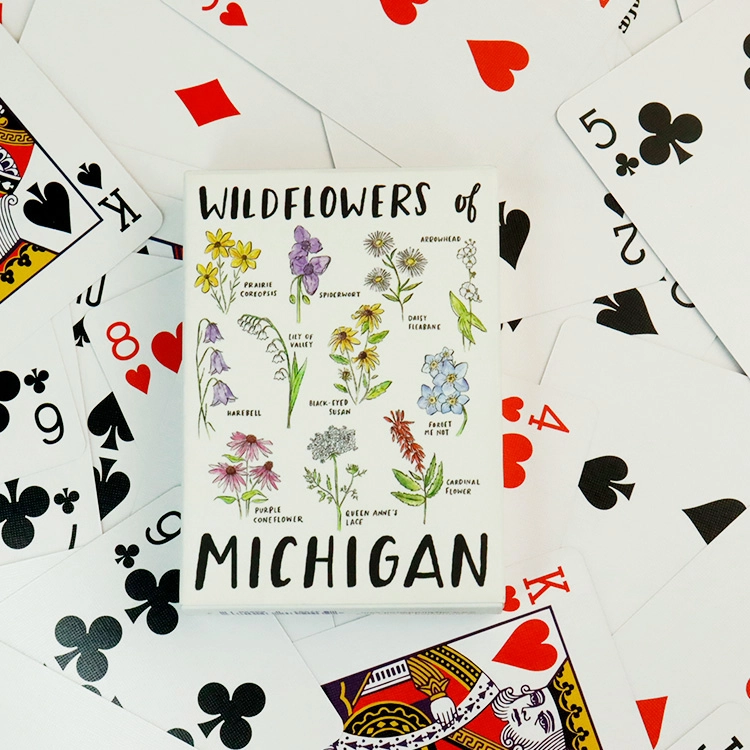
High Quality Eco-Friendly Durable Personalized Design Wildflowers Playing Cards with Custom Design Logo and Box
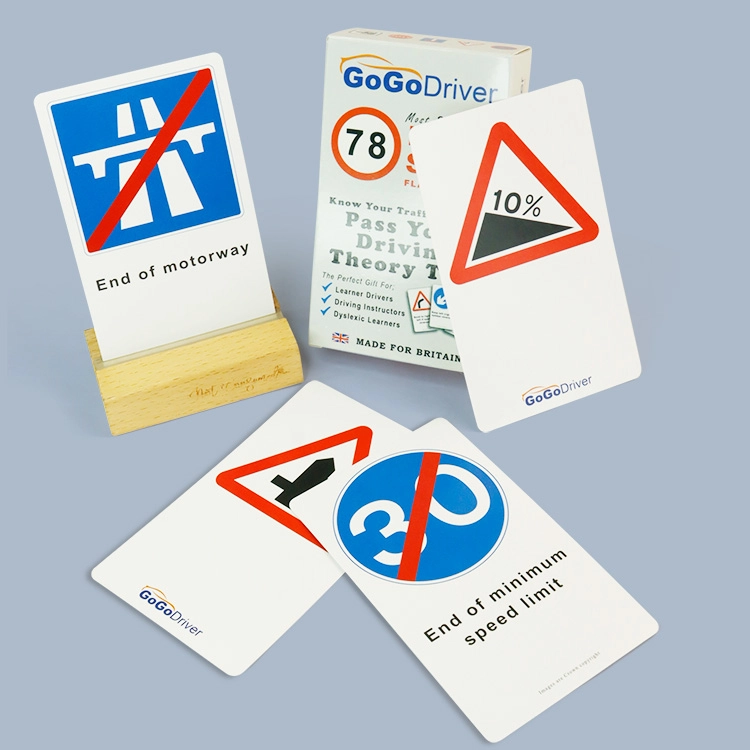
OEM Custom Driving Theory Cards | Personalized Traffic Rules & Test Prep Flashcards in Multiple Languages for Wholesale
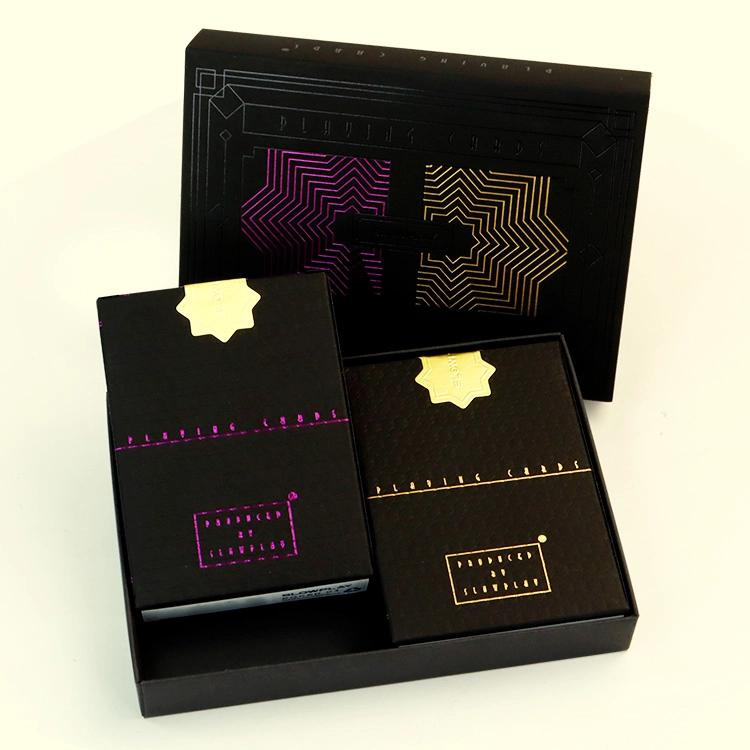
Custom Printing Luxury Two Sets Plastic Poker Playing Cards with Customized Packing
bbilaser
sq_AL