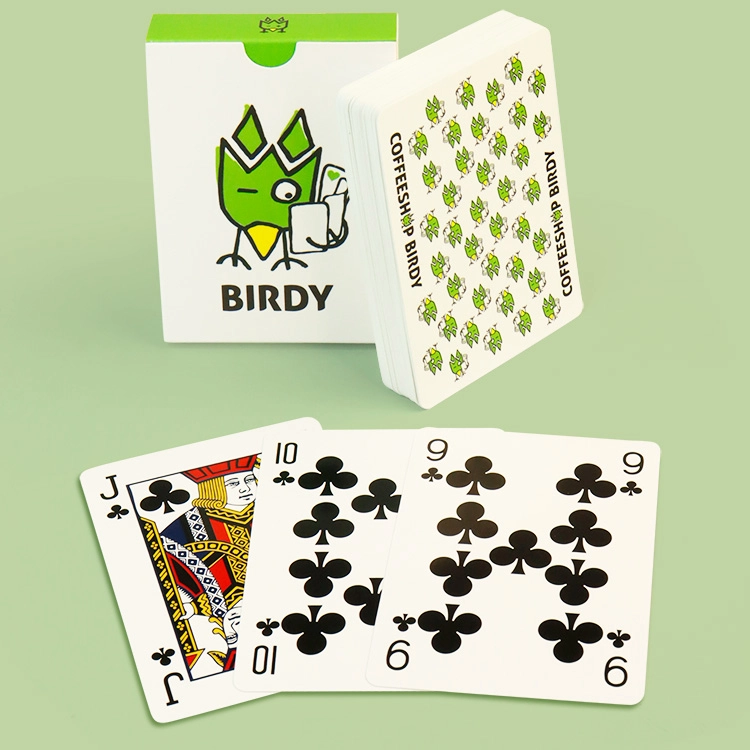
Artwork Specs: Designing Personalized Playing Cards for Print
- Why precise artwork specs matter for playing cards personalized to print
- Business and user intent: what this guide solves
- Key production pain points and how specs address them
- Core artwork specifications every designer must follow
- Resolution and image quality
- Color mode, profiles, and spot colors
- Bleed, trim, and safe zones
- File formats, dielines, and layer management
- Preferred file formats and export settings
- Dielines, cut/crease marks, and registration
- Version control and naming conventions
- Materials, finishes, and production considerations
- Cardstock types, weights, and feel
- Finishes: coatings, varnishes, and lamination
- Finishing constraints and turnaround impacts
- Quality control, testing, and production-ready checklist
- Preflight checklist for designers and project managers
- Sampling strategies and test prints
- Common print defects and remedies
- Comparative reference: digital vs offset vs plastic printing
- How Guangdong Yuhua Playing Cards supports high-quality personalized decks
- Company capabilities and production strengths
- Why partner with Yuhua for OEM/ODM card projects
- Product scope and OEM advantages
- Practical workflow template: from brief to delivery
- Step-by-step production workflow
- Checklist for submitting to a manufacturer
- FAQs — Common questions about designing personalized playing cards
- 1. What file format should I submit for personalized playing cards?
- 2. How much bleed and safe area should I use?
- 3. Can I use RGB images or Pantone colors?
- 4. What DPI is required for photo-quality prints?
- 5. How can I ensure color consistency across multiple runs?
- 6. What are typical production lead times?
- 7. How do I design for double-sided printing alignment?
- Contact and next steps
- References and authoritative resources
Why precise artwork specs matter for playing cards personalized to print
Business and user intent: what this guide solves
When customers search for playing cards personalized, they want a product that looks great, feels right, and arrives without production delays. The single biggest cause of delays, extra cost, or disappointing results is incorrect artwork. This section explains how correct file specs and production-aware design reduce waste, shorten turnaround, and protect Yuhua reputation.
Key production pain points and how specs address them
Common issues include color shifts, cropping of important elements, visible print artifacts, and cards that warp or delaminate. Well-defined specs—resolution, color profiles, bleeds, safe zones, and approved file formats—are your preventive maintenance. They ensure designs translate reliably from screen to finished stock.
Core artwork specifications every designer must follow
Resolution and image quality
For playing cards personalized with photos or detailed illustrations, supply bitmap artwork at 300 DPI (dots per inch) at final print size. Vector artwork (SVG, PDF with embedded fonts or converted to outlines) scales without loss and is preferred for logos and crisp typography. Avoid upscaling low-resolution images—this introduces blurriness and visible pixels in final prints.
Color mode, profiles, and spot colors
Set artwork to CMYK color mode for offset or digital printing. For more consistent color across printers, embed or convert to an appropriate ICC profile (e.g., FOGRA39 for Europe or GRACoL/US Web Coated (SWOP) v2 for U.S.). Use Pantone (PMS) spot colors only when you require exact brand colors and discuss spot ink availability and cost with your manufacturer in advance.
Bleed, trim, and safe zones
Include a minimum 3 mm (0.125 in) bleed on all edges; many manufacturers recommend 5 mm for playing cards to accommodate precise cutting. Define a safe zone at least 3 mm inside the trim line—keep critical artwork (text, faces, logos) inside this area to avoid accidental cropping. Provide dielines as a separate layer or PDF with cut lines clearly marked.
File formats, dielines, and layer management
Preferred file formats and export settings
Accepted production-ready formats typically are PDF/X-1a or PDF/X-4 (with fonts embedded and images at 300 DPI), TIFF (flattened, LZW or none), or native Adobe Illustrator/Photoshop files with fonts outlined and layers flattened where requested. Rasterize transparency when instructed and always include a print-ready proof (PDF) to confirm page layout and artwork placement.
Dielines, cut/crease marks, and registration
Supply dielines as vector paths on a dedicated layer, clearly named (e.g., DIELINE-CUT). Include registration marks and crop marks for offset runs. If your design includes rounded corners or special shapes (e.g., poker vs. bridge card), indicate the corner radius and verify with the manufacturer’s cutter specifications.
Version control and naming conventions
Use clear file names that describe SKU, size, side, and version (e.g., SKU123_poker_front_v2.pdf). Maintain a change log and gather approvals (designer sign-off, client sign-off) on a final PDF proof before mass production. This prevents costly reprints from accidental file mismatches.
Materials, finishes, and production considerations
Cardstock types, weights, and feel
Playing cards personalized for different markets require different cardstocks. Typical options:
| Cardstock | Weight (gsm) | Typical Use | Attributes |
|---|---|---|---|
| Standard coated paper | 300–310 gsm | Consumer playing cards, promotions | Good stiffness, economical |
| Casino-grade composite | 300–330 gsm | Casinos, durable decks | High durability, responsive shuffling |
| Plastic or PVC | ~300–400 µm (thickness) | Waterproof, long-life | Highly durable, different feel |
| Recycled/FSC certified paper | 280–320 gsm | Sustainable products, eco brands | Lower environmental impact, variable finish |
Choose based on tactile preference, durability needs, and budget. For branded High Quality decks, upgraded liners or specialty coatings can justify higher price points.
Finishes: coatings, varnishes, and lamination
Finishes change look, feel, and card longevity. Options include:
- Varnish (aqueous or UV): protects surface, can be gloss or matte.
- Lamination (BOPP): more durable, water-resistant, available in gloss/matte.
- Soft-touch coating: High Quality tactile feel, less glare.
- Spot varnish or raised UV: visual contrast and tactile accents for limited elements.
Discuss with your manufacturer the compatibility of varnishes with inks and substrate. Coatings may slightly change color saturation—order a press proof to verify.
Finishing constraints and turnaround impacts
Special finishes and materials can add processing time and minimum order quantities. Digital production is faster for small runs; offset is more cost-effective for larger volumes but needs plate setup. Communicate desired finishes early to schedule tooling, cutting dies, or lamination steps.
Quality control, testing, and production-ready checklist
Preflight checklist for designers and project managers
Before submitting artwork, confirm:
- All images at 300 DPI at final size; vectors for logos and typography where possible.
- CMYK color mode with embedded ICC profile or specified Pantone swatches.
- 3–5 mm bleed on all sides; safe zone at least 3 mm from trim.
- PDF/X or agreed format with fonts embedded/outlined and transparency flattened if required.
- Dielines and cut/registration marks on separate layers.
- Approved color proof (soft proof and/or hard press proof).
Sampling strategies and test prints
Order a physical press proof (or short-run prototype) when launching a new SKU or using unfamiliar substrates. For large orders, request a first-article inspection and a production sample prior to full run—this mitigates risk and ensures you get the tactile result expected by your end customers.
Common print defects and remedies
Defects to watch for: misregistration (colors not aligned), uneven coating, edge delamination, or excessive curl. Remedies include tightening sheet alignment, adjusting press tension, improving adhesive or lamination parameters, or selecting a different paper grade. Work with a supplier that documents defect rates and corrective actions.
Comparative reference: digital vs offset vs plastic printing
| Process | Best for | Min order | Color consistency | Typical turnaround |
|---|---|---|---|---|
| Digital print | Short runs, variable data personalization | 10–500 decks | Good, variable between runs | Fast (days) |
| Offset print | Large runs, tight color control | 500–10,000+ decks | Excellent after color setup | Longer (1–4+ weeks) |
| Plastic/PVC | Durability, waterproof decks | Varies (often higher) | Good but requires special inks | Varies (can be longer) |
How Guangdong Yuhua Playing Cards supports high-quality personalized decks
Company capabilities and production strengths
Guangdong Yuhua Playing Cards Co., Ltd., founded in 2014, specializes in the R&D, design, and mass custom production of playing cards, game cards, and color-printed packaging. With a 6,000㎡ intelligent facility, Yuhua operates advanced automated card production lines capable of producing over 1,000,000 units per month. The company emphasizes certified, traceable materials and rigorous quality management—FSC® certified substrates, ISO 9001 quality control systems, and a defect rate under 0.5% reflect this focus.
Why partner with Yuhua for OEM/ODM card projects
Yuhua’s differentiators include more than 20 patents, the use of imported High Quality materials for their top brand, and a production process optimized for both small batch personalization (digital workflows) and high-volume offset manufacturing. They serve global markets in casino supplies, board and card games, educational flash cards, tarot decks, and bespoke corporate gifts—providing professional art preflight support, sample proofs, and scalable manufacturing.
Product scope and OEM advantages
Key offerings: OEM Playing Card, ODM Tarot cards, custom Game cards, and Learning Flash cards. Yuhua’s OEM advantage is fast, quality-focused production with comprehensive support—from artwork preflight to final inspection and packaging—helping customers get personalized decks to market quickly and reliably.
Practical workflow template: from brief to delivery
Step-by-step production workflow
- Design brief: define size (poker vs bridge), deck count, substrate, finishes, and personalization requirements.
- Initial artwork: create front/back and packaging dielines; ensure bleed and safe zones are set.
- Preflight: run resolution, color, and font checks; export as PDF/X with dielines and layers.
- Sample proof: order a press or digital proof to validate color and finish.
- Approval: client signs off final proof and production begins.
- Production QA: first-article inspection and random sampling during run.
- Packing & shipping: protective packaging and labeling for distribution.
Checklist for submitting to a manufacturer
- Final PDF/X file with 3–5 mm bleed and dieline layer
- Exported images at 300 DPI and CMYK
- Vector logos/outlined fonts
- Explicit finish and substrate spec (g/m2 or material code)
- Approved color proof and signed approval document
FAQs — Common questions about designing personalized playing cards
1. What file format should I submit for personalized playing cards?
Submit PDF/X-1a or PDF/X-4 with fonts embedded or outlined as your primary file. Include a flattened TIFF or high-res JPEG for image-only elements if requested. Always provide a layered source file upon request for last-minute adjustments.
2. How much bleed and safe area should I use?
Use at least 3 mm (0.125 in) bleed on all sides and a 3 mm safe area from the trim. For extra safety—especially with rounded corners—use 5 mm bleed and 4–5 mm safe area.
3. Can I use RGB images or Pantone colors?
Convert all artwork to CMYK before submission. Pantone spot colors are acceptable for brand-critical elements but verify availability and cost with your manufacturer; some processes (especially digital print) may emulate Pantone with CMYK => differences may exist.
4. What DPI is required for photo-quality prints?
Provide images at 300 DPI at final print size. For very small decorative elements, 600 DPI is sometimes used; anything below 200 DPI risks visible pixelation.
5. How can I ensure color consistency across multiple runs?
Use standardized ICC profiles (e.g., FOGRA39, GRACoL) and request a press proof or color bar checks on the first run. Keep master color targets and document settings so future runs can match closely.
6. What are typical production lead times?
Digital small runs: typically days to 1 week. Offset large runs: often 2–4 weeks depending on tooling and finishing. Specialized finishes or materials may extend timelines—discuss early with your supplier.
7. How do I design for double-sided printing alignment?
Ensure back and front dielines are aligned in your template. Indicate registration marks and include a mockup PDF that shows front/back pairing to avoid mispaired faces. Manufacturers will typically test alignment during press setup.
Contact and next steps
If you need production support, preflight checks, or a quotation for playing cards personalized at scale, Guangdong Yuhua Playing Cards Co., Ltd. provides professional OEM/ODM services with fast sample turnarounds and robust quality controls. Contact Yuhua for a project consultation, sample order, or to review your artwork prior to production.
For quotes, sample requests, or artwork preflight assistance, reach out to Guangdong Yuhua Playing Cards Co., Ltd. to get a tailored production plan and timeline for your personalized deck project.
References and authoritative resources
- Wikipedia — Playing card. https://en.wikipedia.org/wiki/Playing_card (accessed 2025-12-31)
- FSC — Forest Stewardship Council. https://www.fsc.org (accessed 2025-12-31)
- ISO — ISO 9001 Quality Management. https://www.iso.org/iso-9001-quality-management. (accessed 2025-12-31)
- Adobe — PDF/X Standards. https://www.adobe.com (PDF/X overview pages) (accessed 2025-12-31)
- ISO — ISO 12647 (Process control for the production of halftone color separations). https://www.iso.org/standard/50726. (accessed 2025-12-31)
- Printing Industry Guidance — Typical bleed and resolution recommendations (industry best practices) — (example resource) https://www.piworld.com (industry articles) (accessed 2025-12-31)
Note: Company-specific capability statements (Guangdong Yuhua Playing Cards Co., Ltd.) are summarized from the manufacturer's published specifications and product literature provided by the company.
Best professional learning tree cards manufacturers and supplier brands in UK
Playing Card Template Tips: Bleed, Safe Zone, Resolution
Eco-Friendly Materials for Custom Tarot Cards
Top 5 best games with playing cards Company List and Products Compared
About product selection
What types of playing cards do you offer?
We offer a wide range of playing cards including standard decks, custom-designed decks, and specialty cards. Whether you need classic poker cards, bridge cards, or custom promotional decks, we have the options to fit your needs.
Can I see a sample before a full order?
Yes, we will provide a prototype sample for your review to ensure you are satisfied with the final product.
About cooperation process
How long does the OEM process take?
The time depends on the complexity of the project, but generally OEM orders take about 6 weeks from design confirmation to delivery.
Do you accept international orders?
Yes, we accept orders from around the world! Shipping costs and delivery times may vary, so please contact us for specific details related to your location.
About customized services
Do you offer samples?
Yes! We can provide samples of our card materials and finishes. Please contact us to request samples relevant to your project.
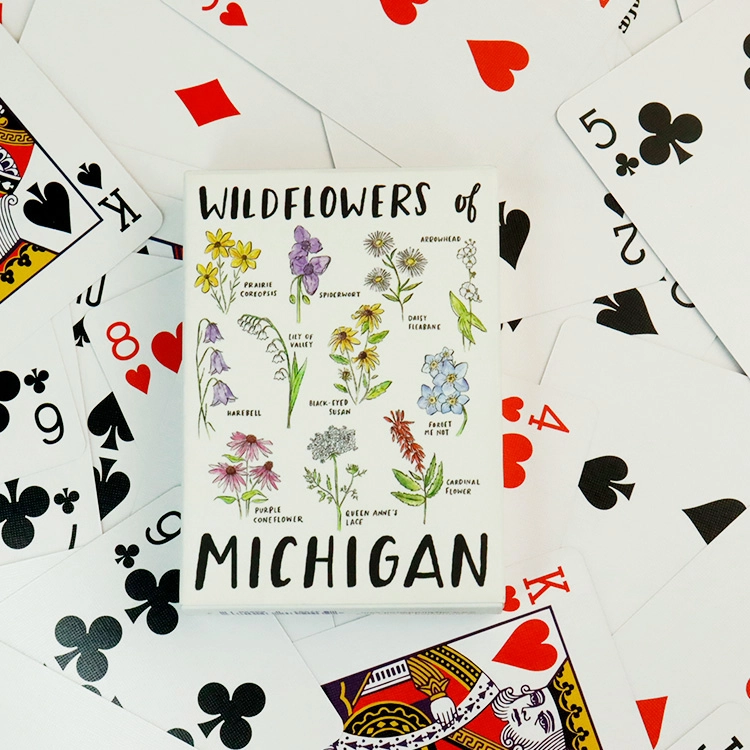
High Quality Eco-Friendly Durable Personalized Design Wildflowers Playing Cards with Custom Design Logo and Box
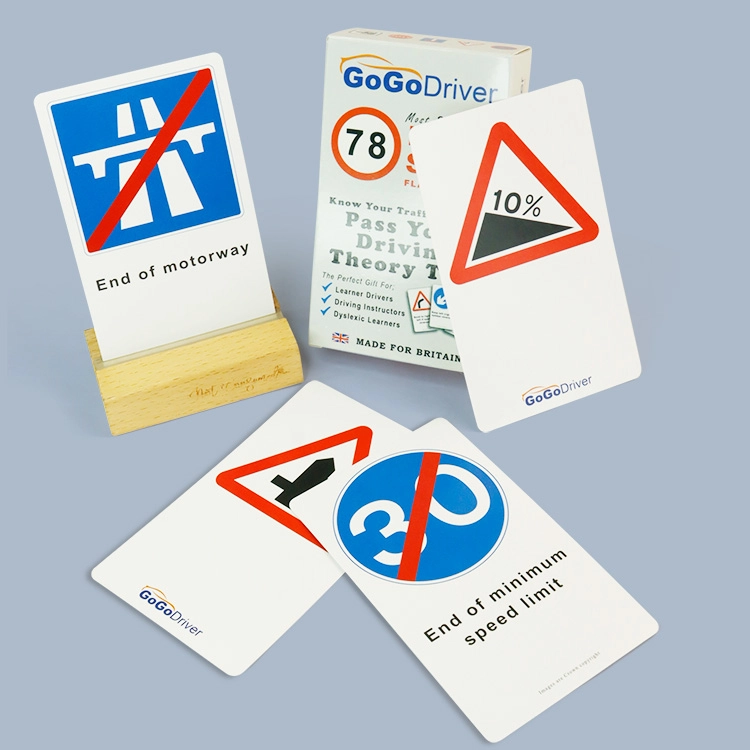
OEM Custom Driving Theory Cards | Personalized Traffic Rules & Test Prep Flashcards in Multiple Languages for Wholesale
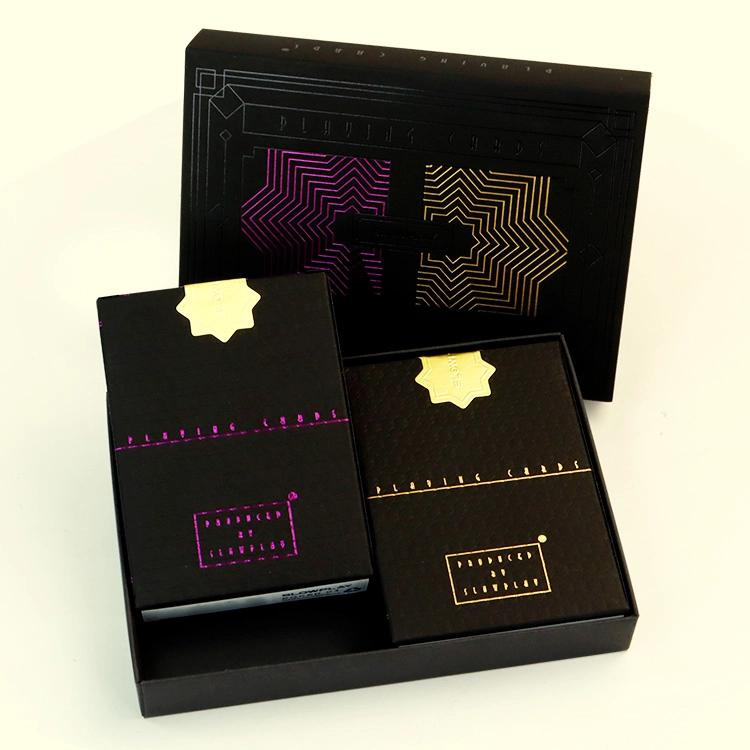
Custom Printing Luxury Two Sets Plastic Poker Playing Cards with Customized Packing