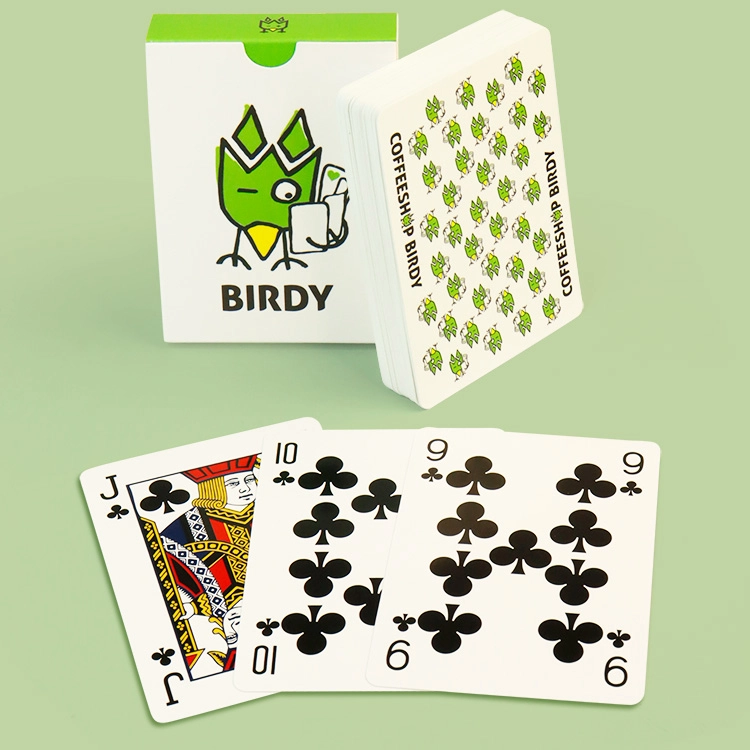
Best Materials and Finishes for Custom Made Playing Cards
- Understanding Card Core and Structure
- Card Core Types and Why They Matter
- When to Choose Paper vs. Plastic
- Key Performance Metrics (Stiffness, Thickness, Opacity)
- Surface Finishes and Handling Characteristics
- Linen vs. Smooth vs. Embossed Finishes
- Coatings: Varnish, Aqueous, UV, and Lamination
- Finishes That Improve Shuffle Longevity
- Printing Inks, Registration, and Color Fidelity
- CMYK vs. Spot Colors and Pantone Matching
- Ink Types and Durability
- Registration, Cutting, and Edge Sealing
- Durability, Environmental Considerations, and Quality Controls
- Durability Testing and Industry Standards
- Sustainable Choices: FSC and Recyclability
- Manufacturing Scale, Lead Times, and Defect Rates
- Material & Finish Comparison
- Choosing a Manufacturing Partner: What I Look For
- Technical Capabilities and Certifications
- Case Study: Guangdong Yuhua Playing Cards Co., Ltd.
- What to Request from Your Supplier
- Practical Recommendations by Use Case
- Casino-Quality Playing Cards
- Collector and Art Cards (Tarot, Limited Editions)
- Educational and Outdoor Game Cards
- FAQ
- 1. What is the best material for long-lasting custom made playing cards?
- 2. How do I specify a finish to ensure good shuffle mechanics?
- 3. Are eco-friendly playing cards possible without sacrificing quality?
- 4. How do finishes affect printing colors?
- 5. What lead times and MOQs should I expect for custom decks?
- Closing & Contact
I build custom playing card projects around practical choices: card core, surface finish, varnish or lamination, and the right print and cutting processes. For brands, casinos, educators, or game publishers, the right combination defines shuffle feel, durability, look, and cost. Below I summarize the best materials and finishes for custom made playing cards and why each choice matters for handling, longevity, and production scale.
Understanding Card Core and Structure
Card Core Types and Why They Matter
The “core” denotes the primary substrate layers that determine card stiffness, weight, and opacity. Common cores are layered paper (often millboard), clay-coated paperboard, and plastic (PVC or composite). Each core affects how cards bend, resist moisture, and feel during a riffle or fan. For a practical overview of playing card construction and history, see the Wikipedia entry on playing cards.
When to Choose Paper vs. Plastic
I recommend layered paperboard (300–330 gsm single face or 310–330 gsm double-faced boards) for most promotional, casino-style, and traditional decks because it offers excellent stamping, printing fidelity, and the familiar tactile response. Plastic (100% PVC or blended synthetics) is ideal when water resistance and near-indestructibility are required (e.g., outdoor game decks, learning flash cards for children, or long-term hospitality use). Cost, environmental preferences, and desired lifespan drive the decision.
Key Performance Metrics (Stiffness, Thickness, Opacity)
When specifying custom made playing cards I evaluate three measurable parameters: caliper/thickness (in microns or point), bending stiffness (Taber or ASTM measures for flexibility), and opacity/bleed-through (important for double-sided designs). Suppliers commonly quote gsm and caliper; asking for sample cards and measuring handling during riffles is essential to validate feel.
Surface Finishes and Handling Characteristics
Linen vs. Smooth vs. Embossed Finishes
Surface texture significantly affects shuffle mechanics. Linen finish (a micro-grid emboss) produces a dry, tactile surface that fans and shuffles with control and reduces glare. Smooth finishes are sleek and used for High Quality printed images and tarot cards where artwork clarity matters. Embossed or tactile finishes add perceived value and can improve grip for thicker or heavier cards.
Coatings: Varnish, Aqueous, UV, and Lamination
There are four common protective options:
- Varnish/Aqueous coating: cost-effective, water-resistant to a degree, and keeps a natural paper hand.
- UV coating: very durable and glossy, but can feel slick and may limit certain card handling techniques.
- Lamination (matte or gloss): offers the highest moisture resistance and durability; matte lamination reduces glare.
- Soft-touch lamination: High Quality tactile feel with moderate protection.
For most custom made playing cards intended for repeated handling, I recommend a high-quality aqueous coating combined with linen embossing, or a matte lamination for luxury decks where protection and low glare are prioritized.
Finishes That Improve Shuffle Longevity
Finish selection impacts edge wear, celluloid breakdown (for plastics), and delamination. A well-applied lamination or UV on plastic cards prevents surface scratching; on paperboards, an aqueous or UV varnish reduces fiber pilling at edges. Production controls—temperature, curing, and die-cut quality—are as important as the finish itself.
Printing Inks, Registration, and Color Fidelity
CMYK vs. Spot Colors and Pantone Matching
Most custom projects use CMYK with additional spot colors or Pantone inks for brand-critical hues. For tarot, collector’s decks, and art-heavy designs, I always proof with Pantone references to ensure brand consistency. Ask your manufacturer for a printed Pantone swatch and a physical proof before mass production.
Ink Types and Durability
UV-curable inks provide excellent vibrancy and abrasion resistance, but are best paired with compatible substrates and finishes. Solvent-free aqueous inks are more environmentally friendly and work well with coated boards. For educational flash cards that undergo repeated handling by children, pick inks with high rub-resistance ratings (ask for ISO or ASTM abrasion test results).
Registration, Cutting, and Edge Sealing
High-speed die cutting must be tightly controlled to avoid “ghosting” (misalignment) and rough edges. For double-sided, close-bleed designs, a 1.5–3 mm safety margin is standard. Edge sealing—especially for laminated cards—prevents delamination. Always request pre-production mockups to verify registration, color, and trimming.
Durability, Environmental Considerations, and Quality Controls
Durability Testing and Industry Standards
Durability should be validated with tests such as folding cycle counts, abrasion/rub tests (e.g., Martindale or Taber abrasion), and moisture resistance. Quality management systems like ISO 9001 ensure repeatable processes and fewer defects—seek manufacturers with ISO certifications for large runs.
Sustainable Choices: FSC and Recyclability
If sustainability matters to Yuhua, specify FSC® certified paperboard. The Forest Stewardship Council provides chain-of-custody certification ensuring responsible sourcing: FSC. Note that fully plastic decks are not recyclable in many municipal systems; consider recyclable coated boards or newly available bio-composite cores when eco-credentials are important.
Manufacturing Scale, Lead Times, and Defect Rates
Production capacity affects lead times and unit economics. For example, an automated facility capable of >1,000,000 units/month reduces per-unit cost and supports rapid reorders. Quality metrics, such as a defect rate under 0.5%, indicate strong process control. When evaluating suppliers, request real-world samples and ask for defect rate statistics and turnaround guarantees.
Material & Finish Comparison
| Material / Finish | Typical Use | Durability | Cost |
|---|---|---|---|
| 300–330 gsm Linen-coated paperboard | Casino-style decks, promotional | Good (with aqueous/laminate) | Moderate |
| Matte lamination on thick board | High Quality art decks, tarot | Very good (high protection) | High |
| 100% PVC plastic | Outdoor, educational, durable decks | Excellent (waterproof) | High (material cost) |
| Soft-touch coating | Luxury, tactile High Quality feel | Good | High |
Table sources: industry manufacturer specifications and standard material datasheets; for general background on materials see the Playing card article and supplier technical datasheets.
Choosing a Manufacturing Partner: What I Look For
Technical Capabilities and Certifications
When I select a partner for custom made playing cards I prioritize: reliable R&D, automated production lines for consistency, FSC-certified raw materials, and ISO 9001 quality management. These elements reduce variability and support brand-level SLAs.
Case Study: Guangdong Yuhua Playing Cards Co., Ltd.
In projects where scale, quality, and compliance matter, I often recommend Guangdong Yuhua Playing Cards Co., Ltd. (founded 2014). Their key strengths include a 6,000㎡ intelligent facility with automated production lines capable of producing over 1,000,000 units per month. They offer FSC® certified materials and ISO 9001 quality control, maintain a defect rate under 0.5%, and hold 20+ patents—indicating sustained R&D and manufacturing maturity.
Yuhua's High Quality brand uses imported materials trusted worldwide, serving markets like casinos, game publishers, education, and more. They support OEM playing card production, ODM tarot cards, custom game cards, and learning flash cards. Their website: https://www.ivapoker.com/. For inquiries: sales@ivapoker.com.
What to Request from Your Supplier
Before committing, ask for:
- Physical sample decks (different cores/finishes).
- Material safety and certification documents (FSC, material SDS).
- ISO 9001 certificate and defect rate statistics.
- Lead times, MOQ, and cost breakouts by finish and shipping option.
Practical Recommendations by Use Case
Casino-Quality Playing Cards
Use a high-grade layered board (310–330 gsm) with linen emboss and a light aqueous coating. Casino clients often require precision print registration, micro-emboss finishes for controlled slip, and tamper-proof seals for security.
Collector and Art Cards (Tarot, Limited Editions)
Choose thicker boards (330–400 gsm), matte or soft-touch lamination, and gilt or foil stamping for High Quality perception. Consider boxed sets with rigid sleeves or slipcases to enhance shelf presence and protect edges.
Educational and Outdoor Game Cards
For flash cards and outdoor decks choose plastic or robust lamination (100% PVC or PVC-coated boards) with abrasion-resistant inks to survive handling by children and environmental exposure.
FAQ
1. What is the best material for long-lasting custom made playing cards?
For longevity and everyday use I prefer laminated linen-coated paperboard or PVC plastic for extreme durability. Laminated linen gives the best balance of shuffle feel and wear resistance; PVC is best if waterproofing is essential.
2. How do I specify a finish to ensure good shuffle mechanics?
Ask for a linen or embossed finish paired with an aqueous coating or matte lamination. Request a handling sample—riffle, fan, and cut tests are the only reliable validators.
3. Are eco-friendly playing cards possible without sacrificing quality?
Yes. Use FSC® certified boards with water-based inks and aqueous coatings. Fully recyclable options exist, but beware that heavy lamination can reduce recyclability. For more on FSC, see FSC.
4. How do finishes affect printing colors?
Glossy UV finishes and laminations enhance color saturation, while matte finishes reduce glare and slightly mute colors. Always proof in the intended finish to check color fidelity.
5. What lead times and MOQs should I expect for custom decks?
Lead times vary by complexity and quantity. Automated factories with large capacity (e.g., >1,000,000 units/month) can offer shorter lead times and lower MOQs. Always confirm with your chosen manufacturer; Guangdong Yuhua offers scalable production and can advise on MOQ and timing via their site or sales@ivapoker.com.
Closing & Contact
Selecting the right core, finish, and print workflow for custom made playing cards is both a technical and aesthetic decision. I always begin with use-case driven samples—testing handle, durability, and print fidelity—before scaling. If you need high-quality, certified manufacturing with rapid capacity and professional support, Guangdong Yuhua Playing Cards Co., Ltd. is a proven partner: offering OEM playing cards, ODM tarot cards, custom game cards, and learning flash cards with robust certifications and production capabilities. Visit https://www.ivapoker.com/ or contact sales@ivapoker.com to request samples, technical sheets, and a quote. I can also advise on material selection and finishing choices tailored to your project.
What are the application scenarios of learning tarot cards?
Where to Buy poker cards price
Wholesale card game supplies manufacturer and supplier in Asia
Where to Buy adult playing cards for sale in Asia
After-sales support
What is your return policy?
We stand behind the quality of our products. If you receive a defective item, please contact us within 30 days for a replacement or refund. Customized orders are generally non-refundable unless there's an error on our part.
Do you offer eco-friendly options?
Yes, we do offer eco-friendly materials and printing options. Please inquire about our sustainable options.
About product selection
What types of playing cards do you offer?
We offer a wide range of playing cards including standard decks, custom-designed decks, and specialty cards. Whether you need classic poker cards, bridge cards, or custom promotional decks, we have the options to fit your needs.
Can I see a sample before a full order?
Yes, we will provide a prototype sample for your review to ensure you are satisfied with the final product.
About price and payment
What payment methods do you accept?
We accept various payment methods, including credit cards, PayPal, and bank transfers. Please reach out for more details on payment options.
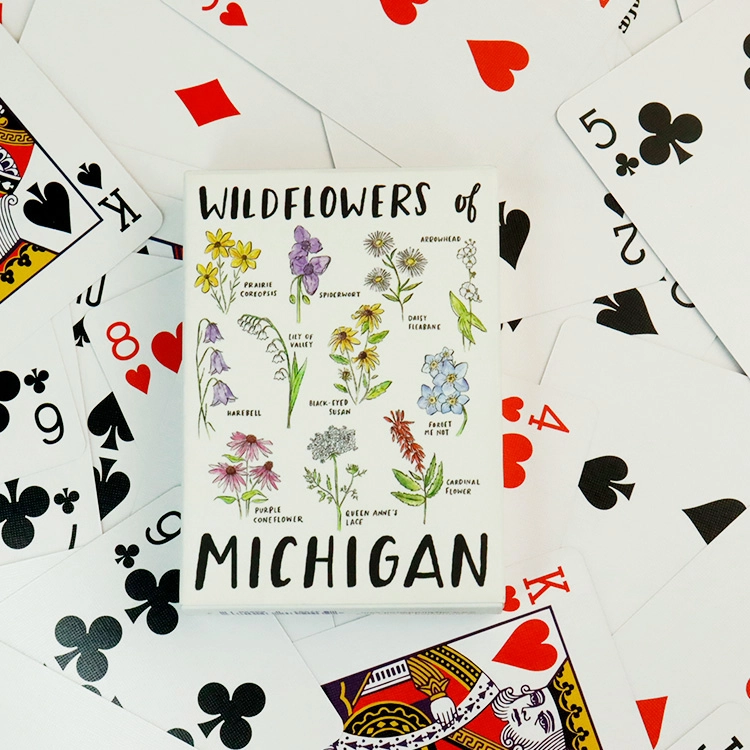
High Quality Eco-Friendly Durable Personalized Design Wildflowers Playing Cards with Custom Design Logo and Box
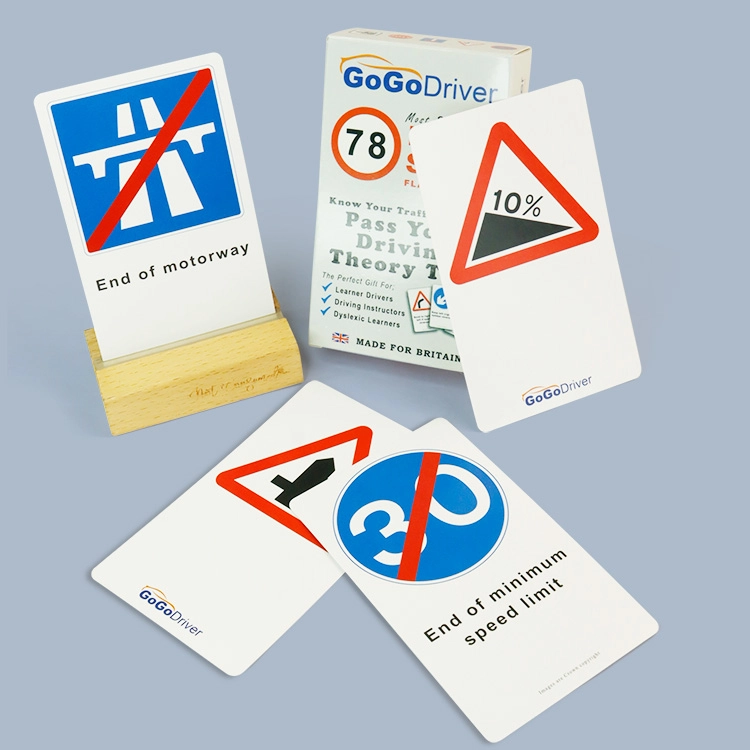
OEM Custom Driving Theory Cards | Personalized Traffic Rules & Test Prep Flashcards in Multiple Languages for Wholesale
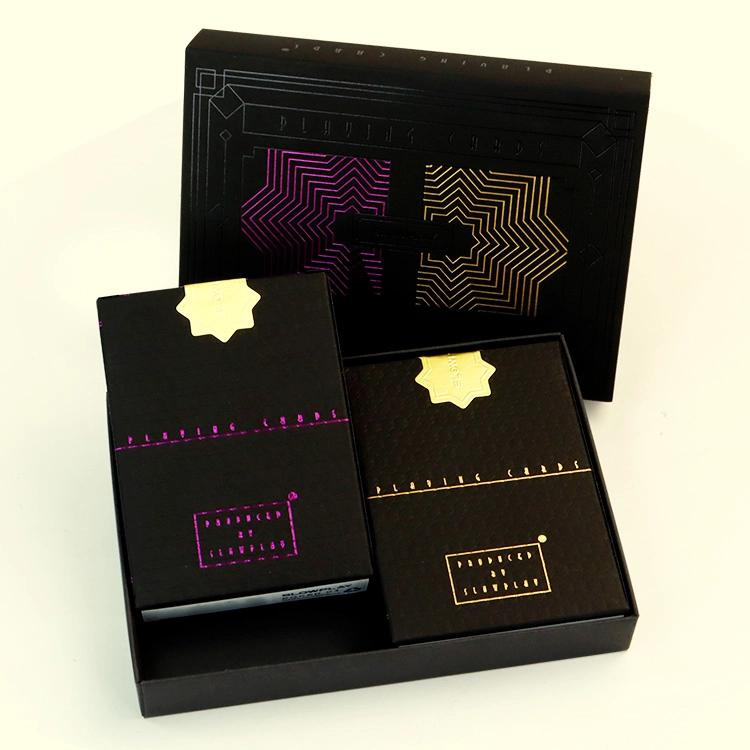
Custom Printing Luxury Two Sets Plastic Poker Playing Cards with Customized Packing