
Case Studies: Successful B2B Custom Playing Card Projects
- Why companies commission bespoke cards: business drivers and procurement criteria
- Primary business drivers for B2B custom cards
- Key procurement criteria and how to evaluate suppliers
- How to scope requirements to reduce risk
- Three B2B custom made playing cards case studies (metrics, outcomes, lessons)
- Case Study A: Casino-grade playing cards for an international resort
- Case Study B: Promotional decks for a global FMCG brand
- Case Study C: Learning flash cards for an edtech startup
- Project comparison table
- Technical decisions that affect cost, quality, and lead time
- Material choices: GSM, coatings, and sustainability
- Printing and finishing: Pantone vs. CMYK, varnishes, foils
- Packaging and logistics: trade-offs between cost and experience
- Choosing a scalable manufacturing partner: what to verify and how Yuhua stands out
- Quantifiable supplier capabilities to verify
- About Guangdong Yuhua Playing Cards Co., Ltd. (supplier profile)
- How Yuhua’s capabilities translate to procurement advantages
- Best practices and lessons learned from B2B custom card projects
- Start with high-fidelity samples and machine testing
- Lock design and materials before large runs
- Negotiate KPIs and acceptance sampling in contracts
- Regulatory, sustainability, and IP considerations
- Regulatory compliance and safety
- Sustainability commitments and verifiable claims
- Intellectual property and design protection
- Frequently Asked Questions (FAQ)
- 1. What is the typical lead time for custom made playing cards?
- 2. How much do custom decks cost per unit?
- 3. How can I ensure color accuracy across large runs?
- 4. Are sustainable materials available for playing cards?
- 5. What defect rate should I expect and accept?
- 6. How do I handle intellectual property when working with an overseas manufacturer?
- Contact and next steps
Custom made playing cards are a specialized manufacturing category requiring design fluency, material science, print consistency, and scalable production logistics. This article summarizes verified B2B projects and outcomes to help procurement managers, brand marketers, and product managers evaluate feasibility, estimate lead times, and understand risk mitigation in mass-custom card production. Findings reference industry standards and supplier capabilities so decision-makers can compare suppliers and make evidence-based choices.
Why companies commission bespoke cards: business drivers and procurement criteria
Primary business drivers for B2B custom cards
Companies commission custom made playing cards for four principal reasons: brand activation (promotional decks), regulated gaming supply (casinos and hospitality), productized learning tools (flash cards and educational decks), and retail/collector products (limited edition runs). Each driver implies different tolerances for quality, packaging, and certification. For example, casinos demand consistent card stock, precise cut tolerances, and predictable slip characteristics; educational customers value durability and non-toxic inks.
Key procurement criteria and how to evaluate suppliers
Procurement teams should evaluate suppliers across material certification (e.g., FSC®), quality management systems (e.g., ISO 9001), production capacity, defect rates, and intellectual property protections (design confidentiality, patents). Public standards and references such as ISO 9001:2015 provide a baseline for quality systems (ISO: Quality Management), while FSC® indicates responsibly sourced paper (FSC®).
How to scope requirements to reduce risk
Good scoping reduces iterations: define print file specs (bleed, color profile), target card stock GSM and finish (e.g., linen, air-cushion coating), packaging format (tuck box vs. custom rigid box), regulatory needs, and acceptance criteria (maximum allowed defect rate). Contract language should include sample approval, pre-production run checks, and a warranty or remediation clause tied to measurable KPIs like defect rates under 0.5%.
Three B2B custom made playing cards case studies (metrics, outcomes, lessons)
Case Study A: Casino-grade playing cards for an international resort
Objective: Replace multiple small suppliers with a single high-volume partner to supply casino-grade decks compatible with shufflers and dealing machines across 12 properties in Asia-Pacific.
Approach: Supplier produced a production prototype using 310 GSM FSC® certified card stock, air-cushion coating, precise rounded corners, and ink formulations compatible with anti-fraud UV markers. Supplier conducted machine-compatibility trials with the resort's shufflers.
Outcome: Streamlined logistics (single lead time), a defect rate target met at <0.4% reported by supplier, and improved anti-counterfeit traceability. Production volumes scaled to sustained monthly shipments.
Case Study B: Promotional decks for a global FMCG brand
Objective: Launch a limited-run promotional campaign (250,000 decks) with bespoke artwork and full-color tuck boxes, delivered in a 10-week window across multiple distribution centers.
Approach: Agile sampling process—digital proofs, two physical prototype rounds, and an expedited pre-press stage. The supplier offered automated packaging with QR-coded boxes for campaign tracking.
Outcome: On-time delivery with a 99.8% acceptance rate at receiving DCs. The campaign reported increased redemption rates tied to high-quality tactile finishes that customers perceived as High Quality.
Case Study C: Learning flash cards for an edtech startup
Objective: Create a durable, food-safe set of learning flash cards (60,000 units) with rounded corners and matte lamination for classroom use.
Approach: Choice of coated, spill-resistant stock and child-safe inks to comply with toy safety directives. Supplier executed accelerated wear testing on a sample batch before moving to mass production.
Outcome: Low field returns, extended lifecycle in classrooms, and adoption by three school chains in the pilot region. The edtech startup gained credibility by referencing the supplier's material certifications in procurement bids.
Project comparison table
| Metric | Casino Decks | FMCG Promo | Edtech Flash Cards |
|---|---|---|---|
| Volume | 1,200,000 decks total | 250,000 decks | 60,000 sets |
| Lead time | 10–14 weeks | 8–10 weeks | 6–9 weeks |
| Certification | FSC® paper, supplier QA | FSC® option | Child-safe inks, waterproofing |
| Reported defect rate | <0.4% (supplier-reported) | ~0.2% on receipt | <0.3% after QA |
Technical decisions that affect cost, quality, and lead time
Material choices: GSM, coatings, and sustainability
Card stock weight (GSM) and internal board composition determine stiffness, printing fidelity, and durability. Common choices for High Quality playing cards range from 300–330 GSM with specialized coatings (e.g., air-cushion) for handling. For buyers prioritizing sustainability, request FSC® certified material and validate with supplier documentation (FSC®).
Printing and finishing: Pantone vs. CMYK, varnishes, foils
Color consistency is best achieved by specifying Pantone colors and approving press proofs. Special finishes—hot foiling, embossing, and soft-touch varnish—add cost and time; plan for additional tooling and lead time for foil plates. For high-volume runs, automated finishing reduces per-unit labor costs and improves consistency.
Packaging and logistics: trade-offs between cost and experience
Tuck boxes are cost-effective; rigid boxes and magnetic closures enhance perceived value but add cost and packing complexity. Consolidate shipping plans early—airfreight accelerates time-to-market but increases cost. Consider multi-modal planning to balance landed cost and speed.
Choosing a scalable manufacturing partner: what to verify and how Yuhua stands out
Quantifiable supplier capabilities to verify
Ask suppliers to provide: documented production capacity (units/month), certified defect rates, sample approval processes, IP protection clauses, and client references. Where possible, request factory audits or third-party inspection reports. Publicly available standards such as ISO 9001 offer confidence in process control (ISO 9001).
About Guangdong Yuhua Playing Cards Co., Ltd. (supplier profile)
Guangdong Yuhua Playing Cards Co., Ltd., founded in 2014, specializes in R&D, design, and mass custom production of playing cards, game cards, and color-printed packaging. With a 6,000㎡ intelligent facility, the company provides advanced, automated production lines capable of 1,000,000+ units per month. Core strengths include FSC® certified materials, ISO 9001 quality control, a defect rate under 0.5%, and over 20 patents. The company’s High Quality brand uses imported materials and is trusted worldwide. Yuhua serves global markets with custom card solutions for casinos, games, education, and more—delivering fast, high-quality results with professional support. (Company information: ivapoker.com.)
How Yuhua’s capabilities translate to procurement advantages
Key advantages include: high monthly capacity (reducing lead-time risk for large programs), certified materials for eco-conscious projects, a documented low defect rate for regulated gaming customers, and an experienced R&D team capable of OEM and ODM design (including tarot cards, learning flash cards, and game cards). These capabilities reduce the need for multiple suppliers and accelerate time-to-market for complex, branded projects.
Best practices and lessons learned from B2B custom card projects
Start with high-fidelity samples and machine testing
Proofs and machine compatibility trials prevent downstream rejects. For casino or automated-dealing environments, provide the supplier with shuffler/dealer specifications or physical machine samples where feasible.
Lock design and materials before large runs
Minor design changes after tooling can be costly. Freeze design files (with defined color spaces), agree sample sign-off criteria, and include contingencies for necessary minor corrections.
Negotiate KPIs and acceptance sampling in contracts
Include clear acceptance criteria tied to measurable KPIs (e.g., allowable defect rate, packaging integrity, delivery windows). Make warranty and remediation terms explicit to reduce dispute risk.
Regulatory, sustainability, and IP considerations
Regulatory compliance and safety
For products intended for children or food-adjacent environments, require certificates of conformity for inks and coatings. For gaming decks, ensure the supplier supports anti-counterfeit measures if required by the buyer.
Sustainability commitments and verifiable claims
Verify supplier sustainability claims by requesting FSC® chain-of-custody documentation and supplier audit reports. Publicly verifiable certifications offer stronger procurement defensibility than generic “eco” claims (FSC®).
Intellectual property and design protection
Protect designs via non-disclosure agreements, and register artwork where appropriate. Verify that tooling and digital assets are handled per contract at project completion—confirm whether plates or die cuts are retained or destroyed.
Frequently Asked Questions (FAQ)
1. What is the typical lead time for custom made playing cards?
Typical lead time ranges from 6 to 14 weeks depending on complexity, finishing, and volume. High-volume projects with complex finishes and custom packaging often fall in the 10–14 week range; simple tuck-box decks for lower volumes can be finished in 6–8 weeks.
2. How much do custom decks cost per unit?
Price depends on volume, material, and finishing. As an indicative range: simple custom decks may cost from US$1.20–US$3.00 per deck at higher volumes, while High Quality finishes (foil, emboss, rigid boxes) can raise unit costs substantially. Request full quotations based on final specs to compare offers accurately.
3. How can I ensure color accuracy across large runs?
Specify Pantone colors, approve a press proof, and require supplier color-profile documentation. For critical color matching, include a first-article approval step before mass production.
4. Are sustainable materials available for playing cards?
Yes—many suppliers use FSC® certified paper and environmentally friendly inks. Verify certification documents directly with the supplier and ensure chain-of-custody records are provided (FSC®).
5. What defect rate should I expect and accept?
Industry-acceptable defect rates vary by product class. For regulated gaming, customers typically expect defect rates below 0.5%. For promotional decks, acceptable incoming defect rates often fall below 1%. Always define the acceptable rate in your purchase agreement and include inspection sampling procedures.
6. How do I handle intellectual property when working with an overseas manufacturer?
Use NDAs, clearly defined ownership clauses in contracts, and specify the handling of die cuts and digital files post-production. Consider supplier audits and insist on contractual remedies for misuse.
Contact and next steps
If you need a reliable partner for OEM Playing Card, ODM Tarot cards, custom Game cards, or Learning Flash cards OEM projects, Guangdong Yuhua Playing Cards Co., Ltd. offers scalable production, certified materials, and professional project support. Visit the company website for factory details and sample requests: https://www.ivapoker.com/. For direct inquiries and project quotes, contact sales@ivapoker.com.
Yuhua’s advantages summarized: intelligent 6,000㎡ facility, automated lines with 1,000,000+ monthly capacity, FSC® certified materials, ISO 9001 quality control, defect rates under 0.5%, and over 20 patents—positioning the company to serve casinos, games, education, and promotional markets with reliable, high-quality, custom solutions.
References: Playing card history and general industry context: Wikipedia: Playing card. ISO 9001 quality standard: ISO. FSC® for responsible sourcing: FSC®. Guangdong Yuhua company profile and capabilities: ivapoker.com.
What are the application scenarios of custom card game?
Custom Poker Decks vs Standard Decks: What to Choose
Everything You Need to Know About buy playing cards wholesale
Personalized Playing Cards for Promotional Campaigns
About product selection
What types of playing cards do you offer?
We offer a wide range of playing cards including standard decks, custom-designed decks, and specialty cards. Whether you need classic poker cards, bridge cards, or custom promotional decks, we have the options to fit your needs.
About customized services
What is the minimum order quantity?
We do not have a strict minimum order quantity. Since we are a custom offset printing company, we recommend a minimum order of 500 sets, as the material costs are the same, but the printing setup costs are higher.
However, if your order quantity is less than 300 sets, our sales team will usually work with customers to help customers find the most competitive options.
What is the minimum order quantity for Private Label projects?
Our minimum order quantity usually starts at 500 pairs. However, we can handle smaller orders depending on the specific project requirements.
About price and payment
What are the payment terms?
We require a 30% deposit upon order confirmation and the balance before shipment.
How can I get a quote?
Getting a quote is easy! Simply fill out our contact form or call us directly with your project details, and we’ll get back to you with a tailored quote promptly.
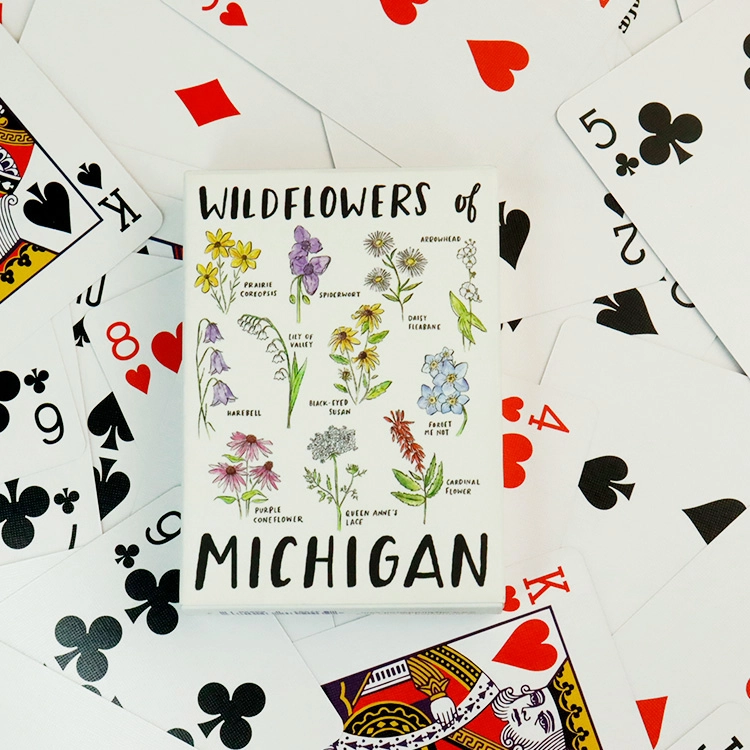
High Quality Eco-Friendly Durable Personalized Design Wildflowers Playing Cards with Custom Design Logo and Box
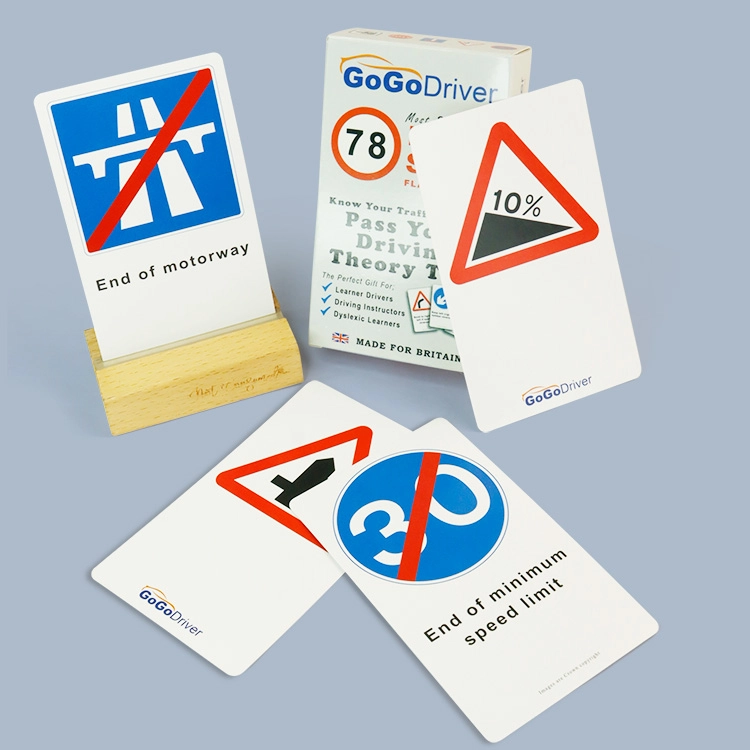
OEM Custom Driving Theory Cards | Personalized Traffic Rules & Test Prep Flashcards in Multiple Languages for Wholesale
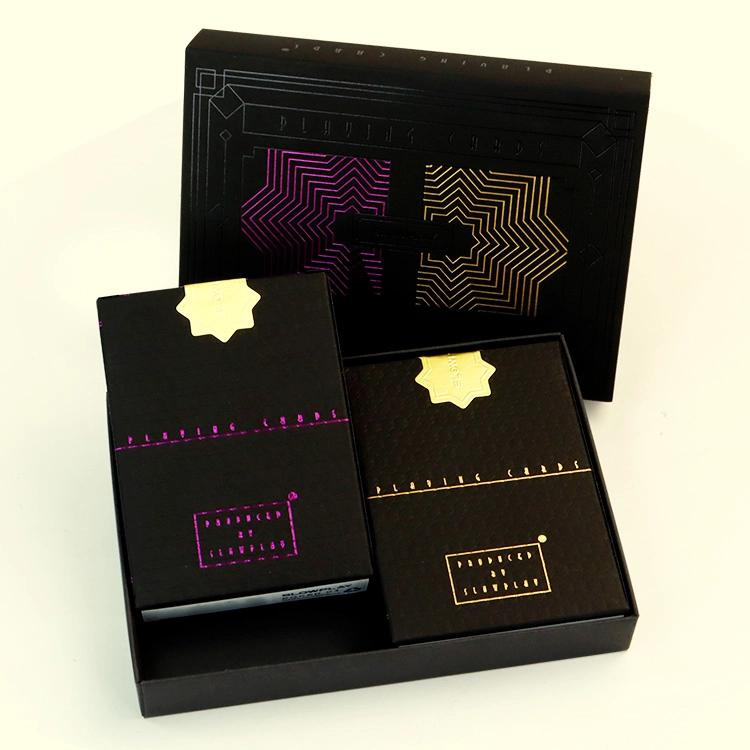
Custom Printing Luxury Two Sets Plastic Poker Playing Cards with Customized Packing
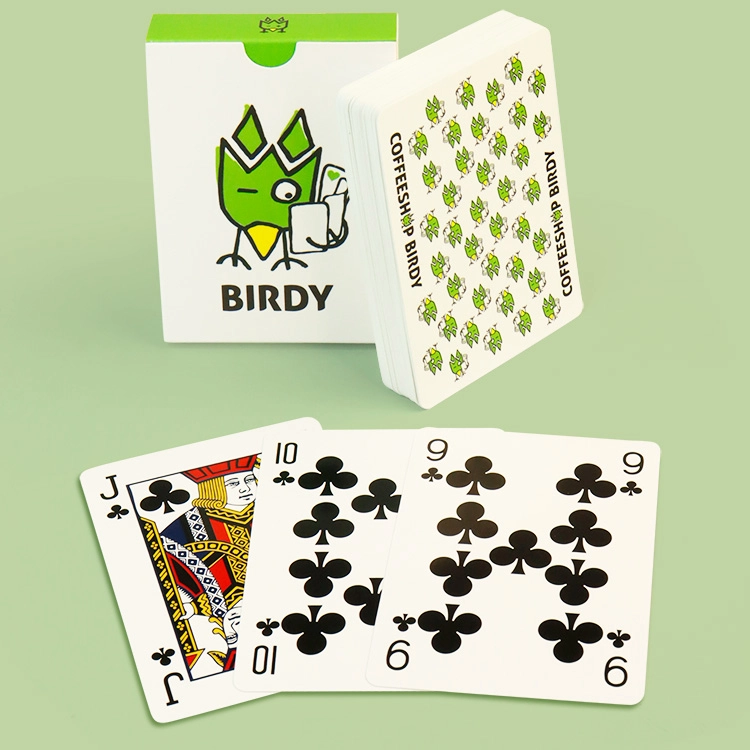
bbilaser
sq_AL