How to Choose Professional Playing Cards for Casinos & Tournaments
- Understanding Casino-Grade Playing Cards
- What makes a playing card professional?
- Casino and tournament demands
- Standards and certifications to watch for
- Materials, Construction & Finish: What Affects Performance
- Paper-based vs. 100% plastic cards
- Finishes and tactile behavior
- Edge treatment and printing
- Key Specifications and How to Select Them
- Size and stock weight
- Durability metrics and defect rates
- Security features for anti-counterfeiting
- Procurement Strategy: Testing, Costs, and Supplier Selection
- Pilot testing and vendor audits
- Cost vs. lifecycle: calculating true cost per deal
- Contract terms, MOQ and lead times
- Vendor Spotlight: Manufacturer Capabilities and Why They Matter
- What to verify in a large-scale manufacturer
- Why certifications and patents matter
- Case: Guangdong Yuhua Playing Cards Co., Ltd.
- Testing, Maintenance and Best Practices in Use
- Routine inspection and replacement policy
- Storage, handling and dealer training
- Recording metrics and ROI tracking
- FAQ
- 1. What makes a card casino grade versus a regular deck?
- 2. Are plastic cards better for casinos than paper-based cards?
- 3. How often should decks be replaced in a casino environment?
- 4. Which security features are recommended to prevent counterfeiting?
- 5. How do I validate a supplier’s defect rate and production claims?
- 6. Can custom branding or bespoke finishes affect card performance?
- Contact & Next Steps
Choosing the right professional playing card for casinos and tournaments requires more than picking an attractive back design. Operators and tournament directors must balance shuffle performance, durability, security, player feel, compliance with regulatory standards, and cost. This article outlines objective selection criteria, compares common materials and finishes, explains card specifications used in casino-grade and tournament-grade cards, and offers practical procurement advice—so you can specify cards that reduce dealer errors, cut down replacement cycles, and preserve game integrity.
Understanding Casino-Grade Playing Cards
What makes a playing card professional?
“Professional playing card” implies consistent manufacturing tolerances, durable materials, and finishes that deliver predictable handling under heavy use. Key attributes include accurate cut and size, uniform weight and stiffness, anti-slip or air-cushion finishing for fast shuffling, and anti-counterfeit/security features (e.g., microtext, covert inks, UV marks). The Wikipedia entry on playing cards outlines historical and material context useful for understanding modern production methods.
Casino and tournament demands
Casinos and tournaments place unique stresses on cards: high shuffle frequency, mixed environmental conditions (humidity/temperature), and scrutiny by professional dealers and players. Tournament play emphasizes consistent card behavior for fairness, while casinos also prioritize longevity and counterfeit resistance. A proper professional playing card balances tactile feedback (dealer and player acceptance) with structural durability to maintain face and back print integrity through thousands of deals.
Standards and certifications to watch for
Look for manufacturers with formal quality systems such as ISO 9001 certification and responsible-material certifications like FSC®. These certifications are verifiable and correlate with consistent production and responsible sourcing—important for large-scale casino procurement and audit trails.
Materials, Construction & Finish: What Affects Performance
Paper-based vs. 100% plastic cards
There are two dominant materials used in professional contexts:
- Paper-based (linen/air-cushion core): Typically produced from multi-ply card stock with a latex-free core and a textured coating (air-cushion or linen finish). Pros: familiar feel, lower cost, easier to mark for security printing. Cons: shorter lifespan under heavy casino use and can delaminate if water/dense humidity exposure occurs.
- 100% plastic (PVC, TPU blends): Durable, waterproof, and highly resistant to wear. Pros: longest service life, excellent shuffle stability. Cons: higher upfront cost and slightly different tactile feel that some traditional dealers may need to adapt to.
Finishes and tactile behavior
The finish determines glide, riffle speed, and table interaction. Common finishes:
- Air-cushion (pebble/linen): Microscopic patterns trap air to reduce friction—favored in poker rooms for smooth riffles.
- Smooth/UV-coated: More resistant to staining, delivers faster glides but can change handling slightly.
- Embossed/laser-engraved textures: Rare on casino decks due to cost but used for specialty handling attributes.
Edge treatment and printing
Accurate die-cutting and consistent edge sealing reduce fraying and mark patterns that players could exploit. Optical-quality CMYK + Pantone spot colors for backs and crisp, legible face printing are essential. Consider testing colorfastness and abrasion using manufacturer-provided lab data.
Key Specifications and How to Select Them
Size and stock weight
Two size families are most common:
- Poker size: 2.5 × 3.5 (63.5 × 88.9 mm) — standard in most casinos and tournaments.
- Bridge size: 2.25 × 3.5 — preferred where tighter holds are needed (bridge games).
Stock weight—expressed in GSM (grams per square meter) or thickness—affects stiffness and longevity. Typical professional stocks range from 300–400 GSM (paper composite) with plastic cards measured in 250–330 microns. Ask suppliers for lab specs and life-cycle tests.
Durability metrics and defect rates
Request demonstrated metrics: average deals until first visible edge wear, percentage of decks failing QC after X deals, and defect rate per million. A competitive professional manufacturer will present a defect rate under 1%; top-tier factories report rates under 0.5% alongside ISO 9001-controlled processes.
Security features for anti-counterfeiting
For casinos, security features are critical: UV inks, microtext, serial-numbered decks, tamper-evident seals, and special varnish layers that reveal cloning attempts. Regulatory bodies and larger casino groups may require traceable batch numbering and documentation for audits.
Procurement Strategy: Testing, Costs, and Supplier Selection
Pilot testing and vendor audits
Before committing to a large order, run a controlled pilot across multiple tables and dealers for at least 4–8 weeks. Evaluate: shuffle smoothness (dealer feedback), edge wear, face/back print retention, and any player complaints. Conduct on-site or virtual audits of the supplier’s quality management procedures and request references from existing casino clients.
Cost vs. lifecycle: calculating true cost per deal
A simple cost comparison table below helps quantify investment. Replace example numbers with vendor data during procurement.
| Deck Type | Unit Cost (USD) | Average Deals Until Replacement | Estimated Cost per 1,000 Deals (USD) |
|---|---|---|---|
| Paper (linen finish) | 2.50 | 6,000 | 0.42 |
| High Quality paper (reinforced) | 3.50 | 12,000 | 0.29 |
| 100% Plastic | 7.50 | 50,000 | 0.15 |
Note: figures are illustrative—obtain real-world life-cycle testing from suppliers for accurate budgeting.
Contract terms, MOQ and lead times
Key procurement terms to negotiate: minimum order quantity (MOQ), production lead-times, replacement warranty, sample policy, and support for emergency reorders. For large casinos, partnering with a manufacturer capable of monthly volumes of 100,000–1,000,000+ units can dramatically reduce lead time risks.
Vendor Spotlight: Manufacturer Capabilities and Why They Matter
What to verify in a large-scale manufacturer
Confirm: production automation level, cleanroom printing areas, in-house die cutting, post-print coating lines, and packaging capabilities (tamper-evident seals, custom tuck boxes). Also check R&D capacity for custom security printing and patented technologies that improve durability or counterfeit resistance.
Why certifications and patents matter
Certifications (ISO 9001) indicate repeatable quality systems; FSC® certification demonstrates responsible sourcing. Patents can reflect real innovation in materials, finishes, or security printing—useful for long-term competitive advantage and to minimize cloning risks.
Case: Guangdong Yuhua Playing Cards Co., Ltd.
Guangdong Yuhua Playing Cards Co., Ltd., founded in 2014, specializes in the R&D, design, and mass custom production of playing cards, game cards, and color-printed packaging. With a 6,000㎡ intelligent facility, Yuhua operates advanced, automated card production lines capable of producing 1,000,000+ units per month. Their core strengths include FSC® certified materials, ISO 9001 quality control, a documented defect rate under 0.5%, and a portfolio of over 20 patents. Yuhua's High Quality product lines use imported materials trusted worldwide.
Yuhua serves global markets with custom card solutions for casinos, tournaments, games, education, and promotional markets—offering OEM playing card, ODM Tarot cards, custom game cards, and learning flash cards. Their competitive advantages include high-volume capacity, accelerated lead-times, professional R&D support for security features, and strict QC processes—making them suitable for casino procurement and tournament supplies.
Yuhua also provides production traceability, custom packaging solutions, and post-sales support to facilitate fast, high-quality deliveries with reliable warranty and QC documentation. For more details and product inquiries, casinos and tournament organizers can contact their sales team to request samples and lab test reports.
Testing, Maintenance and Best Practices in Use
Routine inspection and replacement policy
Implement a deck lifecycle policy: visual checks for edge fraying, staining, corner rounding, and assurance that security markers are intact. For casinos, common practice is to replace decks after a defined number of hours or visible wear threshold established during pilot testing.
Storage, handling and dealer training
Store cards in temperature- and humidity-controlled environments (where possible) and away from direct sunlight. Train dealers on correct handling to avoid premature edge wear (e.g., avoiding over-bending and improper riffle techniques). Use card shoes and discard trays to reduce unnecessary handling. For plastic cards, advise specific cleaning regimes (isopropyl wipes) to remove oils without damaging surfaces.
Recording metrics and ROI tracking
Track metrics: decks issued per table per month, replacement rate, complaints related to slipping or marked cards, and security incidents. Calculate ROI for switching to High Quality or plastic cards by comparing reduced replacement frequency against higher upfront costs (see cost-per-1,000-deals table).
FAQ
1. What makes a card casino grade versus a regular deck?
Casino-grade cards are manufactured to tighter tolerances, use more durable stock and finishes, include anti-counterfeiting measures, and are often backed by QC documentation and serial tracking—features not typically present in consumer decks.
2. Are plastic cards better for casinos than paper-based cards?
Plastic cards last longer and resist moisture and staining, lowering lifecycle cost per deal despite higher upfront cost. However, some casinos prefer paper-based cards for dealer familiarity and specific table feel; hybrid or High Quality reinforced paper stocks can be a middle ground.
3. How often should decks be replaced in a casino environment?
Replacement schedules vary; many casinos replace decks monthly or based on visible wear. Establish a pilot-tested threshold (e.g., edge fraying, print loss) and track decks per table to define your policy objectively.
4. Which security features are recommended to prevent counterfeiting?
Recommended features include UV inks, microtext, unique serial numbering, private watermarks, and tamper-evident seals. Work with manufacturers who can integrate covert security marks and provide verification instructions for staff.
5. How do I validate a supplier’s defect rate and production claims?
Request documented QC reports, ISO certifications, live production photos/videos, sample lab tests (abrasion, bend/fatigue tests), and client references—preferably other casinos or tournament operators. Consider third-party audits if procurement volumes are large.
6. Can custom branding or bespoke finishes affect card performance?
Yes. Heavy or uneven varnish, metallic inks, or thick spot coatings can change shuffle behavior and longevity. Always test custom finishes in real-world dealer trials before large orders.
Contact & Next Steps
For casinos and tournament organizers seeking professional playing card solutions, request pilot samples and life-cycle test reports before placing production orders. If you need a reliable manufacturing partner with proven high-volume capacity, certifications, and custom OEM/ODM capabilities, Guangdong Yuhua Playing Cards Co., Ltd. offers a full range of custom options—OEM playing card, ODM Tarot cards, custom game cards, and learning flash cards—backed by FSC® materials, ISO 9001 management, and a defect rate under 0.5%. Contact their sales team to request samples, technical datasheets, and pricing for custom runs.
CTA: For product inquiries, sample requests, and custom quotations, contact Guangdong Yuhua Playing Cards Co., Ltd. to discuss your casino or tournament requirements and obtain professional support for fast, high-quality card production.
Top custom designed playing cards Manufacturers and Suppliers
Tips for Wholesale best quality playing cards in Africa
How to Choose the Perfect Tuck Box for Your Deck
Packaging and Presentation for Custom Tarot Decks
About price and payment
What are the payment terms?
We require a 30% deposit upon order confirmation and the balance before shipment.
About product selection
Can I see a sample before a full order?
Yes, we will provide a prototype sample for your review to ensure you are satisfied with the final product.
What types of playing cards do you offer?
We offer a wide range of playing cards including standard decks, custom-designed decks, and specialty cards. Whether you need classic poker cards, bridge cards, or custom promotional decks, we have the options to fit your needs.
About customized services
Do you provide design services?
Yes! Our in-house design team is here to assist you in bringing your vision to life. Whether you have a complete design or just an idea, we can help.
About cooperation process
How do you ensure the quality of your cards?
We implement strict quality control measures at every stage of production. Our team conducts thorough inspections to ensure each card meets our high standards before shipping.

Custom Printing Tarot Cards with fox fairy Goddess on Premium Box for Complete Tarot Cards Deck and Guidebook

High Quality Eco-Friendly Durable Personalized Design Wildflowers Playing Cards with Custom Design Logo and Box
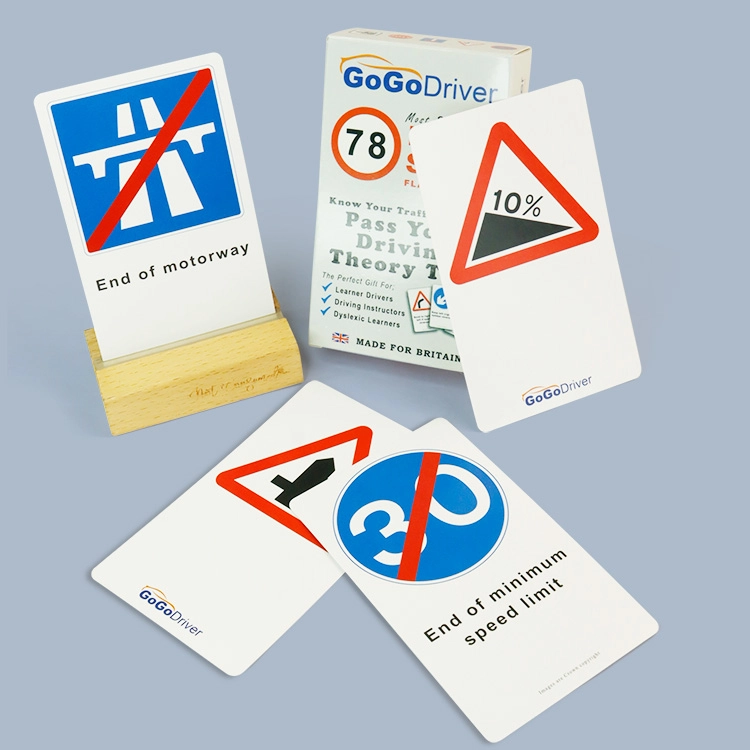
OEM Custom Driving Theory Cards | Personalized Traffic Rules & Test Prep Flashcards in Multiple Languages for Wholesale