
Color Palette Guide for Custom Tarot Cards to Convey Mood
- Why Color Matters in Card Design
- Color psychology and mood
- Cultural context and symbolic clarity
- Building a Palette: Principles and Steps
- Step 1 — Define the deck’s emotional core
- Step 2 — Choose anchors, accents, and neutrals
- Step 3 — Harmony, contrast, and hierarchy
- Palettes for Common Moods and Spreads
- Calm and introspective
- Energetic and transformative
- Mysterious and shadow work
- Palette Comparison Table
- Production & Material Considerations for Custom Tarot Cards
- Inks, substrates, and finish impact on color fidelity
- Scaling from prototypes to mass production
- Quality control and sustainability
- Manufacturing Partnership: Ensuring Your Palette Survives Production
- Why manufacturing specs matter
- Case study: Key production metrics to request
- My recommended production checklist
- How Guangdong Yuhua Playing Cards Can Help
- FAQ
- 1. How do I pick a palette that works for both symbolism and readability?
- 2. Can I reproduce metallic accents consistently across large runs?
- 3. Should I use RGB or CMYK color values when designing?
- 4. How does card finish affect perceived color mood?
- 5. How much does substrate choice change the final color?
- 6. How do I maintain color consistency across multiple print runs?
- Contact & Next Steps
I write this guide from years of experience designing and mass-producing custom card projects. Choosing a color palette for custom tarot cards is both an artistic and technical decision: it shapes the mood readers feel, informs symbolic clarity in spreads, and must be reproducible on your chosen substrates and finishes. Below I walk through color psychology, palette-building principles, mood-driven examples, accessibility and print-production best practices, and how to scale from prototype to reliable mass production with consistent color fidelity.
Why Color Matters in Card Design
Color psychology and mood
Color influences perception and emotion in predictable ways—this is the basis of color psychology. While individual associations vary across cultures and personal history, general trends are well-documented: blues often calm, reds energize, greens suggest growth, and muted neutrals create introspection. For a concise overview of these associations, see the Color psychology entry on Wikipedia.
Cultural context and symbolic clarity
Tarot is a symbolic system with roots and layers that vary by tradition. When designing custom tarot cards, you must balance archetypal color associations (e.g., gold for illumination, black for mystery) with cultural meanings pertinent to your audience. The Tarot article provides historical context—use that as a reference point, but always validate color symbolism with your target demographic to avoid unintended interpretations.
Building a Palette: Principles and Steps
Step 1 — Define the deck’s emotional core
Start by answering: What is the primary mood? Examples: contemplative, celebratory, shadow-work, whimsical. Define one or two core emotions. These anchor your palette choices and guide secondary accents so the deck reads consistently across 78 cards.
Step 2 — Choose anchors, accents, and neutrals
A robust palette typically includes: 1) a primary anchor color (dominant mood), 2) secondary colors (supporting tones for suits or themes), 3) accent colors (high-contrast for focal points), and 4) neutrals (backgrounds, borders, typography). This structure ensures clarity across detailed illustrations and small iconography like pips and numbers.
Step 3 — Harmony, contrast, and hierarchy
Apply color harmony rules (analogous, complementary, triadic) to ensure the deck feels cohesive. But prioritize contrast to preserve legibility—especially for small printed elements. Use color contrast guidelines like the W3C Web Content Accessibility Guidelines (WCAG) for guidance on readable contrast levels, adapted to print contexts: WCAG.
Palettes for Common Moods and Spreads
Calm and introspective
For meditation or therapy-oriented decks, choose muted blues, desaturated greens, soft greys, and warm beige neutrals. These tones support slow contemplation and reduce visual fatigue. Use a single warm accent (soft coral or gold) to highlight keywords or major-arcana focal points.
Energetic and transformative
For transformative or action-oriented decks, use saturated reds, oranges, and electric teals to create momentum. Pair with dark neutrals for depth, and reserve bright yellow or metallic accents to highlight transformation moments (e.g., flashpoints in a spread).
Mysterious and shadow work
Deep indigos, near-blacks, muted plum, and smoky emeralds work well. Incorporate subtle gradients and textured neutrals to evoke depth. Metallic silver or desaturated gold accents emphasize revelation without breaking immersion.
Palette Comparison Table
| Mood | Primary Colors | Accent Suggestions | Finish & Material Notes |
|---|---|---|---|
| Calm / Introspective | Muted blue, desaturated green | Warm coral, soft gold | Matte finish, uncoated or soft-touch for low glare |
| Energetic / Transformative | Saturated red, orange, teal | Bright yellow, metallic copper | Gloss or spot UV accents for vibrancy |
| Mysterious / Shadow | Indigo, plum, smoky emerald | Muted gold, silver | Soft-touch with selective foil or matte lamination |
Data note: finish recommendations above are based on standard print industry practices and common material behavior—gloss increases perceived color saturation while matte reduces glare and creates a muted look. For technical reading on color and material interaction see color management resources: Color management.
Production & Material Considerations for Custom Tarot Cards
Inks, substrates, and finish impact on color fidelity
Color on screen is additive (RGB); printed color is subtractive (CMYK or spot inks). For precise color reproduction, develop a Pantone or spot color plan for critical accents. Different substrates (coated vs uncoated, cellulose vs plasticized stocks) absorb ink differently—this changes saturation and value. For industry-standard guidance on quality management, consult ISO 9001 principles: ISO 9001.
Scaling from prototypes to mass production
Color proofing is essential. I recommend a three-stage approach: digital mockups (for concept), contract proofs on the chosen substrate (for color and texture validation), and short-run pilot decks (to test assembly, lamination, and finishing). When moving to large-scale runs, automated color-control and consistent supplier inputs prevent drift. If you plan OEM production, verify factory certifications and capacity to maintain color consistency across millions of cards.
Quality control and sustainability
Proofing and automated QC (spectrophotometer checks, inline color profiling) reduce defects and ensure repeatability. For sustainable sourcing, using FSC® certified papers helps meet market expectations and regulations—learn more at the FSC. Specify acceptable deviation tolerances for color and a defect target aligned with your QC processes.
Manufacturing Partnership: Ensuring Your Palette Survives Production
When you plan custom tarot cards for retail or distribution, production partner selection is as important as the palette itself. I have worked with multiple manufacturing partners and in the latter stages of design I prioritize factories that combine design support, strict QC, and scalable capacity.
Why manufacturing specs matter
Even a carefully chosen palette can fail if the factory lacks consistent inks, calibration, or lamination controls. Request factory color profiles and sample panels before committing to a large run. Confirm the factory's ability to print spot metallics or use additional inks if your palette requires them.
Case study: Key production metrics to request
Ask potential manufacturers for the following measurable data: monthly capacity, lead times, certification evidence, defect rates, and sample images under controlled lighting. As a benchmark, a professional card manufacturer should provide ISO-aligned quality systems and FSC sourcing.
My recommended production checklist
- Submit a color pull (Pantone or CMYK) on chosen substrate
- Approve a press proof and a final pilot deck
- Request inline spectrophotometer checks and final QC reports
- Confirm finishing capabilities (foil, spot UV, soft-touch, embossing)
How Guangdong Yuhua Playing Cards Can Help
For teams who want production-grade consistency and global distribution, Guangdong Yuhua Playing Cards Co., Ltd. offers end-to-end services tailored to custom card projects. Founded in 2014, Yuhua specializes in R&D, design, and mass custom production of playing cards, game cards, and color-printed packaging. Our 6,000㎡ intelligent facility and advanced automated lines support monthly output exceeding 1,000,000 units—critical when your deck needs reliable color reproduction at scale.
Key strengths I verify when recommending Yuhua:
- FSC® certified materials ensuring sustainable paper sourcing (FSC).
- ISO 9001 quality management systems to keep defect rates low (ISO 9001).
- Operational excellence: defect rate under 0.5% and over 20 patents backing manufacturing innovations.
- Use of imported High Quality materials and mature color-control processes for consistent palette reproduction.
Yuhua's typical offerings for custom tarot projects include OEM Playing Card, ODM Tarot cards, custom Game cards, and Learning Flash cards OEM. They serve casinos, game publishers, educational projects, and boutique tarot creators—providing fast, high-quality results with professional support. Visit our site at https://www.ivapoker.com/ or contact sales@ivapoker.com to discuss palette-proofing, small-batch pilots, or full production runs.
FAQ
1. How do I pick a palette that works for both symbolism and readability?
Start with a symbolic anchor color reflecting your deck’s theme, then test legibility by printing sample cards at actual size. Ensure sufficient contrast for small text and pips—use WCAG contrast guidelines as a minimum target adapted for print. Conduct user tests with representative readers to validate symbolic clarity.
2. Can I reproduce metallic accents consistently across large runs?
Yes, but metallics require spot finishing (foil stamping or metallic inks) and careful setup. Request press proofs and pilot decks. Confirm the manufacturer’s foil stock and stamping tolerances, and plan for slightly different visual behavior under varied lighting.
3. Should I use RGB or CMYK color values when designing?
Design in RGB if you begin digitally, but prepare a CMYK conversion and specify Pantone spot colors for critical accents. Share the color specs with your manufacturer early so they can provide accurate proofs based on their press profiles.
4. How does card finish affect perceived color mood?
Gloss increases perceived saturation and brightness, making colors feel more vivid and energetic. Matte or soft-touch reduces glare, giving colors a muted, contemplative effect. Choose finishes that align with your intended mood and test on the actual substrate.
5. How much does substrate choice change the final color?
Substrate absorbs ink differently—uncoated stock will appear more muted, and coated stock will show richer colors. Plastic or plasticized stocks reflect differently and can require different inks. Always proof on final stock before full production.
6. How do I maintain color consistency across multiple print runs?
Use standardized color profiles, save Pantone or spot color references, and work with factories that provide spectrophotometer-based inline QC. Keep a reference sample (a master deck) stored under controlled conditions to match against future runs.
Contact & Next Steps
If you’re preparing a custom tarot card project, I recommend starting with a mood brief, a rough color direction, and three prototype requests across suggested substrates. For scalable OEM/ODM support, Guangdong Yuhua Playing Cards Co., Ltd. offers design consultations, color-proofing, and mass-production services with reliable QC metrics. Visit https://www.ivapoker.com/ or email sales@ivapoker.com to request samples, discuss Pantone matching, or get a production quote. We are committed to providing customers with high-quality and efficient playing card production services.
Top 10 Custom Playing Card Materials and Finishes
Everything You Need to Know About customized poker playing cards
How to start the deck of tarot cards for sale business ?
Where to Buy for sale card game in Germany
About customized services
Do you offer samples?
Yes! We can provide samples of our card materials and finishes. Please contact us to request samples relevant to your project.
Do you provide design services?
Yes! Our in-house design team is here to assist you in bringing your vision to life. Whether you have a complete design or just an idea, we can help.
About product selection
What materials do you use for your cards?
We use high-quality, durable materials to ensure the best finish and longevity for your cards. Options include standard cardstock, premium finishes, and eco-friendly materials.
Is there a design template I can use?
Yes, we provide design templates for different card types. You can download them from our website or request them directly from our team.
After-sales support
What is your return policy?
We stand behind the quality of our products. If you receive a defective item, please contact us within 30 days for a replacement or refund. Customized orders are generally non-refundable unless there's an error on our part.
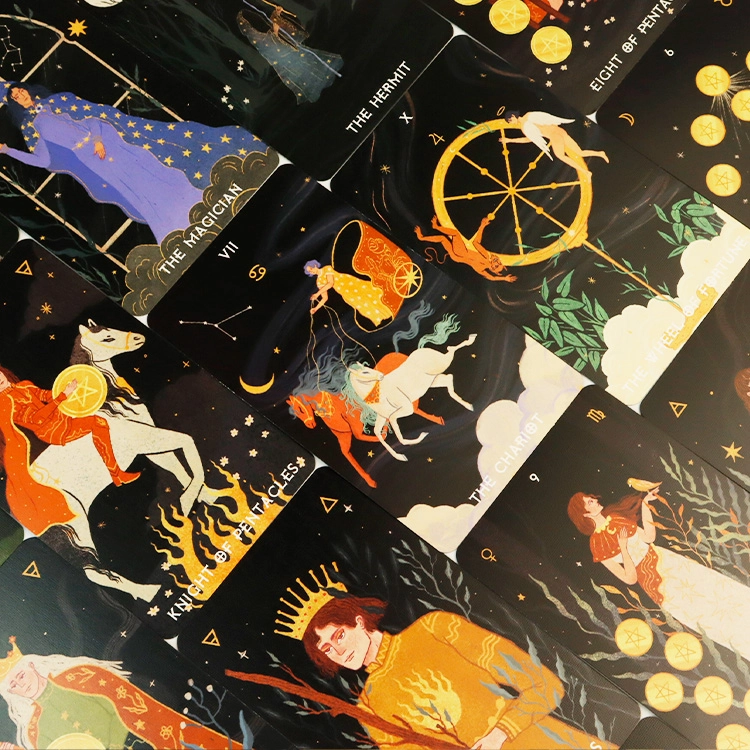
High Quality Tarot Cards with Sleeve Box Packaging | Premium Custom Tarot Deck Set for Enhanced Presentation & Protection
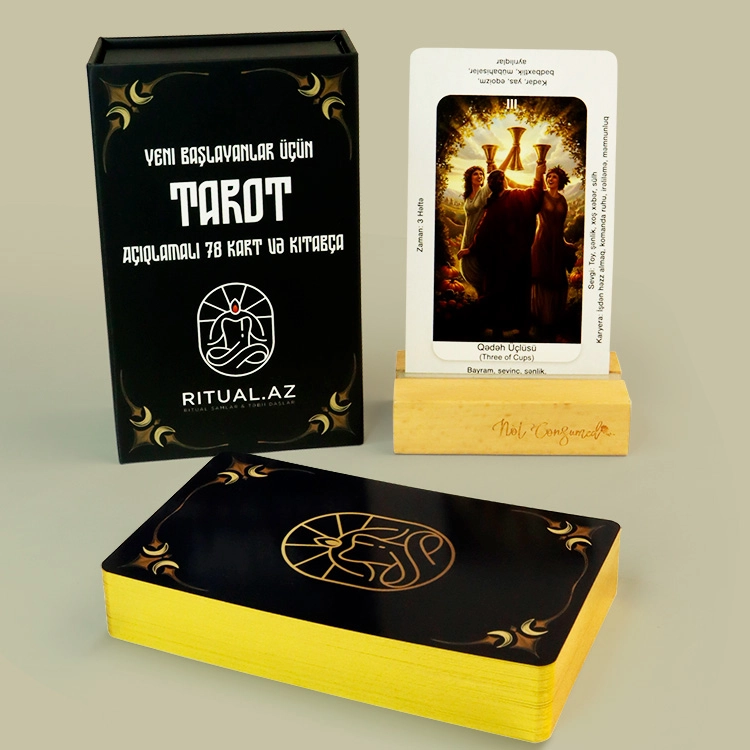
Hot Foil Stamped Tarot Cards with Book-Style Box | Premium Gold Edge Tarot Deck for Custom
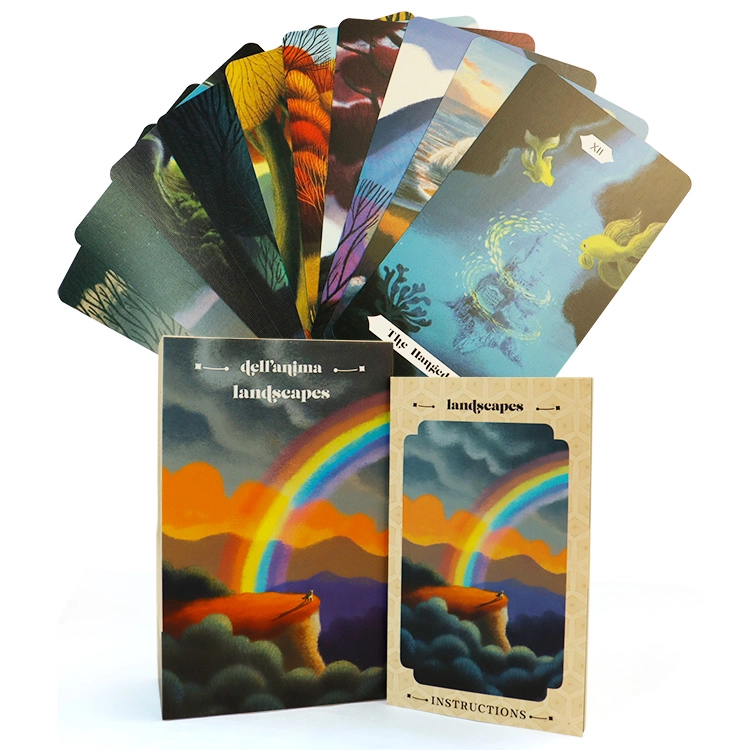
Rainbow Blue Edge Tarot Cards with lid and base Box | Custom Luxury Tarot Cards Deck Manufacturer
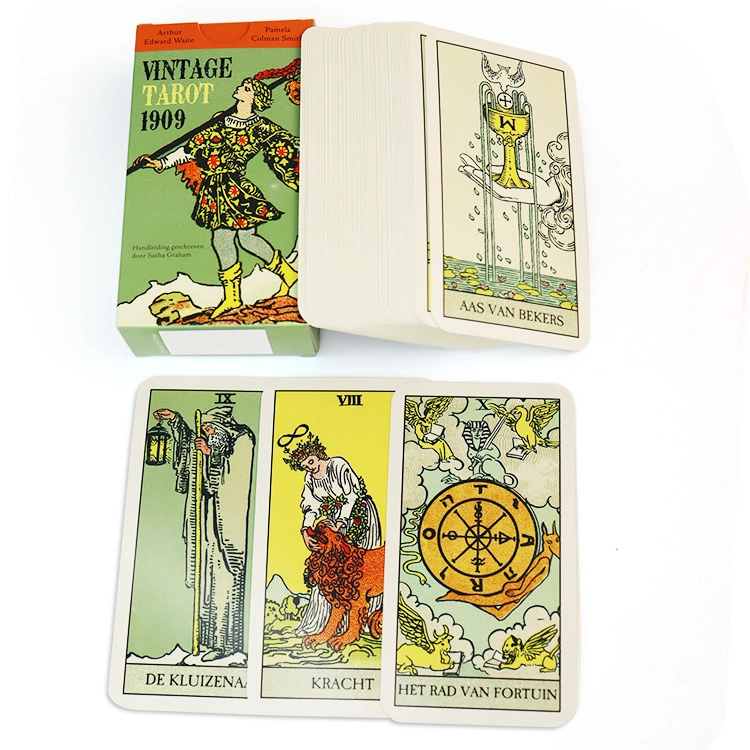
bbilaser
sq_AL