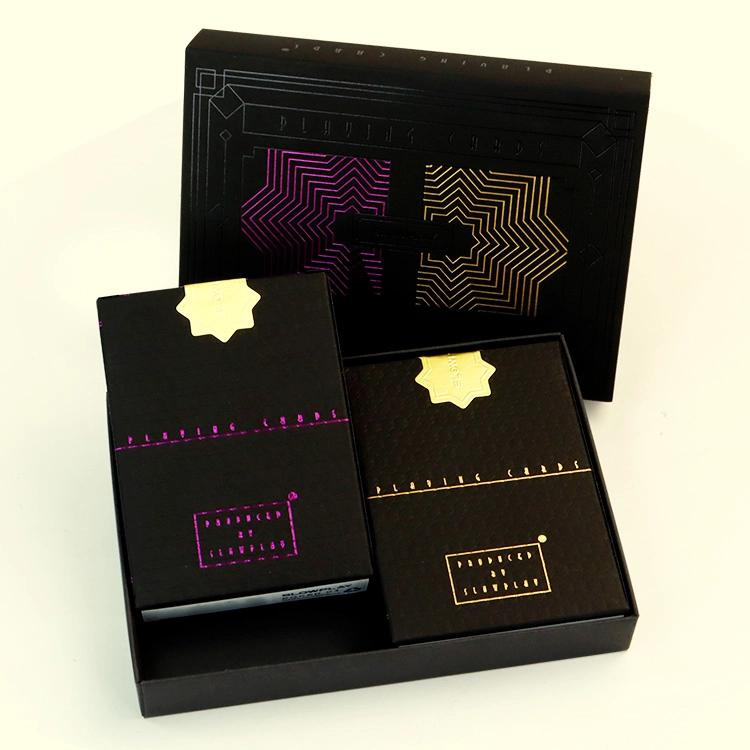
Cost Breakdown and Pricing Tips for Bulk Custom Card Orders
- How Bulk Pricing Works for Custom Playing Cards
- What influences the unit price
- Minimum Order Quantities (MOQs) and price tiers
- Typical lead times and their cost impact
- Detailed Cost Breakdown: Materials to Delivery
- Materials and stock (cardboard, GSM, coatings)
- Printing, finishing and tooling costs
- Packaging, QC, labor and logistics
- Pricing Examples and Calculators
- Example pricing table for a standard 54-card deck (estimates)
- How to estimate your landed cost
- Choosing a Reliable Manufacturer: Guangdong Yuhua Playing Cards Co., Ltd.
- Company capabilities and production scale
- Certifications, quality control and technical strengths
- Products, OEM/ODM services and competitive advantages
- How to Reduce Cost & Negotiate with Suppliers
- Design and specification tips to lower costs
- Negotiation and production strategies
- When to choose OEM vs ODM, digital vs offset
- FAQ
- Ordering and MOQ
- Costs and payment
- Production and quality
- Design and customization
- Timing and logistics
- References and Sources
How Bulk Pricing Works for Custom Playing Cards
What influences the unit price
Bulk pricing for custom design playing cards is determined by a set of interdependent factors: raw material (cardstock, coatings), printing method (offset, digital, UV), finishing (lamination, varnish, foil, embossing), packaging (tuck box, custom-printed box, shrink-wrap), tooling and setup costs, quality control and testing, labor, and logistics (freight, duties, insurance). Economies of scale are strong in playing-card production: fixed setup costs and tooling spread out over higher volumes reduce the per-unit price dramatically.
Minimum Order Quantities (MOQs) and price tiers
Manufacturers typically set MOQs to cover setup costs and to optimize production runs. MOQs vary by process: digital printing often allows smaller runs (e.g., 100–500 decks), while offset printing favors larger runs (1,000+ decks). Price tiers commonly drop at 500, 2,500, 10,000, and 50,000 units. When planning, align expected retail or distribution channels with realistic order tiers to capture per-unit savings.
Typical lead times and their cost impact
Lead time affects both direct costs (rush fees, air freight) and indirect costs (stocking, cash flow). Standard lead times for mass custom card orders run 25–45 days for production plus shipping. Shorter lead times often incur 10%–30% extra in production or freight charges. Proper forecasting and staggered replenishment can reduce rush costs.
Detailed Cost Breakdown: Materials to Delivery
Materials and stock (cardboard, GSM, coatings)
Cardstock grade and GSM (grams per square meter) are primary cost drivers. Typical playing-card board ranges from 280–330gsm for single-ply or laminated multi-ply boards. Certified or imported materials (FSC-certified, specialty linens, metallic foils) carry a High Quality: FSC or sustainably sourced board usually costs more but adds brand value to B2B and retail customers.
Printing, finishing and tooling costs
Printing method selection changes cost structure: digital printing has low setup and higher per-unit ink costs (good for small batches), while offset printing has higher initial setup (plates, color profiling) but lower marginal unit cost for large runs. Specialty finishes (hot foil stamping, embossing, metallic inks, edge painting) require dies or additional machinery and can add significant fixed and variable costs.
Packaging, QC, labor and logistics
Custom tuck boxes, High Quality rigid boxes, or bespoke packaging greatly influence total landed cost. Add labor for assembly, manual quality checks, and box gluing when applicable. Include inspection standards (AQL levels) and any pre-shipment inspection fees. Shipping mode (sea vs. air), incoterms (FOB, CIF, DDP), and customs duties complete the landed cost. For global buyers, documentation and compliance (CE, RoHS where applicable) may add costs.
Pricing Examples and Calculators
Example pricing table for a standard 54-card deck (estimates)
Below are illustrative sample price ranges for a standard 54-card deck printed CMYK on 310gsm board with standard linen finish and a printed tuck box. These estimates include production, basic QC, and standard sea freight (EXW/FOB cost brackets vary by supplier and shipping terms).
| Quantity | Estimated Per-Deck Price (USD) | Estimated Total Price (USD) |
|---|---|---|
| 500 decks | $4.50 – $7.00 | $2,250 – $3,500 |
| 2,500 decks | $2.80 – $4.20 | $7,000 – $10,500 |
| 10,000 decks | $1.40 – $2.50 | $14,000 – $25,000 |
| 50,000 decks | $0.90 – $1.60 | $45,000 – $80,000 |
Notes: These examples are indicative and assume standard designs (no foil, no embossing) and FOB China sea freight. Adding spot UV, foil, custom foil-seals, or High Quality packaging increases costs per unit and might raise MOQ thresholds for certain finishes.
How to estimate your landed cost
To calculate landed cost per deck, use this formula:
- Unit production cost (materials + printing + finishing)
- + Unit packaging cost
- + (Total tooling/setup cost ÷ order quantity)
- + (Inspection + handling fees ÷ order quantity)
- + (Shipping + insurance + duties ÷ order quantity)
- = Landed cost per unit
Always model multiple order quantities (e.g., 500; 2,500; 10,000) to see breakpoints where added tooling is amortized and unit price drops.
Choosing a Reliable Manufacturer: Guangdong Yuhua Playing Cards Co., Ltd.
Company capabilities and production scale
Guangdong Yuhua Playing Cards Co., Ltd., founded in 2014, specializes in the R&D, design, and mass custom production of playing cards, game cards, and color-printed packaging. With a 6,000㎡ intelligent facility and advanced automated card production lines, Yuhua can produce 1,000,000+ units per month. This scale enables competitive pricing at higher volumes while maintaining consistent lead times.
Certifications, quality control and technical strengths
Yuhua emphasizes quality and compliance: core strengths include the use of FSC® certified materials, ISO 9001 quality control systems, and a documented defect rate under 0.5%. The company also holds over 20 patents and uses imported materials for its High Quality brand, which contributes to consistent tactile quality and durability required by casinos and High Quality card collectors.
Products, OEM/ODM services and competitive advantages
Yuhua offers OEM Playing Cards, ODM Tarot cards, custom Game cards, and Learning Flash cards. OEM advantages include full custom printing and packaging with MOQ optimization, while ODM tarot or game products can accelerate time-to-market by leveraging existing art templates and manufacturing processes. Yuhua's global service footprint and professional support make it a strong option for brands seeking fast, high-quality mass production with reliable turnaround.
How to Reduce Cost & Negotiate with Suppliers
Design and specification tips to lower costs
- Standardize sizes: Use industry-standard deck dimensions and tuck-box templates to reduce tooling. Playing-card standardization saves die-cut and box-tooling costs.
- Limit spot effects: Reduce number of specialty finishes (foil, metallics, spot UV). Each adds setup and per-unit costs.
- Simplify packaging: Opt for printed tuck boxes or bulk shrink-wrapped bundles rather than custom rigid boxes for initial runs.
- Optimize artwork: Supply print-ready files in proper color spaces and bleeds to avoid repro charges.
Negotiation and production strategies
- Ask for tiered quotes: Request pricing for several quantities to spot the optimal order size.
- Consolidate SKUs: Producing more units of fewer SKUs reduces changeover and per-unit cost.
- Request shared tooling amortization: If you plan repeated runs, negotiate that tooling costs are amortized across multiple orders.
- Consider staggered shipments: Ship initial stock by air to validate market and the rest by sea to reduce cost.
When to choose OEM vs ODM, digital vs offset
- OEM: Choose when you have final art and need a specific manufacturing spec and packaging. Best for long-term branding and large runs.
- ODM: Use when you want to adapt an existing design or product model to speed up time-to-market and reduce design cost.
- Digital printing: Ideal for prototypes, low-volume runs, or variable decks (personalization) with less setup.
- Offset printing: Best for large volumes (>2,500 decks) where per-unit costs fall significantly.
FAQ
Ordering and MOQ
Q: What minimum order should I expect for custom design playing cards?
A: MOQs vary: digital printing suppliers can accept 100–500 decks; offset suppliers generally start at 1,000–2,500 decks. Specialty finishes can raise MOQs due to die and tool requirements.
Costs and payment
Q: How much will shipping and customs add to my per-unit cost?
A: Sea freight for container loads often adds a few cents to a dollar per deck depending on order size, destination port, and current freight rates. Air freight is substantially higher — expect 3–6× sea cost per unit. Duties depend on HS codes and country-specific tariffs.
Production and quality
Q: How do manufacturers control defects?
A: Robust manufacturers implement ISO 9001-based QC, inline inspections, random sampling, and pre-shipment inspection reports. Agreeing on acceptance criteria (AQL) and sample approvals before mass production is essential.
Design and customization
Q: Can I print full-bleed or metallic colors?
A: Yes. Full-bleed CMYK printing is standard. Metallic or spot colors require special inks or foils and may need additional passes or tooling, increasing cost and lead time.
Timing and logistics
Q: How long from order to delivery?
A: Typical lead time: 4–8 weeks production plus 2–6 weeks for sea shipping depending on destination. Rushed orders and air freight can shorten total time but increase cost.
If you have a specific project, specification sheet, or budget target, consult with an experienced manufacturer early to get an accurate quote and a production timeline.
Contact & Next Steps: For precise quotes, material samples, or to view product portfolios (OEM Playing Card, ODM Tarot cards, custom Game cards, Learning Flash cards), contact Guangdong Yuhua Playing Cards Co., Ltd. Their combination of FSC-certified materials, ISO 9001 processes, automated production lines (1,000,000+ units/month), low defect rates (<0.5%), and product patents can help you achieve fast, reliable, cost-effective bulk custom card production. We are committed to providing customers with high-quality and efficient playing card production services.
References and Sources
- ISO 9001 — Quality management systems. International Organization for Standardization. https://www.iso.org/iso-9001-quality-management. (accessed 2026-01-06)
- FSC — Forest Stewardship Council (sustainable material certification). https://fsc.org/en (accessed 2026-01-06)
- Playing card — Wikipedia (manufacturing overview and history). https://en.wikipedia.org/wiki/Playing_card (accessed 2026-01-06)
- Offset vs Digital Printing — Printful (printing method comparison). https://www.printful.com/blog/offset-vs-digital-printing (accessed 2026-01-06)
- Printing industry — overview and statistics. Statista. https://www.statista.com/topics/1707/printing-industry/ (accessed 2026-01-06)
- Freightos FBX — container freight index and shipping rate trends. https://fbx.freightos.com/ (accessed 2026-01-06)
The latest trends for poker cards in us 2026 | Yuhua Ultimate Insights
OEM/ODM best poker playing cards Manufacturers and Suppliers
Printing Options for Custom Tarot Cards: Pros & Cons
Custom Printed Poker Cards: Buyer's Guide to Materials & Finishes
After-sales support
Do you offer eco-friendly options?
Yes, we do offer eco-friendly materials and printing options. Please inquire about our sustainable options.
What is your return policy?
We stand behind the quality of our products. If you receive a defective item, please contact us within 30 days for a replacement or refund. Customized orders are generally non-refundable unless there's an error on our part.
Can I order a sample before placing a formal order?
Yes, we can provide samples for your review. Please contact us to discuss pricing and options for samples.
About customized services
Can I customize the design of my cards?
Absolutely! We offer full customization options, from card design and size to finishes and packaging. Our design team is ready to collaborate with you to create the perfect look.
About price and payment
What payment methods do you accept?
We accept various payment methods, including credit cards, PayPal, and bank transfers. Please reach out for more details on payment options.
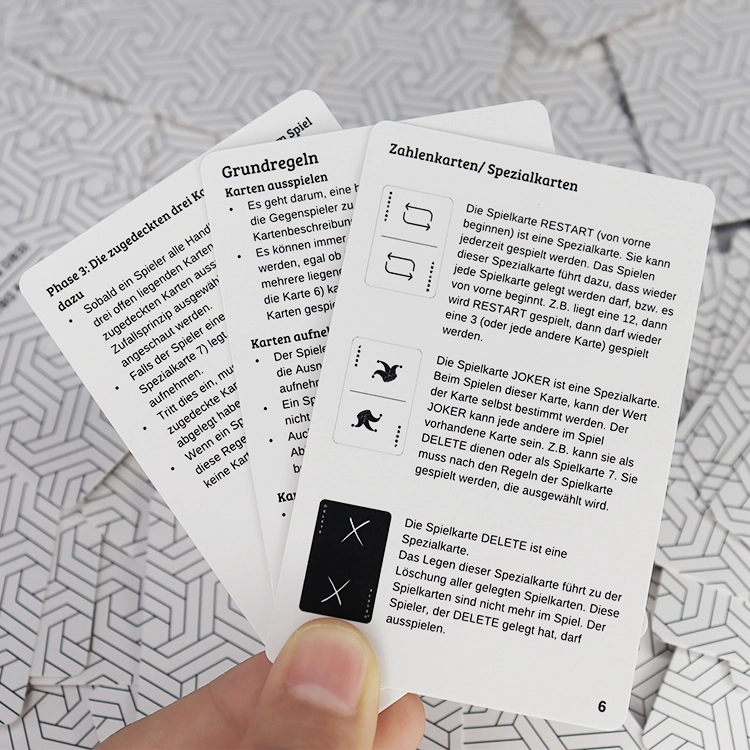
Board Game Manufacturing Top Quality Custom Logo custom design die cut fancy playing cards profesional card
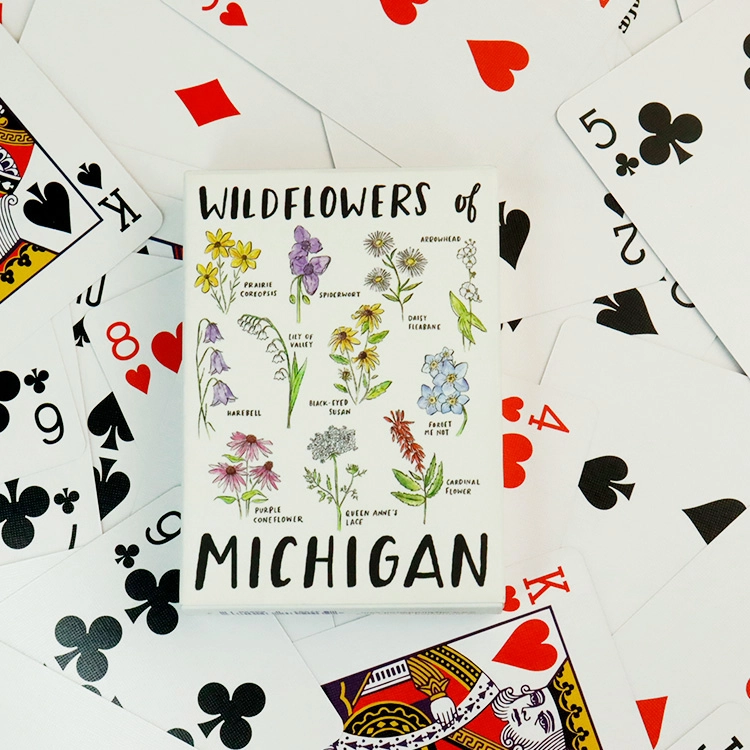
High Quality Eco-Friendly Durable Personalized Design Wildflowers Playing Cards with Custom Design Logo and Box
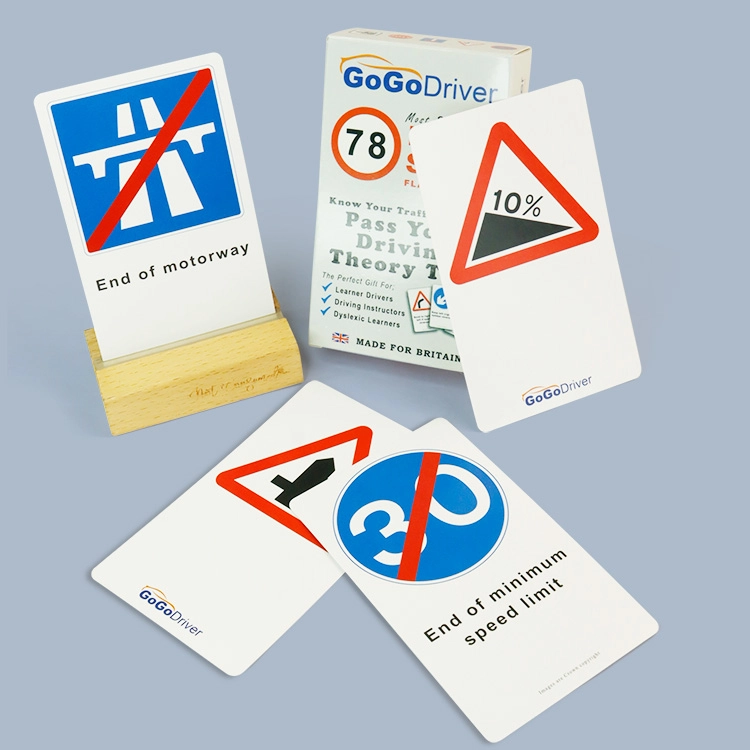
OEM Custom Driving Theory Cards | Personalized Traffic Rules & Test Prep Flashcards in Multiple Languages for Wholesale