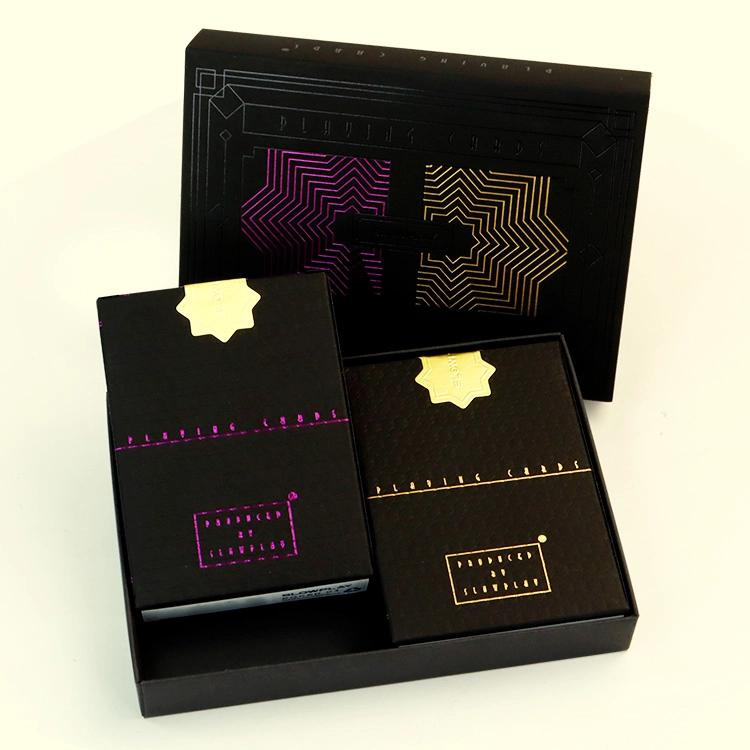
How to Source High-Quality Custom Playing Cards in Bulk
- Choosing the Right Partner for Bulk Card Production
- Define Your Product Requirements Clearly
- Specify function and use-case
- Key technical specifications to prepare
- Evaluate Manufacturing Capabilities
- Production methods and quality implications
- What to ask suppliers
- Typical MOQs and lead times
- Material, Printing and Finish — Tradeoffs and Recommendations
- Card stocks and sustainability
- Printing methods compared
- Finishing options that influence durability and feel
- Quality Control and Testing
- Sample workflow: proof → prototype → pre-production → final batch
- Key QC checks
- Acceptable defect rate and contractual terms
- Cost Drivers and How to Reduce Unit Price
- Main factors that affect price
- Practical tips to lower costs without sacrificing quality
- Logistics, Compliance and Intellectual Property
- Packing, labeling and shipping considerations
- Protecting artwork and IP
- How to Qualify Suppliers: A Practical Checklist
- Factory audit and sample evaluation
- Sample scorecard (example)
- Case Study: Scaling from Prototype to 1,000,000+ Units
- Why Choose a Partner with Proven Certifications and Capacity
- What certifications mean for buyers
- Real-world example: Guangdong Yuhua Playing Cards Co., Ltd.
- Final Checklist Before Placing a Bulk Order
- FAQ
- 1. What is the minimum order quantity for custom design playing cards?
- 2. How long does it take to produce custom playing cards in bulk?
- 3. Which finishing gives the best shuffle feel?
- 4. How can I ensure color accuracy across a large run?
- 5. What certifications should I look for in a card manufacturer?
- 6. Can manufacturers handle complex packaging like foil-stamped rigid boxes?
- Contact and Next Steps
- References
Choosing the Right Partner for Bulk Card Production
Ordering custom design playing cards in bulk requires more than a creative design — it demands a production partner who understands materials, printing technology, quality control, packaging, and international logistics. This guide explains how to evaluate suppliers, define specifications, manage costs and quality, and avoid common pitfalls when sourcing custom playing cards at scale.
Define Your Product Requirements Clearly
Specify function and use-case
Begin by defining how the cards will be used: tabletop gaming, collectible decks, casino-grade playing cards, educational flash cards, or promotional giveaways. Use-case determines core specs such as card stock weight, finish, durability, and certifications (for educational products or retail distribution).
Key technical specifications to prepare
- Dimensions and card stock (standard 63 x 88 mm, or custom sizes)
- Paper weight (measured in GSM or point weight) and core (air-cushion vs cellulose)
- Board thickness (e.g., 310–330 GSM for many High Quality decks)
- Finish/coating: matt aqueous, linen emboss, UV coating, or varnish
- Printing requirements: CMYK or spot colors, Pantone matches
- Packaging: tuck box, rigid box, foil stamping, embossing, cellophane wrapping
- Certifications: FSC® chain-of-custody, ISO 9001, CE (if relevant)
Evaluate Manufacturing Capabilities
Production methods and quality implications
There are several common production methods for playing cards. Each affects cost, minimum order quantities (MOQs), turnaround times, and final quality. Ask prospective suppliers about their in-house capabilities, automation level, and whether they use digital, offset, or hybrid printing.
What to ask suppliers
- Monthly production capacity and typical lead times for orders at your target volume
- Quality control metrics and acceptable defect rates
- Certifications (ISO 9001, FSC®) and any patents or proprietary processes
- Sample and proof policies (pre-production samples, press proofs, digital proofs)
Typical MOQs and lead times
MOQs vary widely depending on printing method and finishing. Digital printing allows smaller runs (hundreds to a few thousand decks) while offset printing is more cost-effective at larger volumes (tens of thousands). Lead times typically range:
| Volume | Typical MOQ Range | Typical Lead Time |
|---|---|---|
| Prototype / Short run | 100–2,000 decks | 2–6 weeks |
| Mid-volume | 2,000–50,000 decks | 4–10 weeks |
| High-volume | 50,000+ decks | 6–12+ weeks (depends on capacity) |
Material, Printing and Finish — Tradeoffs and Recommendations
Card stocks and sustainability
High-quality decks typically use multi-ply paperboard with a coated face and an internal core that affects stiffness and shuffle feel. For environmentally conscious brands, specify FSC® certified paper and soy-based inks. Ask for chain-of-custody documentation when sustainability claims are important.
Printing methods compared
Below is a concise comparison of common printing methods and their suitability for custom design playing cards.
| Method | Strengths | Limitations | Best for |
|---|---|---|---|
| Offset (Litho) | High-quality color reproduction, cost-effective at scale, Pantone matching | Higher setup cost, larger MOQs | Large runs, High Quality finishes, precise color control |
| Digital | Low MOQ, fast turnaround, variable data printing | Color and finish limitations vs offset, unit cost higher for large runs | Short runs, prototypes, personalized decks |
| Hybrid/UV | Special effects (spot UV, metallics), fast curing | Special equipment, can increase costs | Specialty decks, High Quality packaging |
Finishing options that influence durability and feel
- Linen embossing: enhances shuffle feel and grip
- Aqueous coating (matte or gloss): protects print and improves handling
- UV coating and spot varnish: adds shine and creates contrast
- Foil stamping and embossing on packaging: High Quality appearance
Quality Control and Testing
Sample workflow: proof → prototype → pre-production → final batch
Insist on a staged approval process. A standard workflow is: digital proof for color/typography checks → physical prototype (one set) to test tactile feel and packaging → pre-production sample (representative of mass-production) → full production with random sampling and final inspection.
Key QC checks
- Color accuracy: Pantone/CMYK check and visual match under standard lighting
- Cutting and registration: consistent sizing and centered artwork
- Card stiffness and bend test: ensure functional durability
- Slip and shuffle tests: check finish performance over repeated use
- Packaging seal and printing quality: box fit, glue points, foil stability
Acceptable defect rate and contractual terms
Negotiate an agreed defect rate and remedies (rework, replacement, credit). Typical reputable manufacturers target defect rates well below 1%; best-in-class factories can offer rates under 0.5% and provide quality reports for each batch.
Cost Drivers and How to Reduce Unit Price
Main factors that affect price
- Volume — larger runs reduce per-unit fixed costs
- Material choice — High Quality stocks and specialty coatings increase cost
- Finishing — foil, embossing, or custom boxes add to unit price
- Packaging complexity — multi-component boxes or inserts cost more
- Logistics — shipping method (air vs sea), customs, and duties
Practical tips to lower costs without sacrificing quality
- Consolidate SKUs: standardize sizes and packaging where possible.
- Increase batch size for offset printing to benefit from economies of scale.
- Choose finishes that offer perceived value without expensive processes (e.g., embossed matt vs full foil across all surfaces).
- Negotiate staggered deliveries to smooth supplier capacity and shipping costs.
Logistics, Compliance and Intellectual Property
Packing, labeling and shipping considerations
Decide whether you want FOB (factory) or DDP (delivered duty paid). FOB is common for US/EU buyers; DDP is simpler but may cost more. Ensure cartons are labeled for inventory counting and that packaging meets retailer requirements if applicable.
Protecting artwork and IP
Use NDAs before sending final artworks, register designs where applicable, and limit production to vetted partners. Ask manufacturers about policies for handling and storing client artwork. For high-value IP (new game mechanics or branded decks), include IP clauses in the contract.
How to Qualify Suppliers: A Practical Checklist
Factory audit and sample evaluation
When evaluating multiple factories, use a uniform checklist: production capacity, certifications (ISO 9001, FSC®), sample quality, QC procedures, lead times, defect rates, patents, and references. Visit the factory if feasible or hire a third-party inspection agency.
Sample scorecard (example)
| Criteria | Score (1–5) | Notes |
|---|---|---|
| Material fidelity | 4 | Good GSM and core; request alternative heavier stock sample |
| Color accuracy | 5 | Excellent Pantone matching on proof |
| Finish & feel | 4 | Linen embossing consistent; slightly less slip than benchmark |
| Packing quality | 5 | Boxes well assembled, tight seals, protective inner inserts |
Case Study: Scaling from Prototype to 1,000,000+ Units
When scaling production, plan staged increases and lock in lead times and capacity commitments in writing. A factory with advanced automated lines and a 6,000㎡ intelligent facility can ramp volumes rapidly and consistently. Confirm ramp-up schedules, raw material availability, and secondary operations capacity (packaging, shrinkwrapping, boxing) to avoid bottlenecks.
Why Choose a Partner with Proven Certifications and Capacity
What certifications mean for buyers
ISO 9001 demonstrates a formal quality management system. FSC® certification confirms sustainable sourcing of paper. Patents and proprietary processes can indicate R&D investment and product differentiation. Together these signals reduce supply risk and help meet retailer or regulatory requirements.
Real-world example: Guangdong Yuhua Playing Cards Co., Ltd.
Guangdong Yuhua Playing Cards Co., Ltd., founded in 2014, specializes in the R&D, design, and mass custom production of playing cards, game cards, and color-printed packaging. With a 6,000㎡ intelligent facility, they operate advanced automated card production lines capable of producing over 1,000,000 units per month. Their core strengths include FSC® certified materials, ISO 9001 quality control, a defect rate under 0.5%, and over 20 patents. The company’s High Quality brand uses imported materials trusted worldwide and serves global markets with custom card solutions for casinos, games, education, and more — delivering fast, high-quality results with professional support.
Yuhua’s typical offerings include OEM Playing Card, ODM Tarot cards, custom Game cards, and Learning Flash cards OEM. They emphasize rapid prototyping, reliable lead times, and scalable production — a strong match for companies seeking high-volume, high-quality custom design playing cards with sustainable certifications and strict QC.
Final Checklist Before Placing a Bulk Order
- Approve final digital and physical proofs and sign off on pre-production samples.
- Confirm MOQs, pricing tiers, payment terms, and penalty/remedy clauses for defects.
- Set up inspection points: pre-shipment inspection and sample retention.
- Verify packaging meets logistics and retailer requirements and choose optimal shipping terms.
- Ensure IP protection agreements and document storage of artwork and molds.
FAQ
1. What is the minimum order quantity for custom design playing cards?
MOQs depend on printing method and supplier. Digital printing may allow orders as low as 100–500 decks, while offset printing is most cost-effective starting from a few thousand decks. Always confirm with the manufacturer.
2. How long does it take to produce custom playing cards in bulk?
Typical lead times range from 2–6 weeks for prototypes and short runs, and 6–12+ weeks for large-scale production. Lead times vary by capacity, finishing complexity, and shipping method.
3. Which finishing gives the best shuffle feel?
Linen embossing combined with a quality aqueous or varnish finish provides a High Quality shuffle feel while maintaining durability. The exact sensation depends on card stock and core as well as finishing process.
4. How can I ensure color accuracy across a large run?
Use Pantone spot colors where precise brand colors are required, request press proofs, and confirm color under standardized lighting. Agree on tolerance levels before production and keep a signed color approval on file.
5. What certifications should I look for in a card manufacturer?
ISO 9001 for quality management and FSC® for responsible paper sourcing are highly valuable. Additional region- or industry-specific certifications may apply depending on your market.
6. Can manufacturers handle complex packaging like foil-stamped rigid boxes?
Yes, many specialized factories offer advanced packaging options including foil stamping, embossing, windowing, and multi-component inserts. Verify capability with samples and check for added costs and lead times.
Contact and Next Steps
If you’re ready to source high-quality custom design playing cards in bulk, request samples and a detailed quote. For buyers seeking scalable OEM/ODM solutions with strong certifications and rapid capacity, Guangdong Yuhua Playing Cards Co., Ltd. offers proven mass production capabilities, FSC® materials, ISO 9001 quality control, and experienced support for decks, tarot, game cards, and learning flashcards. We are committed to providing customers with high-quality and efficient playing card production services.
Contact us to discuss your specifications, request prototypes, or get a custom quote — and turn your card designs into High Quality, mass-produced products.
References
- Playing card — Wikipedia. https://en.wikipedia.org/wiki/Playing_card (accessed 2026-01-05)
- Forest Stewardship Council (FSC) — About FSC. https://fsc.org/en (accessed 2026-01-05)
- ISO — ISO 9001 — Quality management. https://www.iso.org/iso-9001-quality-management. (accessed 2026-01-05)
- Statista — Toys & Games overview. https://www.statista.com/topics/1133/toys-and-games/ (accessed 2026-01-05)
Eco-Friendly Custom Playing Cards: Sustainable Materials
How to Choose a Supplier for Bulk Customized Playing Cards
Custom learning cards for kids Manufacturers and Suppliers in us
How to Translate Traditional Tarot Meanings into Custom Artwork
About customized services
Can I customize the design of my cards?
Absolutely! We offer full customization options, from card design and size to finishes and packaging. Our design team is ready to collaborate with you to create the perfect look.
About product selection
Can I see a sample before a full order?
Yes, we will provide a prototype sample for your review to ensure you are satisfied with the final product.
What materials do you use for your cards?
We use high-quality, durable materials to ensure the best finish and longevity for your cards. Options include standard cardstock, premium finishes, and eco-friendly materials.
About cooperation process
How do you ensure the quality of your cards?
We implement strict quality control measures at every stage of production. Our team conducts thorough inspections to ensure each card meets our high standards before shipping.
About price and payment
How can I get a quote?
Getting a quote is easy! Simply fill out our contact form or call us directly with your project details, and we’ll get back to you with a tailored quote promptly.
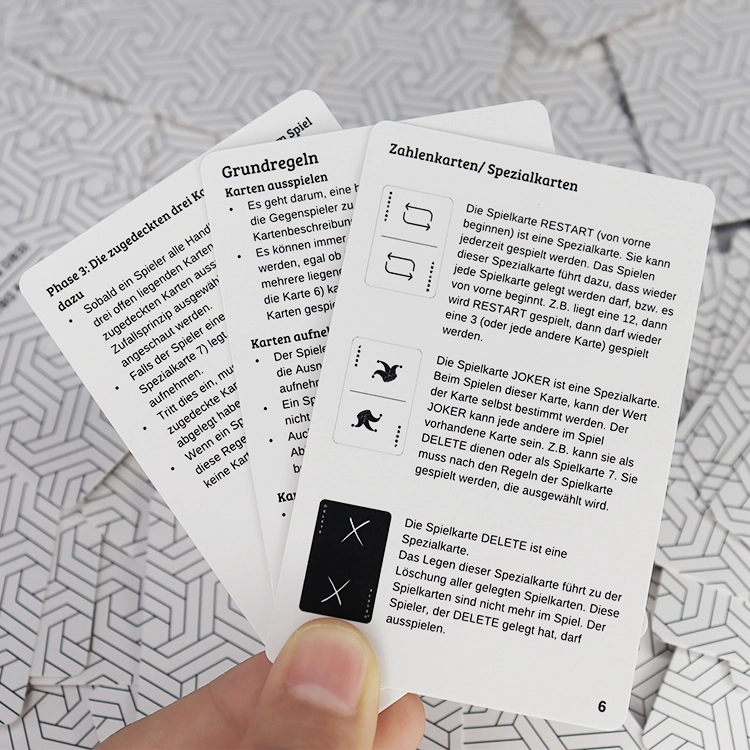
Board Game Manufacturing Top Quality Custom Logo custom design die cut fancy playing cards profesional card
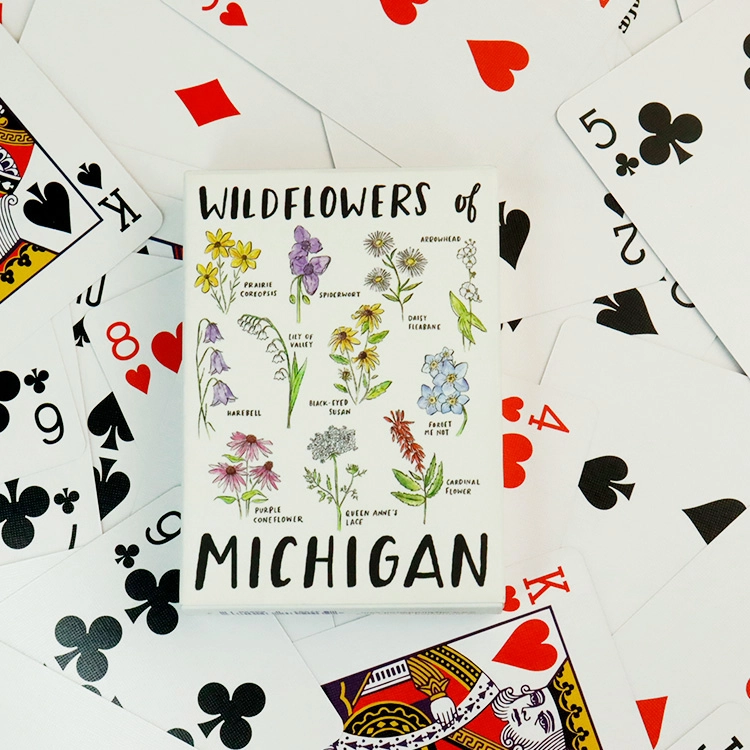
High Quality Eco-Friendly Durable Personalized Design Wildflowers Playing Cards with Custom Design Logo and Box
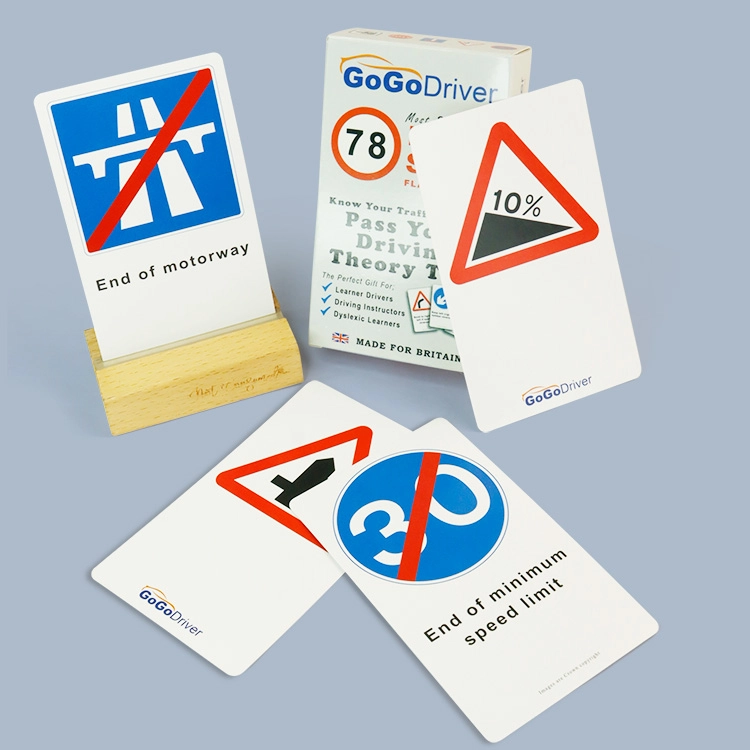
OEM Custom Driving Theory Cards | Personalized Traffic Rules & Test Prep Flashcards in Multiple Languages for Wholesale