
Lead Times, Production & Shipping for Custom Playing Cards
- Why lead times determine project success
- Commercial impact of timing
- Common causes of delay
- Benchmarks and how to interpret them
- Typical production stages & timelines for custom made playing cards
- Stage 1 — Design, artwork and pre-press (2–10 days)
- Stage 2 — Prototyping & soft proof (3–14 days)
- Stage 3 — Mass production & quality control (7–30 days)
- Shipping options, transit times & customs
- Freight modes and typical transit windows
- Customs, duties and incoterms
- Packaging, palletization and documentation
- Reducing lead time: planning, production strategy & risk mitigation
- Order planning and supplier selection
- Parallelization and inventory strategies
- Quality assurance to prevent rework
- Realistic timeline examples (sample projects)
- Example A — Kickstarter campaign, limited run (5,000 decks)
- Example B — Retail launch, mass order (50,000 decks)
- Production capacity and why it matters
- Data-backed comparisons: cost vs speed trade-offs
- Guangdong Yuhua Playing Cards Co., Ltd. — Capacity and competitive advantages
- Checklist to minimize surprises (practical action items)
- Frequently Asked Questions (FAQs)
- 1. How long do custom made playing cards take from order to delivery?
- 2. Can lead times be shortened without dramatically increasing cost?
- 3. What extra time do specialty finishes add?
- 4. How do certifications (FSC, ISO) affect lead times?
- 5. What is a reasonable safety stock for retail decks?
- 6. Who handles customs and duties—buyer or supplier?
- Contact & next steps
Summary for indexing: Understanding realistic lead times, production workflows and global shipping options for custom made playing cards helps brands, casinos and game publishers plan launches and control costs. This guide maps each stage—from prototyping and tooling to QC and international freight—providing benchmark timelines, data-backed shipping windows, and practical tactics to shorten turnaround while preserving quality.
Why lead times determine project success
Commercial impact of timing
Lead time dictates when you can launch a product, fulfil pre-orders, or supply retail channels. For seasonal releases (e.g., holiday decks) or casino reopenings, missing a production window can translate to lost revenue and reputational damage. Businesses ordering custom made playing cards must align art approvals, production, and shipping to a firm calendar.
Common causes of delay
Typical delay sources are design changes during proofing, material sourcing (especially certified stock), machine availability in peak seasons, and international logistics disruptions. External factors such as port congestion and customs clearance can add unpredictable delays, so realistic buffers are critical.
Benchmarks and how to interpret them
Benchmarks should be treated as ranges, not absolutes. Below we provide industry-based windows for common scenarios that you can adapt to project complexity and order quantity.
Typical production stages & timelines for custom made playing cards
Stage 1 — Design, artwork and pre-press (2–10 days)
Artwork approval, dielines, and pre-press checks are the first gating steps. For experienced brands with print-ready assets, this takes 1–2 days; for newly designed decks or multiple revisions plan 5–10 days. Clear, layered source files (PDF/AI) and a print checklist reduce iteration cycles.
Stage 2 — Prototyping & soft proof (3–14 days)
Prototypes let you validate card stock, finish, colors, and tuck box details. A single prototype run typically requires 3–7 days; complex specialty finishes (foil stamping, embossed coatings) or custom box construction can extend this to 10–14 days.
Stage 3 — Mass production & quality control (7–30 days)
Mass production lead time varies by order size and factory capacity. Small runs (a few thousand decks) can be completed in about 7–14 days; large orders (tens or hundreds of thousands) often require 14–30 days. Quality control processes like inline inspection and final sampling add 1–3 days but significantly reduce defect risk.
Shipping options, transit times & customs
Freight modes and typical transit windows
Choice of freight mode impacts cost and timing:
| Mode | Typical transit time (origin China to major markets) | Cost relative | Best when |
|---|---|---|---|
| Express (DHL/FedEx/UPS) | 2–7 days | High | Urgent samples or small urgent orders |
| Air freight (airport-to-airport) | 3–10 days | High–Medium | Faster replenishment of stock (larger volumes than express) |
| Sea freight (FCL/LCL) | 20–45 days | Low | Bulk orders; cost-sensitive shipments |
Transit estimates are general industry ranges; for up-to-date transit times consult carriers like DHL or forwarders such as Maersk and Freightos.
Customs, duties and incoterms
Customs clearance is an often-overlooked time factor. Duties and HS classification for playing cards differ by country; work with your freight forwarder to prepare commercial invoices and classify the goods correctly to avoid holds. Choosing the right Incoterm (e.g., FOB vs DDP) shifts responsibility and risk—DDP (Delivered Duty Paid) transfers customs handling to the supplier at higher service cost but fewer surprises for the buyer.
Packaging, palletization and documentation
Proper packaging affects both damage rates and customs inspections. For bulk shipments, palletization with clear packing lists and photos speeds inspections. For retail-ready decks, a nested carton approach reduces transit damage. Ensure paperwork (commercial invoice, packing list, certificate of origin) is accurate to prevent delays.
Reducing lead time: planning, production strategy & risk mitigation
Order planning and supplier selection
Start supplier conversations early. Choose partners with demonstrated capacity and certifications (e.g., FSC® for responsible paper, ISO 9001 for quality systems). Verified factories with automated lines and stable supply chains are less prone to delay.
Parallelization and inventory strategies
Parallelize tasks where possible: while prototypes are being verified, finalize shipping arrangements and order materials with flexible lead times. Consider safety stock or rolling production (monthly replenishment) to smooth demand spikes.
Quality assurance to prevent rework
Invest in inline QC and pre-shipment inspections. A low defect rate reduces returns and re-manufacture. Third-party inspection services and established ISO procedures reduce the chance of costly rework.
Realistic timeline examples (sample projects)
Example A — Kickstarter campaign, limited run (5,000 decks)
Design finalization: 3 days; prototype: 5 days; production: 10 days; QC & packing: 3 days; air freight to US: 7 days. Total: ~28 days from prototype approval to delivery.
Example B — Retail launch, mass order (50,000 decks)
Design finalization: 7 days; prototype: 10 days; production: 21 days; QC & packing: 5 days; sea freight to EU: 30 days. Total: ~73 days from design finalization to store arrival.
Production capacity and why it matters
Factory capacity affects how quickly an order can be scheduled. For example, Guangdong Yuhua Playing Cards Co., Ltd. operates a 6,000㎡ intelligent facility with advanced automated card production lines capable of over 1,000,000 units per month, which enables faster scheduling for large OEM/ODM projects and mitigates bottlenecks during peak season.
Data-backed comparisons: cost vs speed trade-offs
The following table summarizes how lead time choices affect unit cost and inventory risk.
| Option | Lead time | Unit cost | Inventory risk | Recommended for |
|---|---|---|---|---|
| Express shipping + small production | 2–14 days | High | Low initial inventory, high replenishment cost | Urgent samples, promotional launches |
| Air freight + medium production | 7–21 days | Medium–High | Moderate | Fast restock for scaled campaigns |
| Sea freight + bulk production | 40–90 days (including production) | Low | High (requires forecasting) | Long-term inventory for retail |
Guangdong Yuhua Playing Cards Co., Ltd. — Capacity and competitive advantages
Company snapshot: Guangdong Yuhua Playing Cards Co., Ltd., founded in 2014, specializes in R&D, design and mass custom production of playing cards, game cards and color-printed packaging. With a 6,000㎡ intelligent facility and automated card production lines capable of 1,000,000+ units per month, Yuhua supports OEM and ODM projects of varying scale. Learn more at https://www.ivapoker.com/.
Key strengths you can verify:
- Material standards: Use of FSC® certified materials for responsible paper sourcing (see FSC).
- Quality systems: ISO 9001 quality control framework for consistent production (see ISO 9001).
- Low defect rates: Factory reports a defect rate under 0.5% and more than 20 patents for production and design innovations.
- High Quality materials: Imported paper and specialty finishes used across High Quality product lines.
These capabilities make Yuhua suited for complex projects—casino-grade decks, educational flash cards, tarot lines, and bespoke game cards—where timing, compliance and repeatable quality matter. For inquiries email sales@ivapoker.com or visit ivapoker.com.
Checklist to minimize surprises (practical action items)
- Finalize and freeze artwork before starting production; use layered files and provide color references.
- Request a prototype early and confirm finishes, paper weight, and packaging structure.
- Choose a supplier with transparent capacity data and certifications (FSC®, ISO 9001).
- Decide Incoterms (FOB vs DDP) based on your logistics expertise and tolerance for customs handling.
- Plan freight booking at prototype approval to secure vessel/airspace during peak seasons.
- Include 10–20% schedule buffer for customs delays, especially during holiday seasons or periods of congestion.
Frequently Asked Questions (FAQs)
1. How long do custom made playing cards take from order to delivery?
Typical timelines range from 2–4 weeks for small, urgent orders shipped by air, to 8–12 weeks for large bulk orders shipped by sea. The total depends on design readiness, prototyping cycles, factory capacity and chosen shipping mode.
2. Can lead times be shortened without dramatically increasing cost?
Yes—by optimizing artwork (fewer revisions), pre-booking production slots, choosing faster freight (air vs sea) for critical inventory, and working with a supplier that has spare automated capacity. Consolidating SKUs and using standard materials also cuts setup time.
3. What extra time do specialty finishes add?
Special finishes (foil stamping, embossing, custom varnishes) typically add 3–10 days, depending on tooling and drying times. If finishing requires external vendors, factor in additional logistics time.
4. How do certifications (FSC, ISO) affect lead times?
Using certified materials can add a short sourcing lead time if stocks are limited, but reputable suppliers maintain certified inventory. Certifications generally improve predictability and reduce rework risk, offsetting minor lead time increases.
5. What is a reasonable safety stock for retail decks?
Safety stock depends on sales velocity. For predictable retail lines, 4–8 weeks of stock (accounting for production + sea transit) is common. Fast-moving items or uncertain demand may require 8–12 weeks or a hybrid approach with monthly replenishment via air freight.
6. Who handles customs and duties—buyer or supplier?
That depends on the Incoterm: FOB typically means the buyer handles import formalities, while DDP shifts responsibility to the supplier. Choose based on your capacity to manage customs and the level of service you expect.
Contact & next steps
If you are planning a custom project—OEM playing cards, ODM tarot decks, custom game cards or learning flash cards—plan with realistic timelines and partner with a production specialist. Guangdong Yuhua Playing Cards Co., Ltd. offers high-capacity, certified production with a defect rate under 0.5% and over 20 patents, making them a reliable partner for fast, quality-driven delivery.
Visit https://www.ivapoker.com/ or email sales@ivapoker.com to request lead-time estimates, get a quotation, or arrange prototypes. We are committed to providing customers with high-quality and efficient playing card production services.
Tarot Card Packaging Ideas for Custom Playing Cards
What are the application scenarios of plastic rook playing cards for sale?
How to Choose the custom branded playing cards manufacturer and supplier in Germany?
Case Studies: Successful B2B Custom Playing Card Projects
About product selection
What materials do you use for your cards?
We use high-quality, durable materials to ensure the best finish and longevity for your cards. Options include standard cardstock, premium finishes, and eco-friendly materials.
What types of playing cards do you offer?
We offer a wide range of playing cards including standard decks, custom-designed decks, and specialty cards. Whether you need classic poker cards, bridge cards, or custom promotional decks, we have the options to fit your needs.
About customized services
Do you offer samples?
Yes! We can provide samples of our card materials and finishes. Please contact us to request samples relevant to your project.
What is the minimum order quantity?
We do not have a strict minimum order quantity. Since we are a custom offset printing company, we recommend a minimum order of 500 sets, as the material costs are the same, but the printing setup costs are higher.
However, if your order quantity is less than 300 sets, our sales team will usually work with customers to help customers find the most competitive options.
What is the minimum order quantity for Private Label projects?
Our minimum order quantity usually starts at 500 pairs. However, we can handle smaller orders depending on the specific project requirements.
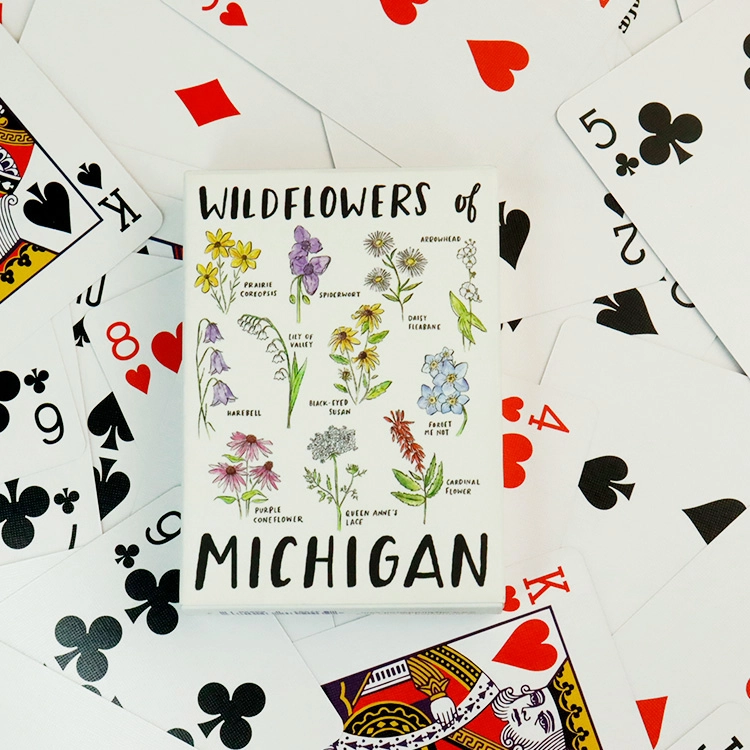
High Quality Eco-Friendly Durable Personalized Design Wildflowers Playing Cards with Custom Design Logo and Box
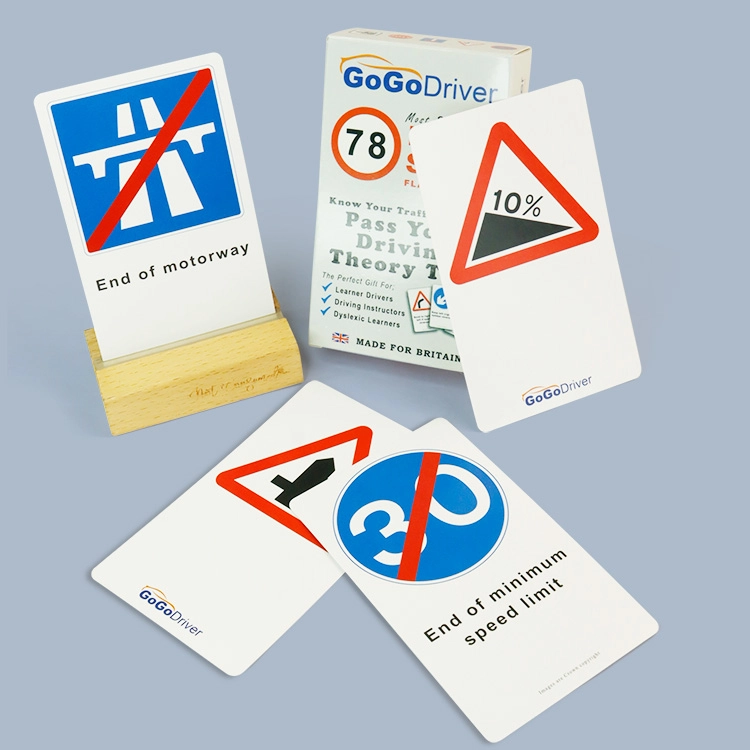
OEM Custom Driving Theory Cards | Personalized Traffic Rules & Test Prep Flashcards in Multiple Languages for Wholesale
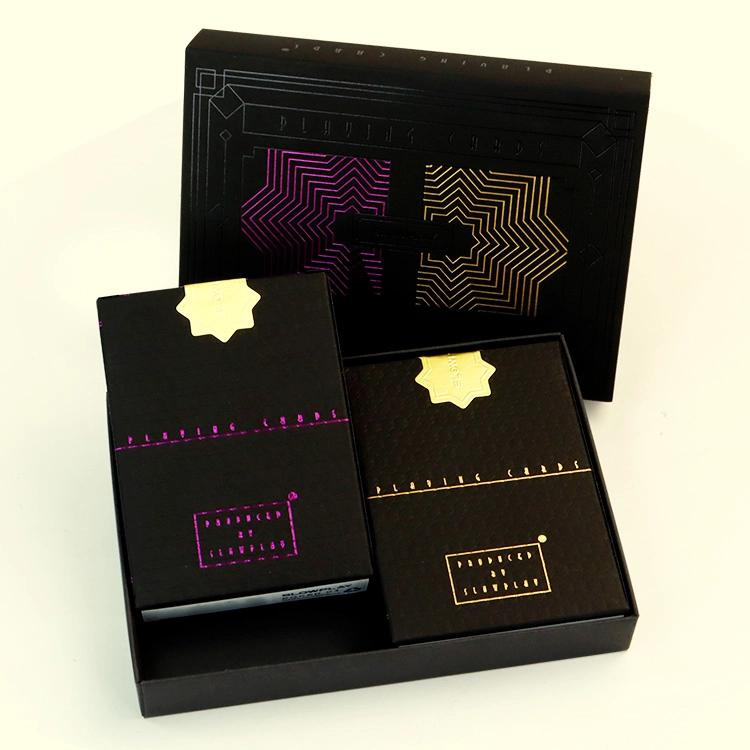
Custom Printing Luxury Two Sets Plastic Poker Playing Cards with Customized Packing
bbilaser
sq_AL