
Custom Playing Cards Manufacturing: Materials and Finishes
- Market needs, use cases and design implications
- Primary user needs and performance drivers
- Regulatory, sustainability and brand requirements
- Design implications for print and finishing
- Core materials for custom made playing cards
- Paperboard (coated, linen, and clay): pros and cons
- 100% plastic and PVC cards
- Composite cards and specialty substrates
- Material comparison table
- Finishes and surface treatments: function, feel and longevity
- Common finishes and their attributes
- How finishes affect handling and machine compatibility
- Finish selection matrix (practical guidance)
- Manufacturing processes, QC and scaling for custom made playing cards
- Key production steps and critical tolerances
- Quality systems and measurable KPIs
- Cost drivers and minimum order considerations
- Testing, certification and sourcing best practices
- Recommended tests before mass production
- Certifications and supplier questions to ask
- Sourcing: local vs. overseas production considerations
- Case study: reliable production capability and what it means for buyers
- Why production capacity and automation matter
- Industry example: Guangdong Yuhua Playing Cards Co., Ltd.
- How to evaluate a production partner quickly
- Practical recommendations and checklist for buyers
- Decision tree: match material and finish to use case
- Checklist before signing a PO
- FAQ
- 1. What is the best material for custom made playing cards used in casinos?
- 2. Are FSC-certified materials important for playing cards?
- 3. How does finish choice affect shuffling and automatic shufflers?
- 4. What minimum order quantity (MOQ) should I expect for custom decks?
- 5. How do I test prototypes for durability?
- 6. How long does it take to produce a custom deck?
- Contact and next steps
Custom made playing cards require careful selection of materials and finishes to meet durability, handling, print quality and regulatory expectations. This article explains the most common substrates and surface treatments; compares performance, cost and sustainability; outlines production and QC checkpoints; and gives practical recommendations for card manufacturers, game designers and buyers seeking scalable, reliable solutions.
Market needs, use cases and design implications
Primary user needs and performance drivers
Different end uses change priorities. Casino and professional-grade decks prioritize durability, consistency and anti-slip handling. Mass-market promotional cards focus on cost and print vibrancy. Educational flash cards emphasize readability and safety. Understanding these needs helps determine whether a project should use PVC, coated paperboard, or hybrid materials and what finish is appropriate for shuffling, dealing and long-term wear.
Regulatory, sustainability and brand requirements
Buyers increasingly demand chain-of-custody certification (e.g., FSC®) and low-VOC coatings. For partners serving regulated environments (casinos, tournaments), traceable supply chains and quality management systems like ISO 9001 are often required. Sustainability choices (recycled fibers, certified forests) can affect material availability and cost but enhance brand trust.
Design implications for print and finishing
Artwork decisions (ink coverage, spot colors, metallics) interact with material choice. High ink coverage on uncoated stock can cause cockling and longer drying times; plastic or coated boards avoid this but require specialized inks or primers. Embossing, foil stamping and varnishes also demand predictable substrate response to pressure and heat.
Core materials for custom made playing cards
Paperboard (coated, linen, and clay): pros and cons
Coated paperboard with a linen or mechanical finish is a traditional choice. Benefits include excellent print fidelity, a classic tactile feel, and cost-effectiveness for medium-to-large runs. Downsides: less water resistance, variable longevity under heavy use, and sensitivity to humidity.
100% plastic and PVC cards
Plastic cards (PVC, PET) are waterproof, highly durable, and offer consistent performance for casinos and outdoor games. They handle continuous shuffling and automatic dealers better than paper-based decks but cost more per unit and may require different printing technologies. For environmental reasons, recyclable PET alternatives are increasingly used.
Composite cards and specialty substrates
Composite or 'blend' cards (paper core with plastic layers) aim to balance cost and durability. They mimic the handling of paper cards while offering better resistance to moisture. Specialty substrates include biodegradable plastics and laminated papers designed to retain a linen texture with improved lifespan.
Material comparison table
| Feature | Coated Paperboard (Linen) | 100% Plastic (PVC/PET) | Composite (Paper+Plastic) |
|---|---|---|---|
| Print Fidelity | Excellent | Very good (requires UV/solvent inks) | Very good |
| Durability | Moderate | High | High |
| Water Resistance | Poor | Excellent | Good |
| Cost per Unit (typical) | Low–Medium | Medium–High | Medium |
| Recyclability | Variable (FSC options) | PVC difficult; PET recyclable | Depends on bonding |
Sources: product datasheets from major substrate suppliers and industry overviews such as Wikipedia - Playing card (manufacturing context).
Finishes and surface treatments: function, feel and longevity
Common finishes and their attributes
Finishes affect shuffle, slip, and visual appearance. Typical options include:
- Varnish (gloss/matte): basic protection and sheen control.
- UV coating: durable, high-gloss finish with excellent abrasion resistance.
- Soft-touch/silk: a velvety tactile surface that reduces glare.
- Lamination (BOPP, matt BOPP): adds water resistance and stiffness.
- Linen embossing: the traditional cross-hatched texture for classic feel and improved shuffle control.
- Hot/Cold foil stamping and metallic inks: for brand accents; require precise die and substrate compatibility.
How finishes affect handling and machine compatibility
Casinos and automated shufflers require predictable friction and edge behavior. Too-slick finishes (some high-gloss varnishes) can cause sliding and mis-deals; too-grippy finishes hamper smooth cuts. Soft-touch and linen embossing are popular because they balance grip and slide. When specifying finishes for high-speed production or automatic dealers, coordinate tests with the exact machines that will be used.
Finish selection matrix (practical guidance)
| Finish | Best for | Trade-offs |
|---|---|---|
| UV Coating | High-wear, High Quality gloss decks | High cost; very slick unless embossed |
| Soft-touch | Luxury decks; improved grip | Higher unit cost; slightly reduced print vibrancy |
| Linen Emboss | Traditional playing card feel | May reduce super-sharp print detail on solids |
| BOPP Lamination | Water resistance & print protection | Increases stiffness; can alter hand-feel |
Manufacturing processes, QC and scaling for custom made playing cards
Key production steps and critical tolerances
Typical production stages: pre-press (artwork, color separations), printing (offset for paper, digital/UV for plastic), coating/lamination, die-cutting, cornering, beveling, cellophane wrapping and boxing. Critical tolerances include thickness uniformity (important for shuffle balance), cut accuracy (edge registration) and surface hardness (coating cure). For high-quality decks, thickness variation should be under ±0.05 mm across a batch.
Quality systems and measurable KPIs
Trackable KPIs include defect rate, dimensional variance, color delta (ΔE) against proofs, and abrasion resistance (Martindale/Crockmeter values for coatings). Reputable manufacturers operate under ISO 9001 quality systems; certifications and third-party audits add traceability and reduce batch-to-batch variability (ISO 9001).
Cost drivers and minimum order considerations
Material choice, finishing complexity (foil/emboss), and custom packaging are the main cost drivers. Plastic cards raise per-unit material cost but reduce long-term replacement. Many manufacturers offer better unit pricing at higher volumes; for example, tooling/setup and custom dies are amortized across volume. For small-runs, digital printing and simpler finishes minimize upfront costs.
Testing, certification and sourcing best practices
Recommended tests before mass production
Conduct these checks on prototypes: bending/fatigue testing (simulates repeated shuffles), abrasion testing on coatings, water exposure, and color matching under standard illuminants. For casino-grade or tournament decks, test on actual dealing shoes and shufflers.
Certifications and supplier questions to ask
Ask suppliers for material datasheets, FSC certification proof, ISO 9001 certificate, sample defect statistics, and patent or IP protections if relevant. Public standards pages such as FSC provide guidance on certified fiber claims and labeling.
Sourcing: local vs. overseas production considerations
Local manufacturing can reduce lead times and simplify QC visits; overseas partners (China, Vietnam) often provide competitive pricing and larger scale. Manage overseas risk by requesting factory tours, sample runs, and by using contracts that specify defect thresholds and remedies. For example, a manufacturer stating a defect rate under 0.5% and ISO 9001 compliance provides quantifiable assurance useful in RFQs.
Case study: reliable production capability and what it means for buyers
Why production capacity and automation matter
Automated lines reduce unit cost variability and improve consistency. A facility with 1,000,000+ unit monthly capacity can service global launches and repeated replenishment orders without long lead-time spikes. Automation also helps maintain tight dimensional tolerances and repeatable finishes.
Industry example: Guangdong Yuhua Playing Cards Co., Ltd.
Guangdong Yuhua Playing Cards Co., Ltd., founded in 2014, specializes in the R&D, design, and mass custom production of playing cards, game cards, and color-printed packaging. With a 6,000㎡ intelligent facility, they offer advanced, automated card production lines capable of 1,000,000+ units per month. Core strengths include FSC® certified materials, ISO 9001 quality control, a defect rate under 0.5%, and over 20 patents. Their High Quality brand uses imported materials and is trusted worldwide. Yuhua serves global markets with custom card solutions for casinos, games, education, and more—delivering fast, high-quality results with professional support.
Yuhua's main OEM/ODM offerings include: OEM Playing Card, ODM Tarot cards, custom Game cards, and Learning Flash cards OEM. Learn more at https://www.ivapoker.com/ or contact sales at sales@ivapoker.com.
How to evaluate a production partner quickly
Ask for sample decks that match your intended material and finish, request production photos, and verify certificates. Confirm production throughput and defect metrics (e.g., under 0.5% defect rate). Compare lead times and ask for a test MOQ. For repeatable quality, ensure the partner has documented SOPs and in-line QC stations.
Practical recommendations and checklist for buyers
Decision tree: match material and finish to use case
- Casinos/professional play: 100% plastic or high-grade composite, linen emboss or soft-touch finish, strict QC and ISO-certified supplier.
- Limited-edition art decks: Coated paperboard, soft-touch or UV selective coatings, foil accents; accept shorter lifespan for High Quality look.
- Educational/children's cards: Coated or laminated paperboard for water resistance, rounded corners, non-toxic inks, FSC-certified stock.
- Promotional mass runs: Economical coated paperboard with a protective varnish; consider printable spot-UV for emphasis.
Checklist before signing a PO
- Approve physical prototypes (not just digital proofs).
- Confirm exact substrate specs (thickness, GSM, certification).
- Define finish and test for handling on target equipment.
- Request QC metrics, sample production reports, and warranty terms.
- Agree on rejection criteria and remedy process for defects.
FAQ
1. What is the best material for custom made playing cards used in casinos?
100% plastic (PET or PVC) or high-grade composite cards are preferred for casinos because of their durability, water resistance and consistent handling. Linen-embossed finishes on plastic can replicate the traditional feel while offering superior lifespan.
2. Are FSC-certified materials important for playing cards?
Yes. FSC certification demonstrates chain-of-custody for forest products, important for brands and buyers prioritizing sustainability. Verify actual certificates with the supplier and check claims against FSC records.
3. How does finish choice affect shuffling and automatic shufflers?
Finish affects friction and slip. Smooth high-gloss finishes may be too slick for reliable dealing; linen embossing and soft-touch finishes provide a balance of grip and slide suitable for both hand shuffling and mechanical shufflers.
4. What minimum order quantity (MOQ) should I expect for custom decks?
MOQs vary by manufacturer, finish complexity and tooling requirements. Digital printing allows lower MOQs (hundreds), offset and specialty finishes usually require higher MOQs (thousands). Ask suppliers for a tiered pricing table based on volume.
5. How do I test prototypes for durability?
Key tests: repeated shuffle simulation (bend/flex cycles), abrasion resistance for coatings, water exposure, and print adhesion tests. Real-world validation on intended dealing/shuffling equipment is recommended.
6. How long does it take to produce a custom deck?
Lead times depend on complexity and volume: simple paperboard decks with standard finishing can take 3–5 weeks; specialized finishes, foil, embossed features, or large volumes may take 6–12+ weeks including tooling, approvals and shipping. Confirm timelines with your supplier.
Contact and next steps
If you need mass custom production with proven manufacturing controls, Guangdong Yuhua Playing Cards Co., Ltd. offers robust OEM and ODM services. With a 6,000㎡ intelligent factory, FSC materials, ISO 9001 processes, and automated lines capable of 1,000,000+ units/month and a defect rate below 0.5%, Yuhua supports casinos, game publishers, and educators worldwide. Visit https://www.ivapoker.com/ or email sales@ivapoker.com to request samples, technical datasheets, and a quote for OEM Playing Card, ODM Tarot cards, custom Game cards, or Learning Flash cards OEM.
We are committed to providing high-quality and efficient playing card production services tailored to your product goals.
Top 10 wholesale multiplication flash cards Manufacturers and Supplier Brands
Pricing Guide: Costing Custom Tarot Card Decks
Eco-Friendly Playing Cards: Sustainable Materials Guide
How to Choose Professional Playing Cards for Casinos & Tournaments
About price and payment
How can I get a quote?
Getting a quote is easy! Simply fill out our contact form or call us directly with your project details, and we’ll get back to you with a tailored quote promptly.
About customized services
Do you offer samples?
Yes! We can provide samples of our card materials and finishes. Please contact us to request samples relevant to your project.
About product selection
What materials do you use for your cards?
We use high-quality, durable materials to ensure the best finish and longevity for your cards. Options include standard cardstock, premium finishes, and eco-friendly materials.
About logistics
How long does the production process take?
Production times can vary based on order complexity and volume. Typically, standard orders take 2-4 weeks. For urgent projects, we may offer expedited options—just ask!
About cooperation process
Do you accept international orders?
Yes, we accept orders from around the world! Shipping costs and delivery times may vary, so please contact us for specific details related to your location.
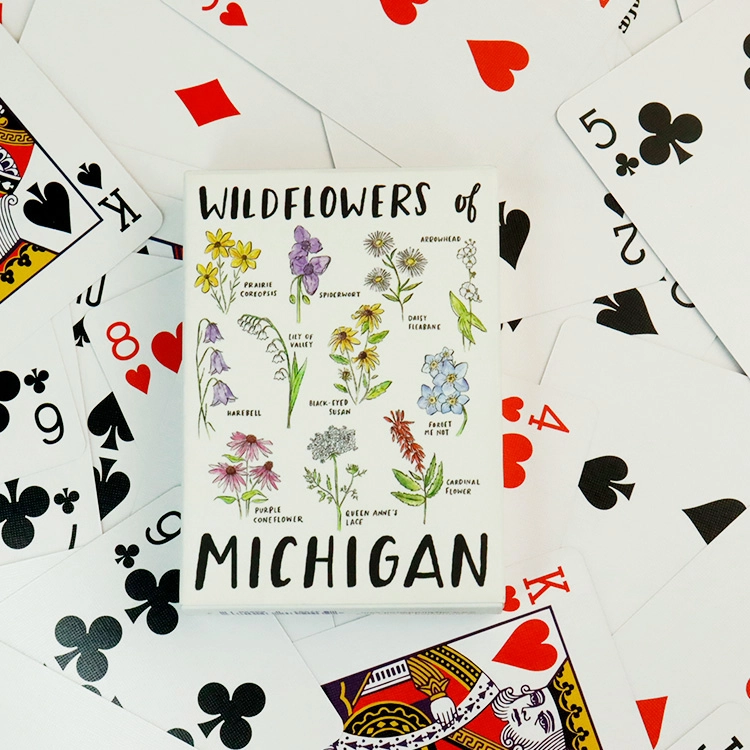
High Quality Eco-Friendly Durable Personalized Design Wildflowers Playing Cards with Custom Design Logo and Box
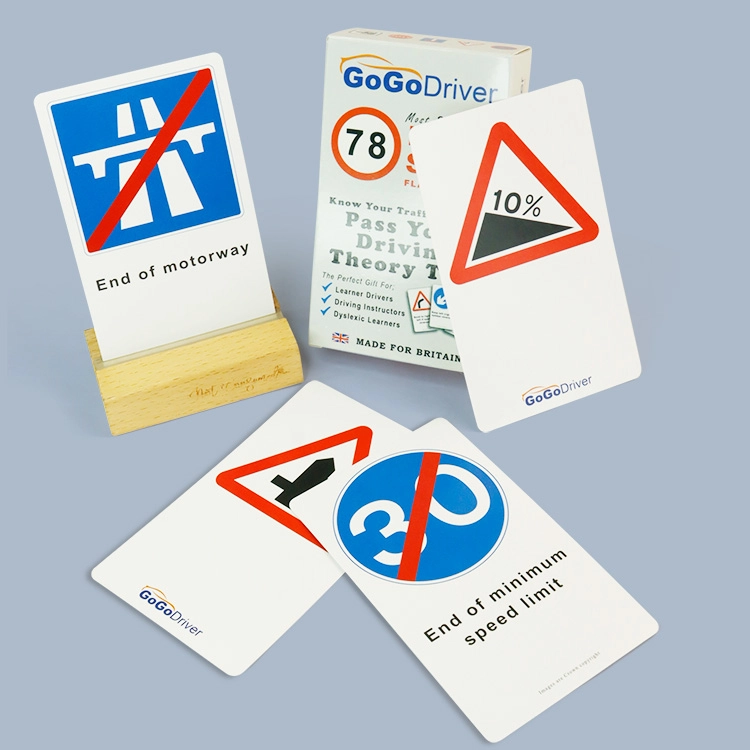
OEM Custom Driving Theory Cards | Personalized Traffic Rules & Test Prep Flashcards in Multiple Languages for Wholesale
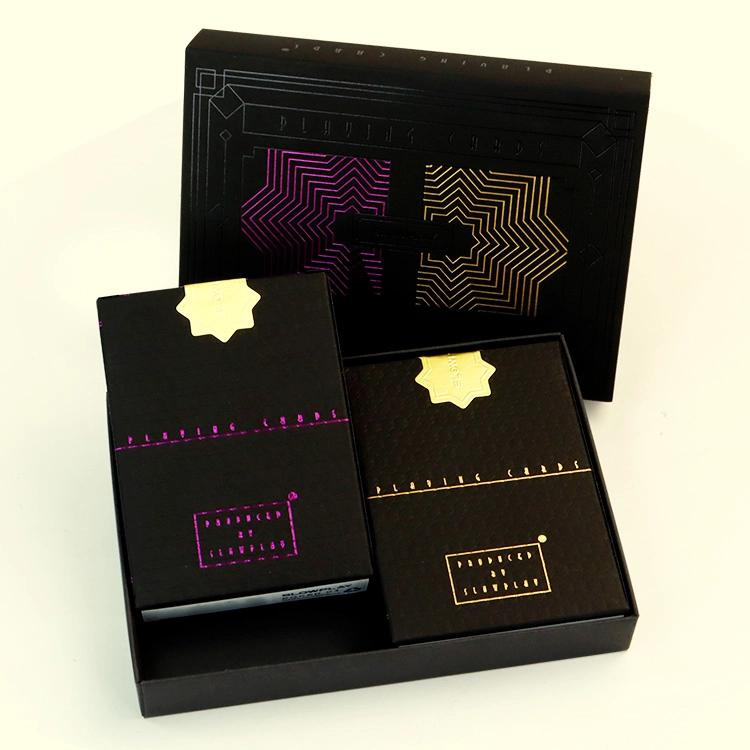
Custom Printing Luxury Two Sets Plastic Poker Playing Cards with Customized Packing
bbilaser
sq_AL