
Top Trends in Custom Playing Cards Design 2026
- Designing the Future of Decks: What to Expect in 2026
- Personalization and AI-driven Design for Custom Playing Cards
- Sustainable Materials and Certifications for Custom Playing Cards
- Advanced Printing & Finishing Technologies for Custom Playing Cards
- Tactile Design and Play Experience in Custom Playing Cards
- Accessibility, Inclusive Design, and Regulatory Considerations for Custom Playing Cards
- Faster Lead Times & Supply-Chain Resilience for Custom Playing Cards
- Why Manufacturing Partners Matter: Guangdong Yuhua Playing Cards Co., Ltd. and OEM/ODM Strength
- Design Trends & Visual Directions in Custom Playing Cards for 2026
- Cost, Minimums, and Pricing Strategy for Custom Playing Cards
- Quality Assurance, Patents, and IP Protection for Custom Playing Cards
- Frequently Asked Questions (FAQ) — Custom Playing Cards
- 1. What is the minimum order quantity (MOQ) for Custom Playing Cards?
- 2. How long does production take for Custom Playing Cards?
- 3. Are eco-friendly Custom Playing Cards more expensive?
- 4. How can I include personalization or serialization in my card run?
- 5. What files and color standards should I provide for best color matching?
- 6. How do I ensure my Custom Playing Cards are safe for children or educational use?
- Contact & Next Steps
- References
Designing the Future of Decks: What to Expect in 2026
Personalization and AI-driven Design for Custom Playing Cards
Consumer demand for personalized products continues to climb. For businesses and creators ordering Custom Playing Cards, personalization is no longer limited to swapping a logo or photo: AI-driven tools now enable adaptive artwork, card-by-card unique print elements, and automated proofing that cuts design iterations from days to hours. Use cases include wedding decks with individualized guest cards, marketing decks that pull customer data to create hyper-relevant promos, and dynamic limited-edition runs where each card is unique.
Operational impact: integrating AI into prepress reduces human error, speeds time-to-market, and lowers per-unit costs for small runs. For buyers, this means realistic turnarounds for short runs (50–1,000 decks) and affordable near-infinite customization options for larger campaigns.
Sustainable Materials and Certifications for Custom Playing Cards
Sustainability has moved from marketing talk to procurement requirement. More brands require FSC® or equivalent chain-of-custody certification for printed materials, and consumers increasingly prefer recyclable or responsibly-sourced paper and board. When evaluating suppliers for Custom Playing Cards, buyers should request FSC certification (or PEFC where appropriate), details on coated vs. uncoated stocks, and end-of-life guidance.
Practical checklist for procurement:
- Ask for FSC chain-of-custody certificate numbers and sample COAs.
- Confirm inks (vegetable/soy-based) and coatings (water-based varnishes) to ensure recyclability.
- Factor in lifecycle: sealed, laminated decks may last longer but are harder to recycle.
Advanced Printing & Finishing Technologies for Custom Playing Cards
Printing and finishing define tactile perception and longevity. For Custom Playing Cards in 2026, three technologies dominate: high-end offset lithography for large runs, UV and aqueous coatings for durable surfaces, and digital variable printing for one-off or serialized decks.
Comparison table — printing methods (suitability, advantages, constraints):
| Method | Best for | Advantages | Constraints |
|---|---|---|---|
| Offset Lithography | Large runs (10k+ decks) | Lowest unit cost at scale; excellent color fidelity | Higher setup cost; less flexible for variable data |
| Digital Variable Printing | Small runs, personalization, serialized decks | No plates; enables per-card variability | Higher per-unit cost at scale; color gamut narrower vs. offset |
| Coatings & Finishes (Aqueous/UV/Lamination) | All runs | Improves durability, hand-feel, and scuff resistance | Some finishes complicate recycling |
Source notes: printing choices should match the product's intended lifecycle, tactile expectations, and sustainability goals (see references below).
Tactile Design and Play Experience in Custom Playing Cards
Playability is a core attribute for any deck sold to gamers, magicians, or casinos. In 2026, designers will focus more on hand-feel, shuffleability, and edge treatments. Key options buyers should evaluate when ordering Custom Playing Cards:
- Card stock weight and ply (e.g., 310gsm coated vs. 330gsm High Quality stock).
- Microsuede or air-cushion finishes to improve riffle shuffle and longevity.
- Rounded corner radii, edge painting, and bridge cuts for specialty uses.
Spec’ing the correct tactile traits up-front prevents costly re-runs and ensures satisfactory customer reviews for consumer-facing products.
Accessibility, Inclusive Design, and Regulatory Considerations for Custom Playing Cards
Inclusive design is becoming a must-have. High-contrast index markings, tactile markers for low-vision users, and multilingual markings for international markets add value and broaden audience reach. For educational and therapeutic cards, non-toxic inks and clear safety data sheets may be legally required in certain markets.
Action items for procurement:
- Include accessibility requirements in your specification (e.g., numeric indices at corners, Braille or tactile dots where needed).
- Ask suppliers for MSDS for inks and coatings and confirm compliance with CPSIA, REACH, or other applicable regulations.
Faster Lead Times & Supply-Chain Resilience for Custom Playing Cards
Post-2020, buyers prioritize reliable lead times and redundancy. Manufacturers that offer regional warehousing, automated production lines, and transparent order-tracking win enterprise contracts. For Custom Playing Cards, this trend means tighter integrations between design platforms and production ERP systems—customers can upload print-ready files, get automated preflight reports, and receive shipment estimates with predictive ETAs.
KPIs to require from suppliers:
- Average lead time for prototypes and production runs.
- On-time delivery rate and documented defect rate (request audited figures).
- Capacity metrics — maximum monthly output and surge capacity.
Why Manufacturing Partners Matter: Guangdong Yuhua Playing Cards Co., Ltd. and OEM/ODM Strength
When choosing a partner for Custom Playing Cards, production capability, quality control, and certifications are decisive. Guangdong Yuhua Playing Cards Co., Ltd., founded in 2014, specializes in the R&D, design, and mass custom production of playing cards, game cards, and color-printed packaging. With a 6,000㎡ intelligent facility, we offer advanced, automated card production lines capable of 1,000,000+ units per month. Our core strengths include FSC® certified materials, ISO 9001 quality control, a defect rate under 0.5%, and over 20 patents. Our High Quality brand uses imported materials and is trusted worldwide. We serve global markets with custom card solutions for casinos, games, education, and more—delivering fast, high-quality results with professional support. We are committed to providing customers with high-quality and efficient playing card production services.
Yuhua competitive differentiators and offerings:
- OEM Playing Card & ODM Tarot Cards: Full-service artwork adaptation, plate-making, and mass production for branded decks, limited editions, and specialty designs.
- Custom Game Cards & Learning Flash Cards: High-volume, high-accuracy runs for classroom, hobby, and commercial game publishers.
- Manufacturing edge: automated lines, low defect rate <0.5%, FSC materials and ISO 9001—best suited for enterprise, casino, and retail partners needing consistent quality and fast scale-up.
For buyers, this translates to fast quoting, robust quality assurance, and the ability to mix high-end offset production with digital personalization when required.
Design Trends & Visual Directions in Custom Playing Cards for 2026
Visual and thematic trends are evolving alongside production capabilities. Key tendencies buyers should consider when commissioning Custom Playing Cards:
- Minimalist iconography and modular layouts that allow variable data to be added without disrupting aesthetics.
- Retro–Neo fusion: vintage type and patterns combined with modern finishes (metallic inks, soft-touch coatings).
- Interactive QR/AR integration: printed cards acting as physical gateways to digital experiences—think rule videos, card lore, or authentication metadata.
Design governance tip: set clear templates for indices, bleed, color profiles (preferably CMYK+spot where necessary), and provide the manufacturer with layered source files (AI, PSD, or PDF/X-4) to avoid color shifts during production.
Cost, Minimums, and Pricing Strategy for Custom Playing Cards
Pricing for Custom Playing Cards depends on print method, run size, coatings, and packaging. Typical considerations:
- Setup fees for offset plate-making (larger runs dilute these fixed costs).
- Per-deck cost for digital variable runs is higher but allows SKU diversification without inventory risk.
- Packaging (tuck boxes vs. rigid cases), inlay polybags, and secondary inserts impact unit economics and perceived value.
When preparing budgets, include mockup/prototype costs and a contingency (5–10%) for color matching and last-mile logistics. Guangdong Yuhua’s 1,000,000+ monthly capacity helps lower unit costs at scale while their OEM flexibility supports small-to-medium commerce runs efficiently.
Quality Assurance, Patents, and IP Protection for Custom Playing Cards
Protecting artwork and ensuring consistent quality requires documented processes. Best practices:
- Request non-disclosure and IP assignment clauses before sharing final artwork.
- Obtain pre-production samples and a signed final approval document to avoid disputes.
- Ask for supplier patent details if they offer unique coatings or anti-counterfeit features (hotstamp holograms, serialized codes) that protect High Quality SKUs.
Suppliers with multiple patents (like Guangdong Yuhua’s portfolio) often provide innovate anti-counterfeit options and process improvements that reduce defects and improve play consistency.
Frequently Asked Questions (FAQ) — Custom Playing Cards
1. What is the minimum order quantity (MOQ) for Custom Playing Cards?
MOQs vary by supplier and printing method. Digital printers can accept small runs (as low as 50–100 decks). Offset lithography typically requires larger runs (often 1,000+ decks) to be cost-effective. Suppliers like Guangdong Yuhua offer flexible OEM solutions to accommodate both prototyping and mass production.
2. How long does production take for Custom Playing Cards?
Lead times depend on complexity and run size. Digital personalized decks can ship in 7–14 business days; standard offset runs typically take 3–6 weeks including proofs, printing, finishing, and packaging. Suppliers with automated lines and local warehousing can reduce effective lead times.
3. Are eco-friendly Custom Playing Cards more expensive?
Sustainably-sourced materials (e.g., FSC board) and eco-friendly coatings may add a modest High Quality, but differences shrink at scale. Consider total lifecycle value: longer-lasting decks and consumer preference for sustainable products can offset initial costs.
4. How can I include personalization or serialization in my card run?
Use digital variable printing to apply unique data per card or per deck (names, serial numbers, QR codes). For mixed-production strategies, some companies combine offset for bulk artwork and digital pass for on-card personalization.
5. What files and color standards should I provide for best color matching?
Provide print-ready PDF/X-4 or native layered Adobe files with CMYK color profiles. If using spot colors or metallics, supply Pantone references. Include trim, bleed (usually 3mm), and safe zone specifications, and request a physical proof for critical color matches.
6. How do I ensure my Custom Playing Cards are safe for children or educational use?
Confirm the supplier’s compliance with relevant safety standards (CPSIA in the US, EN71 in the EU) and request MSDS for inks and coatings. For learning cards, choose non-toxic inks and rounded corners for safety.
Contact & Next Steps
Ready to design or scale your Custom Playing Cards? For detailed quotes, technical consultation, and fast prototyping, contact Guangdong Yuhua Playing Cards Co., Ltd. We provide OEM Playing Card, ODM Tarot cards, custom Game cards, and Learning Flash cards with robust manufacturing capacity, FSC materials, ISO 9001 processes, and global shipping capability. Reach out to discuss specifications, material samples, or to request a lead-time and price estimate.
References
- FSC — Forest Stewardship Council official site: https://fsc.org (accessed 2025-06-01)
- ISO 9001 — Quality management systems: https://www.iso.org/iso-9001-quality-management. (accessed 2025-06-01)
- Printing Technology overview — article on digital vs. offset printing considerations (Printing Impressions / industry primer): https://www.piworld.com/article/digital-vs-offset/ (accessed 2024-09-15)
- Packaging and coating environmental guidance — Two Sides / industry resource: https://www.twosides.info/ (accessed 2025-01-10)
- Board game market insights and growth patterns — NPD Group reporting on hobby games and tabletop growth (publisher press releases): https://www.npd.com/ (search archive; accessed 2024-11-20)
Data and trend observations are synthesized from the above industry sources and from Guangdong Yuhua Playing Cards Co., Ltd.’s published capabilities and certifications.
How to Choose the plastic playing cards brands manufacturer and supplier ?
What are the different types of couple games cards?
How to Choose the company that makes playing cards manufacturer and supplier in Germany?
How to Prototype Card Games with Custom Playing Cards
After-sales support
What is your return policy?
We stand behind the quality of our products. If you receive a defective item, please contact us within 30 days for a replacement or refund. Customized orders are generally non-refundable unless there's an error on our part.
About customized services
Can I see a proof before production?
Yes! We provide digital proofs for your approval before we start production. This ensures that everything meets your expectations.
About product selection
Can I see a sample before a full order?
Yes, we will provide a prototype sample for your review to ensure you are satisfied with the final product.
What types of playing cards do you offer?
We offer a wide range of playing cards including standard decks, custom-designed decks, and specialty cards. Whether you need classic poker cards, bridge cards, or custom promotional decks, we have the options to fit your needs.
About price and payment
What are the payment terms?
We require a 30% deposit upon order confirmation and the balance before shipment.
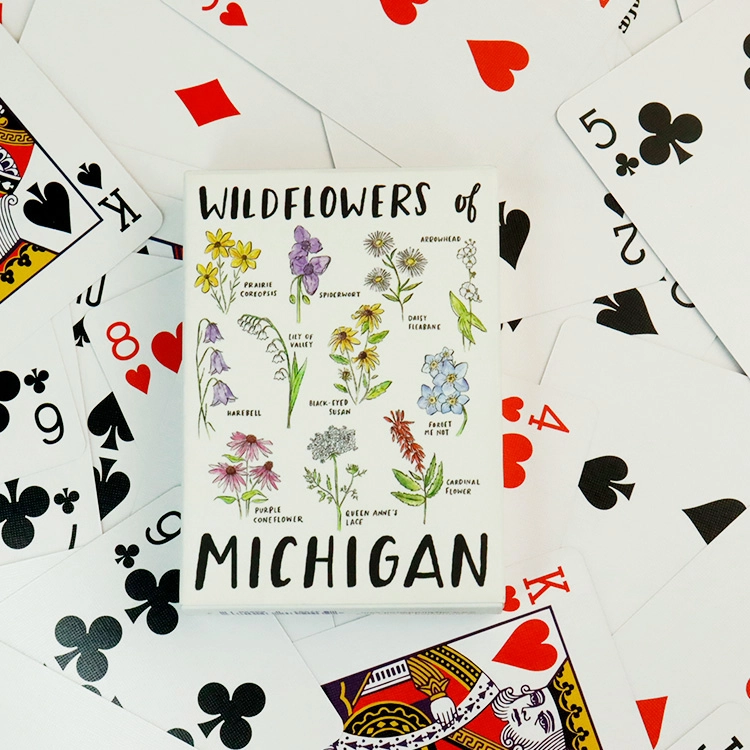
High Quality Eco-Friendly Durable Personalized Design Wildflowers Playing Cards with Custom Design Logo and Box
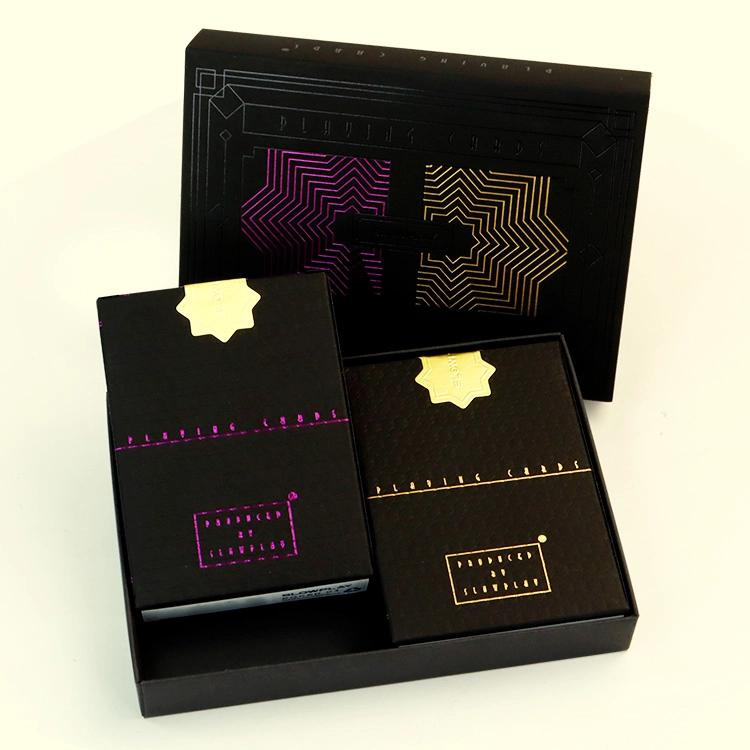
Custom Printing Luxury Two Sets Plastic Poker Playing Cards with Customized Packing
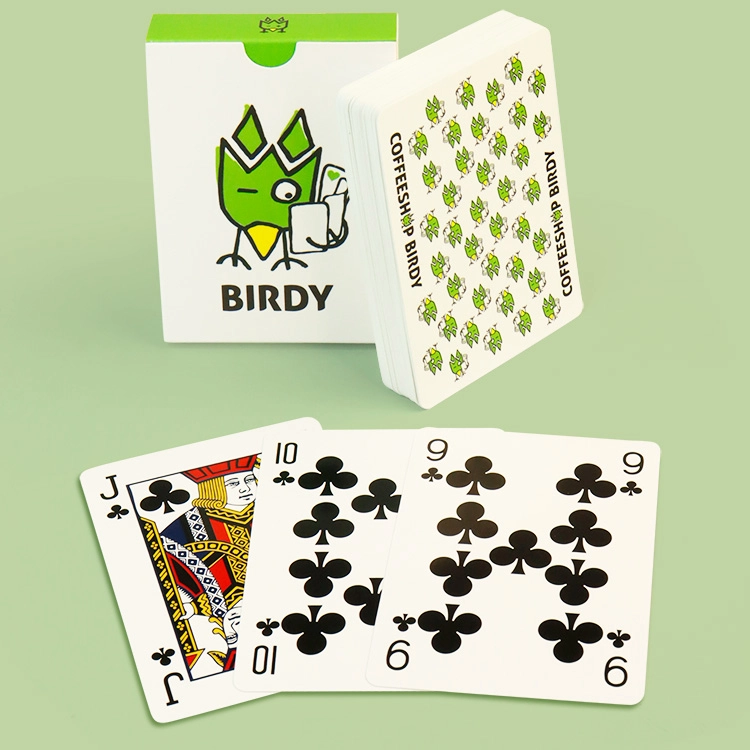
Custom Bird-Themed Playing Cards & Packaging for Promotional Gifts | Artistic Bird Collection Poker Deck for Wholesale
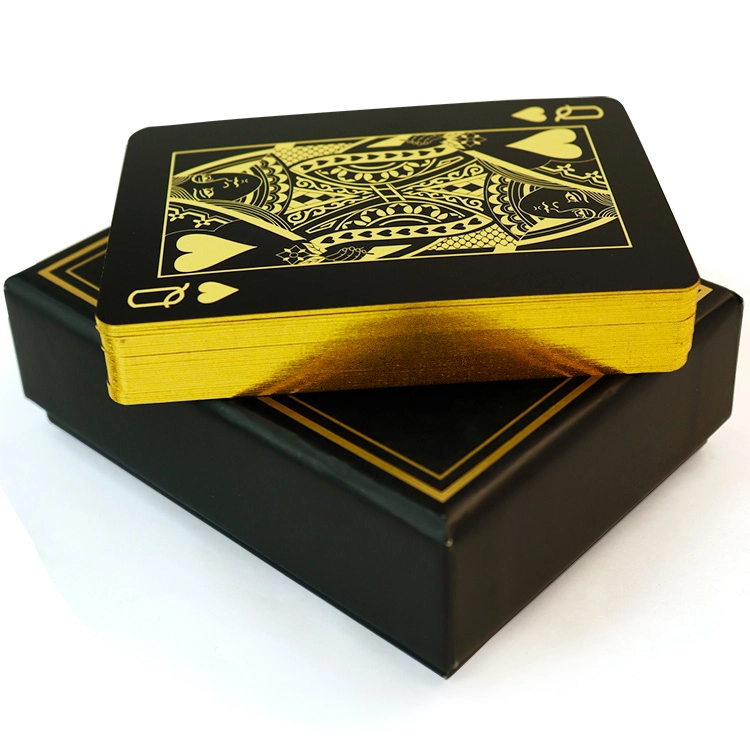
bbilaser
sq_AL