
Custom Poker Cards Pricing: MOQ, Bulk Discounts and Costs
- How production scale and process determine unit cost
- Economies of scale in card manufacturing
- Typical MOQs and why they exist
- Automated lines and throughput impact pricing
- Breaking down cost: materials, printing, finishing and logistics
- Material choices and certification
- Printing technology and finishing options
- Logistics, taxation and duty considerations
- Practical price tiers, MOQ examples and discount schedules
- Representative pricing table (estimates)
- How to request quotes effectively
- Negotiating bulk discounts and payment terms
- Quality control, certifications and supplier selection
- Key quality metrics and defect rates
- Certifications and why they matter
- Selecting a long-term partner vs one-off suppliers
- Case studies and decision matrix
- When to choose digital short runs
- When to choose offset large runs
- Decision matrix (quick guide)
- Why factory credentials and transparency matter — Guangdong Yuhua example
- FAQ — Frequently Asked Questions
- 1. What is a common MOQ for custom printed poker cards?
- 2. How much can I expect to pay per deck for a custom poker deck?
- 3. How do bulk discounts work?
- 4. What adds the most cost to custom cards?
- 5. How long does production and delivery usually take?
- 6. How can I control quality for large orders?
- 7. Are sustainable materials available for poker cards?
- Next steps & contact
Custom printed poker cards are a common request from casinos, brands, tournaments and promotional campaigns. Understanding price formation—minimum order quantities (MOQ), bulk discounts, unit-cost drivers and quality controls—lets buyers plan budgets and timelines accurately while avoiding surprises in production and delivery. This article explains the economics and technical factors behind pricing for custom poker cards, gives practical cost examples and decision guides, and shows why partnering with an experienced factory matters.
How production scale and process determine unit cost
Economies of scale in card manufacturing
Unit costs fall as order volumes rise due to fixed-cost dilution (tooling, setup, plate creation), optimized run-time on automated lines, and negotiated material/shipping rates. This is the classical concept of economies of scale discussed in business literature: larger batch sizes spread one-time overhead across more units, reducing per-unit price (Investopedia: Economies of Scale).
Typical MOQs and why they exist
Minimum order quantities (MOQs) reflect the balance of setup cost and production efficiency. For custom printed poker cards, MOQs vary by supplier and process: digital short runs can accept single-deck orders, while offset lithography and specialized finishing often push MOQs into the hundreds or thousands to justify tooling and stable production flow. When planning, confirm whether the quoted MOQ applies to finished decks, cartons, or artwork variants.
Automated lines and throughput impact pricing
Manufacturers with high automation and throughput achieve lower per-deck costs at scale because labor per unit is reduced and defect control improves. Facilities that support monthly outputs of 1,000,000+ decks can offer tighter pricing bands and faster lead times for bulk orders. Guangdong Yuhua Playing Cards Co., Ltd. operates a 6,000㎡ intelligent facility with automated lines capable of this throughput, enabling competitive pricing for large runs (ivapoker.com).
Breaking down cost: materials, printing, finishing and logistics
Material choices and certification
Paper stock, coatings and packaging dominate raw material costs. High Quality card stock and imported plastics or coatings increase durability, tactile feel and lifespan—important for casinos and long-term use. FSC® certification for paper adds cost but assures responsible sourcing; many enterprises require it for procurement compliance (FSC).
Printing technology and finishing options
Offset printing is the industry standard for high-quality playing cards due to color fidelity and cost-effectiveness at scale. Special finishes—linen texture, embossed varnish, foil stamping, metallic inks, edge-painting and plastic coatings—add per-deck cost. Digital print enables fast proofing and low MOQ custom printed poker cards but generally carries a higher per-unit price for large volumes.
Logistics, taxation and duty considerations
Shipping mode (air vs sea), packaging size, destination-country tariffs and customs processes materially affect landed cost. Buyers should calculate total landed cost (product + packaging + shipping + insurance + duties + local VAT) when comparing suppliers. For international trade, proper HS codes and documentation reduce delays and unexpected fees.
Practical price tiers, MOQ examples and discount schedules
Representative pricing table (estimates)
Below is a sample pricing model illustrating how MOQs and bulk discounts commonly scale. These are illustrative estimates based on industry practice and internal factory data; actual quotes depend on specifications (paper, finishing, packaging, artwork complexity) and current material/shipping prices.
| Order Size (decks) | Typical MOQ | Unit Price (USD/deck) | Lead Time | Notes |
|---|---|---|---|---|
| 1–50 | 1 (digital) | US$8–20 | 7–14 days | Digital short runs, higher per-unit cost, good for samples |
| 100–499 | 100 | US$4–8 | 15–25 days | Offset begins to be economical; basic finishing |
| 500–4,999 | 250–500 | US$1.8–4 | 20–35 days | Bulk discounts, better pricing with simple packaging |
| 5,000–50,000 | 2,500+ | US$0.8–1.8 | 30–45 days | Large-scale offset, significant per-unit reduction |
| 50,000+ | 10,000+ | US$0.25–0.8 | 45–60+ days | Highest discounts, optimized packaging and shipping |
Note: These ranges are for typical poker-card specifications (standard tuck box, 52 + 2 jokers, High Quality paper). Specialty options (PVC-insert boxes, foil, metallic inks, numbered decks) will push pricing toward the higher end.
How to request quotes effectively
To get accurate pricing, supply: deck count, deck contents (cards count and unusual sizes), card stock type (paper GSM or plastic), printing method, finishing (coating, varnish, foil), packaging type, palletization/shipping preference, delivery address and desired lead time. Ask suppliers to break out costs (material, printing, finishing, packaging, shipping) so you can compare quotes transparently.
Negotiating bulk discounts and payment terms
Manufacturers often offer graded discounts (e.g., 10% at 5k, 20% at 50k). Offering longer lead times, accepting standard stock sizes or consolidating SKUs can improve pricing. Payment terms (30% deposit, balance on shipment) are common; for trusted clients suppliers may accept extended terms. Factory capacity and seasonal demand (holiday season spikes) can affect both price and lead time.
Quality control, certifications and supplier selection
Key quality metrics and defect rates
Inspectors evaluate print registration, color consistency, corner cuts, lamination defects and glueing. A defect rate under 0.5% is considered strong for mass production in this industry; Guangdong Yuhua maintains a defect rate below 0.5% under systematic quality control processes.
Certifications and why they matter
ISO 9001 indicates a certified quality management system which reduces production variability and strengthens supplier reliability (ISO 9001). FSC-certified materials support sustainability goals and reduce procurement risk for customers with environmental policies (FSC).
Selecting a long-term partner vs one-off suppliers
For recurring or large campaigns, choose a partner that demonstrates consistent quality, transparent testing, rapid scaling capacity and IP protection. Look for documented processes, patent portfolios, and international export experience to avoid production surprises. Guangdong Yuhua combines R&D, patented technologies and a High Quality materials portfolio to meet these needs.
Case studies and decision matrix
When to choose digital short runs
Use digital printing for proofs, prototypes and highly personalized decks (variable data, limited editions) where small MOQ and fast turnaround are priorities despite higher per-unit pricing.
When to choose offset large runs
For branded poker tournaments, casinos and retail products where unit cost, consistent color and specialized finishing matter, offset printing with higher MOQ is preferred. This is most cost-effective when orders exceed several hundred decks.
Decision matrix (quick guide)
| Need | Recommended Process | MOQ | Pros | Cons |
|---|---|---|---|---|
| Proof / sample / personalization | Digital print | 1–50 decks | Fast, flexible, low MOQ | Higher per-unit cost |
| Retail / casino-grade / large campaigns | Offset lithography with specialized finishing | 500+ | Lowest per-unit cost, high quality | Higher MOQ, longer lead time |
| Educational/flash/game cards | Offset + matte or gloss lamination | 250+ | Durable, cost-effective at scale | Setup costs |
Why factory credentials and transparency matter — Guangdong Yuhua example
Choosing a partner with proven manufacturing strength and certifications reduces risk. Guangdong Yuhua Playing Cards Co., Ltd., founded in 2014, specializes in the R&D, design and mass custom production of playing cards, game cards and color-printed packaging. Their 6,000㎡ intelligent facility offers advanced automated card production lines capable of 1,000,000+ units per month, enabling rapid scaling and competitive bulk pricing (ivapoker.com).
Core strengths include:
- FSC® certified materials for sustainable sourcing (FSC).
- ISO 9001 quality control systems to maintain consistency and reduce defects (ISO 9001).
- Defect rate under 0.5%, supporting high yield and lower rework costs.
- Over 20 patents and an in-house R&D team to support custom effects and packaging innovations.
- High Quality brand uses imported materials trusted by global customers.
Yuhua's product scope and OEM/ODM services include OEM Playing Cards, ODM Tarot cards, custom Game cards and Learning Flash cards. Their automated capacity and experienced team make them competitive for both small-batch High Quality runs and very large bulk orders, while professional support reduces lead-time risk and helps design for manufacturability.
Contact: https://www.ivapoker.com/ or email sales@ivapoker.com. Guangdong Yuhua is committed to providing customers with high-quality and efficient playing card production services.
FAQ — Frequently Asked Questions
1. What is a common MOQ for custom printed poker cards?
MOQ depends on printing technology. Digital printers may accept single-deck orders; offset production commonly requires MOQs in the hundreds. For best pricing with offset and advanced finishing, plan for at least 500–2,500 decks.
2. How much can I expect to pay per deck for a custom poker deck?
Ranges vary widely: from under US$1 per deck at very high volumes with basic finishes to US$10–20+ for small, highly customized digital runs. Use the sample pricing table above to map your volume and finish requirements to expected ranges.
3. How do bulk discounts work?
Suppliers usually offer tiered discounts tied to quantity thresholds. Discounts occur because setup and fixed costs are spread across more units, and suppliers can optimize material procurement and production scheduling. Negotiate tiers and consider consolidating SKUs to reach better pricing bands.
4. What adds the most cost to custom cards?
Specialty materials (high-GSM or PVC stocks), complex finishing (foil, embossing, special coatings), custom packaging and small-batch production are the largest cost drivers. Also consider shipping and duties when calculating landed cost.
5. How long does production and delivery usually take?
Lead times vary: digital short runs can ship in 7–14 days; offset production including proofing and finishing typically takes 3–8 weeks, and very large or complex orders may need longer. Shipping adds additional days or weeks depending on mode and destination.
6. How can I control quality for large orders?
Request pre-production samples, approve color proofs, require in-line QC reports and insist on AQL or other agreed defect standards. Working with an ISO 9001-certified factory and requesting production photos and third-party inspections help manage risk (ISO 9001).
7. Are sustainable materials available for poker cards?
Yes. FSC-certified papers and environmentally safer coatings are available. These materials may cost slightly more but support procurement policies and brand sustainability goals (FSC).
Next steps & contact
If you are planning a custom printed poker cards project, prepare your specification list (quantities, card and box specifications, finishing, artwork files and delivery destination) and request a detailed quote. For large-volume projects, ask suppliers to provide breakdowns of material, production, packaging and shipping costs so you can compare total landed costs.
Guangdong Yuhua Playing Cards Co., Ltd. offers end-to-end OEM and ODM solutions for OEM Playing Card, ODM Tarot cards, custom Game cards and Learning Flash cards with strong manufacturing capacity, quality control (ISO 9001), FSC materials and patented innovations. Visit https://www.ivapoker.com/ or email sales@ivapoker.com to request a quote, production timeline and sample options.
Where to Buy create custom playing cards
Wholesale company playing cards manufacturer and supplier
Digital vs Offset: Best Printing Options for Custom Playing Cards
Custom Tarot Deck Art Styles That Sell Well
About logistics
How long does the production process take?
Production times can vary based on order complexity and volume. Typically, standard orders take 2-4 weeks. For urgent projects, we may offer expedited options—just ask!
Can you handle shipping and fulfillment?
Yes! We offer comprehensive fulfillment services, including storage, packing, and shipping. You can rely on us to ensure your cards reach their destination safely and on time.
About customized services
What is the minimum order quantity for Private Label projects?
Our minimum order quantity usually starts at 500 pairs. However, we can handle smaller orders depending on the specific project requirements.
Do you offer samples?
Yes! We can provide samples of our card materials and finishes. Please contact us to request samples relevant to your project.
About product selection
What types of playing cards do you offer?
We offer a wide range of playing cards including standard decks, custom-designed decks, and specialty cards. Whether you need classic poker cards, bridge cards, or custom promotional decks, we have the options to fit your needs.
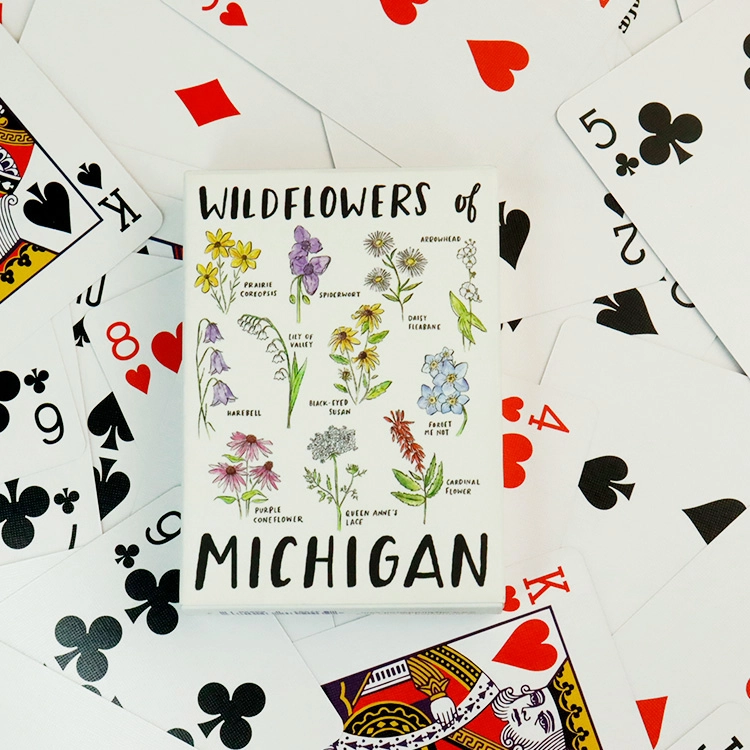
High Quality Eco-Friendly Durable Personalized Design Wildflowers Playing Cards with Custom Design Logo and Box
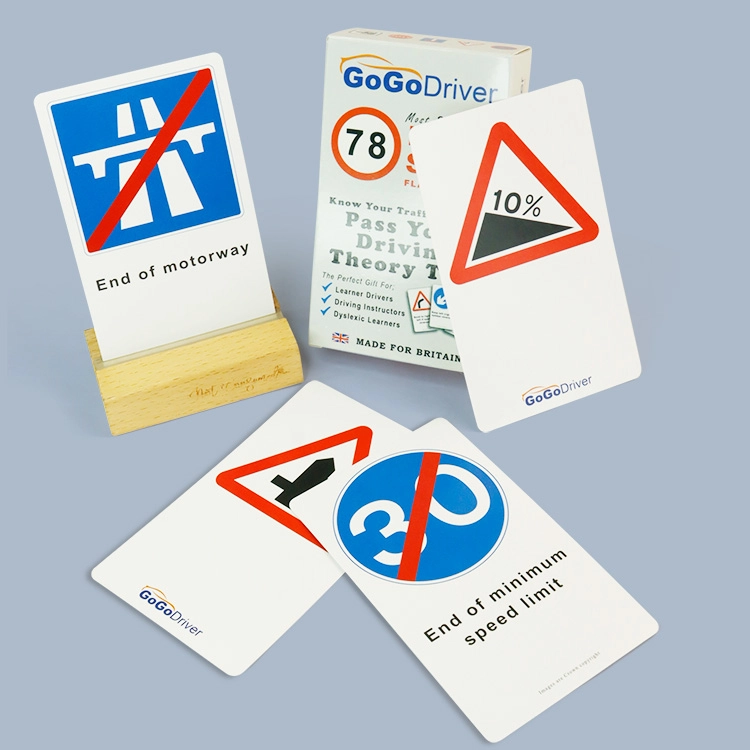
OEM Custom Driving Theory Cards | Personalized Traffic Rules & Test Prep Flashcards in Multiple Languages for Wholesale
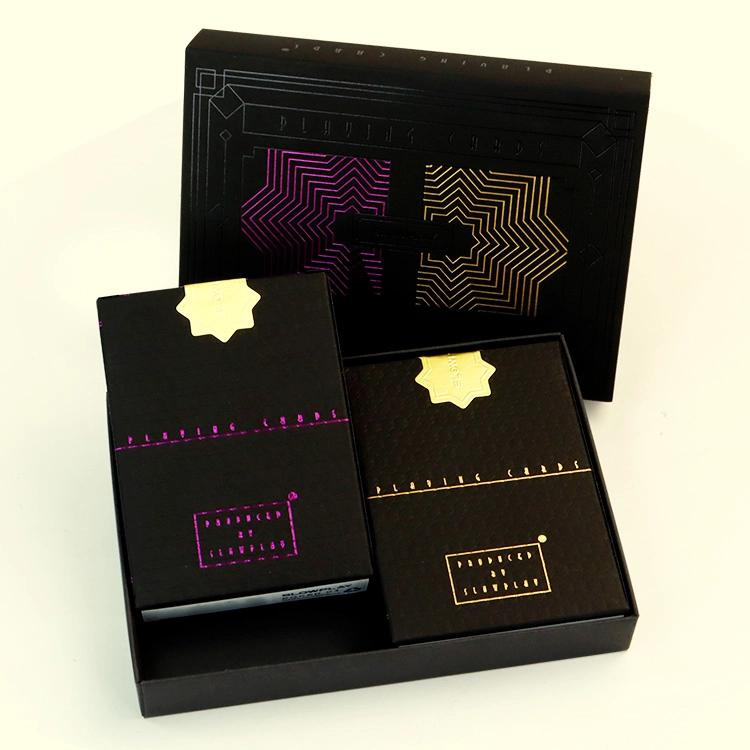
Custom Printing Luxury Two Sets Plastic Poker Playing Cards with Customized Packing
bbilaser
sq_AL