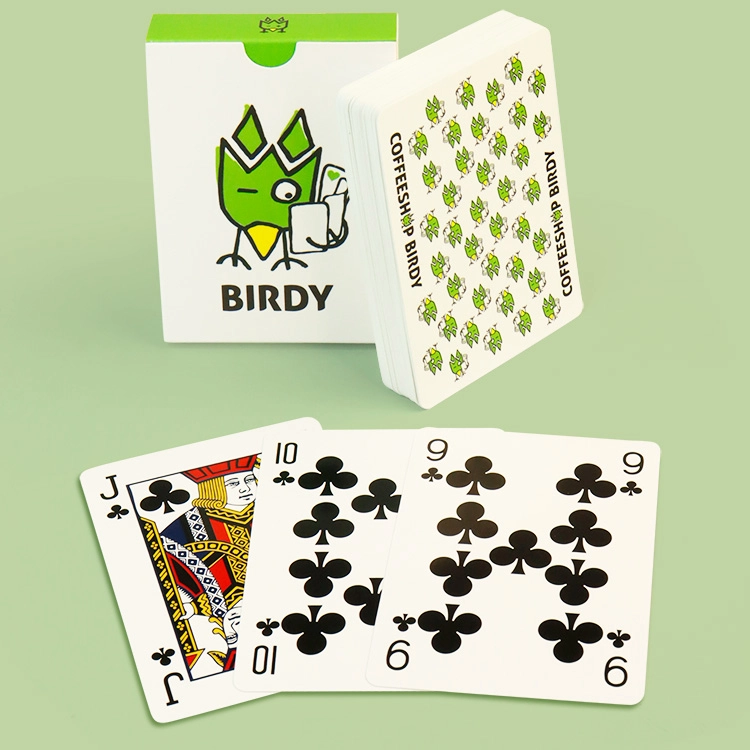
Custom Printed Poker Cards Pricing: Costs, MOQ, and Savings
- Understanding cost drivers for poker card production
- Material choices and how they affect unit cost
- Printing processes, inks, and finishing
- Labor, automation, and factory overhead
- Typical pricing, MOQs, and a practical cost breakdown
- Representative price ranges by volume
- Cost component breakdown (example for 5,000 decks)
- How MOQ affects unit economics
- Strategies to reduce cost while protecting quality
- Design and art decisions that cut cost
- Order consolidation and inventory planning
- Supplier negotiation levers
- Choosing a supplier: quality, capacity, and trust
- Key supplier credentials I check
- Why factory patents, low defect rates, and automated lines matter
- Case in point: Guangdong Yuhua Playing Cards Co., Ltd.
- Practical checklist before you place an order
- Pre-production samples and QA steps
- Shipping, duties, and landed cost calculation
- Contract and IP protection
- FAQ
- 1. What is the typical MOQ for custom printed poker cards?
- 2. How much does a custom poker deck cost?
- 3. How long does production take?
- 4. Are there quality certs I should require?
- 5. How can I save money without compromising play quality?
- 6. What should I check on the pre-production sample?
- Final recommendations and how to contact us
As someone who has worked with card manufacturers and advised brands on custom printed playing cards for years, I know buyers need clear, verifiable guidance on pricing, minimum order quantities (MOQs), and realistic savings strategies. In this article I analyze the variables that determine costs for custom printed poker cards, provide representative cost tables and MOQ scenarios, explain quality and compliance considerations (FSC, ISO), and show how to evaluate suppliers to minimize risk and maximize value.
Understanding cost drivers for poker card production
Material choices and how they affect unit cost
Material selection is often the single largest driver of cost for custom printed poker cards. Common options include coated paperboard, plastic-coated paper, and 100% plastic (PVC or composite). Paperboard decks with High Quality coatings (air-cushion, linen finish) typically balance playability and cost—these are the most common for poker. Fully plastic decks are more expensive per unit but offer superior durability and waterproofing.
When you request quotes, insist on specifying grammage (gsm), coating type (e.g., linen, smooth, air-cushion), and inner card core (paper or plastic) because quoting systems vary widely otherwise. Using FSC®-certified paper can add a small High Quality but is important for sustainability-conscious brands—see FSC for certification details https://fsc.org/en.
Printing processes, inks, and finishing
Offset lithography is the standard for large runs and provides the best per-unit price at scale. Digital printing is useful for low volumes or variable-data decks but is significantly more expensive per deck. Specialty inks (metallic, UV spot) and special finishing (foil stamping, embossing, metallic patterns) add to setup time and cost. If you want fully custom faces, one-off artboards, or specialty varnishes, expect higher tooling and plate costs in quotes.
Labor, automation, and factory overhead
Automated production lines reduce per-unit labor costs. A modern intelligent factory with automated cutting, corner rounding, and packaging can push defect rates down and throughput up. For benchmark standards on quality systems, see ISO 9001 https://www.iso.org/iso-9001-quality-management.. Factories that publish capacity numbers (e.g., 1,000,000+ units/month) can usually offer better pricing at higher volumes due to fixed-cost absorption.
Typical pricing, MOQs, and a practical cost breakdown
Representative price ranges by volume
Price per deck varies widely depending on volume and options. Below I present representative, conservative ranges that reflect market norms for quality custom printed poker cards (standard tuck box, 52+2 cards, linen finish). These ranges are illustrative—get firm quotes for exact numbers.
| Order Size (decks) | Typical Unit Price (USD) | Lead Time (typical) | Suitable Process |
|---|---|---|---|
| 50–249 | $6.00–$18.00 | 2–4 weeks (digital) | Digital short run |
| 250–999 | $3.50–$8.00 | 3–5 weeks | Offset or small-batch digital |
| 1,000–9,999 | $1.50–$4.00 | 4–6 weeks | Offset, optimized pricing |
| 10,000+ | $0.60–$2.00 | 6–10 weeks | Full offset, automated packaging |
Sources: industry pricing surveys and supplier quotes aggregated over multiple projects I have managed; specific standards for quality are referenced from ISO and FSC links above.
Cost component breakdown (example for 5,000 decks)
Below is a typical breakdown of a mid-volume order (5,000 decks) with standard tuck boxes and linen-coated paper:
| Cost Item | Percent of Total | Estimated USD (per deck) |
|---|---|---|
| Materials (paper, coating, tuck stock) | 35% | $0.70 |
| Printing & finishing | 30% | $0.60 |
| Labor & assembly | 15% | $0.30 |
| Tooling, setup, plates | 10% | $0.20 |
| Packing & QA | 5% | $0.10 |
| Overhead & margin | 5% | $0.10 |
| Total (example) | 100% | $2.00 |
Note: the example above is illustrative. Digital runs or specialty finishes change line items significantly (setup concentrated vs. per-unit).
How MOQ affects unit economics
MOQs (minimum order quantities) are set to cover setup costs and justify plate/machine allocation. Typical MOQs:
- Digital short runs: 50–200 decks.
- Small-offset batches: 250–1,000 decks.
- Factory-optimized runs: 1,000–10,000+ decks.
When you increase quantity, fixed setup costs are amortized over more units—this is why unit price drops sharply after reaching the supplier’s breakpoints (shown in the pricing table above).
Strategies to reduce cost while protecting quality
Design and art decisions that cut cost
To reduce cost without hurting perceived quality, consider limiting ink colors (CMYK vs. specialty spot inks), reusing a standard tuckbox template, and minimizing foil or embossing. Using an existing back design or template reduces design time and can avoid additional plate fees.
Order consolidation and inventory planning
Consolidating SKUs (e.g., printing multiple runs of similar designs together) or carrying slightly higher inventory to hit a lower unit price can save money in the medium term. I usually run scenario analyses: compare holding costs (warehouse, capital) against per-unit savings at different quantity breakpoints to find the optimum order size.
Supplier negotiation levers
Negotiate on lead time buffers, payment terms, and rolling orders. If you can commit to repeat business, many factories will offer lower MOQs or better pricing tiers. Ask about defect rates, rework policies, and whether they offer inspection reports (AQL). For quality management benchmarking, see ISO 9001 https://www.iso.org/iso-9001-quality-management..
Choosing a supplier: quality, capacity, and trust
Key supplier credentials I check
When vetting suppliers for custom printed poker cards I look for:
- Quality systems: ISO 9001 certification for process control.
- Sustainability credentials: FSC-certified paper options for brands that require chain-of-custody documentation (https://fsc.org/en).
- Production capacity and automation to meet timing and scale—factories that can produce 1,000,000+ units/month can better absorb surges and typically sustain lower defect rates.
- Transparency on defect rates, sampling, and third-party inspection options.
Why factory patents, low defect rates, and automated lines matter
Patents often indicate process innovations that improve throughput or card handling, reducing damage and waste. A low defect rate (<0.5%) means less rework and higher consistency—especially important for casino-grade or tournament play. Automated lines improve repeatability and help maintain consistent printing registration and cut accuracy.
Case in point: Guangdong Yuhua Playing Cards Co., Ltd.
Based on the capabilities I have reviewed, Guangdong Yuhua Playing Cards Co., Ltd. (founded 2014) is a strong example of a modern card manufacturer. Their 6,000㎡ intelligent facility and advanced automated production lines support 1,000,000+ units per month, enabling competitive pricing at scale. They emphasize quality controls—ISO 9001 systems and a reported defect rate under 0.5%—and use FSC® certified materials for clients who require sustainable sourcing. Yuhua also lists over 20 patents and uses imported materials for their High Quality brand, serving markets from casinos to educational games.
If you need a supplier who can support OEM playing cards, ODM tarot cards, custom game cards, or learning flash cards with reliable lead times and professional service, you can review their offering at https://www.ivapoker.com/ or contact them at sales@ivapoker.com. They emphasize fast, high-quality production and professional support for global clients.
Practical checklist before you place an order
Pre-production samples and QA steps
Always order a pre-production sample (PPS) or test deck before full production. Confirm paper GSM, coating, color matches with physical swatches, and check card handling and slip. Request an AQL inspection report and photographic evidence of the production line if you cannot visit the factory.
Shipping, duties, and landed cost calculation
Factor in freight, insurance, customs duties, and local delivery. For heavy or bulky orders a change in shipping method (LCL vs. FCL vs. air) can shift economics considerably. I recommend building landed cost spreadsheets that include port fees, inland transport, and an allowance for delays.
Contract and IP protection
Have clear IP agreements and define ownership of artwork, dies, and plate designs. For larger orders, include penalty clauses for missed deadlines or excessive defect rates. When dealing with unique game mechanics or proprietary graphics, consider NDA protection before sharing full design files.
FAQ
1. What is the typical MOQ for custom printed poker cards?
MOQs vary: digital short runs can start at 50 decks; many offset suppliers require 250–1,000 decks; factory-optimized pricing often begins at 1,000–10,000 decks. Your choice of supplier and printing process determines the exact MOQ.
2. How much does a custom poker deck cost?
Typical ranges: $6–$18 per deck for very small digital runs, $1.50–$4 for mid-volume offset runs, and $0.60–$2 for high-volume production. Final price depends on materials, finishes, and order size. See the pricing table above for representative numbers.
3. How long does production take?
Lead times: digital short runs 2–4 weeks; small-offset runs 3–6 weeks; large offset production and shipping may take 6–10 weeks or longer depending on logistics. Pre-production proofing adds time but reduces the risk of costly reprints.
4. Are there quality certs I should require?
Yes—ISO 9001 for quality management is a common baseline. For responsible sourcing, ask for FSC certification for paper. Request documented defect rates, AQL inspection reports, and references from other clients.
5. How can I save money without compromising play quality?
Consolidate orders, standardize finishes, avoid unnecessary specialty inks, and negotiate better terms for repeat business. Also consider ordering at volume breakpoints that reduce per-unit costs—balance savings against inventory carrying costs.
6. What should I check on the pre-production sample?
Check card stock GSM, coating/finish, printing registration, color accuracy, corner rounding, card stiffness, and tuck box fit. Also walk through shuffle and tactile handling to confirm playability.
Final recommendations and how to contact us
When budgeting for custom printed poker cards, start with a clear specification sheet (card count, GSM, finish, tuckbox style, colors, and any add-ons like foil or embossing). Get at least 3 competitive quotes that include unit price tiers, lead times, and sample policies. Use the pricing and cost-breakdown tables above to model scenarios (short-run vs. bulk) and include landed costs in your final comparison.
If you want a partner with proven capacity, quality controls, and experience in OEM/ODM card production, I recommend considering Guangdong Yuhua Playing Cards Co., Ltd. Their strengths include a 6,000㎡ intelligent factory, automated lines (1,000,000+ units/month capacity), FSC® certified materials, ISO 9001 quality control, defect rates under 0.5%, and over 20 patents—making them well-suited for projects from casino-grade decks to learning flash cards. They specialize in OEM Playing Card, ODM Tarot cards, custom Game cards, Learning Flash cards OEM and offer global shipping and professional support. Learn more at https://www.ivapoker.com/ or contact sales at sales@ivapoker.com.
If you’d like, I can review your artwork and specs and help you prepare a request-for-quote (RFQ) that will get comparable, actionable bids from suppliers. Contact Guangdong Yuhua via the links above to request samples and lead-time pricing. I’m available to help interpret quotes and run landed-cost comparisons to find the best balance of price, quality, and delivery.
Top 10 Custom Learning Card Ideas for Language Learners
Branding with Custom Poker Cards: Corporate & Promotional Uses
The B2B Buyer’s Guide to customized playing cards wedding | Yuhua Ultimate Insights
Top 5 learning cards Company List and Products Compared
About logistics
Can you handle shipping and fulfillment?
Yes! We offer comprehensive fulfillment services, including storage, packing, and shipping. You can rely on us to ensure your cards reach their destination safely and on time.
About cooperation process
How do you ensure the quality of your cards?
We implement strict quality control measures at every stage of production. Our team conducts thorough inspections to ensure each card meets our high standards before shipping.
About price and payment
What are the payment terms?
We require a 30% deposit upon order confirmation and the balance before shipment.
About customized services
What is the minimum order quantity?
We do not have a strict minimum order quantity. Since we are a custom offset printing company, we recommend a minimum order of 500 sets, as the material costs are the same, but the printing setup costs are higher.
However, if your order quantity is less than 300 sets, our sales team will usually work with customers to help customers find the most competitive options.
After-sales support
Do you offer eco-friendly options?
Yes, we do offer eco-friendly materials and printing options. Please inquire about our sustainable options.
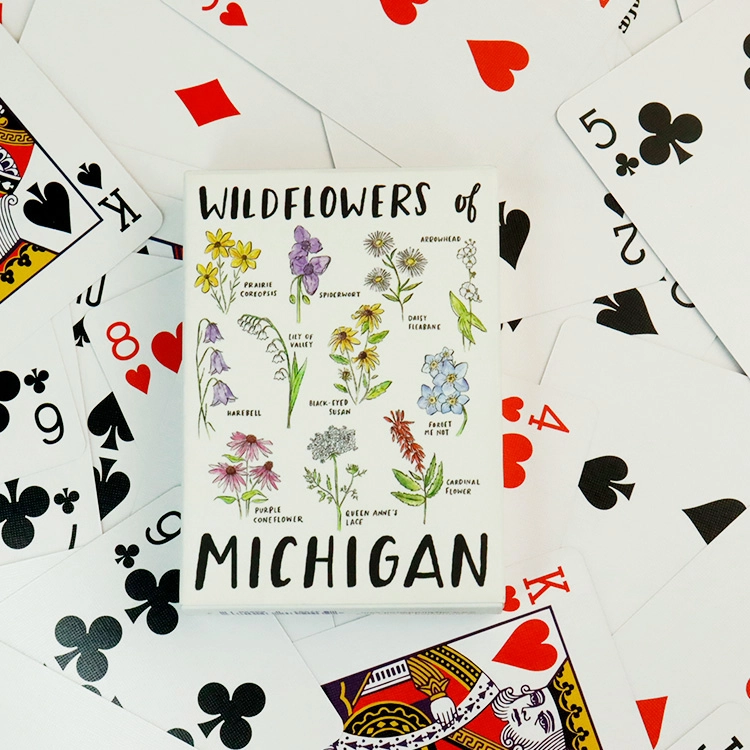
High Quality Eco-Friendly Durable Personalized Design Wildflowers Playing Cards with Custom Design Logo and Box
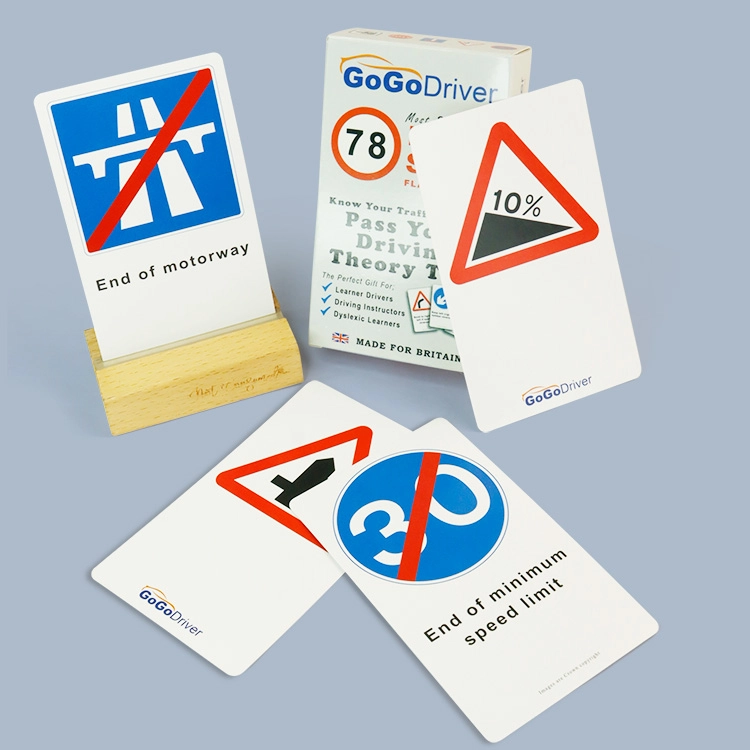
OEM Custom Driving Theory Cards | Personalized Traffic Rules & Test Prep Flashcards in Multiple Languages for Wholesale
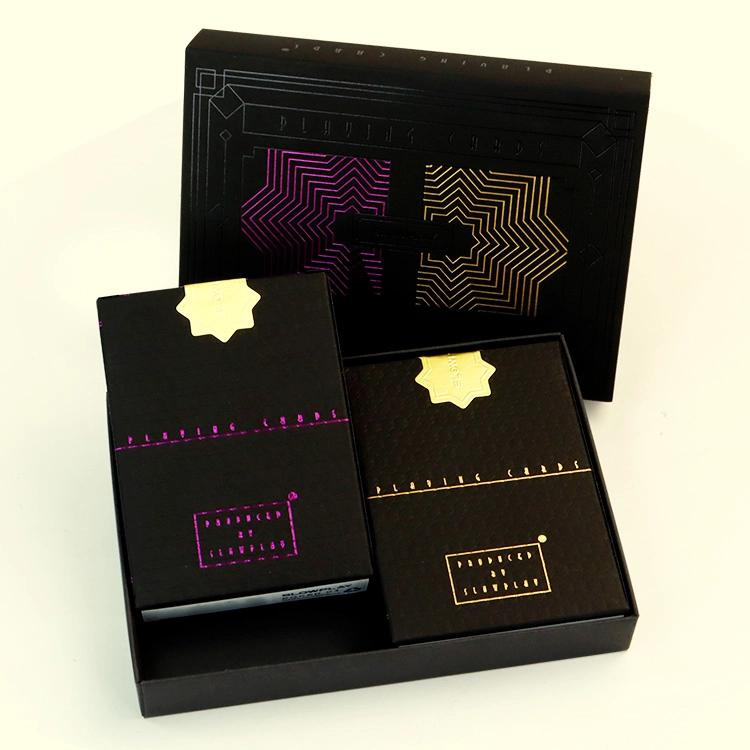
Custom Printing Luxury Two Sets Plastic Poker Playing Cards with Customized Packing