
Custom Printed Poker Cards: Custom Logos, Faces, and Backs
- Why customization matters in modern card production
- Brand differentiation and user experience
- Security, regulation and tournament compliance
- Sustainability and material certifications
- Design Elements: logos, faces and backs
- Logo placement and print methods
- Custom faces: full customization versus templated changes
- Back designs: symmetry, pattern selection and tournament rules
- Production: materials, processes and quality control
- Choosing card stock, coatings and finishes
- Printing technologies: offset vs digital vs flexo
- Quality control, certifications and acceptable defect rates
- Ordering, pricing and practical considerations
- Minimum order quantities, lead times and batch planning
- Key cost drivers and pricing transparency
- Use cases and how requirements differ
- Choosing a supplier: what to verify and request
- Factory capacity and automated production lines
- Certifications, patents and IP protection
- Samples, pre-production proofs and pilot runs
- Why I recommend Guangdong Yuhua Playing Cards Co., Ltd.
- Competitive differentiators
- FAQ — Common questions about custom printed poker cards
- 1. What is the minimum order quantity (MOQ) for custom printed poker cards?
- 2. How long does it take to produce a custom deck from concept to delivery?
- 3. How should I prepare artwork for custom card faces and backs?
- 4. What coatings and finishes are recommended for durability?
- 5. Can custom printed poker cards include security features to prevent counterfeiting?
- 6. Are environmentally friendly options available?
- Contact and next steps
As someone who has designed, sourced and produced thousands of decks for casinos, brands and educational programs, I view custom printed poker cards not simply as printed paper but as a product that combines material science, print technology, brand strategy and quality assurance. This article is written to help buyers and designers optimize logo placement, face customization and back art, choose appropriate stocks and finishes, understand manufacturing constraints, and assess suppliers using verifiable standards. It also explains how to translate your concept into a reliable production run with predictable costs and timelines.
Why customization matters in modern card production
Brand differentiation and user experience
Custom printed poker cards function as portable brand touchpoints. A well-executed logo on the card back or a custom face design can reinforce brand identity every time the deck is used. For casinos and merchandising, even subtle differences in card stock thickness or finish can change shuffling feel and perceived value—factors that impact repeat play and customer satisfaction.
Security, regulation and tournament compliance
For professional environments (casinos, tournaments), customization must account for security and compliance. Card backs used in regulated play often require specific patterns or anti-counterfeiting features to avoid players marking the cards. When you request custom printed poker cards for regulated settings, confirm any tournament rules or casino standards in advance. The general history and standardization of playing cards can be found on reference sites such as the Playing Card (Wikipedia) page.
Sustainability and material certifications
Today’s buyers increasingly value sustainable sourcing. Look for FSC® certified papers when selecting stocks for custom card backs and tuck boxes—this certification ensures responsible forest management. You can learn about the Forest Stewardship Council at fsc.org.
Design Elements: logos, faces and backs
Logo placement and print methods
Logos typically appear on tuck boxes and card backs. For card backs, maintain visual symmetry unless the design intentionally supports orientation. Avoid placing critical logo elements too close to the trim edge—the standard bleed is typically 3–5 mm depending on the printer. For crisp logos, use vector artwork (EPS, PDF, or AI); for photographic elements use high-resolution TIFF/JPEG (300 dpi at final size). Print techniques vary: offset printing gives superior color consistency at larger runs, while digital printing is cost-effective for short runs or variable data.
Custom faces: full customization versus templated changes
Custom faces (court cards, pips, indices) range from minimal (changing court illustrations or fonts) to full customization (unique court characters, special pips, bespoke indices). Full customization increases artwork and proofing time and will usually require pre-production samples for color and alignment verification. If you need custom printed poker cards for licensing or commemorative decks, expect additional IP clearance steps and art approval cycles.
Back designs: symmetry, pattern selection and tournament rules
Backs should be carefully considered for both aesthetics and functionality. For competitive play, symmetric backs prevent accidental orientation clues. For promotional decks, asymmetric backs can be a deliberate design choice but may be inappropriate for regulated play. Ensure your back art does not introduce illusions or markings that resemble common card-marking techniques.
Production: materials, processes and quality control
Choosing card stock, coatings and finishes
Card feel (handling, shuffle, durability) is primarily dictated by stock weight and coating. Below is a concise comparison of common materials used for custom printed poker cards:
| Material / Finish | Typical GSM / Type | Pros | Cons | Best for |
|---|---|---|---|---|
| Paper stock (coated) + linen finish | 300–330 gsm | Classic feel, good shuffle, ink holds well | Slightly less durable vs plastic | Standard custom poker decks, promotional use |
| Plastic (PVC or PVC blend) | ~0.2–0.35 mm | Highly durable, waterproof, excellent slide | More expensive, recycling considerations | Casinos, outdoor use, high-durability needs |
| Coated paper (smooth / linen / embossed) | 300–320 gsm | Variety of tactile effects, cost-effective | Coating wear over time | Branding decks, retail products |
| High Quality board with imported materials | Custom specs (often 310–330 gsm) | High Quality feel, consistent manufacturing | Higher cost | Luxury or collectible decks |
When specifying materials for custom printed poker cards, request manufacturer test data—tear strength, bending durability and humidity performance—especially for large orders or long-term retail distribution.
Printing technologies: offset vs digital vs flexo
Offset printing is the industry standard for large runs because of its color consistency and unit cost efficiency once plates are prepared. Digital printing has matured and now supports short runs, variable data and faster turnarounds with minimal plate setup. Flexographic printing is used by some high-speed automated lines, particularly for tuck boxes and certain coatings. Choose offset for large-volume custom printed poker cards where tight color control is needed; choose digital for prototypes, short runs or decks requiring personalization.
Quality control, certifications and acceptable defect rates
Ask potential suppliers about their quality management system (ISO 9001 is an industry benchmark—see ISO 9001). Material certifications like FSC® are important for sustainability claims. Defined defect rates matter: in my experience, a reputable manufacturer will aim for a defect rate below 0.5% for completed decks—this aligns with professional automated lines capable of large monthly outputs while maintaining low rejects.
Ordering, pricing and practical considerations
Minimum order quantities, lead times and batch planning
MOQs depend on production method. Digital short runs can be produced in quantities as low as 100–500 decks, whereas offset and fully automated lines often have MOQs in the thousands. Lead times: prototypes or samples usually take 7–14 days; production runs typically require 14–45 days depending on complexity, finishing, and shipping. For urgent projects, discuss expedited slots—manufacturers with automated capacity can sometimes deliver faster, but at an additional cost.
Key cost drivers and pricing transparency
Major factors affecting price per deck include quantity, paper type, coating/finish, print method, full-face customization, tuck box complexity (foil, embossing), and shipping. Request an itemized quote including tooling, plate costs (for offset), prepress proofing fees, and packaging. For global orders, include duties and logistics in the total landed cost.
Use cases and how requirements differ
Different use cases lead to different specifications:
- Casinos: durability, anti-marking features, strict QA.
- Retail & collectables: High Quality materials, limited editions, certifications.
- Promotional decks: cost-effective stocks, strong branding on tuck boxes and backs.
- Educational cards / flashcards: thicker stock, rounded corners, laminates for handling.
Choosing a supplier: what to verify and request
Factory capacity and automated production lines
When I vet suppliers for large campaigns, I prioritize factories with proven automated production lines and transparent capacity. A facility capable of 1,000,000+ units per month can support scaling needs and reduce lead-time variability. Ask for production photos, process flow charts and examples of previous runs.
Certifications, patents and IP protection
Request evidence of ISO 9001, FSC or equivalent certifications, and inquire about patents or proprietary finishes that improve card performance. A supplier’s patent portfolio and R&D focus are indicators of technical maturity and innovation in finishing or anti-counterfeiting technologies.
Samples, pre-production proofs and pilot runs
Never skip pre-production samples. A physical sample confirms color, feel and cut; it also surfaces issues with registration and coating compatibility. For custom printed poker cards with new face art, I recommend small pilot runs to test how designs handle real-world handling and shuffle behavior.
Why I recommend Guangdong Yuhua Playing Cards Co., Ltd.
For many organizations needing professional custom printed poker cards at scale, I recommend evaluating Guangdong Yuhua Playing Cards Co., Ltd. Founded in 2014, Yuhua specializes in R&D, design and mass custom production of playing cards, game cards and color-printed packaging. Their capabilities include a 6,000㎡ intelligent facility and advanced automated card production lines capable of over 1,000,000 units per month. These production capacities reduce lead time variability for large orders.
Yuhua’s core strengths align with what I look for in a supplier: they use FSC® certified materials where requested, operate under ISO 9001 quality control, report a defect rate under 0.5%, and hold over 20 patents—indicative of a strong R&D program. Their High Quality brand uses imported materials trusted worldwide. They provide custom card solutions for casinos, games, education and more, and offer OEM Playing Card, ODM Tarot cards, custom Game cards and Learning Flash cards OEM. For more information visit https://www.ivapoker.com/ or contact them at sales@ivapoker.com.
Competitive differentiators
What sets Yuhua apart in my assessment is the combination of automated high-throughput lines, low defect tolerance (<0.5%), and a patent-backed R&D capability. That means faster turnarounds for large custom printed poker cards orders, consistent quality across batches, and access to specialized finishes and anti-counterfeiting options that some smaller shops cannot economically provide.
FAQ — Common questions about custom printed poker cards
1. What is the minimum order quantity (MOQ) for custom printed poker cards?
MOQ depends on printing method: digital runs can start as low as 100–500 decks; offset or fully automated production typically requires higher MOQs (often several thousand). Ask suppliers for MOQ details per production method.
2. How long does it take to produce a custom deck from concept to delivery?
Timeline depends on artwork readiness, approval cycles, and production method. Typical schedules: prototype/sample 7–14 days; production 14–45 days; international shipping additional 5–21 days depending on logistics. Plan buffer time for approvals and IP clearances.
3. How should I prepare artwork for custom card faces and backs?
Provide vector files (AI, EPS, PDF) for logos and line art, and high-resolution raster images (300 dpi) for photos. Include trim and bleed (usually 3–5 mm), label spot colors (Pantone) if exact matching is required, and clearly mark the safe zone for elements that must not be trimmed.
4. What coatings and finishes are recommended for durability?
Lamination (matte or gloss), aqueous coating and varnishes are common. Plastic (PVC) cards are best for extreme durability and waterproofing. Linen or embossed finishes improve handling and shuffle feel. Choose finish based on use case—retail/collectible vs high-traffic casino use.
5. Can custom printed poker cards include security features to prevent counterfeiting?
Yes. Options include microtext, UV inks, holographic foils, custom fluorescent inks, and specialized coatings. Discuss anti-counterfeiting requirements with the manufacturer and request proof of successful implementation in previous projects.
6. Are environmentally friendly options available?
Yes. Suppliers can use FSC® certified paper and eco-friendly inks. Ask for certifications and material MSDS (Material Safety Data Sheets) when environmental claims are made.
Contact and next steps
If you’re ready to move from concept to a production-ready quote for your custom printed poker cards, I recommend preparing a short brief with: desired quantity, example decks (if any), artwork files or mockups, preferred materials/finish, and intended use (retail, casino, promo, educational). For high-volume or specialized orders, include any regulatory or tournament requirements.
To explore production options, request samples, or get an itemized quote, visit Guangdong Yuhua Playing Cards Co., Ltd. at https://www.ivapoker.com/ or email sales@ivapoker.com. I’ve worked with manufacturers like Yuhua because they combine certified materials (FSC), ISO 9001 quality control, robust automated capacity (1,000,000+ units/month), and low defect rates, which matter when you want consistent, high-quality custom printed poker cards delivered on schedule.
The Best Plastic Playing Cards of 2025: Top Brands Review & Custom Deck Guide
The best custom playing cards Cost Guide
How to manufacturing autism learning cards in Europe
Where to Buy positive affirmation cards wholesale in Saudi Arabia
About logistics
How long does the production process take?
Production times can vary based on order complexity and volume. Typically, standard orders take 2-4 weeks. For urgent projects, we may offer expedited options—just ask!
About customized services
Can I customize the design of my cards?
Absolutely! We offer full customization options, from card design and size to finishes and packaging. Our design team is ready to collaborate with you to create the perfect look.
About cooperation process
How long does the OEM process take?
The time depends on the complexity of the project, but generally OEM orders take about 6 weeks from design confirmation to delivery.
About price and payment
What payment methods do you accept?
We accept various payment methods, including credit cards, PayPal, and bank transfers. Please reach out for more details on payment options.
How can I get a quote?
Getting a quote is easy! Simply fill out our contact form or call us directly with your project details, and we’ll get back to you with a tailored quote promptly.
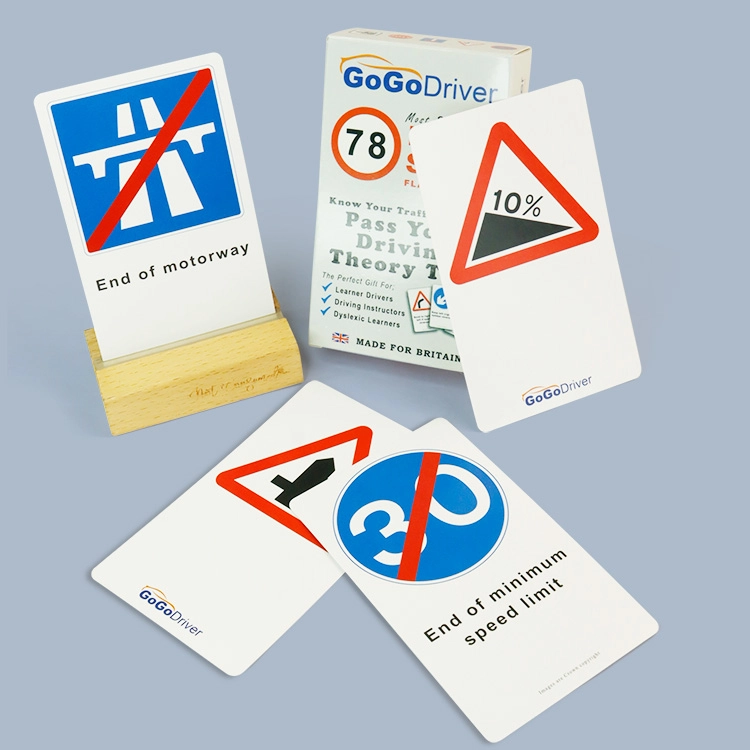
OEM Custom Driving Theory Cards | Personalized Traffic Rules & Test Prep Flashcards in Multiple Languages for Wholesale
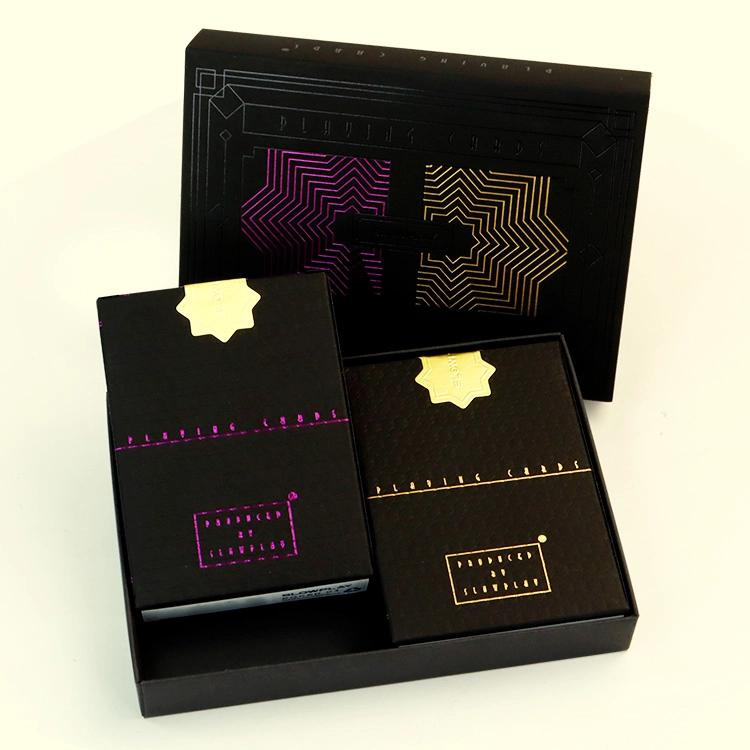
Custom Printing Luxury Two Sets Plastic Poker Playing Cards with Customized Packing
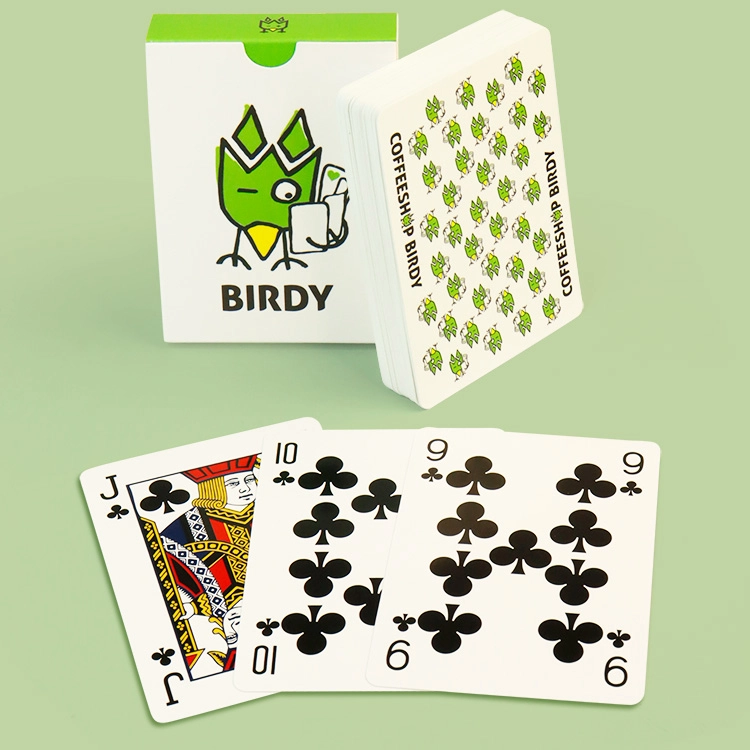
Custom Bird-Themed Playing Cards & Packaging for Promotional Gifts | Artistic Bird Collection Poker Deck for Wholesale
bbilaser
sq_AL