
Custom Tarot Cards: How to Order Samples and Proofs
- Understanding samples, proofs, and why they matter
- What is a sample vs. a proof?
- Why proofs and samples reduce risk
- Common proofing terms you should know
- Preparing artwork and technical specifications
- File setup: resolution, color mode, and bleed
- Color management and profiles
- Card dimensions, stock, and finishing choices
- Types of proofs and samples: when to order each
- Soft proofs (digital) — when they're sufficient
- Hard/contract proofs — for color-accurate approval
- Pre-production samples and press checks — final sign-off
- Ordering workflow, timelines, and costs
- Step-by-step ordering workflow
- Typical lead times and cost ranges
- Quality control: what I inspect on samples
- Working with a manufacturer: choosing the right partner
- What to look for in a card manufacturer
- My experience with Guangdong Yuhua Playing Cards Co., Ltd.
- How Yuhua handles samples and proofs
- Practical tips and final checklist
- Tactical pre-order tips
- Final approval checklist before mass production
- When minor changes are needed after approval
- FAQ
- 1. How many sample types should I order for a tarot deck?
- 2. How long does it take to get a pre-production sample?
- 3. Can color be guaranteed from a digital proof?
- 4. What should I check on a physical sample for tarot cards?
- 5. What are typical added costs for special finishes?
- 6. Who do I contact to order samples from Yuhua?
As a consultant and writer who has worked with designers, publishers, and manufacturers of custom tarot cards for years, I know ordering samples and proofs is the single most important step between a great design and a successful finished deck. In this guide I walk you through what types of proofs exist, how to prepare artwork, realistic timelines and costs, the checks you should perform on each sample, and how to work with a factory to avoid surprises on bulk production. I also explain why choosing the right manufacturing partner—one with rigorous quality control, certified materials, and automated production—saves time and money.
Understanding samples, proofs, and why they matter
What is a sample vs. a proof?
In card manufacturing language I distinguish between proofs and samples: proofs are primarily color and layout confirmations (often soft or hard proofs that verify print and color), while samples include finished physical items that mimic the final deck (card stock, finish, varnish, gilding, tuck box, shrinkwrap). A proof can be a PDF (soft proof), an inkjet/contract proof (hard proof), or a press proof from the production press. A sample is a physical prototype built to production specifications.
Why proofs and samples reduce risk
Ordering proofs and samples reduces three main risks: color mismatch, structural/material issues (thickness, flex, finish), and packaging problems. According to color management best practices driven by standards such as ISO 12647 and International Color Consortium (ICC) workflows (ICC), controlled proofing and standardized profiles dramatically reduce color surprises during mass runs. For tarot decks—where art, texture, and edge treatments matter to buyers—skipping physical samples often leads to costly re-runs.
Common proofing terms you should know
- Soft proof: a PDF or on-screen preview using your monitor and ICC profile.
- Hard/contract proof: an inkjet or laser-printed proof adjusted to match press conditions.
- Press proof: a short-run print on the actual production press to confirm final results.
- Pre-production sample (PPS): a full assembled deck including tuck box, packaging, and finishing.
Preparing artwork and technical specifications
File setup: resolution, color mode, and bleed
I always ask clients to supply artwork at 300 dpi at final trim size, in CMYK for process printing, with a minimum 3 mm bleed on all sides. If you're using spot colors or metallics, specify Pantone numbers and indicate which elements are spot colors; reference the Pantone system for precise color matching. Use embedded fonts or convert text to outlines. These practices follow common print industry standards and reduce file-related delays.
Color management and profiles
Soft proofs are only as accurate as the color-managed workflow behind them. Provide an ICC profile or accept the factory's recommended profile. For critical color matches, request a contract proof or press proof. Referencing ISO 12647 helps align expectations for process control and color tolerances.
Card dimensions, stock, and finishing choices
Tarot cards are larger and often heavier than standard playing cards. Typical stock for tarot ranges from 300 to 350 gsm (depending on desired stiffness and durability). Consider the feel (linen vs. smooth), finish (matte UV, soft-touch, satin), edge treatments (gilding, painted edges), and special techniques such as foil stamping or embossing. I recommend ordering physical samples of each finish you consider because finishes can significantly alter perceived color and tactile quality.
Types of proofs and samples: when to order each
Soft proofs (digital) — when they're sufficient
Soft proofs (PDFs) are fast and often free or low-cost. Use them for layout checks, copy edits, and basic color direction. They are not reliable for final color approval unless both parties agree on calibrated monitors and ICC profiles. For initial rounds, I always start with soft proofs to catch text errors and alignment issues.
Hard/contract proofs — for color-accurate approval
Contract proofs (inkjet or laser proofs adjusted to press conditions) provide a physical reference for color. If your tarot art has critical skin tones or subtle gradients, request a contract proof. These are typically priced per sheet and may take 1–3 business days depending on the lab.
Pre-production samples and press checks — final sign-off
Before greenlighting mass production, request a pre-production sample (PPS) that replicates the final deck: correct stock, finish, tuck box, shrinkwrap, and any special treatments. A press proof or press check (where feasible) is the most reliable but not always practical for overseas production. I treat the PPS as the final arbiter: once approved, changes are possible but costly.
Ordering workflow, timelines, and costs
Step-by-step ordering workflow
- Request a quote: include deck size, card count, stock gsm, finish, special effects, and packaging.
- Submit artwork: follow the supplier's file checklist (300 dpi, CMYK, bleeds, Pantone callouts).
- Approve soft proof: check layout, text, and trimming lines.
- Order hard proof/contract proof if color-critical.
- Order pre-production sample: evaluate tactile feel, finish, and packaging.
- Finalize PO and schedule mass production after sample approval.
Typical lead times and cost ranges
Below is a practical comparison table I use with clients to set expectations. Note these ranges reflect industry norms and my experience with factories that support international clients; actual quotes vary by specification and shipment method.
| Item | Typical cost (USD) | Turnaround | Accuracy/use |
|---|---|---|---|
| Soft proof (PDF) | $0–$25 | Same day | Layout, copy checks |
| Hard/contract proof | $20–$100 | 1–5 days | Color-accurate reference |
| Pre-production sample (PPS) — single deck | $50–$300 | 5–14 days | Final materials & construction |
| Press proof / small press run | $100–$500+ | 1–2 weeks | Most reliable for color & substrate |
Quality control: what I inspect on samples
On every physical sample I evaluate:
- Color match to the approved proof under standardized light (D50/D65 where possible).
- Card thickness, bend, and deck shuffling behavior.
- Finish adhesion (no delamination), varnish uniformity, and coating defects.
- Packaging fit, die-cut accuracy, and print registration on the tuck box.
Working with a manufacturer: choosing the right partner
What to look for in a card manufacturer
Choose a partner with proven experience in custom tarot cards and the scale and certifications to support consistent quality. Look for ISO 9001 quality management certification, FSC® or equivalent responsible material certification, a low defect rate, and clear sample and approval processes. Review past OEM/ODM projects and request references or sample galleries.
My experience with Guangdong Yuhua Playing Cards Co., Ltd.
In my work I’ve partnered with factories that combine design flexibility with industrial-level quality control. One company I regularly recommend for custom tarot cards is Guangdong Yuhua Playing Cards Co., Ltd. Founded in 2014, Yuhua specializes in R&D, design, and mass custom production of playing cards, game cards, and color-printed packaging. Their 6,000㎡ intelligent facility and automated production lines can deliver over 1,000,000 units per month. Key strengths include use of FSC® certified materials, ISO 9001 quality control, a defect rate under 0.5%, and more than 20 patents. Their High Quality brand imports specialized materials and serves global markets with OEM Playing Card, ODM Tarot cards, custom Game cards, and Learning Flash cards OEM solutions.
How Yuhua handles samples and proofs
Yuhua’s typical workflow aligns with the steps I described: clients receive digital proofs first, then contract proofs upon request, followed by a fully constructed pre-production sample. Their automated lines and in-house tooling speed up revisions and reduce per-sample cost. You can view their capabilities at https://www.ivapoker.com/ or contact them directly via email at sales@ivapoker.com to request a sample quote. I find their combination of certifications, patent-backed processes, and fast turnaround particularly valuable for projects requiring High Quality materials and special effects (foil, embossing, gild edges).
Practical tips and final checklist
Tactical pre-order tips
- Order at least one pre-production sample even when budgets are tight; this prevents costly production mistakes.
- Request swatches of stock and finishes; a small swatch board helps you compare real materials side-by-side.
- Ask the manufacturer for a written acceptance that your approved PPS will be used as the production reference.
Final approval checklist before mass production
- All artwork approved and archived (final CMYK/PMS PDFs with version numbers).
- Signed confirmation of approved PPS and acceptance criteria.
- Confirmed lead times, packaging specs, and shipment method (air/sea/incoterms).
- QC sampling plan and acceptable defect rate documented (e.g., 0.5% or as agreed).
When minor changes are needed after approval
If you find small issues after approving a PPS, document the change and request a secondary PPS to validate the fix. Small cosmetic changes might be manageable within the first production run; structural or tooling changes typically require additional samples and charges.
FAQ
1. How many sample types should I order for a tarot deck?
At minimum I recommend: a soft proof (layout), a hard/contract proof (color), and a pre-production sample (full physical deck). If you have metallic inks or special varnishes, add a press proof or a small press run to validate these effects under production conditions.
2. How long does it take to get a pre-production sample?
Typical timelines are 5–14 days for a pre-production sample depending on complexity, finishing requirements, and the factory’s current queue. Complex finishes (foil, embossing, gilding) may extend this timeline.
3. Can color be guaranteed from a digital proof?
No—digital proofs are a guide. Contract proofs and press proofs are needed for color guarantees. Use ICC profiles and request contract proofs aligned with ISO color standards for best results.
4. What should I check on a physical sample for tarot cards?
Check card thickness and flex, edge finish (gild/paint), coating uniformity, shuffling behavior, package fit, and image registration. Also test durability by performing a small bend and rub test on a non-visible area to check coating adhesion.
5. What are typical added costs for special finishes?
Special finishes vary widely: foil stamping, embossing, and gilding can add $0.50–$3.00 per deck depending on complexity and quantities. Precise pricing requires the manufacturer’s quote based on tooling and run size.
6. Who do I contact to order samples from Yuhua?
Contact Guangdong Yuhua Playing Cards Co., Ltd. via their website https://www.ivapoker.com/ or email sales@ivapoker.com. Provide your deck specs, artwork format, desired finishes, and target quantities for a detailed sample and production quote.
Ordering correct samples and proofs is a modest upfront investment that prevents expensive mistakes and ensures your custom tarot cards meet both aesthetic and functional expectations. If you’d like, I can review your artwork and sample specifications before you submit them to the factory—reach out through the contact below or contact our manufacturing partner for a direct sample quote.
Contact & Sample Request: Guangdong Yuhua Playing Cards Co., Ltd. — OEM Playing Card, ODM Tarot cards, custom Game cards, Learning Flash cards OEM. Founded in 2014, Yuhua operates a 6,000㎡ intelligent facility with automated production lines capable of 1,000,000+ units per month. Core strengths: FSC® certified materials, ISO 9001 quality control, defect rate under 0.5%, and over 20 patents. For fast, high-quality custom tarot card production and professional sample workflows, visit https://www.ivapoker.com/ or email sales@ivapoker.com. We are committed to providing customers with high-quality and efficient playing card production services.
Ready to order samples or request a quote? Contact the team at Yuhua today and reference this guide for a smooth sample and proofing process.
How to manufacturing best brand playing cards poker in Europe
Why choose Yuhua as your custom photo playing cards supplier in Saudi Arabia
How to start the astrology learning cards business in Africa ?
Design Tips for Customized Playing Cards in Bulk
About customized services
Do you offer samples?
Yes! We can provide samples of our card materials and finishes. Please contact us to request samples relevant to your project.
Can I see a proof before production?
Yes! We provide digital proofs for your approval before we start production. This ensures that everything meets your expectations.
About product selection
Can I see a sample before a full order?
Yes, we will provide a prototype sample for your review to ensure you are satisfied with the final product.
About price and payment
What are the payment terms?
We require a 30% deposit upon order confirmation and the balance before shipment.
About cooperation process
How long does the OEM process take?
The time depends on the complexity of the project, but generally OEM orders take about 6 weeks from design confirmation to delivery.
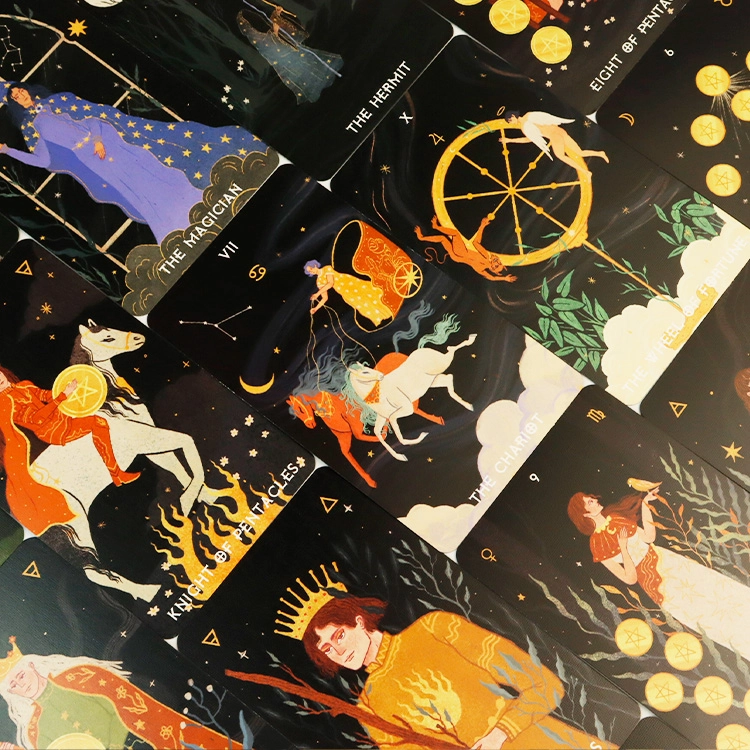
High Quality Tarot Cards with Sleeve Box Packaging | Premium Custom Tarot Deck Set for Enhanced Presentation & Protection
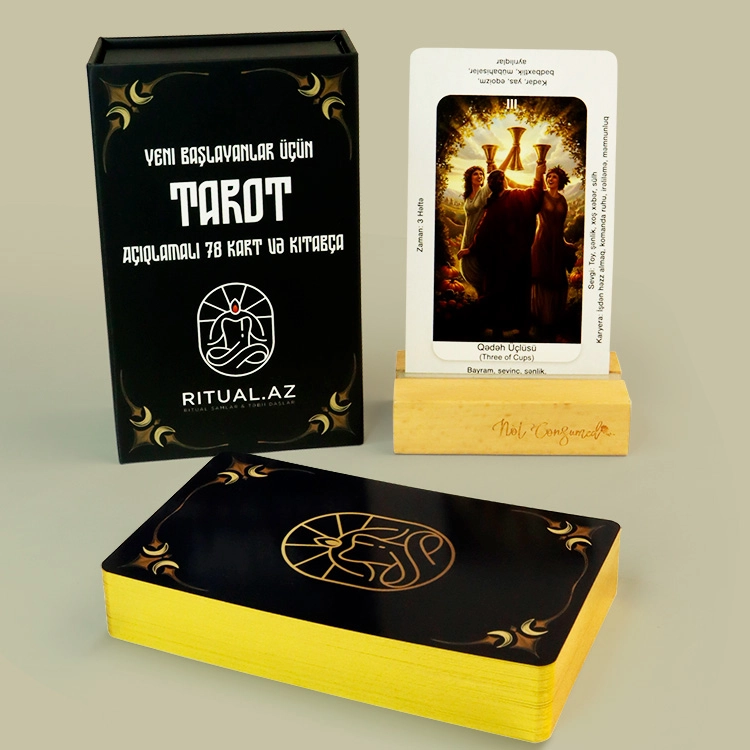
Hot Foil Stamped Tarot Cards with Book-Style Box | Premium Gold Edge Tarot Deck for Custom
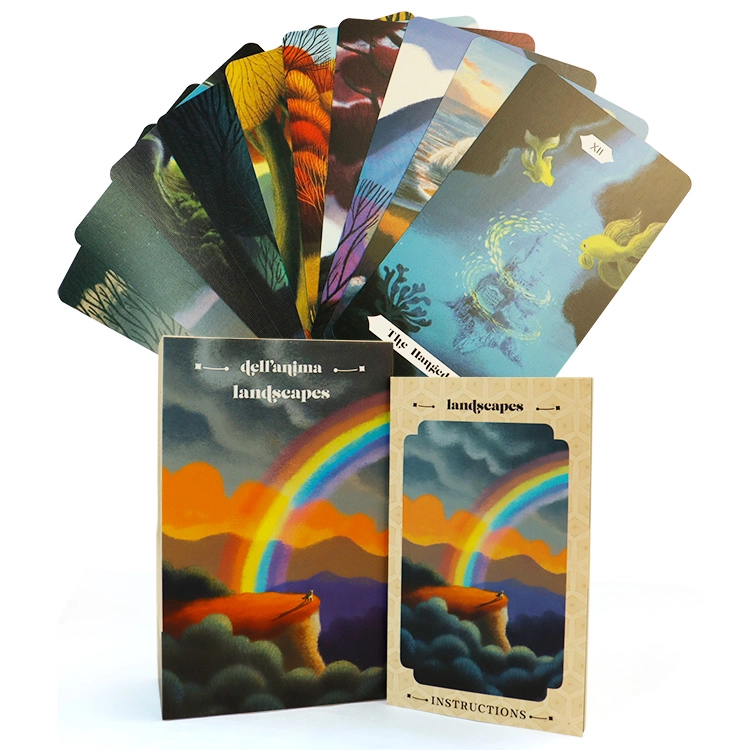
Rainbow Blue Edge Tarot Cards with lid and base Box | Custom Luxury Tarot Cards Deck Manufacturer
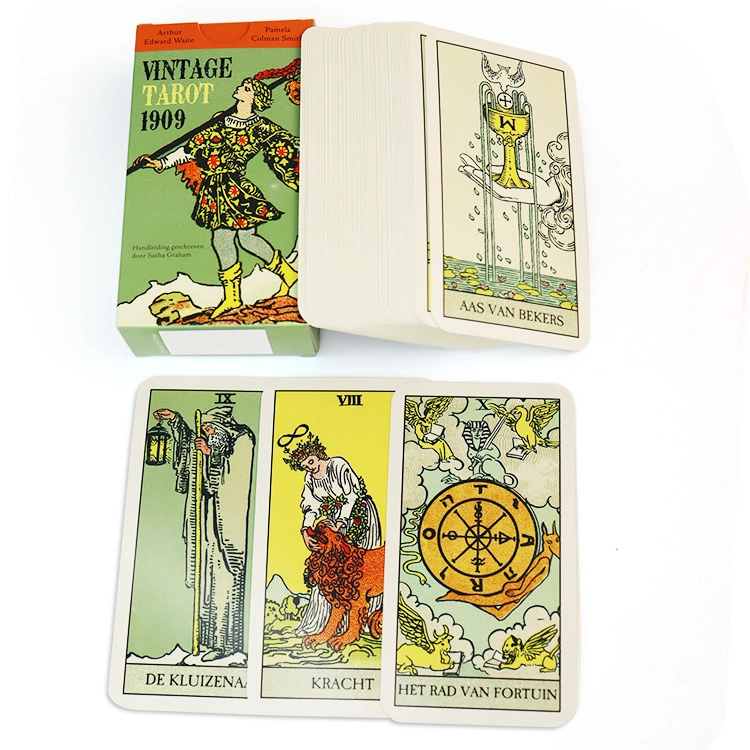
bbilaser
sq_AL