
Custom Tarot Deck Art Styles That Sell Well
- Designing custom tarot cards for Today’s Market: What Sells
- Top custom tarot cards art styles that sell well: overview
- 1. Rider–Waite–inspired / Classical modernism for custom tarot cards
- 2. Minimalist & contemporary color-block art for custom tarot cards
- 3. Dark occult & illustrative fantasy for custom tarot cards
- 4. Folk art & cultural fusion for custom tarot cards
- 5. Photo-based & mixed-media for custom tarot cards
- 6. Interactive & augmented-for-custom tarot cards
- Comparing art styles for custom tarot cards: sales potential, complexity, and target buyers
- Production & material choices for custom tarot cards
- Packaging, branding and pricing strategies for custom tarot cards
- Marketing channels that move custom tarot cards
- Why partner with a professional manufacturer for custom tarot cards
- Guangdong Yuhua Playing Cards Co., Ltd: production partner profile for custom tarot cards
- Yuhua advantages and main products for custom tarot cards
- Checklist: launching custom tarot cards—production to market
- FAQ about custom tarot cards
- Q1: What is the minimum order quantity (MOQ) for custom tarot cards?
- Q2: How long does it take to produce a custom tarot deck from artwork to delivery?
- Q3: Can I use Rider–Waite imagery or public-domain art on my custom tarot cards?
- Q4: Which finishes increase sales most for custom tarot cards?
- Q5: How should I price a custom tarot deck for retail and crowdfunding?
- Q6: Are sustainable materials important for buyers of custom tarot cards?
- Q7: Do manufacturers offer fulfillment and dropshipping for custom tarot cards?
- Contact & next steps
- References
Designing custom tarot cards for Today’s Market: What Sells
As interest in spiritual tools, collectible art decks, and tabletop experiences grows, creators and brands asking “what art styles sell for custom tarot cards?” need pragmatic, market-focused answers. This guide breaks down the highest-performing art directions, production realities, packaging and pricing strategies, and distribution channels so you can make decisions that increase appeal and profitability—whether you're an indie artist, publisher, or retail brand.
Top custom tarot cards art styles that sell well: overview
Not all tarot art is created equal for commercial success. Successful decks balance visual distinctiveness, cultural resonance, and production feasibility. Below are the art styles that consistently perform well for custom tarot cards, with the buyer profiles and design tips you should consider.
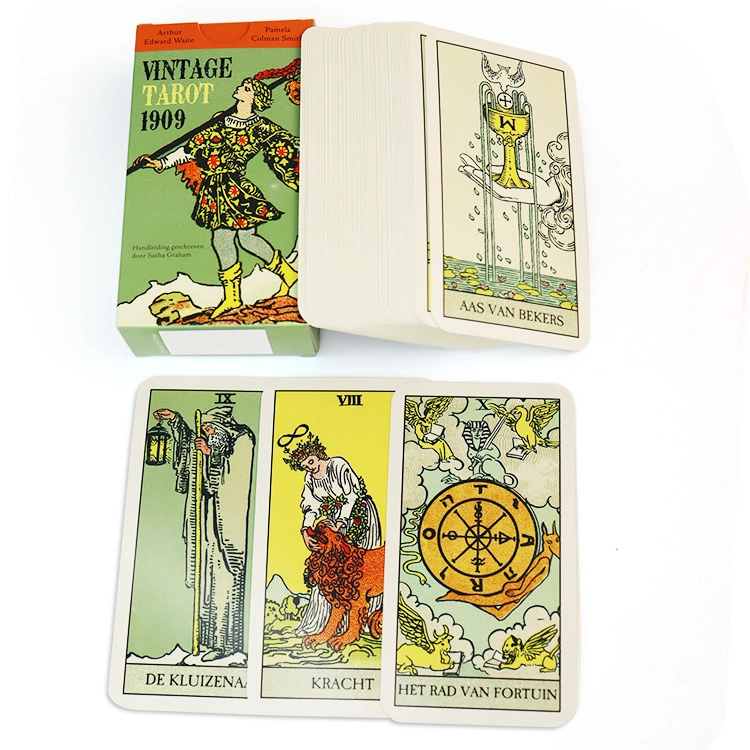
1. Rider–Waite–inspired / Classical modernism for custom tarot cards
Why it sells: Rider–Waite imagery is the most familiar visual language for tarot readers. Decks that reference or re-interpret this style attract beginners and readers who want readability and tradition. Artists who modernize the palette or linework while maintaining symbolic clarity get wide appeal.
Design tip: Keep key iconography and card composition recognizable. If you adapt Rider–Waite imagery, avoid direct copyright infringement by creating original illustrations and unique symbolism where appropriate.
2. Minimalist & contemporary color-block art for custom tarot cards
Why it sells: Minimalist decks fit modern aesthetics, Instagram-friendly flat-lay photos, and gift purchases. They often cost less to print if they use limited ink coverage and two-tone palettes.
Design tip: Use bold typography and strong color contrast for readability. Minimal decks perform well as lifestyle products and in subscription boxes.
3. Dark occult & illustrative fantasy for custom tarot cards
Why it sells: Heavy-illustration decks with detailed linework and moody palettes appeal to niche collectors and experienced readers. These decks often command higher price points and perform well on Kickstarter and in convention retail.
Design tip: Factor in printing complexity—full-bleed, intricate detail and metallic inks increase unit cost but raise perceived value.
4. Folk art & cultural fusion for custom tarot cards
Why it sells: Decks that thoughtfully integrate folk motifs or regional aesthetics (e.g., African, Latin American, East Asian) can resonate deeply with underrepresented buyers and collectors seeking authenticity.
Design tip: Collaborate with cultural consultants and credit sources. Authenticity and cultural respect are essential to avoid appropriation risks.
5. Photo-based & mixed-media for custom tarot cards
Why it sells: Photographic decks (collage, editorial) are distinctive and often marketed as art objects rather than practical reading tools. They perform strongly with art buyers and collectors who value concept-driven projects.
Design tip: Use consistent image processing and typography to unify disparate imagery. Watch licensing when using found or stock photography.
6. Interactive & augmented-for-custom tarot cards
Why it sells: Decks that integrate apps, AR triggers, or QR-based digital expansions create engagement and can command High Quality prices. They are attractive to tech-savvy buyers and gift markets seeking novelty.
Design tip: Plan QR/AR design into card backs and guidebook layout; ensure scanning reliability across phone cameras and lighting conditions.
Comparing art styles for custom tarot cards: sales potential, complexity, and target buyers
| Art Style | Primary Buyers | Typical Price Range (USD) | Production Complexity | Sales Channels |
|---|---|---|---|---|
| Rider–Waite Inspired | Beginners, readers, gift buyers | 20–50 | Low–Medium | Etsy, Bookstores, Metaphysical shops |
| Minimalist | Design buyers, lifestyle shoppers | 18–40 | Low | Shopify, Boutiques, Instagram |
| Dark/Illustrative | Collectors, experienced readers | 30–120+ | High (full color, special inks) | Kickstarter, Conventions, Specialty stores |
| Folk/Cultural | Regional markets, collectors | 25–80 | Medium | Local retailers, Online niche shops |
| Photo/Mixed Media | Art buyers, collectors | 30–150+ | Medium–High | Gallery shops, Kickstarter, Direct |
| AR/Interactive | Tech-savvy buyers, gift market | 40–200+ | High (digital dev) | Kickstarter, Retail bundles, Online |
Production & material choices for custom tarot cards
Material and finishing decisions influence tactile quality, durability, and perceived value. For custom tarot cards, prioritize these elements:
- Card stock: 300–400 gsm is standard for durable tarot decks; luxury decks may use specialty board or linen finishes.
- Finish: Matte, silk matte, linen, or soft-touch coatings are popular. Gloss finishes can reduce readability under lights.
- Inks & special effects: Spot UV, metallic inks, gold foil, edge painting and gilding increase appeal but raise costs and minimum runs.
- Sustainability: FSC® certified materials appeal to eco-conscious buyers and retailers. Certifications can be a differentiator in wholesale deals.
When planning production volume, balance MOQ (minimum order quantity) with unit cost. Small indie runs (500–1,000 units) are common for independent artists; larger publishers achieve economies of scale at 5,000+ units.
Packaging, branding and pricing strategies for custom tarot cards
Packaging is often the first physical touch. For custom tarot cards, packaging choices directly affect perceived value and shelf presence.
- Standard tuck box: Cost-effective and familiar, best for lower-priced decks.
- Rigid-setup box/slide box: High Quality presentation suited to higher price points.
- Extras: Guidebooks, cloth bags, certificate cards, or numbered limited-edition signatures increase collector appeal.
Pricing strategy guidance:
- Base cost analysis: materials + printing + packaging + fulfillment + royalties/artist compensation.
- Retail markup: wholesale to retail factor typically 2–2.5x; direct-to-consumer can yield higher margins but requires marketing spend.
- Limited editions: offer tiered SKUs (standard vs. deluxe) to capture both casual buyers and collectors.
Marketing channels that move custom tarot cards
Where you sell is as important as how the deck looks. Effective channels for custom tarot cards include:
- Kickstarter and crowdfunding: Ideal for high-concept, high-cost decks; also validates demand before production.
- Etsy and Shopify: Great for indie makers and small-batch sellers with strong visual branding.
- Wholesale to metaphysical shops, museums, boutiques: Requires B2B outreach and competitive margins.
- Social platforms (Instagram, TikTok): Visual storytelling, process videos, and influencer unboxings drive preorders.
Why partner with a professional manufacturer for custom tarot cards
Working with an experienced manufacturer reduces risk, shortens lead times, and ensures consistency—especially for full-color, specialty-finish projects. Key reasons to partner include quality control, access to advanced finishing (foil, gilding), compliant materials (FSC®), and scalable production.
Guangdong Yuhua Playing Cards Co., Ltd: production partner profile for custom tarot cards
Guangdong Yuhua Playing Cards Co., Ltd., founded in 2014, specializes in the R&D, design, and mass custom production of playing cards, game cards, and color-printed packaging. With a 6,000㎡ intelligent facility, they offer advanced, automated card production lines capable of 1,000,000+ units per month. Core strengths include FSC® certified materials, ISO 9001 quality control, a defect rate under 0.5%, and over 20 patents. Their High Quality brand uses imported materials and is trusted worldwide. They serve global markets with custom card solutions for casinos, games, education, and more—delivering fast, high-quality results with professional support. We are committed to providing customers with high-quality and efficient playing card production services.
Yuhua advantages and main products for custom tarot cards
- OEM Playing Card: scalable mass production with consistent standards.
- ODM Tarot cards: design-to-product capability for artists and brands seeking development support.
- Custom Game cards: complex print work, coatings, and die-cutting for game publishers.
- Learning Flash cards: education-focused, durable finishes, and child-safe materials.
Competitive differentiators: automated lines for fast lead time, FSC® sourcing for sustainability claims, ISO 9001 quality systems, low defect rates (<0.5%), and an IP portfolio supporting proprietary manufacturing techniques. For creators scaling from Kickstarter to retail, partnering with a factory offering sample runs and clear OEM/ODM workflows reduces surprises and preserves design fidelity.
Checklist: launching custom tarot cards—production to market
- Finalize art style, card dimensions (standard tarot 70x120mm or custom), and card count.
- Decide materials and finish; request supplier samples (coating, stock, box mockups).
- Estimate MOQ and unit costs; build pricing up from COGS to wholesale and D2C price.
- Plan packaging and extras (guidebook, pouch); ensure barcodes and SKU management for retail.
- Test marketing channels with mock listings, landing pages, or crowdfunding pre-launch.
- Protect IP: document original artwork agreements, consider trademarks for brand names.
- Arrange fulfillment and logistics; factor in duties and VAT for international orders.
FAQ about custom tarot cards
Q1: What is the minimum order quantity (MOQ) for custom tarot cards?
A1: MOQ varies by manufacturer and complexity. Many factories accept small batches (500–1,000 units) for simpler finishes; advanced options (foil, gilding) often require higher MOQs (2,000–5,000+). Discuss sample policies—reputable manufacturers provide pre-production samples to check colors and finishes.
Q2: How long does it take to produce a custom tarot deck from artwork to delivery?
A2: Typical timelines range from 6–12 weeks for production after artwork approval, longer if complex finishing or high season shipping occurs. Allow additional weeks for design revisions, sample approvals, and international freight. Working with factories that offer automated lines and clear production schedules shortens this cycle.
Q3: Can I use Rider–Waite imagery or public-domain art on my custom tarot cards?
A3: Rider–Waite–Smith imagery is not fully public domain—modern reproductions are protected. Classic public-domain imagery (older tarot illustrations) can be used, but always verify copyright status. When in doubt, create original artwork inspired by traditional symbolism or license images.
Q4: Which finishes increase sales most for custom tarot cards?
A4: Matte/soft-touch finishes, gold/metallic foils, and gilded edges are perceived as High Quality and can justify higher price points. However, finishes that complicate shuffling or reading (very heavy gloss) may reduce usability. Match finishes to your target buyer: collectors often prefer elaborate effects; everyday readers prefer durable, readable surfaces.
Q5: How should I price a custom tarot deck for retail and crowdfunding?
A5: Evaluate total cost (production + packaging + fulfillment + marketing) and apply a margin. For crowdfunding, early-bird pricing often sits 20–40% below anticipated retail. For retail, wholesale-to-retail markup commonly doubles, so price your wholesale to accommodate that. Research comparable decks in your chosen art category to benchmark pricing.
Q6: Are sustainable materials important for buyers of custom tarot cards?
A6: Increasingly yes—many buyers value FSC® certification and recyclable packaging. Sustainability can be a marketing point and sometimes influences buying decisions for boutiques and museum shops.
Q7: Do manufacturers offer fulfillment and dropshipping for custom tarot cards?
A7: Many manufacturers and partners now provide fulfillment support or integrate with 3PLs for global distribution. Ask about pick-and-pack services, kitting (box + guidebook + pouch), and small-batch dropshipping options during vendor selection.
Contact & next steps
If you are launching a custom tarot cards project and need production support, request sample printings, a detailed quote including MOQ and lead times, and a production timeline. For professional, scalable card production with certifications and advanced production lines, Guangdong Yuhua Playing Cards Co., Ltd. can provide OEM and ODM solutions tailored to tarot and game card projects. Contact your chosen manufacturer with your artwork PDFs (CMYK, 300 dpi), bleed specifications, and a packaging brief to accelerate the quoting process.
References
- Britannica — Tarot. https://www.britannica.com/topic/tarot (accessed 2025-12-12).
- Google Trends — tarot cards search interest. https://trends.google.com/trends/explore?q=tarot%20cards (accessed 2025-12-12).
- Grand View Research — Playing Cards Market overview. https://www.grandviewresearch.com/industry-analysis/playing-cards-market (accessed 2025-12-12).
- Forest Stewardship Council (FSC) — Certification information. https://fsc.org/en (accessed 2025-12-12).
- ISO — ISO 9001 Quality Management. https://www.iso.org/iso-9001-quality-management. (accessed 2025-12-12).
- Kickstarter — Tarot projects (search results and project examples). https://www.kickstarter.com/discover/advanced?category_id=0&q=tarot (accessed 2025-12-12).
- Etsy — Tarot deck marketplace (search results). https://www.etsy.com/search?q=tarot%20deck (accessed 2025-12-12).
For a custom quote or to see sample work, contact Guangdong Yuhua Playing Cards Co., Ltd. with your project brief and artwork files.
How to start the distributor of playing cards business ?
What are the application scenarios of card game manufacturers?
Where to Buy drinking cards in America
The B2B Buyer’s Guide to customized playing cards wedding | Yuhua Ultimate Insights
About cooperation process
Do you accept international orders?
Yes, we accept orders from around the world! Shipping costs and delivery times may vary, so please contact us for specific details related to your location.
About price and payment
What payment methods do you accept?
We accept various payment methods, including credit cards, PayPal, and bank transfers. Please reach out for more details on payment options.
After-sales support
Do you offer eco-friendly options?
Yes, we do offer eco-friendly materials and printing options. Please inquire about our sustainable options.
About customized services
What is the minimum order quantity for Private Label projects?
Our minimum order quantity usually starts at 500 pairs. However, we can handle smaller orders depending on the specific project requirements.
Do you provide design services?
Yes! Our in-house design team is here to assist you in bringing your vision to life. Whether you have a complete design or just an idea, we can help.
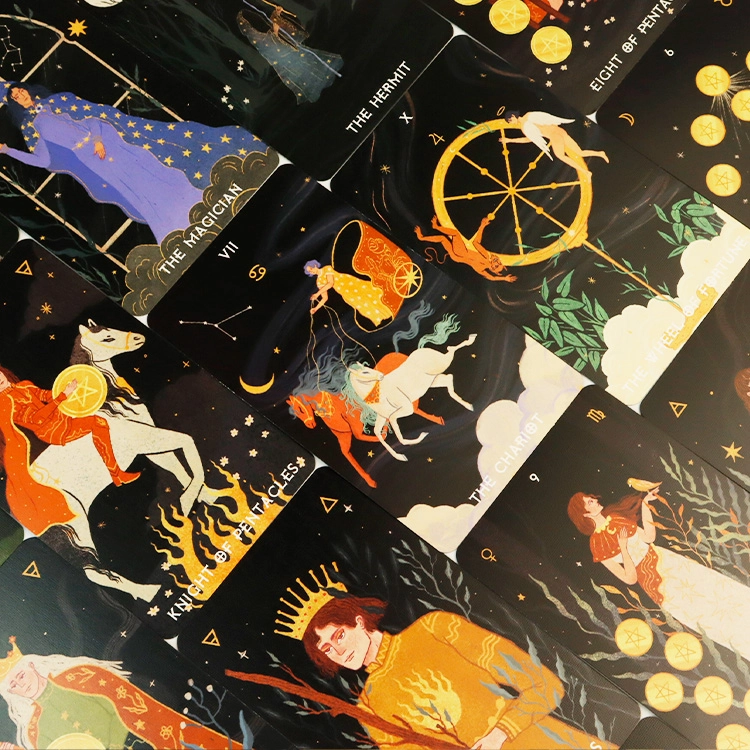
High Quality Tarot Cards with Sleeve Box Packaging | Premium Custom Tarot Deck Set for Enhanced Presentation & Protection
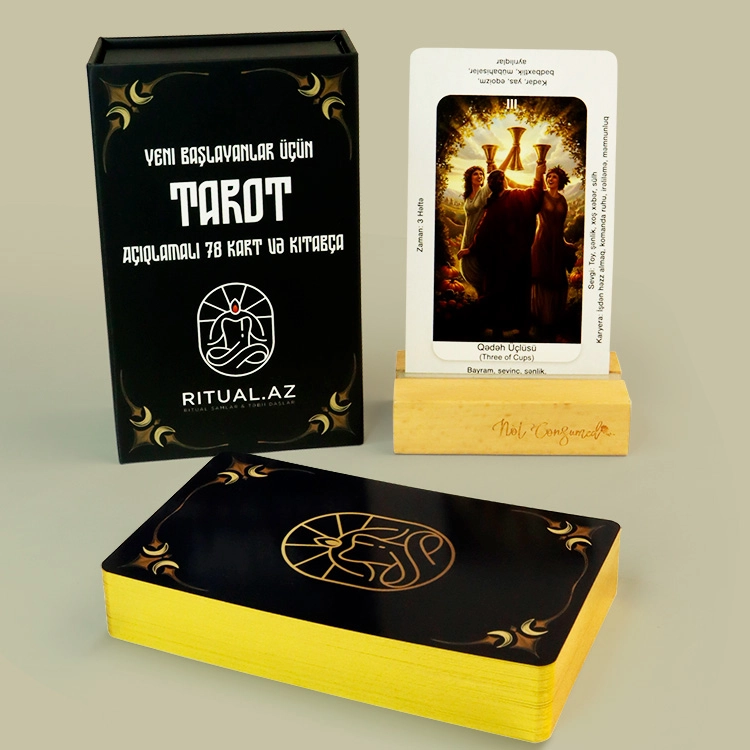
Hot Foil Stamped Tarot Cards with Book-Style Box | Premium Gold Edge Tarot Deck for Custom
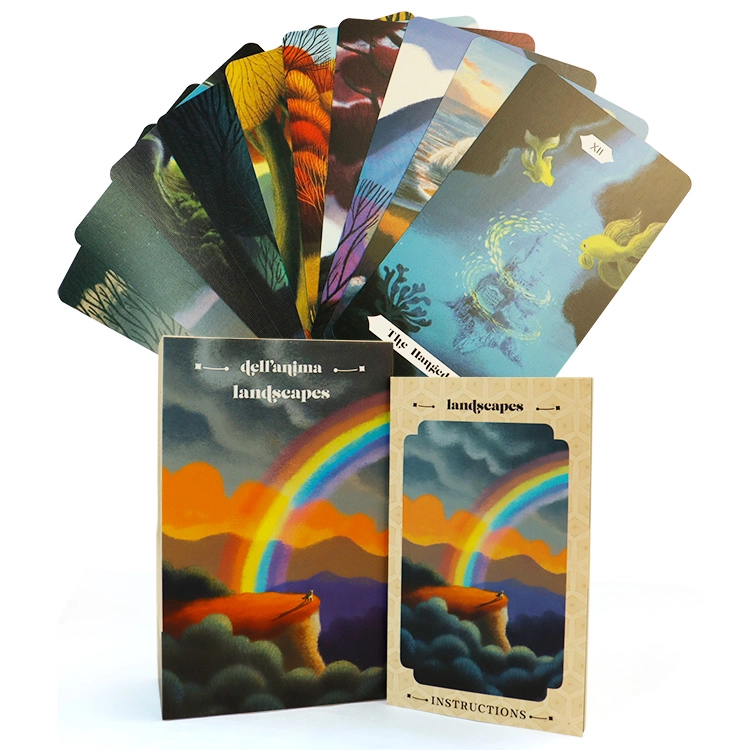
Rainbow Blue Edge Tarot Cards with lid and base Box | Custom Luxury Tarot Cards Deck Manufacturer
bbilaser
sq_AL