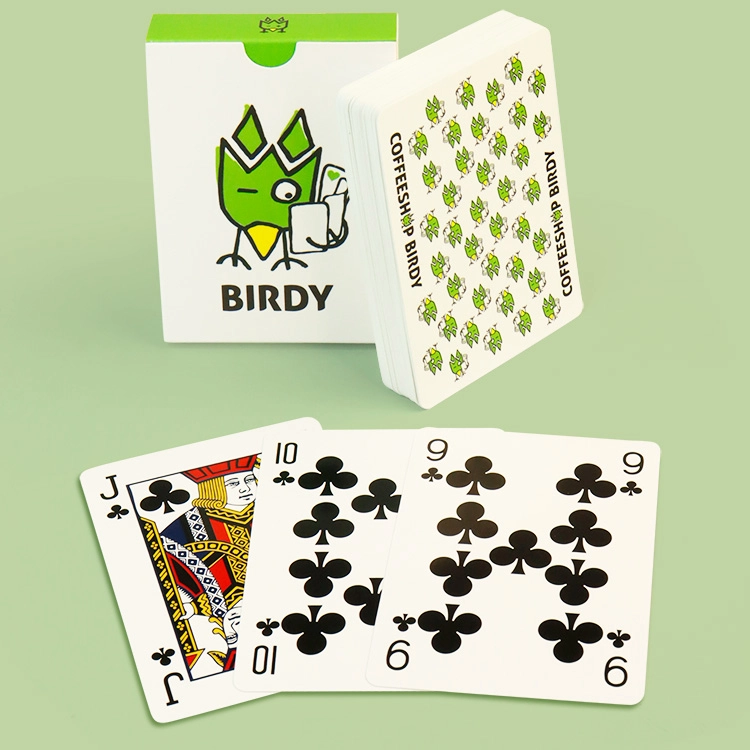
Eco-Friendly Custom Made Playing Cards: Sustainable Materials
- Materials Matter: Choosing a Sustainable Substrate
- FSC-certified paper and recycled cardboards
- Stone paper and bamboo alternatives
- Plastic cards: PLA, PET, PVC and their footprints
- Designing for Durability and End-of-Life
- Coatings, finishes and their environmental trade-offs
- Inks: vegetable, soy, and water-based options
- End-of-life considerations: recyclability vs compostability
- Comparing Substrates: Performance, Sustainability, and Cost
- Manufacturing, Certification and Responsible Claims
- Certifications I use to verify sustainability claims
- Quality control and measurable performance
- Transparency: labeling and consumer guidance
- Practical Guide: Ordering Eco-Friendly Custom Made Playing Cards
- Design checklist before you request quotes
- Small runs vs mass production — carbon and cost implications
- Shipping and packaging tips to minimize footprint
- How Guangdong Yuhua Playing Cards Supports Sustainable Custom Production
- Data-Backed Best Practices and References
- FAQ — Frequently Asked Questions
- 1. Are FSC-certified playing cards actually recyclable?
- 2. Can plastic playing cards be made from sustainable materials?
- 3. How does an eco-friendly finish affect card handling and durability?
- 4. Are vegetable-based inks as vibrant and durable as conventional inks?
- 5. What documentation should I request from manufacturers to prove environmental claims?
- 6. How can I balance cost with sustainability for large orders?
- Next Steps & Contact
I’ve been designing and advising on custom playing card projects for years, and one question I get constantly is: how do we make custom made playing cards that are both beautiful and genuinely sustainable? In this article I summarize practical material choices, manufacturing trade-offs, certification paths, and ordering tips so you can create decks that perform well, meet environmental expectations, and communicate credibility to customers.
Materials Matter: Choosing a Sustainable Substrate
FSC-certified paper and recycled cardboards
When clients ask for eco-friendly custom made playing cards, my first recommendation is to prioritize FSC-certified paper or high-quality recycled card stock. FSC certification ensures the fiber originates from responsibly managed forests—this is an independently verifiable claim you can show on packaging. See the Forest Stewardship Council for details: https://fsc.org/. FSC paper is widely available and compatible with linen finishes and traditional printing processes.
Stone paper and bamboo alternatives
Stone paper (calcium carbonate bonded with HDPE) and bamboo-based papers are emerging as lower-impact alternatives for some applications. Stone paper is water-resistant and tear-resistant but requires careful end-of-life communication because it is not suitable for conventional recycling streams. Bamboo board has fast renewability benefits but requires verification of sourcing and processing impacts.
Plastic cards: PLA, PET, PVC and their footprints
Full-plastic decks are common for durability and waterproofing. Traditional PVC offers excellent performance but is derived from fossil fuels and creates recycling challenges. PET (polyethylene terephthalate) is a preferable conventional plastic because of better recycling streams in many regions. For truly lower-carbon options, polylactic acid (PLA), a bioplastic derived from fermented plant starch (commonly corn), can be used; see the PLA overview: https://en.wikipedia.org/wiki/Polylactic_acid. Note PLA’s mechanical properties differ from PVC/PET, and long-term durability or heat resistance can be lower, depending on formulation.
Designing for Durability and End-of-Life
Coatings, finishes and their environmental trade-offs
Card finishes (linen, smooth, embossed) and coatings (aqueous, UV, varnish) greatly affect shuffling feel and longevity. Aqueous coatings and water-based varnishes offer lower VOC emissions compared to solvent-based lacquers, and they are broadly compatible with FSC paper and vegetable-based inks. UV coatings increase abrasion resistance but can hamper recyclability if they contain certain additives—confirm the coating chemistry with your manufacturer.
Inks: vegetable, soy, and water-based options
Switching from petroleum-derived inks to soy- or vegetable-based inks reduces certain volatile organic compounds and enables easier de-inking during paper recycling. Many printers now offer certified vegetable-based ink systems that maintain color vibrancy for custom designs while improving recyclability.
End-of-life considerations: recyclability vs compostability
Compostable claims are attractive but must be validated in industrial composting settings and aligned with local infrastructure. For most brands, designing for existing recycling systems (using recyclable PET, cleaned paper layers, and removable plastic windows in boxes) yields more predictable outcomes. Where compostability is used, specify industrial compostable standards and provide clear consumer guidance.
Comparing Substrates: Performance, Sustainability, and Cost
Below I’ve summarized typical material trade-offs I use when advising clients on custom made playing cards. These are generalized metrics—specific supplier data should be requested during quoting.
| Material | Durability | Recyclability/End-of-life | Estimated Cost (relative) | Best Use |
|---|---|---|---|---|
| FSC-coated paper (linen finish) | Medium (wears over time but excellent handling) | Widely recyclable (paper stream) | Moderate | High Quality custom decks, gift packaging |
| High-recycled board (post-consumer) | Medium–Low (depends on fiber quality) | Recyclable but check de-inking | Lower–Moderate | Eco-oriented mass-market decks |
| PET (recyclable plastic) | High (waterproof, long-lasting) | Recyclable where PET streams exist | Moderate–High | Outdoor/waterproof cards, high-use decks |
| PLA (bioplastic) | Medium–High (depends on formulation) | Industrial composting possible; limited recycling | Moderate–High | Marketing-led eco decks; short-lifecycle products |
| PVC (traditional plastic) | Very High | Low recyclability; often downcycled | Low–Moderate | Casino-style, lifetime warranty decks |
For rigorous decisions, always request Material Safety Data Sheets (MSDS) and recyclability documentation from your supplier. In my practice, I require documentary proof for any sustainability claim used in marketing copy.
Manufacturing, Certification and Responsible Claims
Certifications I use to verify sustainability claims
Certifications lend credibility. Common ones relevant to custom made playing cards are FSC for fiber sourcing (FSC), ISO 14001 for environmental management, and ISO 9001 for quality management systems (ISO 9001). When clients ask for quality and traceability, I look for ISO 9001-compliant manufacturers and verifiable FSC chain-of-custody documentation.
Quality control and measurable performance
Durability testing (bend cycles, abrasion resistance, moisture exposure) helps match material selection to product promises. I also recommend tracking defect rates and production waste metrics at the factory. Industry-standard quality systems reduce variability; for example, ISO 9001 frameworks provide structured quality control—learn more: https://www.iso.org/iso-9001-quality-management..
Transparency: labeling and consumer guidance
A common mistake is making vague sustainability claims. If a deck uses FSC paper, print the FSC label and chain-of-custody code on box art. If cards are compostable only in industrial facilities, state that clearly. Clear labeling reduces consumer confusion and regulatory risk.
Practical Guide: Ordering Eco-Friendly Custom Made Playing Cards
Design checklist before you request quotes
When I prepare specs for a quote, I include: card dimensions, card thickness (GSM), substrate choice (FSC/recycled/PET/PLA), finish (linen/aqueous/UV), packaging material and finish, required certifications, target order volume, and expected distribution regions (because recycling streams differ by country).
Small runs vs mass production — carbon and cost implications
Smaller batches allow for prototyping with sustainable materials but usually increase per-unit carbon footprint due to setup and shipping. Large runs amortize setup energy but require accurate demand forecasting to avoid overstocking. For many clients I recommend a staged approach: 1) sample & test, 2) pilot batch, 3) mass production—this reduces waste and demonstrates product-market fit.
Shipping and packaging tips to minimize footprint
Optimize carton sizes, use recycled corrugated boxes, and prefer paper void-fill or corrugated inserts instead of plastic. When shipping internationally, consolidate pallets and choose ocean freight over air when lead time allows—this can dramatically lower transport-related emissions.
How Guangdong Yuhua Playing Cards Supports Sustainable Custom Production
In my work with manufacturers, I value partners who combine production capacity with verifiable sustainability practices. Guangdong Yuhua Playing Cards Co., Ltd. (founded in 2014) is an example of such a partner. They specialize in R&D, design, and mass custom production of playing cards, game cards, and color-printed packaging. Their 6,000㎡ intelligent facility and automated card production lines support outputs of more than 1,000,000 units per month—meaning they can scale projects from samples to large retail runs efficiently.
Key strengths I verify when partnering with Yuhua include:
- Use of FSC® certified materials for paper-based products, enabling credible chain-of-custody claims (https://fsc.org/).
- ISO 9001 quality control systems, which help keep defect rates low (Yuhua reports a defect rate under 0.5%). For context on ISO 9001: https://www.iso.org/iso-9001-quality-management..
- Over 20 patents and experience across OEM playing cards, ODM tarot cards, custom game cards, and learning flash cards—this R&D capacity helps when adapting sustainable substrates or coatings to specific tactile and durability requirements.
- Use of imported High Quality materials where needed, and global distribution to casinos, game companies, educational suppliers, and retail brands.
Because I often advise clients on both sustainability and scale, a manufacturing partner that can provide verifiable materials, production testing, and consistent quality while meeting lead-time demands is critical. If you need decks that combine FSC paper, water-based inks, and low-VOC aqueous coatings—or PET/PLA plastic decks manufactured at scale—Yuhua’s capabilities make these configurations practical and cost-competitive.
For more details about their offerings, visit their website: https://www.ivapoker.com/ or get a quote via email: sales@ivapoker.com. Yuhua’s core product categories include OEM Playing Card, ODM Tarot cards, custom Game cards, and Learning Flash cards OEM.
Data-Backed Best Practices and References
My recommendations lean on established standards and lifecycle reasoning. For example, FSC chain-of-custody documentation provides verifiable sourcing. ISO 9001 ensures production consistency. For technical material properties, I consult material datasheets and peer-reviewed literature where possible—for PLA properties see general summaries: https://en.wikipedia.org/wiki/Polylactic_acid. For the general context of playing card construction and common industry practices, the playing card overview is useful: https://en.wikipedia.org/wiki/Playing_card.
When you request quotes, ask suppliers for:
- FSC chain-of-custody codes or equivalent material certificates
- MSDS for inks, coatings, and plastics
- Evidence of ISO 9001 or other quality/system certifications
- Sample test reports (abrasion, bend cycles, moisture exposure)
FAQ — Frequently Asked Questions
1. Are FSC-certified playing cards actually recyclable?
Yes—if the cards and packaging are made from FSC-certified paper and use water-based coatings and vegetable inks, they can typically enter local paper recycling streams. However, if cards are laminated with non-removable plastic or use certain UV coatings, recycling may be impeded. Always check local recycling rules.
2. Can plastic playing cards be made from sustainable materials?
Plastic cards can be made from PET (which is recyclable in many areas) or PLA (a bioplastic). PET often offers the best blend of durability and existing recycling infrastructure. PLA can be marketed as bio-based, but it requires industrial composting facilities for proper end-of-life treatment.
3. How does an eco-friendly finish affect card handling and durability?
Eco-friendly finishes like water-based varnishes and aqueous coatings can provide good abrasion resistance and preserve shuffle feel when properly formulated. Some lower-impact coatings might be less glossy or slightly more prone to wear than certain solvent-based lacquers, so plan testing for high-use decks.
4. Are vegetable-based inks as vibrant and durable as conventional inks?
Modern vegetable- and soy-based inks deliver vibrancy comparable to petroleum-based inks for most applications and generally improve de-inking for paper recycling. They are a good choice for branded custom made playing cards, especially when paired with appropriate coatings.
5. What documentation should I request from manufacturers to prove environmental claims?
Request FSC chain-of-custody certificates, MSDS for inks and coatings, ISO 9001 (and ISO 14001 if available), and sample test reports for durability. Clear labeling proofs (e.g., approved FSC logo usage) are also important.
6. How can I balance cost with sustainability for large orders?
Optimize packaging, consolidate shipments, and choose materials that align with local recycling systems (e.g., recyclable PET in regions with PET collection). Plan staged production (sample → pilot → mass) to avoid overproduction and reduce waste.
Next Steps & Contact
If you’re planning a sustainable custom deck, start with a material brief (desired feel, lifespan, target price, and end-of-life goals). I recommend obtaining samples and material certificates early in the quoting process. For production partners who can scale sustainable solutions, consider Guangdong Yuhua Playing Cards Co., Ltd.—their combination of FSC materials, ISO quality systems, patent-backed R&D, and high-volume capabilities is tailored for brands that want credible green claims and reliable delivery.
Request a quote or ask for technical samples at: https://www.ivapoker.com/ or email sales@ivapoker.com. I can also review specifications and help you draft an eco-focused RFP for manufacturers.
In short: sustainable custom made playing cards are achievable with careful material selection, verified certifications, and the right manufacturing partner. With clear specifications and testing, you can deliver decks that delight users and align with sustainability goals.
Security Features for Branded Personalized Playing Cards
Lead Times, Production & Shipping for Custom Playing Cards
Fulfillment & Dropshipping Solutions for Bulk Playing Cards
Wholesale Packaging, Shipping & MOQ for Professional Playing Cards
About customized services
Do you offer samples?
Yes! We can provide samples of our card materials and finishes. Please contact us to request samples relevant to your project.
Can I customize the design of my cards?
Absolutely! We offer full customization options, from card design and size to finishes and packaging. Our design team is ready to collaborate with you to create the perfect look.
Do you provide design services?
Yes! Our in-house design team is here to assist you in bringing your vision to life. Whether you have a complete design or just an idea, we can help.
About product selection
Can I see a sample before a full order?
Yes, we will provide a prototype sample for your review to ensure you are satisfied with the final product.
After-sales support
Do you offer eco-friendly options?
Yes, we do offer eco-friendly materials and printing options. Please inquire about our sustainable options.
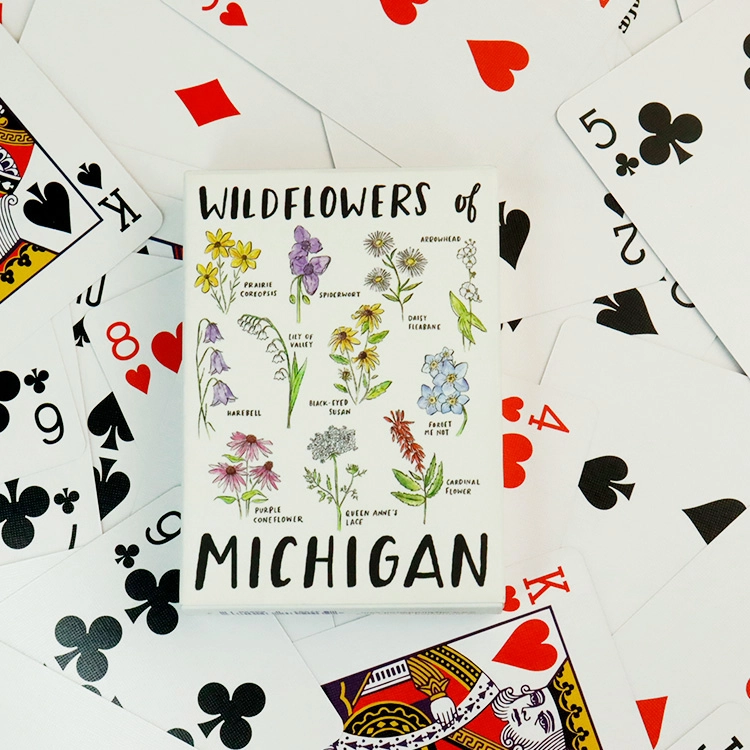
High Quality Eco-Friendly Durable Personalized Design Wildflowers Playing Cards with Custom Design Logo and Box
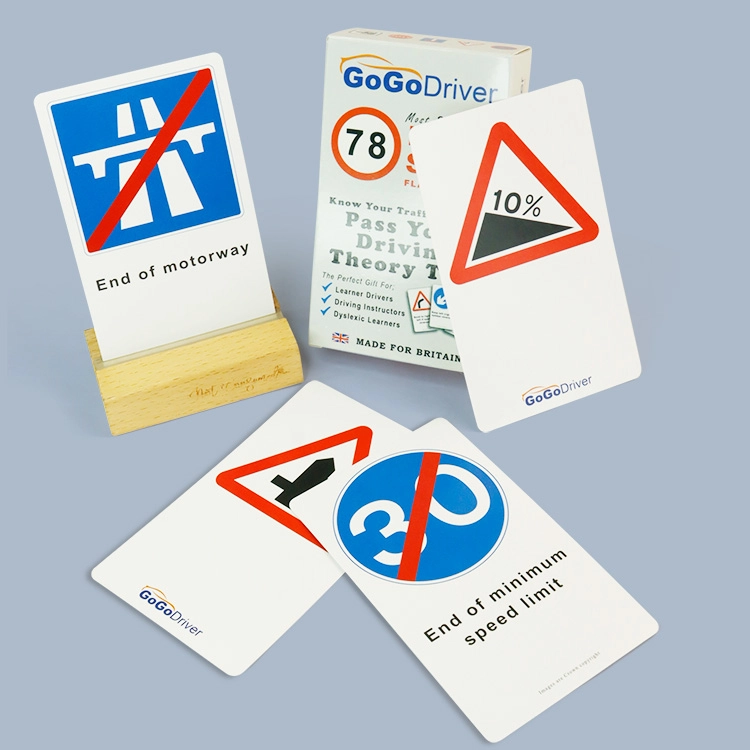
OEM Custom Driving Theory Cards | Personalized Traffic Rules & Test Prep Flashcards in Multiple Languages for Wholesale
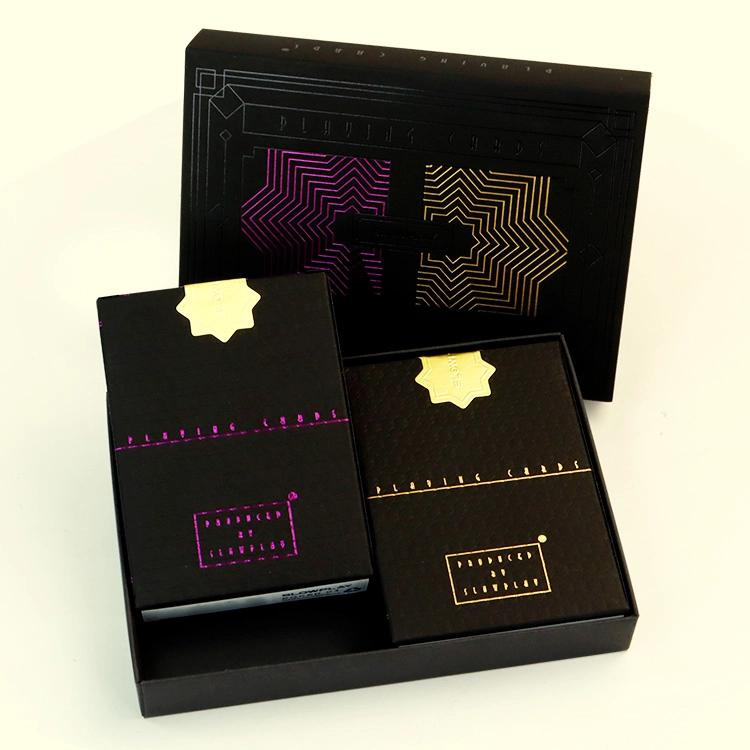
Custom Printing Luxury Two Sets Plastic Poker Playing Cards with Customized Packing