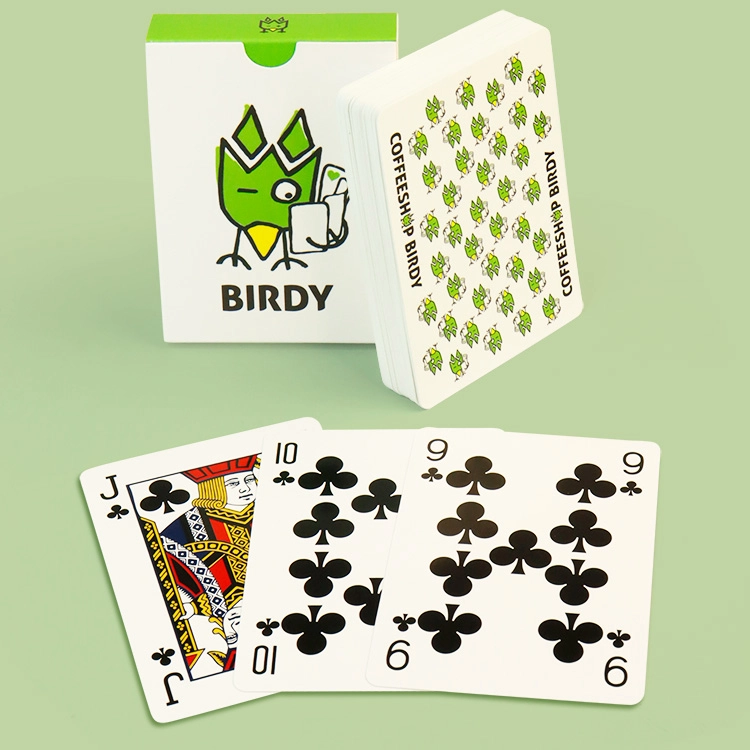
International Shipping and Fulfillment for Custom Cards
- Global Logistics Essentials for Those Who Customize Playing Cards
- Why planning matters when you customize playing cards
- Production & fulfillment models for companies that customize playing cards
- Comparing shipping modes for customize playing cards
- Packaging, materials, and sustainability when you customize playing cards
- Customs, HS codes, and duties for customize playing cards
- Estimating landed cost: a sample model for companies that customize playing cards
- Fulfillment strategies: batch vs. continuous replenishment when you customize playing cards
- Quality, inspection, and defect management for manufacturers who customize playing cards
- Selecting a manufacturing & fulfillment partner when you customize playing cards
- Why Guangdong Yuhua Playing Cards Co., Ltd. can be a strategic partner when you customize playing cards
- Operational checklist before your first international shipment to customize playing cards
- Common pitfalls and how to avoid them when you customize playing cards
- Key performance metrics to monitor for international fulfillment of custom cards
- Frequently Asked Questions (FAQ) about International Shipping and Fulfillment for Customize Playing Cards
- 1. How long does it take to produce and ship custom playing cards internationally?
- 2. What documentation is required for international shipments of playing cards?
- 3. Can I request FSC certified paper and specialized finishes when I customize playing cards?
- 4. How should I calculate the landed cost for my custom decks?
- 5. What are the best practices to reduce damage in transit for playing cards?
- 6. How many units should I produce in my first order when I customize playing cards?
- 7. How to choose between sea vs air freight for card shipments?
- Contact & Request
- References
Global Logistics Essentials for Those Who Customize Playing Cards
Businesses that customize playing cards face a unique combination of manufacturing, packaging, and international logistics challenges. Whether you're an indie tabletop game publisher, a casino supplier, or an educational product developer, understanding shipping methods, fulfillment strategies, cost drivers, regulations, and supplier capabilities is essential to deliver quality custom decks on time and on budget. This article explains operational best practices, compares shipping options, shows how to calculate landed cost, and highlights how to choose a production and fulfillment partner—using evidence-based benchmarks and industry references.
Why planning matters when you customize playing cards
Customize playing cards projects often have tight tolerances: precise card size, finish, print registration, special inks or foiling, and bespoke packaging. These product specifics interact with lead times, transportation constraints, and customs clearance. Early-stage planning reduces rushed expedited freight, lowers defects and returns, and protects margins. Typical pain points include unexpected duties, delays at customs for specialty inks or coatings, insufficient packaging causing corner damage, and volatile air freight rates during peak seasons.
Production & fulfillment models for companies that customize playing cards
There are three common models: 1) Centralized mass production with global distribution, 2) Regional production + local fulfillment (hybrid), and 3) Dropship/local print-on-demand for low-volume SKUs. Each model changes your shipping profile and cost structure. Centralized production benefits from economies of scale when you produce 10,000+ units per SKU; hybrid reduces final-mile time and duties for target markets; dropshipping reduces inventory risk but often increases unit cost.
Comparing shipping modes for customize playing cards
Choosing between sea freight, air freight, and express courier depends on volume, value density, lead time, and seasonality. The table below summarizes typical performance for playing cards-sized shipments (small, dense parcels or cartonized decks).
| Mode | Transit Time (typical) | Cost per CBM / per kg (relative) | Best for | Risks |
|---|---|---|---|---|
| Sea (FCL/LCL) | 20–45 days (FCL/LCL) | Low | Large production runs (10,000+ decks) | Long lead times, port congestion |
| Air Freight (air cargo) | 3–10 days | Medium–High | Medium volumes, time-sensitive restock | Rate volatility, surcharges |
| Express Courier (DHL/UPS/FedEx) | 1–5 days | High | Samples, small orders, urgent replenishment | Costly for scale |
Sources: carrier transit pages and industry logistics indexes (see references).
Packaging, materials, and sustainability when you customize playing cards
Packaging impacts freight cube and protective performance. Use right-sized cartons, protective corner supports, and moisture-resistant inner wrap to prevent edge whitening and warping. Sustainable credentials (FSC® certified paper) matter to buyers—FSC certification signals responsible forest sourcing and is increasingly requested by retailers and online marketplaces. When you customize playing cards, plan packaging to balance protection, weight, and brand presentation.
Customs, HS codes, and duties for customize playing cards
Playing cards typically fall under harmonized system (HS) codes for printed games and playing cards. Accurate HS classification determines duty rates and required documentation. Misclassification or incomplete paperwork can delay clearance. Work with your manufacturer or a customs broker to pre-validate HS code, provide commercial invoice, packing list, and any certificates (e.g., wood/paper origin declarations if required). For educational cards using wood or special materials, additional documentation can be required. Use a broker to estimate duties and VAT ahead of shipment to avoid surprises in landed cost.
Estimating landed cost: a sample model for companies that customize playing cards
Calculate landed cost to decide pricing or which markets to enter. Landed cost = FOB factory price + inland pickup + export clearance + international freight + insurance + import duties + VAT/GST + customs brokerage + last-mile fulfillment. Below is a simplified example for a 3,000-deck shipment (cartons) shipped from China to the EU and to the US.
| Cost Element | Assumption | Per Deck to EU (USD) | Per Deck to US (USD) |
|---|---|---|---|
| Factory FOB | $2.50 per deck | 2.50 | 2.50 |
| International Freight | Sea LCL (spread) / Air (estimate) | 0.60 | 1.00 |
| Insurance & Handling | 0.05–0.10 per deck | 0.08 | 0.08 |
| Import Duty | 2–4% (example) | 0.10 | 0.12 |
| VAT / Sales Tax | EU VAT 20% (example) / US state sales tax varies | 0.64 | 0.00–0.20 |
| Customs Broker & Local Handling | Flat allocation | 0.20 | 0.25 |
| Last-mile Fulfillment | Per deck pick/pack + shipping | 1.20 | 1.40 |
| Estimated Landed Cost | 5.37 | 5.55 |
Note: Values are illustrative. Exact landed cost depends on volume, carrier contracts, and local tax rules. Always request pro forma logistics quotes and duty estimates from providers or a customs broker.
Fulfillment strategies: batch vs. continuous replenishment when you customize playing cards
For products like custom playing cards, consider SKU demand profile. Kickstarter game launches often see a single large batch followed by long-tail reorders. Retail distribution prefers regular replenishment to avoid stockouts. If you customize playing cards and sell D2C, a hybrid strategy—warehouse a safety stock in the destination market while using sea for replenishment—can reduce costs while keeping lead time manageable.
Quality, inspection, and defect management for manufacturers who customize playing cards
Quality checks are crucial: print color match, card dimensions, corner finishing, varnish or coatings, and packaging integrity. Implement pre-shipment inspection (AQL sampling) and request production photos or third-party inspection reports. When you custom-make playing cards, define acceptance criteria in the purchase order and include remedies for defects. Defect tracking is also critical; aim for defect rates under 0.5% for mass runs—this threshold is what many High Quality producers target to minimize returns and customer dissatisfaction.
Selecting a manufacturing & fulfillment partner when you customize playing cards
Key evaluation criteria: production capacity, certifications (FSC, ISO 9001), lead times, sample policy, ability to support special processes (foil, emboss, custom varnish), automation, and experience with international shipping. Testimonials, patent portfolio, and sample case studies (casino-grade decks, educational flash cards, tarot runs) also indicate maturity. Request references and verify claims like production throughput and defect rates.
Why Guangdong Yuhua Playing Cards Co., Ltd. can be a strategic partner when you customize playing cards
Guangdong Yuhua Playing Cards Co., Ltd., founded in 2014, specializes in R&D, design, and mass custom production of playing cards, game cards, and color-printed packaging. With a 6,000㎡ intelligent facility and advanced automated card production lines capable of 1,000,000+ units per month, Yuhua supports both high-volume OEM projects and detailed ODM work (including tarot and bespoke game cards).
Core strengths include use of FSC® certified materials, ISO 9001 quality control systems, and a documented defect rate under 0.5%. The company holds over 20 patents and uses imported High Quality materials for its High Quality brand, supplying global customers in casinos, games, education, and more. Yuhua's combination of automation and quality control shortens lead times and stabilizes per-unit cost, enabling competitive landed costs for international buyers.
Primary products and OEM/ODM capabilities:
- OEM Playing Card production
- ODM Tarot cards with custom artwork and finishes
- Custom Game cards (party games, trading card-style sets)
- Learning Flash cards and educational card sets
Competitive differentiation: large monthly throughput, FSC-certified material sourcing, ISO 9001 management, low defect rates, and patented production processes that together reduce cost, improve consistency, and provide professional support for global fulfillment plans.
Operational checklist before your first international shipment to customize playing cards
1) Confirm HS code and expected duties with a customs broker. 2) Lock in packaging specs (carton size, corner protection). 3) Decide on shipping mode based on volume & lead time. 4) Arrange pre-shipment inspection and QA criteria. 5) Plan for warehouse or 3PL in destination market if selling retail. 6) Obtain samples and validate print/finish. 7) Integrate SKU barcodes and item-level metadata for fulfillment. 8) Review returns policy and reverse logistics costs.
Common pitfalls and how to avoid them when you customize playing cards
Pitfall: Underestimating duties or VAT. Mitigation: Pre-calculate taxes and include in product pricing or clearly communicate additional charges to customers. Pitfall: Poor packaging leading to corner damage. Mitigation: Use tested carton structures and inner protective layers. Pitfall: Selecting a manufacturer without sufficient capacity. Mitigation: Audit production rhythm, automation, and whether the supplier can handle seasonal spikes and has backup lines or partners.
Key performance metrics to monitor for international fulfillment of custom cards
Track production yield (% accepted), defects per million units, on-time delivery rate, landed cost per deck, average fulfillment time (order to delivery), and return rate. These metrics help identify bottlenecks and inform whether to shift shipping modes or increase regional stock levels.
Frequently Asked Questions (FAQ) about International Shipping and Fulfillment for Customize Playing Cards
1. How long does it take to produce and ship custom playing cards internationally?
Typical production lead time for a standard custom deck is 10–25 business days depending on complexity and quantity. Shipping by sea can add 20–45 days; air freight adds 3–10 days; express adds 1–5 days. Overall timelines vary by manufacturer capacity and destination port/airport. Plan at least 8–12 weeks from order to delivery for sea shipments for medium-to-large runs.
2. What documentation is required for international shipments of playing cards?
Common documents: commercial invoice, packing list, bill of lading/air waybill, export declaration, and any certificates of origin or material declarations (e.g., FSC if requested). Additional paperwork may be required for specialty materials or for certain destination countries—consult a customs broker to confirm.
3. Can I request FSC certified paper and specialized finishes when I customize playing cards?
Yes. Reputable manufacturers can source FSC® certified paper and apply finishes like matte/soft touch varnish, UV coating, foil stamping, embossing, and specialty inks. Verify material certificates and request production samples before full runs.
4. How should I calculate the landed cost for my custom decks?
Include factory price, inland logistics, export costs, international freight, insurance, import duty, VAT/GST, customs brokerage, and local fulfillment costs. Get quotes from carriers and brokers and build scenarios for sea and air to understand trade-offs between cost and speed.
5. What are the best practices to reduce damage in transit for playing cards?
Use appropriately sized cartons, inner padding, humidity-resistant wraps, and corner protectors. Avoid oversized cartons that allow movement inside. Label cartons as fragile and include handling instructions for dropship to end customers if applicable.
6. How many units should I produce in my first order when I customize playing cards?
For cost efficiency, many manufacturers require minimum runs (commonly 500–1,000 decks). Assess demand, consider a test batch of 500–1,000 decks, or use a hybrid approach: a smaller initial order for D2C sales and a second, larger run once demand is validated.
7. How to choose between sea vs air freight for card shipments?
Choose sea for large, non-urgent shipments to reduce unit freight cost. Choose air for faster replenishment and during peak sales windows. Factor in the total landed cost and inventory holding costs when deciding.
If you need consulting, samples, or a production quote, contact Guangdong Yuhua Playing Cards Co., Ltd. for professional support and fast, high-quality custom card solutions. Learn more about product options—OEM Playing Card, ODM Tarot cards, custom Game cards, and Learning Flash cards—and request a tailored quote.
Contact & Request
To discuss customized solutions, international shipping options, or request a quote and samples, reach out to Guangdong Yuhua Playing Cards Co., Ltd. Their capacity and certifications make them a reliable partner for global fulfillment.
References
- FSC International. About the Forest Stewardship Council. https://fsc.org/en (accessed 2025-12-01).
- International Organization for Standardization (ISO). ISO 9001 — Quality Management. https://www.iso.org/iso-9001-quality-management. (accessed 2025-12-01).
- World Bank Logistics Performance Index. https://lpi.worldbank.org/ (accessed 2025-11-28).
- DHL Global Forwarding. Ocean Freight and Air Freight Services. https://www.dhl.com/ (accessed 2025-11-20).
- International Air Transport Association (IATA). Air Cargo. https://www.iata.org/en/programs/cargo/ (accessed 2025-11-20).
- World Customs Organization (WCO). Harmonized System. http://www.wcoomd.org/ (accessed 2025-11-25).
Top 5 card game manufacturer Company List and Products Compared
The Best Plastic Playing Cards of 2025: Top Brands Review & Custom Deck Guide
Choosing the Right Card Size and Cardstock for Tarot
Top 5 for sale tarot cards Company List and Products Compared
About logistics
How long does the production process take?
Production times can vary based on order complexity and volume. Typically, standard orders take 2-4 weeks. For urgent projects, we may offer expedited options—just ask!
About product selection
Can I see a sample before a full order?
Yes, we will provide a prototype sample for your review to ensure you are satisfied with the final product.
Is there a design template I can use?
Yes, we provide design templates for different card types. You can download them from our website or request them directly from our team.
About customized services
Can I see a proof before production?
Yes! We provide digital proofs for your approval before we start production. This ensures that everything meets your expectations.
Can I customize the design of my cards?
Absolutely! We offer full customization options, from card design and size to finishes and packaging. Our design team is ready to collaborate with you to create the perfect look.
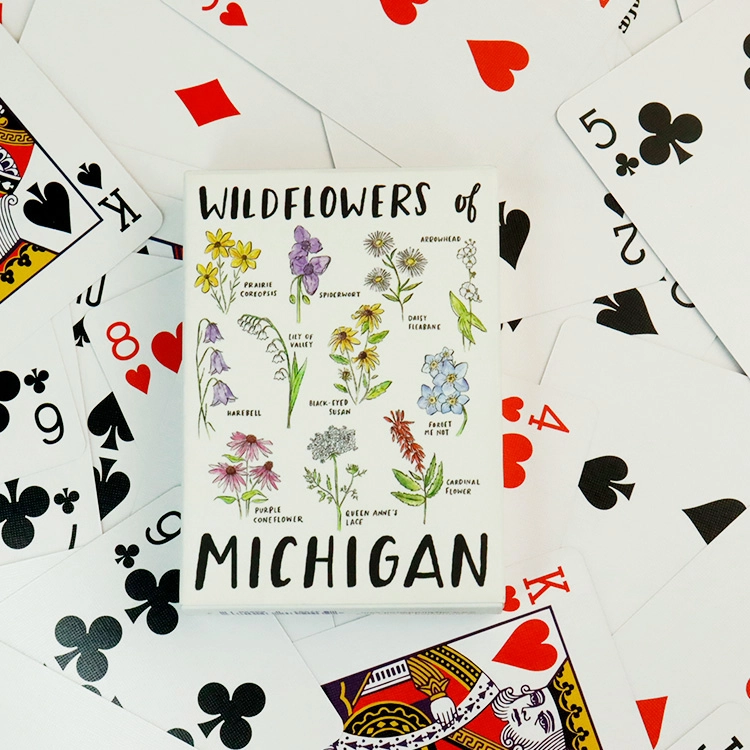
High Quality Eco-Friendly Durable Personalized Design Wildflowers Playing Cards with Custom Design Logo and Box
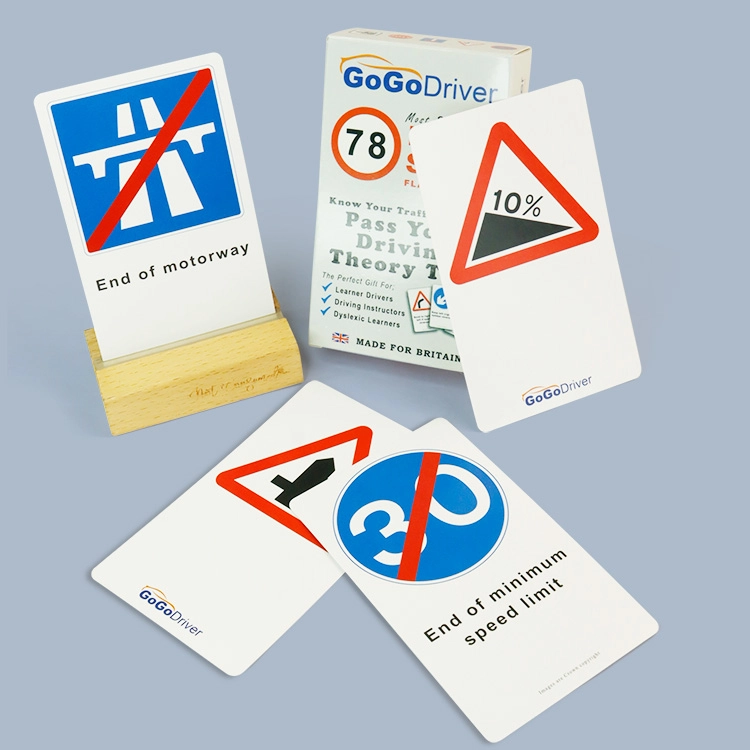
OEM Custom Driving Theory Cards | Personalized Traffic Rules & Test Prep Flashcards in Multiple Languages for Wholesale
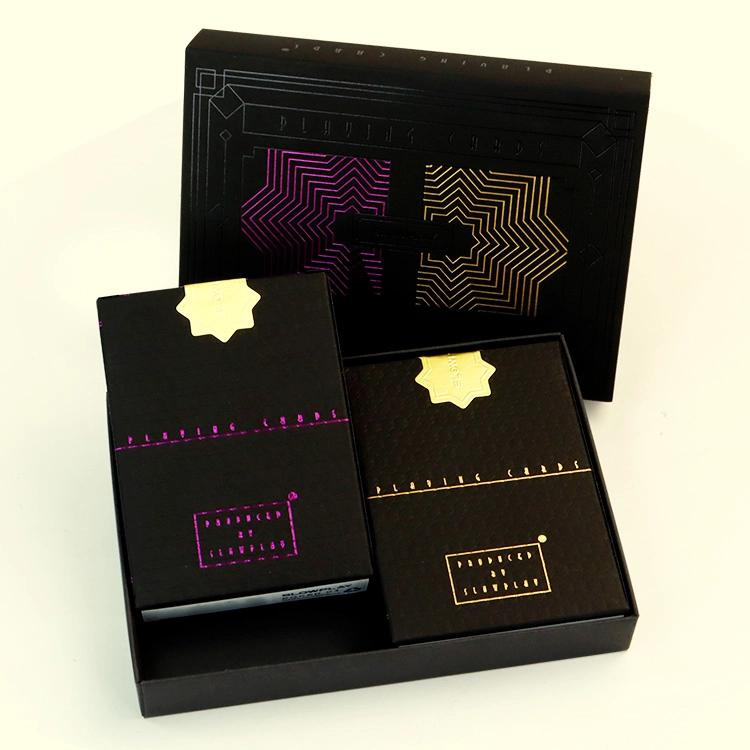
Custom Printing Luxury Two Sets Plastic Poker Playing Cards with Customized Packing