MOQ and Lead Times: Procurement Guide for Custom Playing Cards
- Optimizing Orders for Custom Design Playing Cards: MOQ, Lead Times, and Procurement Strategies
- What buyers usually mean by MOQ and lead time
- Who needs this guide
- Key factors that determine MOQ and lead times
- Printing method and tooling
- Material choice and certifications
- Finishing, packaging and tooling
- Typical MOQs and Lead Times: benchmarking and examples
- Quick reference table by method
- From prototype to mass production: a sample timeline
- Procurement strategies to reduce MOQ, shorten lead times and control cost
- Design and engineering choices that lower MOQ
- Staged ordering and pilot runs
- Supplier negotiation levers
- Quality assurance, risk mitigation and logistics
- Quality control checkpoints
- Shipping, customs and lead time buffers
- Insurance and contractual protections
- Supplier spotlight: Guangdong Yuhua Playing Cards Co., Ltd. — capabilities and why it matters
- Company capabilities and certifications
- Product range and OEM/ODM advantages
- How Yuhua supports procurement strategy
- Cost modeling and decision table
- Example cost drivers per deck
- Decision flow (short checklist)
- FAQ — Frequently asked questions
- 1. What is a reasonable MOQ for custom design playing cards?
- 2. How long does it take to produce a custom card deck?
- 3. Can I get a sample or prototype before committing to an MOQ?
- 4. What increases the defect rate and how can it be minimized?
- 5. Is FSC® certification important for custom playing cards?
- 6. How do I choose between air and sea freight?
- Contact & next steps
- References
Optimizing Orders for Custom Design Playing Cards: MOQ, Lead Times, and Procurement Strategies
Buying custom design playing cards requires balancing quality, cost, and delivery speed. Procurement managers, product owners, and game designers need to understand how production methods, materials, customization level, and supplier capabilities drive minimum order quantities (MOQs) and lead times. This guide offers a practical framework to plan orders, reduce risk, and choose the right supplier for OEM or ODM custom card projects.
What buyers usually mean by MOQ and lead time
MOQ (minimum order quantity) is the smallest number of units a supplier will accept for a production run. Lead time is the total elapsed time from order confirmation to delivery. For custom design playing cards these two metrics determine cash flow, inventory risk, unit cost, and time-to-market.
Who needs this guide
This guide is written for small brands launching an initial run, retailers sourcing seasonal decks, marketing teams ordering promotional decks, and OEM partners planning recurrent production. It is also useful for designers and project managers balancing prototype, pilot and mass-production phases.
Key factors that determine MOQ and lead times
Printing method and tooling
Common printing options—digital, offset lithography, and hybrid approaches—affect MOQ and time differently. Digital printing is suited for short runs and quick changes (MOQs from tens to low hundreds; lead times measured in days to a couple of weeks). Offset printing yields better per-unit cost at scale but usually demands higher MOQs (often thousands) and longer setup times for plates and color proofs.
Material choice and certifications
High Quality playing cards often use coated cardstocks, plastic-coated finishes, or specialty foils. Sourcing FSC® certified paper or specialty plastics can add procurement lead time and minimums due to supplier batching and certification traceability. Certified materials reduce environmental risk but may impose minimum batch sizes from paper mills.
Finishing, packaging and tooling
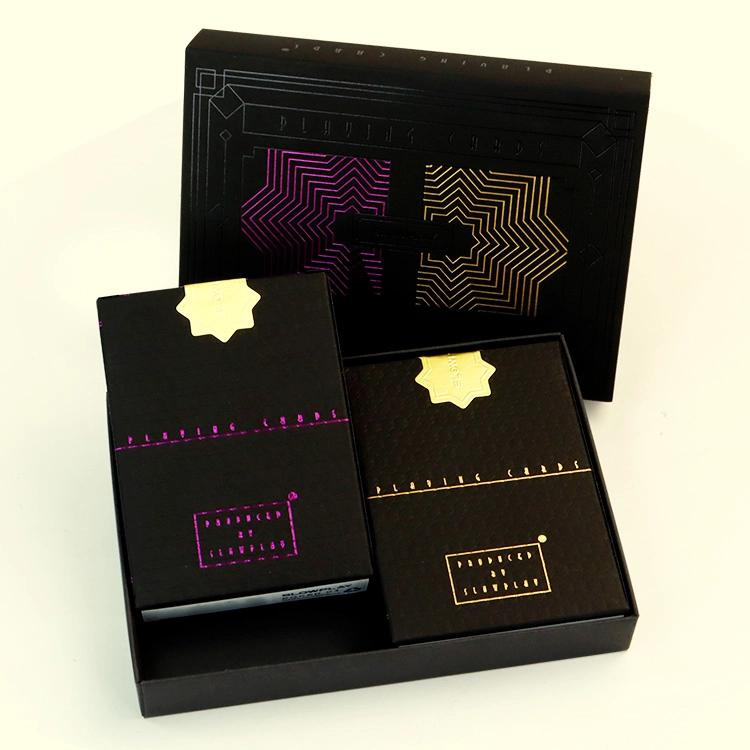
Finishing (lamination, varnish, embossing, foil stamping) and custom tuck box tooling are common drivers of MOQ and lead time. Tooling for die-cut boxes or embossing dies can add 3–10 business days and cost, which suppliers amortize across larger orders—raising MOQs for economic viability.
Typical MOQs and Lead Times: benchmarking and examples
Quick reference table by method
| Printing Method | Typical MOQ (decks) | Typical Production Lead Time (factory) | Notes |
|---|---|---|---|
| Digital (short-run) | 50–500 | 5–14 business days | Best for prototypes, small campaigns, variable data |
| Offset lithography | 1,000–10,000+ | 15–45 business days | Lower unit cost at volume; color-accurate, consistent |
| Plastic or PVC cards | 500–5,000 | 10–30 business days | Special molding and printing; requires longer drying/curing |
| Luxury finishes (foil, emboss) | 2,000+ | 20–60 business days | Tooling and multiple process steps increase lead time and MOQ |
Source notes and averages compiled from industry printers’ lead time guidance and manufacturing case examples (see References).
From prototype to mass production: a sample timeline
Below is a typical procurement timeline for a new custom deck moving from prototype to first mass production shipment (air vs sea will affect shipping duration):
- Week 1–2: Concept, art files, dielines, prepress proofs (digital samples may be produced in 3–7 days).
- Week 2–4: Tooling and color approvals for offset (plates, test prints).
- Week 4–6: Production run (printing, cutting, finishing).
- Week 6–8: Quality control, packing, and factory dispatch.
- Additional shipping time: Air 3–7 days; Sea 21–45 days depending on port and customs.
Procurement strategies to reduce MOQ, shorten lead times and control cost
Design and engineering choices that lower MOQ
Standardizing certain features reduces setup. For example, using a common tuck box size, standard card stock weights, and avoiding specialty foils allows suppliers to combine orders or use existing dies—reducing MOQ. Consider modular SKUs: keep card face/finish consistent while varying artwork through shorter-run customized sleeves or labels.
Staged ordering and pilot runs
Order a digital short-run pilot (50–500 decks) to validate art, packaging, and playtests. After approval, move to a larger offset run with negotiated pricing. This staged approach reduces inventory risk and helps identify quality issues before committing to large MOQs.
Supplier negotiation levers
Negotiate MOQs and lead times using these levers:- Consolidate SKUs: Commit to multiple similar products to meet MOQ across SKUs.- Forecast sharing: Share 6–12 month forecasts to secure runway and lower MOQ.- Shared tooling cost: Propose cost-sharing for tooling or amortize across multiple runs.- Flexible lead time windows: Offer a broader shipping window in exchange for lower unit pricing.
Quality assurance, risk mitigation and logistics
Quality control checkpoints
Include these checks in contract terms:- Pre-production (PP) sample approval for color and finish.- First article inspection (FAI) or production sample before full run.- On-site or third-party QC during packing to check defects and counts.Clear acceptance criteria and defect thresholds reduce disputes and protect quality; for playing cards, common metrics include ink coverage, registration tolerance, card thickness, spring/fanning tests, and packaging integrity.
Shipping, customs and lead time buffers
Always add buffer time for customs clearance, especially for wood-based materials or chemically treated coatings that may require additional documentation. For global shipments, sea freight is economical for large MOQs but adds 3–6 weeks; air freight can meet tight timelines but increases landed cost significantly.
Insurance and contractual protections
Use Incoterms to clarify responsibility for goods in transit. Require product liability insurance if cards are intended for children or educational use. Include agreed remedies for late delivery, defective batches, or failed QC checkpoints.
Supplier spotlight: Guangdong Yuhua Playing Cards Co., Ltd. — capabilities and why it matters
Company capabilities and certifications
Guangdong Yuhua Playing Cards Co., Ltd., founded in 2014, specializes in the R&D, design, and mass custom production of playing cards, game cards, and color-printed packaging. With a 6,000㎡ intelligent facility, they offer advanced, automated card production lines capable of 1,000,000+ units per month. Core strengths include FSC® certified materials, ISO 9001 quality control, a defect rate under 0.5%, and over 20 patents. Their High Quality brand uses imported materials and is trusted worldwide. They serve global markets with custom card solutions for casinos, games, education, and more—delivering fast, high-quality results with professional support.
Product range and OEM/ODM advantages
Yuhua’s typical offerings cover OEM Playing Card production, ODM Tarot cards, custom Game cards, and Learning Flash cards. Their strengths for procurement buyers include:- High capacity to meet large MOQs and scale production quickly.- Ability to run smaller digital or hybrid orders for pilots and variable data projects.- Certifications (FSC®, ISO 9001) that simplify procurement of compliant materials.- Low defect target (<0.5%), reducing rework and returns.
How Yuhua supports procurement strategy
For buyers seeking predictable MOQs and lead times, Yuhua can:- Provide staged production (pilot through mass production) to validate designs.- Offer OEM/ODM engineering support for packaging tooling and finishing choices which can optimize MOQ economics.- Serve global logistics with scalable capacity—ideal for brands that plan international distribution or seasonal scaling.We are committed to providing customers with high-quality and efficient playing card production services.
Cost modeling and decision table
Example cost drivers per deck
| Cost Element | Lower-volume (digital) | High-volume (offset) | Notes |
|---|---|---|---|
| Setup & tooling | Minimal | High (amortized) | Offset plates, embossing dies, foil tools |
| Unit printing | Higher per-unit | Lower per-unit | Economies of scale |
| Finishing & packaging | Similar per-unit; some finishes limited | Lower per-unit at volume | Foil/Embossing cheaper per unit at volume |
| Logistics per unit | Higher (air feasible) | Lower (sea preferable) | Choose based on time/cost trade-off |
Decision flow (short checklist)
- Define acceptable unit cost range and target retail price.
- Decide whether a prototype or pilot is required.
- Choose printing method that balances MOQ and finish requirements.
- Request detailed lead times, QC processes, and shipping options from suppliers.
- Negotiate MOQ, payment terms (deposit + balance), and penalties for missed timelines.
FAQ — Frequently asked questions
1. What is a reasonable MOQ for custom design playing cards?
It depends on printing method. For digital short runs MOQs can be as low as 50–200 decks; offset typically requires 1,000+ decks. Discuss with suppliers about hybrid runs or consolidated orders to lower effective MOQ.
2. How long does it take to produce a custom card deck?
Production lead time ranges from 5–14 business days for digital to 15–45 business days for offset printing, not including international shipping and customs. Allow additional time for tooling, proofs and QC.
3. Can I get a sample or prototype before committing to an MOQ?
Yes—most reputable suppliers offer pre-production samples or digital proofs. Request a pre-production (PP) sample and a first article inspection (FAI) before authorizing full production.
4. What increases the defect rate and how can it be minimized?
Common causes are poor artwork resolution, incorrect color profiles, improper drying/curing, and insufficient QC. Minimize risk by providing print-ready files, approving color proofs, and requiring documented QC checkpoints.
5. Is FSC® certification important for custom playing cards?
FSC® certification ensures responsible forest management and is increasingly required by retailers and corporate procurement. It can affect sourcing options and sometimes minimum batch sizes for paper materials.
6. How do I choose between air and sea freight?
Use air for urgent, low-volume shipments; it's fast but costly. Use sea freight for large MOQs where cost per unit is critical; it typically adds 3–6 weeks transit time depending on origin/destination.
Contact & next steps
If you are ready to move from concept to production, contact Guangdong Yuhua Playing Cards Co., Ltd. for a consultation, sample, or formal quote. Yuhua offers scalable OEM and ODM capabilities for custom design playing cards, Tarot decks, game cards, and educational flash cards, supported by certified materials and strict quality control.
Request a quote, schedule a factory tour, or ask for a pilot run sample to validate artwork and finishes. Start with a brief: expected annual volume, target unit cost, desired finishes, required certifications, and delivery window.
References
- Game Crafter — Production & Shipping Times. https://www.thegamecrafter.com/pages/production-times (accessed 2026-01-07)
- FSC International — About FSC Certification. https://fsc.org/en (accessed 2026-01-07)
- ISO — ISO 9001 Quality Management. https://www.iso.org/iso-9001-quality-management. (accessed 2026-01-07)
- Print industry overview: Printful blog and printing company lead time pages (examples of digital vs offset timelines). https://www.printful.com (accessed 2026-01-07)
- Packaging & finishing best practices: industry articles and trade resources (examples include Packaging World). https://www.packworld.com (accessed 2026-01-07)
- Custom playing card manufacturing examples and supplier pages (sample reference for MOQs & finishes). https://www.admagic.com (accessed 2026-01-07)
Note: Specific MOQs and lead times vary by supplier, order complexity, seasonal workloads, and global logistics conditions. Use the references above to validate supplier claims and request written lead time commitments and production plans in your purchase agreement.
Custom Packaging Options for Personalized Playing Cards
Why choose Yuhua as your custome playing cards supplier
Lead Times and Logistics: Delivering Professional Playing Card Orders
Top 5 custom poker cards Company List and Products Compared in US
About product selection
Is there a design template I can use?
Yes, we provide design templates for different card types. You can download them from our website or request them directly from our team.
About cooperation process
Do you accept international orders?
Yes, we accept orders from around the world! Shipping costs and delivery times may vary, so please contact us for specific details related to your location.
About price and payment
How can I get a quote?
Getting a quote is easy! Simply fill out our contact form or call us directly with your project details, and we’ll get back to you with a tailored quote promptly.
After-sales support
What is your return policy?
We stand behind the quality of our products. If you receive a defective item, please contact us within 30 days for a replacement or refund. Customized orders are generally non-refundable unless there's an error on our part.
Can I order a sample before placing a formal order?
Yes, we can provide samples for your review. Please contact us to discuss pricing and options for samples.
Board Game Manufacturing Top Quality Custom Logo custom design die cut fancy playing cards profesional card
High Quality Eco-Friendly Durable Personalized Design Wildflowers Playing Cards with Custom Design Logo and Box
OEM Custom Driving Theory Cards | Personalized Traffic Rules & Test Prep Flashcards in Multiple Languages for Wholesale