
Private Label & Branding Strategies for Custom Playing Cards
- Market dynamics and buyer intent for custom playing cards
- Why customers buy custom playing cards
- Trends shaping private label opportunities
- Segment sizing and product-market fit
- Design, materials and production choices
- Design considerations for branding and playability
- Material, coatings and sustainability
- Printing technologies and when to choose each
- Private label strategy, pricing and distribution
- Private label vs. white label vs. co-branding
- Cost structure, pricing and MOQ planning
- Distribution channels and fulfillment models
- Quality control, compliance and working with an OEM
- Quality systems and certifications to check
- Production timelines, sample approvals and defect management
- Case study: Contractor capabilities and scale
- Working with Guangdong Yuhua Playing Cards Co., Ltd. (OEM/ODM example)
- Company profile and core strengths
- Product scope and OEM/ODM services
- Competitive differentiators and how to engage
- Launch checklist and practical tips
- Pre-launch checklist
- Cost-saving and value-adding tactics
- Protecting IP and licensing considerations
- FAQ — Private label & branding for custom made playing cards
- 1. What is the minimum order quantity (MOQ) for custom playing cards?
- 2. How long does production typically take for a custom deck?
- 3. What certifications should I request from a card manufacturer?
- 4. Can I trademark or protect my custom card designs?
- 5. How can I estimate landed cost for an international order?
- 6. Are eco-friendly or FSC-certified custom playing cards more expensive?
- 7. What should I include in my technical spec sheet for a manufacturer?
Private label and branding for custom made playing cards requires aligning design, production, and go-to-market strategy to deliver a product that resonates with target customers while remaining profitable and manufacturable at scale. This article explains market drivers, design and manufacturing choices, quality and compliance considerations, packaging and retailing tactics, and operational tips for working with an OEM/ODM partner to launch high-quality private-label decks.
Market dynamics and buyer intent for custom playing cards
Why customers buy custom playing cards
Understanding behind queries like custom made playing cards reveals a mix of buyers: event planners, marketing managers, specialty retailers, casinos, game designers, educational institutions, and hobbyist collectors. Each group seeks different value: branding for promotion, high durability for casino play, collectible design for enthusiasts, or pedagogical features for learning flash cards. Catering to these distinct intents requires segment-specific product and messaging strategies. For basic industry context, see the general history and uses of playing cards on Wikipedia.
Trends shaping private label opportunities
Key trends that create private-label opportunities include: increased interest in tabletop and analog games since the 2010s, the direct-to-consumer (DTC) e-commerce boom, growth in branded merchandise (pop-culture licensing), and demand for sustainable materials. Brands that translate these trends into clear customer benefits (limited editions, eco-certified materials, tactile High Quality finishes) can justify higher price points and stronger margins.
Segment sizing and product-market fit
While precise global market numbers for custom card printing are fragmented across printing and games sectors, working estimates show that specialty playing cards (collectible and High Quality decks) remain a niche but high-margin category within the broader tabletop and hobby market. For corporate gifts or marketing decks, volumes are lower but orders are frequent and profitable due to repeat business. When assessing product-market fit, map order quantity, target price, and fulfillment timeline against manufacturer minimums and per-unit costs.
Design, materials and production choices
Design considerations for branding and playability
Branding decisions should balance visual impact with functional needs. For promotional decks, prioritize logo placement, brand colors, and simple iconography to ensure legibility at small scale. For game designers and casinos, card dimensions, typeface legibility, index size, and edge finishing matter for usability. When ordering custom made playing cards, request physical proofs (or high-fidelity digital mockups) to validate color, contrast and text size before mass production.
Material, coatings and sustainability
Common card substrates are coated paper stock with varying GSM; High Quality decks often use imported cellulose-based materials and tactile coatings (e.g., linen finish, soft-touch laminate) for shuffle feel and durability. Brands increasingly ask for FSC® certified materials to demonstrate sustainability; you can reference FSC information at FSC. For quality systems, ISO 9001 standards are relevant: ISO 9001.
Printing technologies and when to choose each
Choose printing technology based on run size and finish requirements:
| Printing Method | Best for | Typical Run Size | Pros / Cons |
|---|---|---|---|
| Offset lithography | High-quality, high-volume decks | 5,000+ | Excellent color stability and cost-effective at scale; longer setup time |
| Digital printing | Short runs, prototypes, variable data | 10–5,000 | No plates, faster turnaround; per-unit cost higher at scale |
| Specialty (letterpress, foil, emboss) | High Quality limited editions | Often small runs | High tactile/visual impact; expensive and slower |
Choosing the right supplier with flexible production lines is crucial if you plan mixed SKUs (e.g., both 500-unit limited editions and 100k promotional decks).
Private label strategy, pricing and distribution
Private label vs. white label vs. co-branding
Private label implies a brand controls design and sales under its own label, often with exclusive SKUs. White label typically uses generic designs a reseller relabels. Co-branding or licensed partnerships involve shared IP (e.g., a movie or sports license). For long-term brand equity and repeatability, private label with custom artwork and unique packaging usually delivers the highest customer lifetime value.
Cost structure, pricing and MOQ planning
Key cost drivers are material selection, print run size, finishing processes, packaging, and logistics. Minimum order quantities (MOQs) vary by manufacturer and process — digital may allow MOQs as low as a few dozen decks, whereas offset frequently requires thousands. Build pricing models that incorporate per-unit production, artwork setup, packaging, freight, duties, and a margin target. Always request a total landed cost estimate from your OEM partner.
Distribution channels and fulfillment models
Common distribution models include direct-to-consumer (brand site + marketplace), wholesale to retailers, licensing partnerships, and B2B sales (corporate gifts, casinos). Fulfillment options include drop-shipping by the manufacturer, third-party logistics (3PL), or in-house fulfillment. Each model affects inventory risk and lead time; for global reach, using a manufacturer with multi-region logistics experience reduces complications.
Quality control, compliance and working with an OEM
Quality systems and certifications to check
Insist on verifiable quality systems (ISO 9001), material certifications (FSC®), and documented inspection procedures (AQL levels). Ask for sample inspection reports, production-line photos or videos, and third-party test results if applicable. For safety-sensitive products (e.g., cards for children), check regional toy safety standards and request material safety data sheets (MSDS).
Production timelines, sample approvals and defect management
Typical workflow: artwork approval → prototype/sample → pre-production run → production inspection → packaging → shipment. Factor in time for artwork revisions, plate making (offset), and coatings. Set clear acceptance criteria (e.g., maximum defect rate) and include remedies in the contract. Industry-credible suppliers often publish their defect rates; ensure you receive a written guarantee. For example, a supplier might claim a defect rate under 0.5%—a valuable benchmark when evaluating partners.
Case study: Contractor capabilities and scale
When choosing a mass production partner, capacity and automation make a difference in price and lead time. Below is an illustrative comparison between a typical small workshop and a modern automated facility:
| Attribute | Small Workshop | Automated Facility (example) |
|---|---|---|
| Monthly Capacity | 10,000–50,000 decks | 1,000,000+ decks |
| Quality Control | Manual inspection | Automated lines + ISO 9001 QC |
| Moq Flexibility | More flexible for small runs | Better for large-scale, consistent supply |
Choosing the right partner depends on your immediate order size and long-term scaling plans.
Working with Guangdong Yuhua Playing Cards Co., Ltd. (OEM/ODM example)
Company profile and core strengths
Guangdong Yuhua Playing Cards Co., Ltd., founded in 2014, specializes in the R&D, design, and mass custom production of playing cards, game cards, and color-printed packaging. With a 6,000㎡ intelligent facility, the company runs advanced automated card production lines capable of producing over 1,000,000 units per month. Their core strengths include using FSC® certified materials, ISO 9001 quality control, maintaining a defect rate under 0.5%, and holding over 20 patents. The company's High Quality brand uses imported materials and is trusted worldwide.
Product scope and OEM/ODM services
Yuhua serves global markets with custom card solutions for casinos, board and card games, educational flash cards, tarot cards, and collectible decks. Their OEM and ODM services cover artwork support, sample/prototype development, multiple printing techniques (offset, digital, special finishes), and custom color-printed packaging. They emphasize fast, high-quality results with professional technical and customer support.
Competitive differentiators and how to engage
Yuhua's competitive advantages are automation-driven capacity, certified sustainable materials (FSC®), formal quality management (ISO 9001), low defect rates, and patents that support unique finishing or packaging solutions. These competencies suit brands needing reliable mass production or High Quality limited runs with strict consistency. To inquire or request samples, visit https://www.ivapoker.com/ or contact sales via email at sales@ivapoker.com. Yuhua's primary OEM product lines include OEM Playing Card, ODM Tarot cards, custom Game cards, and Learning Flash cards OEM.
Launch checklist and practical tips
Pre-launch checklist
- Define target segment and use-case (promo, retail, casino, education).
- Set order quantities and review MOQ options with manufacturers.
- Choose materials and finish; request physical samples.
- Confirm certifications (FSC®, ISO 9001) and defect guarantees.
- Create packaging and fulfillment plan (DTC, wholesale, B2B).
- Plan marketing (product photography, unboxing content, SKU pages).
Cost-saving and value-adding tactics
Reduce per-unit costs by increasing run size when feasible. Consider a tiered SKU strategy: launch with a limited low-volume High Quality edition (higher margin) to build brand buzz, then move to larger standard runs for wholesale. Offer bundled packages (multiple decks or branded tuck boxes) to increase average order value. Negotiate freight and warehousing terms with your OEM to manage cash flow and inventory risk.
Protecting IP and licensing considerations
When working with custom artwork or licensed IP, use clear contracts that define ownership of artwork, rights to reproduce, and confidentiality. For licensed properties, ensure the OEM follows IP handling procedures and retains no rights to your designs. Ask your manufacturer for proof of non-disclosure agreements (NDAs) and secure artwork version control.
FAQ — Private label & branding for custom made playing cards
1. What is the minimum order quantity (MOQ) for custom playing cards?
MOQs depend on printing method and manufacturer. Digital printing allows lower MOQs (tens to hundreds), while offset usually requires thousands. Confirm with your OEM; many factories provide tiered pricing and MOQ flexibility for first-time customers.
2. How long does production typically take for a custom deck?
Production time varies: prototypes can take 1–3 weeks; small digital runs 2–4 weeks; offset mass production 4–8+ weeks including proofing and packaging. Add international shipping and customs time for global deliveries.
3. What certifications should I request from a card manufacturer?
Ask for ISO 9001 for quality systems, FSC® certification for paper sustainability, MSDS for materials, and sample inspection reports. For products used by children, verify regional toy-safety compliance.
4. Can I trademark or protect my custom card designs?
Yes. Artwork and distinct trade dress can be protected under copyright and trademark law; consult an IP attorney to file registrations and manage licensing agreements. Contracts with manufacturers should protect your IP rights.
5. How can I estimate landed cost for an international order?
Calculate per-unit manufacturing cost + packaging + inland freight to port + international freight + insurance + duties & taxes + local warehousing/fulfillment. Ask your OEM for a full landed-cost quote to your destination port or a DDP price if you prefer the supplier to handle duties.
6. Are eco-friendly or FSC-certified custom playing cards more expensive?
FSC® certified materials can carry a modest High Quality, but increasingly competitive supply chains and manufacturer sourcing often narrow the price gap. Many brands find that sustainability credentials provide marketing differentiation that justifies the small additional cost.
7. What should I include in my technical spec sheet for a manufacturer?
Include card dimensions, number of cards, stock GSM and coating, printing method, color profile (CMYK/Pantone), tuck box dimensions and materials, finishing (foil, emboss, varnish), required certifications, QA acceptance criteria, and target lead times.
If you want a production partner who combines automated high-capacity lines, certified materials, and strict quality control, Guangdong Yuhua Playing Cards Co., Ltd. is a proven option. Founded in 2014 with a 6,000㎡ intelligent facility and monthly outputs exceeding 1,000,000 units, Yuhua offers OEM Playing Card, ODM Tarot cards, custom Game cards, and Learning Flash cards OEM. They maintain FSC® sourcing, ISO 9001 quality control, a defect rate under 0.5%, and over 20 patents—making them suitable for brands that need consistent, high-quality, and scalable production.
Ready to discuss a private-label project or request samples? Visit https://www.ivapoker.com/ or email sales@ivapoker.com to get started. We are committed to providing customers with high-quality and efficient playing card production services.
Tips for buy best poker cards brand
Artwork Preparation: File Specs for Bulk Custom Playing Cards
How to Choose the custom board game cards manufacturer and supplier ?
Tips for buy emotions learning cards in Saudi Arabia
About price and payment
What are the payment terms?
We require a 30% deposit upon order confirmation and the balance before shipment.
About customized services
Do you offer samples?
Yes! We can provide samples of our card materials and finishes. Please contact us to request samples relevant to your project.
What is the minimum order quantity?
We do not have a strict minimum order quantity. Since we are a custom offset printing company, we recommend a minimum order of 500 sets, as the material costs are the same, but the printing setup costs are higher.
However, if your order quantity is less than 300 sets, our sales team will usually work with customers to help customers find the most competitive options.
About product selection
Is there a design template I can use?
Yes, we provide design templates for different card types. You can download them from our website or request them directly from our team.
About cooperation process
How do you ensure the quality of your cards?
We implement strict quality control measures at every stage of production. Our team conducts thorough inspections to ensure each card meets our high standards before shipping.
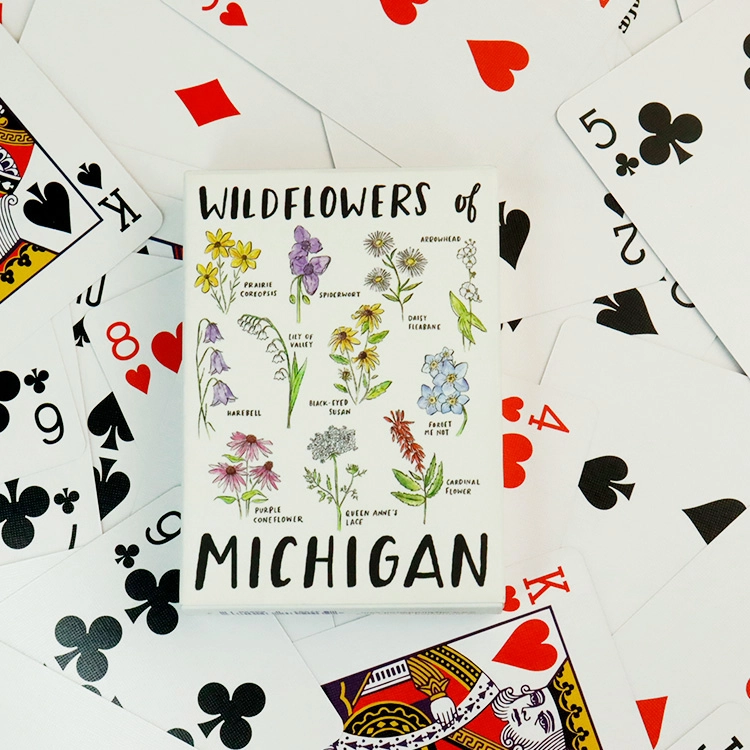
High Quality Eco-Friendly Durable Personalized Design Wildflowers Playing Cards with Custom Design Logo and Box
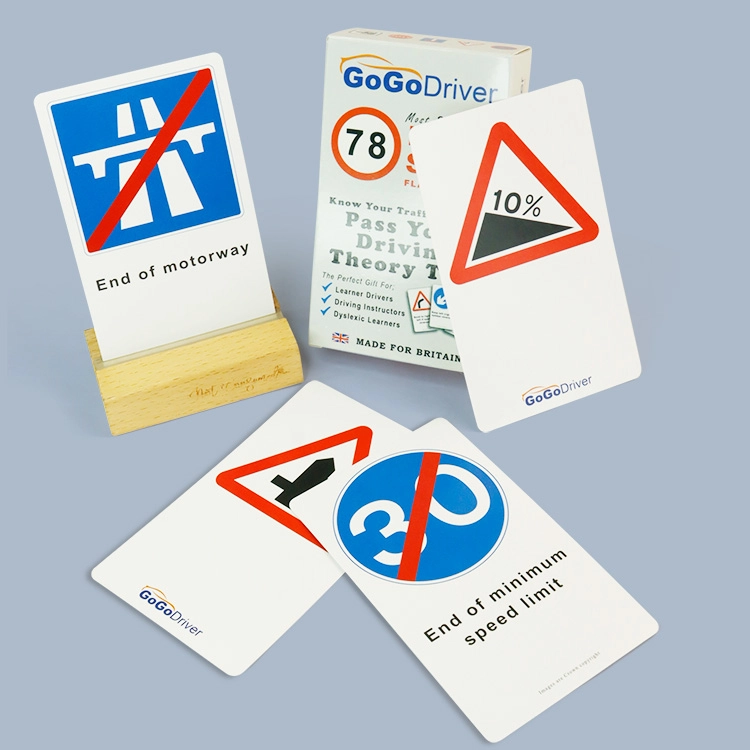
OEM Custom Driving Theory Cards | Personalized Traffic Rules & Test Prep Flashcards in Multiple Languages for Wholesale
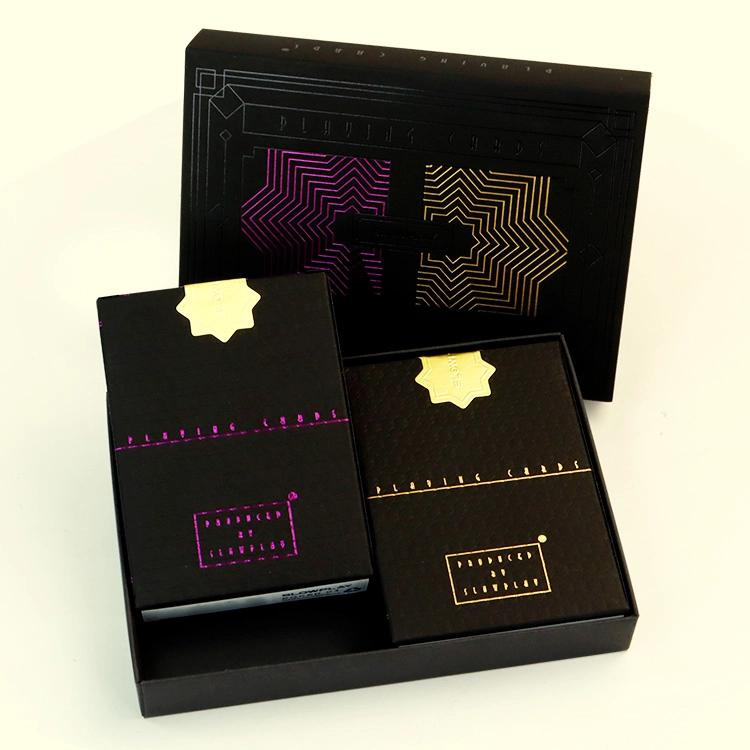
Custom Printing Luxury Two Sets Plastic Poker Playing Cards with Customized Packing
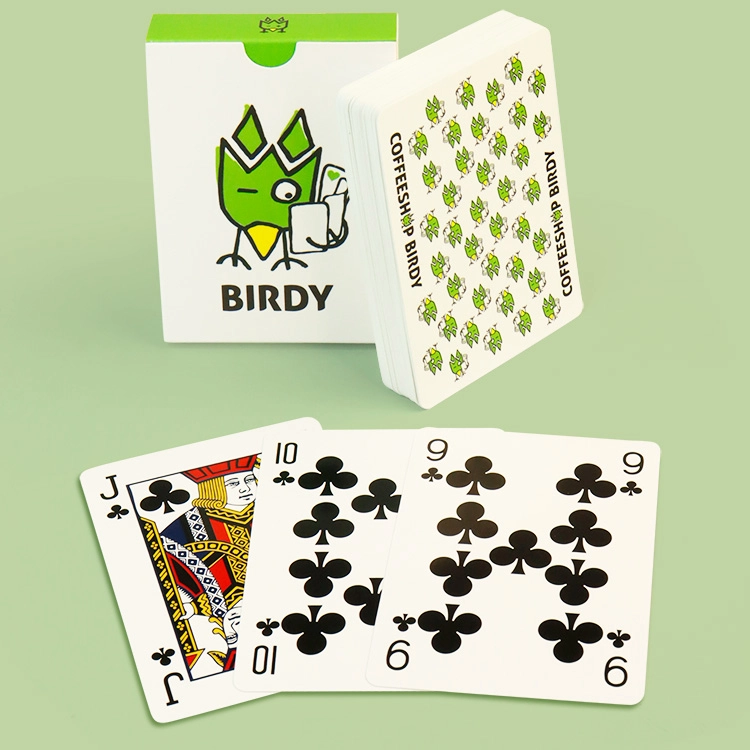
bbilaser
sq_AL