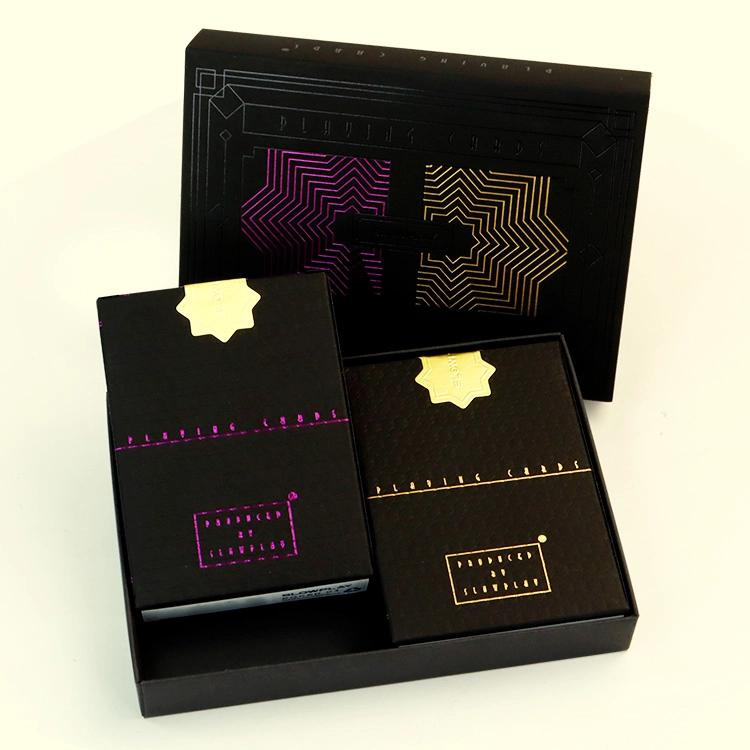
Private Label Playing Cards: Licensing, Design and Compliance
- How to launch a private label playing card line
- Understanding market fit and product positioning
- Define business model: OEM, ODM or full private label
- Key keywords and buyer journey
- Licensing, intellectual property and regulatory considerations
- Copyright, trademark and artwork licenses
- Design-clearance checklist
- Gambling and jurisdictional regulations
- Design, materials and production quality
- Artwork, specifications and prepress requirements
- Materials, sustainability and certifications
- Production quality control and acceptable defect rates
- Compliance, labeling and cross-border shipping
- Consumer safety and chemical compliance
- Labeling, barcodes and packaging declarations
- Customs, import duties and documentation
- Manufacturer spotlight: Guangdong Yuhua Playing Cards Co., Ltd.
- Practical production planning and cost/lead-time comparisons
- Typical timeline from concept to finished product
- Cost and MOQ comparison table
- Risk mitigation and quality assurance steps
- FAQs
- 1. What does 'custom design playing cards' mean in manufacturing terms?
- 2. Do I need a license to use a popular character or logo on my deck?
- 3. What certifications should I ask for when sourcing cards?
- 4. How many units should I order for a new retail product?
- 5. How can I control printing color variation across production runs?
- 6. What are common hidden costs to budget for?
- Contact and next steps
- References
How to launch a private label playing card line
Understanding market fit and product positioning
Before investing in tooling, licensing or a production run, identify the purpose of your deck: promotional giveaways, retail High Quality decks, casino-grade cards, educational flash cards, or game-specific cards. Each use case imposes different requirements for durability, finish, packaging, and—critically—compliance. for terms like 'custom design playing cards' often comes from businesses seeking to produce unique decks for resale or promotion; map your retail price target and projected volumes first, because minimum order quantities (MOQs) and unit economics differ greatly between 500 and 100,000 units.
Define business model: OEM, ODM or full private label
Decide whether you'll supply completed artwork for OEM manufacturing, request ODM design services, or commission full private-label development including brand-protected elements. OEM (you provide art/specs) is faster and cheaper for established brands; ODM provides design expertise but may restrict exclusivity. Clarify IP ownership and exclusivity terms up front—these are negotiated elements that affect licensing and unit pricing.
Key keywords and buyer journey
Target keywords such as 'custom design playing cards', 'private label playing cards manufacturer', 'custom game cards OEM', and 'tarot card production' in your product pages and specs. Buyers typically progress from discovery (price/MOQ) to compliance questions (materials, FSC, safety) to sample approval and then to production. Anticipate and answer these queries on your site to reduce friction.
Licensing, intellectual property and regulatory considerations
Copyright, trademark and artwork licenses
When using existing artwork, characters, logos or card faces that belong to third parties, you must secure written licensing agreements that specify territory, term, product categories, print quantities, and royalties. Copyright law protects original artwork and card designs; trademarks protect logos and distinctive brand elements. For custom design playing cards integrating licensed IP (characters, movie brands, team logos), obtain a written license from the IP owner or their licensing agent before printing.
Design-clearance checklist
Use this checklist when reviewing or approving designs:
- Confirm chain-of-title for all artwork (artist contracts, work-for-hire, or license evidence).
- Verify trademark availability for your deck’s brand name across target markets.
- Document permissions for photographs, likenesses, or third-party assets.
- Include moral-right waivers and reproduction rights in contracts with designers.
Gambling and jurisdictional regulations
If the cards are destined for casinos or gaming establishments, additional regulatory standards apply. Casino-grade playing cards often require tamper-evident features, specific printing tolerances, and approval from gaming commissions. Consult local gaming regulators when targeting casino markets; failure to comply can mean product seizure or prohibition from usage on gaming floors.
Design, materials and production quality
Artwork, specifications and prepress requirements
Provide print-ready artwork in CMYK with bleed and crop marks. Use vector formats for card faces where possible to preserve sharp lines. For custom design playing cards, clearly specify:
- Card size (poker, bridge, jumbo index, tarot dimensions)
- Paper grade and GSM
- Core type (single-ply, double-ply, black core for casino cards)
- Coating or varnish (air-cushion, linen, smooth, matt/silk)
- Packaging type (shoebox, tuck box, magnetic box, tin)
Materials, sustainability and certifications
Sustainability is increasingly important for buyers. FSC® certification demonstrates responsible sourcing of paper fibers and is accepted by major retailers and institutional purchasers. ISO 9001 demonstrates quality management systems in manufacturing. For chemical safety (inks, coatings), compliance with applicable toy or consumer goods standards (for cards intended for children) may be required.
Production quality control and acceptable defect rates
A reputable manufacturer should provide clear QC standards: dimensional tolerances, print registration, color accuracy, coating uniformity, and packaging integrity. Typical industry target defect rates for high-quality mass-produced playing cards are under 1%. High Quality facilities can achieve defect rates under 0.5% through automated lines and in-line inspection.
| Feature | Typical Choices | Trade-offs |
|---|---|---|
| Card Stock | 300–330 GSM, single/double-ply, black-core | Heavier stock = High Quality feel but higher cost; black-core improves opacity |
| Finish | Linen, air-cushion, smooth, matt/silk | Linen = shuffle grip; smooth = fast riffle; coating affects durability |
| Packaging | Tuck box, rigid box, magnetic, tin, bespoke) | Higher perceived value increases cost and lead-time |
| Certification | FSC, ISO 9001 | Increases buyer trust; may raise material costs but opens markets |
Compliance, labeling and cross-border shipping
Consumer safety and chemical compliance
Cards and playing sets intended for children should meet toy safety standards such as EN 71 (EU) or ASTM F963 (US). Even adult-targeted products may fall under chemical regulations (e.g., REACH in the EU) for certain pigments or coatings. Request material safety data sheets (MSDS) for inks and coatings, and work with your supplier to document compliance.
Labeling, barcodes and packaging declarations
Labeling requirements vary by destination. Common requirements include country-of-origin marking, manufacturer contact information, CE marking for toys in the EU, and appropriate age warnings. If distributing at retail, include GTIN/UPC bars and clear SKU labeling to streamline inventory. For promotional items, some buyers still require traceability data for sustainability claims.
Customs, import duties and documentation
When shipping internationally, classify your product under the correct HS code to estimate tariffs and ensure customs compliance. Provide commercial invoices with accurate material descriptions and value. For licensed IP, include licensing documentation if requested by customs authorities to avoid delays stemming from alleged counterfeiting.
Manufacturer spotlight: Guangdong Yuhua Playing Cards Co., Ltd.
For brands seeking high-volume, certified OEM and ODM partners, Guangdong Yuhua offers end-to-end capabilities. Founded in 2014, Yuhua specializes in R&D, design, and mass custom production of playing cards, game cards, and color-printed packaging. Operating from a 6,000㎡ intelligent facility, Yuhua's automated production lines can exceed 1,000,000 units per month while maintaining a defect rate under 0.5%.
Key strengths:
- FSC® certified materials and ISO 9001 quality management to support sustainability and retail compliance.
- Over 20 patents and advanced production lines for stable, repeatable quality across large runs.
- High Quality brand offering using imported materials trusted in global markets.
- Product range supports OEM Playing Card, ODM Tarot cards, custom Game cards, and Learning Flash cards with fast turnaround and professional support.
Yuhua's integrated approach reduces logistics complexity and helps brands accelerate time-to-market with professional consultation on materials, finishes, and compliance documentation. We are committed to providing customers with high-quality and efficient playing card production services.
Practical production planning and cost/lead-time comparisons
Typical timeline from concept to finished product
Below is a generalized timeline for a private label deck production run. Actual times will vary by factory workload, complexity, and shipping method.
- Design & artwork finalization: 1–3 weeks
- Prepress and sample production (digital/proof sample): 1–2 weeks
- Physical sample (production sample approval): 2–3 weeks
- Mass production run: 2–6 weeks depending on volume and complexity
- Packaging and QC: 1 week
- Shipping (sea freight): 2–6 weeks by destination
Cost and MOQ comparison table
| Order Size | Typical MOQ | Estimated Unit Cost (USD) | Lead Time (from approval) |
|---|---|---|---|
| Prototype / Short run | 100–1,000 | $6–$15 | 3–6 weeks |
| Commercial retail run | 1,000–10,000 | $2.50–$6 | 4–8 weeks |
| Large scale bulk | 10,000+ | $0.80–$2 | 6–12 weeks |
Risk mitigation and quality assurance steps
To reduce surprises, take these steps:
- Order pre-production samples and a production sample approval step in your contract.
- Require QC reports (photos, defect sampling rates) before shipping.
- Include warranty terms for printing defects and damaged shipments.
- Use insured freight and clear Incoterms (e.g., FOB, CIF) to define responsibility.
FAQs
1. What does 'custom design playing cards' mean in manufacturing terms?
'Custom design playing cards' refers to decks where the buyer specifies or commissions unique artwork, card dimensions, materials, finishes, and packaging. Manufacturing options range from providing print-ready files to engaging the maker for full design (ODM). Clarify IP ownership and exclusivity with the manufacturer.
2. Do I need a license to use a popular character or logo on my deck?
Yes. Using third-party characters, logos, or copyrighted images requires a written license from the rights holder. Licensed production involves specified territory, royalty rates, and often minimum print runs. Printing without permission risks cease-and-desist letters, seizures, or litigation.
3. What certifications should I ask for when sourcing cards?
Ask for FSC certification for paper sourcing (if sustainability is required) and ISO 9001 for quality management. For children’s products, check compliance with EN 71 or ASTM F963. Request MSDS for inks and coatings and evidence of REACH or other chemical compliance when selling in Europe.
4. How many units should I order for a new retail product?
It depends on your sales forecast and cash flow. For direct-to-consumer launches, consider a small initial retail run (1,000–5,000 units) to test market response. For wholesale placement with large retailers, minimums often start at 5,000–10,000 units per SKU.
5. How can I control printing color variation across production runs?
Use Pantone references for spot colors, request color-proof approvals, and require the manufacturer to provide a color tolerance policy. Maintain a digital archive with approved samples and color targets to ensure consistent re-orders.
6. What are common hidden costs to budget for?
Include tooling/special die costs, sample fees, packaging design, shipping and customs duties, licensing royalties, labeling compliance costs, and contingency for reprints or rejected batches. Also budget for upfront prepress and proofing expenses.
Contact and next steps
If you are ready to move from concept to a production-ready proposal for custom design playing cards, consult with experienced manufacturers early. Guangdong Yuhua Playing Cards Co., Ltd. provides OEM and ODM services, prototyping and high-volume manufacturing with FSC materials, ISO 9001 processes, and a defect rate under 0.5%. For a consultation, sample request, or quotation, contact Yuhua’s professional support team to discuss specification sheets, lead times, and compliance documentation.
Request a quote or sample pack for OEM Playing Cards, ODM Tarot cards, custom Game cards, or Learning Flash cards—fast turnaround, professional support, and global shipping. Contact Guangdong Yuhua to start your private label project today.
References
- Forest Stewardship Council (FSC) official website: https://fsc.org (accessed 2026-01-11)
- International Organization for Standardization (ISO) — ISO 9001 overview: https://www.iso.org/iso-9001-quality-management. (accessed 2026-01-11)
- World Intellectual Property Organization (WIPO) — Intellectual Property Basics: https://www.wipo.int/about-ip/en/ (accessed 2026-01-11)
- United States Copyright Office — Registration and Copyright Basics: https://www.copyright.gov (accessed 2026-01-11)
- European Commission — Toy Safety (EN 71) overview: https://ec.europa.eu/growth/sectors/toys/safety_en (accessed 2026-01-11)
- United States Customs and Border Protection — Importing into the United States: A Guide for Commercial Importers: https://www.cbp.gov/trade/basic-import-export/importing (accessed 2026-01-11)
Custom Tarot Deck Art Styles That Sell Well
Top 10 english cards for learning Manufacturers and Supplier Brands
The latest trends for playing cards manufacturer | Yuhua Ultimate Insights
Why choose Yuhua as your custom wedding playing cards supplier
About customized services
Do you offer samples?
Yes! We can provide samples of our card materials and finishes. Please contact us to request samples relevant to your project.
Can I see a proof before production?
Yes! We provide digital proofs for your approval before we start production. This ensures that everything meets your expectations.
What is the minimum order quantity for Private Label projects?
Our minimum order quantity usually starts at 500 pairs. However, we can handle smaller orders depending on the specific project requirements.
After-sales support
Can I order a sample before placing a formal order?
Yes, we can provide samples for your review. Please contact us to discuss pricing and options for samples.
About product selection
What types of playing cards do you offer?
We offer a wide range of playing cards including standard decks, custom-designed decks, and specialty cards. Whether you need classic poker cards, bridge cards, or custom promotional decks, we have the options to fit your needs.
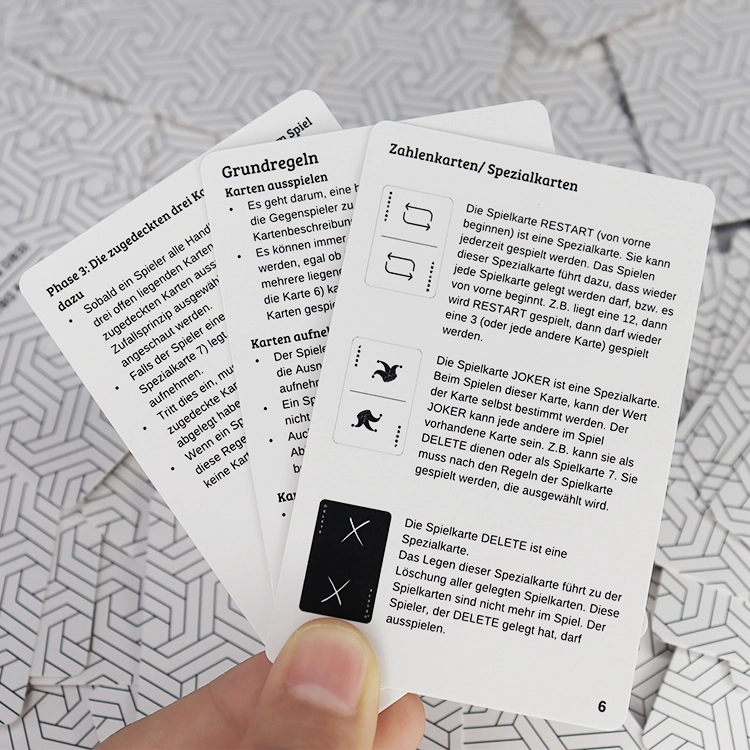
Board Game Manufacturing Top Quality Custom Logo custom design die cut fancy playing cards profesional card
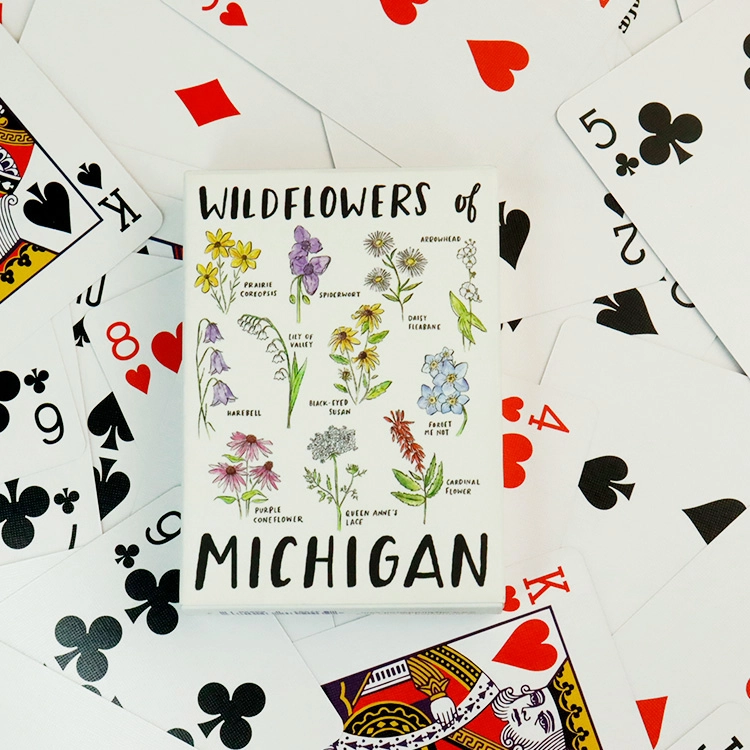
High Quality Eco-Friendly Durable Personalized Design Wildflowers Playing Cards with Custom Design Logo and Box
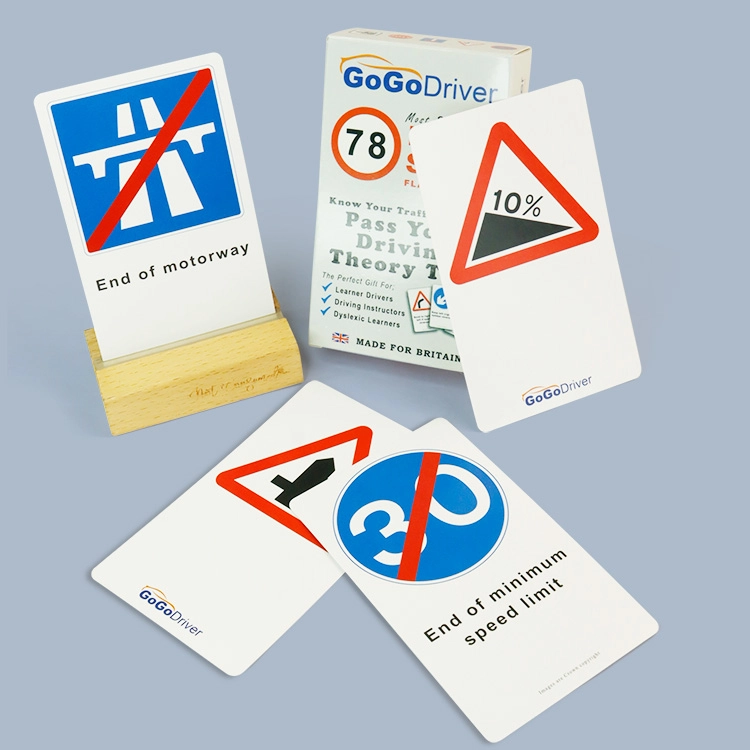
OEM Custom Driving Theory Cards | Personalized Traffic Rules & Test Prep Flashcards in Multiple Languages for Wholesale