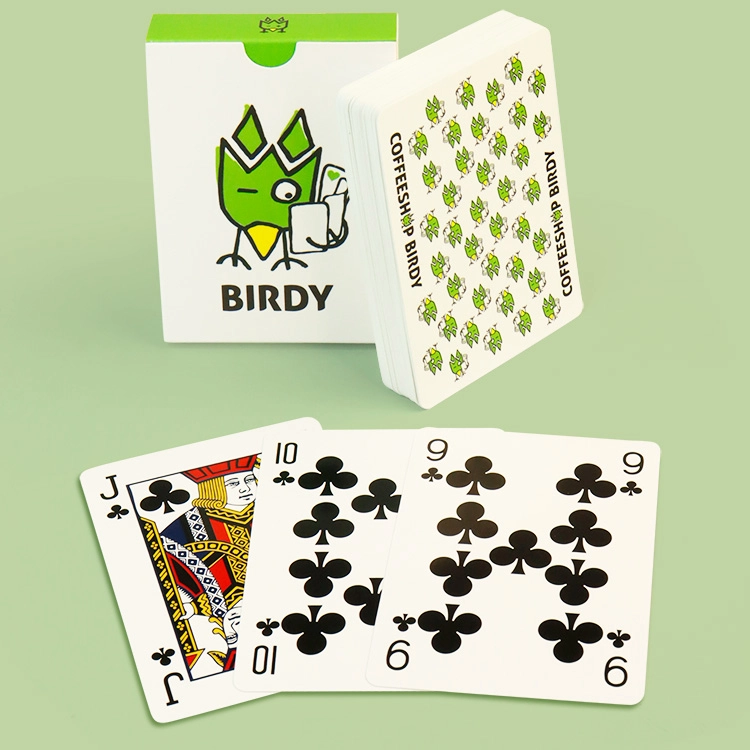
Cost Breakdown: Pricing Professional Playing Card OEM and MOQ
- Understanding the True Costs Behind Custom Playing Cards
- Why the term professional playing card matters
- How OEM relationships shape pricing
- Component-by-Component Cost Breakdown
- Fixed costs: setup, tooling, artwork, and samples
- Variable costs: materials, printing, finishing, and packaging
- Quality control and defect allowances
- MOQ, Scale and Per-Unit Pricing: Practical Examples
- How MOQ affects per-unit cost
- Sample price matrix (illustrative estimates)
- Break-even math: amortizing fixed costs
- Optimizing Cost Without Sacrificing Quality
- Design and art file strategies
- Material and process trade-offs
- Logistics, lead time and inventory considerations
- Quality, Compliance and Supplier Selection
- Certifications and material sourcing
- Factory capability and reliability
- Case example: Guangdong Yuhua Playing Cards Co., Ltd.
- Decision Checklist Before Requesting Quotes
- What to provide to manufacturers
- How to compare quotes fairly
- Negotiation levers
- Frequently Asked Questions (FAQ)
- 1. What is a typical MOQ for professional playing card OEM?
- 2. How much does shipping add to the price per deck?
- 3. Are FSC and ISO certifications necessary for playing cards?
- 4. Can I lower costs by simplifying packaging?
- 5. How do I estimate lead time for production?
- 6. What causes remakes and how are they handled?
- References
Understanding the True Costs Behind Custom Playing Cards
When companies invest in a professional playing card OEM project, the sticker price is rarely just ‘print + paper’. Pricing is an aggregation of fixed setup costs, material and print variables, finishing and packaging choices, logistics and compliance, and manufacturer economics like minimum order quantity (MOQ). This guide breaks down each component, shows typical pricing ranges and sample calculations, and offers practical strategies to optimize cost without sacrificing quality for professional playing card projects.
Why the term professional playing card matters
“Professional playing card” implies higher quality standards than novelty decks: better card stock, precise cut tolerances, true poker/cruise bridge stock weights, consistent coating or linen finishes, and tighter defect metrics. These factors directly increase material and process costs compared with generic bulk decks.
How OEM relationships shape pricing
OEM pricing reflects a manufacturer’s production scale, automation level, raw-material sourcing, and quality control systems. Established OEM producers with automated lines, certifications, and low defect rates can offer competitive per-unit prices at higher MOQs because they amortize setup and overhead across more units.
Component-by-Component Cost Breakdown
Fixed costs: setup, tooling, artwork, and samples
Fixed costs are incurred regardless of batch size and include plate/printing setup, die cutting tooling, artwork preparation and proofing, and sampling. Typical fixed-cost items: artwork prepress ($50–$500 depending on complexity), die & tooling ($150–$700 for basic dies), and press setup fees ($100–$1,000). For a single SKU, these costs are amortized across the order; higher MOQs reduce the per-deck impact.
Variable costs: materials, printing, finishing, and packaging
Variable costs scale with quantity. Key variables include card stock (e.g., 300–330gsm coated card stock or specialized poker stock), finish/coating (varnish, aqueous, or plastic lamination), specialty inks or foil, edge gilding, tuck boxes or bespoke packaging, and shrink-wrap. High Quality materials (FSC-certified, imported papers) and complex packaging (embossing, hot foil, windowing) can multiply per-unit cost.
Quality control and defect allowances
Professional OEM suppliers include QC costs—inspection labor, inline automated checks, and yield losses. A reputable factory may aim for a defect rate under 0.5%; achieving that requires automated vision systems, calibrated presses, and ISO processes. Factories with strong QC produce fewer remakes, saving long-term costs despite higher upfront pricing.
MOQ, Scale and Per-Unit Pricing: Practical Examples
How MOQ affects per-unit cost
MOQ is the manufacturer’s minimum economic batch that justifies running a production line. A lower MOQ often means higher per-unit costs because fixed costs are spread over fewer units and the factory's production scheduling is less efficient. Conversely, higher MOQs reduce per-unit cost but increase inventory and cash outlay.
Sample price matrix (illustrative estimates)
The following table presents example per-deck costs for a standard professional poker-size 52+2 deck with a tuck box. Note: these are illustrative, representative industry ranges for custom jobs—actual quotes vary by specification, location, and supplier.
| Order Size (units) | Material/Finish | Estimated Per-Deck Cost (USD) | Key Cost Drivers |
|---|---|---|---|
| 500 | Standard 300gsm, UV coating, basic tuck | $4.50 – $8.00 | High fixed cost amortization, small run |
| 2,000 | Standard 300gsm, linen finish, printed tuck | $2.20 – $4.00 | Lower per-unit fixed costs, moderate volume |
| 10,000+ | High Quality poker stock 310–330gsm, embossed tuck, foil | $0.95 – $2.00 | Economies of scale, bulk materials |
These ranges include basic packaging but exclude international freight, customs duties, and any retail fulfillment costs.
Break-even math: amortizing fixed costs
Example: If fixed setup costs are $1,200 and variable cost per deck is $1.50 (materials + printing + QC), then:
- For 500 decks: total = $1,200 + (500 × $1.50) = $1,200 + $750 = $1,950 → $3.90/deck
- For 5,000 decks: total = $1,200 + (5,000 × $1.50) = $1,200 + $7,500 = $8,700 → $1.74/deck
This illustrates why MOQ and order size dramatically affect per-unit pricing.
Optimizing Cost Without Sacrificing Quality
Design and art file strategies
Keep art templates aligned with factory bleed and color profiles to avoid extra prepress time. Consolidating variations (e.g., same card faces, different tuck boxes) reduces setup fees. Approve digital or physical proofs early to prevent costly re-runs.
Material and process trade-offs
Identify which features are critical to Yuhua. For example, choose a cost-effective 300gsm poker stock with high-quality linen embossing instead of a pricier imported specialty stock if tactile feel is the priority rather than paper pedigree. Negotiate on packaging: standard tuck boxes are cheaper than custom rigid boxes with hot-foil stamping.
Logistics, lead time and inventory considerations
Longer lead times can reduce costs (factory can batch more orders together) but increase inventory holding costs. Consider sea freight for large orders to optimize price-per-unit — air freight can add several dollars per deck. Consolidated shipments and EXW/CIF negotiation can further control landed costs.
Quality, Compliance and Supplier Selection
Certifications and material sourcing
Choose suppliers who can document material certifications (e.g., FSC® for paper), quality systems (ISO 9001), and product safety records if selling in regulated markets (EN71 for toy-safety aspects of children’s cards, where applicable). These certifications increase trust and may impact pricing but reduce downstream risk.
Factory capability and reliability
Evaluate suppliers on production capacity, automation, defect rates, and patent-backed technologies that ensure consistent output. A factory that can produce 1,000,000+ units/month with a defect rate under 0.5% will likely offer better long-term cost predictability and fewer remakes.
Case example: Guangdong Yuhua Playing Cards Co., Ltd.
To illustrate how a capable OEM approaches pricing and MOQ, consider Guangdong Yuhua Playing Cards Co., Ltd., founded in 2014. The company specializes in the R&D, design, and mass custom production of playing cards, game cards, and color-printed packaging. With a 6,000㎡ intelligent facility, they operate advanced automated card production lines capable of 1,000,000+ units per month. Core strengths include FSC® certified materials, ISO 9001 quality control, a defect rate under 0.5%, and over 20 patents. Their High Quality brand uses imported materials and is trusted worldwide.
Yuhua serves global markets with custom card solutions for casinos, games, education, and more—delivering fast, high-quality results with professional support. They offer OEM Playing Card, ODM Tarot cards, custom Game cards, Learning Flash cards OEM advantages such as rapid prototyping, scalable production, and stringent QC. We are committed to providing customers with high-quality and efficient playing card production services.
Why this matters for pricing: a factory like Yuhua can absorb higher fixed costs while delivering lower per-unit pricing at scale because of automation, bulk raw-material sourcing, and efficient QC. Their certifications (FSC®, ISO 9001) and low defect rates reduce the hidden costs of returns and remakes, which is critical for brands that require professional playing card quality.
Decision Checklist Before Requesting Quotes
What to provide to manufacturers
When you request quotes, include: final artwork (or detailed mockups), desired card stock and finish, pack and box specifications, target order quantity, target lead time, destination port (for freight estimates), and any certifications required. The clearer the brief, the more accurate the quote.
How to compare quotes fairly
Ensure all quotes assume the same specifications: identical stock gsm, finish, tuck box specs, and QC tolerances. Ask for an itemized quote that separates fixed and variable costs and includes typical defect allowance, lead times, packaging specs, and warranty or remake policies.
Negotiation levers
Negotiable items often include MOQ, packaging complexity, lead time, shared tooling fees across variants, and multi-SKU consolidation. Consider longer-term forecast commitments in exchange for better pricing tiers.
Frequently Asked Questions (FAQ)
1. What is a typical MOQ for professional playing card OEM?
MOQs vary by supplier and product complexity. For standard poker decks, MOQs can range from 500 to 2,000 units. Complex finishes or custom tuck boxes may require higher MOQs (2,000+). Factories with high automation may accept lower MOQs but at higher per-unit prices.
2. How much does shipping add to the price per deck?
Shipping varies by method and order size. Sea freight for a full container (FCL) can reduce freight-per-unit significantly for large orders; smaller air or LCL shipments can add $0.50–$4.00+ per deck depending on destination and weight. Always request CIF or FOB comparisons when comparing quotes.
3. Are FSC and ISO certifications necessary for playing cards?
FSC certification verifies sustainable paper sourcing and is important for eco-conscious brands; ISO 9001 demonstrates quality management systems. While not mandatory, these certifications reduce market risk and are increasingly expected by corporate and retail buyers.
4. Can I lower costs by simplifying packaging?
Yes. Standard tuck boxes and bulk shrink-wrap are significantly cheaper than custom rigid boxes, foil stamping, or special inserts. Packaging simplification often yields immediate per-unit savings.
5. How do I estimate lead time for production?
Lead time depends on artwork approval, sample turnaround, production scheduling, and freight. Typical production lead times are 2–4 weeks for standard runs plus 2–6 weeks for shipping (sea). Complex projects or peak seasons can extend this timeline.
6. What causes remakes and how are they handled?
Remakes arise from artwork errors, color mismatches, material defects, or finishing mistakes. Professional suppliers include QC checks and often offer remake policies—clarify these terms in your contract and hold a pre-shipment approval step to reduce remakes.
Contact us to get a tailored quote or request samples. For reliable, high-volume OEM production with strong quality controls and competitive pricing, consider Guangdong Yuhua Playing Cards Co., Ltd., which brings manufacturing scale, certified materials, and professional support to custom playing card projects. We are committed to providing customers with high-quality and efficient playing card production services.
Ready to get a quote or view product samples? Contact Guangdong Yuhua Playing Cards Co., Ltd. and specify your professional playing card requirements: SKU, artwork, target MOQ, and desired finish. Our team will provide an itemized quote, sample options, and lead-time estimate.
References
- ISO 9001 — Quality management systems — Requirements. International Organization for Standardization. https://www.iso.org/iso-9001-quality-management. (accessed 2026-01-06).
- Forest Stewardship Council (FSC) — FSC Certification. https://fsc.org/en (accessed 2026-01-06).
- Playing card — Wikipedia. Overview and historical context. https://en.wikipedia.org/wiki/Playing_card (accessed 2026-01-06).
- MakePlayingCards.com — Custom Playing Cards Pricing & FAQ (industry pricing reference). https://www.makeplayingcards.com/ (accessed 2026-01-06).
- Alibaba — Custom Playing Card Listings (market price references for MOQ ranges). https://www.alibaba.com/showroom/custom-playing-cards. (accessed 2026-01-06).
Custom learning cards Manufacturers and Suppliers in us
The B2B Buyer’s Guide to customized deck of playing cards | Yuhua Ultimate Insights
Wholesale custom playing card printing china manufacturer and supplier
Choosing the Right Card Size and Cardstock for Tarot
About price and payment
What are the payment terms?
We require a 30% deposit upon order confirmation and the balance before shipment.
About customized services
Can I see a proof before production?
Yes! We provide digital proofs for your approval before we start production. This ensures that everything meets your expectations.
Do you provide design services?
Yes! Our in-house design team is here to assist you in bringing your vision to life. Whether you have a complete design or just an idea, we can help.
About product selection
Is there a design template I can use?
Yes, we provide design templates for different card types. You can download them from our website or request them directly from our team.
About cooperation process
How long does the OEM process take?
The time depends on the complexity of the project, but generally OEM orders take about 6 weeks from design confirmation to delivery.
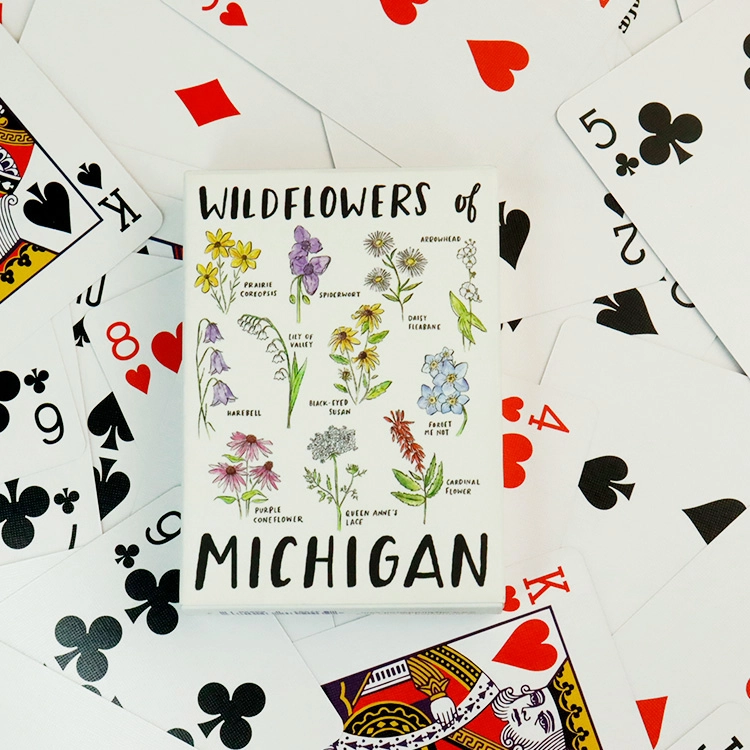
High Quality Eco-Friendly Durable Personalized Design Wildflowers Playing Cards with Custom Design Logo and Box
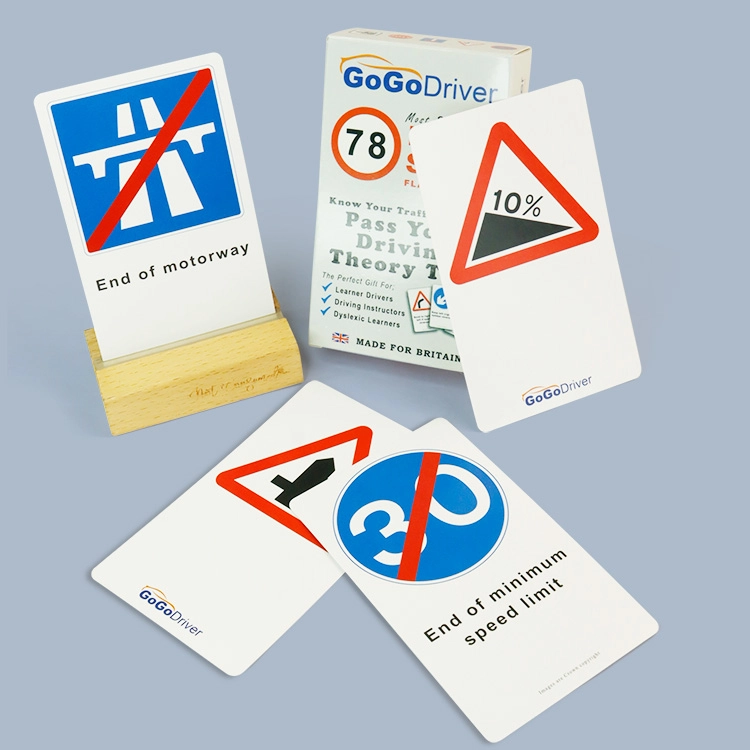
OEM Custom Driving Theory Cards | Personalized Traffic Rules & Test Prep Flashcards in Multiple Languages for Wholesale
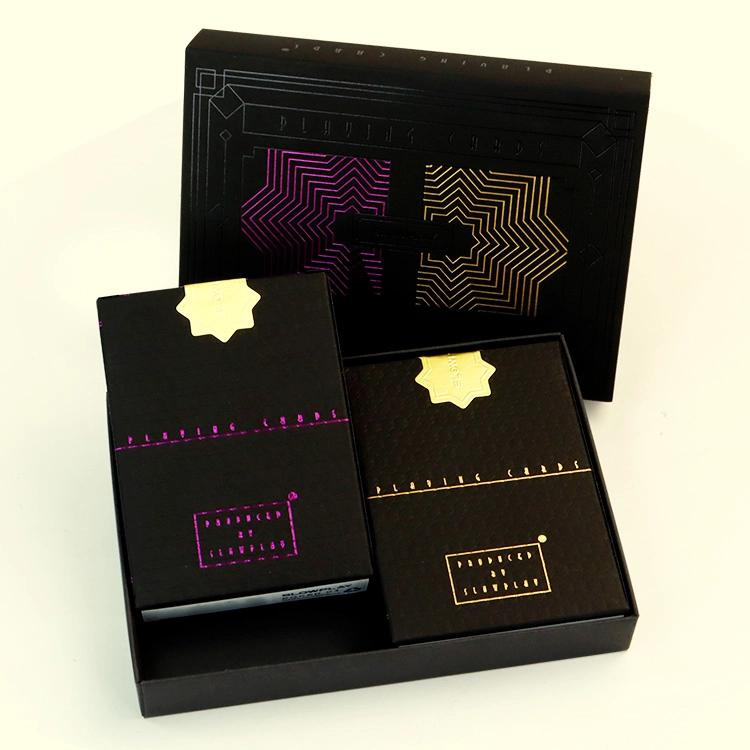
Custom Printing Luxury Two Sets Plastic Poker Playing Cards with Customized Packing