
Quality Control, Certifications & Testing for Custom Playing Cards
- Why quality matters for game components and branded decks
- Perceived value and functional performance
- Safety, sustainability and compliance risks
- Operational efficiency and cost control
- Key certifications and standards for custom playing cards
- FSC certification for responsible fiber sourcing
- ISO 9001 – quality management systems
- Chemical and toy safety: REACH, EN71 and similar
- Testing procedures: from raw materials to finished decks
- Incoming materials inspection
- Inline production checks
- Final product testing
- QC systems and sampling plans for mass production
- Acceptable Quality Limit (AQL) and sampling
- Automated inspection and machine-vision
- Traceability and corrective action (CAPA)
- Certifications & testing comparison
- Practical guidance for brands ordering custom made playing cards
- Specify measurable acceptance criteria
- Request test reports and production samples
- Plan for pre-shipment inspection and logistics testing
- Case study: Applying these principles at scale
- About Guangdong Yuhua Playing Cards Co., Ltd. — capabilities & advantages
- Frequently Asked Questions (FAQ)
- 1. What certifications should I require when ordering custom made playing cards?
- 2. How do I define an acceptable AQL for printed decks?
- 3. Can a supplier provide chemical test reports for inks and coatings?
- 4. How important is a golden sample and what should it include?
- 5. What tests simulate real-world card use?
- 6. How do automated inspection systems improve quality for high-volume orders?
- Conclusion & next steps
High-quality custom made playing cards require rigorous quality control and the right certifications to meet customer expectations and regulatory obligations. This article outlines the essential certifications, testing stages, and QC systems used by professional manufacturers to ensure consistent card performance, safety, and sustainability — from raw paperboard and inks to lamination, cutting, and packaging.
Why quality matters for game components and branded decks
Perceived value and functional performance
Custom playing cards are both a tactile product and a brand touchpoint. Consumers evaluate decks on shuffle feel, card stock resilience, print fidelity, and edge-cut quality. Deficiencies (printing smears, uneven cuts, warping) degrade perceived value and increase returns. Quality control directly protects brand reputation and repeat sales.
Safety, sustainability and compliance risks
Cards and packaging may be subject to chemical and material restrictions (e.g., restricted phthalates, heavy metals in inks, or restricted substances under REACH). Compliance with recognized standards and certifications reduces legal risk, ensures acceptance in regulated markets, and supports B2B procurement requirements.
Operational efficiency and cost control
Systematic testing and process control reduce scrap, rework, and warranty claims. For manufacturers producing custom decks at scale, optimizing QC and inline testing yields measurable savings — fewer stoppages, lower inspection headcount per unit, and predictable throughput for large orders.
Key certifications and standards for custom playing cards
FSC certification for responsible fiber sourcing
FSC certification demonstrates that card stock and paper packaging originate from responsibly managed forests. Buyers increasingly require it for sustainability procurement. See the Forest Stewardship Council information on responsible sourcing: FSC (Wikipedia). Using FSC® certified materials supports corporate ESG goals and often opens additional retail channels.
ISO 9001 – quality management systems
ISO 9001 is the global standard for quality management systems (QMS). Certification indicates the manufacturer maintains documented processes for design transfer, production controls, corrective actions, and continual improvement. For playing card suppliers, ISO 9001 helps standardize inspection procedures and traceability. More background: ISO 9001 (Wikipedia).
Chemical and toy safety: REACH, EN71 and similar
Though playing cards are not toys in every market, decks sold to children or as learning flashcards may require toy safety compliance (EN71 in Europe). Chemical restrictions under REACH (EU) limit certain harmful substances in inks, coatings, and additives. Refer to official REACH materials and enforcement guidance when shipping to EU markets.
Testing procedures: from raw materials to finished decks
Incoming materials inspection
Testing begins at the inbound stage. Typical checks include:
- Paperboard grammage and caliper (thickness) using micrometers
- FSC chain-of-custody documentation verification
- Ink and coating MSDS review for restricted substances
- Color profile verification against supplier-supplied spectrophotometer reports
Inline production checks
During printing and finishing, manufacturers perform:
- Color control using spectrophotometers (ΔE values vs. approved proof)
- Dot gain and registration checks on press
- Lamination bond-strength and adhesion tests
- Die-cut and edge trimming checks for burrs and tolerance
Final product testing
Before shipping, decks undergo performance and visual inspections, including:
- Shuffle tests and flex tests to ensure card memory and resilience
- Coefficient of friction measurements for slip/anti-jam behavior
- Packaging integrity checks (crush resistance, glue hold)
- Random sampling for print defects, centering, and color variation
QC systems and sampling plans for mass production
Acceptable Quality Limit (AQL) and sampling
Most manufacturers use AQL protocols (based on ISO 2859-1) to determine sample sizes and acceptance criteria. A typical plan for consumer-grade decks might use an AQL of 2.5 for major defects and 4.0 for minor defects, while High Quality or regulated orders (casinos, official game sets) use stricter AQLs (e.g., 1.0 or 0.65).
Automated inspection and machine-vision
Modern facilities deploy automated optical inspection (AOI) on web presses and finishing lines to flag print anomalies and registration errors in real time. Machine vision reduces human error and scales inspection throughput for large runs, supporting production targets of hundreds of thousands or millions of units per month.
Traceability and corrective action (CAPA)
Effective QMS includes batch traceability (material lot numbers, press run IDs) and documented corrective actions when nonconformities arise. This allows rapid root-cause analysis (e.g., a press roller fault causing streaking) and prevents recurrence across future orders.
Certifications & testing comparison
The table below summarizes common certifications and what they verify for card manufacturers.
| Certification / Standard | Scope | Typical Evidence | Why it matters for custom cards |
|---|---|---|---|
| FSC | Responsible forest sourcing | FSC CoC certificate, chain-of-custody codes | Meets retailer & ESG buyer requirements for paper-based products |
| ISO 9001 | Quality management system | Third-party certification, documented QMS | Standardizes QC processes, reduces variability |
| REACH / EN71 | Chemical/toy safety | Test reports, MSDS, compliance declarations | Required for children’s products and EU chemical compliance |
| ISO 14001 / CSR | Environmental management (optional) | Third-party audits, environmental policies | Supports corporate sustainability programs |
Practical guidance for brands ordering custom made playing cards
Specify measurable acceptance criteria
When placing an order, include clear, measurable requirements: card stock gram weight (e.g., 300–330 g/m² board), allowable ΔE color tolerance (e.g., ΔE < 2.5), lamination type (silk/matte/gloss), deck thickness, and acceptable AQL levels for minor/major defects. Vague specs create ambiguity and increase risk.
Request test reports and production samples
Ask suppliers to provide third-party test reports (REACH/EN71 where relevant) and a pre-production sample (PPS) or press proof. Approve a final golden sample to be used as the benchmark for all subsequent quality checks.
Plan for pre-shipment inspection and logistics testing
Pre-shipment inspection (PSI) by independent inspection firms validates agreed acceptance criteria on bulk orders. Also request packaging/shipping tests if product will be exported (e.g., carton drop tests) to avoid damage in transit.
Case study: Applying these principles at scale
Large-scale custom card manufacturers combine automated production lines with standardized QC to reliably ship high volumes. Below is a generalized workflow used by high-capacity suppliers:
- Material qualification: certify paperboard and inks (FSC, MSDS checks)
- Process validation: initial press trials, establish color profiles and lamination parameters
- In-process control: AOI and operator checkpoints, daily SPC (statistical process control)
- Final sampling: AQL-based sampling, functional checklist (shuffle, fold, packaging)
- Documentation: full batch records, COA (certificate of analysis), and shipping QC reports
About Guangdong Yuhua Playing Cards Co., Ltd. — capabilities & advantages
Guangdong Yuhua Playing Cards Co., Ltd., founded in 2014, specializes in the R&D, design, and mass custom production of playing cards, game cards, and color-printed packaging. With a 6,000㎡ intelligent facility, Yuhua offers advanced, automated card production lines capable of producing 1,000,000+ units per month. Their core strengths include the use of FSC® certified materials, an ISO 9001 quality management system, a documented defect rate under 0.5%, and a portfolio of over 20 patents. Yuhua’s High Quality brand sources imported materials and is trusted by clients worldwide for casino-grade cards, custom game decks, learning flash cards, and tarot OEM/ODM projects.
Yuhua's competitive advantages include:
- High-volume automated production with consistent QA and a defect rate < 0.5%
- FSC® certified sourcing and ISO 9001 management to support corporate procurement
- Flexible OEM/ODM services: OEM Playing Card, ODM Tarot cards, custom Game cards, Learning Flash cards OEM
- Technical expertise in color management, lamination, and specialized finishes (foil, emboss, soft-touch)
- Global logistics experience and professional customer support to speed time-to-market
For more information, product details, or to request a quotation, visit Yuhua’s website: https://www.ivapoker.com/ or contact their sales team at sales@ivapoker.com.
Frequently Asked Questions (FAQ)
1. What certifications should I require when ordering custom made playing cards?
At minimum, require ISO 9001 for quality management and FSC certification for paperboard if sustainability is a priority. If cards are intended for children, request EN71 and REACH compliance. For High Quality or casino-grade decks, specify tighter AQL levels and request material traceability.
2. How do I define an acceptable AQL for printed decks?
AQL depends on product tier: consumer novelty decks commonly use AQL 2.5–4.0 for minor defects, while High Quality or regulated products use 1.0 or lower. Specify AQL levels for minor, major, and critical defects in the contract.
3. Can a supplier provide chemical test reports for inks and coatings?
Yes. Reputable suppliers will provide MSDS, declarations of conformity, and third-party lab reports for substances restricted under REACH or other regional regulations. Request these during material qualification.
4. How important is a golden sample and what should it include?
A golden sample is the benchmark for color, texture, lamination, and packaging. It should include a full deck (or representative samples), the exact packaging, and documentation of approved tolerances (ΔE color targets, board caliper, lamination type). All production should be compared against this sample.
5. What tests simulate real-world card use?
Common functional tests include shuffle cycles (to assess card memory and wear), flex testing, abrasion resistance (rub tests on printed surfaces), and humidity/temperature exposure tests to evaluate warping or delamination.
6. How do automated inspection systems improve quality for high-volume orders?
Automated optical inspection (AOI) and machine-vision systems detect print defects, registration errors, and missing elements in real time, enabling immediate correction and reducing reliance on slower manual inspection. This is essential for meeting strict throughput and low-defect goals at scale.
Conclusion & next steps
Quality control, certifications, and rigorous testing are foundational for successful custom made playing cards — protecting brand reputation, ensuring compliance, and delivering consistent customer experiences. Specify measurable acceptance criteria, request third-party test reports, approve golden samples, and use reputable manufacturers with proven QC systems.
If you need mass custom card production with robust QC and certifications, Guangdong Yuhua Playing Cards Co., Ltd. offers automated production lines, FSC® materials, ISO 9001 management, and OEM/ODM solutions for poker decks, tarot cards, game cards, and learning flashcards. Visit https://www.ivapoker.com/ or email sales@ivapoker.com to request samples, certifications, and a quotation.
Why choose Yuhua as your paper poker cards manufacturer in US
Custom Made Playing Cards: Complete Buyer's Guide for Businesses
The latest trends for custom poker playing cards online in us 2026 | Yuhua Ultimate Insights
How to Choose a Supplier for Custom Printed Poker Cards
About product selection
Can I see a sample before a full order?
Yes, we will provide a prototype sample for your review to ensure you are satisfied with the final product.
What materials do you use for your cards?
We use high-quality, durable materials to ensure the best finish and longevity for your cards. Options include standard cardstock, premium finishes, and eco-friendly materials.
After-sales support
Do you offer eco-friendly options?
Yes, we do offer eco-friendly materials and printing options. Please inquire about our sustainable options.
About price and payment
What are the payment terms?
We require a 30% deposit upon order confirmation and the balance before shipment.
About cooperation process
How do you ensure the quality of your cards?
We implement strict quality control measures at every stage of production. Our team conducts thorough inspections to ensure each card meets our high standards before shipping.

High Quality Eco-Friendly Durable Personalized Design Wildflowers Playing Cards with Custom Design Logo and Box
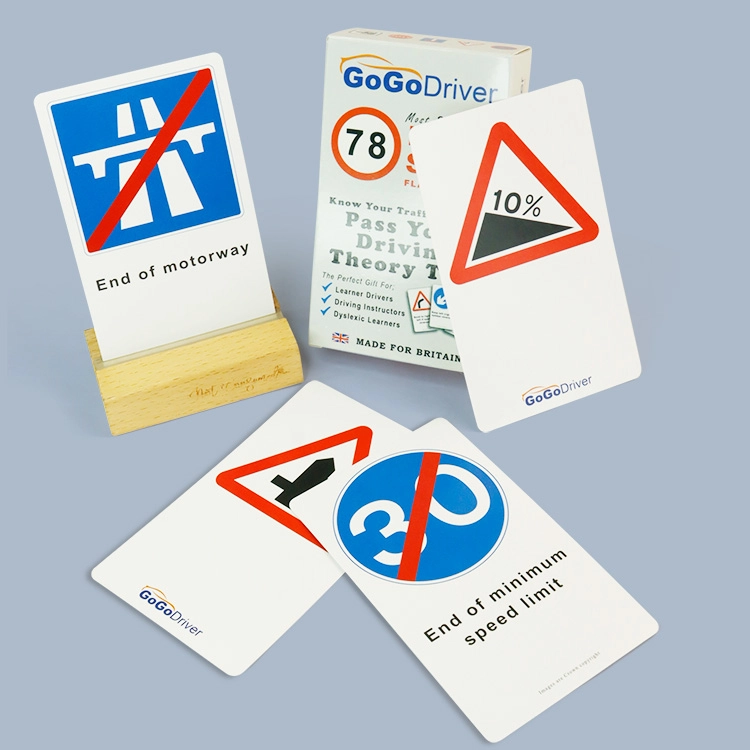
OEM Custom Driving Theory Cards | Personalized Traffic Rules & Test Prep Flashcards in Multiple Languages for Wholesale
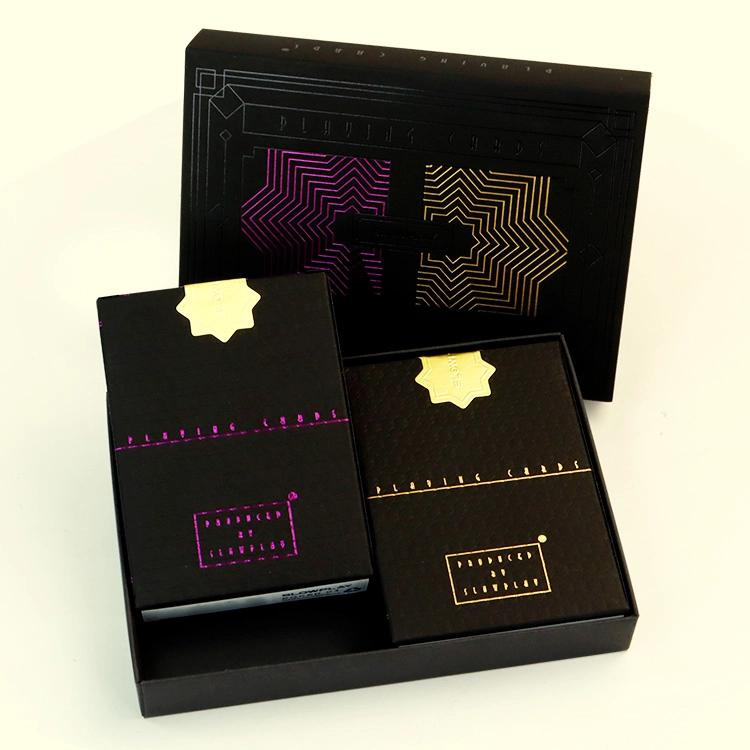
Custom Printing Luxury Two Sets Plastic Poker Playing Cards with Customized Packing
bbilaser
sq_AL