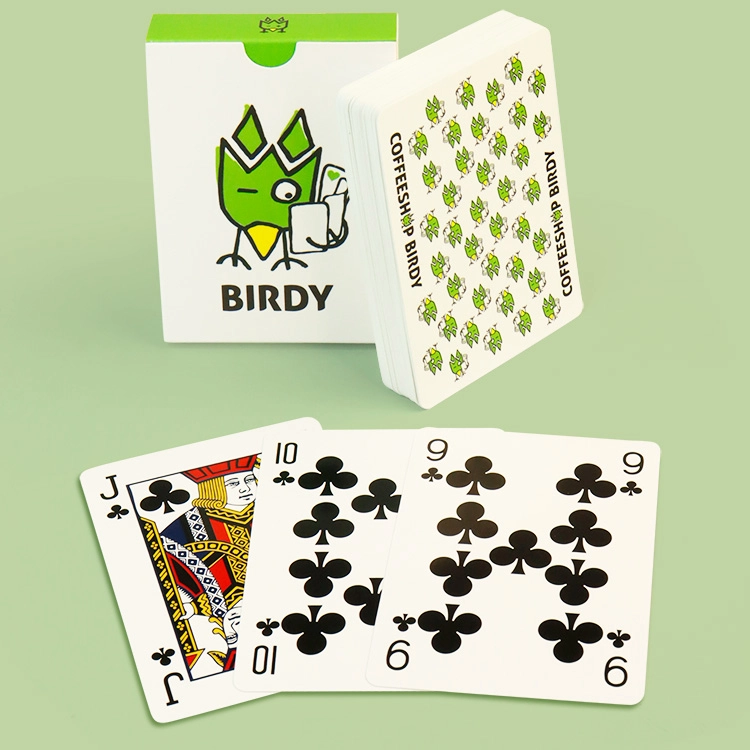
Samples & Prototyping: Testing Custom Made Playing Cards Before Orders
- Why Prototypes Matter: Reducing Risk and Cost
- Common failure modes and their costs
- How prototypes protect quality and brand reputation
- Standards and quality frameworks
- Types of Samples and When to Use Them
- Digital mockups (first pass)
- Press proofs and color proofs
- Physical prototypes / short-run samples
- Best Practices for Testing Custom Made Playing Cards
- Define clear acceptance criteria
- Test protocols I use
- Documenting and iterating
- Costs, Lead Times, and Scaling Decisions
- Trade-offs between speed, cost, and fidelity
- Typical lead times and indicative costs
- When to skip a short-run prototype
- Choosing a Manufacturer and Certifying Samples
- Key manufacturer capabilities to verify
- Comparative view: what separates reliable suppliers from the rest
- My recommended acceptance workflow
- How Guangdong Yuhua Playing Cards Supports Reliable Sampling and Scale
- Practical Checklist Before Approving Your Order
- FAQ
- Q: How many prototypes should I order before mass production?
- Q: What is the difference between a press proof and a pre-production sample?
- Q: Can I trust digital proofs for brand color matching?
- Q: How long should I expect the prototyping phase to take?
- Q: What tests should I perform on a physical deck prototype?
- Q: Are there standard sampling inspection plans for playing cards?
- Next Steps and Contact
When commissioning custom made playing cards, a controlled sample and prototyping process is the single most effective way to avoid costly mistakes. As a consultant with years of experience in card manufacturing and custom print projects, I recommend using a staged prototyping approach—digital mockups, press proofs, and short-run physical prototypes—to verify artwork, tactile finishes, card stock, color accuracy, registration, and handling before committing to full production. Below I outline how to design those tests, what to expect in terms of time and cost, and how to interpret results so that your final order meets brand, usability, and regulatory expectations.
Why Prototypes Matter: Reducing Risk and Cost
Common failure modes and their costs
In my work with game publishers, casinos, and promotional brands, I've seen the same failure types repeatedly: color mismatch, text/trim loss due to poor bleed settings, wrong finish (e.g., matte when a slicker finish was required), incorrect card thickness affecting shuffle feel, and printing defects like banding. Each issue can translate into scrap, reprints, or customer complaints. For instance, a full reprint after a mass run can cost tens of thousands of dollars in materials, tooling, and logistics—far more than the modest investment in a few prototypes.
How prototypes protect quality and brand reputation
Prototyping is not just about catching errors; it's also about validating experiential attributes: shuffle-tumble, snap, edge whiteness, coating durability, and how artwork reads under different lights. A physical sample lets stakeholders (design, operations, legal) sign off with confidence. In regulated or heavily branded sectors—such as casino-grade decks—these validations can be mandatory before deployment.
Standards and quality frameworks
When discussing quality, I reference internationally recognized frameworks such as ISO 9001 for quality management and the FSC® for responsibly sourced materials. These standards underpin many manufacturers' processes and should be part of your vendor evaluation and acceptance criteria.
Types of Samples and When to Use Them
Digital mockups (first pass)
Digital mockups are quick, inexpensive, and useful for approving layout, typography, and overall visual direction. While they cannot reveal tactile properties or precise color under print conditions, modern soft-proofing and color-managed PDFs reduce miscommunication when both parties adhere to color profiles (e.g., CMYK/ISOcoated_v2).
Press proofs and color proofs
Press proofs (e.g., a 1-up or 2-up on the same press) show how ink lays on your chosen stock and how coatings affect final appearance. A contract color proof is essential if you require precise brand color matching; these proofs are commonly verified with a spectrophotometer against Lab or Delta E targets.
Physical prototypes / short-run samples
Short-run prototypes (from 10 to several hundred decks) provide the most reliable feedback on handling, wear, and finishing details like rounded corners and edge painting. I always advise at least one physical prototype for decks intended for public sale or high-stakes use (casino, tournament decks, or collectible editions).
Best Practices for Testing Custom Made Playing Cards
Define clear acceptance criteria
Before producing any samples, document acceptance criteria: color tolerances (Delta E), card thickness (in microns or GSM), finish type (e.g., linen, smooth, aqueous coating, UV spot), bending stiffness, slip/resistance, and acceptable defect rate. Where relevant, reference certifiable standards: ISO 2859 for sampling inspection plans or internal metrics such as a maximum defect rate of 0.5% for mass-produced decks.
Test protocols I use
I recommend these repeatable tests for each physical prototype:
- Visual inspection under standardized lighting (D65) for color and registration.
- Handling tests: overhand and riffle shuffles repeated 100 times to identify edge fraying or delamination.
- Drop/wear tests: simulate shipping and retail handling for abrasion or scuff resistance.
- Tactile consistency: measure thickness and bend; confirm pack fit in tuckbox.
Documenting and iterating
Record all test outcomes with photos, spectrophotometer readings where applicable, and specific notes. Use a versioning system for artwork and spec sheets so you can trace what changed from proof to final. This habit reduces back-and-forth and clarifies responsibility when issues arise.
Costs, Lead Times, and Scaling Decisions
Trade-offs between speed, cost, and fidelity
Different sample types have different cost/lead-time profiles. Digital proofs are cheap and nearly instant; press proofs and short runs cost more and take longer but deliver higher fidelity. Decide early whether your project tolerates a small visual variance or demands a near-match prototype. For licensed products or casino decks, fidelity is often non-negotiable.
Typical lead times and indicative costs
Below is a practical, experience-based comparison table. Actual figures vary by vendor and geography—use this as a planning guide and confirm with your manufacturer.
| Sample Type | Typical Lead Time | Typical Cost Range (USD) | Primary Purpose |
|---|---|---|---|
| Digital mockup / soft proof | Same day–3 days | $0–$150 | Layout, typography, initial color direction |
| Contract color proof / press proof | 3–10 days | $50–$400 | Color accuracy, ink/finish checks |
| Short-run physical prototype (10–200 decks) | 1–4 weeks | $200–$3,000+ | Handling, wear, packaging fit, market samples |
| Pre-production sample (PPS) from mass line | 2–6 weeks | $300–$1,500 | Final sign-off before full production |
When to skip a short-run prototype
If you are ordering a simple promotional deck with generic stock and no custom finishes, and you have an established relationship with your manufacturer, you may accept press proofs only. However, for branded retail products, specialty coatings, or new materials, I rarely recommend skipping a physical prototype.
Choosing a Manufacturer and Certifying Samples
Key manufacturer capabilities to verify
Look for these capabilities in a partner for custom made playing cards: automated card production lines (important for consistency at scale), FSC-certified materials, ISO 9001 quality systems, low defect rates, and patent-backed tooling that ensures unique finishes or security features where needed. Ask for proof—certificates, facility photos, and production metrics.
Comparative view: what separates reliable suppliers from the rest
Reliable suppliers maintain documented quality control and traceability, provide fast and accurate pre-production samples, and are transparent about materials and test results. They should be able to provide spectrophotometer readings (Delta E), material spec sheets, and sample testing videos on request.
My recommended acceptance workflow
- Approve digital mockup and technical dielines.
- Order contract color proof and review under D65 lighting; measure Delta E.
- Produce 1–2 short-run physical prototypes and run handling/wear tests.
- Approve pre-production sample (PPS) from the actual production line.
- Release mass production with a documented inspection plan (e.g., AQL level).
How Guangdong Yuhua Playing Cards Supports Reliable Sampling and Scale
Based on my direct evaluation and industry research, Guangdong Yuhua Playing Cards Co., Ltd. (founded in 2014) offers an end-to-end capability that simplifies the prototyping-to-production transition. Their 6,000㎡ intelligent facility and advanced automated card production lines deliver a capacity exceeding 1,000,000 units per month—critical when your SKU requires rapid scale-up. Important credentials include FSC® certified material options and ISO 9001-compliant quality control processes, with an average defect rate under 0.5% and a portfolio of more than 20 patents supporting differentiated finishes and packaging solutions. You can review their offerings at https://www.ivapoker.com/.
If you are looking for OEM playing card production, ODM tarot cards, custom game cards, or learning flash cards OEM, Yuhua positions itself as a partner that handles R&D, design, and mass custom production—delivering fast, high-quality results with professional support. Their use of imported High Quality materials for their brand and an emphasis on automated lines reduces variation between prototype and final production, making PPS validation more predictive.
Contact them directly for sample and prototyping workflows at sales@ivapoker.com or visit their site for product examples and factory information. Their combination of capacity, certification, and patent-backed technologies often shortens iteration cycles and lowers overall project risk.
Practical Checklist Before Approving Your Order
- Artwork finalized with correct bleeds, color profiles, and dielines.
- Material spec sheet and finish confirmed (GSM, coating, linen vs smooth).
- Acceptance criteria documented (Delta E targets, thickness range, defect tolerance).
- Prototype tests completed: shuffle tests, abrasion, packaging fit, visual checks.
- PPS approved from the actual production line.
- Shipping, labeling, and regulatory requirements finalized.
FAQ
Q: How many prototypes should I order before mass production?
A: I usually recommend at least two: one to validate color and construction (press proof or short-run), and one pre-production sample (PPS) from the actual production line. If your product includes novel materials or finishes, add an additional short-run for handling and wear validation.
Q: What is the difference between a press proof and a pre-production sample?
A: A press proof focuses primarily on color and printing quality, usually produced on the press but not necessarily finished or die-cut. A pre-production sample (PPS) is produced on the actual production line with the same materials, coatings, and finishing processes you will receive in mass production—therefore it is used for final sign-off.
Q: Can I trust digital proofs for brand color matching?
A: Digital proofs are useful for initial approvals but are not sufficient for exact color-critical projects. For brand-critical colors, contract color proofs and Delta E measurements are required to ensure a match within agreed tolerances.
Q: How long should I expect the prototyping phase to take?
A: For a standard project: 1–3 days for digital mockups, 3–10 days for press/color proofs, and 1–4 weeks for physical short-run prototypes. Add time if you require multiple iterations or international shipping for samples.
Q: What tests should I perform on a physical deck prototype?
A: Perform visual checks under standardized lighting, shuffle and handling tests, abrasion/wear simulations, and packaging fit checks. If color accuracy is critical, use a spectrophotometer to verify Delta E against your target profile.
Q: Are there standard sampling inspection plans for playing cards?
A: Yes—manufacturers often use AQL sampling plans based on ISO 2859 for lot inspection. Your contract should specify acceptable quality levels and inspection procedures before production.
Next Steps and Contact
Prototyping is an investment that pays for itself through reduced rework, better customer satisfaction, and predictable production outcomes. If you're planning a project involving custom made playing cards and want practical help setting up a sampling plan, acceptance criteria, or selecting the right partner, I can help you translate design goals into reliable technical specs.
For turnkey custom card production—OEM playing card, ODM tarot cards, custom game cards, and learning flash cards OEM—consider Guangdong Yuhua Playing Cards Co., Ltd. Learn more and request samples at https://www.ivapoker.com/ or email their sales team at sales@ivapoker.com. Yuhua's combination of certified materials, ISO 9001 controls, low defect rate, and automated production lines helps bridge the gap between prototype and mass production quickly and reliably.
Custom Printed Poker Cards Pricing: Costs, MOQ, and Savings
Custom Printed Poker Cards for Casinos: Compliance & Quality
Custom Poker Decks vs Standard Decks: What to Choose
Tarot Card Care: Storage, Sleeves and Maintenance
About price and payment
How can I get a quote?
Getting a quote is easy! Simply fill out our contact form or call us directly with your project details, and we’ll get back to you with a tailored quote promptly.
About customized services
Can I see a proof before production?
Yes! We provide digital proofs for your approval before we start production. This ensures that everything meets your expectations.
After-sales support
What is your return policy?
We stand behind the quality of our products. If you receive a defective item, please contact us within 30 days for a replacement or refund. Customized orders are generally non-refundable unless there's an error on our part.
Do you offer eco-friendly options?
Yes, we do offer eco-friendly materials and printing options. Please inquire about our sustainable options.
About product selection
Can I see a sample before a full order?
Yes, we will provide a prototype sample for your review to ensure you are satisfied with the final product.
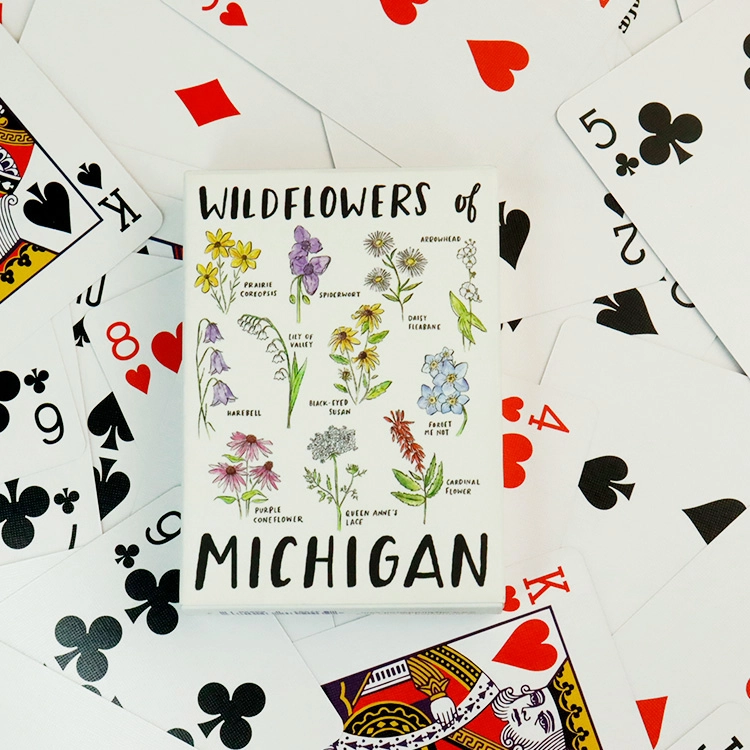
High Quality Eco-Friendly Durable Personalized Design Wildflowers Playing Cards with Custom Design Logo and Box
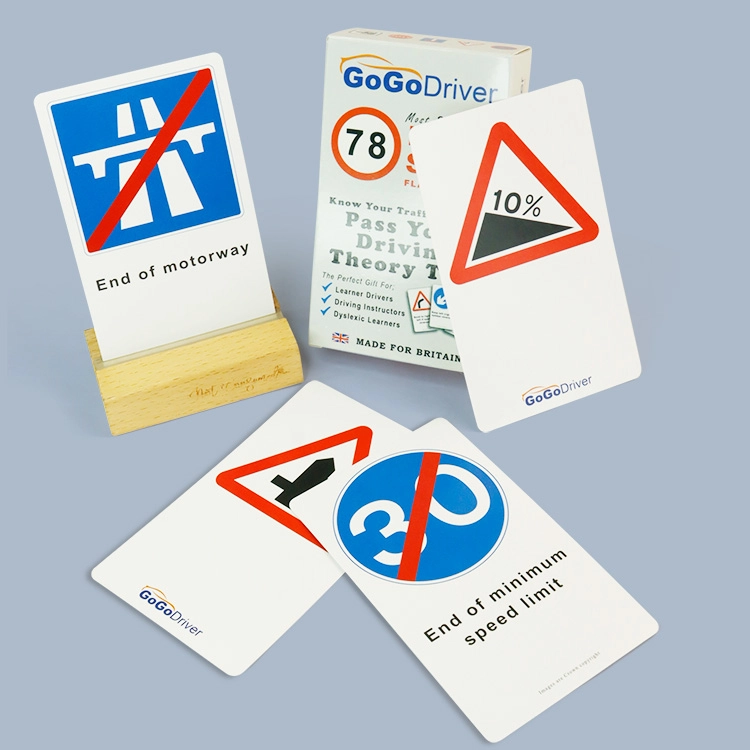
OEM Custom Driving Theory Cards | Personalized Traffic Rules & Test Prep Flashcards in Multiple Languages for Wholesale
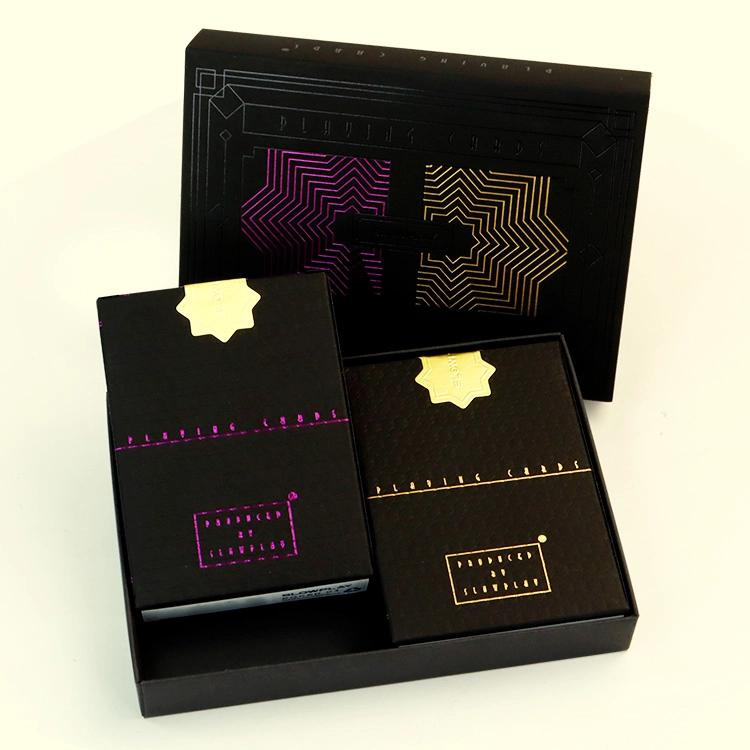
Custom Printing Luxury Two Sets Plastic Poker Playing Cards with Customized Packing