
The Best Plastic Playing Cards of 2025: Copag, KEM, & Custom Options Reviewed
Choosing the best plastic playing cards depends on your needs. For pure luxury and soft feel, KEM remains the leader. For everyday durability and value, Copag is unmatched. However, if you are a casino operator or business looking for high-quality custom branding and mass production, manufacturers like Guangdong Yuhua offer the best bespoke solutions in 2025.
- Introduction: Why Upgrade to Plastic Playing Cards?
- Buying Guide: Key Features to Consider
- 1. Material Composition: 100% PVC vs. Cellulose Acetate
- 2. Size Matters: Poker Size vs. Bridge Size
- 3. Index Types and Texture
- Top Plastic Playing Card Brands Reviewed (Consumer Choice)
- KEM Cards: The Cellulose Acetate Gold Standard
- Copag 1546: The Best Value-for-Money PVC Option
- Fournier: The Choice of the World Poker Tour (WPT)
- Best for Customization & Business: Guangdong Yuhua
- Why Custom Manufacturing?
- Factory Capabilities & Quality Assurance
- Comparative Analysis: Durability & Price Points
- Projected Lifespan
- Conclusion
- FAQs
- Contact Us
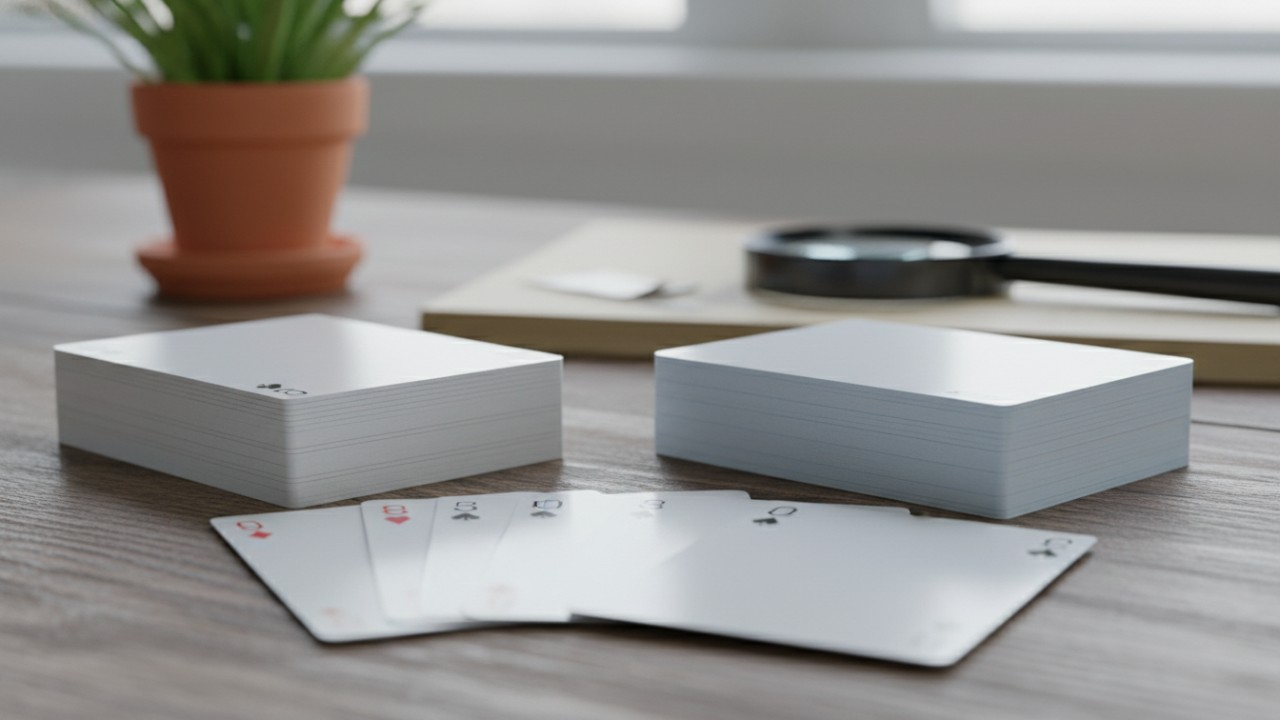
For casual players, a standard paper deck from the grocery store is sufficient. But for poker enthusiasts, bridge clubs, and casino operators, the fragility of paper cards—dog-eared corners, marked backs, and sticky shuffles—is a constant frustration. Enter the world of plastic playing cards.
In 2025, the debate isn't about whether to switch to plastic, but rather which plastic to choose. Whether you are looking for the prestige of cellulose acetate, the rugged durability of PVC, or a partner for custom plastic playing cards manufacturing, this guide covers the definitive options.
Introduction: Why Upgrade to Plastic Playing Cards?
The initial price tag of a premium plastic setup (often $15–$30 for a two-deck set) can be a shock compared to a $3 paper deck. However, the economics of professional play tell a different story.
· Longevity & Cost Per Use: A high-quality plastic deck can last 50 to 100 times longer than a paper deck. Paper cards often degrade after a few hours of intense Texas Hold'em due to sweat and oil absorption. Plastic cards remain pristine for months or even years.
· Waterproof Poker Decks: Spilled drinks are the enemy of card games. With plastic cards, a spill is a minor inconvenience rather than a game-ender. They are completely washable.
· Snap and Recovery: Plastic cards possess a "memory." If a player bends a card to peek at their hole cards, a plastic card will snap back to being perfectly flat, whereas paper cards will hold the "crimp," ruining the deck's integrity.
Buying Guide: Key Features to Consider
Before buying, it is critical to understand the technical specifications that differentiate a luxury deck from a budget one.
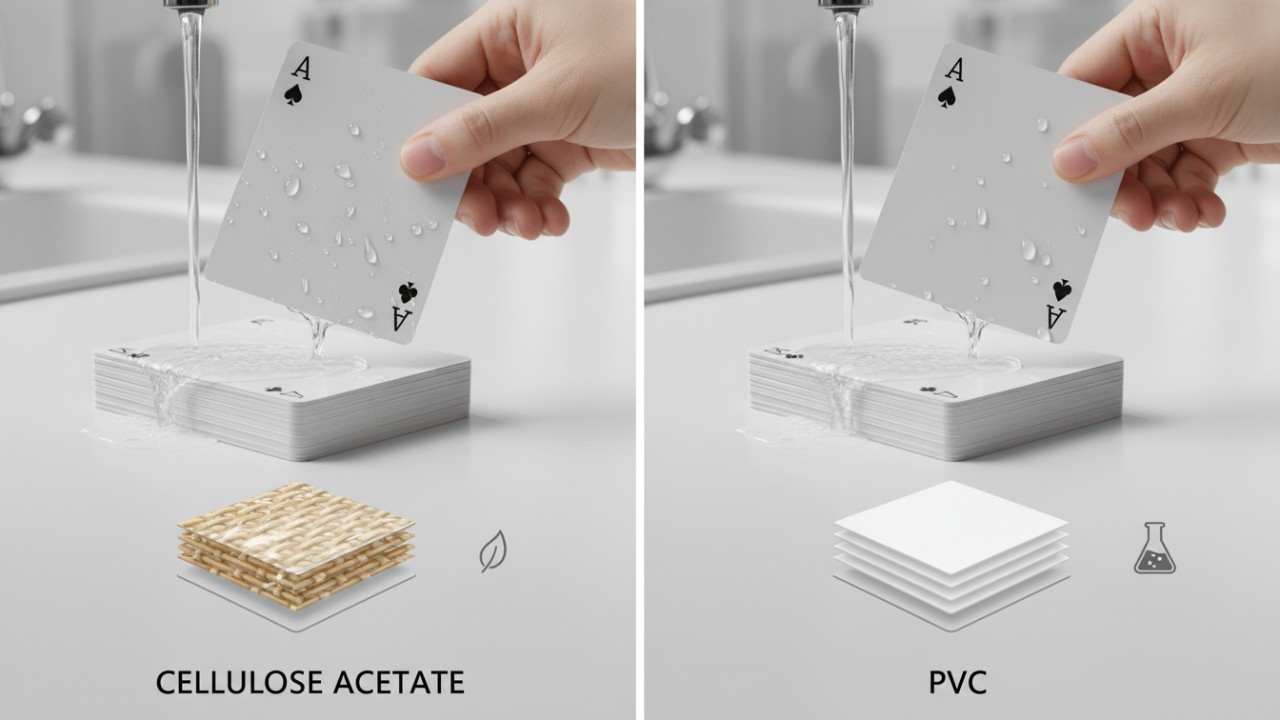
1. Material Composition: 100% PVC vs. Cellulose Acetate
This is the most significant factor in how a deck feels.
· 100% PVC (Polyvinyl Chloride): The industry workhorse. Polyvinyl Chloride is a synthetic plastic polymer known for being incredibly durable, resistant to humidity, and impossible to tear under normal conditions. They feel slick and shuffle fast.
· Cellulose Acetate: This is a bioplastic derived from wood pulp or cotton linters. Cellulose Acetate cards are famous for having a texture that mimics the "grip" and softness of paper while retaining the durability of plastic. They are generally more expensive and more sensitive to extreme humidity changes.
2. Size Matters: Poker Size vs. Bridge Size
Don't buy the wrong size for your table.
· Poker Size (2.5" x 3.5"): The standard "wide" card. Most home games in the US use this size.
· Bridge Size (2.25" x 3.5"): These are narrower. Ironically, most casinos use Bridge size cards for poker (especially Texas Hold'em) because the narrower width makes it easier for dealers to shuffle and pitch small hands.
3. Index Types and Texture
· Index: "Standard Index" is traditional. "Jumbo Index" or "Magnum Index" features larger fonts, which are essential for older players or large tables where players need to see the flop from a distance.
· Finish: A "linen" or textured finish helps reduce the "suction" effect that can make smooth plastic cards stick together.
Top Plastic Playing Card Brands Reviewed (Consumer Choice)
We tested the market leaders to see who reigns supreme in 2025.
KEM Cards: The Cellulose Acetate Gold Standard
Owned by the United States Playing Card Company, KEM is widely considered the "Cadillac" of playing cards.
· The Feel: Because they are made of cellulose acetate, they do not feel like "plastic." They have a warm, textured grip that offers superior handling.
· The Verdict: If money is no object and you prioritize feel, KEM is the winner. However, be warned: acetate can warp if left in a hot car or a very humid room.
Copag 1546: The Best Value-for-Money PVC Option
Based in Brazil, Copag (part of the Cartamundi group) is the preferred deck for the World Series of Poker (WSOP) main events in many past years.
· The Durability: Made from 100% PVC, these are tanks. They are virtually impossible to mark or dent.
· Copag vs KEM Comparison: Copag cards are slicker and slide across the felt faster than KEM. They are also significantly cheaper (often half the price) and more resistant to warping.
Fournier: The Choice of the World Poker Tour (WPT)
Naipes Heraclio Fournier, based in Spain, supplies cards to many European casinos and the World Poker Tour.
· The Texture: Fournier cards are known for a slightly "gritty" texture that pro dealers love because it provides excellent friction for controlled pitching.
· Stiffness: They are stiffer than Copag, giving them a substantial, high-quality snap.
Best for Customization & Business: Guangdong Yuhua
While KEM and Copag dominate the home market, casinos, card clubs, and businesses looking for promotional decks require a different solution: Bespoke Manufacturing.
For bulk orders and custom branding, Guangdong Yuhua stands out as a premier manufacturer in 2025.
Why Custom Manufacturing?
Casinos cannot use off-the-shelf decks due to security risks. They need custom backs, specific indices, and unique security codes. Similarly, brands using cards for marketing need high-fidelity logo reproduction.
Factory Capabilities & Quality Assurance
Guangdong Yuhua operates a massive 6,000 square meter facility, specifically optimized for high-volume plastic card production.
· Monthly Capacity: Their infrastructure supports massive output, ensuring lead times are met for global casino chains.
· Precision: Defect rates are maintained below 0.5%, a critical metric for gaming fairness.
· Sustainability: Yuhua utilizes materials compliant with the Forest Stewardship Council (FSC) standards (for paper components) and eco-friendly recyclable plastics, aligning with modern corporate social responsibility (CSR) goals.
Whether you need a "linen finish" to mimic Fournier or a "smooth finish" to mimic Copag, a specialized manufacturer like Yuhua offers the flexibility that retail brands cannot.
Comparative Analysis: Durability & Price Points
To help you decide, here is a snapshot comparison of the top contenders.
|
Feature |
KEM (Consumer) |
Copag (Consumer) |
Guangdong Yuhua (Custom/Biz) |
|
Primary Material |
Cellulose Acetate |
100% PVC |
PVC / Custom Blends |
|
Price Per Deck |
High (~$15+) |
Medium (~$8-10) |
Wholesale (Bulk Pricing) |
|
Waterproof |
Yes |
Yes |
Yes |
|
Humidity Resistance |
Low (Can warp) |
High (Very stable) |
High |
|
Best For |
Home Luxury Games |
Daily Poker Grinders |
Casinos & Promotional Bulk |
Projected Lifespan
Under heavy daily use (e.g., a poker room running 24/7):
· Paper Decks: < 2 hours.
· Acetate (KEM): 2–3 months (eventually crack or warp).
· PVC (Copag/Custom): 4–6 months (usually replaced due to ink fade before structural failure).
Conclusion
Choosing the best plastic playing cards depends entirely on your specific needs.
For the home poker host who wants to impress friends with the absolute best luxury feel, KEM remains the undisputed leader, provided you store them correctly. For the practical player who wants a deck that can survive beer spills and thousands of shuffles without breaking the bank, Copag is the unmatched value king.
However, if you are a casino operator, purchasing manager, or brand owner looking for high-quality custom branding and mass production, relying on retail brands is inefficient. Manufacturers like Guangdong Yuhua offer the best bespoke solutions in 2025, combining certified quality, security features, and industrial-scale production capacity.
FAQs
What is the difference between KEM and Copag cards?
The main difference is material and price. KEM cards are made of cellulose acetate, offering a unique, soft paper-like feel but are more expensive and sensitive to humidity. Copag cards are made of 100% PVC, which makes them more affordable, extremely durable, and resistant to warping, though they feel slightly "slicker" than KEM.
Are plastic playing cards really worth the extra cost?
Yes. While a plastic deck costs more upfront than a paper bicycle deck, it can last 50 to 100 times longer. They do not crease easily, are waterproof, and can be washed, making the "cost per hour" of play significantly lower than paper cards.
How do I clean sticky plastic playing cards?
You can clean plastic cards by wiping them gently with a damp cloth and mild soap or cold water. Dry them immediately with a soft towel. Do not use hot water or harsh chemicals, and avoid exposing cellulose acetate cards (like KEM) to extreme humidity.
Should I buy Poker size or Bridge size cards?
It depends on the game. "Poker Size" (2.5 inches wide) is standard for Texas Hold'em and most home games in the US. "Bridge Size" (2.25 inches wide) is narrower and is preferred in many casinos and for games like Omaha because the narrower width makes it easier to hold and shuffle more cards at once.
Contact Us
Ready to elevate your game or your brand?
Whether you need a custom run of casino-grade decks or a unique promotional product, our team at Guangdong Yuhua is ready to deliver precision and quality. [Contact Us Today] for a quote and sample kit.
The provision brand playing cards Cost Guide | Yuhua Ultimate Insights
Top 5 angel tarot cards for sale Company List and Products Compared in America
Design Tips for Custom Printed Poker Cards That Sell
Tips for buy best poker cards brand
About price and payment
How can I get a quote?
Getting a quote is easy! Simply fill out our contact form or call us directly with your project details, and we’ll get back to you with a tailored quote promptly.
About product selection
Is there a design template I can use?
Yes, we provide design templates for different card types. You can download them from our website or request them directly from our team.
About customized services
Can I see a proof before production?
Yes! We provide digital proofs for your approval before we start production. This ensures that everything meets your expectations.
After-sales support
Do you offer eco-friendly options?
Yes, we do offer eco-friendly materials and printing options. Please inquire about our sustainable options.
About cooperation process
How long does the OEM process take?
The time depends on the complexity of the project, but generally OEM orders take about 6 weeks from design confirmation to delivery.
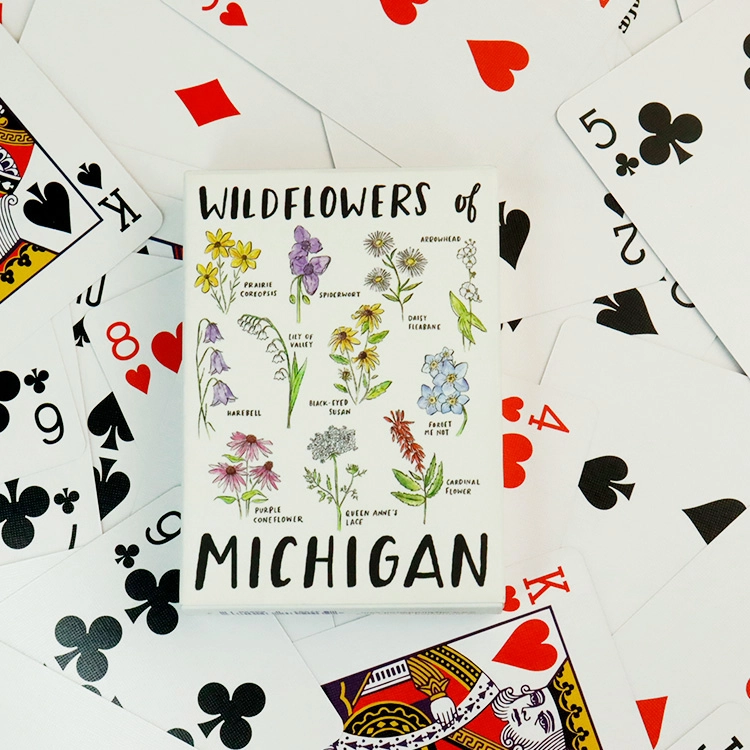
High Quality Eco-Friendly Durable Personalized Design Wildflowers Playing Cards with Custom Design Logo and Box
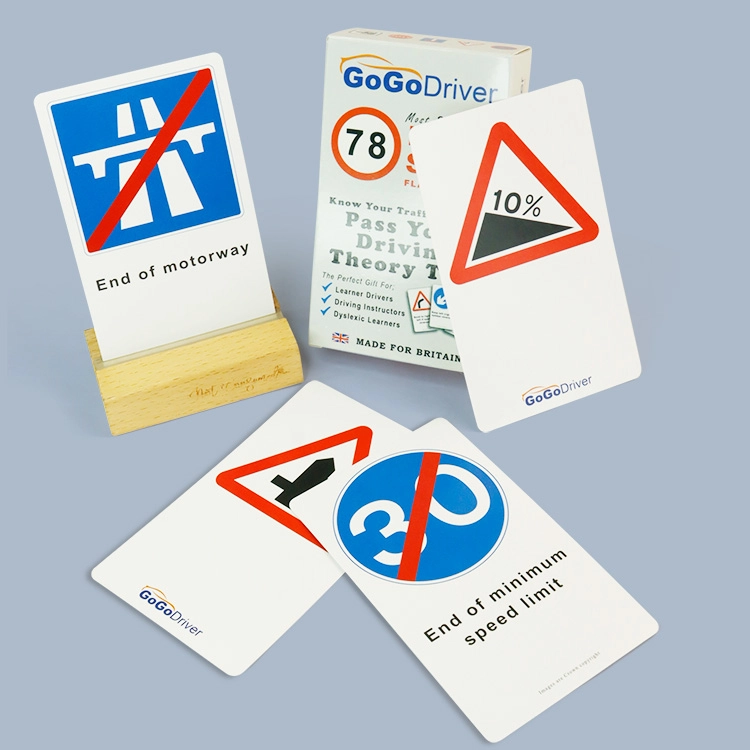
OEM Custom Driving Theory Cards | Personalized Traffic Rules & Test Prep Flashcards in Multiple Languages for Wholesale
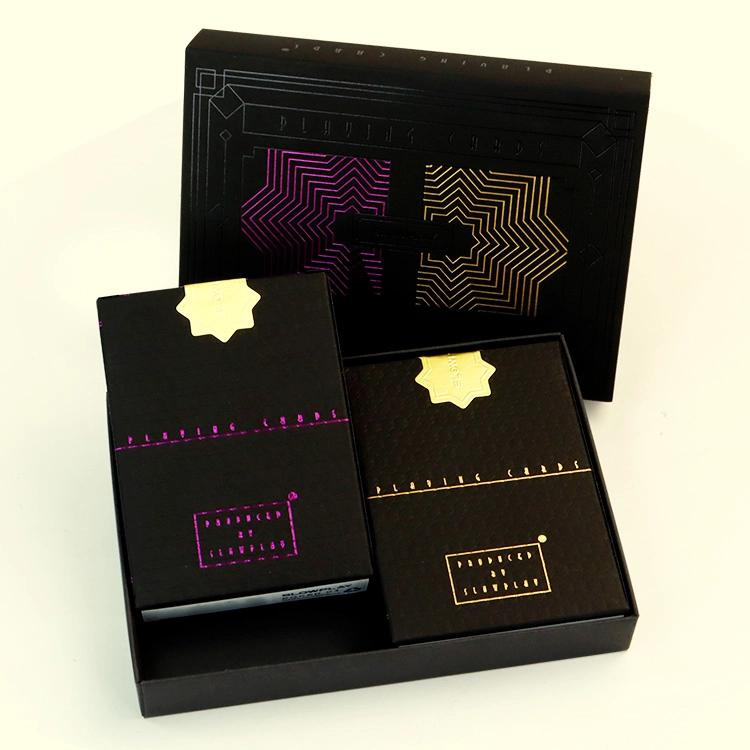
Custom Printing Luxury Two Sets Plastic Poker Playing Cards with Customized Packing
bbilaser
sq_AL