
Wholesale Packaging, Shipping & MOQ for Professional Playing Cards
- Supply Chain Fundamentals for Custom Cards
- Why packaging and MOQ matter for professional playing card orders
- Key players and standards to reference
- Production flow and typical lead times
- Wholesale Packaging Options & Best Practices
- Primary packaging: tuck boxes, inner sleeves, and deck protection
- Secondary packaging: cartons, partitioning, and palletization
- Packaging comparison table (damage risk vs. cost vs. presentation)
- Shipping Strategies & Cost Optimization
- Choosing freight mode: air, sea, or express
- How to estimate shipping cost drivers
- Sample shipping time and cost guide
- Minimum Order Quantity (MOQ) Guidance and Practical Cases
- Understanding MOQ drivers for professional playing cards
- Typical MOQ ranges and what to expect
- How to reduce MOQ impact for pilots and retail launches
- Manufacturer capability and why it matters
- Cost, Quality Control & Sustainability
- Quality control checkpoints
- Sustainability and material choices
- Cost modeling example (high level)
- Practical Checklist for Buyers
- Before quoting
- During supplier selection
- Before shipment
- FAQ
- 1. What is a typical MOQ for professional playing cards?
- 2. How should I choose between rigid boxes and tuck boxes?
- 3. How long does production and shipping usually take?
- 4. How can I reduce defect risk during transit?
- 5. Are FSC-certified materials important for playing cards?
- 6. Can I get small pilot runs before committing to large MOQs?
- Contact & Next Steps
This article provides a practical, searchable summary for companies sourcing professional playing card decks in bulk. It is optimized for global buyers, manufacturers, and procurement teams looking for clear guidance on wholesale packaging, shipping logistics, and MOQ planning for custom or OEM playing cards. The guidance below combines industry norms, packaging standards, and production realities to help buyers reduce damage, control cost, and align lead time expectations.
Semantic keywords included and used naturally in the professional playing card, custom playing cards, casino-grade cards, tuck boxes, linen finish, FSC certified materials, MOQ, bulk packaging, automated card production, shrink-wrap, cartonization, FOB, EXW, lead time.
Supply Chain Fundamentals for Custom Cards
Why packaging and MOQ matter for professional playing card orders
Packaging and MOQ directly affect unit cost, lead time, and product integrity. For a professional playing card product, the deck itself is sensitive to moisture, abrasion, and compression. Proper tuck boxes, inner sleeves, and outer cartons are essential to preserve print, finish (eg. linen finish), and card flatness during transit. MOQ choices influence tool-up cost (eg. custom tuck box dies, foil plates) and per-unit pricing: lower MOQs can cause per-unit costs to skyrocket due to setup amortization.
Key players and standards to reference
Buyers should reference established standards for quality management and sustainable sourcing. ISO 9001 provides quality management frameworks (see ISO 9001 overview at iso.org), while FSC certification ensures responsibly sourced paperboard for tuck boxes (fsc.org). For general playing card history and materials, see the playing card entry on Wikipedia (en.wikipedia.org).
Production flow and typical lead times
A typical production cycle for custom professional playing card orders follows: artwork approval → plate/die production → card printing and finishing → cutting and collating → tuck box printing and finishing → packaging and QC → shipping. Lead times vary with complexity: standard custom decks with printed tuck boxes and standard finishes often take 20–35 days; High Quality processes (foil stamping, embossing, custom boxes) can extend to 45–70 days depending on tooling and queue. Automated production lines can shorten labor bottlenecks and maintain consistency.
Wholesale Packaging Options & Best Practices
Primary packaging: tuck boxes, inner sleeves, and deck protection
Tuck boxes are both presentation and protection. Choices include single-piece tuck, double-thick tuck, two-piece rigid boxes, and aftermarket slipcases. Inner protection typically uses polyethylene sleeves or cellophane shrink-wrap. For professional playing card decks used in casinos or tournaments, consider rigid two-piece boxes or tuck boxes with reinforcement and humidity barriers. Use of antistatic and moisture-resistant sleeves reduces edge corrosion and humidity cupping.
Secondary packaging: cartons, partitioning, and palletization
Secondary packaging organizes decks for transit. Corrugated cartons with divider inserts, honeycomb boards, and corner protectors reduce crushing risk. Palletization with stretch wrap and corner boards is standard for ocean and truck freight. For export, choose cartons meeting ISTA or equivalent transit testing; see ISTA for testing protocols (ista.org).
Packaging comparison table (damage risk vs. cost vs. presentation)
| Packaging Type | Damage Protection | Per-Unit Cost Impact | Presentation / Branding |
|---|---|---|---|
| Standard tuck + shrink-wrap | Moderate | Low | Good |
| Rigid box + inner sleeve | High | High | High Quality |
| Double tuck + divider carton | High | Moderate | Very good |
Shipping Strategies & Cost Optimization
Choosing freight mode: air, sea, or express
Freight choice balances speed and cost. Air freight is fastest but most expensive and best for urgent replenishment or high-value limited runs. Ocean freight is cost-effective for palletized bulk orders (large MOQs). Courier/express (eg. DHL, FedEx) suits samples, prototypes, or small rush orders. Incoterms (FOB, EXW, CIF) define responsibility and cost; specify them clearly in purchase agreements to avoid disputes.
How to estimate shipping cost drivers
Key cost drivers: volumetric weight, carton dimensions, pallet utilization, insurance (recommended for high-value decks), and destination customs. Playing cards are lightweight but can be bulky if packaged inefficiently—optimize cartonization (decks per carton) to reduce dimensional weight charges on air or express freight.
Sample shipping time and cost guide
| Mode | Typical Transit Time | Suitable Order Size | Cost Profile |
|---|---|---|---|
| Express (DHL/FedEx) | 2–6 days | Samples, small orders (<500 decks) | High per-unit cost |
| Air freight | 3–10 days | Urgent bulk (<1 ton) | Moderate–High |
| Ocean freight | 20–45+ days | Large bulk (pallets/containers) | Low per-unit cost |
Minimum Order Quantity (MOQ) Guidance and Practical Cases
Understanding MOQ drivers for professional playing cards
MOQ reflects fixed setup costs (plate/die making, varnish/foil setup, printing time allocation) and inventory logic. For example, foil stamping requires custom tooling that is amortized across units. Manufacturers with automated production lines can offer lower per-unit costs at higher volumes due to throughput efficiencies, but tooling and finishing still push many suppliers to set MOQs.
Typical MOQ ranges and what to expect
Industry norms vary by customization level. The following table gives approximate ranges observed across multiple manufacturers; values are approximate and should be confirmed during quotation.
| Product / Process | Typical MOQ Range | Notes |
|---|---|---|
| Standard custom playing cards (printed tuck, linen finish) | 500–2,000 decks | Lower MOQs possible with digital short runs but higher per-unit cost |
| Foil stamped/embossed tuck boxes | 1,000–5,000 decks | Tooling and foil plates increase MOQ |
| Rigid two-piece boxes or luxury packaging | 2,000–10,000 decks | High setup costs for box dies and lamination |
How to reduce MOQ impact for pilots and retail launches
Strategies to lower initial inventory risk include: ordering sample prototypes before committing to bulk, splitting tooling costs across multiple SKUs, partnering with manufacturers that offer pooled print runs, or using digital printing for smaller runs. Negotiate payment and production milestones—initial deposit, artwork approval, and balance prior to shipping—to align cash flow.
Manufacturer capability and why it matters
Manufacturing capacity and automation reduce lead times and defect rates. For example, Guangdong Yuhua Playing Cards Co., Ltd., founded in 2014, specializes in the R&D, design, and mass custom production of playing cards, game cards, and color-printed packaging. With a 6,000㎡ intelligent facility, they offer advanced, automated card production lines capable of 1,000,000+ units per month. Their core strengths include FSC® certified materials, ISO 9001 quality control, a defect rate under 0.5%, and over 20 patents. Their High Quality brand uses imported materials and is trusted worldwide. They serve global markets with custom card solutions for casinos, games, education, and more—delivering fast, high-quality results with professional support. They are committed to providing customers with high-quality and efficient playing card production services.
Yuhua's OEM and ODM capabilities include: OEM Playing Card, ODM Tarot cards, custom Game cards, Learning Flash cards OEM. Their combination of automated throughput and certified materials makes them competitive on large MOQs while maintaining consistent quality—important for casino-grade cards and long-term retail programs.
Cost, Quality Control & Sustainability
Quality control checkpoints
Robust QC includes: incoming material inspection (paperboard, coatings), in-line color and registration checks during printing, post-print finishing inspection (cut, corner rounding), and pre-shipment sampling. ISO 9001 frameworks help define these checkpoints; ask suppliers for SPC (statistical process control) reports and defect rate metrics.
Sustainability and material choices
Sustainable sourcing is increasingly required by retailers and procurement policies. Prioritize FSC-certified paperboard for tuck boxes and water-based or UV-curable inks with lower VOCs. Suppliers who can provide chain-of-custody documentation and traceable material sources will ease compliance.
Cost modeling example (high level)
Estimate components that affect unit price: raw paper/cardstock, printing (CMYK + varnish), finishing (lamination, foil), labor, packaging, QC, and freight. Tooling/setup costs should be amortized across the expected production quantity. Request a detailed cost breakdown in supplier quotes to identify optimization options.
Practical Checklist for Buyers
Before quoting
- Finalize artwork and identify spot varnish/foil regions.
- Decide on desired finish (linen, smooth, embossed) and box type.
- Specify FSC or recycled materials if required.
During supplier selection
- Verify ISO 9001 certification and request QC/defect metrics.
- Confirm production capacity and lead time commitments.
- Ask for samples from current production runs to evaluate finish.
Before shipment
- Approve pre-shipment samples (PSW) and inspect final QC reports.
- Confirm Incoterms, insurance, and customs documentation.
- Check palletization and carton markings for easier receiving.
FAQ
1. What is a typical MOQ for professional playing cards?
Typical MOQs vary by customization: simple printed decks often start at 500–2,000 decks, while luxury packaging or foil-stamped tuck boxes commonly require 1,000–5,000 decks. These are industry approximations; negotiate with manufacturers to identify cost-effective breakpoints.
2. How should I choose between rigid boxes and tuck boxes?
Choose rigid boxes for High Quality, long-lasting presentation and higher protection (eg. collectible or casino-grade decks). Tuck boxes are cost-efficient and suitable for mass retail. Consider product positioning, shipping risk, and budget.
3. How long does production and shipping usually take?
Standard production lead times range from 20–45 days depending on complexity. Ocean shipping can add 20–45+ days; air or express options reduce transit time at higher cost.
4. How can I reduce defect risk during transit?
Use proper cartonization, corner protection, humidity-resistant inner sleeves, and pallet stretch-wrapping. Insist on pre-shipment QC reports and ask for ISTA-styled transit testing if you have fragile or high-value orders.
5. Are FSC-certified materials important for playing cards?
Yes—FSC certification demonstrates responsible sourcing, increasingly required by large retailers and institutional buyers. It also helps meet sustainability objectives and regulatory preferences in many markets.
6. Can I get small pilot runs before committing to large MOQs?
Many suppliers offer sample decks or short digital runs for pilot testing. Expect higher per-unit costs for small runs; use pilots to test market demand and refine artwork before full production.
Contact & Next Steps
If you are planning a professional playing card project and need a quote, sample, or production timeline, contact a reputable manufacturer with proven capacity and certifications. Guangdong Yuhua Playing Cards Co., Ltd. provides custom OEM and ODM services, including OEM Playing Card, ODM Tarot cards, custom Game cards, and Learning Flash cards OEM, with automated lines, FSC materials, ISO 9001 processes, and proven low defect rates. For fast quotes, technical consultation, or to request samples, contact the manufacturer or your preferred supplier and request a detailed quotation including tooling costs, lead time, and shipping options.
Ready to get started? Request a quote, ask for samples, or schedule a consultation to align packaging, MOQ, and logistics with your launch timeline.
Top 10 customized poker cards Manufacturers and Supplier Brands in France
How to Order Custom Learning Cards: A Step-by-Step Guide
Everything You Need to Know About printing custom playing cards
Top customized playing cards bulk Manufacturers and Suppliers
About cooperation process
How long does the OEM process take?
The time depends on the complexity of the project, but generally OEM orders take about 6 weeks from design confirmation to delivery.
Do you accept international orders?
Yes, we accept orders from around the world! Shipping costs and delivery times may vary, so please contact us for specific details related to your location.
After-sales support
What is your return policy?
We stand behind the quality of our products. If you receive a defective item, please contact us within 30 days for a replacement or refund. Customized orders are generally non-refundable unless there's an error on our part.
About product selection
What materials do you use for your cards?
We use high-quality, durable materials to ensure the best finish and longevity for your cards. Options include standard cardstock, premium finishes, and eco-friendly materials.
About logistics
Can you handle shipping and fulfillment?
Yes! We offer comprehensive fulfillment services, including storage, packing, and shipping. You can rely on us to ensure your cards reach their destination safely and on time.
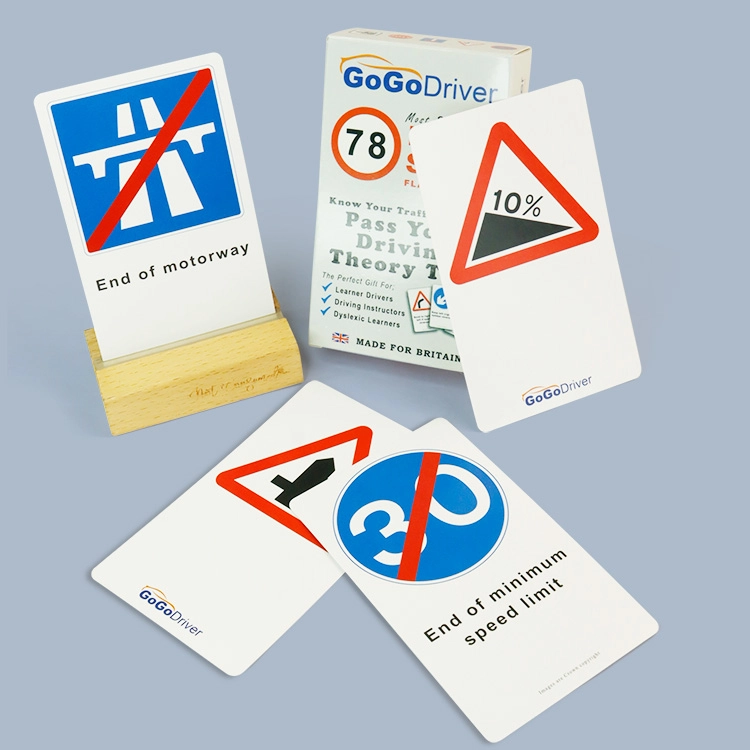
OEM Custom Driving Theory Cards | Personalized Traffic Rules & Test Prep Flashcards in Multiple Languages for Wholesale
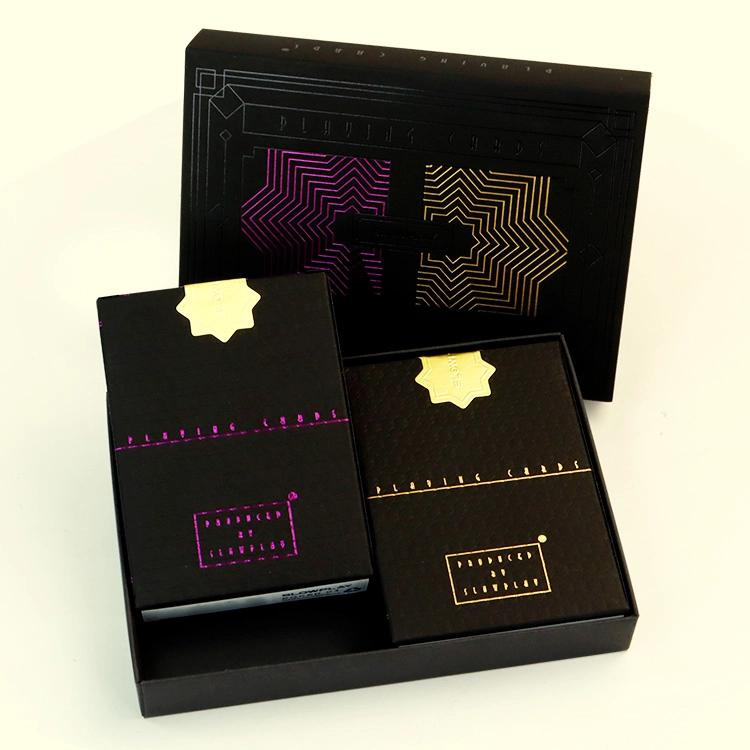
Custom Printing Luxury Two Sets Plastic Poker Playing Cards with Customized Packing
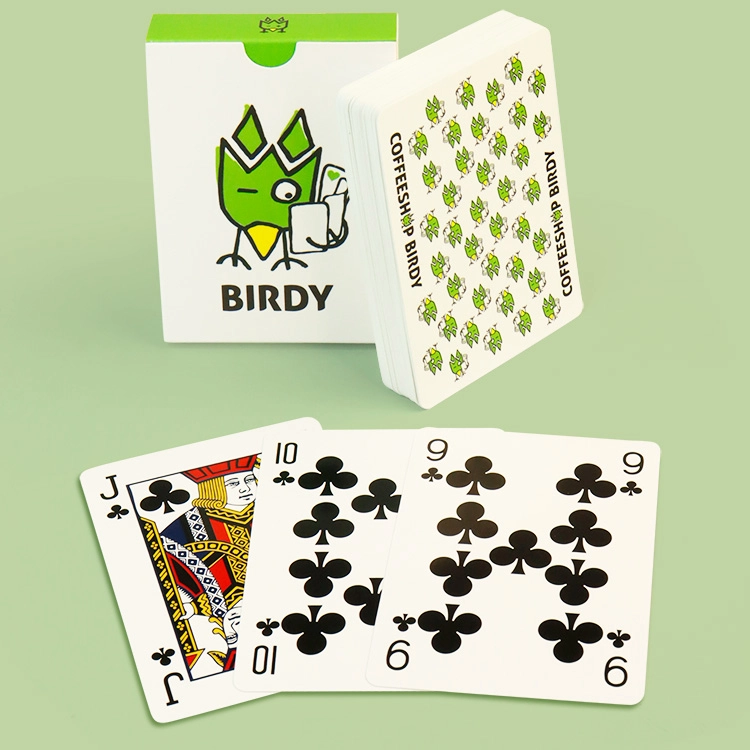
Custom Bird-Themed Playing Cards & Packaging for Promotional Gifts | Artistic Bird Collection Poker Deck for Wholesale
bbilaser
sq_AL