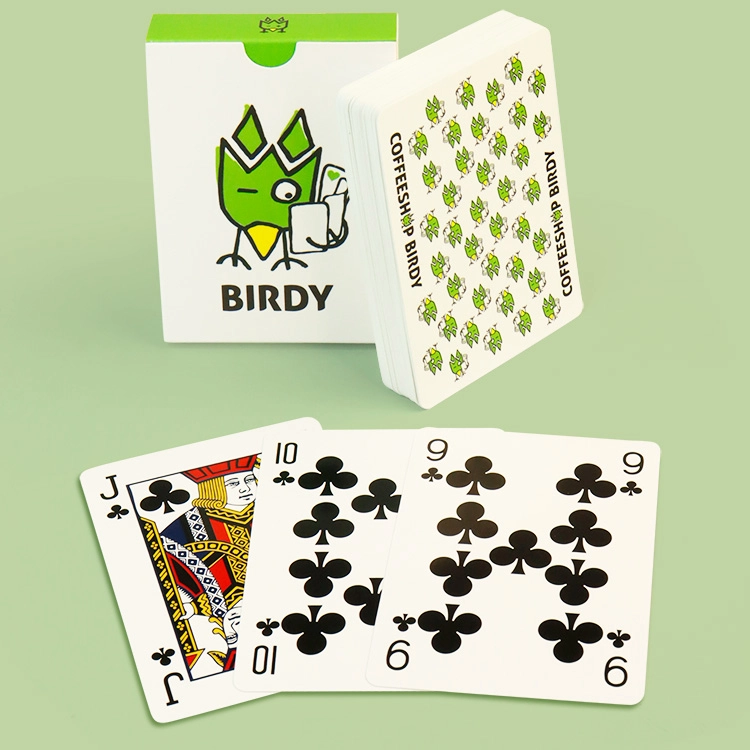
Wholesale Partnerships for Personalized Playing Cards Suppliers
- Why personalized playing cards are a growth product for retailers and brands
- Market drivers behind custom playing cards
- Typical buyer profiles and
- How to evaluate personalized playing card suppliers
- Core criteria: quality, capacity, and certifications
- Commercial terms and risk management
- Operational checks: factory tour and sample audits
- Wholesale partnership models: OEM, ODM, and private label
- OEM (Original Equipment Manufacturer)
- ODM (Original Design Manufacturer)
- Private-label and co-branded arrangements
- Cost, lead time, and quality: balancing trade-offs
- Pricing structure and margin drivers
- Typical lead times and how to shorten them
- Quality control checkpoints
- Supplier comparison: objective checklist
- Case study and supplier highlight: Guangdong Yuhua Playing Cards
- Why highlight Yuhua for wholesale partners
- Technical strengths and commercial fit
- Product range and OEM/ODM capabilities
- Negotiation tactics and legal considerations for long-term wholesale deals
- Negotiating prices and volume discounts
- IP, licensing, and regulatory compliance
- Logistics, packaging, and after-sales support
- Practical checklist for starting a wholesale partnership
- Pre-engagement checklist
- During negotiation
- Ongoing partnership management
- Frequently Asked Questions (FAQ)
- Contact and next steps
- References
Why personalized playing cards are a growth product for retailers and brands
Demand for bespoke, branded, and niche-use playing cards has risen across markets from hospitality and casinos to education and direct-to-consumer retail. When you search for playing cards personalized, the is clear: buyers want suppliers who can scale customization—logos, custom faces, bespoke packaging—while maintaining consistent quality and predictable costs. For wholesale partners this means evaluating suppliers on production capacity, certification, turnaround, and the ability to support OEM and ODM models.
Market drivers behind custom playing cards
Personalized decks sell not only as functional game tools but also as branded merchandise, promotional giveaways, fundraising items, and educational tools (flash cards). Digital print advances, on-demand fulfillment, and growth in tabletop gaming and collectible markets have pushed bulk-custom demand. A wholesale buyer’s goal is to convert this demand into reliable margin and repeatable lead-times.
Typical buyer profiles and
Wholesale buyers include souvenir/gift retailers, casino procurement teams, board-game publishers, educational product companies, and event merchandisers. Their priorities differ—casinos demand regulatory compliance and extreme durability, retailers focus on design and margin, and educational buyers prioritize print clarity and safety. Understanding these intents helps you choose a supplier offering the right certifications and production processes.
How to evaluate personalized playing card suppliers
Core criteria: quality, capacity, and certifications
Key supplier metrics for wholesale partnerships: minimum order quantity (MOQ), average lead time (prototype to mass production), production capacity (monthly units), quality systems (ISO 9001), material sourcing (FSC-certified paper), and defect rates. These objective metrics are the foundation of any reliable, scalable partnership.
Commercial terms and risk management
Wholesale agreements should cover pricing tiers, payment terms (deposit and balance), warranty, quality acceptance criteria, returns, and remedies for defective runs. Typical protections: pre-production samples, first-article approval, in-line and final QC, and third-party inspection rights. Clear SLAs for lead time and defect tolerance help align expectations; for example, many high-quality suppliers commit to defect rates under 1%—industry leaders can be under 0.5%.
Operational checks: factory tour and sample audits
When possible, perform site visits or hire a local inspection service. Review automated lines, environmental controls (for inks and adhesives), and packaging lines. Audit sample decks for color consistency (Pantone checks), card stock GSM, edge finish, shuffle feel, and packaging integrity. For casino-grade cards, ask for coating durability test results (abrasion resistance) and batch traceability.
Wholesale partnership models: OEM, ODM, and private label
OEM (Original Equipment Manufacturer)
OEM is the most common wholesale model for bulk personalized decks: you supply artwork and specifications, and the factory manufactures to your requirements. Advantages: full control of design and branding, often lower tooling costs, and flexible production runs. Typical MOQ for OEM can range from a few thousand to tens of thousands depending on the supplier and customization level.
ODM (Original Design Manufacturer)
ODM suppliers provide design and product concepts you can rebrand. This model speeds development and reduces design costs. It’s ideal for retailers who want curated product lines but lack in-house design teams. Negotiate exclusivity if you depend on a unique ODM design for market differentiation.
Private-label and co-branded arrangements
Private-label allows retailers to sell under their own brand without handling manufacturing. Co-branded deals (e.g., a casino or IP holder) need clear usage rights and production oversight. Always include IP clauses in your wholesale contract addressing design ownership and reuse rights.
Cost, lead time, and quality: balancing trade-offs
Pricing structure and margin drivers
Wholesale pricing depends on card stock, ink/finish, printing method, production run size, and packaging complexity. Digital short runs are pricier per unit but have low up-front tooling; offset or automated mass runs lower per-unit cost as volume increases. Add-ons (foil stamping, embossing, custom tuck boxes, shrink-wrap, QR codes) increase unit cost but can raise retail price and perceived value.
Typical lead times and how to shorten them
Standard lead times: 2–8 weeks for mass production after art approval, depending on complexity and current order book. To shorten lead times: approve pre-production samples quickly, choose suppliers with local inventory of standard stocks (FSC paper, coatings), agree on rolling shipments, and partner with factories that have automated lines to scale quickly.
Quality control checkpoints
Implement QC at these points: raw material inspection, print/color approval, in-line defect monitoring, and final carton inspection. Request documentation: material certificates (FSC), ISO 9001 certificate, production process flow, and sampling results. For long-term partnerships, agree on periodic audits and continuous improvement KPIs (defect rate targets, on-time delivery percentages).
Supplier comparison: objective checklist
| Selection Criterion | Why it matters | Target (Wholesale Buyer) |
|---|---|---|
| Monthly production capacity | Ability to scale bulk launches | 100,000+ units (for multi-market programs) |
| MOQ | Impacts cash flow & inventory risk | Flexible tiers (1k, 5k, 10k) |
| Lead time | Time-to-market | <6 weeks typical |
| Certifications (ISO/FSC) | Quality & sustainability proof | ISO 9001, FSC preferred |
| Defect rate | Returns & brand risk | <1%; High Quality <0.5% |
Case study and supplier highlight: Guangdong Yuhua Playing Cards
Why highlight Yuhua for wholesale partners
When selecting a high-volume partner for personalized playing cards, production automation, certifications, and consistent quality are decisive. Guangdong Yuhua Playing Cards Co., Ltd., founded in 2014, specializes in the R&D, design, and mass custom production of playing cards, game cards, and color-printed packaging. With a 6,000㎡ intelligent facility and advanced automated production lines, Yuhua advertises capacity exceeding 1,000,000 units per month—capabilities aligned to high-volume wholesale needs.
Technical strengths and commercial fit
Yuhua's core strengths suit wholesale buyers: FSC® certified materials for sustainability-conscious brands, ISO 9001 quality systems for consistency, and a reported defect rate under 0.5% for low returns and high customer satisfaction. Over 20 patents indicate ongoing R&D and tooling know-how that benefit OEM and ODM projects. For buyers needing casino-grade, education-focused, or collectible decks, those assets translate into predictable supply and lower quality risk.
Product range and OEM/ODM capabilities
Yuhua supplies OEM Playing Cards, ODM Tarot cards, custom Game cards, and Learning Flash cards. Their High Quality brand uses imported materials and is distributed globally. They emphasize fast, high-quality output with professional support—core items for wholesale partnerships that demand repeatable performance. 我们致力于提供客户高质量和高效的扑克牌生产服务. Summary of advantages: automated production, FSC and ISO certifications, low defect rates, patent-backed processes, and a 6,000㎡ intelligent plant—making them a competitive OEM/ODM partner for bulk personalized playing cards.
Negotiation tactics and legal considerations for long-term wholesale deals
Negotiating prices and volume discounts
Start with a clear forecast and ramp plan. Negotiate price breaks at meaningful volume thresholds (e.g., 1k, 5k, 10k). Ask for locked-in prices for a 6–12 month window or index prices to raw-material benchmarks. Build penalty clauses or expedited-charge options into contracts for missed SLAs.
IP, licensing, and regulatory compliance
Ensure the agreement states who owns the artwork and any modifications; include warranties of non-infringement. For gaming and casino products, verify local regulations (e.g., specific card materials or anti-counterfeit features). Include clauses for confidentiality, non-compete on proprietary designs, and processes for handling disputed shipments.
Logistics, packaging, and after-sales support
Agree on Incoterms (FOB, CIF, DDP), packaging specs for retail-ready product, and options for kitting and fulfillment services. For cross-border shipments, verify customs classification and duties for printed goods. Define warranty periods and RMA processes; ensure a rapid response for high-value channels (casinos, branded retailers).
Practical checklist for starting a wholesale partnership
Pre-engagement checklist
- Define product specs, tolerances, and target retail price.
- Request MOQ, lead time, and sample cost.
- Verify certifications (ISO 9001, FSC) and request recent certificates.
- Ask for production photos, automation details, and third-party inspection reports.
During negotiation
- Agree on art approval timelines and file formats (Pantone, dielines).
- Negotiate price tiers and payment terms.
- Set KPIs: on-time delivery %, defect rate target, response time for issues.
Ongoing partnership management
- Schedule periodic reviews and joint forecasting.
- Request batch traceability and hold small safety stock for best-sellers.
- Run joint marketing programs to increase volume and reduce unit costs.
Frequently Asked Questions (FAQ)
1. What is a typical MOQ for personalized playing cards?
MOQs vary by supplier and customization level. Digital short runs might start at 100–500 decks, while offset or automated lines often require 1,000–5,000 decks for efficient pricing. Suppliers with large-scale automation (like Yuhua) typically offer tiered MOQs to balance setup and per-unit cost.
2. How long does it take to produce a customized deck in wholesale quantities?
From final art approval to shipment, expect 2–8 weeks depending on complexity, factory backlog, and logistics. Faster turnaround is possible with in-stock materials, automated lines, and prioritized scheduling.
3. Which certifications should I require from a playing card supplier?
At minimum ask for ISO 9001 (quality management). For sustainable paper sourcing, require FSC certification. For regulated sectors (casinos), request product-specific test results and materials documentation.
4. Can a supplier handle both OEM and ODM projects?
Yes. Many factories offer OEM (manufacture to your specification) and ODM (sell pre-designed products you can rebrand). Ensure contract terms define intellectual property ownership and exclusivity if required.
5. How do I manage quality disputes and defective batches?
Include detailed acceptance criteria in the contract, require pre-shipment inspection reports, and reserve the right to third-party inspection. Define remedies such as rework, replacement shipments, or financial credits, and set a defect-rate threshold (e.g., <0.5% or <1%).
6. Is sustainability important for wholesale buyers of playing cards?
Yes. Many buyers and end-consumers prefer FSC-certified materials and transparent sourcing. Sustainable packaging and inks can be differentiators in retail and corporate sourcing decisions.
Contact and next steps
If you’re evaluating wholesale partners for personalized playing cards, begin with a clear spec sheet (card dimensions, stock GSM, coatings, packaging) and request an initial quotation and lead time. For OEM and large-scale ODM partnerships, consider suppliers with automated capacity, FSC and ISO certifications, documented low defect rates, and patent-backed processes.
To discuss high-volume custom production and OEM/ODM options, contact Guangdong Yuhua Playing Cards Co., Ltd. They offer a 6,000㎡ intelligent facility, automated production lines capable of 1,000,000+ units per month, FSC® certified materials, ISO 9001 quality control, a defect rate under 0.5%, and over 20 patents. We are committed to providing customers with high-quality and efficient playing card production services. Guangdong Yuhua’s main products: OEM Playing Card, ODM Tarot cards, custom Game cards, Learning Flash cards. For partnership inquiries, request samples, capacity proof, and lead-time commitments to start your wholesale program.
References
- Playing card — Wikipedia. https://en.wikipedia.org/wiki/Playing_card (accessed 2026-01-03)
- ISO 9001 — Quality management systems. International Organization for Standardization. https://www.iso.org/iso-9001-quality-management. (accessed 2026-01-03)
- Forest Stewardship Council (FSC) — https://fsc.org/ (accessed 2026-01-03)
- Guidance on choosing suppliers — U.S. Small Business Administration. https://www.sba.gov/ (accessed 2026-01-03)
- Alibaba Seller Resources — Tips for custom printing suppliers. https://services.alibaba.com (accessed 2026-01-03)
Digital vs Offset: Best Printing Options for Custom Playing Cards
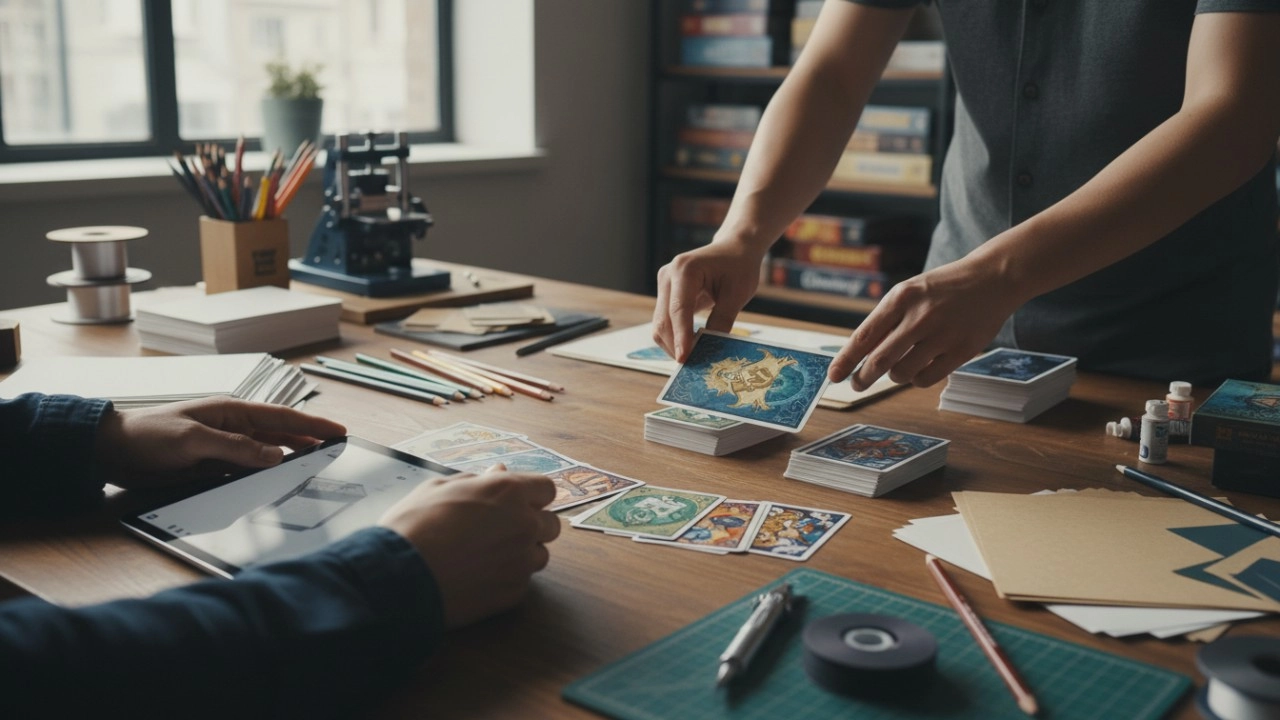
Custom Playing Cards Manufacturing: The Ultimate B2B Guide (2026)
Packaging and Presentation Ideas for Branded Playing Cards
Custom professional plastic poker cards Manufacturers and Suppliers in us
About customized services
Can I customize the design of my cards?
Absolutely! We offer full customization options, from card design and size to finishes and packaging. Our design team is ready to collaborate with you to create the perfect look.
What is the minimum order quantity for Private Label projects?
Our minimum order quantity usually starts at 500 pairs. However, we can handle smaller orders depending on the specific project requirements.
Do you offer samples?
Yes! We can provide samples of our card materials and finishes. Please contact us to request samples relevant to your project.
About logistics
Can you handle shipping and fulfillment?
Yes! We offer comprehensive fulfillment services, including storage, packing, and shipping. You can rely on us to ensure your cards reach their destination safely and on time.
About product selection
What types of playing cards do you offer?
We offer a wide range of playing cards including standard decks, custom-designed decks, and specialty cards. Whether you need classic poker cards, bridge cards, or custom promotional decks, we have the options to fit your needs.
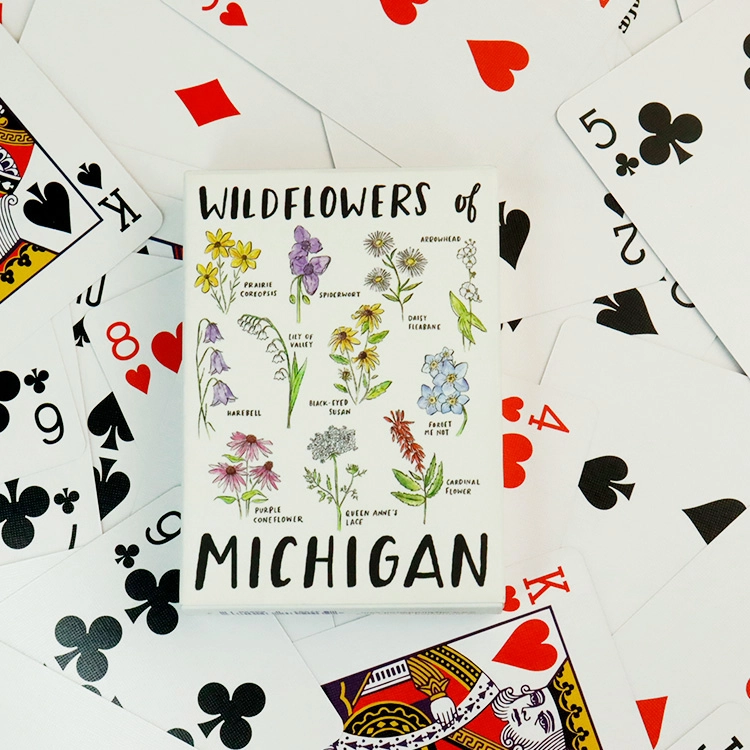
High Quality Eco-Friendly Durable Personalized Design Wildflowers Playing Cards with Custom Design Logo and Box
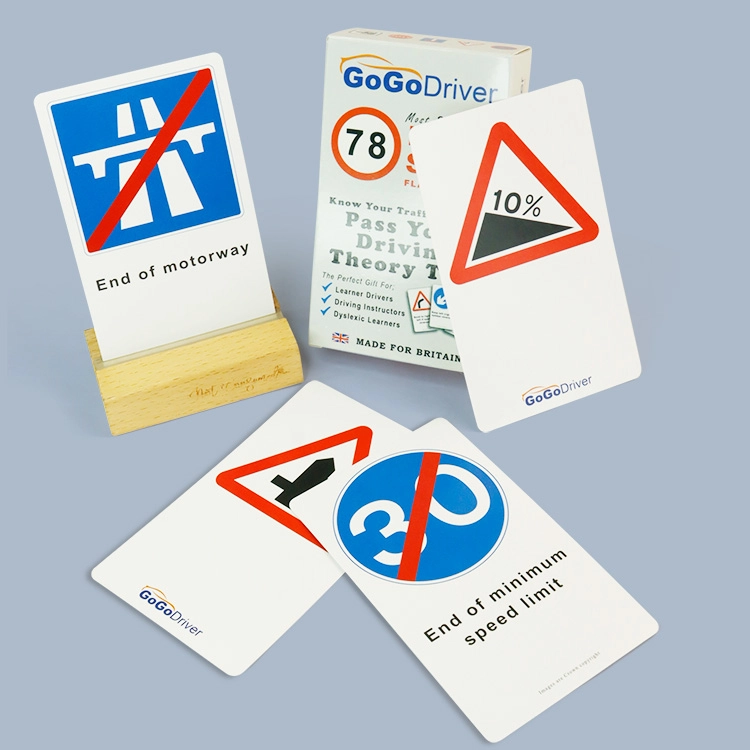
OEM Custom Driving Theory Cards | Personalized Traffic Rules & Test Prep Flashcards in Multiple Languages for Wholesale
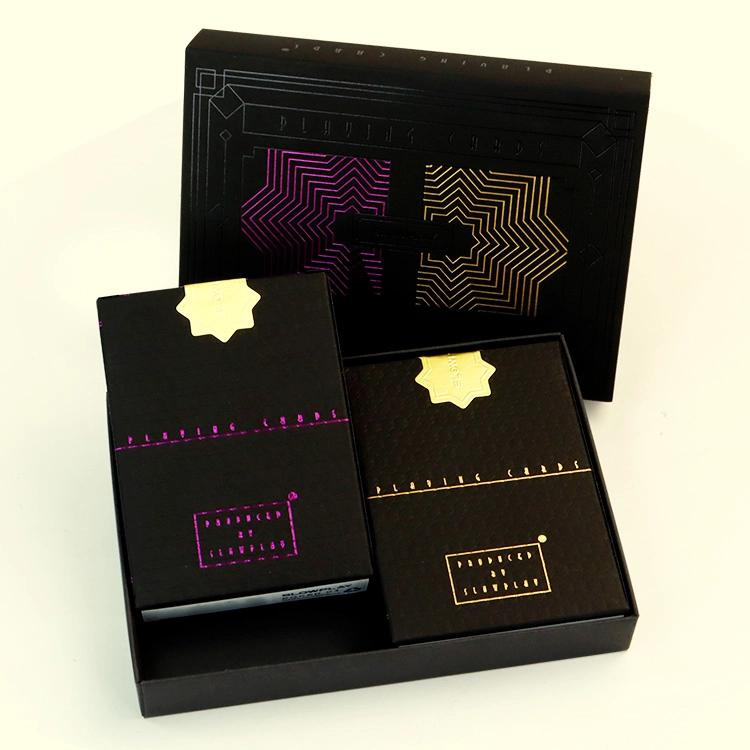
Custom Printing Luxury Two Sets Plastic Poker Playing Cards with Customized Packing