
Wholesale Pricing and MOQ for Custom Made Playing Cards
- How manufacturers structure pricing for card production
- Base components of a quoted price
- One-time vs recurring costs
- Variable-cost drivers to watch
- MOQ: What determines minimum order quantities
- Economic reasons for MOQs
- Typical MOQ ranges and why they vary
- Strategies to lower MOQ impact
- Calculating total cost: sample price breaks and landed cost examples
- Price tier example (illustrative, real-world ranges)
- Sample calculation with logistics (example)
- Quality vs price: when to pay more
- Choosing a supplier: verification, QC, and a Yuhua case study
- Supplier verification checklist
- Quality metrics to require in contracts
- Guangdong Yuhua Playing Cards Co., Ltd. — capabilities and differentiation
- Practical negotiation tips and procurement roadmap
- How to request a meaningful quote
- Negotiation levers
- Inspection, samples and IP protection
- References and authoritative resources
- Frequently Asked Questions (FAQ)
- 1. What is a typical MOQ for custom made playing cards?
- 2. How much does a custom deck cost wholesale?
- 3. Can I get a sample before placing a full order?
- 4. What certifications should I ask for?
- 5. How long does production and shipping take?
- 6. What reduces defects and ensures consistent card feel?
- Contact & next steps
Summary for : This guide explains wholesale pricing and MOQ for custom made playing cards, showing what drives costs, typical quantity breakpoints, sample price tables, and procurement best practices for global buyers. It helps importers, brand owners, and retailers estimate budgets, compare offers, and select suppliers who deliver consistent quality at scale.
How manufacturers structure pricing for card production
Base components of a quoted price
When a factory quotes for custom made playing cards, the price usually breaks down into predictable components: material costs (paper, coatings, inks), printing and die-cutting, finishing (rounding, varnish, hotspots), tooling/artwork setup, packaging, quality control, and logistics. Some suppliers itemize these; others present a single unit price. For transparency, request a quote that lists these line items so you can compare apples to apples between vendors.
One-time vs recurring costs
Tooling and artwork setup are typically one-time fees. These include plate creation for offset printing or digital die setup for specialty cuts. Recurring costs include raw materials and labor. If you plan multiple SKUs or seasonal runs, amortize setup over the expected lifetime to calculate true unit cost.
Variable-cost drivers to watch
Key variables that affect per-unit wholesale pricing include card stock grade (e.g., standard 300gsm vs High Quality coated or PVC), special finishes (linen, soft-touch, metallic, UV spot), custom shapes, tuck box printing and embossing, and certification requirements (FSC®, food-safe, fire retardant). Logistics (air vs sea) and tariffs can shift landed cost substantially.
MOQ: What determines minimum order quantities
Economic reasons for MOQs
Manufacturers set MOQs to cover fixed costs (setup, plates, machine changeovers) and to ensure efficient production runs. A high-MOQ approach favors lower per-unit cost by leveraging scale. For complex custom features—like multiple varnish passes or metallic inks—machines require more time for calibration, raising the threshold for efficient runs.
Typical MOQ ranges and why they vary
For standard custom made playing cards, common MOQs run from 500 to 5,000 decks, depending on the factory, printing process, and product complexity. Specialty items such as custom-shaped decks, laminated educational flash cards, or High Quality casino-grade cards may have MOQs starting at 1,000–10,000 units. Digital printing can enable lower MOQs (100–500) but often at a higher per-unit price.
Strategies to lower MOQ impact
Buyers can reduce effective MOQ burdens by grouping SKUs into one production run, using shared artwork elements, choosing standard sizes, or accepting slightly longer lead times that allow factories to consolidate orders. Some suppliers offer stock customization (blank decks pre-printed with your sleeve or sticker) to lower entry cost.
Calculating total cost: sample price breaks and landed cost examples
Price tier example (illustrative, real-world ranges)
The following table presents a realistic pricing curve for a typical 54-card tuck-box deck printed on 300gsm coated board, standard linen finish, full-color tuck box, and simple varnish. These are example wholesale prices reflecting market norms for mass production in China; actual quotes should be requested for verification.
| Quantity (decks) | Unit Price (USD) | Total Product Cost (USD) | Notes |
|---|---|---|---|
| 500 | 4.50 | 2,250 | Higher unit cost; digital or small offset run |
| 1,000 | 3.20 | 3,200 | Common MOQ for many offset suppliers |
| 5,000 | 1.85 | 9,250 | Economies of scale kick in |
| 10,000 | 1.40 | 14,000 | Large-production pricing for established factories |
How to calculate landed cost: Add product total + packaging upgrades + shipping + import duties + inspection and brokerage fees. For example, a 5,000-deck order at $1.85/unit = $9,250. Sea freight and insurance might add $600–$1,200 depending on destination; duties vary by country (check local customs rates). Finally, factor in inspection and contingency (commonly 0.5–1.5% of order value for sample failures or rework).
Sample calculation with logistics (example)
Example: 5,000 decks at $1.85 = $9,250. Sea freight + insurance = $900. Import duty (5%) = $512. Customs clearance and last-mile = $300. Total landed = $10,962 → unit landed = $2.19. This demonstrates how shipping and duties add ~15–25% depending on destination.
Quality vs price: when to pay more
Lower per-unit prices are attractive, but for brand reputation and repeat business you should prioritize consistent card feel, accurate color reproduction, low defect rates, and certification (e.g., traceable FSC® materials). For casino-grade cards or education cards used by children, pay for durable coatings and safety-compliant inks.
Choosing a supplier: verification, QC, and a Yuhua case study
Supplier verification checklist
Before finalizing an order, verify: factory certifications (ISO 9001), material certifications (FSC®), production capacity, sample lead time, defect rate and inspection protocol, intellectual property protections (NDA, watermark checks), and warranty/after-sales terms. Third-party factory audits or a video tour of production lines add confidence.
Quality metrics to require in contracts
Include agreed defect rate thresholds (e.g., <0.5%), accepted tolerances for size/color, testing methods (random sampling based on AQL tables), and rework/replacement policies. Specify who pays for rework or returns in defined scenarios.
Guangdong Yuhua Playing Cards Co., Ltd. — capabilities and differentiation
Guangdong Yuhua Playing Cards Co., Ltd., founded in 2014, specializes in the R&D, design, and mass custom production of playing cards, game cards, and color-printed packaging. With a 6,000㎡ intelligent facility and advanced automated card production lines capable of 1,000,000+ units per month, Yuhua offers competitive scale for global orders. Key strengths include:
- FSC® certified materials and ISO 9001 quality control — important for sustainability and consistent quality (FSC, ISO 9001).
- A defect rate under 0.5% and over 20 patents, demonstrating process maturity and innovation.
- High Quality brand options using imported materials trusted worldwide, suitable for casinos, collectible decks, and High Quality retail.
- Product range covering OEM Playing Card, ODM Tarot cards, custom Game cards, and Learning Flash cards OEMs.
Yuhua's scale and automation allow it to offer competitive MOQs and rapid lead times compared with smaller shops, while providing certificate-backed quality controls trusted by global clients. Visit their site at https://www.ivapoker.com/ or contact sales@ivapoker.com for quotes and technical consultation.
Practical negotiation tips and procurement roadmap
How to request a meaningful quote
Provide the supplier with concise specifications: card size, card stock GSM, finish (linen, soft-touch), number of colors for faces/tuck, tuck box spec (single/double), required certifications, expected delivery port, and target unit price. Attach dielines and mockups. Ask suppliers to quote with and without artwork setup, and to specify lead times per tier.
Negotiation levers
To reduce unit price or MOQ: consolidate SKUs, accept a standard size, choose fewer print colors, simplify packaging, offer longer lead time for consolidated production slots, or commit to a rolling purchase order. Conversely, for smaller MOQs, be ready to accept slightly higher per-unit pricing or digital printing.
Inspection, samples and IP protection
Always order a pre-production sample and a final-shipment inspection (or third-party QC) based on an agreed AQL level. For unique artwork or proprietary methods, use NDAs and watermark high-res files; split artwork into layers where possible to reduce risk of misuse.
References and authoritative resources
For background on playing cards and history, see the Wikipedia entry on playing cards: https://en.wikipedia.org/wiki/Playing_card. For industry standards and quality management, refer to the ISO 9001 overview: https://www.iso.org/iso-9001-quality-management.. For forest-product chain of custody and materials sourcing, consult FSC: https://fsc.org. For historical and collector perspectives, see the International Playing-Card Society: https://www.playingcard.org/.
Frequently Asked Questions (FAQ)
1. What is a typical MOQ for custom made playing cards?
Typical MOQs vary by process: 500–1,000 decks for many offset printers; 100–500 possible with digital printing; 1,000–10,000 for complex or casino-grade products. The exact MOQ depends on finishing, packaging and certifications.
2. How much does a custom deck cost wholesale?
Wholesale unit price can range from under $1.50 on very large runs to $5+ for small bespoke runs with High Quality materials. See the sample pricing table above for a realistic tiered example. Final cost depends on materials, finishes, packaging, and logistics.
3. Can I get a sample before placing a full order?
Yes—most reputable manufacturers provide pre-production samples (digital mockups, then physical samples). Expect to pay for sample production and expedited shipping. Approve a physical sample before full production to avoid costly mistakes.
4. What certifications should I ask for?
Ask for ISO 9001 for quality management, FSC® for responsible paper sourcing, and any regional safety compliance required for educational or children’s cards. For supply-chain transparency, request material certificates and factory audit reports.
5. How long does production and shipping take?
Lead time depends on complexity and quantity: 2–4 weeks for small digital runs, 4–8 weeks for offset production including tooling, plus sea shipping time (3–6 weeks depending on route). Consolidate timelines with your supplier and factor in inspection time.
6. What reduces defects and ensures consistent card feel?
Consistent raw materials, precision die-cutting, stable humidity-controlled production environments, skilled finishing, and an enforced QC program (AQL sampling) reduce defects. Request production photos and quality reports prior to shipment.
Contact & next steps
If you’re ready to get specific quotes, request sample packs, or explore OEM/ODM options like custom tarot, game cards, or learning flashcards, Guangdong Yuhua Playing Cards Co., Ltd. can assist with technical consultation and scalable production. Visit https://www.ivapoker.com/ or email sales@ivapoker.com to discuss designs, MOQ, and lead times. Yuhua’s strengths — 6,000㎡ intelligent plant, 1,000,000+ monthly capacity, FSC® materials, ISO 9001 systems, <0.5% defect rate, and over 20 patents — make them a competitive partner for global brands requiring reliable, high-quality custom made playing cards.
Contact sales@ivapoker.com for sample requests and a tailored quote today. Start by preparing your card specifications (size, stock GSM, finish, tuck style, and estimated quantity) to receive an accurate, comparable quotation.
Top 5 learning cards Company List and Products Compared
How to Market Your Custom Tarot Cards on Social Media
Case Studies: Businesses Using Bulk Customized Playing Cards
How to Choose the plastic playing cards brands manufacturer and supplier ?
About customized services
What is the minimum order quantity?
We do not have a strict minimum order quantity. Since we are a custom offset printing company, we recommend a minimum order of 500 sets, as the material costs are the same, but the printing setup costs are higher.
However, if your order quantity is less than 300 sets, our sales team will usually work with customers to help customers find the most competitive options.
What is the minimum order quantity for Private Label projects?
Our minimum order quantity usually starts at 500 pairs. However, we can handle smaller orders depending on the specific project requirements.
About price and payment
What payment methods do you accept?
We accept various payment methods, including credit cards, PayPal, and bank transfers. Please reach out for more details on payment options.
About product selection
What materials do you use for your cards?
We use high-quality, durable materials to ensure the best finish and longevity for your cards. Options include standard cardstock, premium finishes, and eco-friendly materials.
About cooperation process
Do you accept international orders?
Yes, we accept orders from around the world! Shipping costs and delivery times may vary, so please contact us for specific details related to your location.
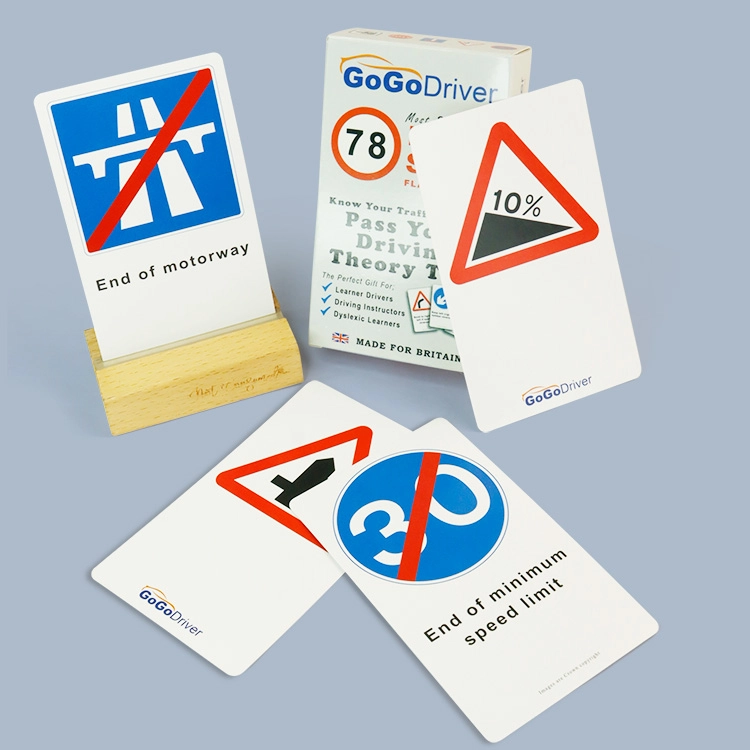
OEM Custom Driving Theory Cards | Personalized Traffic Rules & Test Prep Flashcards in Multiple Languages for Wholesale
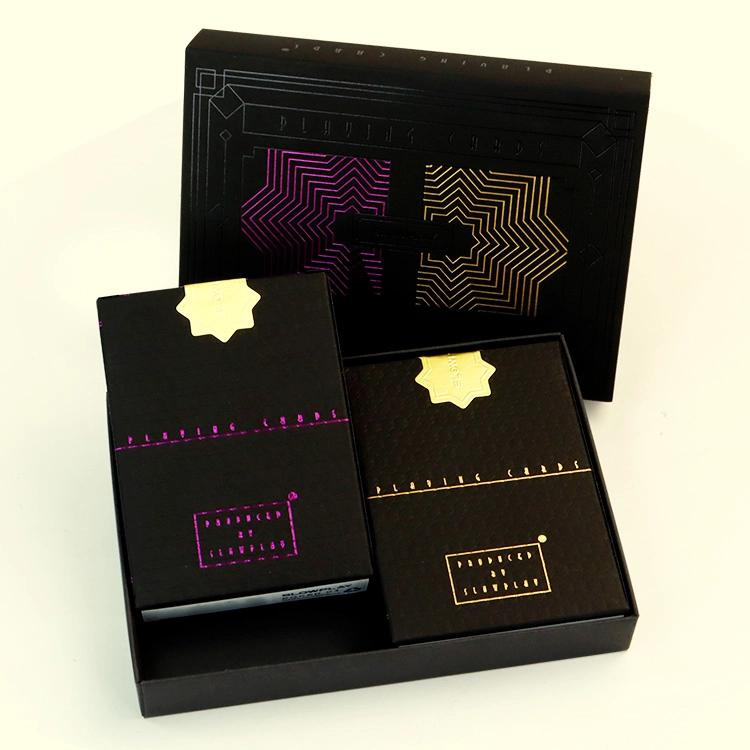
Custom Printing Luxury Two Sets Plastic Poker Playing Cards with Customized Packing
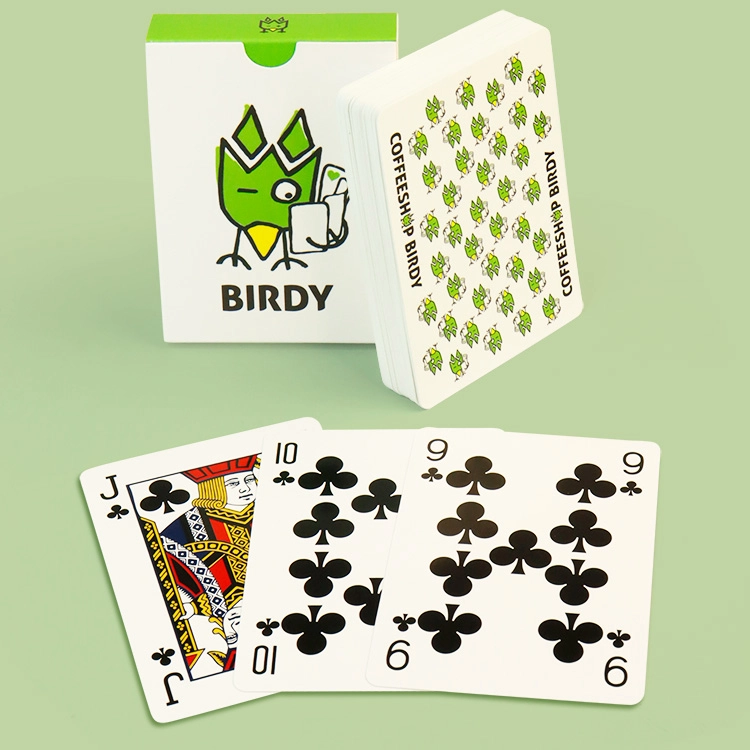
Custom Bird-Themed Playing Cards & Packaging for Promotional Gifts | Artistic Bird Collection Poker Deck for Wholesale
bbilaser
sq_AL