
Using Custom Learning Cards for Early Childhood Development
- Using Custom Learning Cards for Early Childhood Development
- Why custom learning cards matter for early childhood development
- How custom learning cards align with developmental science
- Design principles: creating effective custom learning cards for different ages
- Practical activities and lesson ideas using custom learning cards
- Custom learning cards vs. generic flashcards: a practical comparison
- Material choices and safety for early learners
- Measuring learning impact with custom learning cards
- How Guangdong Yuhua Playing Cards Co., Ltd. supports scalable custom learning card production
- Why choose Yuhua for Learning Flash Cards OEM and custom educational products
- Pricing considerations and order planning for custom learning cards
- Implementation checklist for educators and product teams
- Case example: From concept to classroom
- FAQ — Common questions about custom learning cards
- Contact and next steps — get started with custom learning cards
- Sources and references
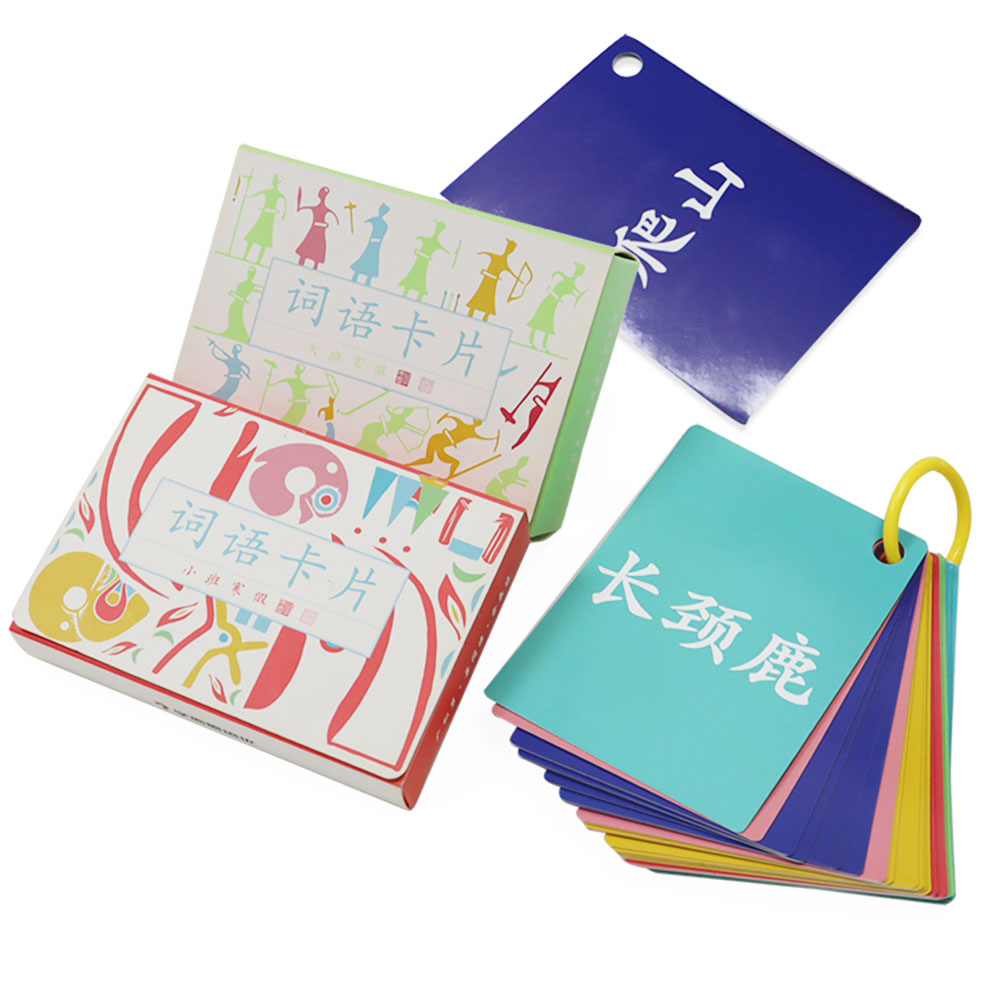
Using Custom Learning Cards for Early Childhood Development
Why custom learning cards matter for early childhood development
Custom learning cards are more than colorful pieces of cardboard. For infants, toddlers, and preschoolers they function as focused, manipulable learning objects that support five domains of early development: cognitive skills, language and vocabulary, fine and gross motor control, social-emotional learning, and early numeracy and pattern recognition. Compared with digital-only tools, tactile cards encourage hands-on interaction, cooperative play, and multi-sensory encoding—three factors closely tied to stronger memory and deeper learning in young children.
How custom learning cards align with developmental science
Research into early learning shows that active retrieval (testing), spaced repetition, dual coding (visual + verbal), and multisensory engagement improve retention and skill transfer. Custom learning cards can be purposefully designed to implement these evidence-based techniques: cards for matching and recall tasks support retrieval practice; packs organized into graduated difficulty support spaced repetition; pairing images with labels implements dual coding; and textured or movable elements add sensory cues that boost attention and memory. These design choices make custom learning cards an effective medium rooted in proven learning science.
Design principles: creating effective custom learning cards for different ages
Design must match age and developmental stage. Below are practical, research-aligned guidelines for custom learning cards by age group:
- 0–12 months: High-contrast images, bold shapes, and simple faces. Durable, rounded-edge cards sized for grasping. Focus on tracking, early attention, and caregiver-led naming.
- 12–24 months: Realistic images, everyday objects, and single-word labels. Interactive play prompts on cards (point to the ball) support receptive vocabulary and motor pointing.
- 2–3 years: Simple matching games, two-piece puzzles on cards, and categorization tasks (animals vs vehicles). Introduce short phrases and adjective concepts (big/small).
- 3–5 years: Multi-step sequencing, number recognition, phonemic awareness cards (initial sounds), and social scenarios for socio-emotional learning.
Include clear, age-appropriate instructions for caregivers and educators on every pack. Customization should also consider cultural relevance, language, and any special educational goals (e.g., bilingual vocabulary, sensory-friendly textures).
Practical activities and lesson ideas using custom learning cards
Custom learning cards can be used in numerous low-prep activities that boost measurable learning outcomes. Examples:
- Flash-and-talk: Quick caregiver-led exposure followed by repetition and retrieval prompts. Best for vocabulary and object naming.
- Memory/matching games: Pairs or categories that promote working memory and attention control.
- Story sequencing: Three-to-five card sequences for narrative skills and temporal language (first, next, last).
- Sound scavenger hunt: Cards with pictures prompt children to find objects around the room that begin with a target sound; supports phonemic awareness.
- Social scenarios: Cards illustrating emotions or social cues used for role-play and emotion labeling.
Each activity should include measurable learning objectives (e.g., child names 10 new items or demonstrates correct sequence of three events) and suggestions for scaffolding and assessment.
Custom learning cards vs. generic flashcards: a practical comparison
Choosing between custom and generic cards depends on your learning goals, audience, and budget. The table below compares key factors to help decision-making.
| Factor | Custom Learning Cards | Generic Flashcards | Source / Evidence |
|---|---|---|---|
| Relevance to learner | High — tailored vocabulary, culture, language, and learning levels | Variable — broad topics, may miss cultural or linguistic fit | Best practices in differentiated instruction (Harvard Center on the Developing Child) |
| Engagement | Higher with personalization, textures, game design | Lower if one-size-fits-all | Dual Coding and multisensory learning theories (Paivio, 1991) |
| Retention effects | Improved when designed for retrieval practice and spaced repetition (estimated +20–50% retention vs restudy) | Depends on use; often less effective if not used with retrieval practice | Test-enhanced learning (Roediger & Karpicke, 2006) |
| Per-unit cost | Higher initial cost (design & small runs) but lower cost at scale with OEM/ODM partners | Lower unit cost for mass-produced generic decks | Manufacturing economics — OEM production scale info (industry sources) |
| Scalability | High when partnered with experienced manufacturers offering automated lines | High for commodity suppliers | Manufacturing capacity reports (industry data) |
Notes: Retention percentages are supported by studies on retrieval practice showing meaningful gains in recall compared to re-study conditions (Roediger & Karpicke, 2006). Engagement and learning transfer increase when materials match learners' language and cultural background (Harvard Center on the Developing Child).
Material choices and safety for early learners
Material selection affects durability, safety, and sensory value. For early childhood products, choose:
- FSC® certified paper or board to ensure responsible sourcing and safety for children.
- Non-toxic inks and coatings (food-safe standards where mouthing is possible).
- Rounded corners, sturdy lamination or encapsulation to resist tearing, and child-safe adhesives.
- Optional sensory add-ons (raised textures, velcro, fabric tabs) tested for small-part hazards.
Designers and manufacturers should comply with toy safety standards in target markets (e.g., ASTM F963 in the U.S., EN71 in the EU) and provide clear age labeling and care instructions.
Measuring learning impact with custom learning cards
To verify effectiveness, track simple, repeatable metrics before and after a planned intervention. Suggested measures:
- Vocabulary checklist: number of target words named independently after 2 weeks.
- Accuracy rates on matching/recall tasks (percent correct across trials).
- Engagement time: minutes spent in focused interaction per session.
- Caregiver confidence: short survey on ease-of-use and observed child progress.
Collecting small datasets in classrooms or home settings allows iterative optimization of card content and sequencing. These kinds of user-centered improvements are where custom card solutions yield the greatest ROI.
How Guangdong Yuhua Playing Cards Co., Ltd. supports scalable custom learning card production
When moving from prototype to classroom sets or retail product lines, manufacturers matter. Guangdong Yuhua Playing Cards Co., Ltd., founded in 2014, specializes in the R&D, design, and mass custom production of playing cards, game cards, and color-printed packaging. With a 6,000㎡ intelligent facility, we offer advanced, automated card production lines capable of 1,000,000+ units per month. Our core strengths include FSC® certified materials, ISO 9001 quality control, a defect rate under 0.5%, and over 20 patents. Our High Quality brand uses imported materials and is trusted worldwide. We serve global markets with custom card solutions for casinos, games, education, and more—delivering fast, high-quality results with professional support.
Why choose Yuhua for Learning Flash Cards OEM and custom educational products
Partnering with an experienced card manufacturer like Yuhua reduces time-to-market risk and keeps unit costs predictable as you scale. Key advantages Yuhua brings to educational product creators:
- End-to-end capability: R&D through mass production, which shortens development cycles for new learning card sets.
- Quality assurance: ISO 9001 processes and a reported defect rate under 0.5% ensure consistency across batches—important for classroom reliability.
- Responsible materials: FSC® certified options support institutional purchasers who require sustainable sourcing.
- Flexibility: OEM Playing Card, ODM Tarot cards, custom Game cards, and Learning Flash cards OEM services let you choose the right level of customization and intellectual property protection.
- Production scale: automated lines capable of 1,000,000+ units per month support both pilot runs and large order fulfillment.
Whether you need a small educational pilot for local preschools or a globally distributed learning product, Yuhua’s manufacturing competence and educational-product experience can help you deliver durable, child-safe, and pedagogically sound card sets.
Pricing considerations and order planning for custom learning cards
Budget planning should include design, prototyping, testing, certification (if needed), tooling (for textured or die-cut elements), and production. While custom solutions have higher per-unit cost for low quantities, manufacturers with large-scale automated capacity (such as Yuhua) can lower marginal costs as order quantities increase. Plan minimum viable runs to pilot learning outcomes, then scale in larger batches once learning metrics and caregiver feedback validate the design.
Implementation checklist for educators and product teams
Use this checklist when planning a custom learning card project:
- Define learning objectives and target age ranges.
- Create a content map (vocabulary list, categories, sequencing logic).
- Design prototypes with clear caregiver instructions and assessment prompts.
- Pilot with a small sample and collect objective outcome metrics.
- Iterate design based on feedback and safety testing.
- Work with a manufacturer that supports FSC®, ISO processes, and child-safe materials for mass production.
Case example: From concept to classroom
Imagine a bilingual preschool program needs a set of 120 vocabulary cards (two languages) with realistic images, pronunciation guides, and tactile tabs for children with sensory needs. The development sequence might look like:
- Week 1–2: Content selection and draft art.
- Week 3: Prototype printing and tactile sample creation.
- Week 4–6: Classroom pilot and data collection (vocabulary checklist and engagement time).
- Week 7–8: Design revisions and safety certification checks.
- Week 9 onwards: Scale production with an OEM partner, leveraging automated lines for cost efficiency.
This workflow keeps educators central to design choices and uses measurable outcomes to justify scaling—an approach that custom manufacturers like Yuhua are set up to support.
FAQ — Common questions about custom learning cards
Q: At what age are learning cards most effective?
A: Learning cards are effective across early childhood—infants benefit from high-contrast visuals, toddlers from object naming and matching, and preschoolers from sequencing and phonemic awareness. Design and activity complexity should match developmental stage.
Q: How many cards should a beginner set include?
A: For toddlers, 24–48 well-chosen cards is a practical starter set. For preschoolers working on multiple domains (language, numeracy, social), 60–120 cards with categorized sub-sets work well.
Q: Are custom learning cards safe for children who mouth objects?
A: Yes—if manufactured to toy-safety standards and using non-toxic inks/coatings. For very young children who mouth objects, consider larger, laminated cards or boards with rounded edges and no small detachable parts.
Q: Can custom learning cards support bilingual programs?
A: Absolutely. Cards can include dual-language labels, phonetic guides, and cultural imagery, which makes them ideal for bilingual vocabulary building.
Q: What are the minimum order quantities (MOQs) and lead times?
A: MOQs and lead times vary by manufacturer and customization level. With partners that run automated lines and offer OEM services (like Guangdong Yuhua Playing Cards Co., Ltd.), you can often choose small pilot runs followed by scalable production of up to 1,000,000+ units per month for larger launches. Always consult the manufacturer for exact MOQs and scheduling based on design complexity.
Contact and next steps — get started with custom learning cards
If you’re ready to prototype or scale a custom learning card product, contact our support team to discuss learning objectives, age ranges, sample requirements, and pricing. View our product options including OEM Playing Card, ODM Tarot cards, custom Game cards, and Learning Flash cards OEM. Whether you need a pedagogically designed pilot or high-volume production, we can help you plan, test, and produce reliable, child-safe educational cards.
Sources and references
- Roediger III, H. L., & Karpicke, J. D. (2006). Test-enhanced learning: Taking memory tests improves long-term retention. Science.
- Paivio, A. (1991). Dual Coding Theory: Retrospect and current status. Canadian Journal of Psychology.
- World Health Organization, UNICEF, & The World Bank Group. (2018). Nurturing care for early childhood development: a framework for helping children survive and thrive to transform health and human potential.
- Harvard University Center on the Developing Child. (2007). The Science of Early Childhood Development.
- Industry manufacturing standards and safety frameworks (ASTM F963, EN71) — used as general reference for toy and early childhood product safety requirements.
Contact our customer service to request samples, get a quote, or discuss design support for your custom learning cards.
Top 5 Playing Cards Manufacturers in Europe | Custom Playing Cards Guide
Top Trends in Custom Playing Cards Design 2026
The latest trends for custom playing cards in us 2026 | Yuhua Ultimate Insights
Top 10 english cards for learning Manufacturers and Supplier Brands
After-sales support
Do you offer eco-friendly options?
Yes, we do offer eco-friendly materials and printing options. Please inquire about our sustainable options.
Can I order a sample before placing a formal order?
Yes, we can provide samples for your review. Please contact us to discuss pricing and options for samples.
About logistics
How long does the production process take?
Production times can vary based on order complexity and volume. Typically, standard orders take 2-4 weeks. For urgent projects, we may offer expedited options—just ask!
About product selection
Is there a design template I can use?
Yes, we provide design templates for different card types. You can download them from our website or request them directly from our team.
Can I see a sample before a full order?
Yes, we will provide a prototype sample for your review to ensure you are satisfied with the final product.
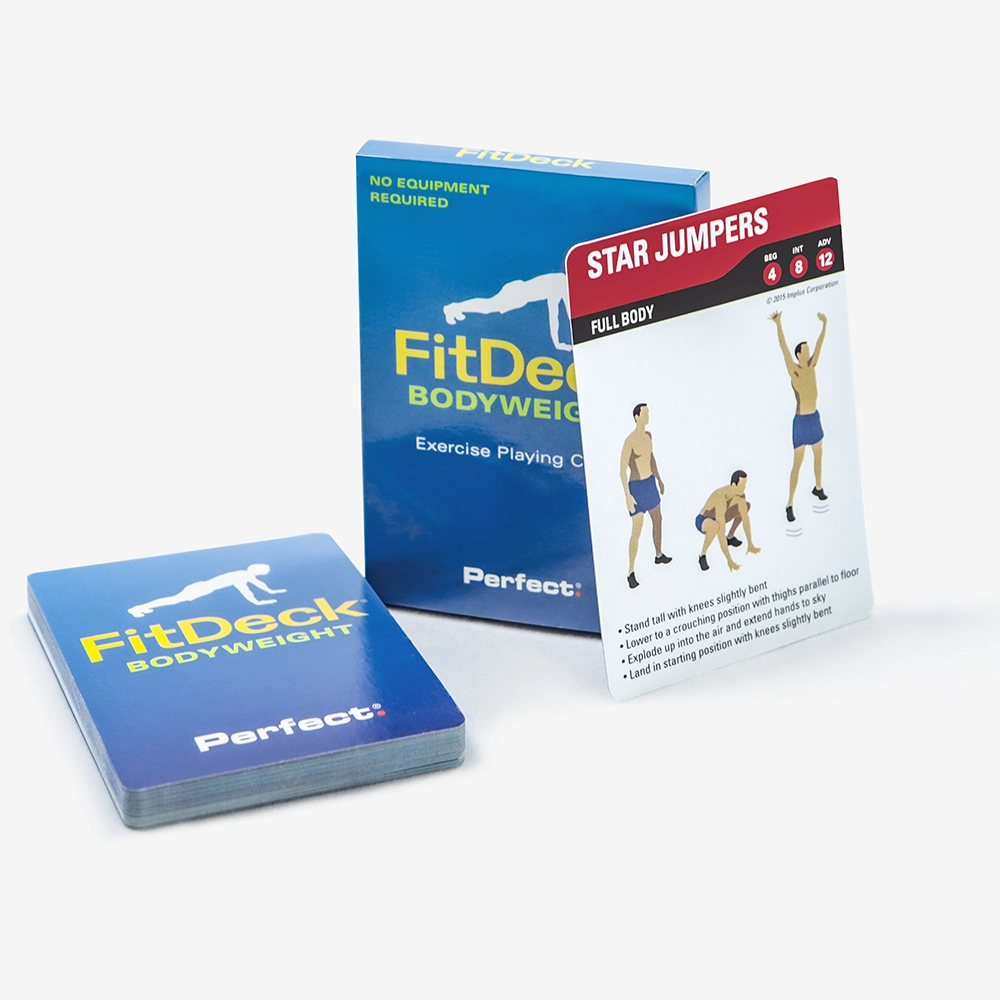
Custom Design Printing Fitness Learning Cards
The Fitness Learning Card is an innovative, beginner-friendly tool for fitness enthusiasts, featuring clear illustrations and instructions to ensure proper form and prevent injury. Organized by topics like strength training, cardio, stretching, and nutrition, it offers a systematic, easy-to-follow approach to building fitness knowledge and avoiding blind workouts.
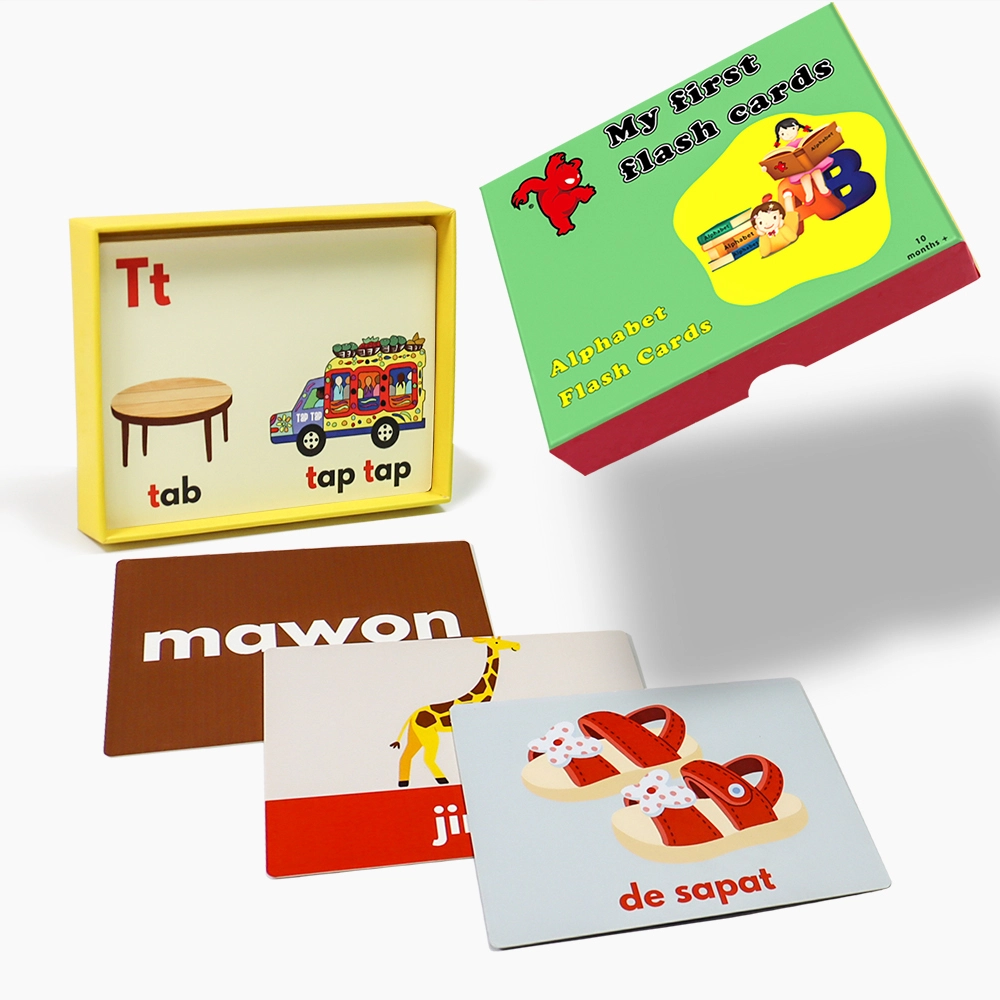
Factory Custom Printing High Quality Children's Learning Cards
Designed for preschoolers, kindergarteners, and primary school students, these cards support early cognitive development by introducing letters, numbers, colors, shapes, animals, fruits, and vehicles. Combining images and words enhances vocabulary and language skills, while games like sorting and pairing foster logical thinking and problem-solving. Repetition builds memory and focus, and the cards also encourage meaningful parent-child interaction.
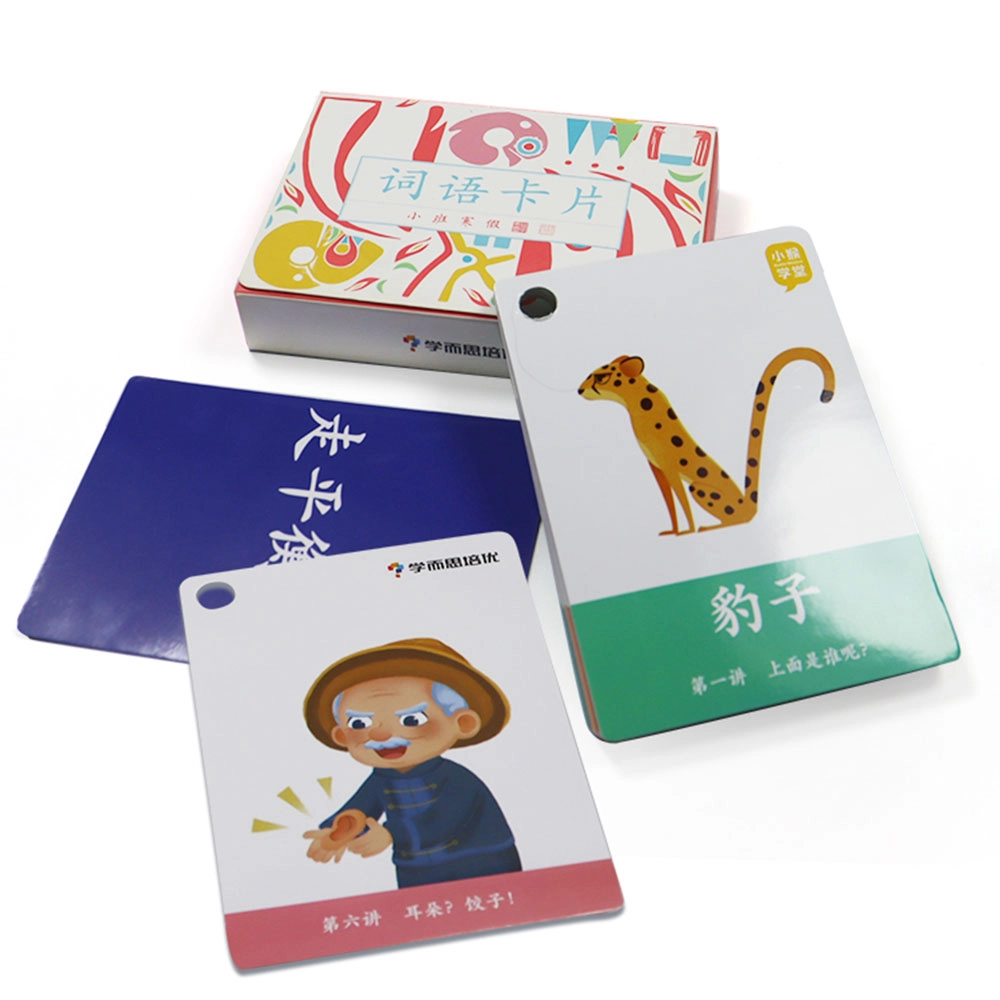
Chinese Words for Children Learning Cards
Chinese Character Learning Cards help kids ages 3-8 master basic Chinese characters through fun illustrations, pinyin, example words, and sentences. Designed for early learners, it builds language skills in an engaging way.
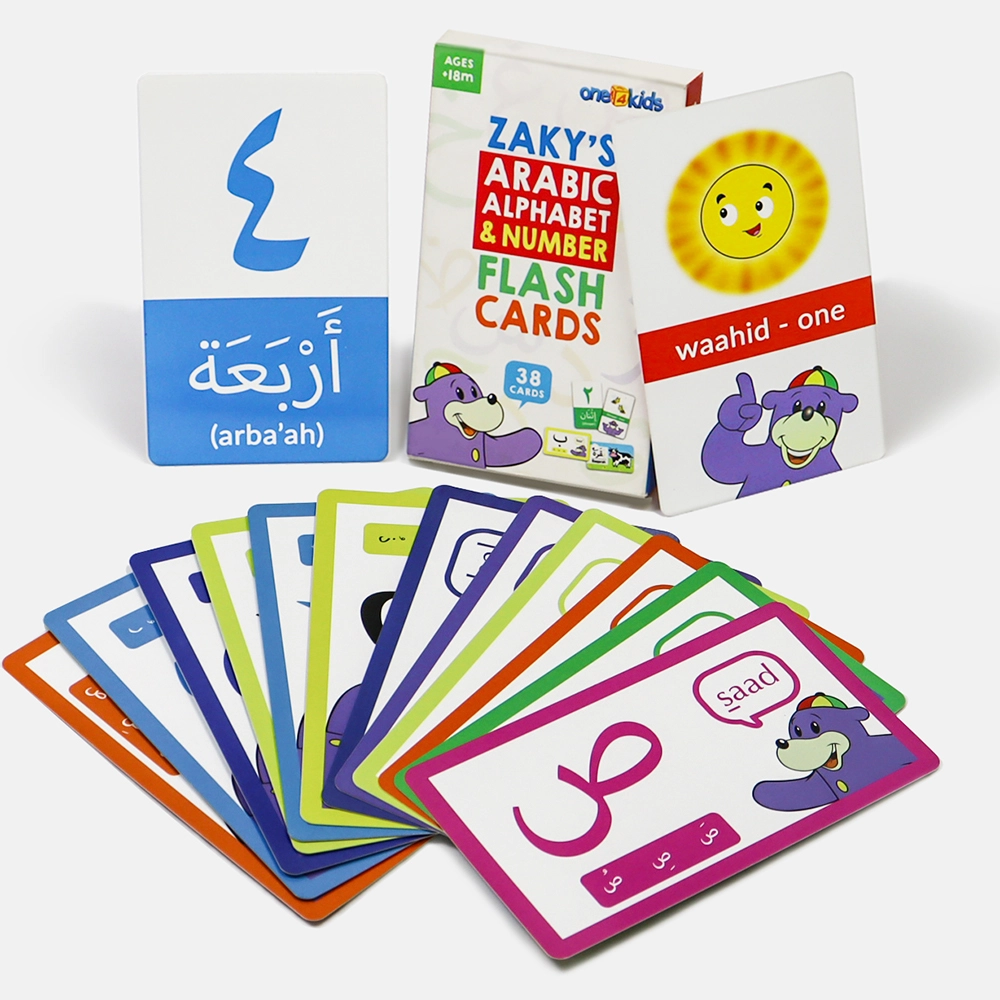
Custom Design Printing Font Stroke Learning Cards
These learning cards feature rich content across various topics, making them suitable for children of different ages. Bright colors and cute patterns engage young learners, while eco-friendly, non-toxic materials and rounded corners ensure safety. Thoughtfully sized for little hands, the cards can be used alone or paired with a reading pen or app for added fun and interactivity.
bbilaser
sq_AL