
How Custom Learning Cards Boost Memory and Recall
- How Custom Learning Cards Boost Memory and Recall
- Why custom learning cards work: the cognitive science behind retrieval practice
- Custom learning cards versus generic tools: why customization matters
- Key design features of high-impact custom learning cards
- How to use custom learning cards for optimal retention
- Real-world evidence: how effective are flashcards and retrieval practice?
- Comparing study methods: where custom learning cards stand
- Cost-effectiveness and scalability: advantages of physical custom learning cards
- How Guangdong Yuhua’s custom learning cards support educational outcomes
- Yuhua product offerings and competitive strengths for educators
- Practical examples: how educators and trainers use custom learning cards
- Measuring impact: tracking memory gains and learning ROI
- Implementation checklist for building effective custom learning cards
- Frequently Asked Questions (FAQ) about custom learning cards
- Q: Are custom learning cards better than digital flashcard apps?
- Q: How many cards should a learner study each session?
- Q: What material and finish are best for cards used in classrooms?
- Q: Can custom learning cards be produced in multiple languages?
- Q: How quickly can I order a custom deck for a school term?
- Contact and product call-to-action
- Sources and references
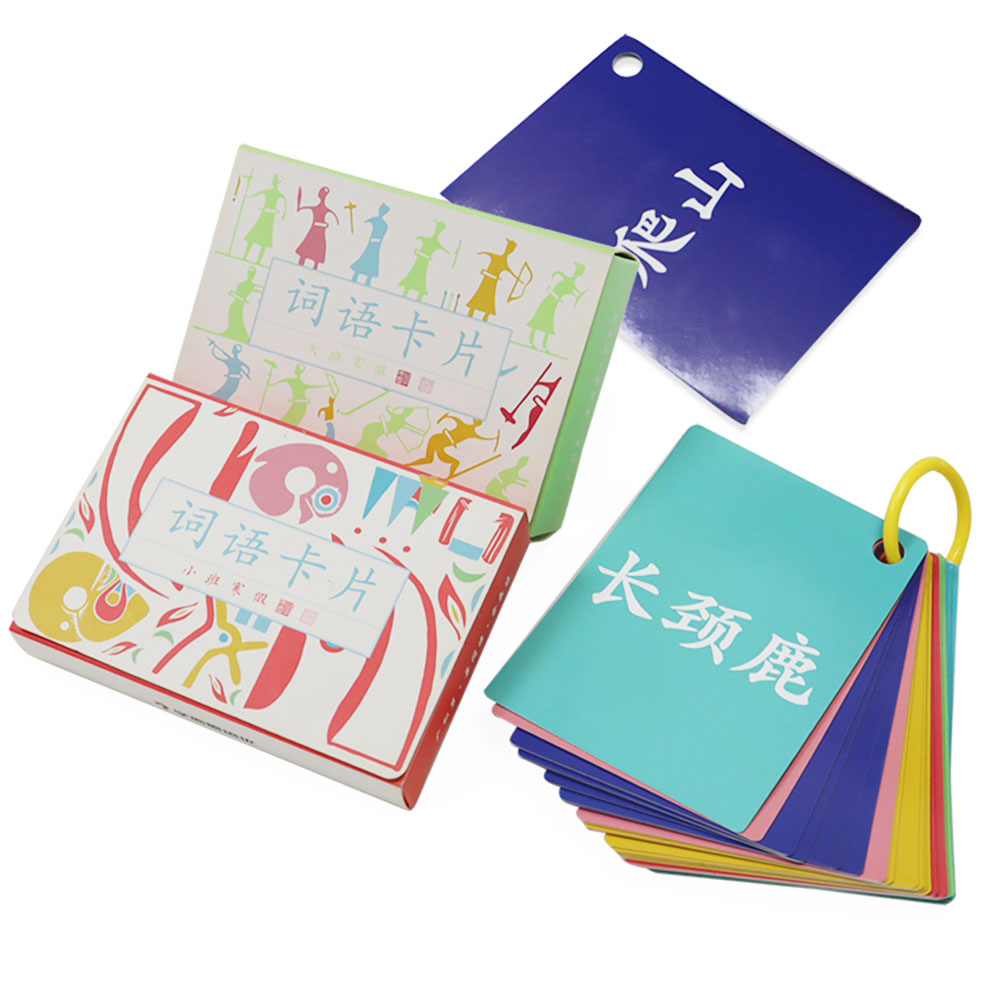
How Custom Learning Cards Boost Memory and Recall
Why custom learning cards work: the cognitive science behind retrieval practice
Custom learning cards are effective because they directly leverage two of the best-supported principles in cognitive science: retrieval practice and spaced (distributed) practice. Retrieval practice—actively trying to recall information—has repeatedly been shown to strengthen memory and create durable learning. When a learner attempts to retrieve an answer from a card instead of passively rereading notes, the neural pathways representing that information are reinforced, making future retrieval easier.
Spaced practice distributes study sessions over time rather than compressing them into a single massed session. This combats the natural forgetting curve first described by Hermann Ebbinghaus and is central to the power of flashcards: you revisit items at increasing intervals to transfer them into long-term memory. Custom learning cards are uniquely suited for these strategies because they can be tailored to content, difficulty, and timing, and easily reordered for spaced repetition.
Custom learning cards versus generic tools: why customization matters
Not all flashcards are equally effective. Custom learning cards let instructors and learners design cards that match learning goals, cognitive load, and context. Customization enables:
- Precise wording of prompts to encourage deeper recall rather than cue-dependent recognition.
- Integration of images, diagrams, or context cues for dual coding (combining verbal and visual information).
- Graded difficulty and tagging so learners can schedule spaced repetitions appropriately.
- Subject-specific formats—formula cards for STEM, vocabulary for languages, scenario cards for clinical training.
Because custom learning cards are tailored, they reduce extraneous cognitive load and increase the relevance of retrieval practice—both crucial for efficient learning.
Key design features of high-impact custom learning cards
To maximize memory gains, good custom learning cards follow evidence-based design principles. Important features include:
- One concept per card: prevents interference and helps precise retrieval.
- Clear, specific prompts: questions that require active recall rather than recognition.
- Concise answers on the reverse, with optional elaboration or mnemonic cues.
- Visuals and color-coding for categories—leveraging dual coding and organization.
- Durable materials and standardized sizes for classroom circulation and repeated handling.
Custom printing allows educators to include logos, curriculum codes, and QR codes that link to supporting materials or spaced-repetition apps, further integrating cards into modern learning workflows.
How to use custom learning cards for optimal retention
Design is only part of the equation—how learners use cards determines outcomes. Best practices include:
- Start with a moderate set of items and expand as recall improves.
- Use active retrieval: attempt to answer before flipping the card.
- Apply spaced repetition schedules—move items to longer intervals as they are recalled correctly.
- Self-explain answers aloud to deepen encoding and check for gaps.
- Mix related topics (interleaving) to improve discrimination and application.
Regular, short study sessions (10–30 minutes) are often more effective than infrequent long sessions. Custom learning cards make short, effective practice convenient and portable.
Real-world evidence: how effective are flashcards and retrieval practice?
Scientific reviews show strong benefits for retrieval practice and spaced repetition—core mechanisms in the effectiveness of custom learning cards. Key findings include:
- Practice testing (flashcards) and distributed practice are among the highest-utility learning strategies (Dunlosky et al., 2013).
- Spaced repetition produces large improvements in long-term retention compared with massed study (Cepeda et al., 2008).
- Testing effects (act of retrieval) improve retention beyond repeated study, even when initial performance is low (Roediger & Karpicke, 2006).
These findings hold across ages and subjects—languages, factual learning, medical education, and procedural knowledge all benefit when retrieval and spacing principles are applied.
Comparing study methods: where custom learning cards stand
Below is a concise comparison of commonly used study methods and their relative effectiveness based on contemporary reviews.
| Method | Effectiveness | Why |
|---|---|---|
| Highlighting / rereading | Low | Passive; produces familiarity without strong retrieval practice (Dunlosky et al., 2013). |
| Massed practice (cramming) | Low–Medium (short term) | Improves short-term recognition but poor long-term retention; vulnerable to forgetting curve (Ebbinghaus). |
| Practice testing (flashcards, quizzes) | High | Active retrieval strengthens memory and supports transfer (Roediger & Karpicke, 2006). |
| Distributed (spaced) practice | High | Spacing increases retention and efficiency (Cepeda et al., 2008). |
| Interleaving | Medium–High | Mixing problems improves discrimination and application in many domains. |
Sources: Dunlosky et al. (2013); Cepeda et al. (2008); Roediger & Karpicke (2006).
Cost-effectiveness and scalability: advantages of physical custom learning cards
Digital flashcard apps are popular, but printed custom learning cards remain valuable for classrooms, workshops, and environments where tactile or group interaction matters. Benefits include:
- No battery or device required—reduces distractions.
- Durable, repeatable: laminated or high-quality card stock lasts through many cohorts.
- Group-friendly: small groups can share and test each other easily.
- Branding and quality: custom-printed cards reflect professional standards for corporate or institutional training.
When institutions order in bulk, high-quality production reduces per-unit costs and ensures consistency across training programs.
How Guangdong Yuhua’s custom learning cards support educational outcomes
Guangdong Yuhua Playing Cards Co., Ltd., founded in 2014, specializes in the R&D, design, and mass custom production of playing cards, game cards, and color-printed packaging. With a 6,000㎡ intelligent facility, Yuhua operates advanced automated production lines capable of 1,000,000+ units per month. Their core strengths—FSC® certified materials, ISO 9001 quality control, a defect rate under 0.5%, and over 20 patents—mean educational customers receive reliable, durable, and eco-conscious custom learning cards.
Yuhua’s High Quality materials and imported components ensure cards withstand repeated handling in classrooms and training centers. Professional artwork, precise color printing, optional lamination, and secure packaging help learning cards stay legible and usable throughout multi-year curricula. Yuhua also offers product customization such as QR codes, multilingual printing, and curriculum-specific formatting—features that directly enable spaced-repetition workflows and classroom deployment.
Yuhua product offerings and competitive strengths for educators
Yuhua serves global markets with custom card solutions for casinos, games, education, and more—delivering fast, high-quality results with professional support. Their main OEM and ODM educational products include:
- OEM Playing Card: durable, standardized playing card formats suitable for gamified learning activities.
- ODM Tarot Cards: high-resolution, themed decks for narrative-based or therapeutic learning contexts.
- Custom Game Cards: specialized formats for board games, classroom review games, and scenario practice.
- Learning Flash Cards OEM: bespoke flash cards for vocabulary, medical terms, formulas, and certification exam prep.
Core competitive advantages:
- High-volume, rapid production—useful for large classroom orders or textbook bundles.
- Certified materials and airtight quality management—ensures safety and consistency for institutions.
- Design support and patent-backed manufacturing techniques that produce crisp, long-lasting cards.
- Flexible OEM/ODM options—helps educational publishers and training providers create tailored study aids quickly.
By integrating cognitive principles into card layout and offering production-grade durability, Yuhua helps educators scale evidence-based learning tools with professional finish and logistical reliability.
Practical examples: how educators and trainers use custom learning cards
Use cases where custom learning cards yield clear benefits include:
- Language classrooms: vocabulary cards with images on one side and target language usage on the reverse support rapid recall and contextualization.
- Medical education: flash cards for anatomy, symptoms, and differential diagnoses used in short daily review sessions.
- Corporate training: compliance and product knowledge cards circulated during onboarding for repeated microlearning.
- Primary education: math facts and sight words on colorful, laminated cards for kinesthetic and visual learners.
In each case, the cards are used in short, repeated sessions with retrieval-focused prompts and spaced intervals to maximize retention.
Measuring impact: tracking memory gains and learning ROI
To evaluate effectiveness, educators can track metrics such as pre/post test improvement, retention at 1 week / 1 month, and time-to-mastery per item. Pairing custom learning cards with simple tracking (e.g., graded boxes for spaced intervals) lets instructors quantify improvements and refine card content. Many organizations find that investment in tailored cards pays back through faster mastery, reduced classroom time for review, and better long-term retention on assessments.
Implementation checklist for building effective custom learning cards
Follow this practical checklist when ordering or producing custom learning cards:
- Define learning objectives and item scope (one concept per card).
- Write clear prompts and concise answers; avoid ambiguous cues.
- Decide visual elements: photos, diagrams, or icons that support dual coding.
- Choose material: laminated, High Quality card stock for durability.
- Plan production quantity and packaging—consider classroom sets and teacher packs.
- Include tags, curriculum codes, or QR links for digital resources.
- Test with a pilot group and refine content and scheduling rules based on results.
Frequently Asked Questions (FAQ) about custom learning cards
Q: Are custom learning cards better than digital flashcard apps?
A: Both have strengths. Physical custom learning cards are durable, reduce screen distraction, and support group activities. Digital apps add automated spacing algorithms and portability. Combining both—physical cards with QR codes linking to spaced-repetition schedules—often provides the best of both worlds.
Q: How many cards should a learner study each session?
A: Start with a manageable set (20–30 cards) for an initial session, then focus review on items that were not recalled. Short, frequent sessions (10–30 minutes) are more effective than long sessions.
Q: What material and finish are best for cards used in classrooms?
A: Lamination or coated High Quality card stock increases durability and resists wear. Yuhua offers various finishes and FSC® certified materials for environmental considerations.
Q: Can custom learning cards be produced in multiple languages?
A: Yes. Yuhua supports multilingual printing and can produce decks with different language versions or side-by-side translations to support bilingual instruction.
Q: How quickly can I order a custom deck for a school term?
A: Production time depends on quantity and customization. Yuhua’s high-capacity facilities can handle large orders quickly—contact their sales team for specific lead times based on your specifications.
Contact and product call-to-action
If you want to improve retention and learning outcomes with professionally produced custom learning cards, contact Guangdong Yuhua Playing Cards Co., Ltd. for a sample, quote, or design consultation. Explore product options including OEM Playing Card, ODM Tarot cards, custom Game cards, and Learning Flash cards OEM to find the best fit for your curriculum or training program. Reach out to Yuhua’s professional support team to discuss materials, printing, and bulk pricing—get fast, high-quality results backed by ISO 9001 quality control and FSC® certified materials.
Sources and references
- Hermann Ebbinghaus, Memory: A Contribution to Experimental Psychology (1885) — foundational work describing forgetting curves and spacing effects.
- Roediger, H. L., & Karpicke, J. D. (2006). Test-enhanced learning: taking memory tests improves long-term retention. Psychological Science.
- Dunlosky, J., Rawson, K. A., Marsh, E. J., Nathan, M. J., & Willingham, D. T. (2013). Improving students’ learning with effective learning techniques: promising directions from cognitive and educational psychology. Psychological Science in the Public Interest.
- Cepeda, N. J., Pashler, H., Vul, E., Wixted, J. T., & Rohrer, D. (2008). Distributed practice in verbal recall tasks: a review and quantitative synthesis. Psychological Bulletin.
- Paivio, A. (1971). Imagery and verbal processes—Dual coding theory fundamentals.
Common Mistakes When Ordering Custom Playing Cards
The Best Plastic Playing Cards of 2025: Copag, KEM, & Custom Options Reviewed
Top customized playing cards bulk Manufacturers and Suppliers
The latest trends for playing cards manufacturer | Yuhua Ultimate Insights
About cooperation process
Do you accept international orders?
Yes, we accept orders from around the world! Shipping costs and delivery times may vary, so please contact us for specific details related to your location.
About product selection
What materials do you use for your cards?
We use high-quality, durable materials to ensure the best finish and longevity for your cards. Options include standard cardstock, premium finishes, and eco-friendly materials.
After-sales support
What is your return policy?
We stand behind the quality of our products. If you receive a defective item, please contact us within 30 days for a replacement or refund. Customized orders are generally non-refundable unless there's an error on our part.
About customized services
Do you offer samples?
Yes! We can provide samples of our card materials and finishes. Please contact us to request samples relevant to your project.
Can I customize the design of my cards?
Absolutely! We offer full customization options, from card design and size to finishes and packaging. Our design team is ready to collaborate with you to create the perfect look.
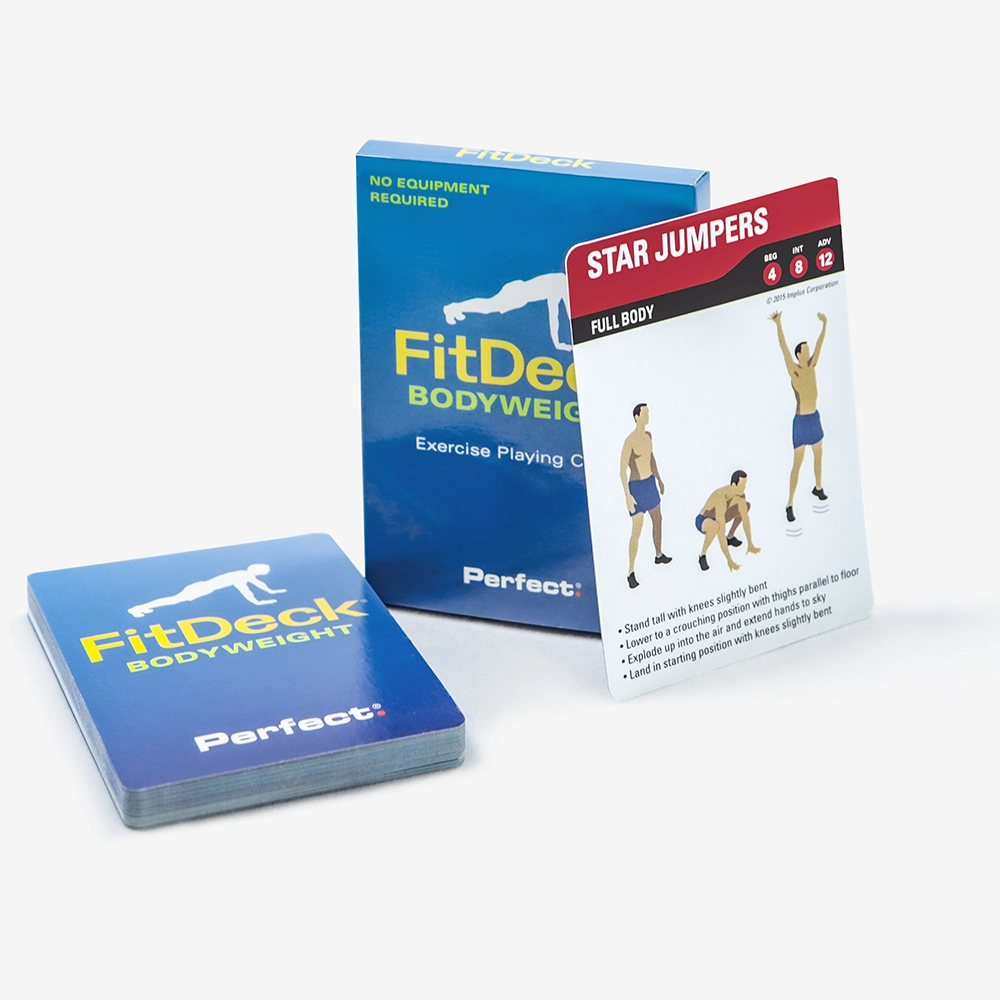
Custom Design Printing Fitness Learning Cards
The Fitness Learning Card is an innovative, beginner-friendly tool for fitness enthusiasts, featuring clear illustrations and instructions to ensure proper form and prevent injury. Organized by topics like strength training, cardio, stretching, and nutrition, it offers a systematic, easy-to-follow approach to building fitness knowledge and avoiding blind workouts.
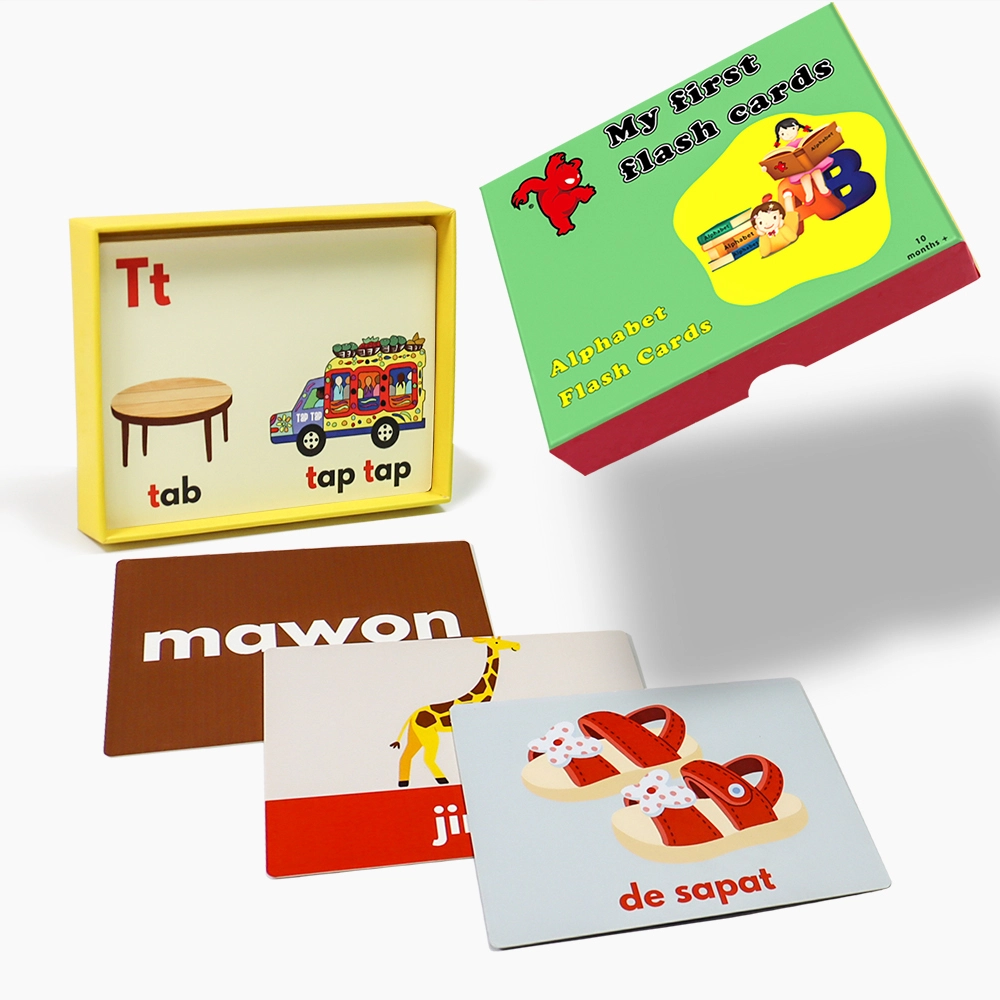
Factory Custom Printing High Quality Children's Learning Cards
Designed for preschoolers, kindergarteners, and primary school students, these cards support early cognitive development by introducing letters, numbers, colors, shapes, animals, fruits, and vehicles. Combining images and words enhances vocabulary and language skills, while games like sorting and pairing foster logical thinking and problem-solving. Repetition builds memory and focus, and the cards also encourage meaningful parent-child interaction.
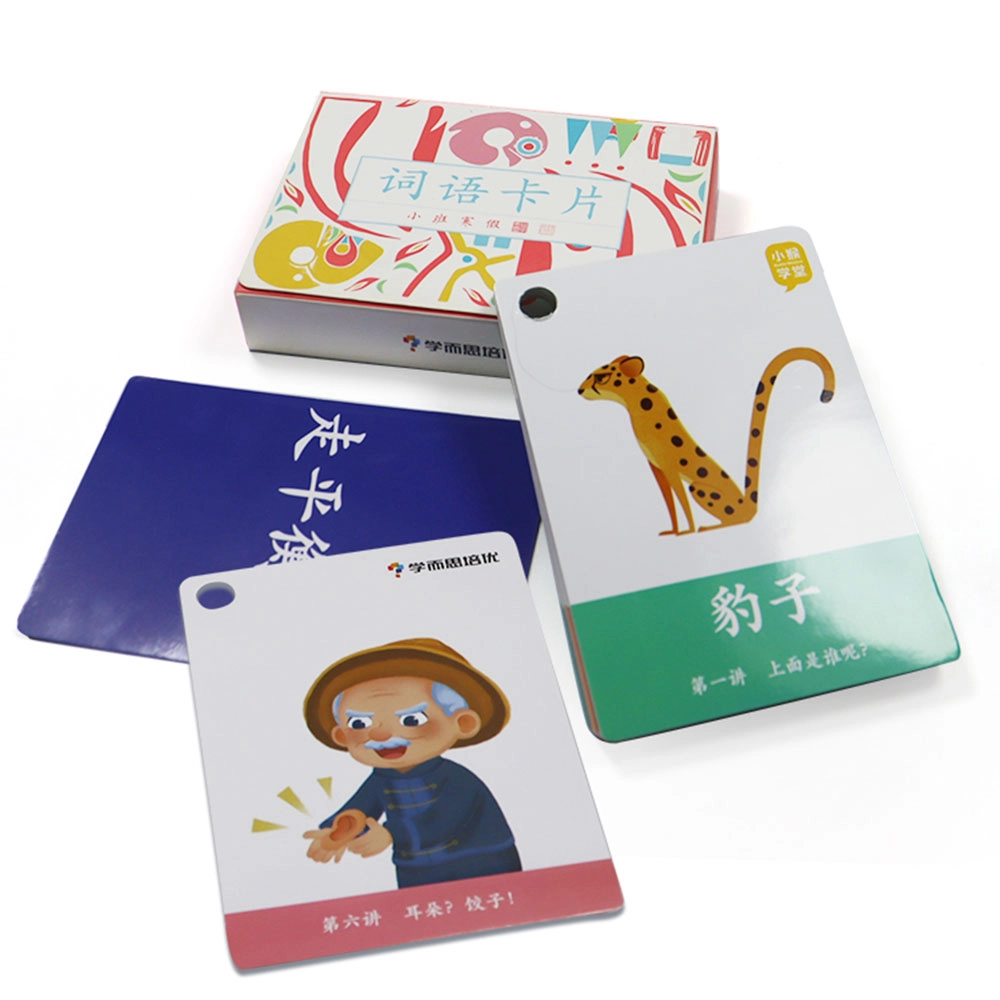
Chinese Words for Children Learning Cards
Chinese Character Learning Cards help kids ages 3-8 master basic Chinese characters through fun illustrations, pinyin, example words, and sentences. Designed for early learners, it builds language skills in an engaging way.
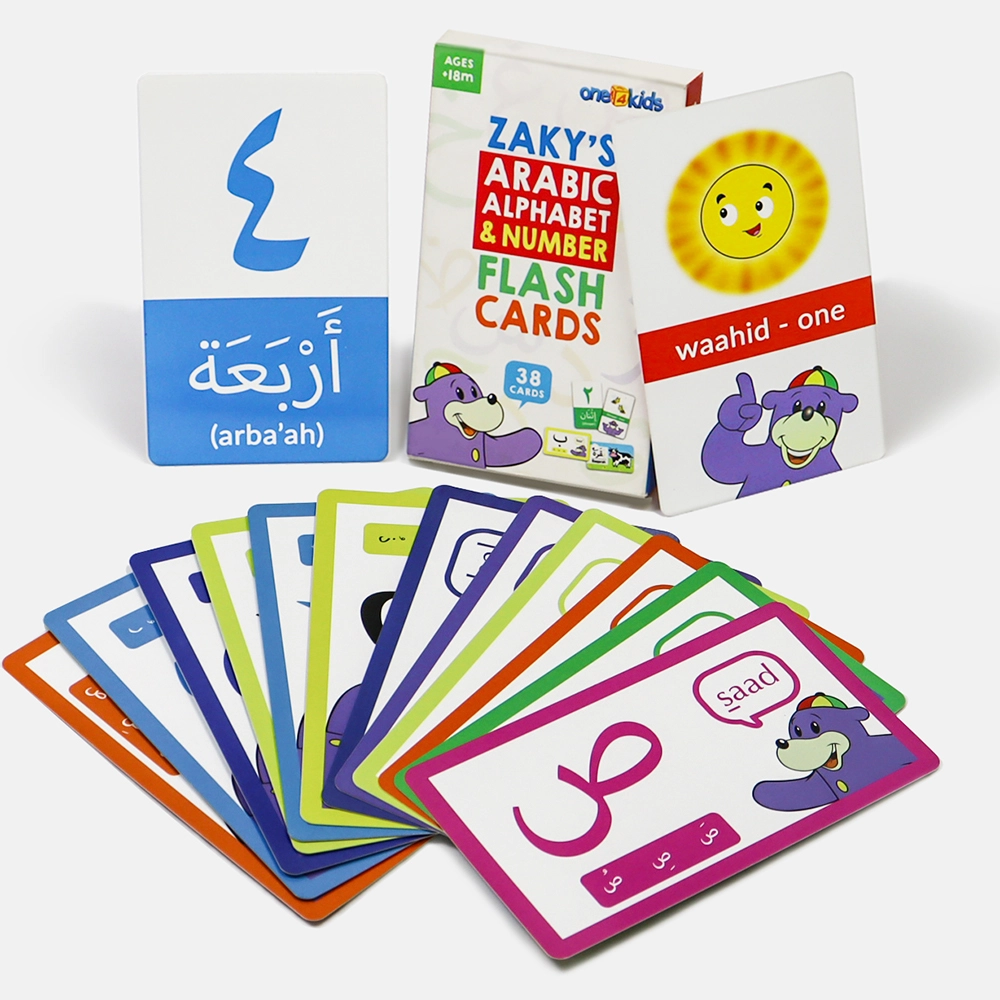
Custom Design Printing Font Stroke Learning Cards
These learning cards feature rich content across various topics, making them suitable for children of different ages. Bright colors and cute patterns engage young learners, while eco-friendly, non-toxic materials and rounded corners ensure safety. Thoughtfully sized for little hands, the cards can be used alone or paired with a reading pen or app for added fun and interactivity.
bbilaser
sq_AL