
How to Design Custom Playing Cards: Tips for Unique Decks
- How to Design Custom Playing Cards: Tips for Unique Decks
- Why design custom playing cards? Understanding purpose before you start (custom playing cards)
- Set design goals and audience expectations
- Choose the right card size and format
- Card stock selection: durability vs. feel (custom playing cards)
- Designing faces and backs: composition and branding (custom playing cards)
- Typography and iconography for custom playing cards
- Color and artwork preparation for printing (custom playing cards)
- Image resolution and file formats (custom playing cards)
- Choose the best printing method and finish (custom playing cards)
- Finish choice impacts gameplay and longevity (custom playing cards)
- Packaging and presentation: more than just a box (custom playing cards)
- Include inserts, rules, and certificates when relevant (custom playing cards)
- Prototyping, proofing and sampling (custom playing cards)
- Proof checklist for custom playing cards
- Production, quality control and certifications (custom playing cards)
- How Guangdong Yuhua Playing Cards supports high-quality custom playing cards production
- Why these capabilities matter when designing custom playing cards
- Cost factors and typical timelines (custom playing cards)
- Shipping, customs, and fulfilment considerations (custom playing cards)
- Testing and post-production checks (custom playing cards)
- When to invest in third-party testing
- Practical tips for designers and brands (custom playing cards)
- Conclusion and next steps: Launching your custom playing cards (custom playing cards)
- FAQ — Frequently Asked Questions about custom playing cards
- What is the minimum order quantity for custom playing cards?
- How long does it take to produce a custom deck?
- Can I get a physical sample before full production?
- What file formats do printers require?
- How do I protect my design from counterfeiters?
- Can I get eco-friendly custom playing cards?
- Contact & Product CTA
- Sources
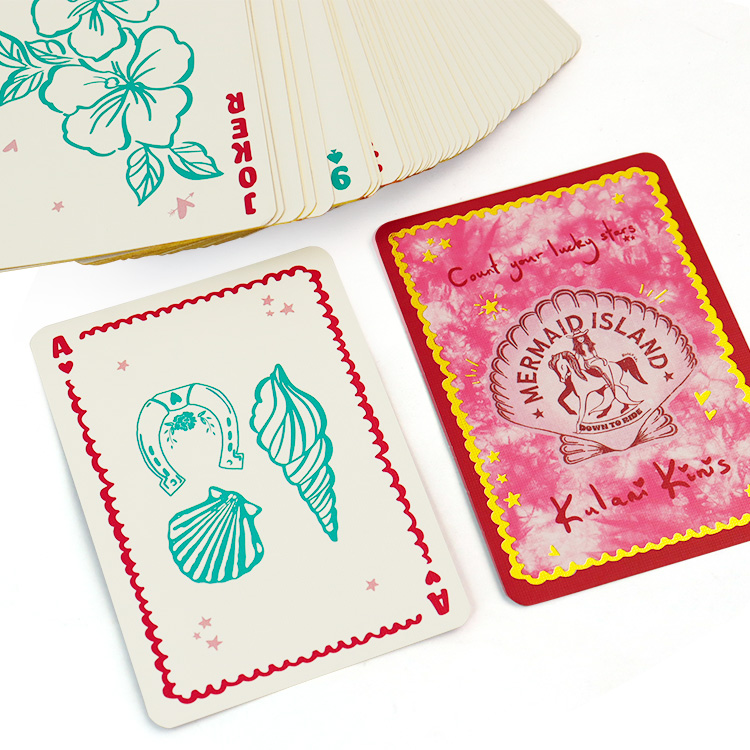
How to Design Custom Playing Cards: Tips for Unique Decks
Why design custom playing cards? Understanding purpose before you start (custom playing cards)
Designing custom playing cards begins with a clear objective. Are you creating a branded promotional deck, a limited-edition art project, a casino-grade set, or educational flashcards? Each use case dictates choices in size, stock, finish, print quality and packaging. When you define purpose early, you avoid costly revisions and ensure the final product meets functional and aesthetic needs.
Set design goals and audience expectations
Ask concrete questions: Who will use these cards? How often? Under what conditions (casino table, nightclub, classroom, giftbox)? What emotional response should the design evoke? For example, a luxury collector deck prioritizes High Quality stock, foil stamping and shrink-wrapped presentation, while a promo deck for an event might prioritize bold branding and affordability. Aligning design goals with audience expectations is the first step to a successful custom playing cards project.
Choose the right card size and format
Card dimensions are a practical decision that impacts handling, printing layout and packaging. Standard poker size (63 x 88 mm) and bridge size (56 x 87 mm) are industry norms for playing performance. Specialty sizes (mini decks, tarot/card game formats) work when you have a specific gameplay or display need.
Consider these factors:
- Shuffling and handling: Poker and bridge sizes have known ergonomics.
- Artwork space: Larger cards give more canvas for detailed illustrations.
- Packaging: Standard tuck boxes or custom rigid boxes influence card dimension tolerances.
Card stock selection: durability vs. feel (custom playing cards)
Card stock determines tactile feel, opacity, and longevity. Options range from economy uncoated stock to luxury linen-feel or plastic-coated stocks used in casinos. Many designers choose 300–330gsm paper with a coated finish for everyday decks; casino cards often use 310–330gsm plastic or PVC to resist marking and last longer.
Designing faces and backs: composition and branding (custom playing cards)
The face (rank and suit area) and the back (branding or art) require different design strategies. Faces must balance clarity and ornamentation: indices should be visible from a distance, suits easily recognized, and court cards readable when fanned.
Back designs are a chance for unique expression. Keep these tips in mind:
- Symmetry: For standard play, use a center-symmetric back to avoid revealing orientation during play.
- Color contrast: Ensure back color doesn’t bleed through to faces under bright light.
- Branding: Subtly place logos or campaign messaging so it enhances rather than overwhelms.
Typography and iconography for custom playing cards
Choose typefaces that remain legible at small sizes. Sans-serifs often read better for indices; decorative type can be used in titles or limited areas. For icons (suits, custom symbols), use vector art to maintain sharpness at printing resolutions.
Color and artwork preparation for printing (custom playing cards)
Design in CMYK color space and request a color proof when possible. If using spot colors (Pantone) for metallics or brand tones, confirm the printer supports those inks. Maintain bleed (typically 3–5 mm) and include safe zones so important elements aren’t trimmed off.
Image resolution and file formats (custom playing cards)
Supply artwork at 300 DPI at final print size in CMYK. Preferred formats include PDF/X-1a for packaged print-ready files, or high-resolution TIFFs and vector EPS for logos. Embed fonts or convert text to outlines to avoid substitution errors.
Choose the best printing method and finish (custom playing cards)
Common printing methods include offset lithography for large runs and digital print for short runs or prototypes. Consider finishes to enhance durability and feel:
- Lamination (matte/gloss): Adds scratch resistance and changes tactile feel.
- UV coating: Provides shiny highlights and local spot effects but can affect shuffle feel.
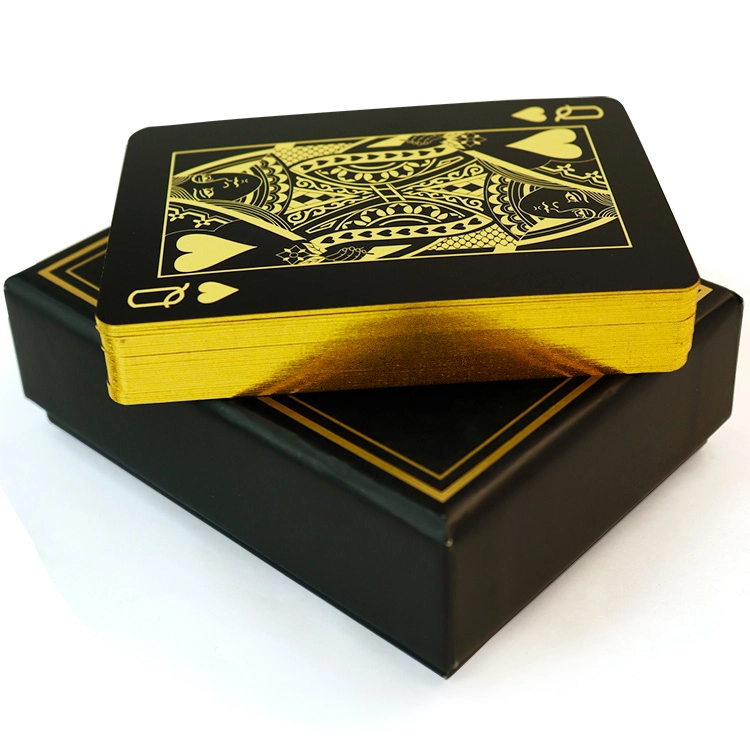
- Embossing/faux foiling/metallic inks: High Quality options for collectible decks.
Finish choice impacts gameplay and longevity (custom playing cards)
Casino-grade cards often use micro-embossed coatings or plastic to ensure uniform handling and reduced marking. For collectible or promotional decks, tactile finishes (linen, soft-touch) can create a High Quality experience but may reduce slip during shuffling. Test samples to ensure the finish aligns with user needs.
Packaging and presentation: more than just a box (custom playing cards)
Packaging is the first physical impression. Decide between tuck boxes, two-piece rigid boxes, magnetic closure boxes, or custom tins. Packaging choices affect shipping, unboxing experience, perceived value and unit cost.
Include inserts, rules, and certificates when relevant (custom playing cards)
For game decks or limited editions, include rule sheets, authenticity certificates, or artist notes. These add value and improve user satisfaction, especially for crowdfunding campaigns or collector markets.
Prototyping, proofing and sampling (custom playing cards)
Always order physical proofs before full production. Digital proofs are helpful for layout checks, but real printed samples reveal tactile issues, color shifts, and trim errors. Plan for at least one round of physical sample revisions for medium to large projects.
Proof checklist for custom playing cards
- Trim accuracy and bleed check
- Color matching vs. brand standards
- Finish and coating feel
- Shuffle and handling test
- Packaging fit and closure function
Production, quality control and certifications (custom playing cards)
Reliable production is crucial. Ask your manufacturer about capacity, defect rates, and certifications. Key quality markers include ISO 9001 for quality management and FSC® certification for responsibly sourced paper. Insist on final inspection reports and sample retention policies so you can verify batch consistency.
How Guangdong Yuhua Playing Cards supports high-quality custom playing cards production
Guangdong Yuhua Playing Cards Co., Ltd., founded in 2014, specializes in the R&D, design, and mass custom production of playing cards, game cards, and color-printed packaging. With a 6,000㎡ intelligent facility, Yuhua operates advanced, automated card production lines capable of 1,000,000+ units per month. Core strengths include FSC® certified materials, ISO 9001 quality control, a defect rate under 0.5%, and over 20 patents. The company uses imported High Quality materials for its top-tier brand and serves global markets with custom solutions for casinos, games, education and more—delivering fast, high-quality results with professional support.
Why these capabilities matter when designing custom playing cards
High production capacity ensures predictable lead times for large orders. ISO 9001 processes and low defect rates reduce rework and returns. FSC certification supports sustainability goals, which many brands now require. Yuhua’s combined R&D and automated manufacturing make them a strong partner for OEM playing card projects, ODM tarot cards, custom game cards, and learning flash cards.
Cost factors and typical timelines (custom playing cards)
Costs depend on quantity, stock, printing method, finishes, and packaging. Below is a compact comparison to help set expectations. These ranges are industry-typical and should be validated with your chosen manufacturer.
| Option | Typical Per-Deck Cost (USD) | Typical Lead Time | Best For |
|---|---|---|---|
| Digital print, basic stock, tuck box | $1.50 – $4.00 | 7–15 business days | Short runs, prototypes |
| Offset print, coated stock, tuck box | $1.00 – $3.00 (bulk pricing lowers cost) | 12–25 business days | Large runs, standard decks |
| High Quality finish, sealed, rigid box | $4.50 – $12.00+ | 20–40 business days | Collector editions, retail High Quality |
| Plastic/PVC casino-grade cards | $2.50 – $8.00 | 15–30 business days | Casinos, heavy-use decks |
Sources for these typical ranges are industry provider listings and manufacturer quotes; always request a formal quote for accurate pricing related to your specifications.
Shipping, customs, and fulfilment considerations (custom playing cards)
Large-volume orders must account for shipping mode (air vs. sea), customs documentation and packaging protection. Work with a manufacturer that provides export documentation, consolidated packing lists and can assist with DDP/DDU terms. For global distribution, plan for buffer stock to avoid fulfillment delays.
Testing and post-production checks (custom playing cards)
After production, test a random sample from each batch for these factors: color fidelity, cut tolerances, card bend, coating adhesion, and packaging integrity. For specialized uses (education or games), test wear patterns under expected conditions to ensure the card life matches user needs.
When to invest in third-party testing
If your cards must meet regulatory or safety standards (e.g., for children’s educational cards), consider third-party testing for material safety and print VOCs. Certifications can be a selling point for B2B customers and retailers.
Practical tips for designers and brands (custom playing cards)
- Build a style guide for your deck: color swatches, type sizes, icon library and back patterns.
- Create templates for indices and court cards to ensure consistent alignment across suits.
- Order a small pre-production batch to validate supply chains before committing to large volumes.
- Document versioning: keep labeled file versions to track art changes and approvals.
Conclusion and next steps: Launching your custom playing cards (custom playing cards)
Designing distinctive, durable custom playing cards requires thoughtful choices about size, stock, print method, finish and packaging—backed by strong manufacturing and quality control. Partner with a manufacturer that offers transparent production timelines, certifications and sampling to minimize risk. Guangdong Yuhua Playing Cards Co., Ltd. brings combined R&D, certified materials and automated capacity to support OEM and ODM projects, from tarot and game cards to learning flash cards and casino decks. If you need fast, high-quality card production with professional support, Yuhua is equipped to deliver.
Ready to start? Contact Guangdong Yuhua for quotes, samples and design support—see product options from OEM playing cards, ODM tarot cards, custom game cards to learning flash cards and printed packaging.
FAQ — Frequently Asked Questions about custom playing cards
What is the minimum order quantity for custom playing cards?
Minimums vary by manufacturer and printing method. Digital printers can accept small runs (hundreds), while offset typically has higher minimums for cost-efficiency (thousands). Guangdong Yuhua can provide specific MOQ details based on design and finish requirements—contact them for exact figures.
How long does it take to produce a custom deck?
Typical lead times range from 7 business days for fast digital prototypes to 20–40 business days for large offset runs with High Quality finishing and packaging. Timelines depend on artwork approvals, sample rounds, and current production capacity.
Can I get a physical sample before full production?
Yes. Always request a physical sample or pre-production proof. Samples let you test color, finish and handling before committing to a full run.
What file formats do printers require?
Provide print-ready files in CMYK at 300 DPI. Preferred formats: PDF/X-1a, high-res TIFFs for images, and vector EPS or PDF for logos and line art. Convert fonts to outlines or embed them in PDFs.
How do I protect my design from counterfeiters?
Consider security features like unique serial numbers, holographic foils, microtext, custom inks, or tamper-evident packaging. Discuss anti-counterfeit options with your manufacturer.
Can I get eco-friendly custom playing cards?
Yes. Look for manufacturers using FSC® certified paper and vegetable-based inks. Guangdong Yuhua uses FSC® certified materials, supporting sustainable production choices.
Contact & Product CTA
For expert help producing your custom playing cards—whether OEM playing card runs, ODM tarot cards, custom game cards, or educational learning flash cards—reach out to Guangdong Yuhua Playing Cards Co., Ltd. Request quotes, technical guidance, or physical samples to validate your design and production plan. Deliver high-quality, certified cards with fast turnaround backed by professional support.
Once you've mastered the basics of designing unique playing cards, the next step is to explore how to turn these designs into powerful branding tools. Learn how custom playing cards can boost your business and transform your creative decks into marketing assets.
Sources
- Guangdong Yuhua Playing Cards Co., Ltd. company information (provided by manufacturer).
- ISO 9001 — International Organization for Standardization (ISO) publications on quality management systems.
- FSC® — Forest Stewardship Council guidelines on certified materials and responsible sourcing.
- MakePlayingCards.com and similar custom card providers — production timelines and print options (industry vendor references for typical lead times).
- Printing industry best practices — design-for-print recommendations commonly published by print trade organizations and major card manufacturers.
What are the different types of couple games cards?
Custom Playing Card Sets for Weddings, Events, and Parties
How to Copyright Your Custom Tarot Card Images
Everything You Need to Know About custom deck of tarot cards bulk
After-sales support
What is your return policy?
We stand behind the quality of our products. If you receive a defective item, please contact us within 30 days for a replacement or refund. Customized orders are generally non-refundable unless there's an error on our part.
About customized services
Can I see a proof before production?
Yes! We provide digital proofs for your approval before we start production. This ensures that everything meets your expectations.
About logistics
How long does the production process take?
Production times can vary based on order complexity and volume. Typically, standard orders take 2-4 weeks. For urgent projects, we may offer expedited options—just ask!
About price and payment
What are the payment terms?
We require a 30% deposit upon order confirmation and the balance before shipment.
About product selection
What types of playing cards do you offer?
We offer a wide range of playing cards including standard decks, custom-designed decks, and specialty cards. Whether you need classic poker cards, bridge cards, or custom promotional decks, we have the options to fit your needs.
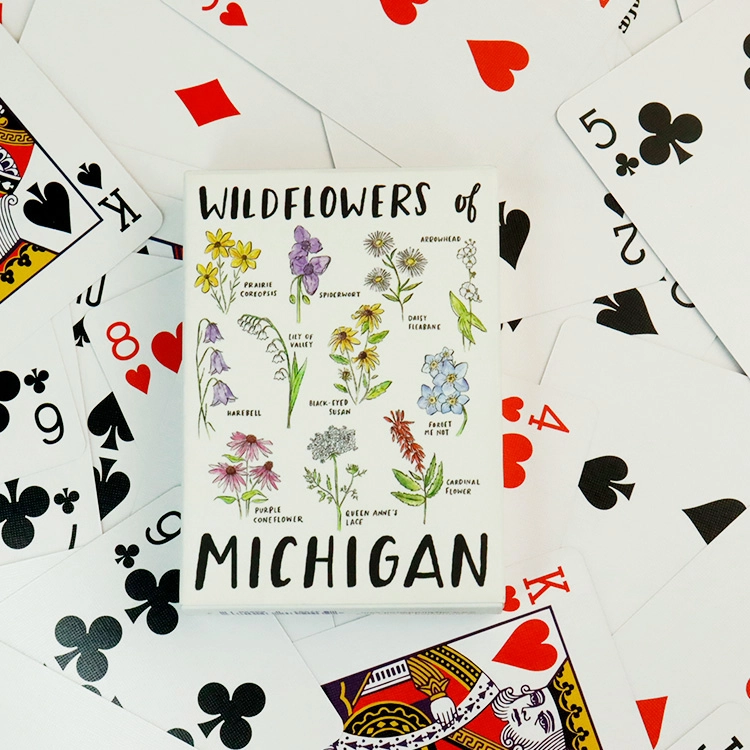
High Quality Eco-Friendly Durable Personalized Design Wildflowers Playing Cards with Custom Design Logo and Box
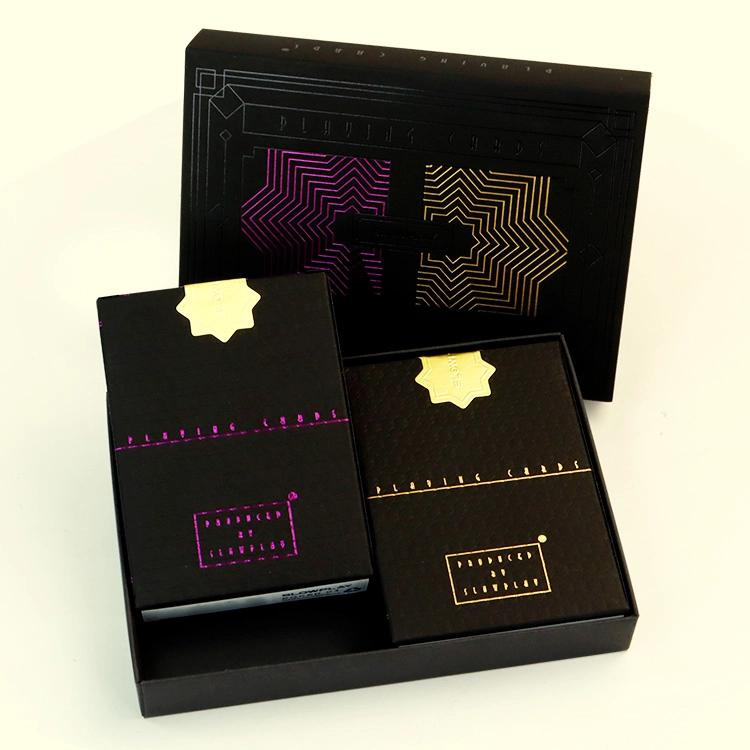
Custom Printing Luxury Two Sets Plastic Poker Playing Cards with Customized Packing
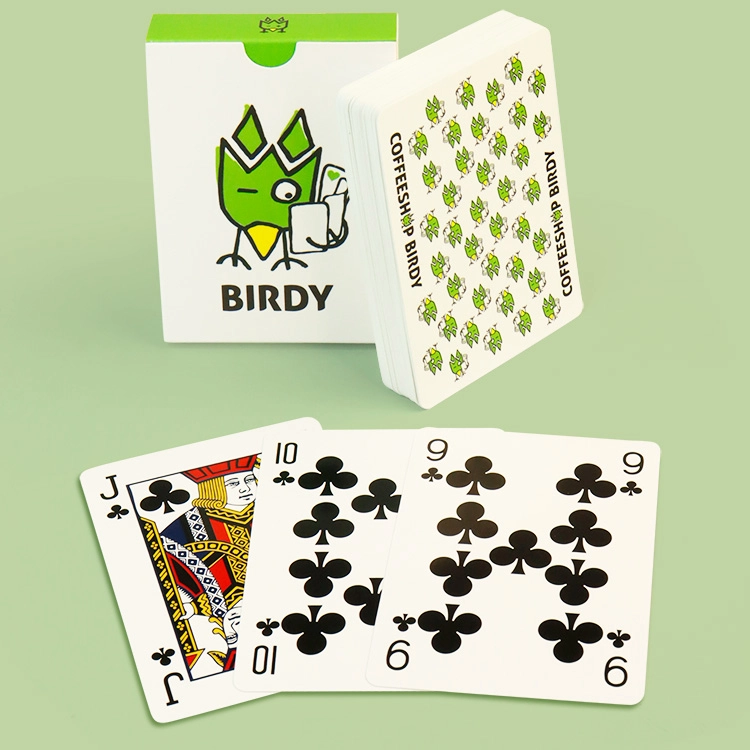
Custom Bird-Themed Playing Cards & Packaging for Promotional Gifts | Artistic Bird Collection Poker Deck for Wholesale
bbilaser
sq_AL