
How to Create Limited Edition Tarot Decks That Sell
- How to Create Limited Edition Tarot Decks That Sell
- Why limited edition tarot cards can outperform mass-market decks
- Define your concept and target audience for tarot cards
- Design and art direction: make your tarot cards irresistible
- Artwork checklist for tarot cards
- Materials, printing options, and finishes for tarot cards
- Production planning: choose the right manufacturing partner for tarot cards
- How Guangdong Yuhua supports limited edition tarot card production
- Decide run size, pricing, and edition structure for tarot cards
- Marketing and pre-launch: build demand before production
- Fulfillment, quality control and legal considerations for tarot cards
- Pricing examples and margin planning (illustrative)
- Launch logistics and post-launch care for tarot cards
- Why partner with a qualified OEM/ODM for tarot cards
- FAQ — Common questions about creating limited edition tarot cards
- How many decks should a limited edition be?
- What is the best way to fund production?
- Should I offer signed or numbered decks?
- How can I keep costs reasonable while offering High Quality features?
- How long does production usually take?
- Contact and next steps — get production-ready tarot cards
- Sources and references
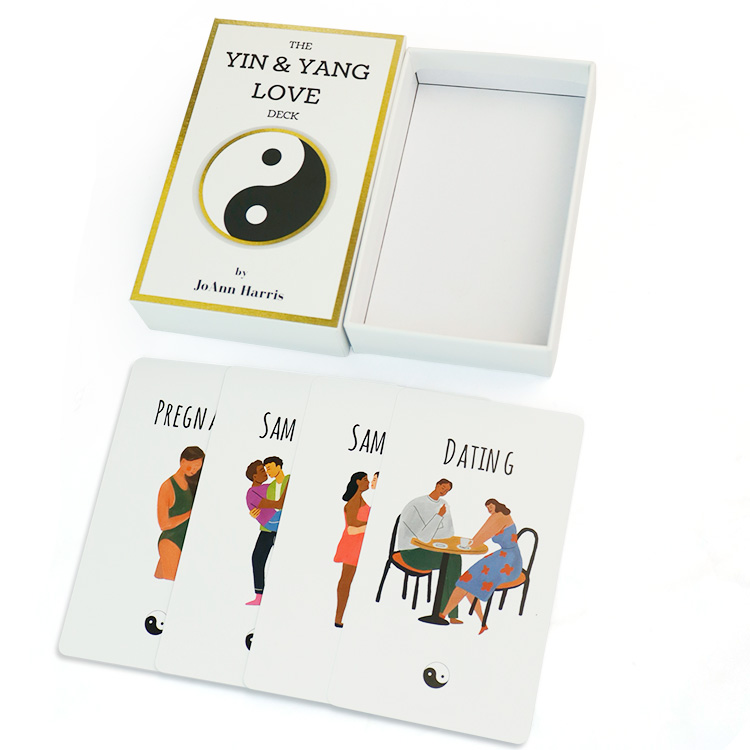
How to Create Limited Edition Tarot Decks That Sell
Why limited edition tarot cards can outperform mass-market decks
Limited edition tarot cards tap into collectors' psychology: rarity, storytelling, and strong visual identity. For buyers of tarot cards, uniqueness—whether in artwork, materials, or packaging—adds perceived value beyond functional use. A well-executed limited run becomes both a divinatory tool and an art object, encouraging higher price points and stronger word-of-mouth. If you plan to sell tarot cards, your goal is to create an emotional and collectible experience that justifies scarcity.
Define your concept and target audience for tarot cards
Start by clarifying who the deck is for. Is it aimed at practicing readers, collectors, or the fashion-conscious gift market? Questions to answer:
- What story or theme does the deck tell? (e.g., mythic, modern, cultural, queer-positive)
- Who will use the deck—daily readers, occasional users, or display collectors?
- What price tier fits your audience: budget, mid-range, or High Quality/collectible?
These decisions drive the art direction, materials, packaging, and marketing approach. For example, collectors will value limited signatures, numbered runs, and High Quality boxes; casual users prioritize clear iconography and affordable price.
Design and art direction: make your tarot cards irresistible
Design is the single most important differentiator for limited tarot decks. Invest in a clear art direction and a consistent visual language across all cards, tuck box, and extras (guidebook, art prints, stickers). Practical tips:
- Hire an illustrator or art director who understands symbolism—the Major and Minor Arcana have conventional meanings; decide how literal or interpretive you want to be.
- Create high-resolution assets (300–600 DPI) and vector elements for sharp printing.
- Consider a booklet or essay that explains the deck’s symbolism—this increases perceived value and is a tangible extra for collectors.
- Plan special elements for the limited edition: foil stamping, spot UV, embossed icons, or alternate-card prints for a subset of decks.
Artwork checklist for tarot cards
- Consistent color palette and line work
- Clear symbolism mapped to card meanings
- High-resolution master files with bleed and safe areas
- Alternate artwork for numbered or signed editions
Materials, printing options, and finishes for tarot cards
Material and finishing choices affect feel, durability, shuffle-ability, and cost—key purchase factors for tarot cards. Below is a concise comparison to help choose the right specs for your limited edition tarot cards.
| Option | Recommended for | Pros | Cons | Notes |
|---|---|---|---|---|
| High Quality coated 330–350gsm with linen finish | High Quality/collectible tarot cards | Durable, luxurious feel, great color reproduction | Higher cost per deck; slightly stiffer | Popular for boxed collector decks |
| Standard coated 300gsm (smooth) | Mid-range tarot cards for users | Good print quality; cost-effective; easy to shuffle | Less High Quality tactile feel | Best balance of cost and performance |
| Uncoated/art paper with special varnish | Artist editions emphasizing texture | Unique tactile character; matte look | Can wear faster; show fingerprints | Consider for small artisan runs |
| Special finishes (foil, spot UV, emboss) | Limited-run collectors | High visual impact; justifies High Quality price | Increases production complexity and cost | Use selectively (e.g., on box, key cards) |
Table source: industry manufacturing standards and production experience from major card manufacturers and OEM partners.
Production planning: choose the right manufacturing partner for tarot cards
For limited edition tarot decks, find a manufacturer that can balance small-run capabilities (if you plan very limited runs) with consistent quality. Key selection criteria:
- Experience with playing-card formats, custom tuck boxes, and specialty finishes.
- Quality systems: ISO 9001 certification indicates consistent processes.
- Sustainable supply chain: FSC-certified materials reassure eco-conscious buyers.
- Minimum order quantities (MOQs) and lead times that match your schedule.
- Proofing process that supports color checks and sample approvals.
Make a sample run and evaluate printing, trimming, color fidelity, and box fit before approving a full run. Ask the manufacturer for a signed production checklist and a defect/return policy.
How Guangdong Yuhua supports limited edition tarot card production
Guangdong Yuhua Playing Cards Co., Ltd., founded in 2014, specializes in R&D, design, and mass custom production of playing cards, game cards, and color-printed packaging. With a 6,000㎡ intelligent facility and advanced automated production lines capable of 1,000,000+ units per month, Yuhua offers strong capabilities for creators and brands launching limited edition tarot cards.
Core strengths relevant to limited tarot decks:
- FSC® certified materials support eco-conscious editions.
- ISO 9001 quality control and a defect rate under 0.5% ensure consistent product quality.
- Over 20 patents and a High Quality brand portfolio indicate technical and design expertise.
- Imported materials and automated lines enable both High Quality finishes (foil, emboss) and efficient mass custom runs.
Yuhua’s product categories that serve limited tarot projects: OEM Playing Cards, ODM Tarot cards, custom Game cards, and Learning Flash cards OEM. The company’s strengths—fast lead times, professional support, strict QC, and global shipping—help creators move from concept to market with fewer production risks.
Decide run size, pricing, and edition structure for tarot cards
Limited editions can be structured to maximize urgency and margin. Common approaches:
- Numbered runs: e.g., 1–500 signed and numbered decks.
- Tiered editions: a base run + small High Quality artist/foil-signed run.
- Pre-order only: accept orders before production to finance the print run.
Pricing considerations:
- Calculate all costs: artwork, design, prototyping, printing, packaging, shipping, taxes, fulfillment, platform fees, and returns.
- Factor in per-unit cost decline at higher volumes; limited runs will have higher unit costs—price accordingly.
- Use tiered pricing for early-bird preorders and collector editions to capture both casual buyers and superfans.
Marketing and pre-launch: build demand before production
Successful limited tarot launches build anticipation. Practical tactics:
- Tease art and prototypes on Instagram, TikTok, Pinterest, and tarot-focused communities.
- Offer behind-the-scenes content: design sketches, color tests, prototype unboxings.
- Use email pre-launch lists for early-bird offers and numbered allocations.
- Consider Kickstarter or Indiegogo to validate demand and gather funds. (Crowdfunding can also create built-in community marketing.)
- Collaborate with influencers and professional readers who can demonstrate the deck’s use and aesthetics.
Metrics to watch: pre-order conversion rate, email list growth, social engagement, and waitlist sign-ups—these indicate whether your chosen price and presentation resonate.
Fulfillment, quality control and legal considerations for tarot cards
For collectors, presentation and condition matter. Ensure your manufacturing partner provides clear quality checks and protective packaging. Steps to follow:
- Inspect samples for color consistency, card stock integrity, and box fit.
- Request a signed quality control report and photograph evidence for each batch.
- Plan protective shipping: rigid mailers, bubble wrap, or specialized boxes for High Quality editions.
- Verify intellectual property rights: ensure art contracts transfer the necessary usage rights for prints, advertising, and international sales.
- Comply with labeling and consumer protection rules in target markets (e.g., country of origin, safety notices where applicable).
Pricing examples and margin planning (illustrative)
The table below shows a simplified illustration of how unit cost and retail price might vary by edition type. These are example tiers—use your actual quotes to finalize pricing.
| Edition Type | Unit cost (illustrative) | Suggested retail | Margin before fees |
|---|---|---|---|
| Standard run (300gsm, 1,500 decks) | $5–$8 | $25–$35 | ~60–80% |
| High Quality limited (foil, embossed, 300–500 decks) | $10–$18 | $60–$120 | ~60–80% (depending on packaging) |
| Artist signed/extremely limited (50–200 decks) | $15–$30 | $150–$400+ | Varies widely; collectibility drives price |
Illustration source: typical industry margins and manufacturing cost ranges observed by OEM/ODM card producers. Get actual quotes from your manufacturer before final pricing.
Launch logistics and post-launch care for tarot cards
After launch, focus on fulfillment transparency and community building. Key actions:
- Communicate shipping timelines clearly—collectors expect timely, tracked shipping.
- Offer bundling options (art prints, guidebook, reading cloth) to increase average order value.
- Collect customer feedback and user-generated content (photos, readings) to support ongoing sales.
- Keep a small re-order buffer if collectors drive unexpected demand for a High Quality tier, but respect numbered limitations if you promised scarcity.
Why partner with a qualified OEM/ODM for tarot cards
Partnering with an experienced OEM/ODM minimizes production risk and speeds time-to-market. An experienced partner provides:
- Accurate color matching and proofing workflows
- Access to specialty finishes and High Quality materials
- Scalable production that supports tiered editions
- Quality certifications (FSC, ISO) that support buyer trust
Guangdong Yuhua’s facilities and certifications (FSC® materials, ISO 9001 quality control) illustrate the type of partner you want when you scale from pre-orders to larger limited editions while maintaining a defect rate under 0.5% and professional support for design and packaging.
FAQ — Common questions about creating limited edition tarot cards
How many decks should a limited edition be?
There is no fixed number; common approaches are 50, 100, 300, or 500. Fewer units generally increase perceived value. Choose a number that aligns with your production cost, your audience size, and the authenticity of your rarity claim.
What is the best way to fund production?
Pre-orders and crowdfunding (Kickstarter/Indiegogo) are common because they validate demand and reduce financial risk. You can also offer tiered rewards to incentivize higher pledges.
Should I offer signed or numbered decks?
Yes—signatures and numbering add collectible value. Consider a separate numbered run for signed decks or artist-variant cards to avoid upsetting buyers who purchase standard editions.
How can I keep costs reasonable while offering High Quality features?
Prioritize two or three High Quality elements (e.g., High Quality stock + foil on the box) rather than many small effects. Negotiating with your manufacturer and increasing quantity (if possible) reduces per-unit cost.
How long does production usually take?
Typical lead times vary: prototyping 2–4 weeks, production 3–8 weeks depending on complexity and queue, plus shipping time. Work closely with your manufacturer to build realistic timelines.
Contact and next steps — get production-ready tarot cards
Ready to turn your tarot cards concept into a limited edition that sells? Guangdong Yuhua Playing Cards Co., Ltd. offers end-to-end OEM and ODM support for tarot cards—from design and prototyping to mass custom production, High Quality finishes, and global fulfillment. With FSC® materials, ISO 9001 quality control, advanced automated lines, and a low defect rate under 0.5%, Yuhua is positioned to help creators and brands launch successful limited editions.
Contact our sales team to request a quote, sample, or production plan. Explore product options including OEM Playing Cards, ODM Tarot cards, custom Game cards, and Learning Flash cards OEM—backed by professional support and fast, high-quality manufacturing.
Sources and references
- Forest Stewardship Council (FSC) — information on responsible sourcing of paper and board materials (FSC® certification).
- International Organization for Standardization (ISO) — ISO 9001 quality management standards.
- Kickstarter — platform statistics and guidance on crowdfunding for creative projects.
- Shopify blog and industry marketing resources — tactics for limited edition product launches and e-commerce best practices.
- Industry manufacturing guidelines and OEM/ODM production experience from major playing card manufacturers (production practices, finishes, and quality control norms).
Contact CTA: For custom quotes, samples, or to discuss OEM/ODM tarot deck production, contact Guangdong Yuhua Playing Cards Co., Ltd. — we provide tailored solutions to bring collectible tarot cards to market quickly and reliably.
Why choose Yuhua as your professional plastic poker cards supplier in UK
Top 5 playing cards made in china Company List and Products Compared
Custom kids learning cards Manufacturers and Suppliers in us
Custom Poker Cards Pricing: MOQ, Bulk Discounts and Costs
About customized services
Do you offer samples?
Yes! We can provide samples of our card materials and finishes. Please contact us to request samples relevant to your project.
Can I see a proof before production?
Yes! We provide digital proofs for your approval before we start production. This ensures that everything meets your expectations.
After-sales support
Do you offer eco-friendly options?
Yes, we do offer eco-friendly materials and printing options. Please inquire about our sustainable options.
About price and payment
What payment methods do you accept?
We accept various payment methods, including credit cards, PayPal, and bank transfers. Please reach out for more details on payment options.
About cooperation process
Do you accept international orders?
Yes, we accept orders from around the world! Shipping costs and delivery times may vary, so please contact us for specific details related to your location.
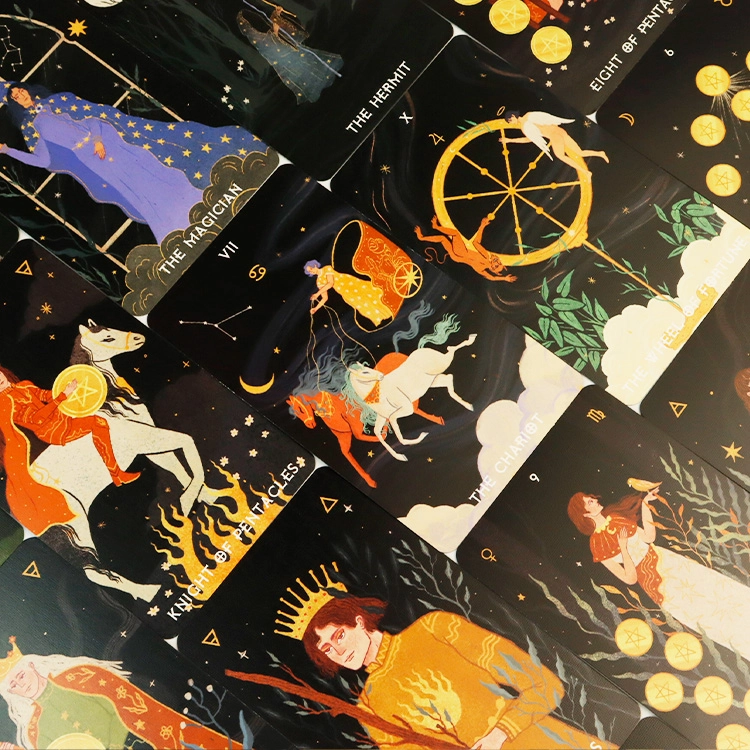
High Quality Tarot Cards with Sleeve Box Packaging | Premium Custom Tarot Deck Set for Enhanced Presentation & Protection

OEM Card Game Manufacturer - Wholesale Custom Printing for Tarot, Poker & Board Game Cards
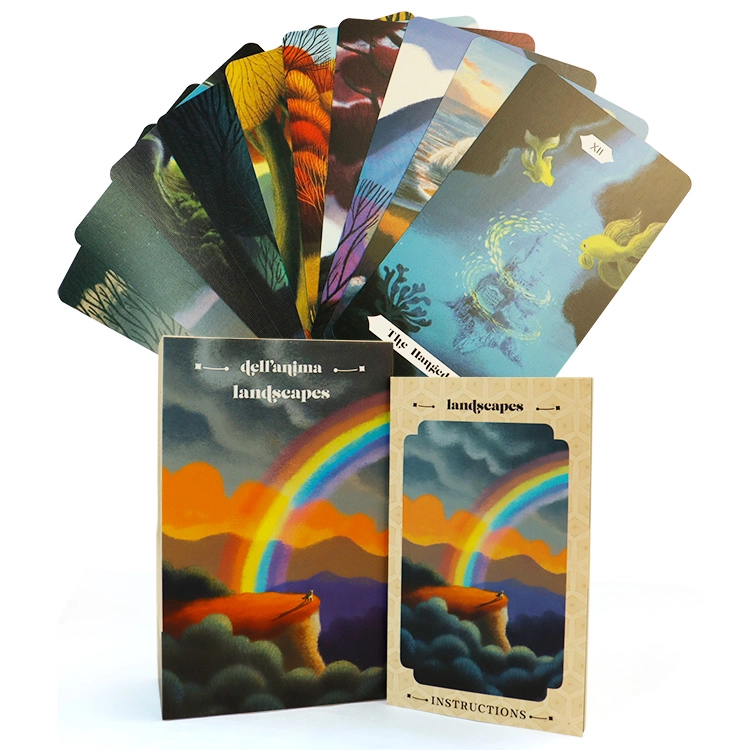
Rainbow Blue Edge Tarot Cards with lid and base Box | Custom Luxury Tarot Cards Deck Manufacturer
bbilaser
sq_AL