
Top 10 Custom Learning Card Ideas for Language Learners
- Top 10 Custom Learning Card Ideas for Language Learners
- Why custom learning cards work: science-backed benefits for language learners
- 1. Themed Vocabulary Decks: context-rich custom learning cards
- 2. Picture-to-Word Flashcards: visual-first custom learning cards
- 3. Grammar Prompt Cards: quick drills and sentence building
- 4. Pronunciation & Phonetics Cards: sound-focused custom learning cards
- 5. Spaced-Repetition Sets: built-in review scheduling cards
- 6. Conversation Prompt & Role-play Cards: interactive custom learning cards
- 7. Grammar Game Cards: gamified custom learning cards for classrooms
- 8. Bilingual / Translation Practice Cards: bridging L1 and L2
- 9. Cultural Notes & Idiom Cards: pragmatic fluency with custom learning cards
- 10. Assessment & Progress Cards: track learning with custom learning cards
- Design and production tips for effective custom learning cards
- Material and durability comparison for custom learning cards
- How to plan an order: quantities, packaging, and customization options
- Why choose a professional custom card manufacturer: quality, consistency, and compliance
- Partner spotlight: Guangdong Yuhua Playing Cards Co., Ltd. — custom learning cards at scale
- Sample production workflows and timelines
- Cost considerations and ROI for organizations
- FAQ: Frequently Asked Questions about custom learning cards
- Q: What file formats do manufacturers prefer for card printing?
- Q: How many cards should be in a deck for language learning?
- Q: Can custom learning cards include QR codes or NFC for audio/video?
- Q: Are eco-friendly materials available for custom card orders?
- Q: What are typical minimum order quantities (MOQs)?
- Get started: contact and product options
- References and sources
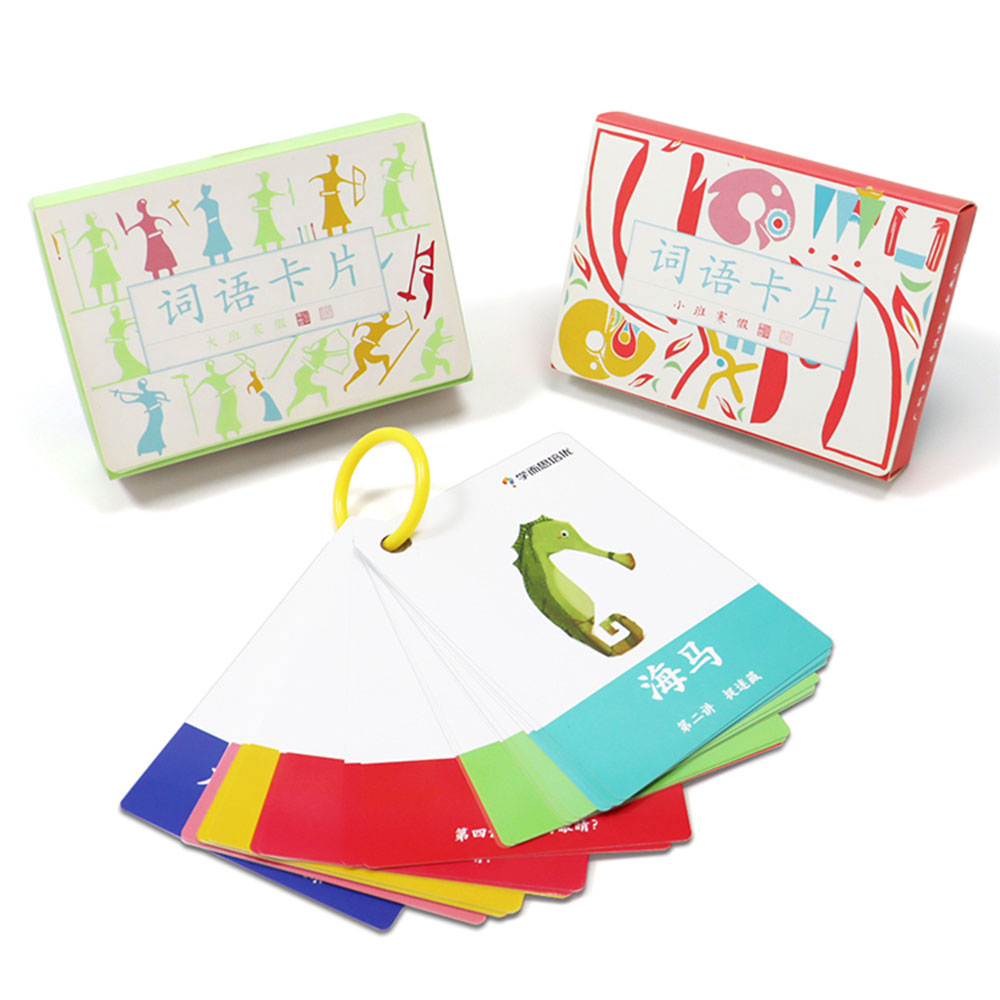
Top 10 Custom Learning Card Ideas for Language Learners
Why custom learning cards work: science-backed benefits for language learners
Custom learning cards capitalize on two well-studied memory principles: retrieval practice and spaced repetition. Retrieval practice (the testing effect) shows that actively recalling information increases long-term retention compared with passive review. Spaced repetition arranges reviews over increasing intervals to counteract the forgetting curve and maximize retention efficiency. When you design custom learning cards specifically for a learner’s vocabulary, grammar challenges, or pronunciation goals, you can implement both principles in a compact, low-cost format that works in classrooms, tutoring sessions, and self-study.
1. Themed Vocabulary Decks: context-rich custom learning cards
Create decks centered on real-life contexts—travel, food, workplace, medical, or technology vocabulary. Each card pairs the target word with a short phrase, an image, and an example sentence. For intermediate and advanced learners, include collocations and common mistakes on the card back. The commercial advantage of custom production here is branding and consistency: schools, publishers, and language apps can order decks with logos, learner-level color-coding, and bespoke packaging to enhance adoption and perceived value.
2. Picture-to-Word Flashcards: visual-first custom learning cards
For beginner learners and young children, picture-to-word cards are highly effective. Use high-quality, culturally appropriate imagery on one side and the target word plus phonetic transcription on the other. Consider variations: black-and-white images for reading focus, or photographic images for vocabulary grounded in realism. With custom printing, you can choose photo paper or coated stock and add tactile features (spot UV, embossed elements) to increase engagement and durability—especially useful for classroom sets.
3. Grammar Prompt Cards: quick drills and sentence building
Design cards that prompt learners to transform sentences, fill gaps, or reorder words. Each card can include a short rule summary on the back and progressive difficulty markers. This format is ideal for group activities: shuffle decks to create mixed-level practice, or combine grammar prompt cards with vocabulary cards for integrated drills. Custom decks allow you to align grammar prompts with a textbook or curriculum and produce teacher editions with answer keys and activity suggestions.
4. Pronunciation & Phonetics Cards: sound-focused custom learning cards
Pronunciation cards pair phonetic symbols, minimal pairs, and a quick articulatory tip (e.g., tongue placement) on the back. For higher fidelity, add QR codes that link to native-speaker audio or short video clips demonstrating mouth shape. Custom card production can incorporate durable finishes to withstand frequent handling and printing of high-resolution images to support detailed articulatory diagrams.
5. Spaced-Repetition Sets: built-in review scheduling cards
Turn your custom learning cards into a spaced-repetition system by color-coding cards into review boxes (e.g., daily, 3-day, weekly, monthly). Each card can include small icons indicating the next review interval, or you can supply accompanying boxes/holders in custom packaging. Commercially, this product is attractive to language schools and retail markets because it pairs physical cards with a simple, evidence-based study system—bridging physical learning tools and digital study habits.
6. Conversation Prompt & Role-play Cards: interactive custom learning cards
Conversation cards provide scenarios, roles, and key phrases. They encourage spontaneous speech and pragmatic competence. Each card can offer cultural notes and follow-up questions to deepen interaction. Custom decks for schools or corporate clients can be tailored to industry-specific dialogues (hospitality, customer service, interviews), supporting workplace language training programs with branded, job-specific materials.
7. Grammar Game Cards: gamified custom learning cards for classrooms
Design game mechanics into your card decks—matching pairs, set collection, or board-driven movement triggered by grammar challenges. Gamified decks increase motivation and time-on-task. Customization enables rules printed directly on High Quality boxes, and laminated or plastic cards for durability in repeated classroom use. Offering OEM or ODM options for branded games helps institutions scale purchases for multiple class sets.
8. Bilingual / Translation Practice Cards: bridging L1 and L2
Bilingual cards show the native-language equivalent alongside the target-language entry, with a usage cue on the reverse. Effective for quick review and classroom pair work, these cards can also be customized for less commonly taught languages where ready-made materials are scarce. Custom printing ensures correct typography, diacritics, and right-to-left script support where needed (e.g., Arabic, Hebrew), addressing accessibility and linguistic accuracy.
9. Cultural Notes & Idiom Cards: pragmatic fluency with custom learning cards
Idioms, proverbs, and culture-specific expressions are often best learned with contextual stories. Cards that present the idiom, literal translation, usage examples, and a short cultural note help learners use language naturally. These cards make excellent teacher resources—print special ‘teacher edition’ cards with suggested activities and expansion questions to facilitate classroom discussion.
10. Assessment & Progress Cards: track learning with custom learning cards
Assessment cards are designed to evaluate mastery. Include self-check indicators, quick scoring rubrics, or a checklist on the back to help students and teachers measure progress. For institutions, producing standardized assessment decks supports curriculum-aligned diagnostics and helps with bulk ordering of consistent testing materials.
Design and production tips for effective custom learning cards
When designing, prioritize readability (large fonts, high-contrast colors), clear chunking of information, and image quality. Consider card size: standard playing-card dimensions (63mm x 88mm) are portable; larger sizes (e.g., index-card formats) are better for classroom visibility. For production, choose finishes based on use: matte or silk coatings reduce glare for photography, while plastic-coated or laminated cards increase longevity. QR codes and microperforations can add digital integration and classroom convenience.
Material and durability comparison for custom learning cards
Below is a concise comparison of common material choices used when ordering custom learning cards:
| Material | Durability | Cost | Best Use |
|---|---|---|---|
| Coated paperboard (300–400 gsm) | Moderate (classroom use, some wear) | Low–Medium | Most classroom flashcards, low-cost decks |
| Laminated cards (paperboard + lamination) | High (spill- and tear-resistant) | Medium | Frequent-handling sets, children’s decks |
| PVC/Plastic | Very high (indestructible, washable) | High | Outdoor use, durable classroom sets, restaurants |
Source for material considerations: Manufacturer experience and common industry practice; see references below for certification standards.
How to plan an order: quantities, packaging, and customization options
Start by defining your target audience (age, level, institution). For classroom implementations, orders are often packaged in sets of 20–30 decks per class; for retail, 1,000+ units can reduce per-unit cost significantly. Custom options commonly include: branded tuck boxes, custom tuck or rigid boxes, instructional booklets, answer-sheet inserts, and teacher’s guides. Adding an SKU and barcode can simplify future reorders and retail distribution.
Why choose a professional custom card manufacturer: quality, consistency, and compliance
Working with an experienced manufacturer reduces mistakes (wrong colors, misaligned prints, incorrect texts). Professional partners provide proofing services, sample runs, and quality control systems that align with international standards—reducing waste and ensuring consistent classroom experiences. For larger clients, manufacturers offer OEM/ODM services to convert educational content into market-ready products quickly.
Partner spotlight: Guangdong Yuhua Playing Cards Co., Ltd. — custom learning cards at scale
Guangdong Yuhua Playing Cards Co., Ltd., founded in 2014, specializes in the R&D, design, and mass custom production of playing cards, game cards, and color-printed packaging. With a 6,000㎡ intelligent facility, Yuhua offers advanced, automated card production lines capable of 1,000,000+ units per month. Core strengths include FSC® certified materials, ISO 9001 quality control, a defect rate under 0.5%, and over 20 patents. Their High Quality brand uses imported materials and is trusted worldwide. Yuhua serves global markets with custom card solutions for casinos, games, education, and more—delivering fast, high-quality results with professional support.
How Yuhua fits the needs of language educators and publishers:- Scalability: Order classroom or retail volumes with consistent quality.- Material options: FSC-certified paper and High Quality imported stocks for sustainability and feel.- Customization: OEM Playing Card, ODM Tarot cards, custom Game cards, Learning Flash cards OEM—Yuhua supports tailored sizes, finishes, and packaging.- Reliability: ISO 9001 processes and a defect rate under 0.5% ensure that educational programs receive dependable materials on schedule.
Sample production workflows and timelines
A typical workflow for custom learning cards with a professional manufacturer:1) Concept & art files: 3–7 days (design & approvals)2) Prototypes & pre-production samples: 5–10 days3) Production run (1,000–100,000 units): 7–21 days depending on complexity4) Quality inspection & packaging: 2–4 days5) Shipping: depends on destination and shipping methodTotal lead time often ranges from 3 to 8 weeks. Guangdong Yuhua’s automated lines and streamlined QC can shorten lead times for repeat clients and large orders.
Cost considerations and ROI for organizations
Initial costs include design time, sample fees, and the first production run. Per-unit costs decrease sharply with higher volumes. Consider the learning outcomes: well-designed custom learning cards improve retention and reduce curriculum development time, often yielding strong ROI in institutional settings. For retail, branded and High Quality-finished decks command higher margins and support repeat purchases.
FAQ: Frequently Asked Questions about custom learning cards
Q: What file formats do manufacturers prefer for card printing?
A: Most manufacturers accept high-resolution PDF, AI, or EPS files with outlined fonts, CMYK color mode, and bleed (usually 3–5mm). Always request a print-ready template from your manufacturer.
Q: How many cards should be in a deck for language learning?
A: It depends on purpose. Starter vocabulary decks often contain 50–100 cards. Themed decks (e.g., travel) commonly have 100–200 cards. Assessment or modular decks may be smaller but designed to be used in sets.
Q: Can custom learning cards include QR codes or NFC for audio/video?
A: Yes—QR codes are inexpensive and widely supported. NFC is more costly but provides a seamless tap-to-access experience. Both are excellent for pronunciation, video demonstrations, or linking to digital lesson plans.
Q: Are eco-friendly materials available for custom card orders?
A: Yes. Choose FSC® certified paper and water-based inks. Guangdong Yuhua offers FSC-certified materials as part of their sustainable options.
Q: What are typical minimum order quantities (MOQs)?
A: MOQs vary by manufacturer and product type. Many educational card manufacturers accept small prototype orders (100–500 units) and offer price breaks above 1,000 or 5,000 units. Guangdong Yuhua’s production lines support both small and large-scale runs.
Get started: contact and product options
If you’re ready to design custom learning cards for your program or product line, contact Guangdong Yuhua Playing Cards Co., Ltd. for a consultation, sample, and quote. Yuhua’s core products include OEM Playing Card, ODM Tarot cards, custom Game cards, and Learning Flash cards OEM services—delivered with robust quality control and fast production cycles. Whether you need a one-off prototype or mass-produced educational decks, Yuhua combines industry experience with manufacturing scale to bring your cards to market quickly and reliably.
Contact our sales team to request a sample or view custom learning card product options and pricing.
References and sources
- Cepeda, N. J., Pashler, H., Vul, E., Wixted, J. T., & Rohrer, D. (2008). Distributed practice in verbal recall tasks: A review and quantitative synthesis. Psychological Bulletin. (Spacing and memory research)
- Roediger, H. L., & Karpicke, J. D. (2006). Test-enhanced learning: Taking memory tests improves long-term retention. Psychological Science. (Testing effect)
- FSC® (Forest Stewardship Council) — Certification standards for responsible paper sourcing. (Material and certification reference)
- ISO 9001 — International Organization for Standardization: Quality management systems overview. (Quality control reference)
- Guangdong Yuhua Playing Cards Co., Ltd. company information provided by the client (company profile and production capabilities)
After-sales support
Do you offer eco-friendly options?
Yes, we do offer eco-friendly materials and printing options. Please inquire about our sustainable options.
About product selection
Can I see a sample before a full order?
Yes, we will provide a prototype sample for your review to ensure you are satisfied with the final product.
What materials do you use for your cards?
We use high-quality, durable materials to ensure the best finish and longevity for your cards. Options include standard cardstock, premium finishes, and eco-friendly materials.
About logistics
How long does the production process take?
Production times can vary based on order complexity and volume. Typically, standard orders take 2-4 weeks. For urgent projects, we may offer expedited options—just ask!
About price and payment
What are the payment terms?
We require a 30% deposit upon order confirmation and the balance before shipment.
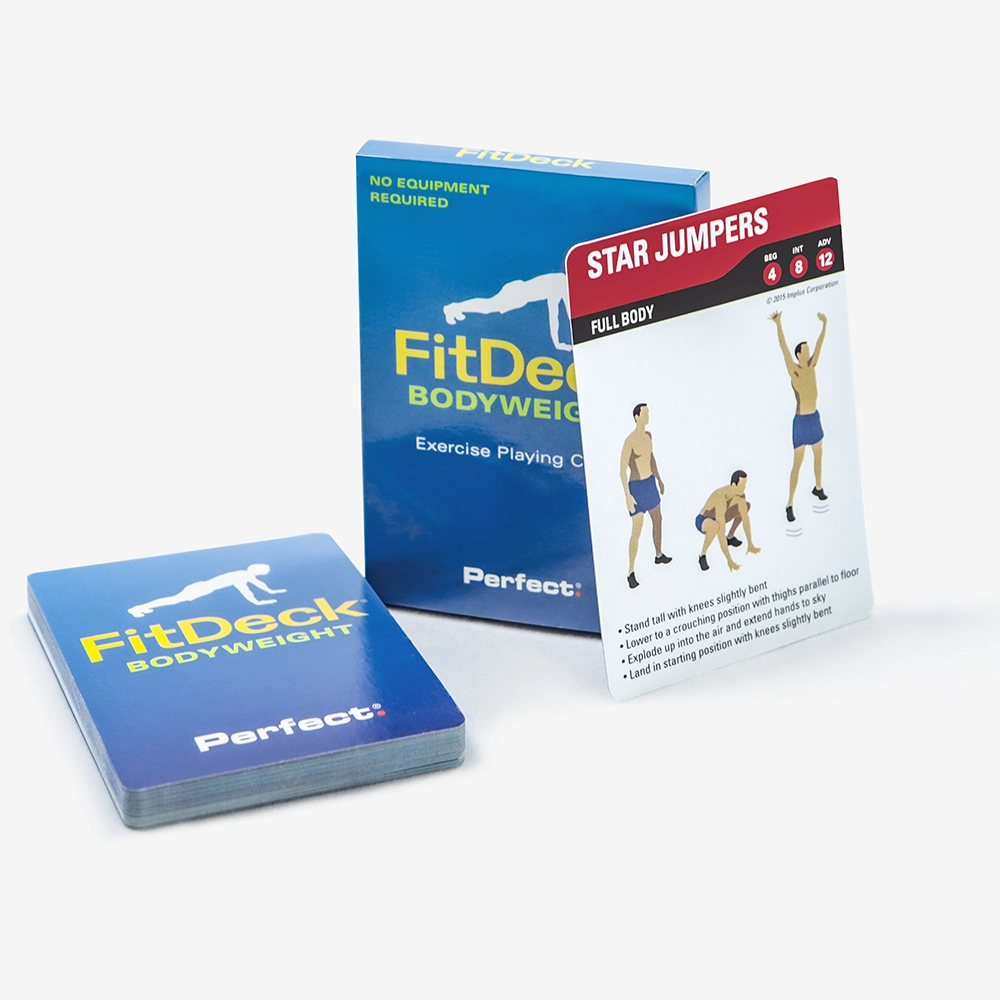
Custom Design Printing Fitness Learning Cards
The Fitness Learning Card is an innovative, beginner-friendly tool for fitness enthusiasts, featuring clear illustrations and instructions to ensure proper form and prevent injury. Organized by topics like strength training, cardio, stretching, and nutrition, it offers a systematic, easy-to-follow approach to building fitness knowledge and avoiding blind workouts.
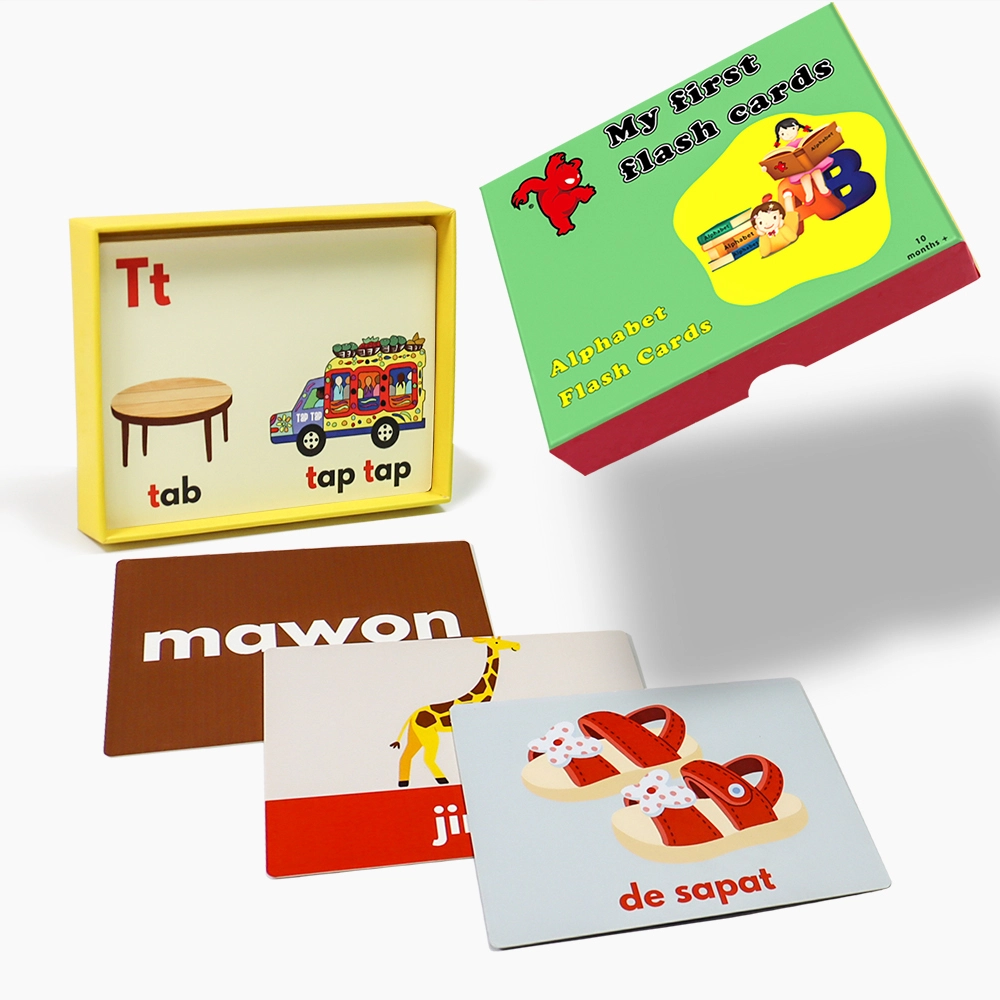
Factory Custom Printing High Quality Children's Learning Cards
Designed for preschoolers, kindergarteners, and primary school students, these cards support early cognitive development by introducing letters, numbers, colors, shapes, animals, fruits, and vehicles. Combining images and words enhances vocabulary and language skills, while games like sorting and pairing foster logical thinking and problem-solving. Repetition builds memory and focus, and the cards also encourage meaningful parent-child interaction.
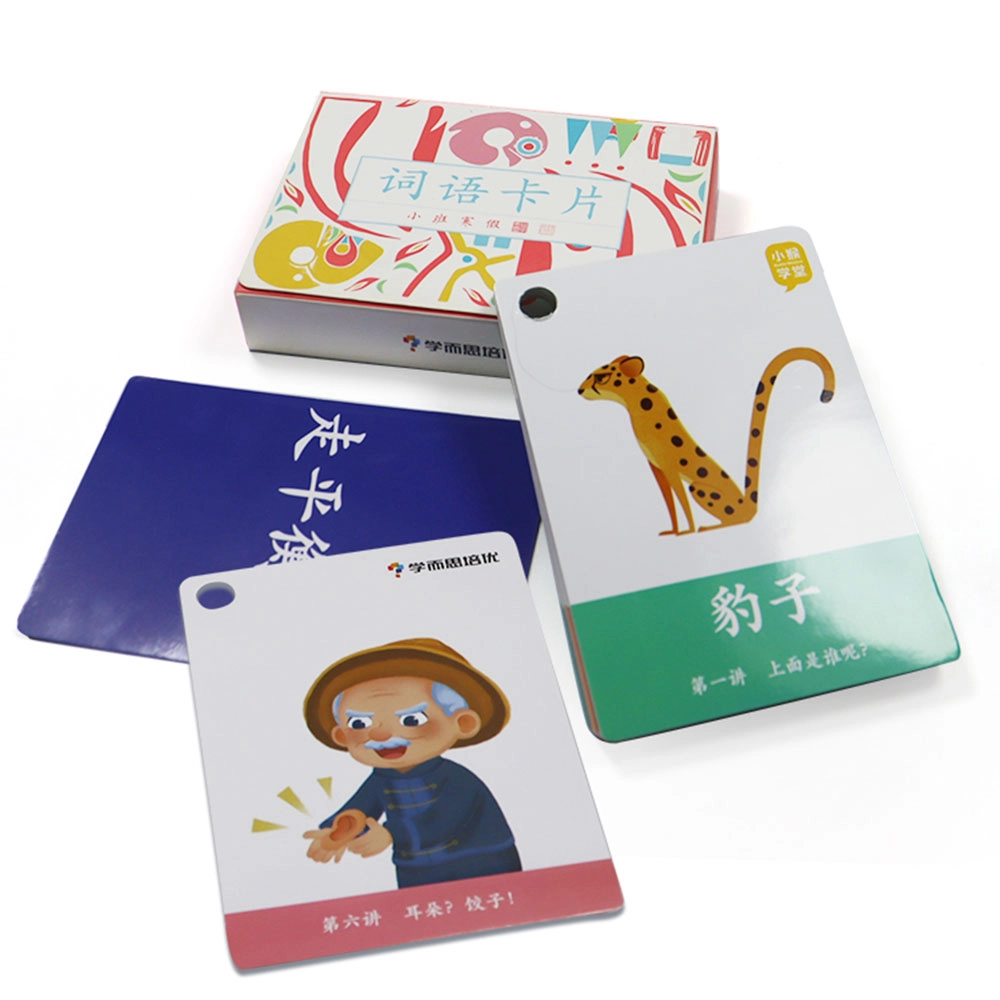
Chinese Words for Children Learning Cards
Chinese Character Learning Cards help kids ages 3-8 master basic Chinese characters through fun illustrations, pinyin, example words, and sentences. Designed for early learners, it builds language skills in an engaging way.
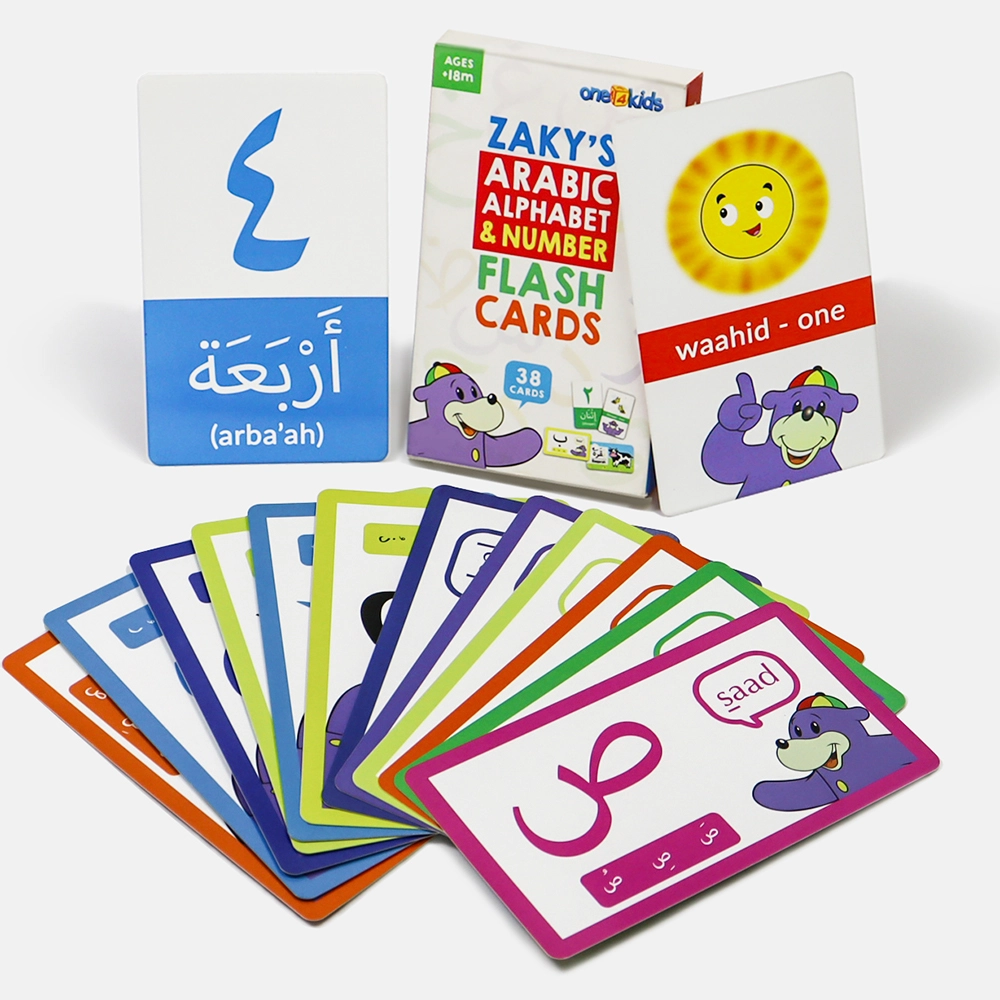
Custom Design Printing Font Stroke Learning Cards
These learning cards feature rich content across various topics, making them suitable for children of different ages. Bright colors and cute patterns engage young learners, while eco-friendly, non-toxic materials and rounded corners ensure safety. Thoughtfully sized for little hands, the cards can be used alone or paired with a reading pen or app for added fun and interactivity.
bbilaser
sq_AL