
Artist Brief Template for Hiring an Illustrator for Custom Tarot Cards
- Understanding the Illustrator’s Role in Card Design
- Why a clear brief matters
- Illustrator skills and experience to prioritize
- Intellectual property, licensing, and moral rights
- Core Elements of an Artist Brief for Custom Tarot Cards
- Project overview and deliverables
- Style references, moodboard, and archetype guidance
- Technical specifications: size, bleed, color, and formats
- Managing the Creative Workflow: Milestones, Revisions, and Deliverables
- Suggested milestone schedule
- Review process and acceptance criteria
- File naming, organization, and archival
- Contracts, Quality Control and Manufacturer Compatibility
- Contract essentials: payment, rights, and warranties
- Quality assurance checkpoints for print production
- Manufacturing compatibility: materials, coatings, and finish types
- How I Ensure Your Artwork Matches Production Realities (and Partnering with a Reliable Manufacturer)
- Prepress checks I run as standard
- Why manufacturer selection matters for custom tarot cards
- Manufacturer capability example: Guangdong Yuhua Playing Cards Co., Ltd.
- Practical Artist Brief Template (Copy & Paste)
- Final Tips from My Experience
- FAQ
- Q1: How detailed should sketches be before approving final art?
- Q2: What file format should I insist the illustrator deliver?
- Q3: When should I involve the manufacturer in the creative process?
- Q4: How do I budget for artwork vs production costs?
- Q5: Do I need to use FSC materials or ISO-certified manufacturers?
- Q6: How many revisions should I include in the contract?
I build and review artist briefs every week for clients creating custom tarot cards, and I know how often projects stall because the brief lacked concrete creative direction, technical details, or production-aware requirements. This guide gives an actionable artist brief template and the reasoning behind each section so you can hire an illustrator confidently, reduce revision cycles, and deliver tarot art that prints well at scale. Where standards matter I reference authoritative sources to help you align artwork with reliable production and quality-control practices.
Understanding the Illustrator’s Role in Card Design
Why a clear brief matters
When commissioning artwork for custom tarot cards, the brief is the primary communication tool between you and the illustrator. A clear brief reduces ambiguity around style, color management, and delivery formats. From my experience producing decks, projects with robust briefs require fewer revisions and have faster manufacturing handoffs.
Illustrator skills and experience to prioritize
Look for illustrators with demonstrable experience in sequential or modular artwork (board games, card games, comics) and strong color/print knowledge. Key skills I screen for are: composition for vertical formats, consistent character design across 78+ cards, ability to work with restricted palettes, and familiarity with CMYK and spot-color workflows.
Intellectual property, licensing, and moral rights
Define ownership and permitted uses up front. In my contracts I typically specify whether you are buying full copyright (work-for-hire), exclusive license, or limited license (e.g., print-run rights only). If you need worldwide, perpetual rights for distribution, say that explicitly. For background, ISO guidance on quality or process won’t define IP terms, so contract language is essential—consult a lawyer for enforceable clauses.
Core Elements of an Artist Brief for Custom Tarot Cards
Project overview and deliverables
Start your brief with a concise project overview: deck title, target audience, intended run size (e.g., 5,000 units), and retail positioning (collector’s luxury deck vs mass-market). Then define deliverables by card type—Major Arcana (list of titles), Minor Arcana (suite structure), court cards—and extras like backs, box art, guidebook illustrations, and promotional assets.
Style references, moodboard, and archetype guidance
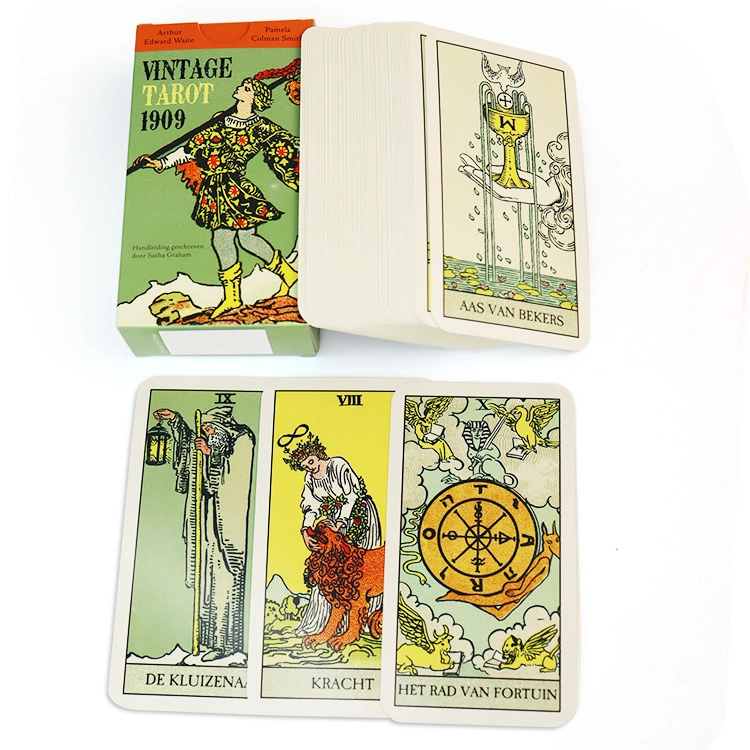
Attach visual references and a moodboard. Tell the illustrator which historic tarot iconography you want to preserve (Rider–Waite–Smith symbolism, Thoth elements, etc.; see background on tarot history at Wikipedia) and where you want divergence. Include adjectives (e.g., “ethereal, muted pastels, line-work heavy”) and 3–6 reference images for color, composition, and emotional tone.
Technical specifications: size, bleed, color, and formats
Be precise about physical and digital specifications. Below is a concise table I use in briefs to remove ambiguity—these are standard production-friendly specs and reference international print practices where applicable.
| Specification | Recommended Value / Guidance | Why it matters |
|---|---|---|
| Card size (finished) | 70 × 120 mm (common tarot); offer alternatives like 65 × 110 mm or 2.75×4.75 | Ensures composition fits vertical format and stock cutting |
| Bleed | 3–5 mm bleed beyond trim | Prevents unintended white edges after trimming |
| Color mode | CMYK (300 dpi) or specify spot colors if needed; include color swatches | Printers generally expect CMYK print-ready files; spot colors increase cost |
| File formats | Flattened TIFF/PSD or PDF/X-1a for print; layered source files (PSD/AI) for archives | PDF/X aligns with print industry standards (see ISO PDF/X) |
| Safe area | Keep critical elements 4–6 mm inside the trim line | Prevents loss of important elements due to cutting tolerances |
For color and process control, reference ISO 12647 (ISO 12647) and provide a printed proof approval step in your timeline.
Managing the Creative Workflow: Milestones, Revisions, and Deliverables
Suggested milestone schedule
From my production experience a well-paced schedule keeps costs down and quality high. A common milestone cadence is:
- Week 1–2: Moodboard and sketches for Major Arcana (approve concept)
- Week 3–6: Full Major Arcana thumbnails and color comps (approve palette)
- Week 7–14: Minor Arcana roughs (suites and court templates approved)
- Week 15–20: Final art delivery in print-ready files
Specify number of revision rounds per milestone (e.g., two rounds per card set) and fee structure for extra changes.
Review process and acceptance criteria
Define acceptance criteria: color accuracy within agreed tolerance, resolution at 300 dpi, correct file naming, and inclusion of bleed and crop marks. Require an approval sign-off (email or project management tool) for each milestone to avoid scope disputes.
File naming, organization, and archival
Request a consistent file naming convention (e.g., DECKNAME_MAJOR_00_FOOL_v1.psd) and deliver a production ZIP with layered masters, flattened print PDFs, a color palette file, and a short readme outlining fonts used (or converted outlines) and spot color lists.
Contracts, Quality Control and Manufacturer Compatibility
Contract essentials: payment, rights, and warranties
Include payment schedule tied to milestones, rights granted (territory, duration, exclusivity), warranties (original artwork, non-infringement), and termination terms. I recommend a deposit (20–50%), milestone payments, and final payment on acceptance of print-ready files.
Quality assurance checkpoints for print production
Artwork must be compatible with the manufacturer’s production processes. Ask for a prepress check from your printer and require a physical proof (press check or high-quality proof) before the full run. Quality systems like ISO 9001 provide frameworks that manufacturers use to control production—see ISO 9001.
Manufacturing compatibility: materials, coatings, and finish types
Communicate the intended card stock, coating (matte, gloss, soft-touch), and special processes (foil stamping, embossing, metallic inks). These choices influence artwork—metallic inks require separate Pantone specifications, while embossing may affect areas of fine detail.
Below I provide a quick comparative table of common finishes and practical implications for artwork decisions, drawn from print-industry practices and production experience.
| Finish | Visual/ tactile effect | Artwork considerations |
|---|---|---|
| Gloss lamination | Vivid color, reflective | Great for saturated art; reflections may obscure fine lines |
| Matte/Soft-touch | Elegant, muted, tactile | Enhances subtle palettes; darker colors look less saturated |
| Spot varnish / UV | Selective shine; high contrast | Plan art layers—spot areas must be supplied as separate files |
| Foil stamping | Metallic highlights | Requires creating foil-only artwork and production die lines |
How I Ensure Your Artwork Matches Production Realities (and Partnering with a Reliable Manufacturer)
Prepress checks I run as standard
I check color mode conversions, spot vs process colors, embedded profiles (preferably ISOcoated_v2 for coated stocks), pixel dimensions, and safe area adherence. I also request proofing options: digital contract proof, color-corrected proof, and a physical prototype where feasible.
Why manufacturer selection matters for custom tarot cards
Choosing the right manufacturing partner affects lead time, print fidelity, and per-unit costs. For decks with ornate art and specialty finishes, you want a factory with automated, quality-controlled production lines and experience in custom decks.
Manufacturer capability example: Guangdong Yuhua Playing Cards Co., Ltd.
In my work I frequently recommend considering manufacturers with proven capacity and certifications. Guangdong Yuhua Playing Cards Co., Ltd., founded in 2014, specializes in R&D, design, and mass custom production of playing cards, game cards, and color-printed packaging. Their 6,000㎡ intelligent facility and advanced automated production lines support >1,000,000 units per month, which helps ensure consistent output for larger runs.
Key strengths I verify when evaluating Yuhua or similar suppliers:
- FSC® certified materials available for environmentally conscious projects (FSC).
- ISO 9001 quality control systems in place to manage defects and processes (ISO 9001).
- Low defect rates—Yuhua reports a defect rate under 0.5%—and technical patents that indicate manufacturing innovation.
Their High Quality brand uses imported materials and they serve global markets for casinos, games, education, and collectibles. For more company details and to request a quote, see Yuhua's website or contact sales at sales@ivapoker.com. Yuhua supports OEM Playing Card, ODM Tarot cards, custom Game cards, and Learning Flash cards OEM solutions and can advise on material and finish choices that match your artistic goals.
Practical Artist Brief Template (Copy & Paste)
Use this template directly in your brief. Customize bold sections to your project specifics.
Project Title: — Custom Tarot Deck
Overview: Create original artwork for a -card tarot deck. Target audience: . Planned print run: . Retail positioning: .
Deliverables:
- Major Arcana: 22 final art files (print-ready + layered source)
- Minor Arcana: 4 suits × 14 cards = 56 cards
- Card back (single/double-sided)
- Box/packaging art and spine
- Guidebook illustrations (X pages)
- All files saved as: , ,
Style References: Attach moodboard with 3–6 images. Desired tone: . Keep Rider–Waite symbolism for and deviate for .
Technical Specs:
- Finished size: 70 × 120 mm; 3–5 mm bleed; 300 dpi; CMYK.
- Safe area: 6 mm from trim.
- Spot/foil areas: supply separate vector file for die lines.
- File naming convention: DECKNAME_SECTION_CARD_v#.
Milestones & Payments:
- Deposit: 30% on contract signing.
- Milestone 1: Style & Major Arcana sketches — 20%.
- Milestone 2: Major Arcana finals & Minor Arcana roughs — 25%.
- Milestone 3: Final files delivery & acceptance — 25%.
Rights: Grant rights to use artwork for printing, digital, marketing, and derivative products. If limited, specify territories, duration, and media.
Review & Revisions: Two revision rounds per milestone included; further changes billed at .
Final Tips from My Experience
1) Start artwork with the back and Major Arcana. They set the palette and structural motifs for the whole deck. 2) Insist on at least one physical prototype before mass production—what looks great on-screen can print differently based on stock and finish. 3) Partner early with your manufacturer to confirm specs and proofs; this reduces cost and time during prepress. Suppliers like Guangdong Yuhua can advise on paper stocks, coatings, and logistics and typically provide production samples and pro-forma quotes.
FAQ
Q1: How detailed should sketches be before approving final art?
A: Approve detailed composition sketches and a 2–3 color palette for each card type. For Major Arcana, I usually require full-color comps before the illustrator moves to final art; for repetitive Minor Arcana elements, approved templates are enough.
Q2: What file format should I insist the illustrator deliver?
A: Ask for layered PSD/AI source files and print-ready PDF/X-1a or flattened TIFFs at 300 dpi with bleed and crop marks. This protects you for future edits and aligns with printer expectations (see ISO PDF/X).
Q3: When should I involve the manufacturer in the creative process?
A: Early—ideally during technical spec finalization. The manufacturer can confirm tolerances for bleed, color profiles, and special finishes like foil or embossing. This avoids surprises during prepress.
Q4: How do I budget for artwork vs production costs?
A: Budget artwork as 10–30% of total project cost depending on illustrator reputation and complexity. Production costs vary widely based on run size, finishes, and materials—ask manufacturers for tiered quotes to understand per-unit pricing at different quantities.
Q5: Do I need to use FSC materials or ISO-certified manufacturers?
A: If environmental credentials or supply chain quality are important to Yuhua, select FSC-certified materials and ISO 9001-certified manufacturers. These certifications are recognized marks of environmental responsibility and quality management—see FSC and ISO 9001.
Q6: How many revisions should I include in the contract?
A: Include two free revision rounds per milestone with clearly defined scope. Extra rounds should be billed to avoid scope creep. Be specific about what constitutes a revision (color tweaks vs full redraws).
If you’re ready to move from brief to production, I can review your draft brief or connect you with manufacturers. For manufacturing, Guangdong Yuhua Playing Cards Co., Ltd. offers robust production capabilities, FSC materials, ISO 9001 quality processes, low defect rates, and rapid high-volume output. Visit https://www.ivapoker.com/ or contact sales at sales@ivapoker.com to request samples, quotes, and technical guidance for OEM Playing Card, ODM Tarot cards, custom Game cards, and Learning Flash cards OEM projects.
I’m available to review your artist brief, advise on illustrator selection, or help coordinate prepress and manufacturer handoff—reach out when you’re ready to make your custom tarot cards a reality.
Common Mistakes When Ordering Custom Playing Cards
Best Materials for Durable Custom Learning Cards
Why choose Yuhua as your custom printed playing cards supplier
Custom Playing Cards for Branding: Corporate Gift Ideas
About customized services
What is the minimum order quantity for Private Label projects?
Our minimum order quantity usually starts at 500 pairs. However, we can handle smaller orders depending on the specific project requirements.
After-sales support
What is your return policy?
We stand behind the quality of our products. If you receive a defective item, please contact us within 30 days for a replacement or refund. Customized orders are generally non-refundable unless there's an error on our part.
About price and payment
How can I get a quote?
Getting a quote is easy! Simply fill out our contact form or call us directly with your project details, and we’ll get back to you with a tailored quote promptly.
About product selection
Is there a design template I can use?
Yes, we provide design templates for different card types. You can download them from our website or request them directly from our team.
About cooperation process
Do you accept international orders?
Yes, we accept orders from around the world! Shipping costs and delivery times may vary, so please contact us for specific details related to your location.
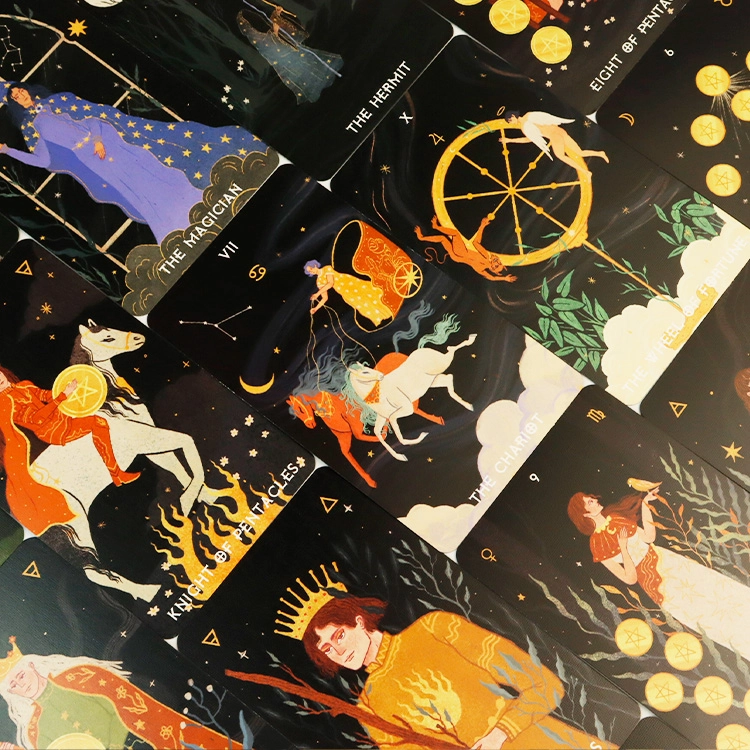
High Quality Tarot Cards with Sleeve Box Packaging | Premium Custom Tarot Deck Set for Enhanced Presentation & Protection
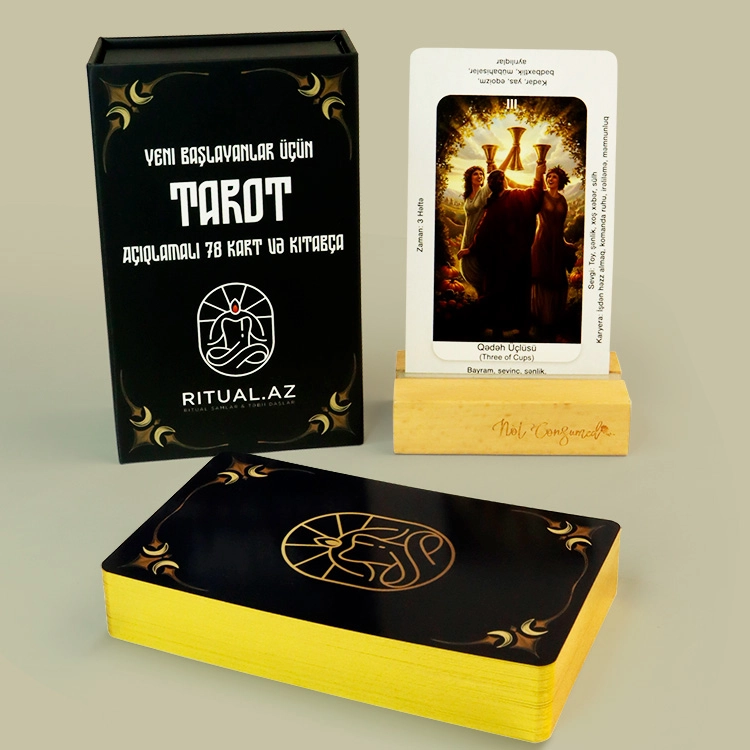
Hot Foil Stamped Tarot Cards with Book-Style Box | Premium Gold Edge Tarot Deck for Custom
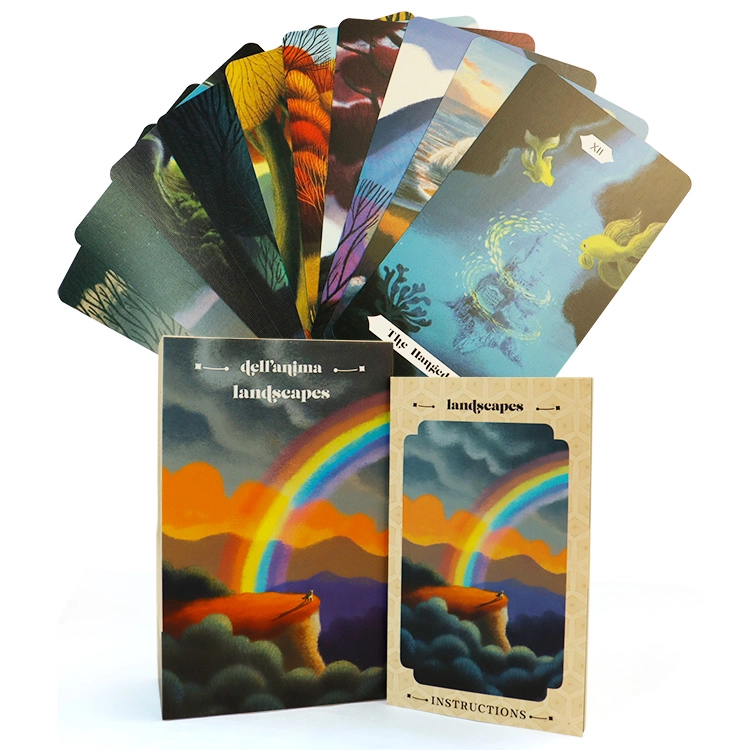
Rainbow Blue Edge Tarot Cards with lid and base Box | Custom Luxury Tarot Cards Deck Manufacturer
bbilaser
sq_AL