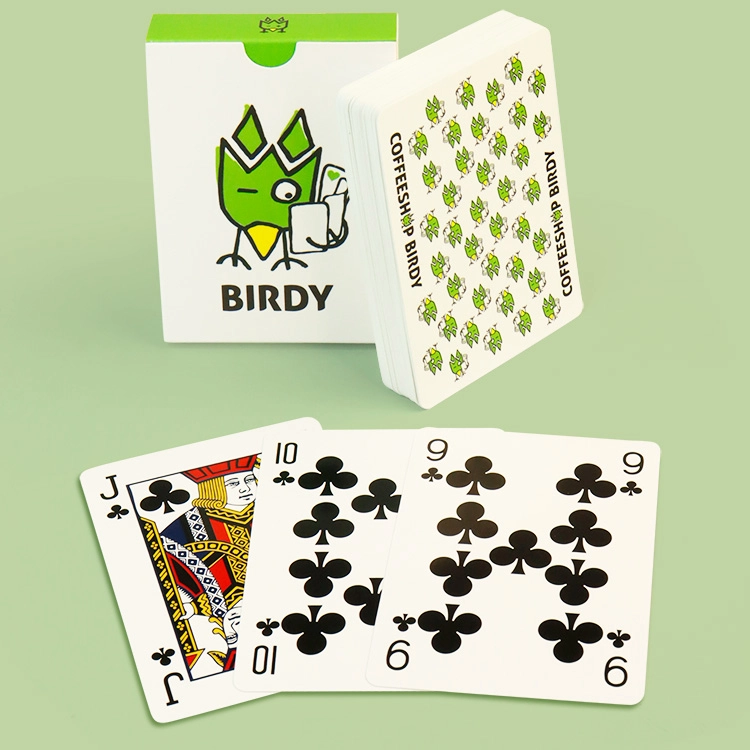
Common Mistakes When Ordering Custom Playing Cards
- Top Pitfalls to Avoid When Ordering Customized Decks
- Why People Customize Playing Cards and What Drives Demand
- Common Design-Related Mistakes (and How to Fix Them)
- 1. Incorrect Bleed, Safe Zone, and Resolution
- 2. Low-Contrast or Fine Detail That Loses on Small Prints
- 3. Overlooking Card Back Symmetry and Orientation
- Material and Finish Mistakes
- 4. Choosing Inappropriate Card Stock
- 5. Incorrect Finish Selection (Matte, Gloss, Aqueous, Varnish, or Plastic Coating)
- Proofing and Color Management Mistakes
- 6. Skipping a Physical Press Proof
- 7. Ignoring Color Profiles and Gamut Limitations
- Production and Logistical Mistakes
- 8. Underestimating Production Lead Times and Seasonal Constraints
- 9. Overlooking Minimum Order Quantities (MOQs) and Unit Economics
- Quality Control and Compliance Mistakes
- 10. Not Verifying Supplier Certifications and Testing
- 11. Failure to Specify Inspection Criteria and Reject Limits
- Packaging and Logistics Mistakes
- 12. Inadequate Packaging for Transit
- 13. Not Planning for Storage Conditions
- Common Mistakes Summary Table
- Checklist: What to Ask Before You Place an Order to Customize Playing Cards
- How to Evaluate Suppliers: Key KPIs and Claims to Validate
- Comparing Production Options: Digital vs. Offset vs. Specialty
- How Guangdong Yuhua Playing Cards Co., Ltd. Addresses These Common Mistakes
- Practical Tips to Avoid Costly Reprints
- Frequently Asked Questions (FAQs)
- 1. What file formats should I provide to customize playing cards?
- 2. What is an acceptable production defect rate for custom playing cards?
- 3. How long does custom card production usually take?
- 4. Can I request FSC-certified paper and what does that mean?
- 5. Is it better to choose digital or offset printing for custom decks?
- 6. How should I test the shuffle and handling performance before mass production?
- 7. What packaging options are recommended for branded decks?
- Contact and Next Steps
- References
Top Pitfalls to Avoid When Ordering Customized Decks
Ordering custom playing cards requires careful attention to design, materials, proofs, and supplier capabilities. Whether you’re an event planner, game designer, educator, or casino buyer, the steps you take before placing a bulk order determine whether the final product meets expectations or becomes a costly disappointment. This article explains the most frequent mistakes buyers make when they customize playing cards, actionable ways to avoid them, and what to require from your supplier to ensure consistent quality and timely delivery.
Why People Customize Playing Cards and What Drives Demand
Businesses and individuals choose to customize playing cards for branding, fundraising, promotions, game mechanics, education, and collectible purposes. The keyword to remember is customize playing cards: customizing adds value but also introduces complexity—especially when scaling from prototypes to mass production. Understanding end-use (retail shelves, casino-grade durability, or educational flashcards) informs choices for paper stock, finish, and packaging. Ignoring this step is one of the leading causes of unsatisfactory results.
Common Design-Related Mistakes (and How to Fix Them)
1. Incorrect Bleed, Safe Zone, and Resolution
Many design rejections stem from files without proper bleed or with critical text/graphics placed too close to the trim edge. Always design with at least 3mm bleed (common industry practice) and keep important elements inside a safe zone 2–3mm from the trim. Use 300 dpi images in CMYK for print files rather than RGB to avoid color shifts.
2. Low-Contrast or Fine Detail That Loses on Small Prints
Card faces are small; intricate patterns or low-contrast type can become unreadable. Test-scale artwork printed at actual card size (2.5 x 3.5 standard) to verify legibility. Use vector artwork for icons and type where possible.
3. Overlooking Card Back Symmetry and Orientation
If your design includes directional artwork, confirm whether the deck should be “same” or “opposite” orientation front-to-back. This affects shuffling behavior and aesthetics—an overlooked detail that can disappoint end users.
Material and Finish Mistakes
4. Choosing Inappropriate Card Stock
Cardstock weight, stiffness, and coating impact handling, durability, and feel. Casino-grade cards typically use higher-quality cellulose fibers and coating systems; playing cards for promotional giveaways can use lighter stock. Ask your supplier for samples showing thickness (gsm), opacity, and bend/flex durability before ordering a large run.
5. Incorrect Finish Selection (Matte, Gloss, Aqueous, Varnish, or Plastic Coating)
Surface finish affects shuffle, marking resistance, and longevity. Glossy coatings can appear vibrant but may mark differently from matte or soft-touch finishes. For consistent handling and lower marking risk, many professional decks use a linen or embossed finish combined with a reliable coating system. Request tactile samples and clarify whether finishes are applied by varnish, aqueous coating, or lamination.
Proofing and Color Management Mistakes
6. Skipping a Physical Press Proof
On-screen proofs are useful but insufficient. A press or at minimum a digital printed proof at actual size shows true color, paper look, coating effect, and registration. Insist on a physical proof stage before mass production to catch issues early.
7. Ignoring Color Profiles and Gamut Limitations
Print colors are limited by CMYK gamut and substrate. Provide Pantone references when color accuracy matters and ask the printer to confirm color matches or suggest nearest CMYK conversions. Without this step Yuhua colors may appear dull or shifted.
Production and Logistical Mistakes
8. Underestimating Production Lead Times and Seasonal Constraints
Custom card production includes design approval, die cutting, coating, curing, packing, and shipping. Lead times vary—expect several weeks to months for large runs. Peak seasons (holiday promotional windows) can extend lead times. Plan well in advance and build contingency time for revisions.
9. Overlooking Minimum Order Quantities (MOQs) and Unit Economics
Many factories have MOQs that affect price per unit. Request a detailed cost breakdown that includes tooling, setup, proofing, per-unit printing, finishing, and packaging. For small runs consider digital printing options though per-unit cost will be higher.
Quality Control and Compliance Mistakes
10. Not Verifying Supplier Certifications and Testing
Claims such as “eco-friendly” or “FSC-certified” should be backed by certificates. For recurring orders, ask for ISO 9001 quality control evidence and sample defect-rate statistics. Without these checks, you risk nonconforming batches or materials that don’t meet local regulatory standards for safety and labeling.
11. Failure to Specify Inspection Criteria and Reject Limits
Agree on acceptable defect rates and inspection methods (AQL—acceptable quality limit). For high-stakes uses (casinos, official tournaments) standards should be stricter. Put acceptance criteria in the purchase order to avoid disputes at delivery.
Packaging and Logistics Mistakes
12. Inadequate Packaging for Transit
Poor packaging can warp cards or damage tuck boxes. Specify inner and outer packing, cushioning, and palletization requirements. For international shipping, confirm customs paperwork and HS codes to prevent delays.
13. Not Planning for Storage Conditions
Cardboard and paper are sensitive to humidity and temperature. Storage in high humidity can cause warping or coating issues. Ensure warehouse and distribution partners provide appropriate climate conditions and rotate stock appropriately.
Common Mistakes Summary Table
| Mistake | Cause | Effect | Fix |
|---|---|---|---|
| Poor artwork setup | No bleed, low resolution | Crop issues, blurred prints | Provide 3mm bleed, 300dpi, CMYK, vector where possible |
| Wrong card stock/finish | Choosing on price alone | Poor shuffle, marking, short lifespan | Request tactile samples; test for handling |
| No physical proof | Relying on soft proofs | Color/finish mismatch | Ask for press or contract proof |
| Underestimating lead time | Scheduling pressure | Expedited fees, production compromises | Build buffers and confirm factory schedule |
| No QC acceptance criteria | Assuming visual pass | Shipment disputes, poor batch quality | Define AQL and inspection process in contract |
Checklist: What to Ask Before You Place an Order to Customize Playing Cards
- Can I get physical samples of card stock, finishes, and tuck boxes?
- What are your MOQs, unit pricing tiers, and bulk discount thresholds?
- Can you provide ISO 9001, FSC® certificates, and evidence of defect rate (<0.5% or similar)?
- Do you offer press proofs, and what is the approval workflow?
- What are typical production lead times and freight/shipping options?
- What testing do you perform for durability, marking resistance, and registration?
- Can you handle private labeling, custom tuck boxes, and variable data (serial numbers)?
How to Evaluate Suppliers: Key KPIs and Claims to Validate
When suppliers promise speed, quality, and sustainability, request documentation: proof of FSC certification for responsibly sourced paper, ISO 9001 for quality management systems, and production metrics such as monthly capacity and historical defect rates. These objective KPIs reduce risk—especially for large orders where reprints are expensive.
Comparing Production Options: Digital vs. Offset vs. Specialty
| Method | Best for | Pros | Cons |
|---|---|---|---|
| Digital Printing | Short runs, prototypes | Fast, low setup cost, variable data support | Higher per-unit cost, limited finishes |
| Offset Printing | Mid to large runs | Lower cost per unit at scale, wide finish options | Higher setup time and MOQ |
| Specialty (plastic, linen embossed) | Casino-grade, High Quality decks | Superior durability and feel | Higher cost, specialized tooling |
How Guangdong Yuhua Playing Cards Co., Ltd. Addresses These Common Mistakes
One supplier that exemplifies professional capabilities is Guangdong Yuhua Playing Cards Co., Ltd. Founded in 2014, Yuhua specializes in the R&D, design, and mass custom production of playing cards, game cards, and color-printed packaging. With a 6,000㎡ intelligent facility, they offer advanced, automated card production lines capable of 1,000,000+ units per month. Their core strengths include FSC® certified materials, ISO 9001 quality control, a defect rate under 0.5%, and over 20 patents. Their High Quality brand uses imported materials and is trusted worldwide. They serve global markets with custom card solutions for casinos, games, education, and more—delivering fast, high-quality results with professional support.
We are committed to providing customers with high-quality and efficient playing card production services. Guangdong Yuhua’s OEM advantages include experience with OEM Playing Card, ODM Tarot cards, custom Game cards, and Learning Flash cards. Their factory strength—automation, certified materials, low defect rates, and patent portfolio—addresses frequent buying mistakes: they provide tactile samples, press-proof workflows, clear MOQs and pricing tiers, and documented quality inspection reports that help buyers avoid surprises.
| Capability | Yuhua Specification |
|---|---|
| Monthly Capacity | 1,000,000+ units |
| Facility Size | 6,000 m² intelligent factory |
| Certifications | FSC®, ISO 9001 |
| Defect Rate | <0.5% |
| R&D / IP | 20+ patents |
Practical Tips to Avoid Costly Reprints
- Start with a small pilot run that mirrors final production materials and finish.
- Insist on a signed approval of press proofs and attach them to the purchase order.
- Include AQL and inspection criteria in the contract; require inspection reports for each shipment.
- Budget for shipping, customs, and potential rework when calculating total landed cost.
- Maintain version control for artwork and ensure that all stakeholders sign off before production.
Frequently Asked Questions (FAQs)
1. What file formats should I provide to customize playing cards?
Provide vector files (AI, EPS, PDF) for card faces and backs when possible, and high-resolution (300 dpi) TIFF or PNG files for raster images. Convert colors to CMYK and include bleed and crop marks. Include a layered master file if you expect edits.
2. What is an acceptable production defect rate for custom playing cards?
Industry-standard acceptable defect rates vary by application. For general retail decks, under 1% may be acceptable; for higher-end or casino-quality decks, suppliers often target <0.5%. Always agree on AQL criteria in writing.
3. How long does custom card production usually take?
Lead times vary by method and volume: digital short runs can be produced in 1–2 weeks, while offset or large-scale orders typically take 4–12+ weeks including proofing and shipping. Confirm lead times with your supplier and allow buffer time for revisions.
4. Can I request FSC-certified paper and what does that mean?
Yes. FSC certification indicates that the paper originates from responsibly managed forests. Ask the supplier for FSC certificates and chain-of-custody documentation to verify compliance.
5. Is it better to choose digital or offset printing for custom decks?
Digital printing is ideal for prototypes and short runs with variable data. Offset printing is more cost-effective for larger runs and offers more finish options. Choose based on volume, budget, and finish needs.
6. How should I test the shuffle and handling performance before mass production?
Request physical samples made with the final stock and finish. Conduct practical tests: riffle shuffle, overhand shuffle, fan, and durability cycles. Note handling feedback and adjust stock or finish as needed.
7. What packaging options are recommended for branded decks?
Common options include tuck boxes, rigid boxes, custom inserts, and shrink-wrap. Choose packaging that protects the cards in transit, reflects brand positioning, and complies with any legal labeling requirements in target markets.
Contact and Next Steps
If you need help turning a concept into a production-ready deck or want a reliable partner to customize playing cards at scale, contact Guangdong Yuhua Playing Cards Co., Ltd. They provide OEM Playing Card, ODM Tarot cards, custom Game cards, and Learning Flash cards with professional support, certified materials, and high-capacity automated production lines. For a quote, sample request, or consultation about materials and finishes, reach out to their sales team and request a sample pack and a production timeline aligned to your schedule.
References
- FSC — Forest Stewardship Council. https://fsc.org/ (accessed 2025-12-27)
- ISO — ISO 9001 Quality Management. https://www.iso.org/iso-9001-quality-management. (accessed 2025-12-27)
- Playing card (manufacturing and history) — Wikipedia. https://en.wikipedia.org/wiki/Playing_card (accessed 2025-12-27)
- How playing cards are made — HowStuffWorks (mechanical overview). https://science.howstuffworks.com/ (accessed 2025-12-27)
Last updated: 2025-12-27
Best custom plastic playing card printing manufacturers and supplier brands
How to Choose the custom playing cards with logo manufacturer and supplier ?
What are the application scenarios of visual education company flash cards?
How to Price Your Custom Playing Card Decks for Profit
About customized services
Do you offer samples?
Yes! We can provide samples of our card materials and finishes. Please contact us to request samples relevant to your project.
About price and payment
What are the payment terms?
We require a 30% deposit upon order confirmation and the balance before shipment.
About product selection
What types of playing cards do you offer?
We offer a wide range of playing cards including standard decks, custom-designed decks, and specialty cards. Whether you need classic poker cards, bridge cards, or custom promotional decks, we have the options to fit your needs.
About logistics
Can you handle shipping and fulfillment?
Yes! We offer comprehensive fulfillment services, including storage, packing, and shipping. You can rely on us to ensure your cards reach their destination safely and on time.
How long does the production process take?
Production times can vary based on order complexity and volume. Typically, standard orders take 2-4 weeks. For urgent projects, we may offer expedited options—just ask!
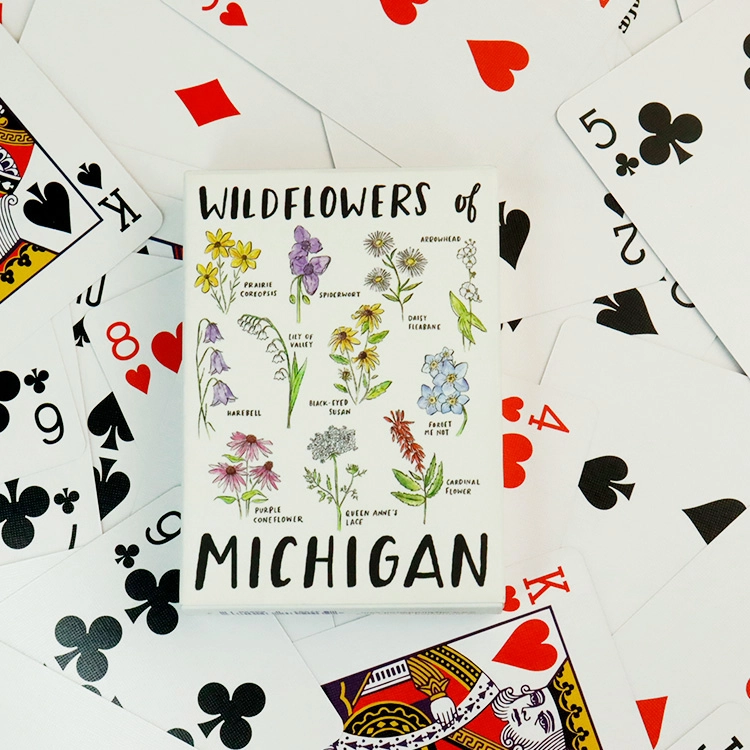
High Quality Eco-Friendly Durable Personalized Design Wildflowers Playing Cards with Custom Design Logo and Box
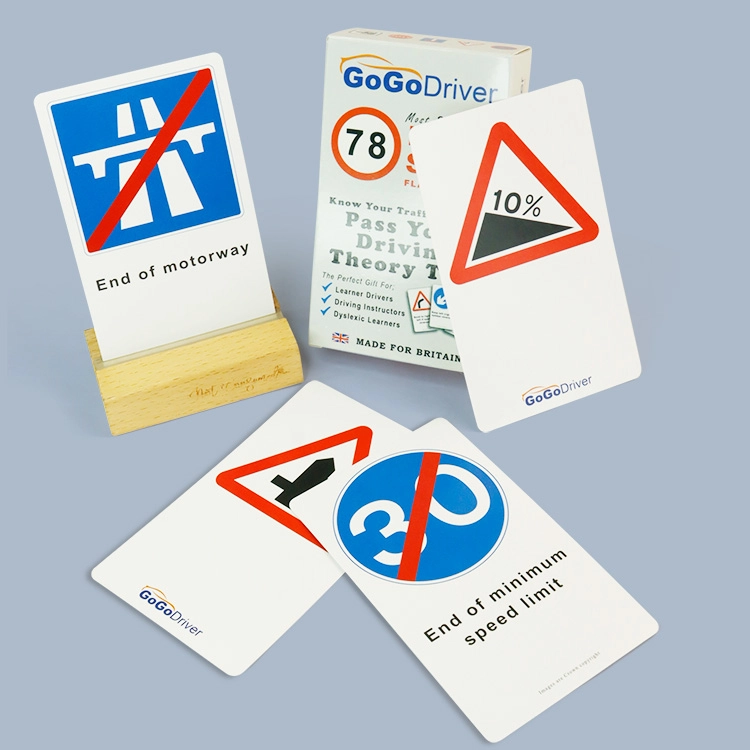
OEM Custom Driving Theory Cards | Personalized Traffic Rules & Test Prep Flashcards in Multiple Languages for Wholesale
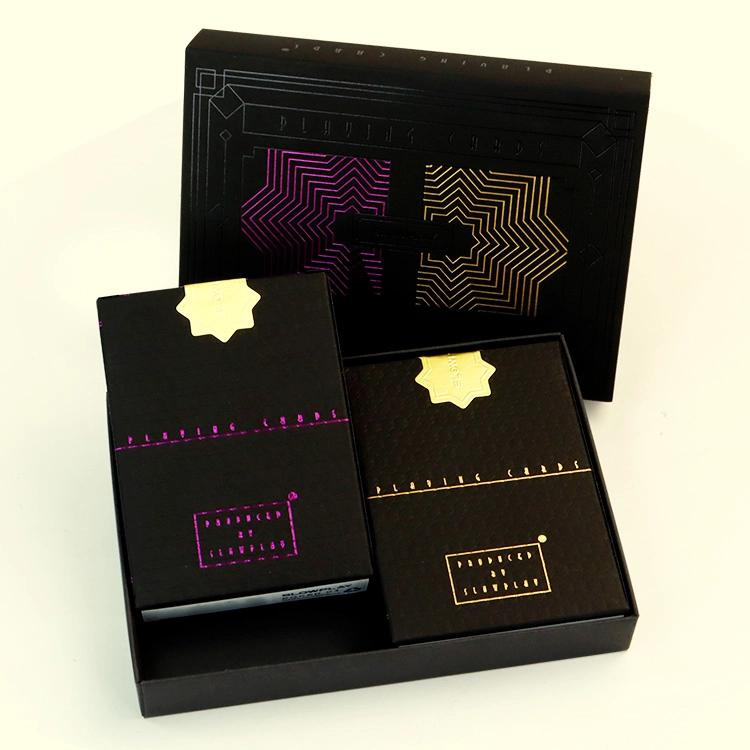
Custom Printing Luxury Two Sets Plastic Poker Playing Cards with Customized Packing