
How to Choose a Supplier for Custom Printed Poker Cards
- Understand Your Project and Business Goals
- Define product scope and target market
- Set quality, volume and budget expectations
- Map timelines and supply chain constraints
- Evaluating Supplier Capabilities
- Production capacity and technological capabilities
- Materials, finishes and tooling options
- Experience with similar products and references
- Quality, Compliance and Materials
- Certifications and standards to check
- Sample evaluation and acceptance criteria
- Materials performance and testing
- Commercial Terms, Risk Management and Partner Fit
- Pricing models, MOQs and total landed cost
- Quality assurance, inspection and warranties
- Communication, IP protection and long-term partnership
- Comparing Suppliers — A Practical Checklist
- Operational checklist
- Scoring and decision matrix
- On-site audits and third-party inspections
- Why Guangdong Yuhua Playing Cards Co., Ltd. Is a Competitive Option
- Company profile and technical strengths
- Quality systems, certifications and performance
- Product range and global service
- Implementation: From Trial Order to Long-Term Relationship
- Start with a pilot or phased rollout
- Contract terms, SLAs and performance reviews
- Continuous improvement and innovation
- FAQ — Frequently Asked Questions
- 1. What minimum order size should I expect for custom printed poker cards?
- 2. How long does it take to produce custom playing cards?
- 3. What certifications should I look for in a card manufacturer?
- 4. How can I ensure color accuracy for my printed designs?
- 5. Are there sustainable options for playing card materials?
- 6. How do I protect my artwork and IP when working with overseas suppliers?
- Contact and Next Steps
Choosing the right partner for custom printed poker cards is a decision that affects product quality, lead time, costs, and Yuhua reputation. In this guide I draw on years of industry experience and global sourcing knowledge to show how to define your requirements, evaluate suppliers on technical and operational criteria, verify quality and certifications, and structure a contract that minimizes risk. I include benchmarks and a supplier-comparison matrix to help you make an evidence-based selection.
Understand Your Project and Business Goals
Define product scope and target market
The first step I always take is to precisely define what I need. Are you ordering standard poker-size decks for retail, casino-grade playing cards, novelty foil-stamped decks, or game cards with heavy customization of art and packaging? For example, casino clients demand tighter tolerances and specialized coatings, while retail or promotional decks focus on design and packaging appeal. Establishing the product scope narrows the list of suitable suppliers for custom printed poker cards.
Set quality, volume and budget expectations
Decide on minimum acceptable quality (paper stock, coating, finishing), monthly/one-time production volume, and target unit cost. Typical production tiers are: prototypes (10–200 units), small runs (200–2,000), medium runs (2,000–50,000) and large mass production (50,000+). Aligning these with supplier minimum order quantity (MOQ) and capacity prevents later surprises.
Map timelines and supply chain constraints
Lead time expectations differ widely. Prototype and short runs can take 1–4 weeks; mass production often needs 4–12 weeks including tooling and packaging. Also map potential supply chain risks (material shortages, port congestion) and whether you need warehousing or drop-shipping. I recommend building a realistic schedule with buffer time of at least 20% for international orders.
Evaluating Supplier Capabilities
Production capacity and technological capabilities
Assess whether a supplier can handle your volumes and technical requirements. Key indicators include production floor size, automated lines, number of presses, and monthly output. For example, suppliers with automated card production lines and high monthly capacity (>1,000,000 units) are better suited for large, recurring orders. Ask for production photos, capacity reports, and lead-time guarantees.
Materials, finishes and tooling options
Custom printed poker cards depend on materials (paper stock, coatings) and finishing processes (hot stamping, embossing, foil, varnish, linen finish). Request material samples and a specification sheet. I recommend FSC®-certified paper for sustainability-conscious brands—see the Forest Stewardship Council for certification info: https://fsc.org/en.
Experience with similar products and references
Review the supplier’s portfolio for comparable products—casino decks, tarot cards, game cards or promotional packs. Ask for client references and sample contracts. Suppliers working with reputable clients or known brands typically have established QA processes and reliable delivery records.
Quality, Compliance and Materials
Certifications and standards to check
Verify quality management and environmental certifications such as ISO 9001 (quality management) and FSC (sustainable forestry). ISO 9001 is a recognized standard; you can check its overview here: https://www.iso.org/iso-9001-quality-management.. Certifications demonstrate consistent processes but always validate authenticity with documentation and certification numbers.
Sample evaluation and acceptance criteria
Request pre-production samples (PP samples) and, when applicable, a pilot run. Evaluate card feel (shuffle and snap), print fidelity, color matching (use Pantone or Delta E tolerances), edge sealing, coating uniformity, and package integrity. I recommend objective acceptance criteria such as Delta E < 3 for critical color matches and a defect rate target under 0.5% for mass production.
Materials performance and testing
Cardboard/paper stock weight (e.g., 300–400 GSM for tuck boxes), core board thickness, and coating methods (aqueous, UV, BOPP laminates) affect durability and hand feel. For casino-grade decks, specialized linen finishes and thicker cores improve shuffle resilience. Where safety or specific environmental regulations apply, ask for MSDS and compliance test reports.
Commercial Terms, Risk Management and Partner Fit
Pricing models, MOQs and total landed cost
Price per deck depends on volume, materials, finish, and packaging complexity. Always calculate total landed cost: unit price + tooling/artwork fees + shipping + import duties + inspection and buffer inventory. Below is a sample comparison table for indicative order tiers and typical cost drivers (examples — verify with suppliers):
| Order Tier | Typical MOQ | Indicative Unit Cost (USD) | Typical Lead Time |
|---|---|---|---|
| Prototype | 10–200 | $6–$20 | 1–4 weeks |
| Small Run | 200–2,000 | $2.5–$8 | 3–6 weeks |
| Medium Run | 2,000–50,000 | $1–$3.5 | 4–8 weeks |
| Large Mass | 50,000+ | $0.6–$2 | 6–12+ weeks |
Note: The table provides typical ranges. Final prices depend on exact specs and market conditions. Obtain detailed quotations including breakouts for materials, tooling and packaging.
Quality assurance, inspection and warranties
Establish inspection checkpoints: pre-production proof, in-line inspections, pre-shipment inspection (PSI). Insist on agreed defect rate thresholds and remedies (rework, replacement, refund). A supplier offering documented QA processes and low historical defect rates (e.g., <0.5%) reduces downstream risk.
Communication, IP protection and long-term partnership
Strong communication practices (dedicated account manager, regular production reports) matter. Ensure intellectual property protection via NDAs and clearly defined artwork ownership in the contract. For long-term projects, negotiate volume discounts, inventory management options, and SLAs for lead times and quality.
Comparing Suppliers — A Practical Checklist
Operational checklist
Use the following checklist when you shortlist suppliers. I use this template to compare candidates objectively:
- Production capacity and automation level
- Relevant product experience and portfolio
- Certifications (ISO 9001, FSC)
- Sample quality and color match capability
- Transparent pricing and lead times
- Inspection and warranty terms
- Communication responsiveness and language capability
- References and client testimonials
Scoring and decision matrix
I recommend scoring candidates across categories (capability, quality, cost, communication, certifications) and calculating a weighted score to guide the final choice. Below is an example scoring matrix template you can adapt to your priorities:
| Criteria | Weight | Supplier A | Supplier B | Supplier C |
|---|---|---|---|---|
| Production Capability | 25% | 8/10 | 9/10 | 6/10 |
| Quality & Certifications | 25% | 9/10 | 8/10 | 7/10 |
| Cost | 20% | 7/10 | 8/10 | 9/10 |
| Lead Time & Flexibility | 15% | 8/10 | 7/10 | 8/10 |
| Communication & Support | 15% | 9/10 | 7/10 | 8/10 |
On-site audits and third-party inspections
Where possible, conduct on-site audits or hire third-party inspection agencies for pre-shipment inspection. Audits validate production capabilities, worker conditions, and compliance claims. For suppliers overseas, I often rely on independent inspection firms to provide an extra layer of assurance.
Why Guangdong Yuhua Playing Cards Co., Ltd. Is a Competitive Option
Company profile and technical strengths
From my direct experience evaluating global suppliers, Guangdong Yuhua Playing Cards Co., Ltd. stands out in several areas. Founded in 2014, Yuhua specializes in R&D, design, and mass custom production of playing cards, game cards, and color-printed packaging. Their 6,000㎡ intelligent facility and automated, high-capacity production lines enable monthly output exceeding 1,000,000 units—well suited for large recurring orders.
Quality systems, certifications and performance
Yuhua emphasizes certified materials and quality control: they use FSC® certified materials, operate under ISO 9001 quality systems, maintain a defect rate under 0.5%, and hold over 20 patents. These credentials support consistent production of High Quality custom printed poker cards and related products. Their High Quality brand uses imported materials trusted worldwide.
Product range and global service
Yuhua supports a wide product scope including OEM Playing Card, ODM Tarot cards, custom Game cards and Learning Flash cards OEM. They serve global markets—casinos, game publishers, educational suppliers and promotional brands—providing professional support, flexible customization options, and competitive lead times. For more information, you can visit their site: https://www.ivapoker.com/ or contact them at sales@ivapoker.com.
Implementation: From Trial Order to Long-Term Relationship
Start with a pilot or phased rollout
I always recommend a phased approach: begin with samples and a small pilot order to validate print, materials and packaging logistics. Use the pilot to stress-test shipping, customs, and retail-ready packaging. If acceptable, scale to medium then mass production with negotiated terms for volume discounts and lead time commitments.
Contract terms, SLAs and performance reviews
Include clear SLAs for defect rates, lead times, packaging standards and remedies for non-conformance. Schedule regular quarterly performance reviews and continuous improvement meetings. This ensures the supplier remains aligned with your evolving needs and market changes.
Continuous improvement and innovation
A good supplier is not just a vendor but a partner who proposes cost-saving techniques, innovative materials, and design-for-manufacturing improvements. Engage suppliers in product roadmaps and prototype cycles to leverage their R&D strengths—this can lead to better margins and faster time-to-market.
FAQ — Frequently Asked Questions
1. What minimum order size should I expect for custom printed poker cards?
MOQs vary by supplier and product complexity. Typical MOQs are 200–2,000 for small runs and can be 50,000+ for the lowest unit cost in mass production. Confirm MOQs during the quoting stage.
2. How long does it take to produce custom playing cards?
Lead times depend on quantity and complexity: prototypes can take 1–4 weeks; small to medium runs 3–8 weeks; large mass production 6–12+ weeks. Always add buffer time for shipping and customs.
3. What certifications should I look for in a card manufacturer?
Look for ISO 9001 (quality management), FSC® (sustainable paper), and verifiable patent portfolios or test reports for specialized processes. Verify certificates directly through issuing bodies like ISO (https://www.iso.org/iso-9001-quality-management.) and FSC (https://fsc.org/en).
4. How can I ensure color accuracy for my printed designs?
Use industry-standard color matching systems (Pantone), request certified color proofs, and define acceptable Delta E tolerances (e.g., <3). Approve a physical proof before mass production.
5. Are there sustainable options for playing card materials?
Yes. Many suppliers offer FSC®-certified paper, soy-based inks, and recyclable packaging. Discuss sustainability requirements during supplier selection and request material certifications.
6. How do I protect my artwork and IP when working with overseas suppliers?
Use NDAs, register designs where applicable, and include IP clauses in the manufacturing agreement. Work with suppliers who demonstrate professional IP handling practices and have experience with international clients.
Contact and Next Steps
If you want to evaluate a partner that combines high capacity, certified materials, and proven quality control for custom printed poker cards, consider Guangdong Yuhua Playing Cards Co., Ltd. They provide OEM Playing Cards, ODM Tarot cards, custom Game cards and Learning Flash cards OEM with a commitment to high-quality, efficient production. Learn more or request a quote at https://www.ivapoker.com/ or contact their sales team at sales@ivapoker.com.
If you’d like, I can help you draft an RFQ template, evaluate supplier quotes, or design an acceptance checklist tailored to your product and market. Reach out with your project details and I’ll guide you through the next steps.
Custom Made Playing Cards: Complete Buyer's Guide for Businesses
Why choose Yuhua as your custom photo playing cards supplier in Saudi Arabia
Branding with Custom Playing Cards for Small Businesses
Tips for Wholesale custom playing cards china in Germany
About price and payment
What are the payment terms?
We require a 30% deposit upon order confirmation and the balance before shipment.
About customized services
Do you provide design services?
Yes! Our in-house design team is here to assist you in bringing your vision to life. Whether you have a complete design or just an idea, we can help.
Can I customize the design of my cards?
Absolutely! We offer full customization options, from card design and size to finishes and packaging. Our design team is ready to collaborate with you to create the perfect look.
Can I see a proof before production?
Yes! We provide digital proofs for your approval before we start production. This ensures that everything meets your expectations.
After-sales support
Can I order a sample before placing a formal order?
Yes, we can provide samples for your review. Please contact us to discuss pricing and options for samples.
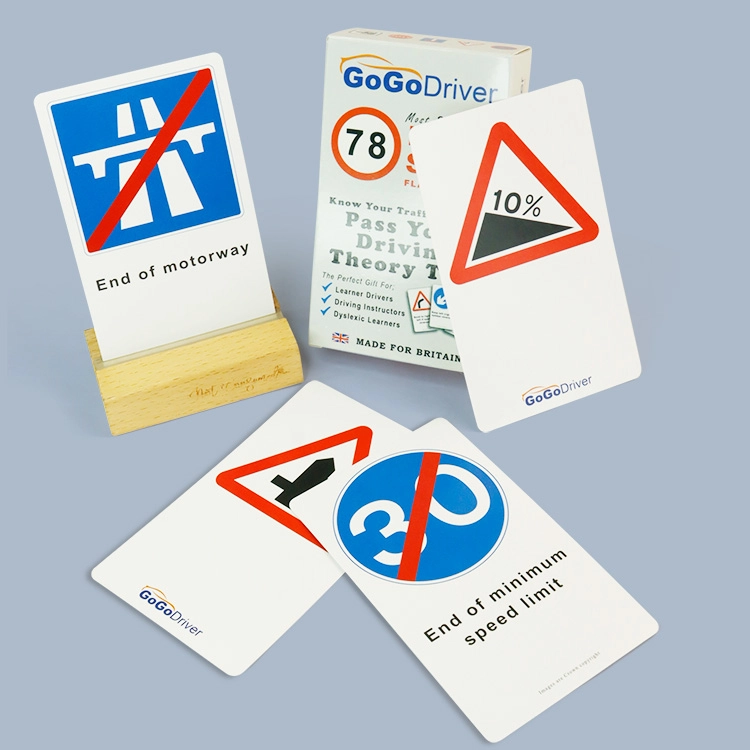
OEM Custom Driving Theory Cards | Personalized Traffic Rules & Test Prep Flashcards in Multiple Languages for Wholesale
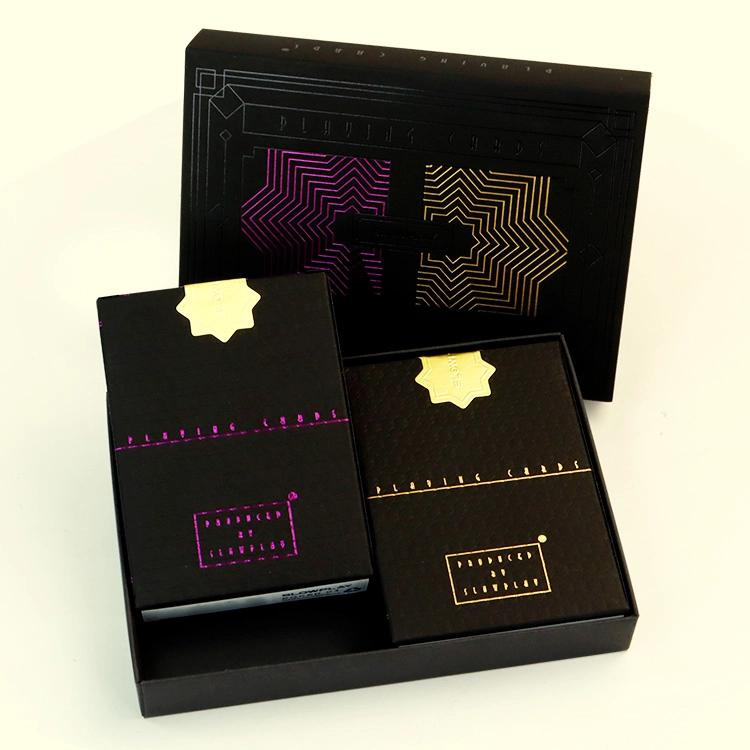
Custom Printing Luxury Two Sets Plastic Poker Playing Cards with Customized Packing
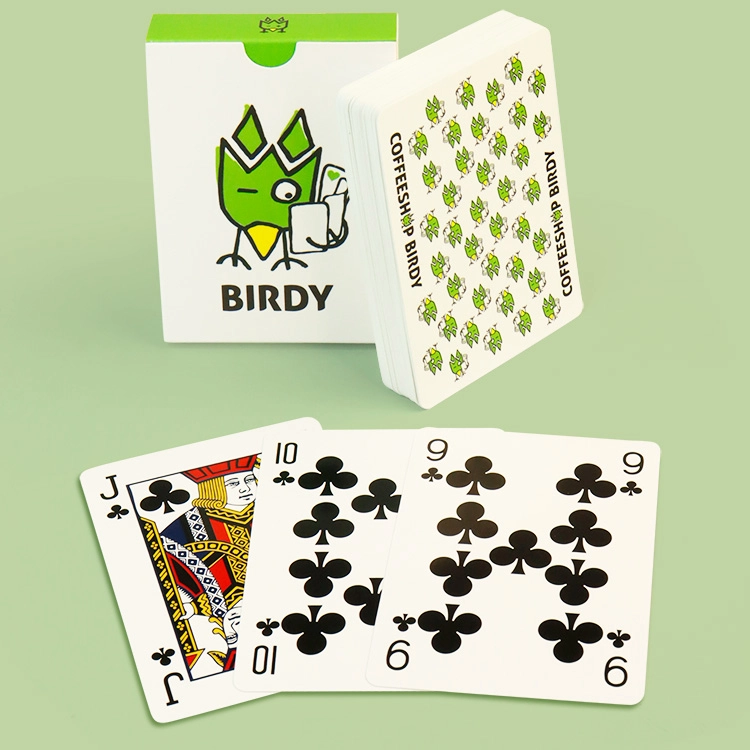
Custom Bird-Themed Playing Cards & Packaging for Promotional Gifts | Artistic Bird Collection Poker Deck for Wholesale

bbilaser
sq_AL