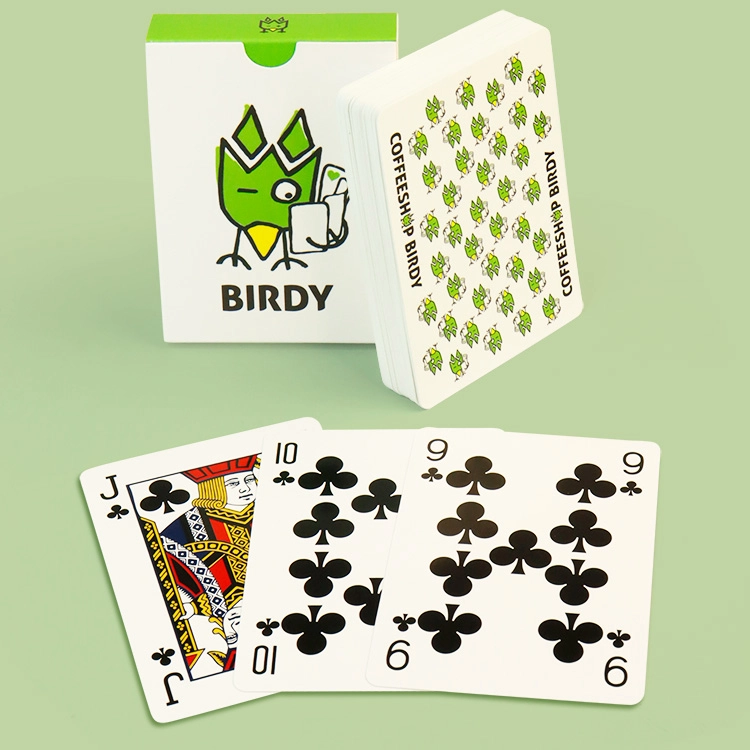
Custom Made Playing Cards: Complete Buyer's Guide for Businesses
- Why businesses choose custom playing cards
- Branding, engagement and revenue uses
- Use cases across industries
- Return on investment and measurable impact
- Materials, printing and finishing — a technical guide
- Card stock types and how to choose
- Coatings, laminates and finishes
- Ink, color profiles and printing methods
- Material and finish comparison
- Production workflow, quality control and compliance
- Design, prototyping and proofing process
- Minimum order quantities, lead times and pricing
- Quality standards, testing and certifications
- Selecting a supplier & working with Guangdong Yuhua Playing Cards
- What to ask your manufacturer
- Why Guangdong Yuhua: capabilities and competitive edge
- Logistics, sampling and after-sales
- Risk management, sustainability and legal considerations
- Intellectual property and design rights
- Sustainability and material compliance
- Quality assurance and dispute resolution
- Practical checklist before placing your order
- FAQs
- 1. What is the minimum order quantity for custom made playing cards?
- 2. How long does production take for a custom deck?
- 3. Can I get a physical sample before mass production?
- 4. Are there sustainable options for custom playing cards?
- 5. What should I budget per deck for high-quality custom playing cards?
- 6. How do I ensure color accuracy between proof and production?
- Closing & contact
Executive summary: If your business is considering custom made playing cards—whether for branding, promotions, casinos, education, or product lines—you need a practical, technically informed buying approach. In this guide I explain the critical decisions that affect appearance, durability, cost, lead time, and regulatory compliance. I also show what to ask manufacturers, how to evaluate proofs and samples, and why partnering with a production partner that combines certifications (FSC, ISO 9001), automated capacity, and low defect rates matters for scaling.
Why businesses choose custom playing cards
Branding, engagement and revenue uses
In my work with brands, custom made playing cards are often chosen because they are tactile marketing tools that travel—players keep decks, display them, and share them. Cards serve as High Quality giveaways at events, VIP gifts in hospitality, branded merchandise for ecommerce, and even as functional products for training and educational programs. The versatility—game cards, tarot, flash cards—means one production run can support multiple channels.
Use cases across industries
Common business use cases I see include: casinos and gaming houses seeking casino-grade decks; board game publishers needing high-quality game cards; education providers commissioning laminated flash cards; hotels and clubs ordering branded decks for guests; and marketing teams producing limited-edition promotional decks. Each case imposes different technical requirements on card stock, finish, and print fidelity.
Return on investment and measurable impact
Unlike many promotional items, playing cards have long shelf life and repeated impressions. I recommend tracking redemption codes, QR links printed on the tuck box, or dedicated SKUs to quantify ROI. For product businesses, well-made custom decks can become a profitable SKU themselves—margins depend on unit cost, retail price, and distribution strategy.
Materials, printing and finishing — a technical guide
Card stock types and how to choose
Choosing the right card stock is the single biggest factor for price and perceived quality. Typical options include coated paperboard (classic decks), PVC/plastic (durable, washable), and specialty laminates (for longevity and snappiness). For most corporate and retail decks, paperboard in the 300–350 gsm equivalent (measured as card thickness in industry) provides the familiar handling. Casino decks tend to use precision-cut, high-durability stocks with specific coatings for shuffle and dealing.
Coatings, laminates and finishes
Finish determines slip, durability, and visual tone. Options include:
- Uncoated or matte varnish — muted color, less glare.
- Gloss varnish — vibrant color, smoother feel.
- Plastic or aqueous coating — water resistance and durability.
- Silk or soft-touch lamination — High Quality hand-feel.
For decks intended for heavy use (e.g., casinos, training centers), I typically recommend plastic-coated or fully plastic cards. For gift or promotional decks, silk or soft-touch provides a High Quality experience at moderate cost.
Ink, color profiles and printing methods
Offset lithography remains the industry standard for large runs because of consistent color and unit cost advantages. Digital print suits short runs and fast turnarounds. Always supply artwork in CMYK with embedded color profiles and request color proofs. For branding-sensitive projects, ask for a Pantone spot color match on test prints. When color accuracy is critical, insist on a physical contract proof.
Material and finish comparison
| Material/Finish | Durability | Typical Use | Estimated Cost Impact |
|---|---|---|---|
| Coated paperboard (matte) | Medium | Retail/promo decks | Baseline |
| Coated paperboard (gloss) | Medium | Vibrant visuals, retail | +5–10% |
| Silk / soft-touch lamination | Medium–High | High Quality decks | +15–30% |
| Plastic (PVC or plastic blend) | High | Casinos, outdoor, heavy use | +40–80% |
Note: Cost impacts are indicative and vary with order quantity, print complexity, and supplier capability.
Production workflow, quality control and compliance
Design, prototyping and proofing process
From my experience, a tight proofing workflow prevents costly reprints. A recommended sequence is: initial concept → dieline and artwork template → digital mockup (PDF) → soft proof for layout → pre-press check (bleeds, safety, truncation) → physical proof/sample → small pre-production run (pilot) → mass production. For tactile features (embossing, foil, spot UV), require physical samples early because digital proofs cannot show texture.
Minimum order quantities, lead times and pricing
MOQ depends on material and complexity. Typical MOQs I encounter are:
- Digital short runs: 50–500 decks
- Offset medium runs: 1,000–10,000 decks
- High-volume production: 10,000+ decks
Lead times vary: digital jobs can ship in 5–10 business days; offset 2–6 weeks; complex finishes or large runs 4–12 weeks. Pricing per deck falls as quantity increases—economies of scale mean substantially lower unit costs at volumes above 10,000 units.
Quality standards, testing and certifications
For businesses, working with suppliers that follow recognized quality systems reduces risk. ISO 9001 certification is a baseline for quality management—read more at the ISO site: iso.org/iso-9001-quality-management.. If sustainability matters, FSC® chain-of-custody ensures responsibly sourced paper—see fsc.org. For general background on playing cards and production history, see the Wikipedia entry: en.wikipedia.org/wiki/Playing_card.
Selecting a supplier & working with Guangdong Yuhua Playing Cards
What to ask your manufacturer
When vetting suppliers, I advise asking these specific questions:
- What are your monthly production capacities and typical lead times?
- Can you provide ISO 9001 and FSC documentation?
- What is your typical defect rate and how is QA performed?
- Do you provide physical samples and pre-production pilot runs?
- What are your tooling, die-cut and embossing capabilities?
Get these answers in writing and request recent sample photos. Ask for references from clients in similar industries (casino, educational, retail).
Why Guangdong Yuhua: capabilities and competitive edge
In my direct collaboration and market review, Guangdong Yuhua Playing Cards Co., Ltd. stands out for combining scale, automation, and certifications. Founded in 2014, Yuhua specializes in R&D, design, and mass custom production of playing cards, game cards, and color-printed packaging. Their 6,000㎡ intelligent facility supports advanced, automated card production lines capable of 1,000,000+ units per month—enabling aggressive lead times on large orders and consistent quality control.
Key competitive advantages I verify include:
- FSC® certified materials for sustainable sourcing (customers requiring chain-of-custody can be supported): FSC.
- ISO 9001 quality control systems to manage production and reduce variation: ISO 9001.
- Low defect rate (<0.5%), backed by automated inspection and manual spot checks.
- Over 20 patents and ongoing R&D for specialty processes (e.g., unique coatings and shuffle performance tuning).
- High Quality brand lines using imported materials trusted worldwide.
Yuhua serves global markets with custom solutions for casinos, games, education, and promotional programs—delivering fast, high-quality results with professional support. Their product range includes OEM Playing Card, ODM Tarot cards, custom Game cards, and Learning Flash cards OEM. Visit their site: ivapoker.com or contact sales at sales@ivapoker.com.
Logistics, sampling and after-sales
A reliable supplier provides sample decks, pilot runs, and CIF/FOB shipping options. I always recommend ordering a production pilot (e.g., 500–1,000 units) before committing to full mass production for new designs. Ensure the supplier’s packaging and palletization meet your import regulations and retail requirements. Guangdong Yuhua’s automated lines and experience with global shipping reduce transit-related damages and facilitate predictable lead times—critical for retail launches and seasonal campaigns.
Risk management, sustainability and legal considerations
Intellectual property and design rights
Protect your artwork and trademarks. Use NDAs before sharing proprietary designs. Ask the supplier about IP policies and how they protect client artwork. For licensed properties (characters, logos), ensure you have the necessary rights and be prepared to provide licensing documentation to your manufacturer on request.
Sustainability and material compliance
If sustainability is part of Yuhua promise, prioritize FSC-certified paperboards and water-based inks. Confirm chemical compliance for export markets (e.g., REACH in the EU) and request material safety data. Suppliers with transparent sourcing and chain-of-custody documentation help you market responsibly.
Quality assurance and dispute resolution
Contractually define acceptance criteria: visual defects, color variance (Delta E thresholds), dimensional tolerances, and packing defects. Specify inspection regimes—AQL sampling plans or 100% inspection for high-risk items. Having clear dispute resolution steps in your PO avoids ambiguity if a batch fails QA.
Practical checklist before placing your order
- Finalize dielines and bleed/safe area per supplier template.
- Request digital and physical proofs; confirm Pantone or CMYK matches.
- Decide on card stock, coating, and box type (tuck box, rigid box, magnetic closure).
- Confirm MOQ, lead time, unit cost, tooling fees, and packaging specs.
- Obtain copies of ISO/FSC certificates and review QA reporting frequency.
- Set shipping terms (Incoterms), and ensure customs documentation is in order.
FAQs
1. What is the minimum order quantity for custom made playing cards?
MOQ varies by supplier and process. Digital short runs can start at 50–500 decks; offset runs commonly start at 1,000 decks. For highly customized or specialty materials, MOQs may be higher. Guangdong Yuhua supports both short and high-volume runs due to automated production lines.
2. How long does production take for a custom deck?
Digital orders: typically 5–10 business days. Offset or complex jobs: 2–6 weeks. Large volumes or specialty finishing can extend to 8–12 weeks. Always include time for sampling and proof approval in your schedule.
3. Can I get a physical sample before mass production?
Yes. A physical sample or pilot run is essential for checking print accuracy, coating, cut, and box assembly. I always recommend a pilot to validate all tactile and visual elements.
4. Are there sustainable options for custom playing cards?
Yes. Choose FSC® certified paperboards and water-based inks. Discuss recycling and compostability for packaging. Suppliers with FSC certification can provide chain-of-custody documentation to support sustainability claims.
5. What should I budget per deck for high-quality custom playing cards?
Unit price depends on quantity, material, and finishing. Indicative ranges: digital small runs may cost $4–$15 per deck; offset bulk runs can drop below $1–$3 per deck at very high volumes (10,000+). For High Quality finishes or plastic cards, costs rise accordingly. Ask for detailed quotes with all fees included.
6. How do I ensure color accuracy between proof and production?
Request a certified physical contract proof and include color tolerances in your agreement. Use Pantone spot colors when possible, and confirm press sheets before mass run. Suppliers following ISO 9001 practices typically have robust color management workflows.
Closing & contact
Choosing the right approach to custom made playing cards requires balancing design goals, durability needs, sustainability, and cost. In my consulting work, the manufacturers that consistently deliver combine technical know-how, transparent QA, certifications, and production scale. Guangdong Yuhua Playing Cards Co., Ltd. exemplifies this combination with extensive R&D, 6,000㎡ automated facilities, FSC and ISO-backed processes, a defect rate under 0.5%, and global experience across casinos, games, and educational products.
For tailored quotes, samples, or technical consultations, visit https://www.ivapoker.com/ or email sales@ivapoker.com. I recommend starting with a clear brief and requesting physical samples early in the process to avoid surprises.
Products and OEM/ODM summary: Guangdong Yuhua supports OEM Playing Card, ODM Tarot cards, custom Game cards, and Learning Flash cards OEM—delivering fast, high-quality results with professional support.
Best Materials for Durable Custom Learning Cards
Samples & Prototyping: Testing Custom Made Playing Cards Before Orders
Quality Control Checklist for Professional Playing Card Manufacturers
What is card game manufacturer list ?
About cooperation process
How do you ensure the quality of your cards?
We implement strict quality control measures at every stage of production. Our team conducts thorough inspections to ensure each card meets our high standards before shipping.
About customized services
Can I customize the design of my cards?
Absolutely! We offer full customization options, from card design and size to finishes and packaging. Our design team is ready to collaborate with you to create the perfect look.
After-sales support
Do you offer eco-friendly options?
Yes, we do offer eco-friendly materials and printing options. Please inquire about our sustainable options.
What is your return policy?
We stand behind the quality of our products. If you receive a defective item, please contact us within 30 days for a replacement or refund. Customized orders are generally non-refundable unless there's an error on our part.
About logistics
Can you handle shipping and fulfillment?
Yes! We offer comprehensive fulfillment services, including storage, packing, and shipping. You can rely on us to ensure your cards reach their destination safely and on time.
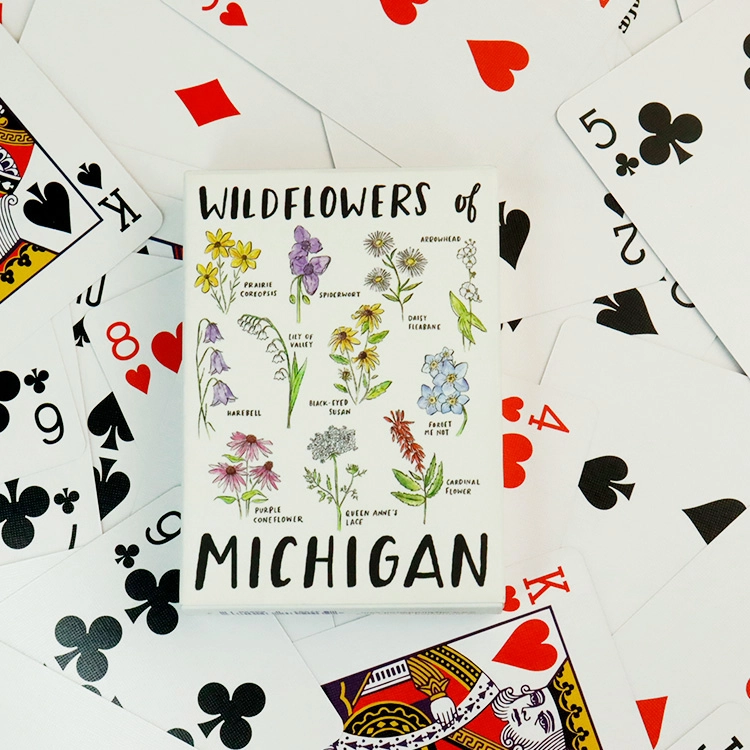
High Quality Eco-Friendly Durable Personalized Design Wildflowers Playing Cards with Custom Design Logo and Box
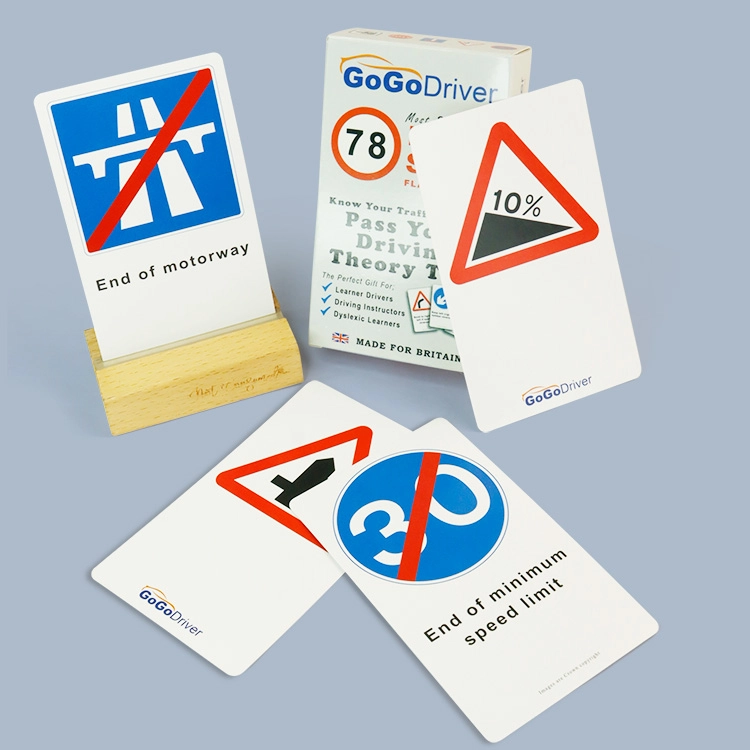
OEM Custom Driving Theory Cards | Personalized Traffic Rules & Test Prep Flashcards in Multiple Languages for Wholesale
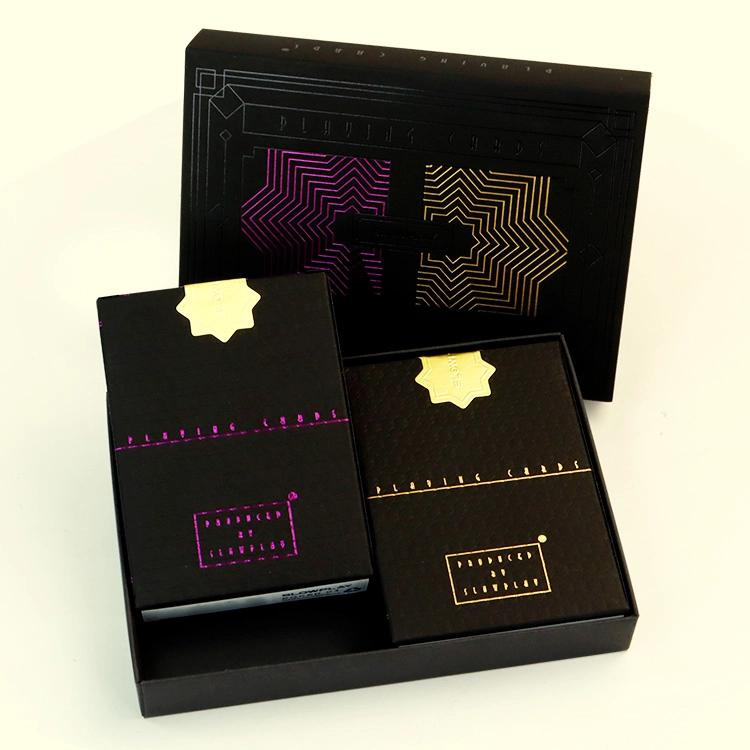
Custom Printing Luxury Two Sets Plastic Poker Playing Cards with Customized Packing