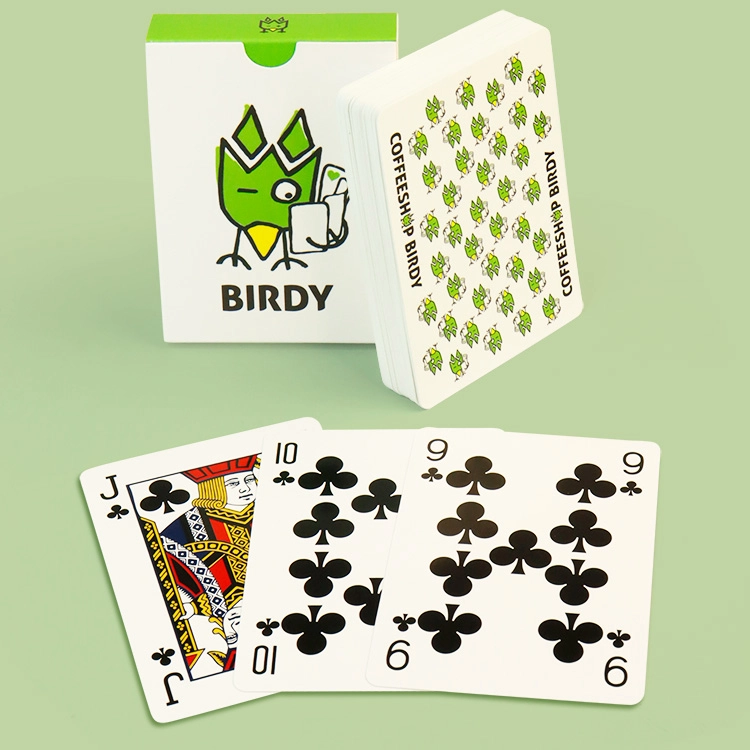
Legal Issues: Copyright and Custom Playing Cards
- Understanding Legal Boundaries for Customized Card Products
- Copyright Basics: What Protects a Playing Card Design?
- Which Card Elements Are Typically Copyrightable?
- Trademark, Trade Dress, and Logos on Custom Cards
- Design Patents and Industrial Designs
- Right of Publicity and Privacy
- Licensing, Commissioning Art, and Contracts — Best Practices
- Risk Management: Clearance Workflows Before Production
- Enforcement, DMCA, and Responding to Claims
- Comparison: How Different IP Protections Apply to Playing Cards
- Practical Scenarios & How to Proceed
- How a Responsible Manufacturer Supports Legal Compliance
- Checklist Before You Print: Legal Prep for Custom Card Runs
- FAQ — Common Legal Questions About Custom Playing Cards
- 1. Can I legally sell playing cards that feature a famous movie character?
- 2. Is it safe to use stock images and fonts in a custom deck?
- 3. Do I need to register copyright for my card art?
- 4. Can I reproduce public-domain playing card designs?
- 5. What should I require from an artist if I commission card illustrations?
- 6. If someone claims my deck infringes, what immediate steps should I take?
- 7. Can a manufacturer refuse to print my artwork?
- Contact & Next Steps
- References
Understanding Legal Boundaries for Customized Card Products
When you decide to customize playing cards—whether for a brand promotion, a game prototype, or a limited-edition art deck—you are stepping into a space where intellectual property (IP) and personal rights intersect with manufacturing and commercial distribution. This article walks through the key legal issues (copyright, trademark, design protection, and personality rights), practical compliance steps, and production considerations so you can launch custom card projects with lower legal risk and clearer approval workflows.
Copyright Basics: What Protects a Playing Card Design?
Copyright protects original works of authorship fixed in a tangible medium. For playing cards, copyright commonly covers original artwork on faces and backs, illustrated pips, bespoke type treatments, and unique rulebooks or box artwork. The moment an original image or text is created and recorded, it receives copyright protection under most jurisdictions (Berne Convention). However, copyright does not protect ideas, procedures, methods of operation, or purely functional elements.
When you customize playing cards, consider whether the artwork is original or derived. Creating derivative works (e.g., modifying an existing copyrighted illustration) requires permission from the original copyright owner unless a clear exception applies.
Which Card Elements Are Typically Copyrightable?
Not all parts of a card receive the same protection. Common protectable elements include:
- Original illustrations and character designs on card faces and backs.
- Decorative card backs and bespoke border artwork.
- Original box and packaging artwork, rulebooks, and manuals.
- Photographs or scanned artwork used in the design.
Elements often not protected (or weakly protected) include:
- Standard playing card pips and numeric layouts that are functional or in the public domain.
- Short titles or single words (unless strongly stylized or used as trademarks).
- Useful functional features (e.g., card size, mechanical aspects).
When you customize playing cards, document authorship, retain source files, and have written agreements with artists to clarify ownership or licensing terms.
Trademark, Trade Dress, and Logos on Custom Cards
Trademark law protects brand identifiers (names, logos, taglines) that distinguish goods or services. If you place another company's logo or a protected brand on cards, you generally need permission. Trade dress can protect the overall look and feel of a product (when non-functional and distinctive). For cards intended for sale, consider the following:
- Obtain written trademark licenses for logos and branded imagery.
- Avoid designs that are confusingly similar to established brands to limit claims of infringement or dilution.
- For casino-style decks or licensed IP (movies, sports teams), secure explicit rights for reproduction and distribution in the territories you plan to sell.
These precautions should be integrated when you customize playing cards for retail or promotional use.
Design Patents and Industrial Designs
In some jurisdictions, ornamental designs can be protected by design patents or registered industrial designs. This protection can prevent third parties from copying unique card back patterns or packaging. The scope and duration vary by country and typically require registration prior to enforcement. Manufacturers and brands often combine copyright and design registrations to strengthen protection.
Right of Publicity and Privacy
Using a real person's name, likeness, voice, or signature on cards can implicate personality rights (right of publicity). These rights vary by state/country but commonly require consent for commercial use. If you customize playing cards with celebrity images, customer photos, or employee likenesses, obtain signed model releases and clarify permitted uses.
Licensing, Commissioning Art, and Contracts — Best Practices
Contracts are your primary tool to prevent disputes. When commissioning or sourcing art for custom decks:
- Use written agreements specifying whether the creator assigns copyright, grants an exclusive or non-exclusive license, and the permitted scope (territory, duration, media).
- Include moral rights waivers where enforceable and clear payment and royalty terms.
- Require artists to warrant original authorship and indemnify against third-party IP claims.
Manufacturers and clients should also maintain a clear chain of title for all provided assets. If you ask a supplier to customize playing cards, obtain vendor warranties that materials are either owned or properly licensed.
Risk Management: Clearance Workflows Before Production
To reduce the chance of infringement claims prior to mass production:
- Run an IP clearance on logos, characters, and distinctive designs.
- Verify artist agreements and secure written licenses for third-party assets (fonts, stock images).
- Use public domain or Creative Commons (with compatible licenses) art when appropriate—always check license terms.
- Keep a documented approval trail (client approvals, proofs, dated contracts) before manufacturing.
These steps are essential when you plan to customize playing cards at scale or for resale.
Enforcement, DMCA, and Responding to Claims
If you face an infringement claim after producing cards, immediate steps include:
- Preserve all source files, contracts, and correspondence.
- Promptly consult IP counsel to assess the claim's validity.
- If online listings include infringing images, use DMCA takedown notices where applicable to marketplaces and hosting providers (U.S. framework shown by the Digital Millennium Copyright Act).
- Consider out-of-court settlements, redesigns, or licensing if infringement risks are substantial.
Proactive clearance is usually cheaper than litigation following disputes that arise when you customize playing cards without permissions.
Comparison: How Different IP Protections Apply to Playing Cards
| Protection | What It Covers | Typical Duration | Registration Required? | Common Use for Cards |
|---|---|---|---|---|
| Copyright | Original art, text, photos, creative layouts | Author's life + 70 yrs (varies) | No (but registration strengthens enforcement) | Card faces, backs, packaging, manuals |
| Trademark | Brand names, logos, distinctive marks | Indefinite if renewed | Not required but recommended | Brand identity on boxes/decks |
| Design Patent / Registered Design | Ornamental design of an object | 15–25 yrs (varies) | Yes | Unique back patterns or packaging shapes |
| Right of Publicity | Name, image, likeness | Varies by jurisdiction | No (consent recommended) | Portraits or celebrity images on cards |
Sources: U.S. Copyright Office, USPTO, WIPO (see references).
Practical Scenarios & How to Proceed
Scenario A — Branded Promo Deck: If a business wants a promo deck with its logo and a third-party illustrator's art, the business should secure a trademark license for the logo (if needed), an assignment or license from the illustrator for commercial reproduction, and a written manufacturing agreement with the card producer. This workflow applies when you customize playing cards for marketing campaigns.
Scenario B — Fan Art Deck for Sale: Fan art based on a copyrighted movie or character typically requires a license from the rights holder. Selling unlicensed fan art carries high risk of takedown or litigation.
Scenario C — Educational Flash Cards: For educational use, you can often create original content or use properly licensed public-domain materials. Still, ensure third-party images are cleared before mass printing.
How a Responsible Manufacturer Supports Legal Compliance
Manufacturers that produce custom decks can add legal value by offering documented production processes, material certifications, and IP-compliant workflows. Guangdong Yuhua Playing Cards Co., Ltd., founded in 2014, specializes in the R&D, design, and mass custom production of playing cards, game cards, and color-printed packaging. With a 6,000㎡ intelligent facility, we offer advanced, automated card production lines capable of 1,000,000+ units per month. Our core strengths include FSC® certified materials, ISO 9001 quality control, a defect rate under 0.5%, and over 20 patents. Our High Quality brand uses imported materials and is trusted worldwide. We serve global markets with custom card solutions for casinos, games, education, and more—delivering fast, high-quality results with professional support.
When you need to customize playing cards, Yuhua can help by verifying material provenance (FSC), documenting production batches, maintaining NDAs with design teams, and advising on licensing needs as part of the OEM/ODM process. We are committed to providing customers with high-quality and efficient playing card production services.和主题简要总结 Yuhua优势和主营产品 OEM Playing Card,ODM Tarot cards,custom Game cards,Learning Flash cards OEM 优势。
Yuhua's competitive advantages include end-to-end production control, automated high-volume capacity, strict QC standards, and experienced project managers who streamline proofs and pre-production approvals—reducing the chance of a compliance lapse when you produce licensed or branded decks.
Checklist Before You Print: Legal Prep for Custom Card Runs
- Confirm ownership or license for each image and font used.
- Obtain signed releases for any person depicted.
- Retain written trademark permissions for logos and brand marks.
- Document the chain of title for commissioned works (assignment or perpetual license).
- Keep copies of all approvals and final proofs with timestamps.
- Discuss trade dress or design registration if you expect to protect a unique product appearance.
Following this checklist helps manufacturers and clients who choose to customize playing cards avoid costly reprints or takedown actions.
FAQ — Common Legal Questions About Custom Playing Cards
1. Can I legally sell playing cards that feature a famous movie character?
No, not without a license. Characters from movies, TV shows, and comics are copyrighted and often trademarked. Selling unauthorized decks risks infringement claims and takedowns.
2. Is it safe to use stock images and fonts in a custom deck?
Yes, if the stock license allows commercial reproduction on physical goods. Check license terms: some stock assets allow editorial but not commercial use. Keep licenses on file.
3. Do I need to register copyright for my card art?
Registration is not required to have copyright, but in many jurisdictions (like the U.S.), registration before infringement or within a set time enhances remedies (statutory damages, attorneys' fees).
4. Can I reproduce public-domain playing card designs?
Yes, public-domain works can be used freely. Verify public-domain status carefully (e.g., old card designs versus modern stylizations) before mass production.
5. What should I require from an artist if I commission card illustrations?
Use a written contract specifying assignment or exclusive license, scope (territories, duration), deliverables, warranties of originality, indemnification, and payment terms. Clarify rights to modify and reproduce at scale.
6. If someone claims my deck infringes, what immediate steps should I take?
Preserve all materials, halt further distribution, consult IP counsel, and evaluate defenses (licenses, fair use, independent creation). Consider redesign or settlement based on counsel advice.
7. Can a manufacturer refuse to print my artwork?
Yes. Reputable manufacturers often have IP compliance policies and may require documentation or decline projects involving unlicensed third-party IP to avoid legal exposure.
Contact & Next Steps
If you plan to customize playing cards and need production with compliance support, contact Guangdong Yuhua Playing Cards Co., Ltd. for consultations, proofs, and a compliance checklist. We provide OEM and ODM options for Playing Card decks, Tarot cards, custom Game cards, and Learning Flash cards, backed by FSC materials, ISO 9001 controls, and large-scale automated capacity. For quotes, samples, or legal-forward production planning, reach out through our sales channels to get a tailored workflow that minimizes IP risk and accelerates time-to-market.
References
- U.S. Copyright Office — Copyright Basics. https://www.copyright.gov/help/faq/ (accessed 2025-12-20)
- United States Patent and Trademark Office (USPTO) — Trademark Basics. https://www.uspto.gov/trademarks/basics (accessed 2025-12-20)
- World Intellectual Property Organization (WIPO) — Understanding Copyright and Related Rights. https://www.wipo.int/copyright/en/ (accessed 2025-12-20)
- Berne Convention for the Protection of Literary and Artistic Works — Summary. https://www.wipo.int/treaties/en/ip/berne/ (accessed 2025-12-20)
- U.S. Digital Millennium Copyright Act (DMCA) overview — U.S. Copyright Office. https://www.copyright.gov/legislation/dmca.pdf (accessed 2025-12-20)
- Creative Commons — About The Licenses. https://creativecommons.org/licenses/ (accessed 2025-12-20)
Artist Brief Template for Hiring an Illustrator for Custom Tarot Cards
Why choose Yuhua as your kids learning cards supplier
Custom Learning Cards for Early Childhood Development
Top private label playing cards Manufacturers and Suppliers
About customized services
What is the minimum order quantity for Private Label projects?
Our minimum order quantity usually starts at 500 pairs. However, we can handle smaller orders depending on the specific project requirements.
Do you provide design services?
Yes! Our in-house design team is here to assist you in bringing your vision to life. Whether you have a complete design or just an idea, we can help.
Do you offer samples?
Yes! We can provide samples of our card materials and finishes. Please contact us to request samples relevant to your project.
What is the minimum order quantity?
We do not have a strict minimum order quantity. Since we are a custom offset printing company, we recommend a minimum order of 500 sets, as the material costs are the same, but the printing setup costs are higher.
However, if your order quantity is less than 300 sets, our sales team will usually work with customers to help customers find the most competitive options.
About price and payment
What payment methods do you accept?
We accept various payment methods, including credit cards, PayPal, and bank transfers. Please reach out for more details on payment options.
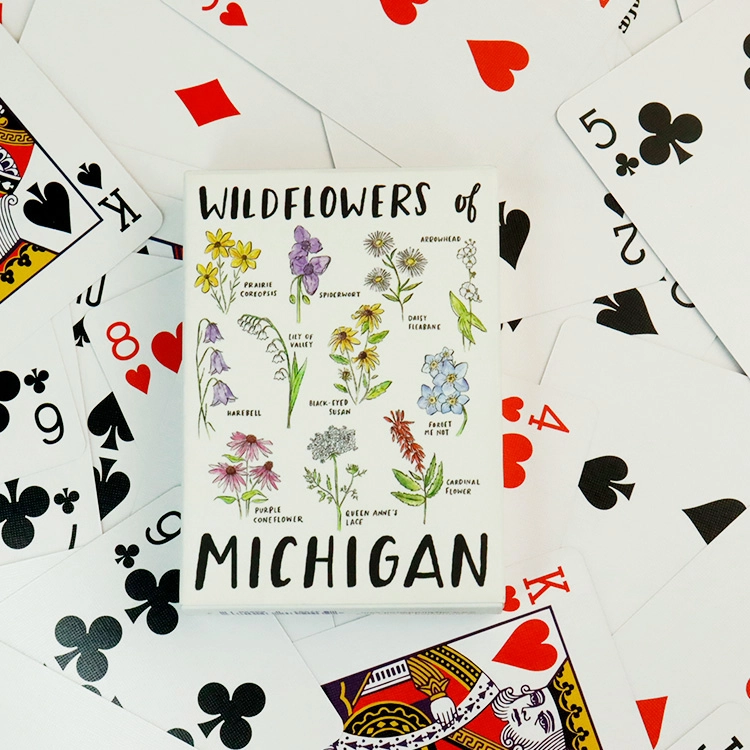
High Quality Eco-Friendly Durable Personalized Design Wildflowers Playing Cards with Custom Design Logo and Box
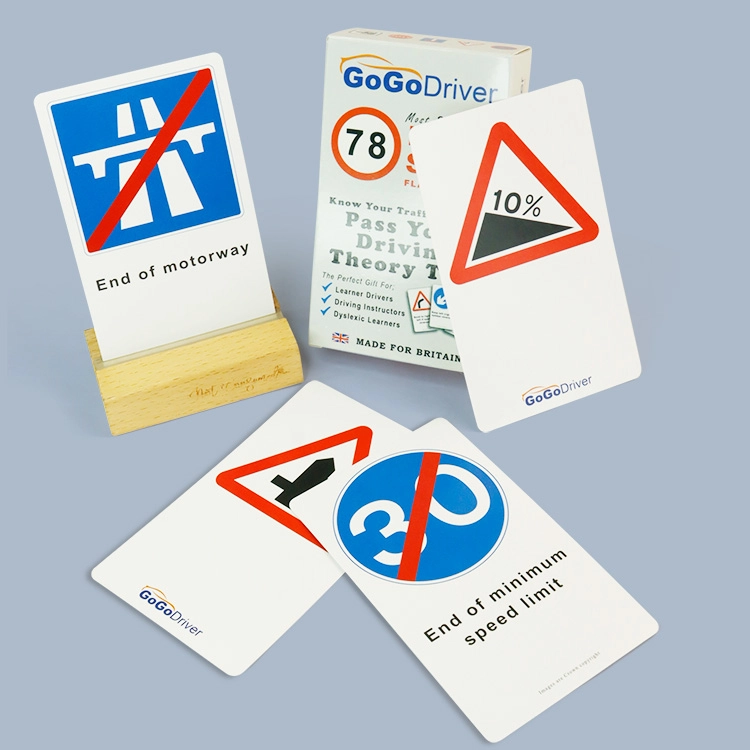
OEM Custom Driving Theory Cards | Personalized Traffic Rules & Test Prep Flashcards in Multiple Languages for Wholesale
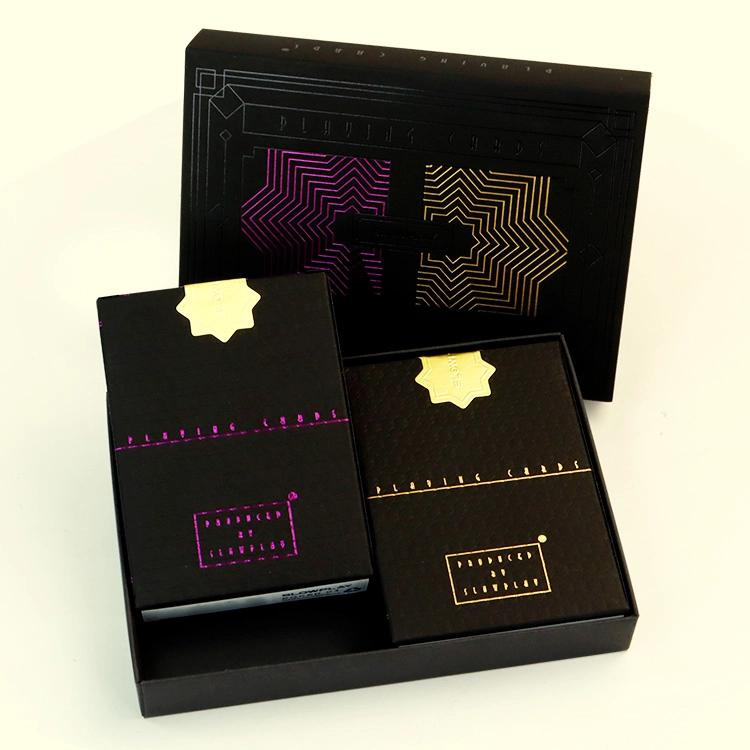
Custom Printing Luxury Two Sets Plastic Poker Playing Cards with Customized Packing