Custom Playing Cards Manufacturing: The Ultimate B2B Guide (2026)
Successfully bringing your custom playing cards to market requires more than just great artwork; it demands a deep understanding of manufacturing specifications. Whether you choose the heritage quality of European printers or the cost-efficiency of Asian partners, prioritizing paper quality (like German Black Core) and requesting physical samples is non-negotiable. By aligning your project scope—be it a Kickstarter prototype or a casino-grade bulk order—with the right manufacturing capabilities, you ensure a final product that handles as beautifully as it looks.
- 1. Beyond DIY: Professional Custom Playing Cards Manufacturing
- The Difference Between 'Photo Gifts' (POD) and Professional Game Manufacturing
- Identifying Your Needs: Prototyping vs. Mass Production
- Overview of the 2026 Market Landscape
- 2. Technical Specifications: Paper Stock & Cores
- Understanding GSM Weights (300gsm vs. 310gsm vs. 330gsm)
- The Core Differences
- Plastic (PVC) vs. Paper Cards
- 3. Printing Techniques & Surface Finishes
- Digital Printing vs. Offset Printing
- Texture Options
- Special Effects
- 4. Packaging & Box Types
- Standard Tuck Boxes vs. Rigid Two-Piece Boxes
- Brick Boxes for Bulk Shipping
- Custom Seals and Cellophane
- 5. Pre-Production: File Preparation & Prototyping
- CMYK vs. RGB
- Bleed Lines and Safe Zones
- The Importance of Hard-Proof Samples
- 6. Choosing the Right Manufacturer: Europe vs. Asia
- European Quality (Cartamundi, Piatnik)
- Cost-Effective Asian Solutions
- Navigating MOQ (Minimum Order Quantity)
- Conclusion
- FAQ
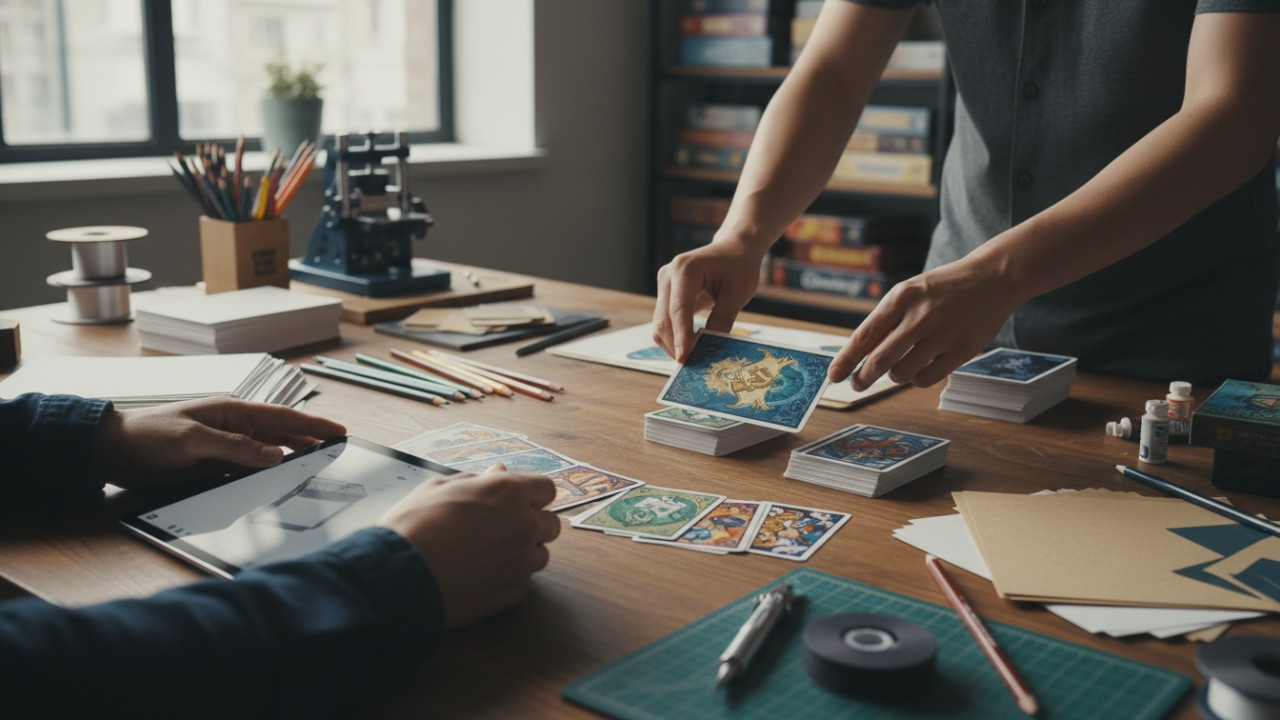
In the rapidly evolving landscape of tabletop gaming, the difference between a forgotten Kickstarter project and a retail bestseller often lies in the tactile quality of the components. As we navigate the market in 2026, the standards for custom card game printing have reached new heights. Players no longer accept flimsy cardstock or inconsistent cutting; they demand the "snap," durability, and finish of a casino-grade deck.
For game designers, independent publishers, and businesses looking to produce branded decks, understanding the intricacies of manufacturing is no longer optional—it is a prerequisite for success. This guide provides a comprehensive B2B analysis of the manufacturing process, helping you navigate the complex decisions between paper stocks, printing methods, and global production partners.
1. Beyond DIY: Professional Custom Playing Cards Manufacturing
The barrier to entry for game design has lowered, but the barrier to quality remains high. A common misconception among first-time creators is equating "Print on Demand" (POD) photo services with professional game manufacturing.
The Difference Between 'Photo Gifts' (POD) and Professional Game Manufacturing
POD services are excellent for one-off gifts, but they rely on digital toner presses and pre-cut standard papers. The result is often a card that feels "dead"—it lacks the air pockets required for smooth shuffling and the opaque core needed to prevent transparency.
A professional bulk playing cards manufacturer operates differently. They utilize industrial offset presses, apply specialized varnishes that cure under UV light, and use "crash cutting" or rotary die-cutting to ensure uniform edges. The collectors and historians at the International Playing-Card Society often note that the structural integrity of a deck is just as vital as its graphical history; modern manufacturing must honor this legacy through precision engineering.
Identifying Your Needs: Prototyping vs. Mass Production
Your manufacturing strategy depends entirely on your project stage.
· Prototyping: At this stage, you need speed and low volume. You are testing mechanics, not materials. Prototype card decks are typically produced digitally. While they may not have the perfect "casino finish," they allow for rapid iteration.
· Mass Production: Once you move to funding (Kickstarter, Indiegogo) or retail distribution, you shift to offset printing. This is where economies of scale kick in, allowing for advanced finishes like linen textures and metallic foils that are cost-prohibitive in small runs.
Overview of the 2026 Market Landscape
By 2026, the market has seen a shift toward "Premium Economy." Gamers expect high-end features—such as interior box printing and embossing—even on standard indie games. Consequently, manufacturers have automated more of the assembly process, making premium features more accessible to mid-sized orders (500–1000 decks).
2. Technical Specifications: Paper Stock & Cores
The soul of a playing card is its paper. Unlike standard brochure printing, playing card paper stock is a sandwich of two sheets of paper bonded together with an opaque core adhesive.
Understanding GSM Weights (300gsm vs. 310gsm vs. 330gsm)
GSM (Grams per Square Meter) measures the density of the paper, not necessarily its thickness.
· 300gsm: The entry-level standard. Good for promo decks or children's games.
· 310gsm: The sweet spot for most indie card games. It offers a balance of flexibility and stiffness.
· 330gsm: Heavyweight stock used for premium poker decks and luxury editions. It feels substantial in the hand but requires a "break-in" period to shuffle smoothly.
The Core Differences
The "Core" is the glue layer that prevents light from shining through the card (which would allow opponents to see your hand).
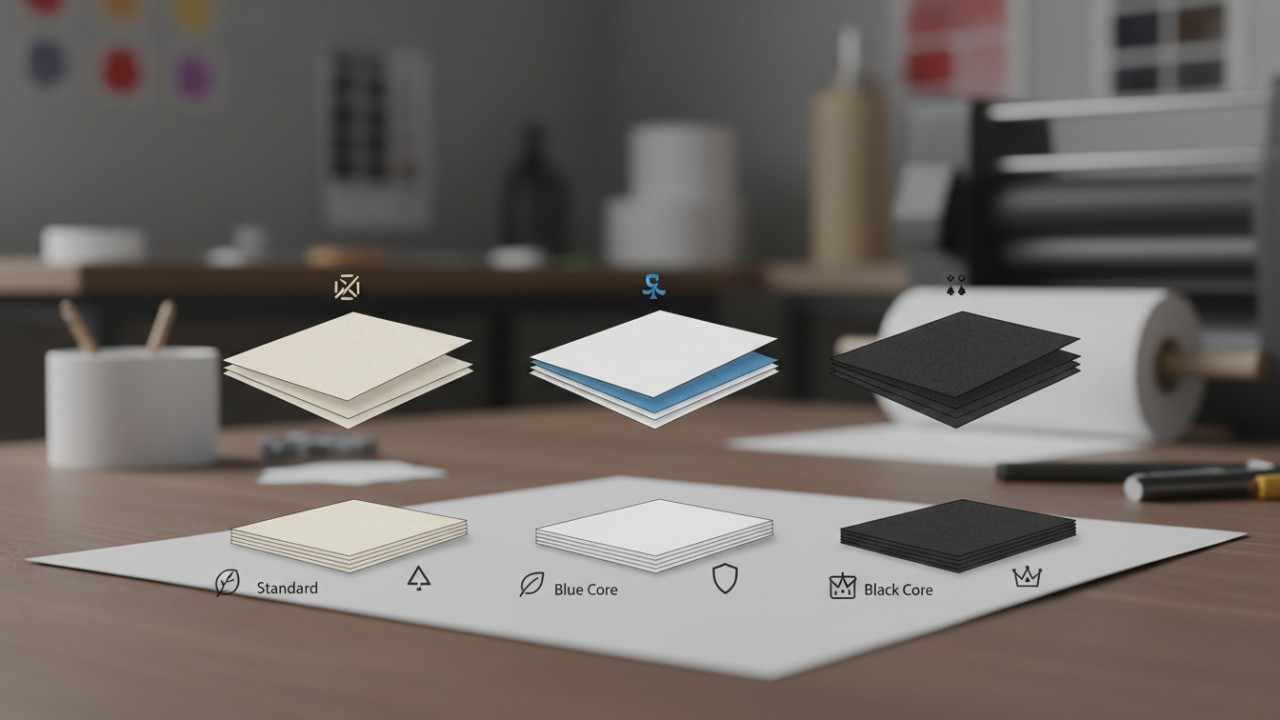
· Grey Core (Standard): Used in most budget-friendly custom card game printing. It is opaque enough for general play but may show some transparency under intense studio lighting.
· Blue Core (Professional): The industry standard for board games. It offers excellent snap and recovery (the card returns to flat after bending).
· German Black Core (Casino Grade): The gold standard. Imported primarily from Germany (e.g., Koehler paper), this stock is completely opaque, waterproof at the core level, and provides the most satisfying tactile experience.
Plastic (PVC) vs. Paper Cards
While paper dominates the hobby market, 100% plastic (PVC) cards have their place, particularly in poker rooms where durability against liquid spills is paramount. However, PVC cards tend to be slippery and lack the "texture" that magicians and cardists prefer. When designing, ensure your artwork files adhere to standard playing card dimensions, regardless of whether you choose PVC or paper, to ensure compatibility with standard sleeves and shufflers.
Furthermore, in 2026, sustainability is a key B2B consideration. Many publishers now insist on sourcing FSC-certified paper to ensure that the wood pulp used in their decks comes from responsibly managed forests.
3. Printing Techniques & Surface Finishes
Choosing between printing methods is usually a function of budget and quantity.
Digital Printing vs. Offset Printing
This is the most critical decision regarding cost per unit.
· Digital Printing: Best for <500 decks. It uses toner or liquid ink.
o Pros: Fast turnaround, low setup fees.
o Cons: No volume discounts, slightly less color accuracy, limited paper options.
· Offset Printing: Best for 1000+ decks. This involves burning physical aluminum plates for each color (CMYK).
o Pros: Offset vs digital card printing comparisons always favor offset for quality. It provides crisp text, true Pantone color matching, and significantly lower unit costs at scale.
o Cons: High setup costs make it impractical for small runs.
Texture Options
The finish determines how the cards glide across a table.
· Smooth/Gloss: Colors pop, but cards tend to stick together due to suction/static.
· Linen (Air Cushion): The paper is embossed with a cross-hatch pattern. This creates pockets of air between cards, allowing for smooth fanning and shuffling. This is the preferred finish for professional use.
· Butter/Velvet Finish: A newer soft-touch coating that feels luxurious but can sometimes dampen the "slide" of the cards.
Special Effects
To stand out on a shelf in 2026, designers are using:
· Cold Foil: Metallic foil applied during printing (under the ink) for a shimmering, integrated look.
· Spot UV: High-gloss varnish applied to specific areas (like a logo) to create contrast against a matte background.
· Metallic Inks: Less reflective than foil but cheaper and subtler.
4. Packaging & Box Types
The tuck box (packaging) is the first thing a customer touches.
Standard Tuck Boxes vs. Rigid Two-Piece Boxes
· Standard Tuck Box: Made from 300-350gsm cardstock. It’s cost-effective and standard for poker decks.
· Rigid Two-Piece Box: A "lift-off" lid box made from thick chipboard wrapped in art paper. This suggests a premium product and is common for oracle decks or comprehensive card games with instruction booklets.
Brick Boxes for Bulk Shipping
If you are a bulk playing cards manufacturer or a retailer, you must consider the "Brick." This is a carton usually containing 12 decks (6x2). Designing a custom brick box adds shelf appeal for retailers who display the entire carton.
Custom Seals and Cellophane
· Custom Seals: A sticker sealing the tuck box. It can be a numbered edition seal (1 of 1000) to drive collectibility.
· Cellophane: Essential for retail. It protects the box from shelf wear and humidity. In 2026, biodegradable bioplastics are becoming the standard replacement for traditional cello-wrap.
5. Pre-Production: File Preparation & Prototyping
The most common cause of production delays is improper file preparation.
CMYK vs. RGB
Screens display in RGB (Red, Green, Blue) light. Printers use CMYK (Cyan, Magenta, Yellow, Key/Black) ink. You must design in or convert to CMYK. Bright neon greens and electric blues in RGB often turn muddy in CMYK unless you pay for extra Pantone Neon inks.
Bleed Lines and Safe Zones
Because paper shifts slightly during cutting (up to 2mm drift is industry standard):
· Bleed: Artwork must extend 3mm beyond the cut line.
· Safe Zone: Text and critical icons must be at least 3mm inside the cut line.
· Borders: B2B tip—avoid thin white borders on card backs. A 1mm cutting shift makes a thin border look visibly off-center. Borderless or wide-bordered designs are safer.
The Importance of Hard-Proof Samples
Always order prototype card decks before authorizing the full offset run. A "Hard Proof" is a physical sample.
· Digital Hard Proof: Checks layout and paper feel (printed digitally).
· Wet Proof: Checks exact color accuracy on the actual offset press (very expensive, usually only for massive orders).
· Uncut Sheet: Requesting an uncut sheet allows you to spot alignment errors across the entire form.
6. Choosing the Right Manufacturer: Europe vs. Asia
The geography of manufacturing involves a trade-off between cost, speed, and heritage.
European Quality (Cartamundi, Piatnik)
Europe holds the heritage of playing card manufacturing. Companies like Cartamundi (Belgium) are legendary.
· Pros: Unmatched quality control, superior eco-standards, faster shipping to US/EU markets compared to sea freight from Asia.
· Cons: Higher manufacturing costs.
Cost-Effective Asian Solutions
China remains the hub for custom card game printing due to infrastructure.
· Pros: Low labor costs allow for complex hand-assembly (e.g., rigid boxes with magnetic closures) at a fraction of the price.
· Cons: Shipping times (4-6 weeks by sea) and potential communication barriers.
· Quality: Top-tier Chinese printers (WJPC, QP, etc.) now rival European quality regarding paper stock (importing German Black Core) and finish.
Navigating MOQ (Minimum Order Quantity)
· Digital: MOQ is often 1 deck.
· Asian Offset: MOQ usually starts at 500 decks.
· European Offset: MOQ often starts at 1,000 or 2,500 decks.
Conclusion
Successfully bringing your custom playing cards to market requires more than just great artwork; it demands a deep understanding of manufacturing specifications. Whether you choose the heritage quality of European printers or the cost-efficiency of Asian partners, prioritizing paper quality (like German Black Core) and requesting physical samples is non-negotiable. By aligning your project scope—be it a Kickstarter prototype or a casino-grade bulk order—with the right manufacturing capabilities, you ensure a final product that handles as beautifully as it looks.
FAQ
What is the best paper stock for professional playing cards?
For a professional 'casino' feel, 310gsm or 330gsm German Black Core paper is the industry standard. It prevents light from shining through the card and provides superior snap and recovery compared to standard blue or grey core papers.
What is the difference between digital and offset printing for cards?
Digital printing is ideal for small runs (1-500 decks) and prototypes, offering faster turnaround but slightly higher per-unit cost. Offset printing is used for mass production (500+ decks), offering the highest color fidelity and significantly lower unit costs at scale.
How long does it take to manufacture custom playing cards?
Production times vary by method. Digital samples often take 3-7 days. Mass production via offset printing typically takes 3-5 weeks, plus additional time for ocean or air freight shipping.
Do I need to pay import duties when ordering from China to Europe?
Yes, if you are importing commercial goods into Europe from outside the EU, VAT and customs duties usually apply. However, some manufacturers offer DDP (Delivered Duty Paid) shipping options where these costs are handled upfront.
Wholesale flash cards custom manufacturer and supplier
Where to Buy custom playing card maker printing
OEM/ODM custom playing cards manufacturer Manufacturers and Suppliers
Best professional black tarot cards for sale manufacturers and supplier brands in US
About price and payment
What are the payment terms?
We require a 30% deposit upon order confirmation and the balance before shipment.
How can I get a quote?
Getting a quote is easy! Simply fill out our contact form or call us directly with your project details, and we’ll get back to you with a tailored quote promptly.
About product selection
What types of playing cards do you offer?
We offer a wide range of playing cards including standard decks, custom-designed decks, and specialty cards. Whether you need classic poker cards, bridge cards, or custom promotional decks, we have the options to fit your needs.
About customized services
Do you provide design services?
Yes! Our in-house design team is here to assist you in bringing your vision to life. Whether you have a complete design or just an idea, we can help.
About logistics
How long does the production process take?
Production times can vary based on order complexity and volume. Typically, standard orders take 2-4 weeks. For urgent projects, we may offer expedited options—just ask!
High Quality Eco-Friendly Durable Personalized Design Wildflowers Playing Cards with Custom Design Logo and Box
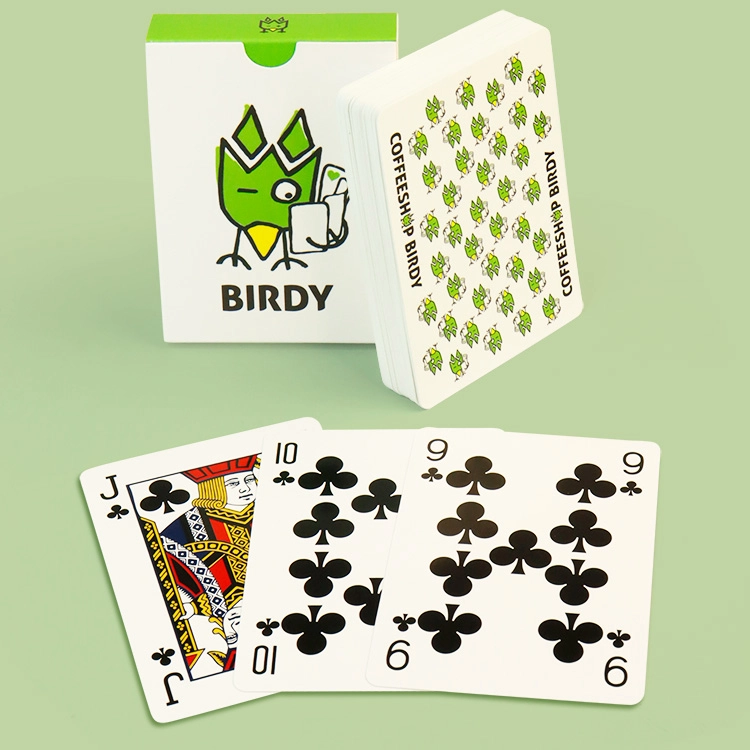
Custom Bird-Themed Playing Cards & Packaging for Promotional Gifts | Artistic Bird Collection Poker Deck for Wholesale
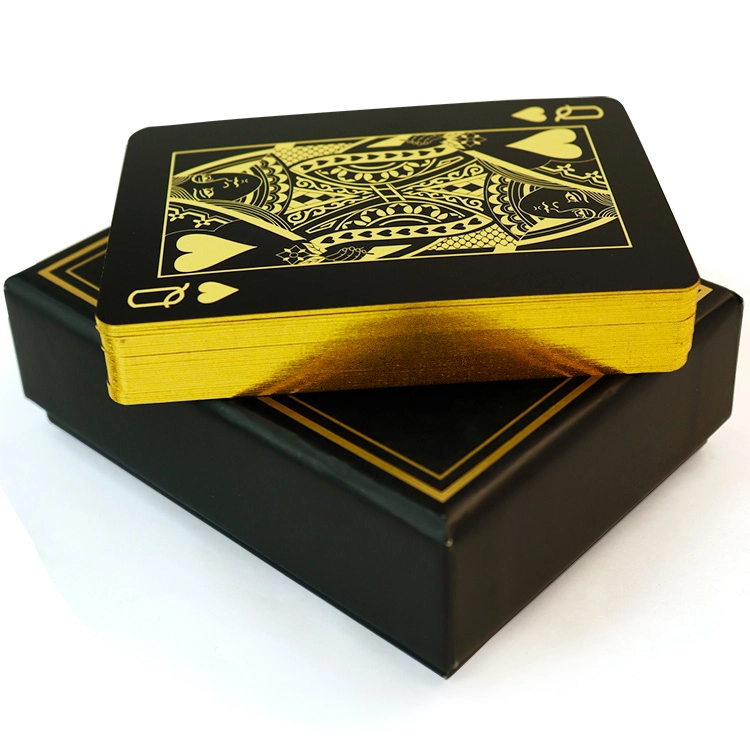
Professional Custom Branded Poker Cards | Advertising & Promotional Playing Cards with Custom Box