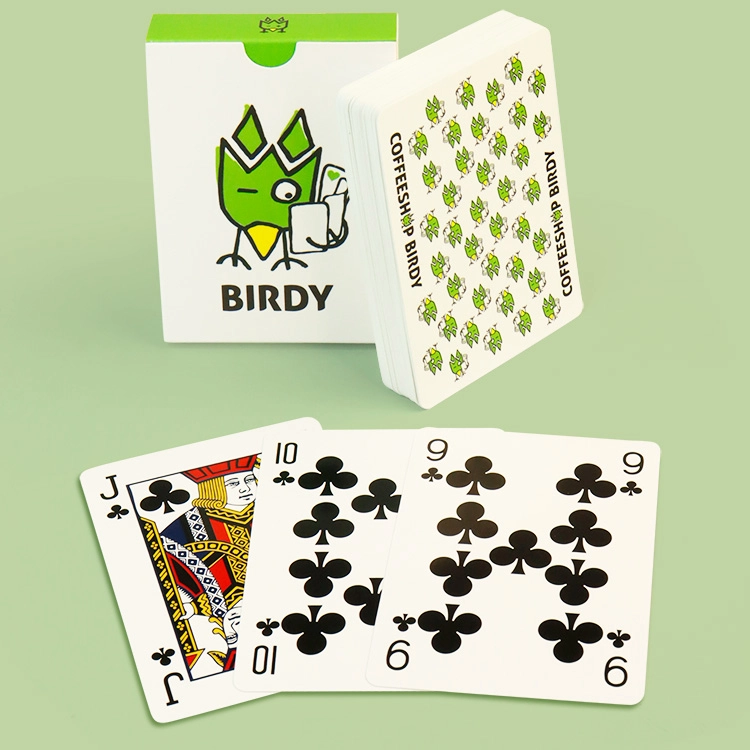
Custom Tuck Boxes and Packaging Options
- Why packaging matters for modern card brands
- Packaging Types When You Customize Playing Cards
- Materials and sustainable choices for brands that customize playing cards
- Surface finishes and print techniques for High Quality appeal
- Structural Design, Dielines and Safety When You Customize Playing Cards
- Print Processes and Color Management for Custom Playing Cards
- Quality control and defect rates
- Protective Packaging, Shipping, and Shelf-Ready Options
- Cost Drivers and Lead Times When You Customize Playing Cards
- Cost and Production Capability Comparison
- When to Choose Generic vs. Fully Custom Packaging
- Supplier Selection: What to Ask When You Customize Playing Cards
- Guangdong Yuhua Playing Cards Co., Ltd. — a manufacturing profile
- Yuhua's advantages and main products
- Practical checklist before approving a custom tuck box order
- FAQ — Custom Tuck Boxes and Packaging Options
- Contact and next steps
- References
Why packaging matters for modern card brands
Packaging is the first physical brand touchpoint your customer experiences when they buy a deck. For businesses that customize playing cards, tuck boxes and alternative packaging are not merely containers—they protect the product, communicate value, and influence perceived price and collectibility. This article explains the full range of packaging options and practical decisions you must make when you customize playing cards for retail, promotional, or High Quality markets.
Packaging Types When You Customize Playing Cards
Choosing a packaging type depends on product positioning, budget, and production constraints. Below is a concise comparison of common options used when you customize playing cards and the typical use-cases for each.
| Packaging Type | Typical Materials | Best for | Perceived Value | Cost Tier |
|---|---|---|---|---|
| Tuck Box (single-piece) | Coated SBS card, kraft, recycled board | Mass retail decks, giveaways, standard custom decks | Medium | Low–Medium |
| Two-piece rigid box (telescopic) | Rigid chipboard wrapped in printed paper | High Quality collector decks, gift sets | High | High |
| Magnetic flip box | Rigid board + magnetic closure | Limited editions, luxury projects | Very High | Very High |
| Rigid tin / metal case | Stamped/printed metal | Durability-focused, promotional, novelty decks | High | Medium–High |
| Eco sleeve / compostable pouch | PLA, kraft paper sleeve | Eco-conscious brands, low-weight shipping | Medium | Low–Medium |
Each option can be further customized with print, coatings, die-cuts, and inserts—decisions that materially affect production complexity and cost.
Materials and sustainable choices for brands that customize playing cards
Material selection is a balance between feel, print performance, protection, and environmental goals. Common board choices include coated and uncoated SBS (solid bleached sulfate), FBB (folding boxboard), and recycled kraft. For brands emphasizing sustainability, using FSC® certified boards and water-based or vegetable inks is a standard approach. When you customize playing cards with sustainability in mind, request chain-of-custody certification and verify coating and glue choices to ensure recyclability.
Surface finishes and print techniques for High Quality appeal
Finishes are high-impact, relative to their cost. Popular finishes include:
- Matte / silk aqueous coating — smooth, modern look and good scuff resistance.
- Gloss UV — high shine, rich color saturation, but may show fingerprints.
- Soft-touch lamination — luxurious tactile feel, high perceived value.
- Spot UV & foil stamping — create focal highlights, metallic accents, and prestige.
- Embossing / debossing — tactile depth and High Quality branding cues.
When you customize playing cards, coordinate your finish selection with print limitations (registration, ink coverage) and folding/creasing specs to prevent cracking on folds.
Structural Design, Dielines and Safety When You Customize Playing Cards
Structural design affects protection, shelf presence, and manufacturability. For tuck boxes, a correct dieline ensures clean folds and consistent gluing. Key structural considerations:
- Insert supports: inner cardboard trays or foam cutouts for two-piece boxes.
- Tab and tuck strength: reinforced tabs or lock slots reduce accidental openings.
- Edge finishing: rounded corners increase perceived quality and reduce wear.
- Punched windows: showcase card back design but reduce structural rigidity.
Provide dielines in vector formats (AI, PDF with crop marks) and include bleed (usually 3–5mm) plus safe zones. When working with manufacturers, ask for a pre-production kraft mock-up (folded, unprinted) to validate fit and function.
Print Processes and Color Management for Custom Playing Cards
To ensure consistent color across cards and packaging, use CMYK profiles and specify Pantone spot colors when precise metallics or brand colors are required. Key tips when you customize playing cards:
- Request press proofs and, for critical color matches, a press-check or color-certified proof (Fogra/PSO).
- High ink coverage can cause cold-set problems on thin boards—choose appropriate stocks or coatings.
- For foil and metallic effects, consider cold foil or hot foil stamping based on budget and run size.
Quality control and defect rates
Quality standards for custom playing cards should specify acceptable defect rates, inspection points, and packaging protection levels. A reliable manufacturer will document in-line checks, final carton inspections, and corrective action processes. Industry-good benchmarks for consumer printed materials range from sub-1% for visible defects; high-volume intelligent lines can push that lower.
Protective Packaging, Shipping, and Shelf-Ready Options
Protection and presentation are both crucial. If you customize playing cards for e-commerce, additional transit-ready packaging (corrugated shippers, bubble-lined mailers) is often required. For physical retail, shelf-ready packaging (SRP) or hanging holes may be necessary. Consider the following logistics elements:
- Inner protection: shrink-wrap or cello for moisture control and tamper evidence.
- Outer cartons: right-sized corrugate prevents movement and reduces freight damage.
- Palletization: consistent box counts and barcodes for efficient warehouse receipt.
Cost Drivers and Lead Times When You Customize Playing Cards
Understanding the primary cost drivers will help you plan a realistic budget. Major factors include:
- Run size and minimum order quantities—lower unit cost at higher volumes.
- Material choices and specialty finishes (foil, soft-touch, magnetic closures).
- Die complexity and assembly labor—hand-assembled elements raise costs.
- Preproduction proofing, tooling, and die costs—one-time investments for unique shapes.
- Shipping method and international duties.
Typical lead times vary by complexity and capacity: simple tuck boxes with standard printing can be produced in 2–4 weeks after artwork approval; High Quality boxes with rigid structures, foils, and inserts commonly require 4–8+ weeks. Always allow time for tooling and color proofs when you customize playing cards, and build buffer time for peak season slowdowns.
Cost and Production Capability Comparison
The table below gives relative lead times and MOQ guidance; actual numbers depend on the supplier and current capacity.
| Packaging Type | Typical MOQ | Estimated Lead Time | Typical Defect Tolerance |
|---|---|---|---|
| Tuck Box (standard) | 5,000–10,000 units | 2–4 weeks | <1% visible |
| Two-piece rigid box | 1,000–5,000 units | 4–8 weeks | <0.5% visible |
| Magnetic flip box | 1,000+ units | 6–10 weeks | <0.5% visible |
| Metal tin | 2,000+ units | 4–8 weeks | <1% visible |
These ranges are illustrative. When you customize playing cards, request an itemized quote to understand tooling, print, assembly, and inspection costs separately.
When to Choose Generic vs. Fully Custom Packaging
Deciding whether to use stock tuck boxes or invest in fully custom packaging depends on your market goals. Use case guidance:
- Stock or semi-custom tuck boxes: ideal for proof-of-concept, preorders, and promo decks.
- Fully custom structural + finish: recommended for limited editions, High Quality retail, or branding-focused campaigns.
- Hybrid approach: combine a standardized inner tuck with a custom outer sleeve to lower costs while maintaining High Quality presentation.
Supplier Selection: What to Ask When You Customize Playing Cards
Choose a partner with relevant experience, robust quality controls, and transparent communication. Key questions:
- What are your MOQs and normal lead times for my desired packaging type?
- Do you provide dieline templates, prepress support, and proofs?
- What certifications do you have (FSC, ISO 9001) and what is your defect rate?
- Can you provide references or samples of similar finished products?
- What are your inland and international shipping capabilities?
Guangdong Yuhua Playing Cards Co., Ltd. — a manufacturing profile
Guangdong Yuhua Playing Cards Co., Ltd., founded in 2014, specializes in the R&D, design, and mass custom production of playing cards, game cards, and color-printed packaging. With a 6,000㎡ intelligent facility, we offer advanced, automated card production lines capable of 1,000,000+ units per month. Our core strengths include FSC® certified materials, ISO 9001 quality control, a defect rate under 0.5%, and over 20 patents. Our High Quality brand uses imported materials and is trusted worldwide. We serve global markets with custom card solutions for casinos, games, education, and more—delivering fast, high-quality results with professional support.
We are committed to providing customers with high-quality and efficient playing card production services.
Yuhua's advantages and main products
Yuhua combines automated capacity with certifications and product range to serve diverse markets. Key offerings and differentiators include:
- Product range: OEM Playing Card, ODM Tarot cards, custom Game cards, Learning Flash cards.
- OEM advantages: high-volume automated lines reduce per-unit cost; experienced prepress and tooling teams lower risk; and quick turnaround for repeat orders.
- Technical strength: more than 20 patents and a sub-0.5% defect rate demonstrate process maturity.
- Certifications: Use of FSC® materials and ISO 9001 quality management support sustainability and traceability claims.
- Global service: experience delivering to diverse markets—casino-grade, retail, and educational card products.
If you are evaluating suppliers for large runs or need reliable ODM/OEM support when you customize playing cards, Yuhua’s combination of scale, certifications, and end-to-end services makes them a practical choice.
Practical checklist before approving a custom tuck box order
Before you sign off on full production, verify the following:
- Approved dieline with bleed and safety zones.
- Press proof (digital) and one physical color proof if color matching is critical.
- Material specs and certifications (e.g., FSC certificate numbers).
- Sample assembly/mock-up to confirm structural integrity and fit with cards.
- Agreed defect tolerance, inspection plan, and remedy clauses in the contract.
- Logistics plan (pack counts, palletization, incoterms, lead times).
FAQ — Custom Tuck Boxes and Packaging Options
Q1: What is the minimum order quantity (MOQ) for custom tuck boxes?
A: MOQs vary by supplier and finish. Typical MOQs for printed tuck boxes are 5,000–10,000 units, while rigid or magnetic boxes often have lower MOQs but higher per-unit costs. Contact your manufacturer for exact thresholds.
Q2: How long does production take when I customize playing cards?
A: Simple tuck-box runs can be produced in 2–4 weeks after artwork approval. High Quality boxed sets, special finishes, or tooling can extend lead times to 6–10 weeks or more. Always include time for proofs and pre-production samples.
Q3: Can I get FSC® certified materials for my custom packaging?
A: Yes. Many manufacturers source FSC® certified boards and can provide chain-of-custody documentation. Request certificate numbers and confirm specific grades and coatings to ensure recyclability.
Q4: Are foil, embossing or soft-touch finishes possible for tuck boxes?
A: Absolutely. Foil stamping, spot UV, embossing/debossing and soft-touch lamination are common for High Quality decks. These finishes increase production complexity and cost, so plan budgets and lead times accordingly.
Q5: What is the difference between a tuck box and a two-piece rigid box?
A: A tuck box is a single folded board with a tuck flap—economical and common for retail decks. A two-piece rigid box (telescopic) uses thicker chipboard wrapped in printed paper or laminate and provides a more High Quality, durable presentation with higher perceived value.
Q6: How do I reduce damage during shipping?
A: Use right-sized corrugate cartons, internal filler or dividers, and shrink-wrap or cello for moisture protection. For high-value decks, individual cartons inside a master shipper with foam or inserts reduce transit damage.
Q7: Can I order mixed designs in one production run?
A: Mixed designs are possible but often increase tooling and print setup costs. Many manufacturers offer mixed-SKU runs above certain batch sizes to optimize press set-up. Discuss mix-and-match options during quoting.
Contact and next steps
If you’re ready to customize playing cards and need help selecting the ideal tuck box or packaging option, contact Guangdong Yuhua Playing Cards Co., Ltd. for a consultation, product samples, and an itemized quote. Whether your priority is budget, retail appeal, or a High Quality unboxing experience, a well-planned packaging strategy will protect your product and elevate Yuhua.
Request a quote or view product samples to start the process—professional support can shorten lead times and reduce production risk.
References
- Playing card — Wikipedia. https://en.wikipedia.org/wiki/Playing_card (Accessed 2025-12-23)
- FSC — Forest Stewardship Council. https://fsc.org (Accessed 2025-12-23)
- ISO 9001 — International Organization for Standardization. https://www.iso.org/iso-9001-quality-management. (Accessed 2025-12-23)
- Packaging industry best-practices and finishes — Packaging Europe (overview articles on finishes and sustainable materials). https://packagingeurope.com (Accessed 2025-12-23)
Choosing the Right Card Size and Cardstock for Tarot
Custom english learning cards Manufacturers and Suppliers in us
Fulfillment & Dropshipping Solutions for Bulk Playing Cards
How to Choose the custom paper playing cards manufacturer and supplier ?
About price and payment
How can I get a quote?
Getting a quote is easy! Simply fill out our contact form or call us directly with your project details, and we’ll get back to you with a tailored quote promptly.
About customized services
Can I customize the design of my cards?
Absolutely! We offer full customization options, from card design and size to finishes and packaging. Our design team is ready to collaborate with you to create the perfect look.
Do you offer samples?
Yes! We can provide samples of our card materials and finishes. Please contact us to request samples relevant to your project.
About logistics
How long does the production process take?
Production times can vary based on order complexity and volume. Typically, standard orders take 2-4 weeks. For urgent projects, we may offer expedited options—just ask!
After-sales support
Do you offer eco-friendly options?
Yes, we do offer eco-friendly materials and printing options. Please inquire about our sustainable options.
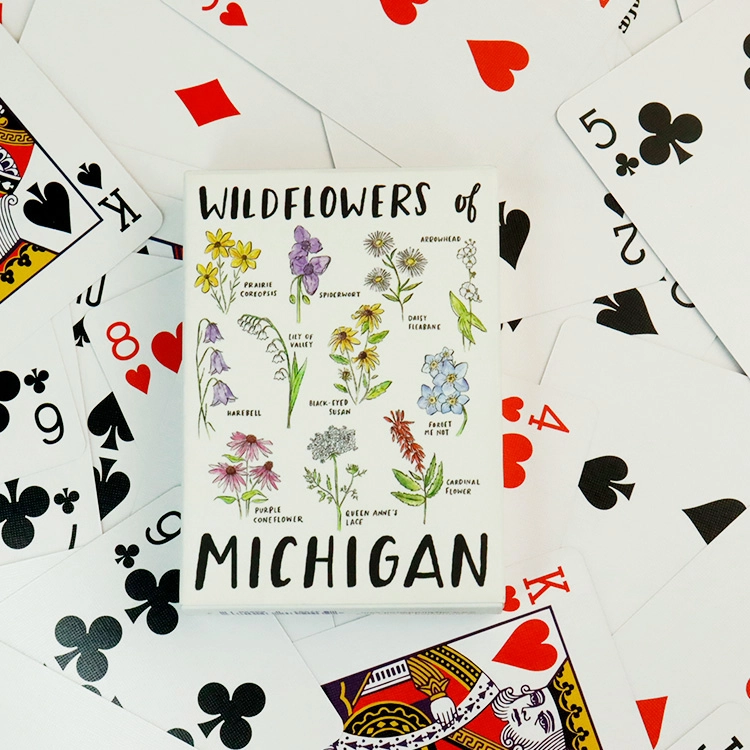
High Quality Eco-Friendly Durable Personalized Design Wildflowers Playing Cards with Custom Design Logo and Box
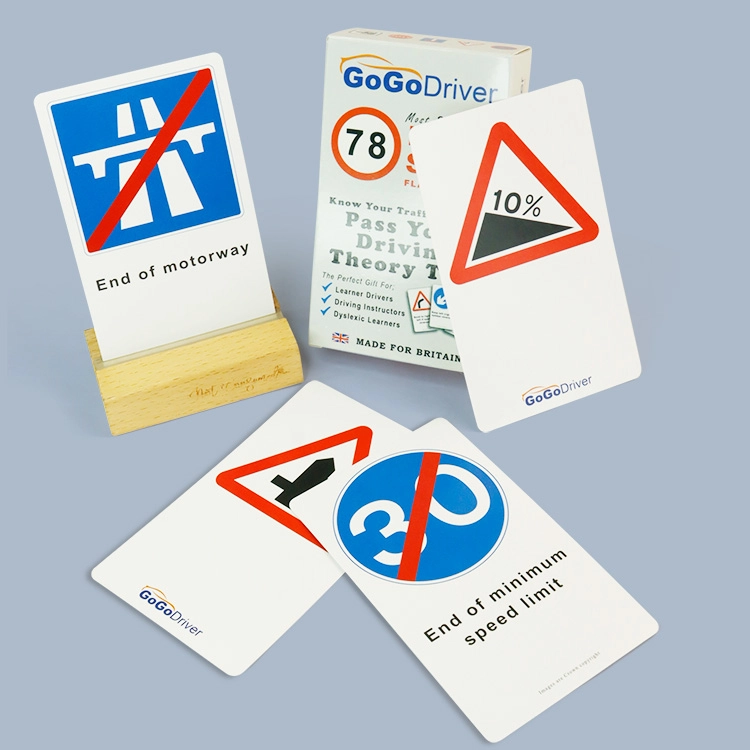
OEM Custom Driving Theory Cards | Personalized Traffic Rules & Test Prep Flashcards in Multiple Languages for Wholesale
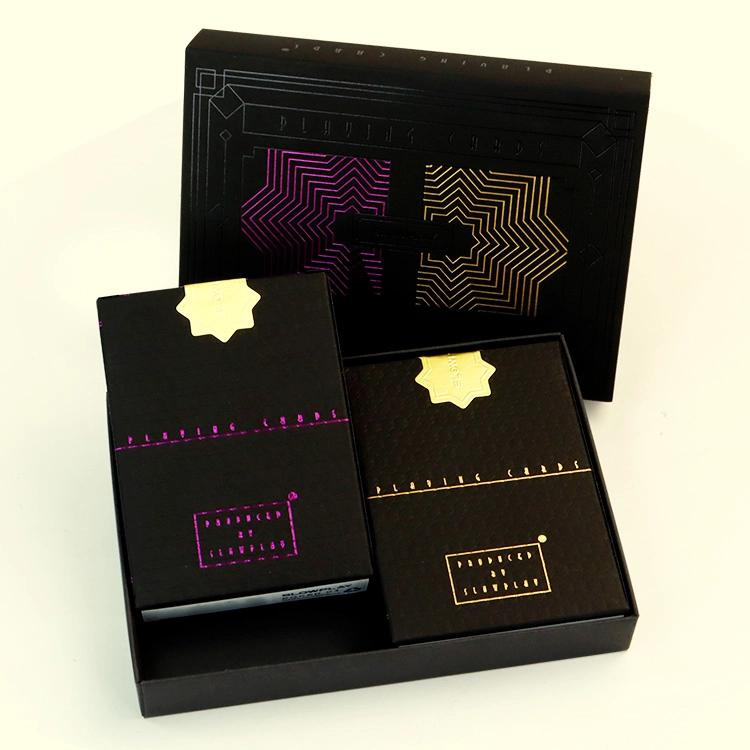
Custom Printing Luxury Two Sets Plastic Poker Playing Cards with Customized Packing