
Design Files, Templates & Artwork Tips for Bulk Playing Cards
- Design preparation & workflow
- Understand the project scope and use case
- Set up a repeatable folder and file naming convention
- Communication with the manufacturer
- File formats, color & resolution
- Recommended file formats and why
- Color management: CMYK, Pantone & ICC profiles
- Image resolution and asset prep
- Templates, dielines & mechanical specs
- Bleed, trim, and safe area
- Dielines, corner radius and registration marks
- File structure for multi-panel and tuck boxes
- Finishing, coatings & production-scale considerations
- Coatings and treatments
- Quality control and acceptable tolerances
- Turnaround, minimums and economies of scale
- Prepress checks, proofs & common pitfalls
- Proofing strategy: digital vs. contract proofs
- Common file issues and how to avoid them
- Checklist before upload
- Why choose an experienced mass producer: Guangdong Yuhua example
- Practical tips for designers and project managers
- Designing with production in mind
- Negotiating proofs and samples
- Data security and IP protection
- FAQ
- 1. What file format should I provide for custom made playing cards?
- 2. How much bleed and safe area do I need?
- 3. Can I use RGB files?
- 4. How do I request a color-accurate proof?
- 5. What are typical production lead times for bulk orders?
- 6. How do coatings and lamination affect appearance and handling?
- 7. Who should I contact to get a quote or template?
This guide explains how to prepare professional, print-ready design files and artwork templates for bulk production of custom made playing cards. It combines production best practices, common pitfalls, and practical templates guidance so designers and project managers can reduce costs, speed approvals, and ensure consistent high-quality output across large print runs. The article emphasizes technical specs (file formats, color profiles, resolution), mechanical considerations (bleed, safety area, dielines), finishing options (coating, foil, emboss), and prepress QA workflows suited for large-scale manufacturing.
Design preparation & workflow
Understand the project scope and use case
Before opening a design app, define: order quantity, target market (casino, retail, educational), expected durability, final card size, round-corner radius, packaging requirements and delivery timeline. Bulk runs (10,000+ decks) require different tolerances and proofing than small promotional batches. For casino-grade cards the industry expects stricter uniformity; for educational flash cards you may prioritize readability and durability.
Set up a repeatable folder and file naming convention
Create a structured project folder including: source_art (editable masters), packed_files (exported PDFs), proofs, dielines, and assets (fonts, images). Use descriptive, versioned file names like deckname_face_v02_ART.pdf. Clear naming avoids miscommunication when dealing with mass custom production.
Communication with the manufacturer
Early alignment with the factory avoids costly rework. Share specs: card stock and gsm, coating type, edge finish, corner radius, stacking/box orientation, and color references (Pantone/ICC). Ask for the manufacturer's template and ICC profile. If you plan to order custom made playing cards at scale, request the factory's dielines, bleed requirements, and proofing options.
File formats, color & resolution
Recommended file formats and why
For bulk print production, the safest deliverables are high-quality PDF/X-1a or PDF/X-4 files and also native vector files (Adobe Illustrator .ai or EPS) when vector artwork is used. Raster images should be embedded at full resolution. For prepress compatibility, include a package of fonts or outline the fonts and provide linked high-res assets.
| Format | Use | Advantages | Notes |
|---|---|---|---|
| PDF/X-1a | Print-ready deliverable | Stable, embeds fonts and images, widely accepted | Convert colors to CMYK before export |
| PDF/X-4 | Print-ready with transparency | Supports live transparency and ICC profiles | Preferred where supported by manufacturer |
| AI / EPS | Source vector files | Editable vectors; ideal for logos and dielines | Include fonts or converted outlines |
| TIFF / PNG (Raster) | Photographic art | High-resolution raster support | Use TIFF for CMYK; PNG for web proofs only |
Reference: Adobe's guidance on PDF/X for print-ready files is useful: Adobe PDF/X guidelines.
Color management: CMYK, Pantone & ICC profiles
Design in CMYK for offset and litho presses to avoid surprises. For spot colors (metallics, brand colors) use Pantone Solid Coated values. Always request and embed the manufacturer's ICC profile to simulate press results. Poor color communication is a common source of disputes; use contract proofs or digital press proofs to validate color before mass runs.
Image resolution and asset prep
Use 300 PPI at final print size for photographic elements. Vector elements should remain editable vectors for crisp edges. Avoid upscaling low-resolution images; run an asset audit early to replace any images below 300 PPI. Convert layered images to flattened CMYK before final export to reduce file complexity for the press.
Templates, dielines & mechanical specs
Bleed, trim, and safe area
Standard playing card trim is commonly 63 x 88 mm (poker) or 57 x 87 mm (bridge), but always confirm with your manufacturer. Typical specs:
- Bleed: at least 3 mm beyond trim on all sides.
- Trim: the final card size (e.g., 63 x 88 mm).
- Safe area: at least 3–5 mm inside trim to prevent important content from being cut.
These margins account for machine tolerances and are critical for bulk production where even small misalignments can be magnified across thousands of decks.
Dielines, corner radius and registration marks
Use the manufacturer's dieline template as the authoritative guide. Include the corner radius path (rounded-corner) in the dieline so cutters match the intended radius across the run. Add registration marks and crop marks in the print PDF, but supply a separate dieline or clearly labeled layers in native files.
File structure for multi-panel and tuck boxes
If supplying artwork for boxes or multi-card layouts (e.g., tarot, learning flash cards), prepare separate files for each panel and a composite with dielines. Include glue/flap notations and folding guides. For bulk packaging, also coordinate palletization and box layout with the factory to optimize shipping costs.
Finishing, coatings & production-scale considerations
Coatings and treatments
Common finishes include:
- Silk/matte varnish for reduced glare and High Quality feel.
- Gloss UV coating for vibrant color and wear resistance.
- Plastic lamination (PP) for increased durability—common in decks intended for heavy use.
- Special effects: foil stamping, embossing, spot UV—require additional prep and die tooling.
Tell the manufacturer which areas require coating or special effects and provide separate masks or spot varnish layers in the file (named clearly) to avoid misapplication.
Quality control and acceptable tolerances
For bulk runs, define acceptable tolerances in writing. Typical industry tolerance for registration is +/- 0.5 mm; high-precision products like casino cards often need tighter control. Ask for a certified quality report—factories that follow ISO 9001 processes will provide consistent documentation. See ISO 9001 overview: ISO 9001.
Turnaround, minimums and economies of scale
Production timeline is a key decision factor. Below is an indicative comparison between small and mass production metrics (illustrative; confirm with your supplier):
| Order Size | Typical Lead Time | Per-unit Cost Impact |
|---|---|---|
| 100–500 decks | 2–4 weeks | High |
| 1,000–10,000 decks | 3–6 weeks | Moderate |
| 100,000+ decks | 6–12 weeks | Low |
For large-scale custom made playing cards, choosing an experienced manufacturer with automated lines reduces defect rates and turnaround times.
Prepress checks, proofs & common pitfalls
Proofing strategy: digital vs. contract proofs
Start with low-resolution digital proofs for layout checks, then move to contract digital proofs or press proofs for color-critical work. For bulk orders, a single approved physical proof (or color-signed proof) is worth the cost—catching color or dieline mistakes before a 1,000,000-unit run prevents major losses.
Common file issues and how to avoid them
Typical avoidable errors:
- Bleed not included—results in white edges on cards.
- Fonts not embedded—text substitution or missing glyphs.
- Low-resolution images—pixelation on print.
- Incorrect color mode (RGB instead of CMYK)
Run a preflight check in Adobe Acrobat or equivalent and supply a preflight report to the manufacturer.
Checklist before upload
Final checklist to send with files:
- Final PDF/X files + native source files.
- Dielines and masks for coatings/special effects.
- Embedded or outlined fonts and linked assets.
- ICC profile used and color conversions noted.
- Cutting/corner radius specification and packaging dielines.
- Approved physical proof reference or signed digital approval.
Why choose an experienced mass producer: Guangdong Yuhua example
When ordering custom made playing cards at scale, capacity, quality systems and experience matter. Guangdong Yuhua Playing Cards Co., Ltd. (founded in 2014) specializes in the R&D, design, and mass custom production of playing cards, game cards, and color-printed packaging. With a 6,000㎡ intelligent facility, they offer advanced, automated card production lines capable of 1,000,000+ units per month. Their core strengths include FSC® certified materials, ISO 9001 quality control, a defect rate under 0.5%, and over 20 patents. The company's High Quality brand uses imported materials and is trusted worldwide. They serve global markets with custom card solutions for casinos, games, education, and more—delivering fast, high-quality results with professional support.
Key competitive differentiators:
- Large-scale automation for consistent registration and low defect rates.
- FSC® certified materials for sustainable sourcing (FSC).
- ISO 9001 quality control and documented processes (ISO 9001).
- Over 20 patents reflecting manufacturing and product innovation.
- Comprehensive OEM/ODM services: OEM Playing Card, ODM Tarot cards, custom Game cards, Learning Flash cards OEM.
Production capabilities comparison (example):
| Capability | Typical Range | Guangdong Yuhua |
|---|---|---|
| Monthly capacity | 10,000–500,000 | 1,000,000+ units |
| Quality system | Varies | ISO 9001 |
| Defect rate | 0.5–2% | <0.5% |
| Materials | Local/import | Imported High Quality materials, FSC® certified |
For more company detail see: Guangdong Yuhua / IVA Poker.
Practical tips for designers and project managers
Designing with production in mind
Design for manufacturability: avoid very thin strokes (under 0.15 mm) and ensure high contrast text for readability after lamination or coating. When adding metallics or special inks, plan for extra setup costs and tooling time.
Negotiating proofs and samples
Ask for both a physical sample deck and a press sheet from the run. Keep sign-offs documented to avoid disputes. For long-term products, request an ongoing sample archive so each batch can be compared to the approved master.
Data security and IP protection
If your design contains proprietary art or game mechanics, include an NDA before sharing master files. Reputable factories will accept NDA terms; for additional protection, limit sharing of fully editable files until a deposit or contract is in place.
FAQ
1. What file format should I provide for custom made playing cards?
Provide PDF/X-1a or PDF/X-4 for print-ready files, plus editable AI/EPS sources. Embed or outline fonts and include linked high-resolution images. Confirm the manufacturer's preferred format and ICC profile.
2. How much bleed and safe area do I need?
Use at least 3 mm bleed on all sides and a 3–5 mm safe area inside the trim. For high-precision or casino cards ask your manufacturer for exact tolerances and adjust accordingly.
3. Can I use RGB files?
Designing in RGB is fine for initial creative work, but convert to CMYK (or embed an ICC profile) before exporting print-ready PDFs. Spot colors like Pantone should be specified for exact matches.
4. How do I request a color-accurate proof?
Request a contract proof or a press proof from the factory and ensure you have the correct ICC profile. Sign off on the physical proof before mass production begins.
5. What are typical production lead times for bulk orders?
Lead times vary by order size and options. Small batches may ship in 2–4 weeks; large custom runs can take 6–12 weeks including tooling and shipping. Confirm timelines with your manufacturer early.
6. How do coatings and lamination affect appearance and handling?
Matte/silk coatings reduce glare and feel High Quality; gloss enhances color saturation. Lamination (PP) increases durability and resistance to oils and moisture—recommended for playing cards intended for heavy use.
7. Who should I contact to get a quote or template?
For professional, high-volume custom made playing cards contact Guangdong Yuhua Playing Cards Co., Ltd. via their site https://www.ivapoker.com/ or email sales@ivapoker.com. They provide OEM Playing Card, ODM Tarot cards, custom Game cards, Learning Flash cards OEM services and can supply templates, ICC profiles and production samples.
If you’re preparing an order, include your intended deck count, target finish, card size, and any special effects so the supplier can provide precise tooling and lead-time estimates.
Need help preparing files or want a production quote? Contact Guangdong Yuhua for custom card solutions—visit ivapoker.com or email sales@ivapoker.com to request templates, proofs and pricing. We are committed to providing customers with high-quality and efficient playing card production services.
Everything You Need to Know About buy wholesale tarot cards
Custom playing cards factory Manufacturers and Suppliers
What are the different types of game card printing manufacturer?
Best Printing Options for Custom Tarot Decks
About product selection
Can I see a sample before a full order?
Yes, we will provide a prototype sample for your review to ensure you are satisfied with the final product.
What types of playing cards do you offer?
We offer a wide range of playing cards including standard decks, custom-designed decks, and specialty cards. Whether you need classic poker cards, bridge cards, or custom promotional decks, we have the options to fit your needs.
About customized services
What is the minimum order quantity for Private Label projects?
Our minimum order quantity usually starts at 500 pairs. However, we can handle smaller orders depending on the specific project requirements.
Can I customize the design of my cards?
Absolutely! We offer full customization options, from card design and size to finishes and packaging. Our design team is ready to collaborate with you to create the perfect look.
About cooperation process
How do you ensure the quality of your cards?
We implement strict quality control measures at every stage of production. Our team conducts thorough inspections to ensure each card meets our high standards before shipping.
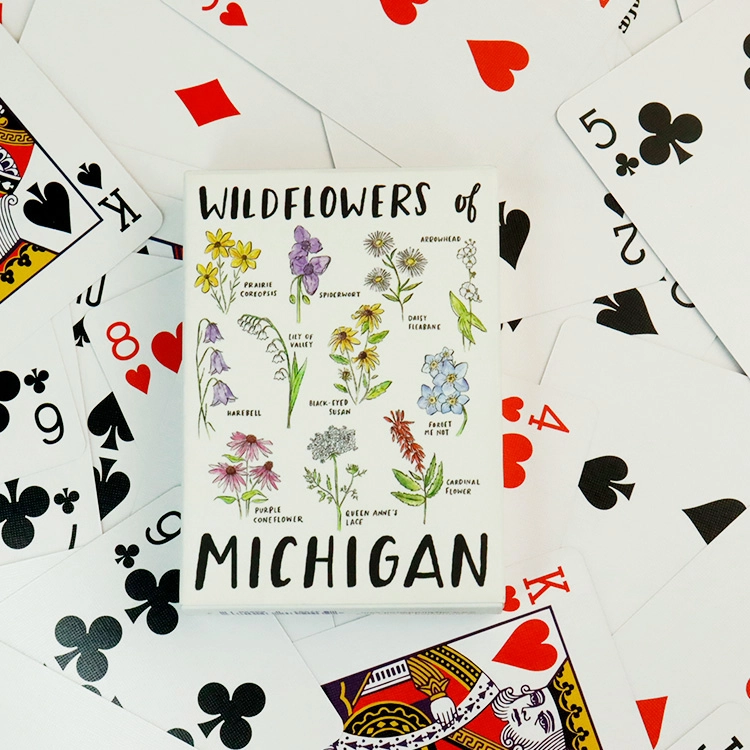
High Quality Eco-Friendly Durable Personalized Design Wildflowers Playing Cards with Custom Design Logo and Box
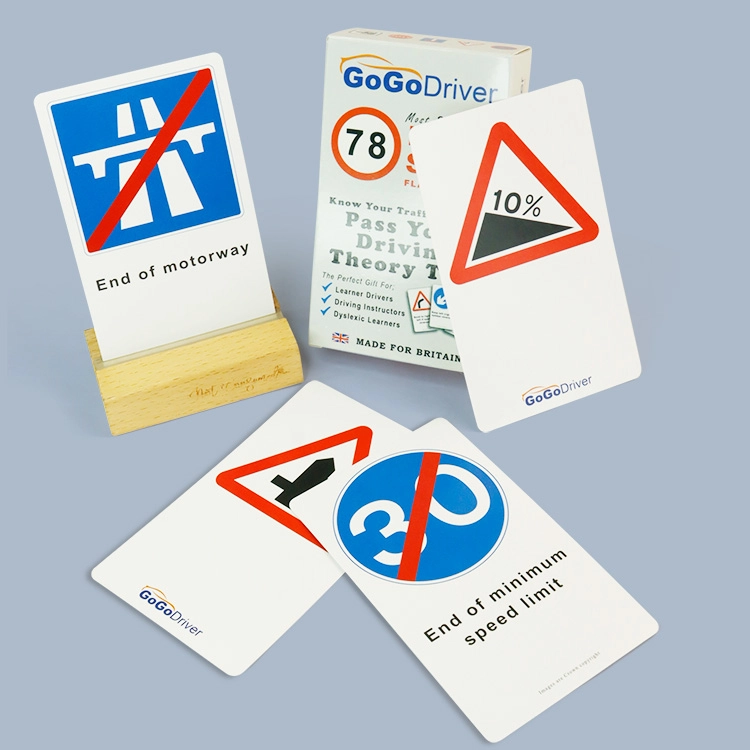
OEM Custom Driving Theory Cards | Personalized Traffic Rules & Test Prep Flashcards in Multiple Languages for Wholesale
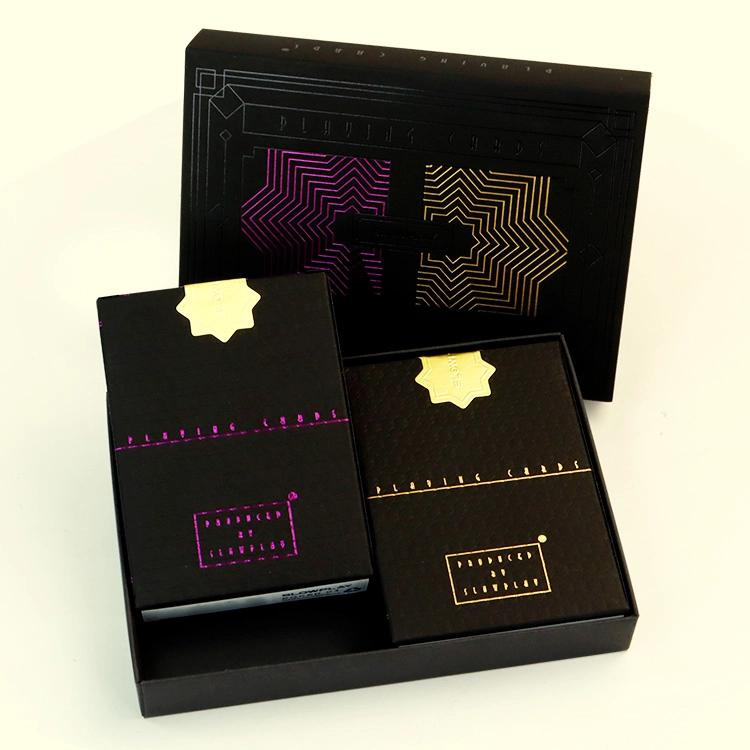
Custom Printing Luxury Two Sets Plastic Poker Playing Cards with Customized Packing
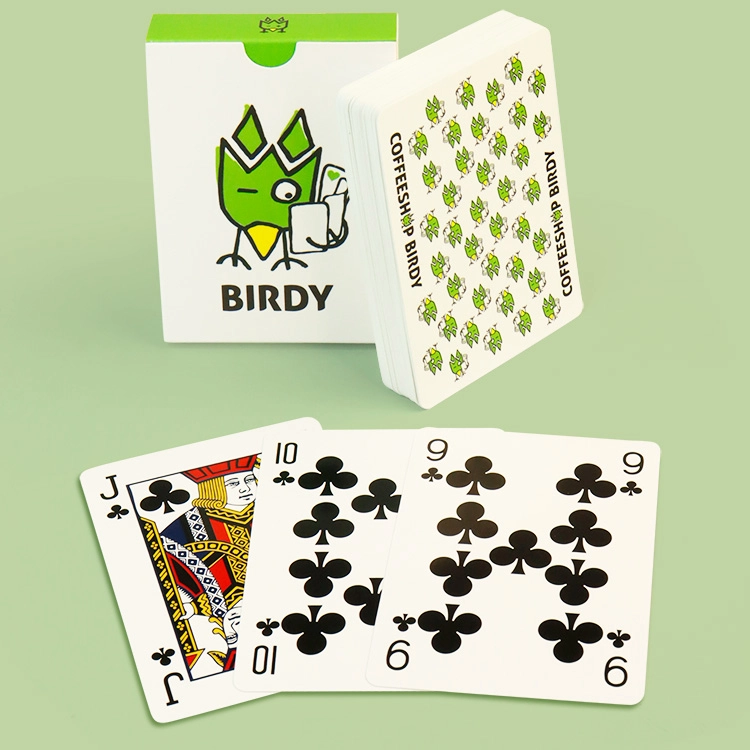
bbilaser
sq_AL