
Eco-Friendly Materials for Custom Tarot Cards
- Why sustainability matters for card makers and collectors
- Key environmental criteria when selecting materials for custom tarot cards
- Certifications to look for when ordering custom tarot cards
- Material options for eco-friendly custom tarot cards
- 1. FSC® certified virgin paper and board
- 2. Recycled paper and board (post-consumer fibers)
- 3. Linen and cotton blends
- 4. Cellulose-based films (cellophane) and water-based laminates
- 5. Bioplastics and PLA coatings
- Material comparison: recyclability, durability, and cost
- Print and finishing choices that reduce environmental impact
- Production considerations for manufacturers of custom tarot cards
- Quantifiable production metrics to request
- Case study: balancing sustainability and scale for custom tarot cards
- How Guangdong Yuhua Playing Cards supports sustainable custom tarot production
- Yuhua's eco and OEM/ODM advantages for custom tarot cards
- Practical checklist for ordering sustainable custom tarot cards
- Cost vs. sustainability: managing expectations for custom tarot cards
- FAQs — common questions about eco-friendly custom tarot cards
- 1. Can tarot cards be fully recyclable?
- 2. Are biodegradable or compostable tarot cards practical?
- 3. How does card finish affect recyclability?
- 4. Will recycled board affect print quality for detailed tarot art?
- 5. What certifications should I demand from my supplier?
- Contact & next steps
- References
Why sustainability matters for card makers and collectors
Designers and brands that produce custom tarot cards face two converging pressures: consumers increasingly demand sustainable products, and regulations and procurement standards push for verified environmental claims. For creators of custom tarot cards, choosing the right eco-friendly materials affects not only environmental impact but also durability, print fidelity, tactile feel, and long-term brand reputation. This article walks through practical, verifiable material options, production implications, and how to balance performance, cost, and sustainability for custom tarot cards.
Key environmental criteria when selecting materials for custom tarot cards
When evaluating materials for custom tarot cards, prioritize criteria that are measurable and relevant to both producers and buyers:
- Certification and chain of custody (e.g., FSC®) — ensures wood/pulp sourcing is responsible.
- Recyclability and compostability — whether end-users can recycle or compost the product locally.
- Carbon and energy footprint — embodied carbon of paper vs. plastics.
- Durability and lifecycle — cards should withstand shuffling and handling to avoid early replacement.
- Toxicity and emissions — VOCs from coatings and adhesives.
- Print and finishing compatibility — maintaining color, gloss, and tactile qualities important for tarot art.
Embedding the keyword: custom tarot cards must meet these environmental and functional metrics to satisfy both sustainable branding and user experience.
Certifications to look for when ordering custom tarot cards
For clients and manufacturers, credible certifications make sustainability claims verifiable. The most relevant are:
- FSC® (Forest Stewardship Council) — for responsibly sourced paper and board.
- ISO 14001 (environmental management) and ISO 9001 (quality management) — for consistent production standards and quality controls.
- Compostability certifications (e.g., EN 13432) — for compostable films or coatings, where applicable.
Material options for eco-friendly custom tarot cards
Below are the main material families used in sustainable custom tarot cards, with trade-offs that affect print and durability.
1. FSC® certified virgin paper and board
FSC-certified card board provides a balance of responsible sourcing and high print quality. For tarot cards, manufacturers typically use coated or uncoated boards in the 300–400 gsm range (depending on desired stiffness). Advantages include consistent printing and established recycling streams; drawbacks are the continued use of virgin fiber unless mixed with recycled content.
2. Recycled paper and board (post-consumer fibers)
Recycled board reduces demand for virgin pulp and often lowers embodied carbon. High-quality recycled options can match print fidelity with modern coating and finishing techniques. Note that heavy post-consumer content may affect brightness and color gamut, and fully recycled board with high-quality whiteness can be costlier.
3. Linen and cotton blends
Cotton-linen stocks (stonehenge-style or rag) are valued for superior hand-feel and longevity. If made from recycled or certified fibers, they can be a High Quality eco option. These stocks are often chosen for higher-end custom tarot cards where tactile experience is critical.
4. Cellulose-based films (cellophane) and water-based laminates
Cellulose films (often called cellophane) are derived from wood pulp and are bio-based and industrially compostable in some cases. Water-based laminates (acrylic or aqueous coatings) significantly reduce VOC emissions compared to solvent-based varnishes and improve durability. For custom tarot cards, these finishes can protect art while maintaining recyclability if chosen correctly.
5. Bioplastics and PLA coatings
Polylactic acid (PLA) and other bioplastics offer compostability under industrial conditions. They can be used for clear coatings or for fully bioplastic cards, but they require appropriate disposal streams (industrial composting) and can be sensitive to heat. Bioplastics can be a good option for limited editions where compostability is prioritized and end-of-life options are communicated clearly to buyers.
Material comparison: recyclability, durability, and cost
The following table compares common materials for custom tarot cards across practical metrics. Sources are listed at the end of the article.
| Material | Recyclability / Compostability | Durability (shuffling/handling) | Print Quality | Typical Cost vs. Standard Coated Board |
|---|---|---|---|---|
| FSC® certified coated board (300–350 gsm) | Widely recyclable in paper streams (if no non-paper lamination) | High (with appropriate coating) | Excellent | ~Equal to slightly higher |
| Recycled post-consumer board | Recyclable; lower embodied carbon | Moderate to high (varies with formulation) | Very good (may have lower brightness) | Often cost-competitive |
| Cotton-linen (rag) paper | Recyclable; compostable depending on coatings | High (High Quality feel) | Excellent (rich texture) | Higher |
| Cellulose film (cellophane) / water-based laminate | Some products compostable; water-based laminates keep recyclability of board | High (improves slip resistance) | Maintains color and reduces scuffing | Moderate |
| PLA / bioplastic cards | Industrial composting required; not widely recyclable | Good but can warp in heat | Good; glossy finish possible | Higher |
Print and finishing choices that reduce environmental impact
Choosing sustainable raw materials is only part of the equation. For custom tarot cards, finishing choices determine longevity and recyclability:
- Prefer water-based (aqueous) varnishes over solvent-based varnishes to reduce VOC emissions (EPA guidance indicates lower VOCs in water-based finishes).
- Use cellulose or recyclable films instead of PVC lamination — cellophane is bio-based and can be industrially compostable (check certification).
- Design for minimal mixed-material laminates. If packaging uses the same fiber (FSC board) and the cards are recyclable, end-of-life processing is simpler.
- Use soy or vegetable-based inks to lower petroleum-derived components and facilitate recycling in paper streams.
Production considerations for manufacturers of custom tarot cards
From a production perspective, material selection impacts setup, defect rates, and throughput. Manufacturers must balance sustainability with operational efficiency to keep costs and defects low. For brands ordering custom tarot cards, ask suppliers about:
- Material traceability (FSC chain-of-custody documentation).
- Quality management systems (ISO 9001) and the supplier’s recent defect metrics.
- Capacity and lead times when using specialty stocks (e.g., cotton or high-recycled content boards).
- Waste management and recycling practices in the factory.
Quantifiable production metrics to request
Request these metrics before approving a production run of custom tarot cards:
- Monthly production capacity (units/month).
- Defect rate (percentage of units failing QC).
- Percentage of recycled or certified materials used.
- Certifications (FSC®, ISO 9001) and patent or process advantages if relevant.
Case study: balancing sustainability and scale for custom tarot cards
Consider a mid-size publisher commissioning 5,000 decks for retail. They decide between three options: FSC coated board + water-based varnish; recycled board + aqueous coating; or cotton-linen with a light protective varnish. The trade-offs are:
- FSC board offers best color fidelity and guaranteed responsible sourcing; suitable for retail launches with eco claims tied to certification.
- Recycled board lowers embodied carbon and can be cost-effective, but color brightness must be tested pre-production.
- Cotton-linen provides High Quality feel and longevity but at higher cost and longer lead times.
Practical recommendation: for broad retail distribution, FSC-certified coated board with a water-based protective finish balances sustainability, print quality, and recyclability for custom tarot cards.
How Guangdong Yuhua Playing Cards supports sustainable custom tarot production
Guangdong Yuhua Playing Cards Co., Ltd., founded in 2014, specializes in the R&D, design, and mass custom production of playing cards, game cards, and color-printed packaging. With a 6,000㎡ intelligent facility, we offer advanced, automated card production lines capable of 1,000,000+ units per month. Our core strengths include FSC® certified materials, ISO 9001 quality control, a defect rate under 0.5%, and over 20 patents. Our High Quality brand uses imported materials and is trusted worldwide. We serve global markets with custom card solutions for casinos, games, education, and more—delivering fast, high-quality results with professional support.
Yuhua's eco and OEM/ODM advantages for custom tarot cards
Yuhua combines sustainability credentials with manufacturing scale and quality controls that directly benefit brands ordering custom tarot cards:
- FSC-certified materials available for card and packaging production — enabling verifiable sustainability claims.
- ISO 9001 quality systems and a reported defect rate below 0.5% — reducing waste from reprints.
- Large, automated production capacity (1,000,000+ units/month) and a 6,000㎡ smart facility — enabling cost efficiency for both small and large runs.
- Over 20 patents and R&D capabilities to optimize coatings and finishing that maintain recyclability while improving card lifespan.
- OEM Playing Card, ODM Tarot cards, custom Game cards, Learning Flash cards — flexible manufacturing for diverse product types and educational or collectible tarot decks.
For brands that require both sustainability and professional supply chain performance, Yuhua’s combination of certified materials, quality control, and scale helps reduce per-unit environmental impact while ensuring product quality and reliable lead times.
Practical checklist for ordering sustainable custom tarot cards
Use this checklist when you brief a manufacturer or supplier for custom tarot cards:
- Specify target certifications (e.g., FSC®) and request chain-of-custody documentation.
- Choose a primary material: FSC coated board for retail; recycled board for lower carbon footprint; cotton-linen for High Quality decks.
- Prefer water-based varnishes and cellulose films to minimize VOCs and enable recycling.
- Request sample prototypes — test shuffling, wear, and color fidelity under real use.
- Ask about factory waste practices, recycling, and local disposal requirements for bioplastic options.
- Confirm lead times, minimum order quantities, and pricing for different finishes.
- Obtain quantitative QC metrics: defect rate, capacity, and recent production examples.
Cost vs. sustainability: managing expectations for custom tarot cards
Sustainable materials can add cost, but the High Quality is often marginal at scale and offers marketing value. For small-run indie tarot decks, the per-deck cost difference is more significant. Strategies to manage cost while remaining green:
- Use FSC-certified core materials but optimize packaging to reduce extra materials.
- Offer tiered editions: standard recycled-board edition and a High Quality cotton-linen limited edition.
- Communicate end-of-life instructions clearly (e.g., recycle in paper stream; compost only if certified) to reduce confusion and improve impact.
FAQs — common questions about eco-friendly custom tarot cards
1. Can tarot cards be fully recyclable?
Yes, decks made from FSC-certified paper or recycled board with water-based coatings and recyclable glue can typically be recycled in paper streams. Avoid PVC lamination and mixed-material packaging if recyclability is a priority.
2. Are biodegradable or compostable tarot cards practical?
Biodegradable or PLA-based cards can be compostable under industrial conditions, but they require appropriate waste infrastructure. If buyers lack access to industrial composting, these materials may not reach their intended end-of-life.
3. How does card finish affect recyclability?
Finishes like water-based varnish and cellulose films generally keep cards recyclable. Traditional plastic (PVC) lamination can contaminate paper recycling streams and should be avoided if recyclability is required.
4. Will recycled board affect print quality for detailed tarot art?
High-quality recycled boards can achieve excellent print fidelity. Discuss color profiles, paper whiteness, and pre-production proofs with your manufacturer to ensure art quality meets expectations.
5. What certifications should I demand from my supplier?
Request FSC® chain-of-custody documentation for fiber sourcing and ISO 9001 for quality systems. If claiming compostability, ask for EN 13432 or equivalent certification for the specific film or coating used.
Contact & next steps
If you’re planning a sustainable tarot project and need manufacturing support, Guangdong Yuhua offers end-to-end OEM/ODM services and can advise on material selection and finishing to match your sustainability goals. For a quote, sample runs, or technical consultation on eco-friendly custom tarot cards, contact our production and design team — we provide fast, high-quality results with professional support.
References
- Forest Stewardship Council (FSC) — https://fsc.org (accessed 2025-12-14)
- ISO — ISO 9001 Quality Management — https://www.iso.org/iso-9001-quality-management. (accessed 2025-12-14)
- EPA — Paints and Coatings: Reducing Emissions (VOCs) — https://www.epa.gov/paint (accessed 2025-12-14)
- Wikipedia — Tarot — https://en.wikipedia.org/wiki/Tarot (accessed 2025-12-14)
- Wikipedia — Cellophane — https://en.wikipedia.org/wiki/Cellophane (accessed 2025-12-14)
- Wikipedia — Polylactic acid — https://en.wikipedia.org/wiki/Polylactic_acid (accessed 2025-12-14)
- European Bioplastics — Industry information on bioplastics (overview) — https://www.european-bioplastics.org (accessed 2025-12-14)
For further assistance designing sustainable custom tarot cards or to request samples and a production estimate, contact Guangdong Yuhua Playing Cards Co., Ltd. — we are committed to providing customers with high-quality and efficient playing card production services.
Color Palette Guide for Custom Tarot Cards to Convey Mood
Custom playing cards factory Manufacturers and Suppliers
Everything You Need to Know About customize card game
Best chinese tarot cards for sale manufacturers and supplier brands
About cooperation process
Do you accept international orders?
Yes, we accept orders from around the world! Shipping costs and delivery times may vary, so please contact us for specific details related to your location.
About price and payment
How can I get a quote?
Getting a quote is easy! Simply fill out our contact form or call us directly with your project details, and we’ll get back to you with a tailored quote promptly.
About logistics
How long does the production process take?
Production times can vary based on order complexity and volume. Typically, standard orders take 2-4 weeks. For urgent projects, we may offer expedited options—just ask!
About product selection
What materials do you use for your cards?
We use high-quality, durable materials to ensure the best finish and longevity for your cards. Options include standard cardstock, premium finishes, and eco-friendly materials.
About customized services
Do you offer samples?
Yes! We can provide samples of our card materials and finishes. Please contact us to request samples relevant to your project.
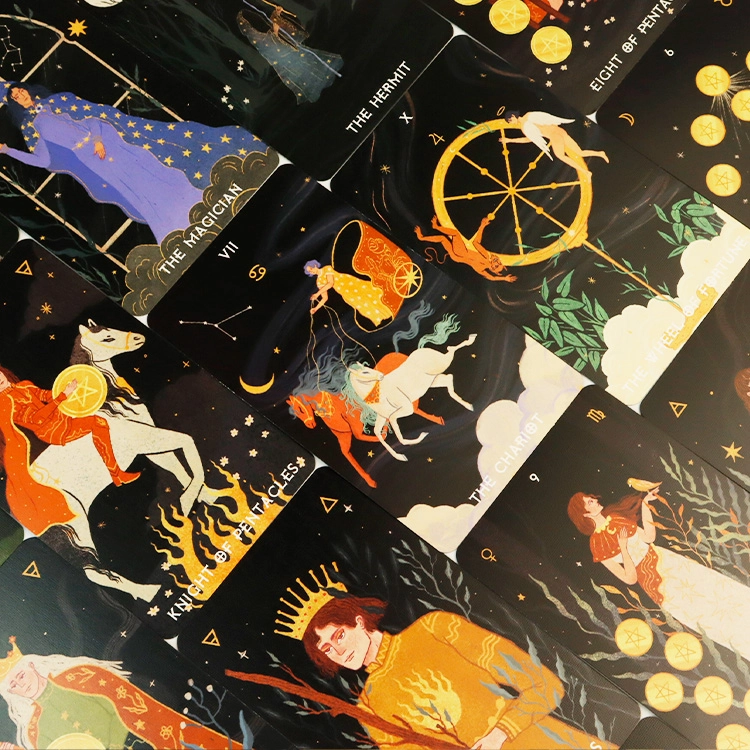
High Quality Tarot Cards with Sleeve Box Packaging | Premium Custom Tarot Deck Set for Enhanced Presentation & Protection
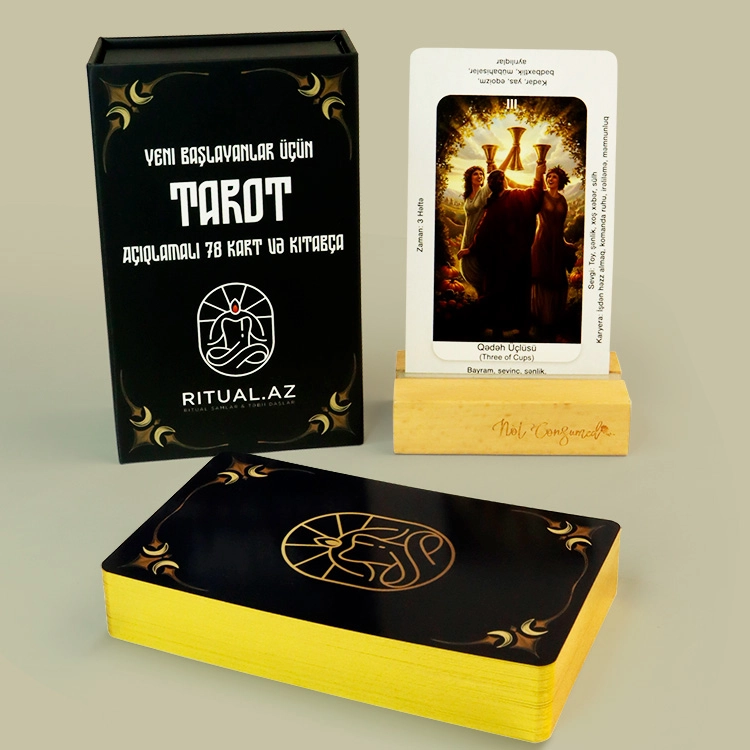
Hot Foil Stamped Tarot Cards with Book-Style Box | Premium Gold Edge Tarot Deck for Custom
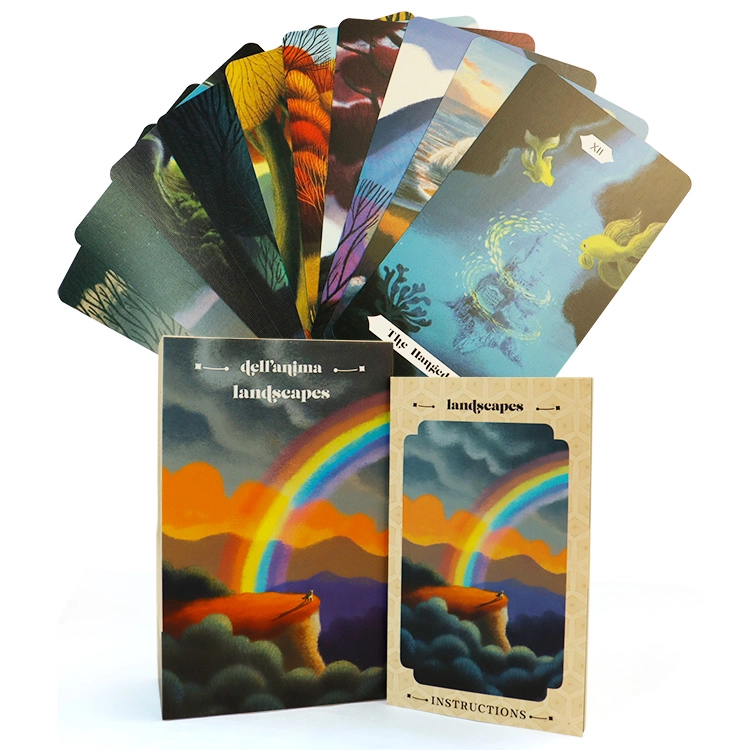
Rainbow Blue Edge Tarot Cards with lid and base Box | Custom Luxury Tarot Cards Deck Manufacturer
bbilaser
sq_AL