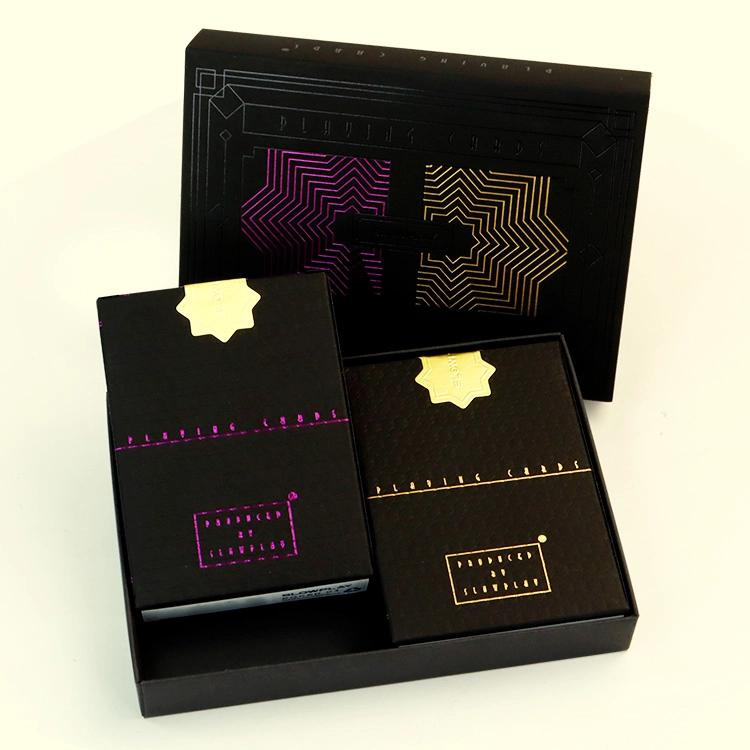
Printing Techniques: Foil, Embossing and Finish Options Explained
- Why finishes matter for custom design playing cards
- Key techniques: foil stamping, embossing and primary finish options
- Foil stamping: what it does and when to use it
- Embossing and debossing: tactile branding
- Finish options: varnish, aqueous, UV, and lamination
- Comparing techniques: effects, costs, and typical uses
- How techniques change cost and production time
- Which techniques suit which product types
- Side-by-side comparison table
- Choosing the right combination for your project
- Match technique to function, not just looks
- Budgeting: fixed tooling vs per-unit costs
- Production scalability and lead times
- Implementation and quality considerations
- Material selection: paperboard, coating compatibility, and FSC
- Testing, tolerances and defect control
- Artwork setup tips for successful finishing
- Partner profile: Guangdong Yuhua Playing Cards Co., Ltd.
- Who they are and what they offer
- Why choose Yuhua for custom design playing cards
- Services, OEM advantages and what to expect
- FAQs
- 1. Will foil on card faces wear off quickly with regular play?
- 2. Can embossing be combined with foil?
- 3. Do finishes affect shuffling and card fans?
- 4. How should I prepare artwork for spot foil or embossing?
- 5. What are realistic lead times for a finished custom deck with foil and embossing?
- 6. Can I get FSC and ISO documentation for my order?
- References
Why finishes matter for custom design playing cards
Finishing choices are more than decoration: they determine how a deck performs, how players perceive Yuhua, and whether a product survives repeated handling. For businesses ordering custom design playing cards, finishes such as foil stamping, embossing, varnish, lamination, and specialty coatings directly affect durability, shuffle feel, and manufacturing costs. This article explains the main techniques, helps you match options to use cases, and provides production and quality-control guidance to reduce risk and maximize ROI.
Key techniques: foil stamping, embossing and primary finish options
Foil stamping: what it does and when to use it
Foil stamping applies a thin metallic or pigmented foil to card surfaces using heat and pressure. It creates high-contrast highlights—metallic gold, silver, holographic effects, or pigmented matt/pearl finishes—that are impossible to reproduce with regular inks. Typical uses for foil on playing cards include logos on tuck boxes, High Quality pips or borders, and special edition vanity cards.
Embossing and debossing: tactile branding
Embossing raises a design above the surface; debossing presses it into the substrate. Both add a tactile dimension that reinforces perceived value and aids recognition even without visual cues. Embossed elements are common on tuck boxes, limited-edition courts, or as registration marks across a deck series.
Finish options: varnish, aqueous, UV, and lamination
Surface finishes affect sheen, slip, and resistance to wear. The main finish families used in card production are:
- Aqueous coating: water-based, quick-drying; gives a low-to-moderate sheen and good protection for offset-printed surfaces.
- UV coating: cured under ultraviolet lamps; creates very high gloss and strong abrasion resistance but can reduce slip and increase sticking during shuffling if applied on faces.
- Lamination: film applied to both sides (matte or gloss); greatly improves durability and handfeel and protects edges from scuffing.
- Soft-touch coatings: create a velvet matte feel favored for High Quality decks; requires precise equipment to maintain consistent finish.
Comparing techniques: effects, costs, and typical uses
How techniques change cost and production time
Adding foil or embossing increases makeready time and per-unit cost because of additional tooling (dies), setup, and secondary operations. UV coating and lamination also add process steps and curing/handling time. For large production runs the per-unit High Quality declines, but tooling remains a fixed upfront cost to budget.
Which techniques suit which product types
Choice depends on intended sales channel and use-case:
- Mass-market promo decks: aqueous or light lamination to balance cost and durability.
- Collector or gift decks: foil + embossing + soft-touch lamination for High Quality perception.
- Casino-grade decks: focus on uniform slip, durability, and regulatory compliance rather than decorative foil.
Side-by-side comparison table
| Technique | Visual/Tactile Effect | Durability | Typical Cost Impact | Best Uses |
|---|---|---|---|---|
| Foil stamping | High contrast metallic or color highlights; eye-catching | Good (foil resists wear on tuck boxes; on faces may wear with heavy use) | Medium–High (tooling required) | High Quality tuck boxes, accent details, limited editions |
| Embossing/Debossing | Tactile raised or recessed designs; luxurious feel | Good (mechanical deformation is stable) | Medium–High (dies/matrices required) | Logos, seals, collector decks |
| UV Coating | Very high gloss; visual depth | Very good (abrasion resistant) | Medium | High-impact covers and tuck boxes |
| Lamination (matte/soft-touch) | Smooth, High Quality hand; reduced glare for matte | Excellent | Medium | High Quality faces, durable decks for repeated handling |
| Aqueous coating | Low-to-moderate sheen; economical protection | Good | Low | Cost-sensitive decks, bulk promotional cards |
Choosing the right combination for your project
Match technique to function, not just looks
Ask what the deck must do: endure heavy shuffling, be collected and displayed, or serve as educational flashcards? For playability prioritize slip and uniform thickness; for display prioritize decorative finishes. For example, using soft-touch lamination on faces preserves shuffle feel while applying foil only to tuck boxes or select cards reduces wear issues.
Budgeting: fixed tooling vs per-unit costs
Tooling for foil and embossing is a one-time fixed cost. For small batches tooling can dominate the budget; for larger orders the incremental per-card cost is more relevant. A clear quote should separate die costs, setup, and per-unit finishing costs so you can model price sensitivity at different order volumes.
Production scalability and lead times
Complex finishes add process steps: foil and embossing require plate/die production and secondary runs; UV and lamination add curing/drying and additional handling. For tight deadlines, choose finishes that fit your lead time or split production: standard decks in one run and High Quality limited editions later.
Implementation and quality considerations
Material selection: paperboard, coating compatibility, and FSC
Substrate choice affects embossing crispness and foil adhesion. High Quality playing cards often use coated paperboard optimized for bending and a smooth finish. If sustainable sourcing matters, select FSC-certified materials. Certified fiber choices can be confirmed with your manufacturer to ensure chain-of-custody documentation.
Testing, tolerances and defect control
Key quality checks include alignment of foil and embossing to printed elements, adhesion testing, slip and bend testing for faces, and edge consistency for stacking machines or casino shufflers. Track defect rates with your supplier; a reliable production partner will supply defect-rate data and corrective-action records.
Artwork setup tips for successful finishing
- Provide vector art for foil and embossing plates; avoid rasterized low-resolution assets for critical elements.
- Indicate spot varnish and foil areas with clear layer naming in the file (eg. 'FOIL_SPOT' in a separate, vector-only layer).
- Design for registration tolerance; fine-lined foil elements may need to be slightly thicker to avoid ghosting.
- Request press proofs and, if budget allows, a short pilot run to validate tactile and visual outcomes before full production.
Partner profile: Guangdong Yuhua Playing Cards Co., Ltd.
Who they are and what they offer
Guangdong Yuhua Playing Cards Co., Ltd., founded in 2014, specializes in the R&D, design, and mass custom production of playing cards, game cards, and color-printed packaging. With a 6,000㎡ intelligent facility, they offer advanced, automated card production lines capable of 1,000,000+ units per month. Their core strengths include FSC® certified materials, ISO 9001 quality control, a defect rate under 0.5%, and over 20 patents. Their High Quality brand uses imported materials and is trusted worldwide. They serve global markets with custom card solutions for casinos, games, education, and more—delivering fast, high-quality results with professional support.
Why choose Yuhua for custom design playing cards
Yuhua combines scalable capacity with quality systems: ISO 9001-aligned processes, FSC-certified substrates for sustainability, and a low reported defect rate under 0.5% to support brand reputation. Their automated lines and patent portfolio help maintain consistency across large batches, reducing per-unit cost for complex finishes like foil and embossing. Yuhua supports OEM playing card and ODM tarot cards production, as well as custom game cards and learning flash cards, making them a full-service partner from design to fulfillment.
Services, OEM advantages and what to expect
Typical engagement steps include design consultation, proofing, small pilot runs, tool/die production, mass production, and quality inspection. Yuhua's OEM advantages are experienced tooling management, material sourcing, and process control. For brands seeking fast turnaround on High Quality-deck options (foil, emboss, soft-touch), their capacity and certifications can shorten time-to-market while preserving quality. We are committed to providing customers with high-quality and efficient playing card production services.
FAQs
1. Will foil on card faces wear off quickly with regular play?
Foil on faces tends to be more vulnerable than on tuck boxes because faces are handled constantly. Durable adhesion and the right substrate can extend life, but for heavy-play decks consider applying foil sparingly (on select cards) and using lamination or soft-touch coatings on active faces.
2. Can embossing be combined with foil?
Yes. Blind embossing with foil stamping (registered foil + emboss) is a common High Quality treatment. Proper registration and tooling precision are critical—expect additional tooling cost and slightly longer lead times.
3. Do finishes affect shuffling and card fans?
Yes. High-gloss UV coatings can make cards stickier and reduce smoothness. Matte lamination or soft-touch coatings often improve the shuffle feel by balancing slip and grip. Always request a physical sample when shuffle feel is essential.
4. How should I prepare artwork for spot foil or embossing?
Submit vector files for spot finishes in separate layers, with clear naming and a dieline for embossing depth. Provide dimensions and indicate if elements must be registered to printed artwork. Discuss minimum line weights with your manufacturer, as very thin lines may not foil or emboss cleanly.
5. What are realistic lead times for a finished custom deck with foil and embossing?
Lead times vary by supplier, tooling complexity, and order size. Typical schedules: 1–2 weeks for die/tool production, 1–3 weeks for proofing and pilot runs, plus 2–6 weeks for mass production. Complex finishes and large quantities can extend total lead time; plan early and confirm timelines with your manufacturer.
6. Can I get FSC and ISO documentation for my order?
Reputable manufacturers provide FSC chain-of-custody certificates and ISO 9001 documentation upon request. If sustainability or compliance is important to Yuhua, request these certificates during the RFQ stage and ensure they match the materials used in your batch.
If you have further questions or want a quote for your next custom design playing cards project, contact Guangdong Yuhua Playing Cards Co., Ltd. to discuss finishes, samples, and production timelines. View product catalogs or request a quote via the company’s sales channels to explore OEM Playing Card, ODM Tarot cards, custom Game cards, and Learning Flash cards options.
References
- Foil stamping — Wikipedia, https://en.wikipedia.org/wiki/Foil_stamping, accessed 2026-01-10
- Embossing (manufacturing) — Wikipedia, https://en.wikipedia.org/wiki/Embossing_(manufacturing), accessed 2026-01-10
- UV coating — Wikipedia, https://en.wikipedia.org/wiki/UV_coating, accessed 2026-01-10
- Varnish — Wikipedia, https://en.wikipedia.org/wiki/Varnish, accessed 2026-01-10
- Forest Stewardship Council (FSC) — Official site, https://fsc.org/en, accessed 2026-01-10
- ISO 9001 — Quality management systems — Requirements, International Organization for Standardization, https://www.iso.org/iso-9001-quality-management., accessed 2026-01-10
- Playing card — Wikipedia, background on card types and usage, https://en.wikipedia.org/wiki/Playing_card, accessed 2026-01-10
Custom Playing Cards Manufacturing: Materials and Finishes
Sustainable Professional Playing Cards: Eco Materials for B2B
Best Printing Options for Custom Playing Cards in 2026
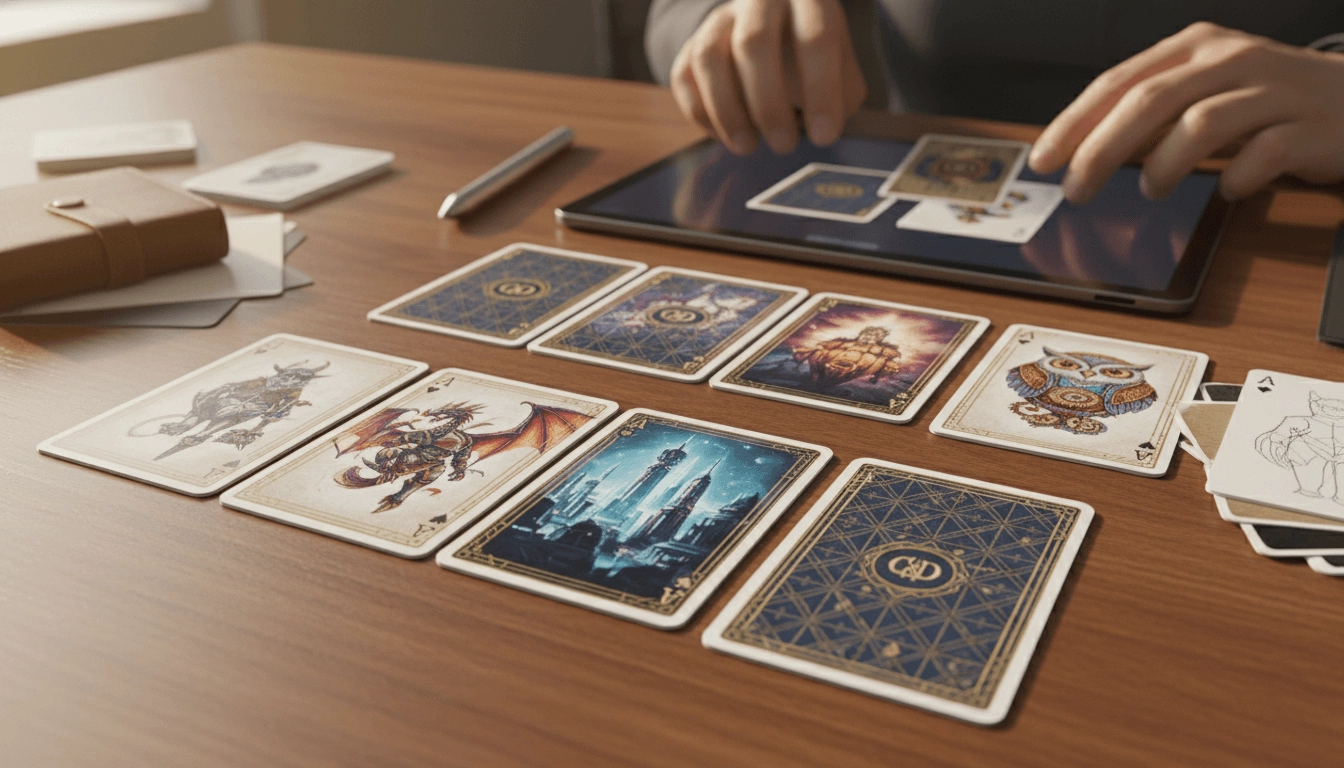
Top 10 Custom Card Game Manufacturers for USA (2026 Guide): Costs, MOQs & Eco-Friendly Options
About cooperation process
Do you accept international orders?
Yes, we accept orders from around the world! Shipping costs and delivery times may vary, so please contact us for specific details related to your location.
How long does the OEM process take?
The time depends on the complexity of the project, but generally OEM orders take about 6 weeks from design confirmation to delivery.
About customized services
Can I see a proof before production?
Yes! We provide digital proofs for your approval before we start production. This ensures that everything meets your expectations.
Do you offer samples?
Yes! We can provide samples of our card materials and finishes. Please contact us to request samples relevant to your project.
About price and payment
What payment methods do you accept?
We accept various payment methods, including credit cards, PayPal, and bank transfers. Please reach out for more details on payment options.
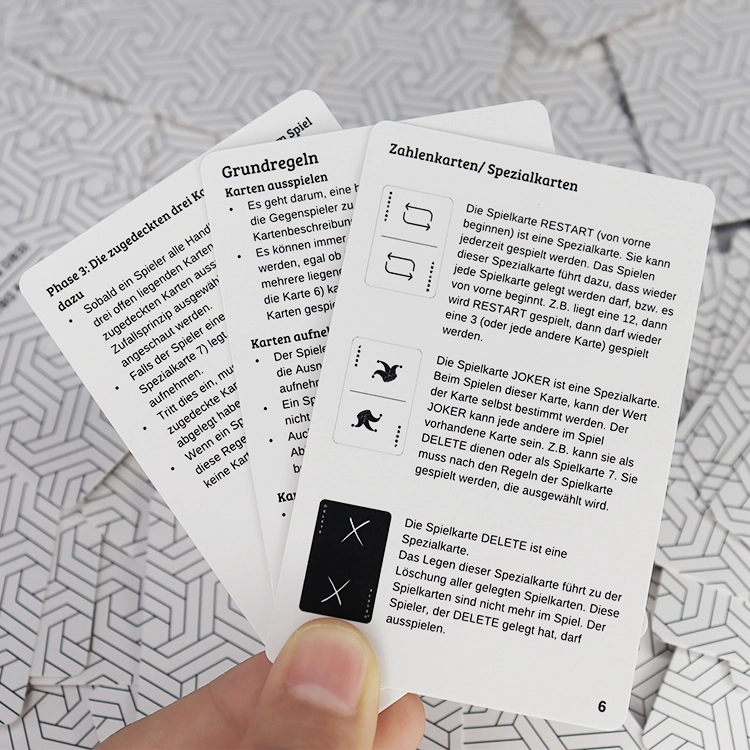
Board Game Manufacturing Top Quality Custom Logo custom design die cut fancy playing cards profesional card
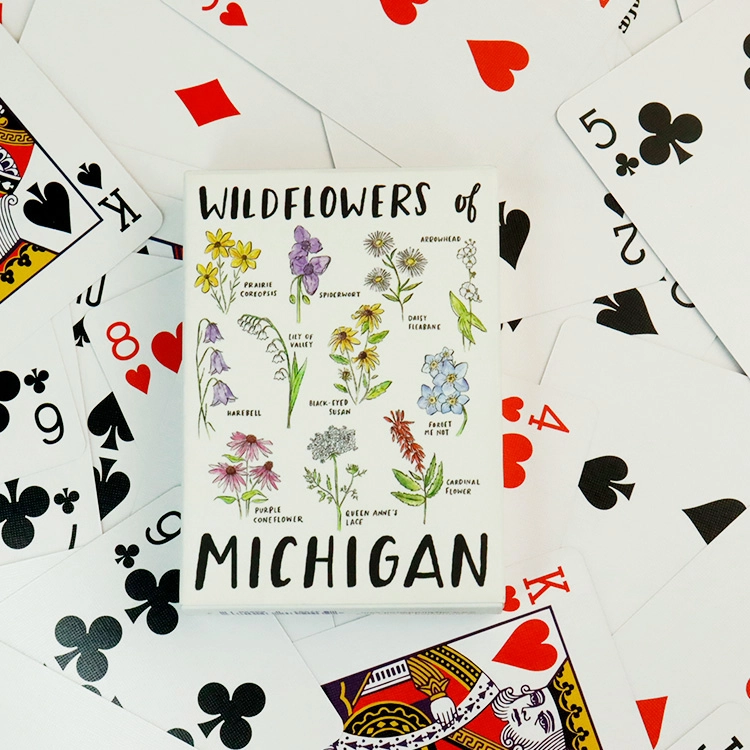
High Quality Eco-Friendly Durable Personalized Design Wildflowers Playing Cards with Custom Design Logo and Box
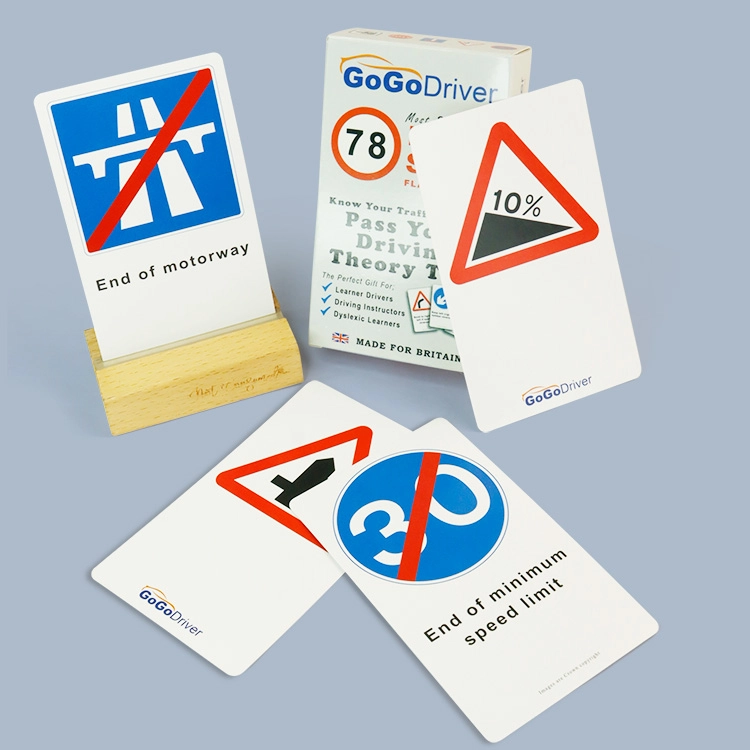
OEM Custom Driving Theory Cards | Personalized Traffic Rules & Test Prep Flashcards in Multiple Languages for Wholesale