
How to Design Custom Playing Cards: Tips for Beginners
- Designing Your First Deck: A Beginner's Roadmap for Custom Playing Cards
- Understand Purpose and Audience for Your Custom Playing Cards
- Set Budget, Minimum Order Quantities (MOQs) and Timeline
- Essential Design Elements for Custom Playing Cards
- Card Size and Layout
- Card Stock and Thickness
- Finishes and Coatings
- Artwork, Typography and Contrast
- Printing Processes, Materials and Their Trade-offs
- Prototyping, Proofs and Quality Control for Custom Playing Cards
- Packaging, Fulfillment and Shipping Considerations
- Cost Drivers and How to Optimize Budget for Custom Playing Cards
- Step-by-Step Example Workflow: From Concept to Shipped Product
- Common Beginner Mistakes and How to Avoid Them
- Why Choose Guangdong Yuhua Playing Cards Co., Ltd. for Custom Playing Cards
- Conclusion: Practical Next Steps
- FAQ — Common Questions About Custom Playing Cards
- 1. How long does it take to produce custom playing cards?
- 2. What is a reasonable minimum order quantity (MOQ) for custom playing cards?
- 3. What file formats and resolutions are required for card artwork?
- 4. Are eco-friendly materials available for playing cards?
- 5. How can I ensure colors match the design when printed?
- 6. What should I test during prototyping?
- 7. Can I order multiple variations in one production run?
- Contact and Product Inquiry (CTA)
- References
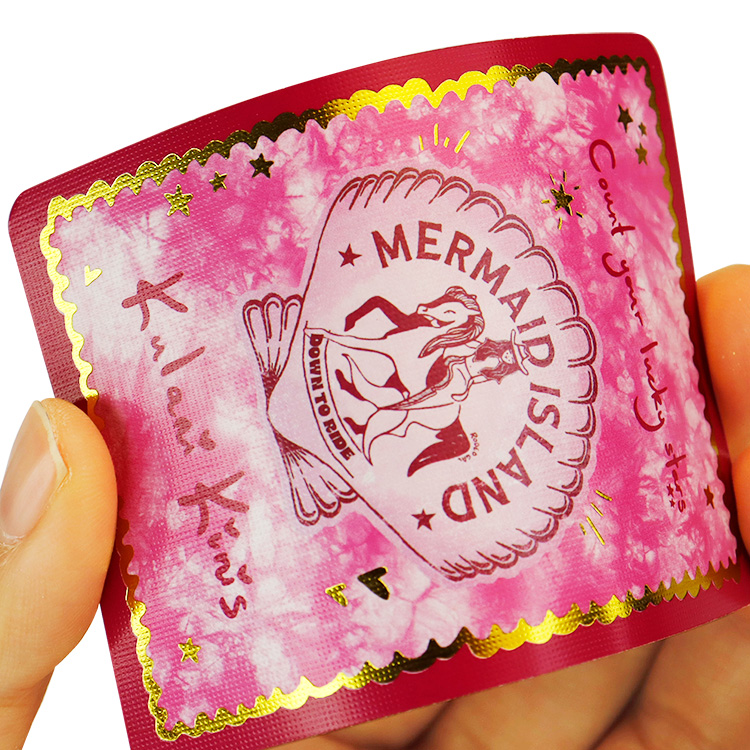
Designing Your First Deck: A Beginner's Roadmap for Custom Playing Cards
Designing custom playing cards is part creative project, part product engineering. Whether you’re creating a promo deck, a branded corporate gift, a tarot set, or an educational flash card series, the same fundamentals apply: define purpose, choose the right materials, design for print, test prototypes, and plan production and fulfillment. This guide walks beginners through each step, offers practical tips to avoid common pitfalls, and explains how production choices affect cost, durability, and player experience for custom playing cards.
Understand Purpose and Audience for Your Custom Playing Cards
Before any artwork or specs are chosen, clarify why you’re making custom playing cards and who will use them. Purpose defines many decisions:
- Promotional decks: prioritize brand visibility, logo placement, and cost efficiency.
- Casino-style decks: require High Quality stock, strict tolerances, and often tamper-proof features.
- Collectible or artist decks: emphasize unique artwork, specialty finishes, and limited runs.
- Educational/flash cards: focus on readability, durable finishes, and kid-safe materials.
Knowing audience age, usage frequency, and budget will guide card size, stock weight, finish, and packaging choices. Include the term custom playing cards in your product descriptions and discussions with manufacturers so they understand and can propose suitable production options.
Set Budget, Minimum Order Quantities (MOQs) and Timeline
Cost and lead time are two of the most common surprises for beginners. Ask potential manufacturers about MOQs, tooling/setup fees, proofing costs, and typical lead times. Small digital runs reduce MOQ but cost more per unit; offset printing lowers per-unit cost at scale but usually requires higher MOQ and longer setup.
Quick checklist:
- Target retail price or unit cost
- Acceptable lead time (prototype, production, shipping)
- MOQ and price breaks for higher volumes
- Budget for packaging and shipping
Essential Design Elements for Custom Playing Cards
Good card design balances aesthetics, functionality, and manufacturability. These are the core design elements to consider:
Card Size and Layout
Standard poker cards are 63 x 88 mm (2.5 x 3.5 in); bridge cards are narrower. Decide if you’ll use standard dimensions for compatibility with existing card cases and accessories. Account for bleed (typically 3–5 mm) and safe zones so important artwork isn’t trimmed.
Card Stock and Thickness
Card stock dictates feel and durability. Typical playing card stocks range from 300–330 gsm for high-quality consumer decks. For frequent use (casino-style), manufacturers often use specialized clay-coated boards with linen finishes. For educational flash cards, thicker uncoated stock may be preferred for writeability.
Finishes and Coatings
Finishes affect shuffle feel, durability, and gloss. Common options include:
- Linen/embossed finish — better grip and shuffle feel.
- Plastic coating (PU or aqueous varnish) — water resistance and durability.
- UV or spot UV — visual emphasis for special elements but increases cost.
Artwork, Typography and Contrast
Use vector art for linework and crisp typography. Ensure high contrast between foreground and background for readability (especially for numbered cards, icons, or educational content). Keep critical elements within the safe zone and provide readable fonts at typical card sizes (avoid very thin strokes).
Printing Processes, Materials and Their Trade-offs
Choose a printing method based on run size, budget, and desired finish. The table below summarizes common methods used for custom playing cards.
| Method | Best for | Advantages | Limitations |
|---|---|---|---|
| Offset (litho) | Medium to large runs | High color fidelity, lower unit cost at scale, good for special spot varnishes | Higher setup cost, larger MOQ, longer lead time |
| Digital (inkjet/toner) | Small runs, prototypes | Low setup cost, fast turnaround, economical for limited editions | Higher per-unit cost, limited special finishing options |
| Screen/spot printing | Special finishes, metallic inks | Vibrant solids, specialty inks possible | Not ideal for complex photographic imagery |
Material certifications matter. If you need sustainably sourced stock, request FSC® certified materials from the manufacturer and verify documentation.
Prototyping, Proofs and Quality Control for Custom Playing Cards
Never proceed directly to mass production without a physical proof or prototype. Digital proofs help check layout and color, but physical decks reveal issues like card warp, edge trimming, finish feel, and shuffle behavior.
Quality control checklist before full production:
- Paper/board sample approval (thickness, bend and stiffness)
- Color proof (printed on final stock if possible)
- Trim and bleed confirmation
- Coating and finish samples
- Function test (shuffle/sort/fanning if required)
- Packaging fit test (cards must fit in tuck box or case)
Work with manufacturers that publish defect rates and ISO-standard QM systems. For high-volume or brand-critical runs, request a Manufacturing Quality Plan that includes acceptance criteria and testing protocols.
Packaging, Fulfillment and Shipping Considerations
Packaging is not just decorative: it protects cards, influences shelf presence, and affects shipping costs. Popular options include tuck boxes, two-piece boxes, tin cases, and custom rigid boxes with foam inserts. Consider the following:
- Durability vs cost: two-piece rigid boxes are High Quality but costlier.
- Retail requirements: UPC, barcode, and compliance labeling for certain markets.
- Distribution: bulk packing vs retail-ready packaging affects labor and cost.
- Shipping: estimate volumetric weight and choose suitable courier/lead times.
Cost Drivers and How to Optimize Budget for Custom Playing Cards
The largest cost drivers are run quantity, stock choice, finishes, and packaging. Use the table below to prioritize savings:
| Factor | Impact on Cost | Optimization Tips |
|---|---|---|
| Run quantity | High — bigger runs lower unit cost | Take advantage of price breaks; consider preorders or crowd-funding |
| Card stock & finish | Medium — High Quality stocks increase cost | Choose functional stock that balances feel and price; limit special coatings |
| Packaging | Medium to high | Standard tuck boxes reduce cost; bulk pack to lower per-unit labor |
| Special inks/embellishments | High | Use sparingly; reserve spot UV/foil for focal elements |
Step-by-Step Example Workflow: From Concept to Shipped Product
- Concept & audience definition — write a brief that includes target user, use case, and desired retail price.
- Artwork & specifications — prepare vector files, select dimensions, and define bleed/safe areas.
- Material selection — request paper samples and finish swatches (FSC® certified options if required).
- Prototype & proof — approve physical prototype; test shuffle and durability.
- Production run — manufacturer executes production with agreed QC checkpoints.
- Packaging & finishing — apply finishes and pack according to fulfillment plan.
- Shipping & distribution — arrange logistics; verify customs/documentation for international shipments.
Common Beginner Mistakes and How to Avoid Them
- Skipping physical proofs — always test a print-on-stock prototype.
- Using low-resolution images — always supply 300 dpi for raster or vector artwork.
- Ignoring bleed and trim — place critical elements within the safe zone.
- Underestimating lead time — account for proofing, tooling, and shipping delays.
- Not verifying certifications — request documentation for FSC® or other claims.
Why Choose Guangdong Yuhua Playing Cards Co., Ltd. for Custom Playing Cards
For beginners who want a reliable manufacturing partner, Guangdong Yuhua Playing Cards Co., Ltd. (founded in 2014) offers an end-to-end solution for custom playing cards. Their key advantages, relevant to designers and brand owners, include:
- Specialization: R&D, design, and mass custom production of playing cards, game cards, and color-printed packaging—helpful when you need guidance from concept to finished product.
- Production capacity: A 6,000㎡ intelligent facility with advanced automated card production lines capable of 1,000,000+ units per month—useful for scaling from prototypes to large runs quickly.
- Quality and sustainability: Use of FSC® certified materials, ISO 9001 quality control systems, and a published defect rate under 0.5% provide measurable quality assurance.
- Innovation and IP: Over 20 patents and a High Quality brand sourcing imported materials demonstrate technical depth and commitment to product quality.
- Product range & services: They support OEM Playing Card, ODM Tarot cards, custom Game cards, and Learning Flash cards OEM services—covering most custom use cases from promotional decks to educational products.
- Global reach & support: Trusted worldwide with professional customer support, they handle fast, high-quality production and logistics for global markets.
We are committed to providing customers with high-quality and efficient playing card production services. If you require assistance selecting stock, finishes, or packaging, Yuhua can provide technical consultation, material samples, and prototyping support to ensure your custom playing cards meet both aesthetic and functional goals.
Conclusion: Practical Next Steps
Designing custom playing cards is a rewarding mix of creativity and product development. Start by clarifying purpose and audience, set a realistic budget and timeline, prioritize a physical prototype, and work with a manufacturer who can demonstrate capacity, certifications, and quality control. For beginners, partnering with an experienced manufacturer like Guangdong Yuhua Playing Cards Co., Ltd. can reduce risk and speed up time-to-market.
Ready to move from concept to prototype? Contact a manufacturer early in the design process, request material samples and a printed proof, and plan your fulfillment strategy before production. If you’d like professional support, consult with Guangdong Yuhua for OEM and ODM solutions tailored to custom playing cards, tarot decks, game cards, and educational flash cards.
FAQ — Common Questions About Custom Playing Cards
1. How long does it take to produce custom playing cards?
Typical timelines: prototypes (1–3 weeks with digital proofs), small digital runs (1–3 weeks), offset production for medium-to-large runs (4–8 weeks including proofs). Shipping and customs add additional days based on destination. Always confirm lead time with your manufacturer.
2. What is a reasonable minimum order quantity (MOQ) for custom playing cards?
MOQs vary by manufacturer and printing method. Digital printers can accept small runs of a few hundred decks, while offset printers may require MOQs in the thousands. Discuss MOQ and price breaks with potential suppliers.
3. What file formats and resolutions are required for card artwork?
Supply vector files (AI, EPS, PDF) for scalable line work and typography. For raster images, use 300 dpi at final print size. Include bleed (3–5 mm) and keep critical content within a safe zone.
4. Are eco-friendly materials available for playing cards?
Yes. Many manufacturers offer FSC® certified paper/board and water-based coatings. Request certification documents from the supplier to verify claims.
5. How can I ensure colors match the design when printed?
Request a color proof printed on the chosen stock. Use CMYK color profiles and consider Pantone spot colors for critical brand colors; note that spot color availability depends on the printing method and may increase cost.
6. What should I test during prototyping?
Test card feel (shuffle/fan), coating durability, corner rounding, edge trimming, readability of text/icons, and packaging fit. Also conduct a small wear test if cards will be used frequently.
7. Can I order multiple variations in one production run?
Yes, but it depends on tooling and printing setup. Digital printing makes short runs and multiple SKUs easier; offset runs typically require careful planning and may increase cost for multiple versions.
Contact and Product Inquiry (CTA)
If you’re ready to design and produce custom playing cards, Guangdong Yuhua Playing Cards Co., Ltd. can help from concept to global delivery. For fast quotes, sample requests, or technical consultation on OEM Playing Card, ODM Tarot cards, custom Game cards, and Learning Flash cards OEM advantages, contact Yuhua’s sales team or visit their website to view product options and request samples.
References
- FSC International — About FSC Certification: https://fsc.org/en (accessed 2025-11-20)
- ISO — ISO 9001 Quality Management: https://www.iso.org/iso-9001-quality-management. (accessed 2025-11-20)
- Wikipedia — Playing Card: https://en.wikipedia.org/wiki/Playing_card (accessed 2025-11-20)
- Printing Industry Overview — How Offset Printing Works (educational resource): https://www.printing.org/ (accessed 2025-11-20)
What is card game custom ?
Custom professional plastic poker cards Manufacturers and Suppliers in us
How to Choose the plastic playing cards brands manufacturer and supplier ?
How to Prototype Card Games with Custom Playing Cards
About customized services
Can I see a proof before production?
Yes! We provide digital proofs for your approval before we start production. This ensures that everything meets your expectations.
What is the minimum order quantity?
We do not have a strict minimum order quantity. Since we are a custom offset printing company, we recommend a minimum order of 500 sets, as the material costs are the same, but the printing setup costs are higher.
However, if your order quantity is less than 300 sets, our sales team will usually work with customers to help customers find the most competitive options.
About product selection
What types of playing cards do you offer?
We offer a wide range of playing cards including standard decks, custom-designed decks, and specialty cards. Whether you need classic poker cards, bridge cards, or custom promotional decks, we have the options to fit your needs.
Is there a design template I can use?
Yes, we provide design templates for different card types. You can download them from our website or request them directly from our team.
About cooperation process
How do you ensure the quality of your cards?
We implement strict quality control measures at every stage of production. Our team conducts thorough inspections to ensure each card meets our high standards before shipping.
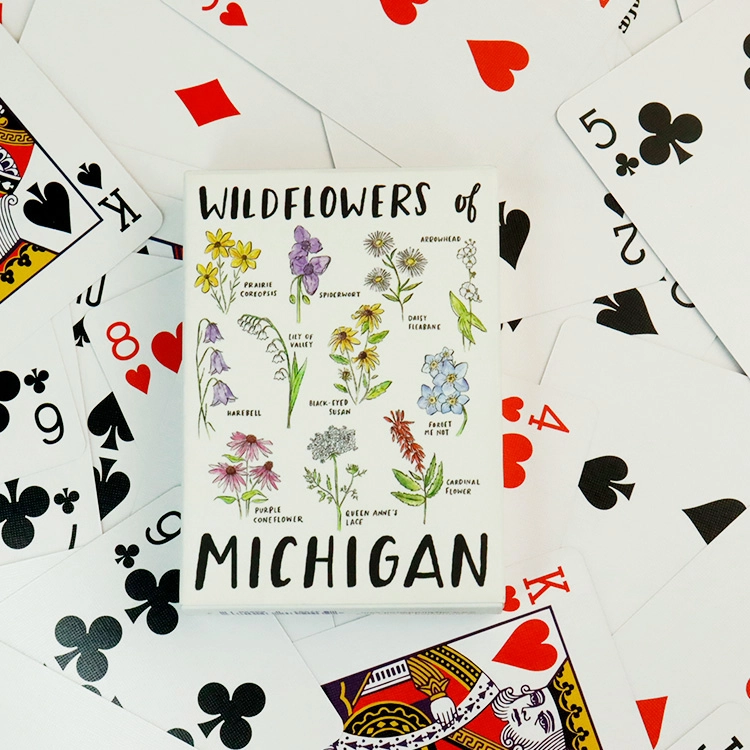
High Quality Eco-Friendly Durable Personalized Design Wildflowers Playing Cards with Custom Design Logo and Box
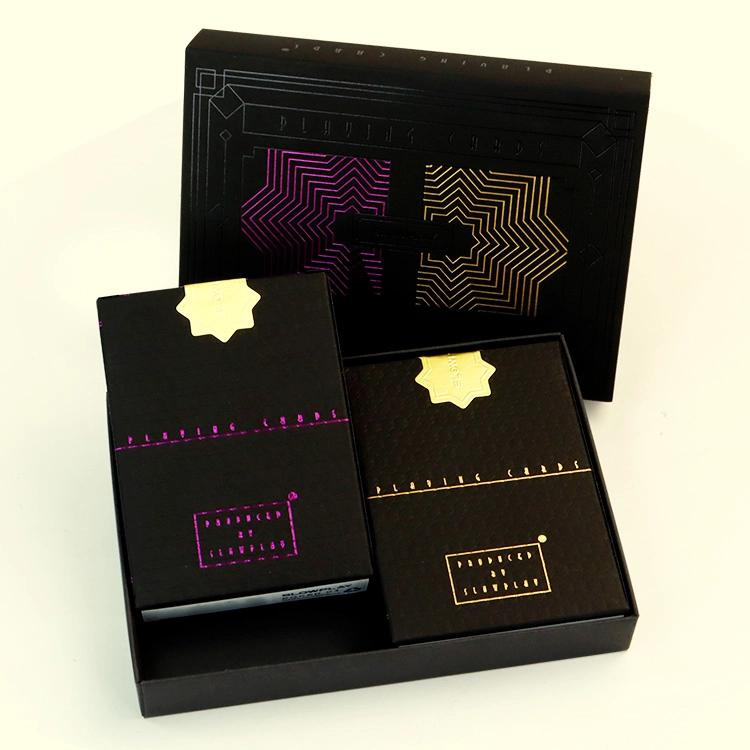
Custom Printing Luxury Two Sets Plastic Poker Playing Cards with Customized Packing
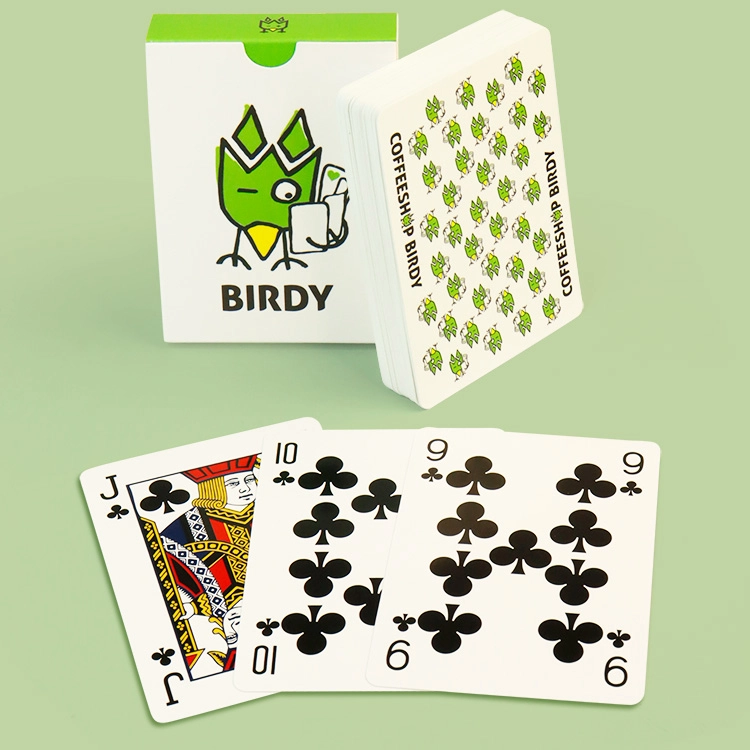
Custom Bird-Themed Playing Cards & Packaging for Promotional Gifts | Artistic Bird Collection Poker Deck for Wholesale
bbilaser
sq_AL