
Printing Options for Custom Tarot Cards: Pros & Cons
- Choosing the Right Production Method for Tarot Decks
- What buyers mean when they search for custom tarot cards
- Primary printing technologies for custom tarot cards (and when to use each)
- Offset lithography (sheet-fed)
- Digital printing (HP Indigo, inkjet/laser)
- PVC/plastic card production
- Specialty processes: hot-foil stamping, embossing, letterpress, gilding
- Card stock, thickness, and finishes: what affects feel and durability for custom tarot cards
- Comparing printing options: practical table for decision-making
- Cost drivers and how to optimize budget for custom tarot cards
- Quality control, certifications, and environmental considerations for custom tarot cards
- Scaling production: from artisanal decks to mass-market runs
- How Guangdong Yuhua Playing Cards Co., Ltd. supports custom tarot cards production
- Checklist for commissioning a custom tarot deck (practical next steps)
- FAQ — Common questions about printing custom tarot cards
- 1. What is the minimum order quantity for custom tarot cards?
- 2. Which finish is best for a tarot deck that's handled daily?
- 3. Can I add foil, embossing, or gilded edges to small runs?
- 4. Are eco-friendly materials available for tarot decks?
- 5. How long does a typical production run take?
- 6. Can I print different backs or personalize decks (e.g., names or numbers)?
- 7. How should I prepare artwork files to avoid delays?
- Contact & next steps — get a quote or request samples
- References
Choosing the Right Production Method for Tarot Decks
Designing a custom tarot deck is creative work; producing it well is a technical decision. For creators, publishers, or sellers searching for 'custom tarot cards', selecting the right printing method and finishing determines color fidelity, card feel, durability, minimum order, and final price. This article explains the main printing and finishing options for custom tarot cards, compares pros and cons with practical guidance, and outlines production and OEM/ODM capabilities relevant to scaling from small art runs to large retail launches.
What buyers mean when they search for custom tarot cards
behind 'custom tarot cards' often includes: finding a printer capable of small-batch runs, understanding costs and minimum order quantities, choosing materials and finishes that suit reading durability, and learning specialty effects—foil, gilding, embossing—that match High Quality art. We will address these concerns by detailing printing technologies, card stock choices, finishing options, typical cost drivers, and production timelines.
Primary printing technologies for custom tarot cards (and when to use each)
Most custom tarot decks are printed using one of a few mainstream technologies. Each has trade-offs in color accuracy, unit cost, setup cost, minimum order quantity (MOQ), and suitability for special finishes.
Offset lithography (sheet-fed)
Pros: Excellent color fidelity for CMYK process printing, consistent across large runs, economical per-unit at scale, compatible with many coatings and edge treatments.
Cons: Higher setup cost and longer lead time; not economical for very small runs; plate costs and makeready mean MOQs typically start in the low thousands for true cost-efficiency.
Best for: Large runs (thousands+), publishers who need tight color control and durable coatings (UV, AQ varnish), or decks with complex pantone matching when combined with spot colors.
Digital printing (HP Indigo, inkjet/laser)
Pros: Low setup costs and fast turnaround, ideal for print-on-demand and short runs, allows variable data printing (numbered decks, personalization), and increasingly good color and gamut with high-end machines (e.g., HP Indigo).
Cons: Per-unit cost higher than offset at scale; some digital presses have limitations for heavy coatings or certain specialty inks; long-term color consistency can vary between batches if not managed.
Best for: Small to medium runs (from single decks to a few thousand), prototype decks, limited editions, and highly personalized tarot decks.
PVC/plastic card production
Pros: Extremely durable, water-resistant, good for outdoor or heavily-used decks, smooth plastic surface supports vibrant printing. MOQ varies by manufacturer but can be competitive for mid to large runs.
Cons: Less eco-friendly (unless recycled PVC), markedly different tactile feel (slick rather than linen), limited recyclability, and printing options for certain special effects may be constrained.
Best for: Durable oracle decks, novelty decks, or cards intended for heavy handling (educational flash cards, instructions that must last years).
Specialty processes: hot-foil stamping, embossing, letterpress, gilding
These are frequently combined with offset or digital printing rather than used alone.
- Hot-foil stamping: metallic or holographic foils add High Quality appeal; requires tooling and die—good for limited High Quality editions.
- Embossing/debossing: tactile effects that enhance perceived value; increases unit cost and can complicate packaging.
- Letterpress: soft texture and vintage look; typically limited to low or medium runs due to setup and time.
Pros: Dramatically increases perceived value; differentiates product in a crowded market.
Cons: Adds cost, increases lead time, and usually requires larger MOQs to be cost-effective.
Card stock, thickness, and finishes: what affects feel and durability for custom tarot cards
Cardstock and finishes determine shuffle-ability, bend resistance, and longevity—crucial for a tarot deck meant to be handled often. Playing-card manufacturers typically reference 'points' (thousandths of an inch) or gsm (grams per square meter).
Common specifications:
- Paper-based playing card stock: often 300–350 gsm (approx. 0.28–0.35 mm when finished) with a layered board for snap/elasticity.
- Plastic/PVC cards: 300–800 microns (0.3–0.8 mm) depending on stiffness desired.
- Finishes: linen (air-cushion) for better shuffle/handling, smooth/paper finish for crisp prints, soft-touch/matte for High Quality feel, gloss/UV varnish for brighter color and scratch resistance.
Choosing finish depends on the intended user experience: readers who shuffle heavily often prefer linen stock for easier handling, while collectors may prefer soft-touch or gilded edges.
Sources for industry-standard materials and certifications: FSC for responsibly sourced paper and ISO 9001 for quality management (see references).
Comparing printing options: practical table for decision-making
The table below summarizes the common options against typical project requirements for custom tarot cards.
| Method | Best for | MOQ (typical) | Per-unit cost | Color & detail | Special finishes | Turnaround |
|---|---|---|---|---|---|---|
| Offset litho | Large retail runs | 1,000–5,000+ | Low at scale | Excellent | Fully compatible (foil, varnish) | 4–8 weeks |
| Digital (HP Indigo/inkjet) | Small runs, POD, personalization | 1–500 | Higher for large qtys | Very good (varies by press) | Compatible (some limits) | 1–3 weeks |
| PVC / Plastic | High-durability decks | 500+ | Moderate | High (bright) | Some foiling/gilding options | 3–6 weeks |
| Letterpress / Embossing | High Quality / artisanal decks | 200+ | High | Excellent for spot colors/textures | Perfectly suited | 4–10 weeks |
Note: the MOQs and timelines above are typical industry ranges; specific shops or factories may provide different thresholds. For exact quotes, request a cost breakdown that separates plates/dies, printing, finishing, and packaging.
Cost drivers and how to optimize budget for custom tarot cards
Primary cost drivers:
- Quantity — per-unit cost drops significantly with scale (offset becomes cheaper at higher volumes).
- Card size and number of cards — standard tarot decks (78 cards) cost more per deck than shorter oracle decks due to extra printing and cutting.
- Special finishes — foils, embossing, gilded edges, and High Quality soft-touch coatings add material and setup costs.
- Packaging complexity — custom tuck boxes, magnetic closures, or boxed sets increase total cost and may require separate tooling.
- Artwork preparation — spot color matching, bleed/content safety, and high-resolution files reduce rework but may require designer time.
Ways to optimize:
- Prototype with digital printing before committing to offset tooling.
- Limit spot foiling to key design elements rather than full-card coverage.
- Use standard tuck or two-piece boxes instead of fully custom rigid boxes for cost savings.
- Plan logistics and combine SKUs to reach lower per-unit pricing tiers.
Quality control, certifications, and environmental considerations for custom tarot cards
When selecting a supplier, evaluate quality control and certifications. Look for ISO 9001 (quality management) and FSC certification for responsibly sourced paper. These indicate robust processes and environmental stewardship and are verifiable via the certifying bodies.
Durability testing: ask suppliers for defect rates, sample test results (bend tests, surface abrasion tests), and reports on print consistency across batches. For decks intended for daily use or retail, a defect rate under 1% is typical for experienced factories; world-class manufacturers often report defect rates under 0.5% when using automated inspection.
Scaling production: from artisanal decks to mass-market runs
If you expect to scale a tarot product, two choices are common:
- Start small with digital printing to validate the market, then move to offset for cost efficiency at scale.
- Work with an experienced OEM/ODM partner that supports both short runs (digital) and mass custom production (offset, automated lines), and that can assist with packaging and fulfillment.
Timesaving tip: request samples of card stock, finishes, and packaging from potential partners. A factory that can provide color proofs, mockups, and a sample deck speeds approval and reduces design iterations.
How Guangdong Yuhua Playing Cards Co., Ltd. supports custom tarot cards production
For creators and brands ready to move from prototype to production, Guangdong Yuhua Playing Cards Co., Ltd. (founded 2014) specializes in R&D, design, and mass custom production of playing cards, game cards, and color-printed packaging. With a 6,000㎡ intelligent facility and advanced automated card production lines, Yuhua can produce 1,000,000+ units per month, making it well suited for projects that need both quality and scale.
Yuhua's core strengths include:
- FSC® certified materials for environmentally conscious projects.
- ISO 9001 quality control systems ensuring consistent production standards.
- Reported defect rates under 0.5% through automated inspection and process control.
- Over 20 patents and a portfolio of High Quality-brand experience using imported raw materials trusted worldwide.
Product and service highlights relevant for tarot creators:
- OEM Playing Cards production with high-speed, consistent output for retail distribution.
- ODM Tarot cards development — collaborative design, prototyping, and tooling.
- Custom Game cards and Learning Flash cards with variable printing and educational use durability.
- Packaging capabilities for tuck boxes, rigid boxes, magnetic boxes, and custom printed sleeves.
Why choose an experienced partner like Yuhua: they combine short-run flexibility (digital proofs and prototypes) with the capability to scale into large automated offset runs, providing a clear pathway from a crowdfunded or limited-edition launch to mass retail distribution. Their combination of certifications, production capacity, and material sourcing helps minimize common scaling risks: inconsistent color, packaging delays, and quality defects.
Checklist for commissioning a custom tarot deck (practical next steps)
- Finalize card count and size (standard tarot: 78 cards; consider slimmer decks for portability).
- Choose primary printing method based on expected quantity (digital for prototypes/small runs; offset for scale).
- Request material samples (cardstock, coatings, and edge treatments).
- Ask suppliers for a full quote that separates setup/tooling, per-unit printing, finishing, and packaging.
- Confirm certifications (FSC, ISO) and ask for recent batch defect statistics and sample test reports.
- Order a pre-production proof or small pre-order to validate quality before a full run.
FAQ — Common questions about printing custom tarot cards
1. What is the minimum order quantity for custom tarot cards?
It depends on the printing method and factory. Digital printing can allow MOQs of 1–50 decks, while offset lithography typically becomes cost-effective at 1,000+ decks. Factories with flexible lines may offer intermediate MOQs; always request a quote for your exact specifications.
2. Which finish is best for a tarot deck that's handled daily?
Linen (air-cushion) stock or a matte/soft-touch finish with an appropriate varnish offers a balance of shuffle-ability and durability. Linen allows easier shuffling; soft-touch gives a High Quality feel but can show wear faster if not properly sealed.
3. Can I add foil, embossing, or gilded edges to small runs?
Yes, but expect higher per-unit costs due to tooling and setup. Digital-first factories can sometimes offer selective foil or hot-stamp effects for smaller batches, but full-metallic coverage is typically more economical at larger quantities.
4. Are eco-friendly materials available for tarot decks?
Yes. Many factories offer FSC-certified paperboard and vegetable-based inks. Ask the supplier for certificates and inquire about recyclable packaging options if minimizing environmental impact is a priority.
5. How long does a typical production run take?
Turnaround depends on method and complexity: digital short runs can ship in 1–3 weeks; offset runs including tooling and finishing may take 4–8+ weeks. Adding specialty finishes like foil or embossing can extend lead times.
6. Can I print different backs or personalize decks (e.g., names or numbers)?
Yes. Digital printing is ideal for personalization and small-batch variations. For offset, consider adding variable-data printing for serial numbers or limited editions, though this adds cost and complexity.
7. How should I prepare artwork files to avoid delays?
Provide high-resolution (300 dpi or greater) images in CMYK, include bleed (commonly 3–5 mm), and outline fonts or supply fonts used. Ask your printer for a template and color profile (ICC) to ensure accurate proofs and minimize rework.
Contact & next steps — get a quote or request samples
If you are planning a tarot deck project and want a reliable partner who can handle prototypes, short runs, and mass production, Guangdong Yuhua Playing Cards Co., Ltd. can help. With a focus on quality (ISO 9001), responsible materials (FSC®), low defect rates, and strong OEM/ODM experience, Yuhua supports designers and brands through the full production lifecycle.
Contact your manufacturing consultant or request a quote and free samples to compare card stock and finishes. For fast support and detailed proposals tailored to your deck size, print method, and packaging preferences, reach out to Guangdong Yuhua Playing Cards Co., Ltd.
References
- Tarot — Wikipedia. https://en.wikipedia.org/wiki/Tarot (Accessed 2025-12-13)
- Offset printing — Wikipedia. https://en.wikipedia.org/wiki/Offset_printing (Accessed 2025-12-13)
- Digital printing — Wikipedia. https://en.wikipedia.org/wiki/Digital_printing (Accessed 2025-12-13)
- Hot stamping — Wikipedia. https://en.wikipedia.org/wiki/Hot_stamping (Accessed 2025-12-13)
- Embossing — Wikipedia. https://en.wikipedia.org/wiki/Embossing (Accessed 2025-12-13)
- Forest Stewardship Council (FSC) — Certification information. https://fsc.org/en (Accessed 2025-12-13)
- ISO 9001 — Quality management. https://iso.org/iso-9001 (Accessed 2025-12-13)
- Cartamundi — Playing cards production insights. https://www.cartamundi.com/en (Accessed 2025-12-13)
For specific quotes, sample requests, or technical production questions, contact Guangdong Yuhua Playing Cards Co., Ltd. for professional support and OEM/ODM services tailored to custom tarot cards and playing card products.
Design Files, Templates & Artwork Tips for Bulk Playing Cards
Top 10 custom playing cards cheap Manufacturers and Supplier Brands in Germany
Custom playing cards poker Manufacturers and Suppliers in us
Custom makers of playing cards Manufacturers and Suppliers
About customized services
Can I customize the design of my cards?
Absolutely! We offer full customization options, from card design and size to finishes and packaging. Our design team is ready to collaborate with you to create the perfect look.
Do you offer samples?
Yes! We can provide samples of our card materials and finishes. Please contact us to request samples relevant to your project.
About price and payment
What payment methods do you accept?
We accept various payment methods, including credit cards, PayPal, and bank transfers. Please reach out for more details on payment options.
About product selection
Is there a design template I can use?
Yes, we provide design templates for different card types. You can download them from our website or request them directly from our team.
After-sales support
Do you offer eco-friendly options?
Yes, we do offer eco-friendly materials and printing options. Please inquire about our sustainable options.
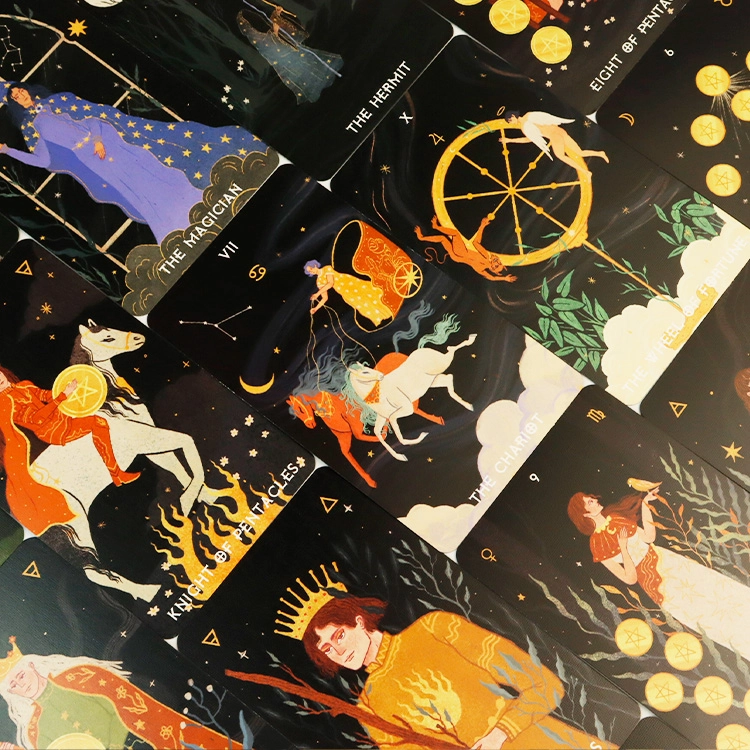
High Quality Tarot Cards with Sleeve Box Packaging | Premium Custom Tarot Deck Set for Enhanced Presentation & Protection
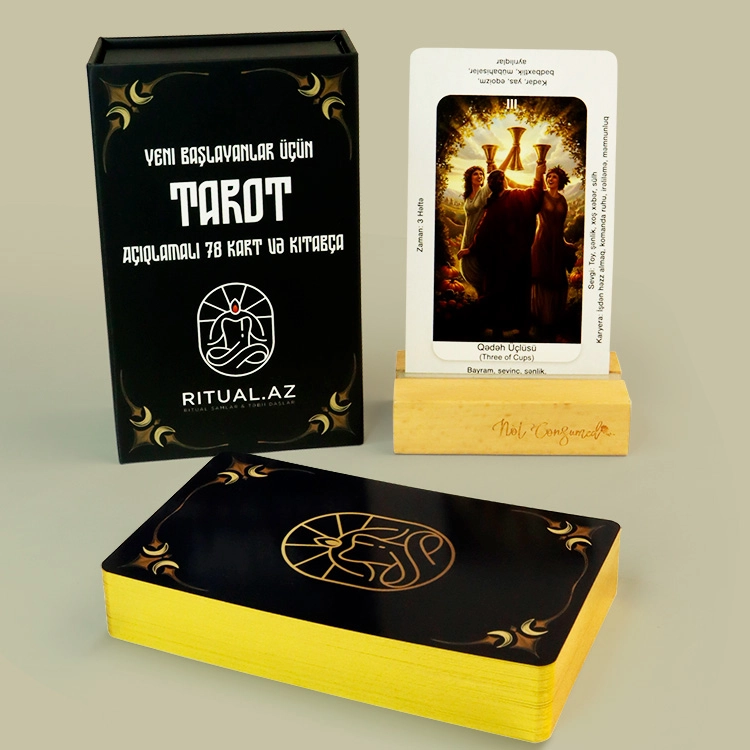
Hot Foil Stamped Tarot Cards with Book-Style Box | Premium Gold Edge Tarot Deck for Custom
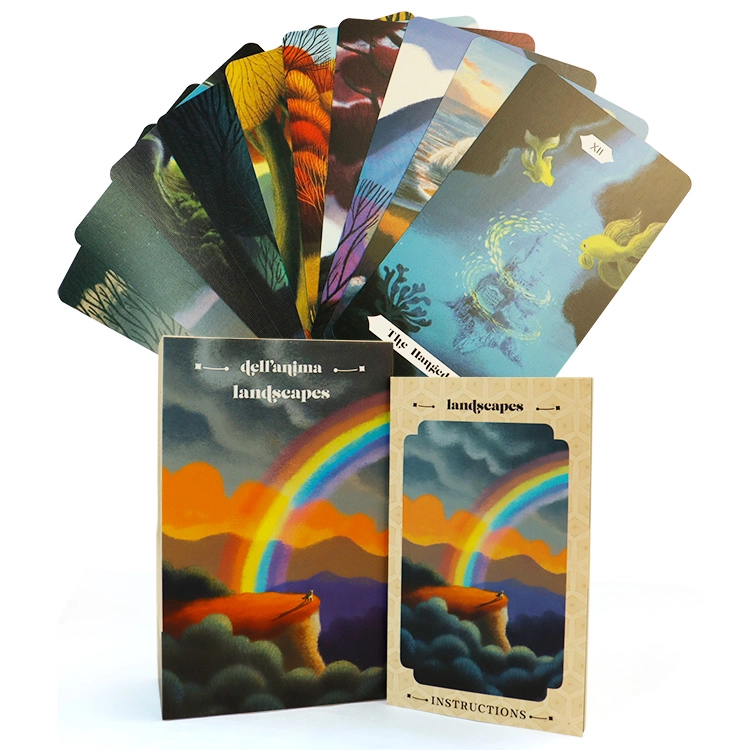
Rainbow Blue Edge Tarot Cards with lid and base Box | Custom Luxury Tarot Cards Deck Manufacturer
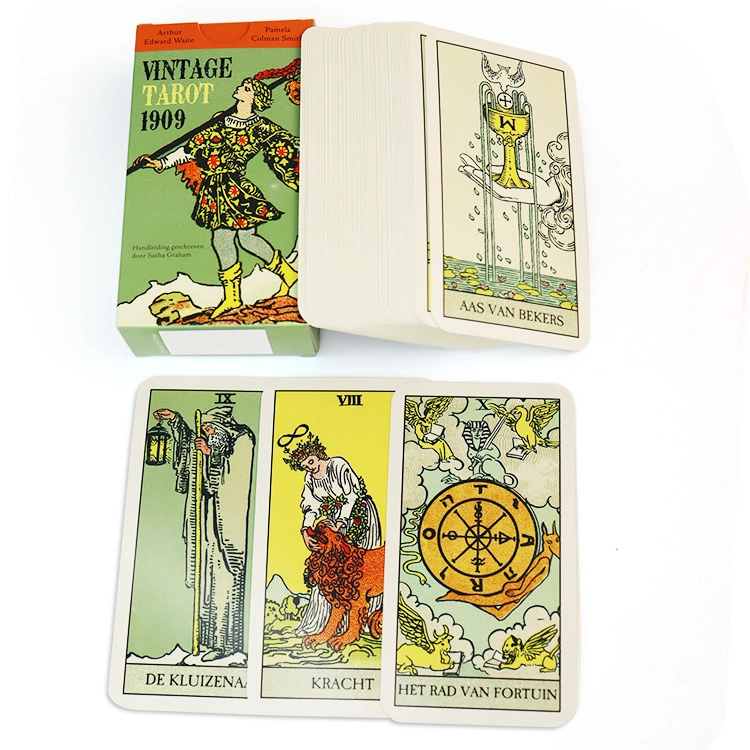
bbilaser
sq_AL