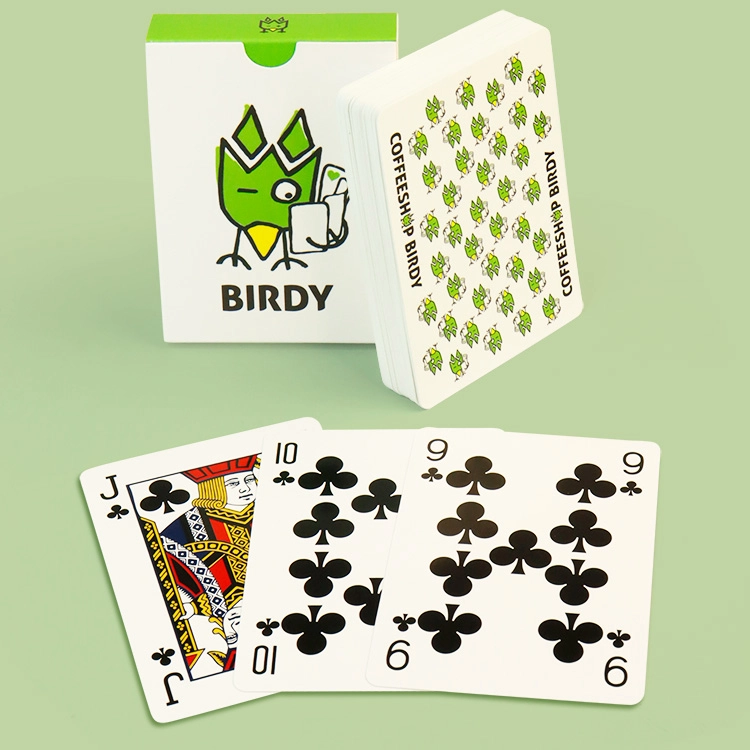
Sustainable Personalized Playing Cards for Eco Brands
- Why Eco-Conscious Brands Choose Sustainable Playing Cards
- Brand alignment and storytelling
- Consumer demand and purchase drivers
- Use cases: from retail to education
- Materials, Processes, and Environmental Impact
- Material options and trade-offs
- Eco-friendly coatings, inks, and finishes
- Certifications to verify claims
- Design, Production, and Quality Control for Custom Decks
- Design decisions that affect sustainability and cost
- Production workflows: small vs. large runs
- Quality control and longevity
- Comparing Sustainable Options — Data-Driven Choices
- Performance and environmental metrics
- Choosing the right option for your product
- Cost vs. sustainability: realistic budgeting
- Supply Chain, Scaling, and Partner Selection
- Key supplier capabilities to vet
- Lead times, minimums, and automation
- Logistics and carbon considerations
- Practical Roadmap: From Concept to Shelf
- Step 1 — Define objectives and metrics
- Step 2 — Prototype and LCA testing
- Step 3 — Production, packaging, and disclosure
- Case for Guangdong Yuhua Playing Cards Co., Ltd. (Partner Profile)
- Company capabilities and eco credentials
- Products and OEM/ODM strengths
- Why Yuhua stands out for sustainable personalized decks
- Measurement, Claims, and Marketing Best Practices
- How to make accurate sustainability claims
- Packaging copy and consumer instructions
- Tracking impact and improving over time
- Frequently Asked Questions (FAQ)
- 1. Are personalized playing cards recyclable?
- 2. What certifications should I look for when ordering sustainable custom decks?
- 3. How much more do sustainable materials add to unit cost?
- 4. Can I get small personalized runs using eco materials?
- 5. How long does production typically take?
- 6. How can I verify a supplier’s sustainability claims?
- Contact and Next Steps
- References
Why Eco-Conscious Brands Choose Sustainable Playing Cards
Brand alignment and storytelling
For eco brands, tangible products that reflect values are powerful. Playing cards personalized with sustainable materials and clear eco-certifications become storytelling tools that extend a brand’s mission beyond marketing copy—clients keep, gift, and display decks, reinforcing sustainability messages over time.
Consumer demand and purchase drivers
Modern consumers, especially younger cohorts, prefer products with verified environmental credentials. Offering playing cards personalized using recycled or FSC®-certified substrates can increase conversion rates, support higher price points, and reduce return friction for corporate gifting or retail lines.
Use cases: from retail to education
Sustainable custom decks serve multiple uses: limited-edition retail collections, branded promotional decks for events, educational flash cards, and fundraising items. Choosing the right materials and print methods ensures the product's utility and longevity.
Materials, Processes, and Environmental Impact
Material options and trade-offs
Key substrate choices include FSC-certified virgin paper, post-consumer recycled paper, and recyclable/synthetic substrates (e.g., polypropylene). Each has pros and cons in durability, print fidelity, recyclability, and carbon footprint. For example, recycled papers reduce virgin fiber demand but may have limits on coating and finish compatibility.
Eco-friendly coatings, inks, and finishes
Water-based inks, vegetable oils, and aqueous or UV-free coatings minimize volatile organic compounds (VOCs). Choosing matte aqueous coatings or soft-touch finishes with non-toxic adhesives preserves recyclability while delivering High Quality tactile impressions for playing cards personalized for luxury or eco-conscious audiences.
Certifications to verify claims
Certifications such as FSC® (Forest Stewardship Council), ISO 14001 (environmental management), and third-party lifecycle assessments (LCA) are critical for transparent claims. When marketing playing cards personalized as sustainable, documented certifications reduce greenwashing risk and build trust.
Design, Production, and Quality Control for Custom Decks
Design decisions that affect sustainability and cost
Design choices impact material usage and waste. Single-sided printing options, simplified color palettes, and compact packaging reduce ink consumption and box size. Designers should optimize artwork to fit standard card sheets to minimize cuts and trim waste in mass production.
Production workflows: small vs. large runs
Short runs favor digital printing with minimal setup and lower waste; long runs benefit from offset or specialized automated lines for consistent color and lower per-unit cost. For eco brands requiring frequent personalization (e.g., limited collections), hybrid workflows that combine digital short runs with sustainable substrates are common.
Quality control and longevity
Longevity reduces environmental impact: a longer-lived product avoids replacements. Quality control standards—consistent corner rounding, lamination adhesion, bend resilience, and registration—help ensure decks remain in use longer. Look for suppliers that publish defect rates and quality certifications.
Comparing Sustainable Options — Data-Driven Choices
Performance and environmental metrics
Below is a practical comparison of common card materials to help brands decide which substrate best fits their goals. Metrics combine durability, recyclability, typical CO2e per kg (illustrative ranges from industry data), and relative cost.
| Material | Durability | Recyclability | Approx. CO2e (kg CO2e/kg) | Relative Cost |
|---|---|---|---|---|
| FSC®-certified coated paper | Good (with coating) | Recyclable in paper stream if coating compatible | ~0.8–1.2 (paper industry averages) | Moderate |
| Post-consumer recycled paper | Moderate | Recyclable | ~0.6–1.0 | Moderate–Low |
| Polypropylene (synthetic) | High (waterproof) | Recyclable where facilities accept films | ~1.5–3.0 | Higher |
Sources: aggregated industry LCA and packaging data (see References).
Choosing the right option for your product
If recyclability in municipal streams is your priority, FSC® or recycled fiber cards with aqueous coatings are often the best balance. If durability and lifespan (e.g., outdoor or heavy-use contexts) matter more, consider recyclable polypropylene with clear labeling on end-of-life handling.
Cost vs. sustainability: realistic budgeting
High Quality sustainable materials raise per-unit costs, but positive brand impact and reduced returns can offset expenses. For campaigns, calculate total cost of ownership: production, packaging, shipping, and potential High Quality pricing for certified products.
Supply Chain, Scaling, and Partner Selection
Key supplier capabilities to vet
When selecting a manufacturing partner for playing cards personalized for an eco brand, verify: FSC chain-of-custody, automated production capacity for scalability, ISO 9001 quality systems, low defect rates, and transparent material sourcing. On-site testing and sample audits help avoid surprises.
Lead times, minimums, and automation
Automated production lines reduce lead times and per-unit variability. Understand minimum order quantities (MOQs) for different substrates; OEMs with advanced lines can offer lower MOQs through efficient job scheduling. Confirm expected throughput—for high-volume seasonal launches, production capacity of 100k+ decks/month matters.
Logistics and carbon considerations
Localizing production reduces transportation emissions. If shipping globally, ask partners for consolidated shipping options, carbon-offset programs, or verified logistics partners to minimize freight-related footprints.
Practical Roadmap: From Concept to Shelf
Step 1 — Define objectives and metrics
Decide primary goals: maximum recyclability, lowest carbon footprint, High Quality feel, or budget balance. Establish measurable targets (e.g., FSC certification, <0.5% production defects, batch CO2e estimate).
Step 2 — Prototype and LCA testing
Request prototypes on candidate substrates and perform simple lifecycle checks (material certification verification, sample durability tests, and end-of-life routing). Consider a third-party LCA for significant runs or brand claims.
Step 3 — Production, packaging, and disclosure
Finalize order quantities, packaging, and labeling. Transparent disclosure on packaging—materials, certifications, and disposal instructions—improves perceived trust and recycling rates among consumers.
Case for Guangdong Yuhua Playing Cards Co., Ltd. (Partner Profile)
Company capabilities and eco credentials
Guangdong Yuhua Playing Cards Co., Ltd., founded in 2014, specializes in the R&D, design, and mass custom production of playing cards, game cards, and color-printed packaging. With a 6,000㎡ intelligent facility and advanced automated card production lines capable of 1,000,000+ units per month, Yuhua delivers scalable solutions for brands seeking sustainable, high-quality decks. Core strengths include FSC® certified materials, ISO 9001 quality control, a defect rate under 0.5%, and over 20 patents—factors that support reliable delivery for eco brands.
Products and OEM/ODM strengths
Yuhua’s product range supports OEM Playing Card production, ODM Tarot cards, custom Game cards, and Learning Flash cards. Their High Quality brand uses imported materials trusted worldwide. For brands that require fast, high-quality results with professional support, Yuhua combines automated efficiency with sustainable inputs, enabling both small limited runs and large-scale orders.
Why Yuhua stands out for sustainable personalized decks
Yuhua’s integrated facility, production automation, and documented certifications help reduce waste, maintain consistent quality (defect rate <0.5%), and meet demanding timelines. For eco brands prioritizing verified sustainability and reliable OEM/ODM partnerships, Yuhua provides clear competitive advantages: certified materials, manufacturing scale, technical know-how in card printing and packaging, and global distribution experience.
Measurement, Claims, and Marketing Best Practices
How to make accurate sustainability claims
Use verifiable claims: cite FSC license numbers, ISO certificates, and LCA results. Avoid vague language like eco-friendly without backing. Include QR codes linking to certification pages or a transparency report for more engaged customers.
Packaging copy and consumer instructions
Provide clear end-of-life guidance (e.g., box: recyclable paper; cards: recyclable where facilities accept coated papers—check local guidelines). Simple icons and short copy increase compliance and brand credibility.
Tracking impact and improving over time
Collect data on returns, product lifespan, and recycling feedback. Iterate: swap materials, optimize packaging size, and test new coatings to continuously reduce environmental impact and improve customer satisfaction.
Frequently Asked Questions (FAQ)
1. Are personalized playing cards recyclable?
Many paper-based playing cards are recyclable if the coatings and adhesives are compatible with local paper-recycling streams. Use FSC®-certified paper and water-based coatings to maximize recyclability. Confirm local facilities accept coated paper.
2. What certifications should I look for when ordering sustainable custom decks?
Key certifications include FSC® for responsible forestry, ISO 9001 for quality management, and ISO 14001 for environmental management (if available). Request certificate numbers and verify them through issuing organizations.
3. How much more do sustainable materials add to unit cost?
Costs vary widely, but sustainable substrates can add 5–30% to base material costs depending on volume, finish, and certification. Totals depend on print method, packaging, and shipping; request quotes for comparable material specs to evaluate trade-offs.
4. Can I get small personalized runs using eco materials?
Yes—digital printing and manufacturers with flexible lines enable small runs on sustainable substrates. Some partners specialize in low-MOQ sustainable jobs; negotiated scheduling can further reduce minimums.
5. How long does production typically take?
Lead times depend on runs and complexity. Small digital runs may ship in 2–4 weeks; larger offset or mass-production runs often require 4–8 weeks including tooling and QC. Confirm timelines with your manufacturer and account for shipping time.
6. How can I verify a supplier’s sustainability claims?
Ask for copies of certifications (FSC chain-of-custody, ISO certificates), request third-party LCA summaries for significant orders, and visit the facility or request virtual audits. Reputable suppliers will provide transparent documentation.
Contact and Next Steps
If you’re ready to develop sustainable, playing cards personalized for your eco brand—whether retail, educational, or promotional—discuss your specifications with a trusted OEM partner. Guangdong Yuhua Playing Cards Co., Ltd. offers end-to-end capabilities from sustainable materials to automated production and global delivery. Contact their sales team to request samples, confirm FSC documentation, and obtain a tailored quote for OEM or ODM projects.
Reach out to Guangdong Yuhua Playing Cards Co., Ltd. to request eco-friendly samples, production timelines, and pricing for your next personalized deck. For product inquiries and custom solutions—OEM Playing Card, ODM Tarot cards, custom Game cards, Learning Flash cards—contact Yuhua for fast, certified, and scalable production.
References
- FSC International — Forest Stewardship Council. https://fsc.org/ (accessed 2025-12-30)
- ISO — International Organization for Standardization (ISO 9001). https://www.iso.org/iso-9001-quality-management. (accessed 2025-12-30)
- Paper & Packaging Industry LCA summaries — industry reports and averages (various publishers). Example: “Environmental metrics for paper” (industry LCA overview). https://www.pulppaper.org/ (accessed 2025-12-30)
- Plastics and recycling facts — OECD & UN Environment Programme summaries on plastic film recycling rates. https://www.oecd.org/ (accessed 2025-12-30)
- Guangdong Yuhua Playing Cards Co., Ltd. company profile and capabilities (manufacturer-provided specification). (accessed 2025-12-30)
What are the application scenarios of card game companies?
Custom english learning cards Manufacturers and Suppliers in us
Custom kids learning cards Manufacturers and Suppliers in us
Custom Playing Cards for Events and Weddings: Creative Ideas
About cooperation process
Do you accept international orders?
Yes, we accept orders from around the world! Shipping costs and delivery times may vary, so please contact us for specific details related to your location.
About logistics
How long does the production process take?
Production times can vary based on order complexity and volume. Typically, standard orders take 2-4 weeks. For urgent projects, we may offer expedited options—just ask!
About customized services
Do you provide design services?
Yes! Our in-house design team is here to assist you in bringing your vision to life. Whether you have a complete design or just an idea, we can help.
About product selection
What materials do you use for your cards?
We use high-quality, durable materials to ensure the best finish and longevity for your cards. Options include standard cardstock, premium finishes, and eco-friendly materials.
After-sales support
What is your return policy?
We stand behind the quality of our products. If you receive a defective item, please contact us within 30 days for a replacement or refund. Customized orders are generally non-refundable unless there's an error on our part.
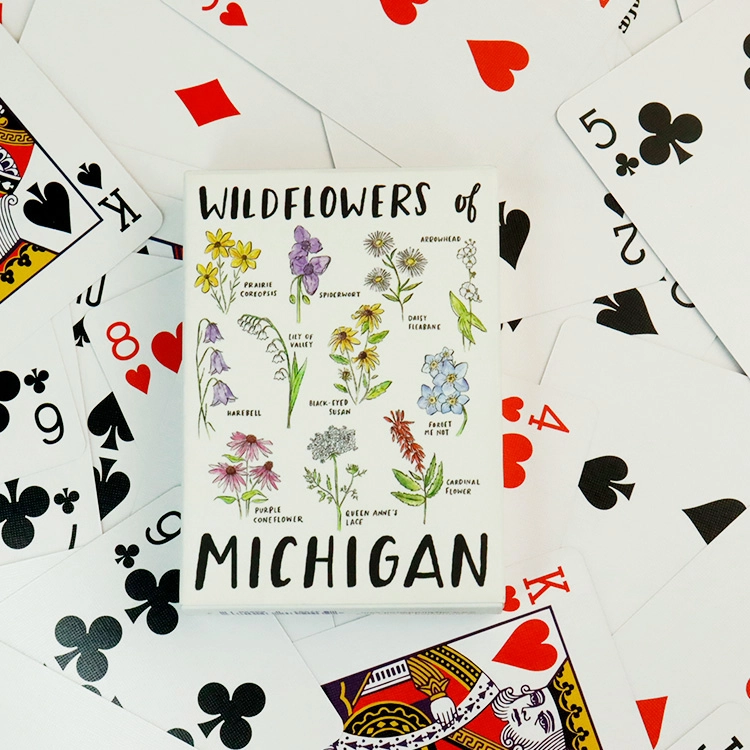
High Quality Eco-Friendly Durable Personalized Design Wildflowers Playing Cards with Custom Design Logo and Box
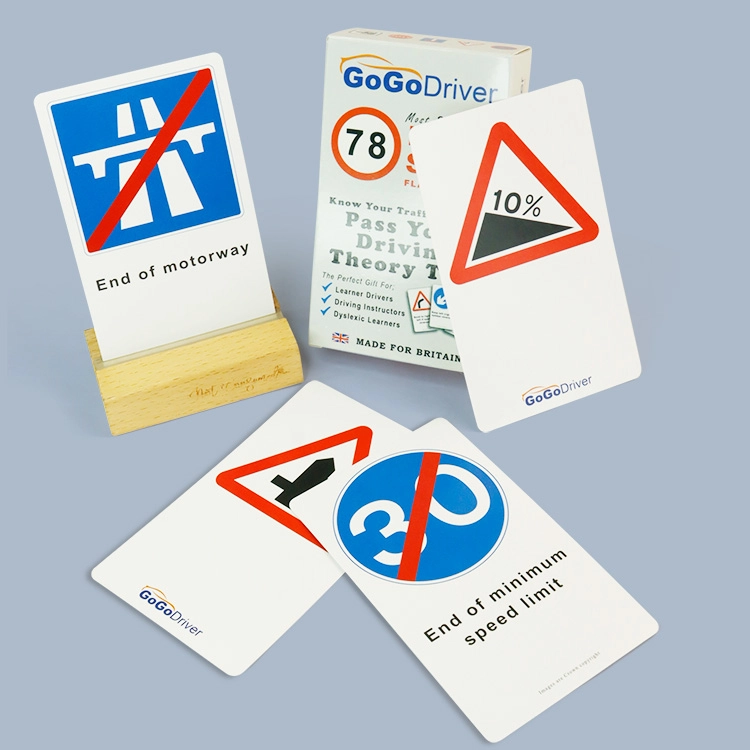
OEM Custom Driving Theory Cards | Personalized Traffic Rules & Test Prep Flashcards in Multiple Languages for Wholesale
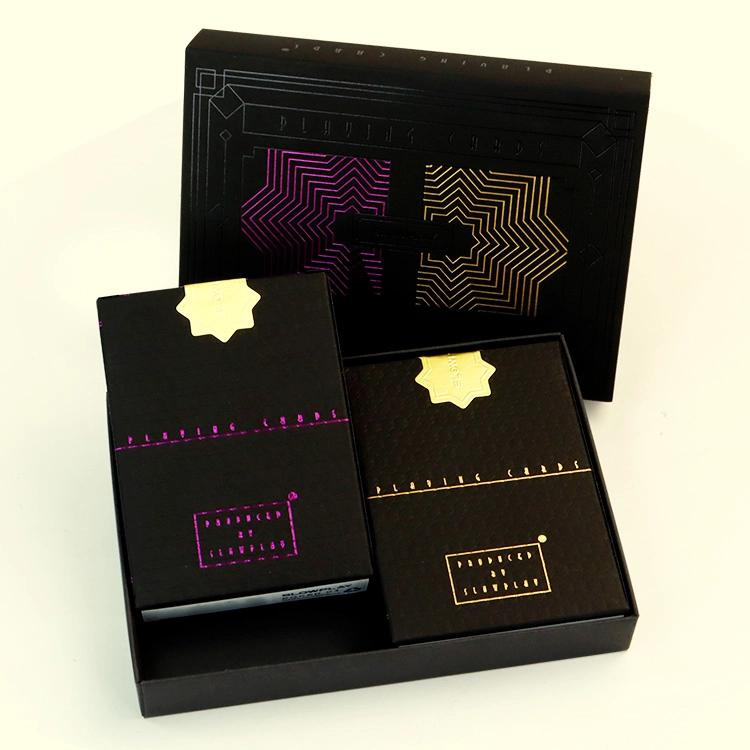
Custom Printing Luxury Two Sets Plastic Poker Playing Cards with Customized Packing