
Custom Learning Cards for Language Learning: Tips and Examples
- Custom Learning Cards for Language Learning: Tips and Examples
- Why custom learning cards work for language learning
- Evidence-backed comparison of study techniques for language learning
- How to design effective custom learning cards (best practices)
- Using spaced repetition and active recall with custom learning cards
- Examples of custom learning card types and templates
- Production considerations: materials, finishes, and durability for custom learning cards
- Ordering custom learning cards at scale: manufacturing and lead time considerations
- Case studies and classroom activities using custom learning cards
- Cost-effective tips for producing custom learning cards
- Choosing a manufacturer for custom learning cards — why choose Yuhua
- FAQ — Custom Learning Cards
- Q1: What are custom learning cards best used for?
- Q2: How many cards should a deck have for a language course?
- Q3: Are paper cards better than digital flashcards?
- Q4: What production lead time should I expect?
- Q5: Can I get samples before a full order?
- Contact us / View products
- References
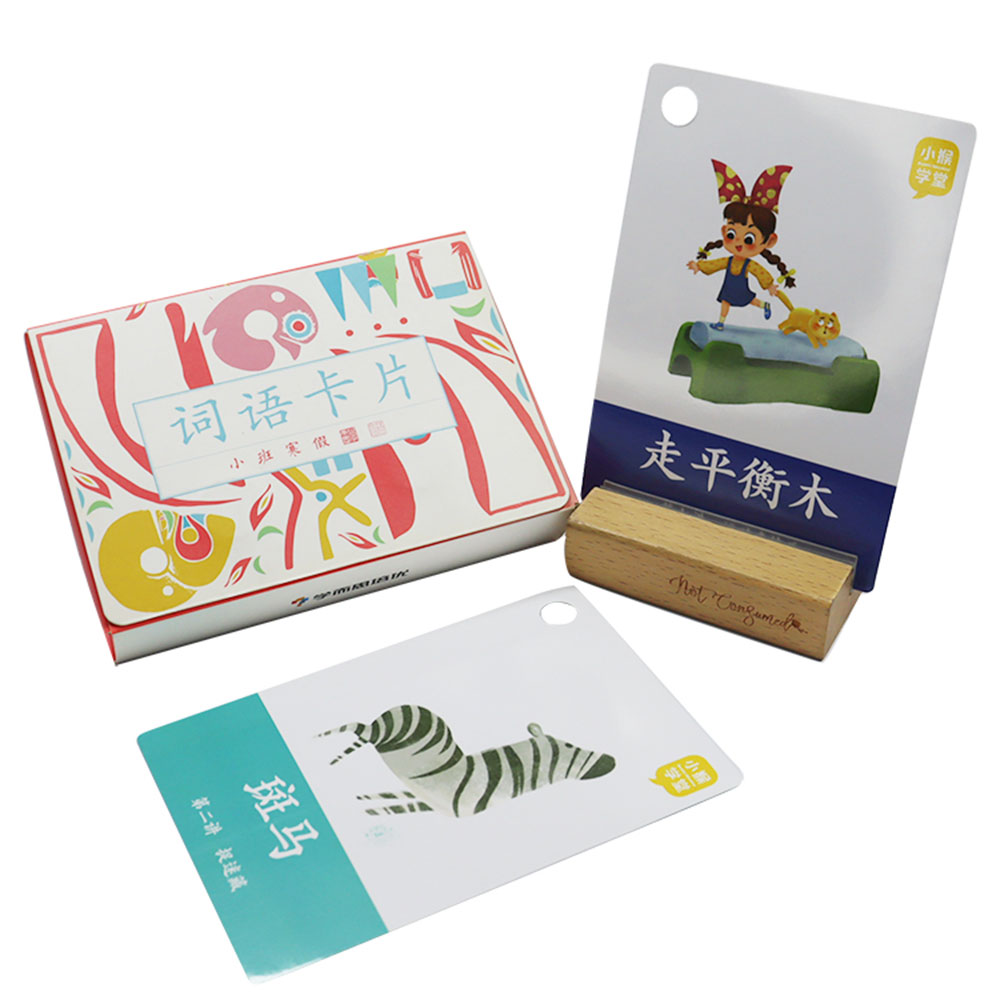
Custom Learning Cards for Language Learning: Tips and Examples
Why custom learning cards work for language learning
Custom learning cards are one of the most versatile tools for vocabulary, grammar, pronunciation, and cultural learning. They combine active recall, focused exposure, and repeatable practice in a compact format that learners and teachers can adapt to specific goals. Educational research highlights two principles that make cards effective: the testing effect (active recall improves memory) and spacing (distributed practice improves long-term retention). When you build custom learning cards with targeted content, you exploit both principles — learners test themselves repeatedly, and you can schedule review intervals to maximize retention.
Evidence-backed comparison of study techniques for language learning
Below is a practical comparison of common study techniques and how they perform relative to each other for long-term language retention. This is a synthesis of educational research translated into classroom practice.
| Technique | How it works | Practical strength | Primary source |
|---|---|---|---|
| Active recall (flashcards, tests) | Learner attempts to retrieve information, strengthening memory traces. | High — excellent for long-term retention | Roediger & Karpicke (2006), Make It Stick (2014) |
| Spaced repetition | Information reviewed at increasing intervals to combat forgetting. | High — improves retention over weeks/months | Cepeda et al. (2008) |
| Massed practice (cramming) | Repeated study in a short period. | Low for long-term retention — good for short-term recall | Educational literature |
Sources listed at the end provide the empirical basis; use these techniques together when you design custom learning cards.
How to design effective custom learning cards (best practices)
Design matters. Custom learning cards should be simple, consistent, and goal-oriented. Below are actionable design rules you can apply immediately:
- One idea per card: a single word, phrase, grammar point, or pronunciation feature.
- Use clear prompts and answers: front = cue (e.g., picture, sentence with blank); back = concise answer (translation, grammar note, IPA, example sentence).
- Limit text: short examples work better than long paragraphs.
- Use imagery selectively: concrete nouns benefit from photos or icons; abstract words can use contextual sentences.
- Include pronunciation help: phonetic transcription and a QR/audio link for listening on mobile devices.
- Color code by category: verbs, nouns, adjectives, function words, or proficiency level (A1–C2).
- Add usage notes and common mistakes on the back for advanced learners.
These choices improve readability and make review sessions faster and more effective.
Using spaced repetition and active recall with custom learning cards
Custom learning cards fit naturally into spaced repetition systems (SRS). You can use paper cards with manual scheduling (boxes or Leitner system) or pair printed cards with an app by scanning a card's QR code to log reviews. Practical scheduling example for vocabulary:
- Day 1: initial exposure
- Day 2: review
- Day 5: review
- Day 12: review
- Day 30: final review
Adjust intervals by difficulty. The key is repeated retrieval: when a learner successfully recalls a card, increase the interval; if they fail, shorten the interval. This approach is especially powerful for language facts that require memorization, such as irregular verbs, fixed expressions, and pronunciation contrasts.
Examples of custom learning card types and templates
Here are practical templates you can produce as custom learning cards, with suggestions for front/back content and use cases.
- Vocabulary card: Front = target word + picture; Back = translation, example sentence, part of speech, pronunciation.
- Phrase/idiom card: Front = phrase in context (sentence with blank or picture); Back = meaning and two sample sentences.
- Grammar card: Front = short grammar prompt (e.g., 'past perfect use'); Back = rule summary and two example sentences.
- Conjugation chart card: Front = infinitive + pronouns; Back = conjugated forms (use concise layout).
- Pronunciation card: Front = minimal pair (ship/sheep) with IPA; Back = articulatory tips and audio QR link.
- Conversation prompt card: Front = role + situation (shop, airport); Back = sample lines and key vocabulary.
- Cultural note card: Front = image or question; Back = short explanation and tip for learners.
Mix card types in a deck for well-rounded practice. For classroom sets, vary difficulty and include teacher instruction cards to run quick activities.
Production considerations: materials, finishes, and durability for custom learning cards
When you order custom learning cards, consider these production elements because they affect durability, usability, and cost:
- Cardstock weight: heavier stock (300–400 gsm) resists bending and works well for repeated handling.
- Coating/lamination: matte lamination reduces glare and resists fingerprints; gloss is more vibrant but reflective.
- Rounded corners: increase durability and safety in classrooms.
- Printing color accuracy: use CMYK for full-color imagery; Pantone matching for brand-critical colors.
- Sustainability: FSC® certified paper supports responsible sourcing; request certification if sustainability is important.
- Packaging: deck boxes, indexed dividers, or resealable pouches protect cards and organize by level.
These choices improve the lifespan of cards and the learning experience, especially for school and institutional use.
Ordering custom learning cards at scale: manufacturing and lead time considerations
Schools, publishers, and educational startups often need large volumes with tight schedules. Key factors to manage are minimum order quantities (MOQs), lead times, quality control, and compliance. Guangdong Yuhua Playing Cards Co., Ltd. (founded in 2014) specializes in R&D, design, and mass custom production of playing cards, game cards, and color-printed packaging. With a 6,000㎡ intelligent facility and advanced automated card production lines capable of 1,000,000+ units per month, Yuhua can support large educational projects. Core strengths include:
- FSC® certified materials and ISO 9001 quality control.
- Defect rate under 0.5% and over 20 patents for manufacturing expertise.
- High Quality brand positioning using imported materials trusted worldwide.
- OEM and ODM services for Playing Cards, Tarot cards, custom Game cards, and Learning Flash cards OEM.
These capabilities translate to predictable delivery, low defect risk, and professional support — critical when you run large deployments in classrooms or retail. Typical lead times depend on complexity but Yuhua's automated lines and quality systems help shorten turnaround and maintain consistency.
Case studies and classroom activities using custom learning cards
Below are practical classroom activities and a simple case study idea you can replicate with your own cards.
- Speed rounds: learners pull a card and have 30 seconds to produce the answer; quick repetitions increase exposure.
- Pair practice: learner A shows front, learner B answers; swap roles to practice speaking and listening.
- Card-sort grammar: students group cards by tense, function, or difficulty to deepen understanding.
- Memory chain: each student recalls previous cards before adding a new one, building longer recall sequences.
Case study idea: implement a 12-week vocabulary deck intervention for an A2 class. Pre-test vocabulary knowledge, provide students with a 200-card deck (10–15 minutes daily review using Leitner system), and post-test at 6 and 12 weeks. Expect improved retention vs. control (passive review) groups based on testing effect literature.
Cost-effective tips for producing custom learning cards
Manage costs without sacrificing quality by following these tips:
- Standardize sizes and finishes across product lines to reduce setup costs.
- Bundle orders for several levels or titles in one print run to leverage economies of scale.
- Use two-sided printing efficiently — front/back layouts that minimize unused space reduce waste.
- Consider spot UV or selective varnish only where it adds functional value (e.g., durable icons).
- Evaluate sample runs: request prototypes from manufacturers like Guangdong Yuhua before mass production to verify color, feel, and durability.
Choosing a manufacturer for custom learning cards — why choose Yuhua
Selecting a manufacturer is a business decision as much as a technical one. Criteria include capacity, quality control, certifications, and experience with educational products. Guangdong Yuhua Playing Cards Co., Ltd. is positioned as a partner for educational projects because it combines:
- High-volume production capability (1,000,000+ units/month) and a 6,000㎡ intelligent facility.
- Quality systems: ISO 9001 and a defect rate under 0.5%.
- Sustainability credentials: use of FSC® certified materials.
- Experience across product types: OEM Playing Card, ODM Tarot cards, custom Game cards, and Learning Flash cards OEM.
These strengths reduce procurement risk and help deliver high-quality, locally consistent learning card products to global markets.
FAQ — Custom Learning Cards
Q1: What are custom learning cards best used for?
They are ideal for vocabulary memorization, grammar drills, pronunciation practice, quick classroom activities, formative assessment, and self-study. Their portability and adaptability make them suitable for learners of all ages.
Q2: How many cards should a deck have for a language course?
It depends on goals. Beginner decks often contain 100–300 cards (high-frequency vocabulary and core grammar), while comprehensive course decks can have 500–1,000+ cards broken into levels.
Q3: Are paper cards better than digital flashcards?
Both have strengths. Paper cards are tactile, low-tech, and great for group activities; digital cards automate spacing and audio. Combining printed cards with QR/audio links gives the best of both worlds.
Q4: What production lead time should I expect?
Lead time varies with complexity, order size, and finishing options. With an experienced manufacturer like Guangdong Yuhua, standard custom decks typically ship in a few weeks; large multi-SKU projects may take longer. Request a production timeline during quoting.
Q5: Can I get samples before a full order?
Yes. Always request physical samples or prototypes to verify color, card weight, lamination, and layout before mass production.
Contact us / View products
If you are ready to design or order custom learning cards, contact our customer service or view our product offerings. Guangdong Yuhua Playing Cards Co., Ltd. provides professional support for custom card solutions, including sample production, material selection, and OEM/ODM services for learning flash cards, game cards, tarot cards, and custom playing cards. Reach out to discuss your project, request a quote, or order samples — we help you turn curriculum into durable, effective learning tools.
References
- Roediger, H. L., & Karpicke, J. D. (2006). Test-enhanced learning: Taking memory tests improves long-term retention. Psychological Science.
- Cepeda, N. J., Pashler, H., Vul, E., Wixted, J. T., & Rohrer, D. (2008). Distributed practice in verbal recall tasks: A review and quantitative synthesis. Psychological Bulletin.
- Brown, P. C., Roediger III, H. L., & McDaniel, M. A. (2014). Make It Stick: The Science of Successful Learning. Harvard University Press.
Tips for Wholesale best quality playing cards in Africa
Top best paper playing cards Manufacturers and Suppliers in Saudi Arabia
The china paper playing cards Cost Guide | Yuhua Ultimate Insights
What are the application scenarios of card game companies?
About customized services
Do you provide design services?
Yes! Our in-house design team is here to assist you in bringing your vision to life. Whether you have a complete design or just an idea, we can help.
About product selection
What types of playing cards do you offer?
We offer a wide range of playing cards including standard decks, custom-designed decks, and specialty cards. Whether you need classic poker cards, bridge cards, or custom promotional decks, we have the options to fit your needs.
Can I see a sample before a full order?
Yes, we will provide a prototype sample for your review to ensure you are satisfied with the final product.
Is there a design template I can use?
Yes, we provide design templates for different card types. You can download them from our website or request them directly from our team.
About price and payment
What payment methods do you accept?
We accept various payment methods, including credit cards, PayPal, and bank transfers. Please reach out for more details on payment options.
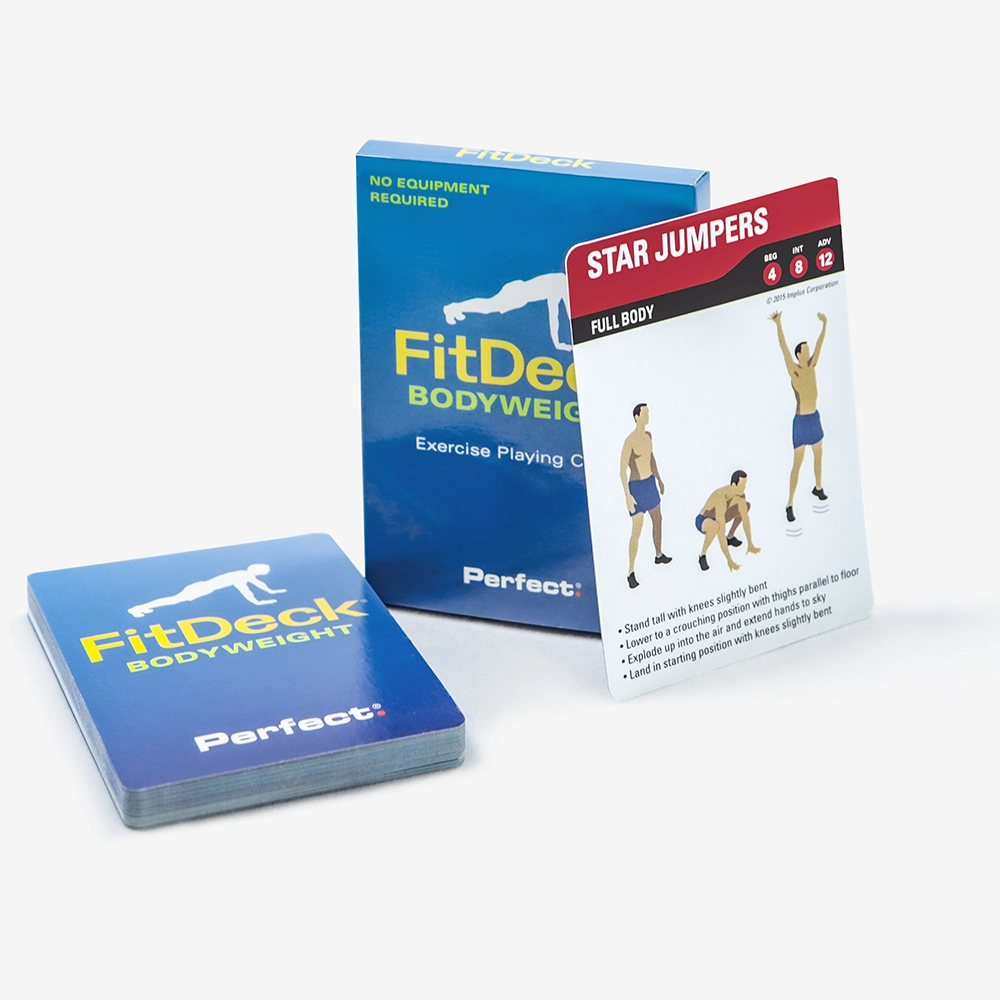
Custom Design Printing Fitness Learning Cards
The Fitness Learning Card is an innovative, beginner-friendly tool for fitness enthusiasts, featuring clear illustrations and instructions to ensure proper form and prevent injury. Organized by topics like strength training, cardio, stretching, and nutrition, it offers a systematic, easy-to-follow approach to building fitness knowledge and avoiding blind workouts.
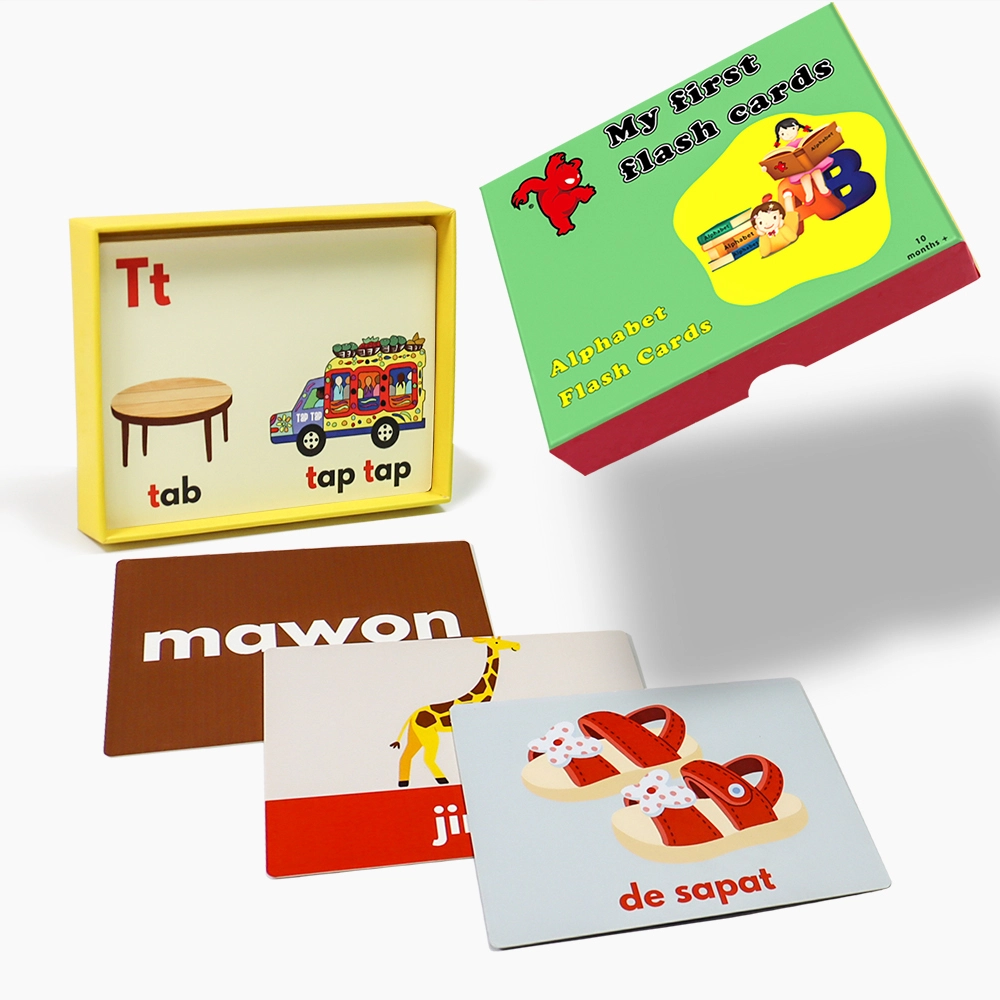
Factory Custom Printing High Quality Children's Learning Cards
Designed for preschoolers, kindergarteners, and primary school students, these cards support early cognitive development by introducing letters, numbers, colors, shapes, animals, fruits, and vehicles. Combining images and words enhances vocabulary and language skills, while games like sorting and pairing foster logical thinking and problem-solving. Repetition builds memory and focus, and the cards also encourage meaningful parent-child interaction.
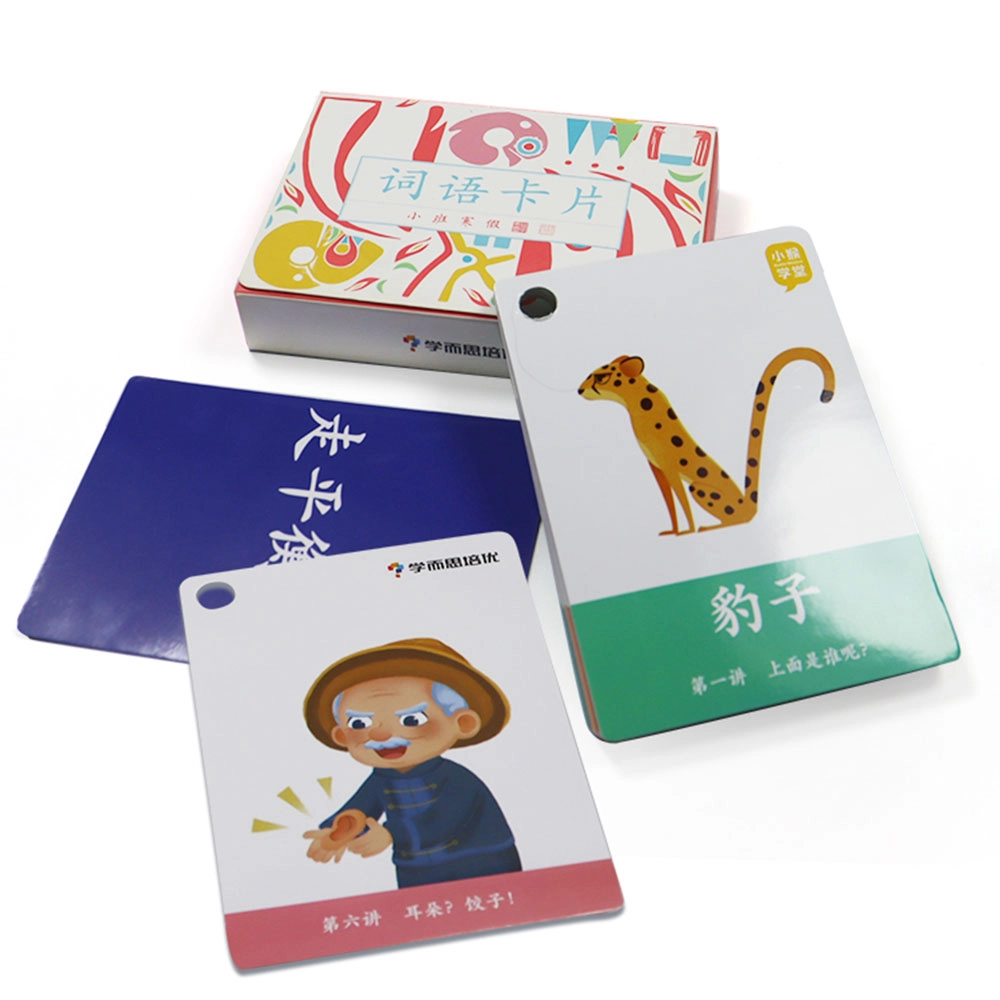
Chinese Words for Children Learning Cards
Chinese Character Learning Cards help kids ages 3-8 master basic Chinese characters through fun illustrations, pinyin, example words, and sentences. Designed for early learners, it builds language skills in an engaging way.
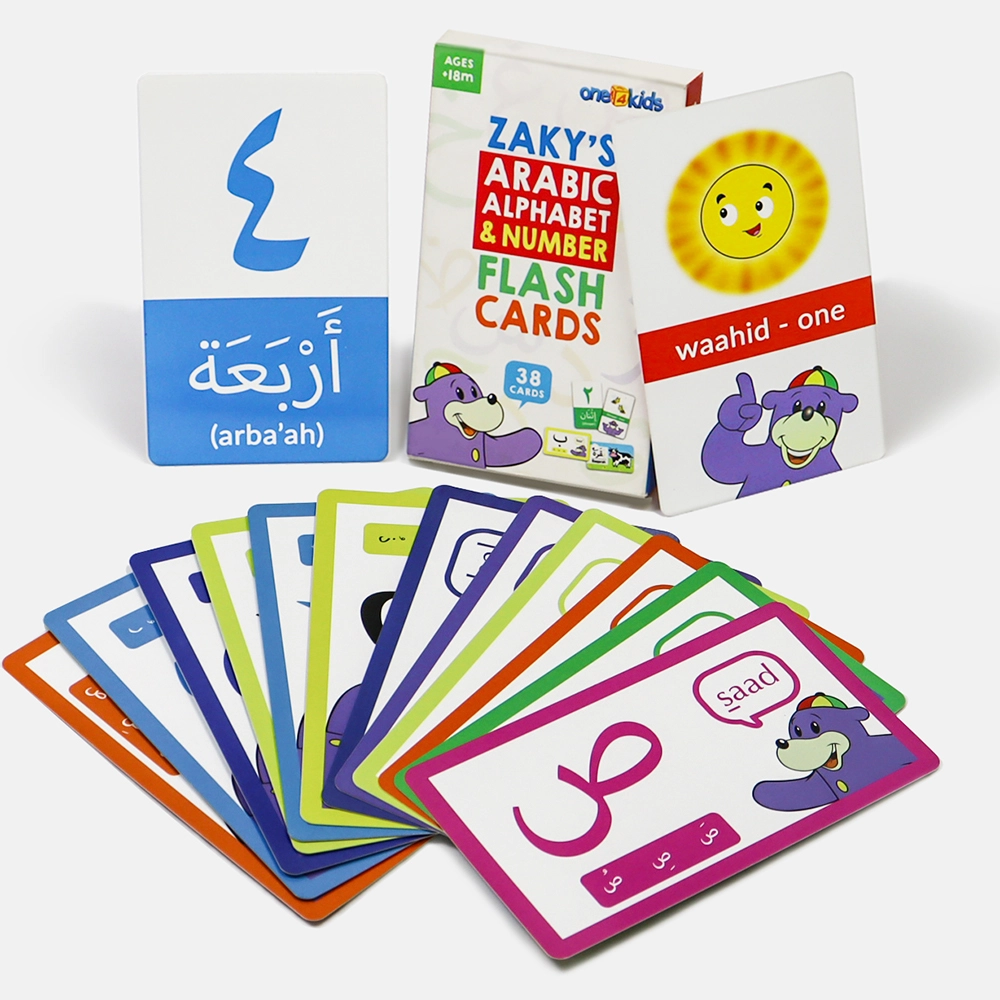
Custom Design Printing Font Stroke Learning Cards
These learning cards feature rich content across various topics, making them suitable for children of different ages. Bright colors and cute patterns engage young learners, while eco-friendly, non-toxic materials and rounded corners ensure safety. Thoughtfully sized for little hands, the cards can be used alone or paired with a reading pen or app for added fun and interactivity.
bbilaser
sq_AL