
The latest trends for custom designed playing cards in us 2026 | Yuhua Ultimate Insights
- Introduction: Why 2026 is a turning point for custom designed playing cards in the US
- Context and
- Market overview: Demand drivers for custom designed playing cards in the US
- Why demand is rising for personalized and small-batch cards
- How production and distribution trends shape availability
- Trend 1 — Sustainability and responsible materials in custom designed playing cards
- Consumers and buyers demand eco-certified cards
- Packaging and unboxing as sustainability opportunities
- Trend 2 — Digital printing and short runs: economics of micro-batches
- Short runs make personalization affordable
- Hybrid production for scale and quality
- Trend 3 — High Quality & casino-grade security features
- Security and durability for casinos and pro use
- Certifications and quality control matter
- Trend 4 — Technology integration: NFC, AR, and interactive experiences
- Cards as a bridge between physical and digital
- When to use tech features
- Trend 5 — E-commerce, D2C sales, and fulfillment expectations
- Faster fulfillment and global shipping expectations
- Customer experience extends beyond the deck
- Trend 6 — Collaborations, limited editions, and collectible drops
- Scarcity and collaboration sell
- Designers must think like publishers
- Manufacturing capabilities and why Guangdong Yuhua matters
- Yuhua’s production strengths — what buyers should verify
- How facility scale affects buyer choices
- Comparison table: Production methods for custom designed playing cards
- Choosing the right production method
- Design and specification best practices for US buyers
- Design for printability and long-term durability
- Use templates and proofs to reduce revisions
- Price, lead time, and risk considerations
- Balancing cost vs. speed vs. quality
- Mitigating supply chain risk
- Actionable checklist for US buyers seeking custom designed playing cards in 2026
- Step-by-step buyer checklist
- Conclusion: How to leverage 2026 trends to win with custom designed playing cards
- Strategy summary
- Next steps for buyers
- Frequently Asked Questions
Introduction: Why 2026 is a turning point for custom designed playing cards in the US
Context and
Businesses, game designers, casinos, marketing teams, and hobbyists searching for custom designed playing cards in 2026 want practical guidance on what buyers expect, which technologies deliver value, and how suppliers can meet shorter lead times while maintaining quality. This article synthesizes market signals, manufacturing capabilities, and actionable buying and design recommendations so you can make confident decisions.
Market overview: Demand drivers for custom designed playing cards in the US
Why demand is rising for personalized and small-batch cards
Demand for custom playing cards in the US continues to expand across several verticals: casino and gambling operations seeking tamper-proof decks, tabletop game designers launching niche titles, corporate and promotional buyers using cards as High Quality swag, educational institutions using cards as learning tools, and collectors seeking limited editions. Key drivers include increased consumer appetite for personalization, the growth of tabletop gaming, and the rise of direct-to-consumer (D2C) drops and limited-edition merch.
How production and distribution trends shape availability
Manufacturing automation, digital printing advances, and more efficient logistics enable faster turnaround and viable short runs. Suppliers that combine scalable facilities with digital capabilities are best positioned to meet the needs of US buyers who expect both speed and customization at competitive price points.
Trend 1 — Sustainability and responsible materials in custom designed playing cards
Consumers and buyers demand eco-certified cards
Sustainability is no longer optional. Buyers prefer FSC®-certified papers, recycled cores, and vegetable-based inks. For corporate buyers and retailers, FSC certification and reduced plastic use are procurement checklist items. Suppliers that can document chain-of-custody and provide CO2-reduction or recycled content statements will win more bids.
Packaging and unboxing as sustainability opportunities
Eco-friendly packaging (minimalist, recyclable, or made-of-post-consumer waste) is often the first brand touchpoint. Sustainable packaging combined with high-quality printing creates a High Quality perceived value without adding environmental cost.
Trend 2 — Digital printing and short runs: economics of micro-batches
Short runs make personalization affordable
Digital printing technologies allow profitable production of short runs (from hundreds to a few thousand decks) where traditional offset would be uneconomic. That enables creators to test designs, release limited editions, and fulfill small B2B orders quickly.
Hybrid production for scale and quality
Many manufacturers adopt hybrid workflows: digital for personalization and variable data, offset for base runs to keep unit costs low at scale. This hybrid model balances speed, cost, and print fidelity.
Trend 3 — High Quality & casino-grade security features
Security and durability for casinos and pro use
Casinos and professional venues continue to require tamper-evident features, precise cut tolerances, tactile coatings, and specialized finishes (e.g., air-cushion coatings, linen finishes) to ensure consistent shuffle and long lifespan. Suppliers must document quality control processes and offer sample decks with measurable specifications.
Certifications and quality control matter
ISO 9001 quality systems, strict defect rate guarantees (e.g., <0.5%), and FCC/industry-standard anti-counterfeit measures are increasingly requested in formal procurement. These credentials reduce procurement risk and shorten audit cycles for large buyers.
Trend 4 — Technology integration: NFC, AR, and interactive experiences
Cards as a bridge between physical and digital
NFC chips embedded in cards and augmented reality (AR) markers enable a hybrid experience: scan-able bonus content, game tutorials, or authenticated provenance. This appeals to both game publishers and collectors who want multimedia storytelling and secure proof of authenticity.
When to use tech features
Tech integration makes sense when it adds measurable value (e.g., unlocking exclusive content, enabling verified ownership for limited editions). For mass-market promotional decks, tech features add cost and complexity and are used selectively.
Trend 5 — E-commerce, D2C sales, and fulfillment expectations
Faster fulfillment and global shipping expectations
Direct-to-consumer sales and Kickstarter-style campaigns drive demand for predictable lead times and global fulfillment. Buyers expect integrated production-to-fulfillment partners who can handle kitting, drop-shipping, and international customs documentation.
Customer experience extends beyond the deck
Packaging, tracking, and post-sales support (replacement cards, reprints) influence buyer satisfaction strongly. Suppliers with transparent order portals and real-time proofs shorten decision cycles.
Trend 6 — Collaborations, limited editions, and collectible drops
Scarcity and collaboration sell
Collaborative releases—artists, influencers, and game studios—use limited-edition decks to create urgency and collector value. This model relies on high-quality printing, numbered runs, and secure authentication to sustain secondary market interest.
Designers must think like publishers
Successful drops require coordinated marketing, serialized numbering, certificates of authenticity, and thoughtful packaging design to maximize perceived value and resale potential.
Manufacturing capabilities and why Guangdong Yuhua matters
Yuhua’s production strengths — what buyers should verify
Guangdong Yuhua Playing Cards Co., Ltd. (est. 2014) combines a 6,000㎡ intelligent facility and automated production lines that can exceed 1,000,000 units per month, making it a viable partner for both small-batch custom runs and high-volume orders. Yuhua emphasizes FSC® materials, ISO 9001 quality control, and a defect rate under 0.5% with over 20 patents—credentials that reduce manufacturing risk for US buyers.
How facility scale affects buyer choices
Larger, automated facilities typically offer faster lead times, consistent quality, and lower per-unit costs at scale. For high-value or regulated applications (casinos), factory-level quality control and traceable materials are essential.
Comparison table: Production methods for custom designed playing cards
Choosing the right production method
| Method | Typical run size | Lead time | Print quality | Best for |
|---|---|---|---|---|
| Digital printing | 100–5,000 decks | 1–3 weeks | Very good for full-color; excellent for variable data | Personalized decks, short runs, rapid prototypes |
| Offset printing | 5,000–100,000+ decks | 3–8+ weeks | Highest fidelity for large runs | Large editions, consistent color at scale |
| Hybrid (digital + offset) | 500–50,000 decks | 2–6 weeks | Combines benefits of both | Variable personalization on bulk runs |
Design and specification best practices for US buyers
Design for printability and long-term durability
Use CMYK color profiles with appropriate bleed (usually 3–5 mm) and provide high-resolution assets (300–600 DPI for artwork). Specify coatings (matte, gloss, air-cushion) and card stock weight. For casino or professional use, request samples to validate shuffle feel and durability.
Use templates and proofs to reduce revisions
Working from manufacturer templates reduces errors. Insist on a color-accurate proof (physical if possible) before full production, and verify edge-cut, indexing, and coating samples.
Price, lead time, and risk considerations
Balancing cost vs. speed vs. quality
Short runs cost more per unit but allow testing and limited editions. Larger runs lower unit costs but require higher upfront investment and longer lead times. Factor in duties, shipping, and potential reprint costs when estimating the landed cost to US customers.
Mitigating supply chain risk
Work with suppliers who have clear quality metrics (ISO 9001), certifications (FSC®), and transparent lead-time policies. Request contingency plans for delays, and consider buffered inventory for recurring SKU lines.
Actionable checklist for US buyers seeking custom designed playing cards in 2026
Step-by-step buyer checklist
- Define run size: micro-run (≤5,000) or large run (≥5,000).
- Choose production method: digital for variable data, offset for large consistent runs.
- Specify materials and certifications: ask for FSC® and material MSDS if needed.
- Request sample decks and physical proofs for tactile validation.
- Confirm lead time, defect rate guarantee, and reprint policy in writing.
- Consider tech add-ons (NFC, AR) only if they add measurable value.
- Plan fulfillment and international shipping with HS codes and customs paperwork.
Conclusion: How to leverage 2026 trends to win with custom designed playing cards
Strategy summary
In 2026, success in the US custom playing cards market means combining sustainability, fast and flexible production, strategic use of technology (AR/NFC), and robust quality credentials. Suppliers like Guangdong Yuhua Playing Cards—equipped with automated lines, FSC-certified materials, ISO 9001 processes, and extensive patent-backed capabilities—can support a wide range of buyer needs from promotional short runs to casino-grade orders.
Next steps for buyers
Prioritize a supplier that provides transparent proofs, clear lead times, and verifiable certifications. If you need help evaluating specifications or obtaining samples tailored to US requirements (casino, retail, or D2C), request a production sample and a documented QC plan before committing to large runs.
Guangdong Yuhua remains committed to providing high-quality and efficient playing card production services for global markets—delivering fast, high-quality results with professional support.
Frequently Asked Questions
What is the typical lead time for custom designed playing cards?Lead times vary by production method and order size. Digital short runs can ship in 1–3 weeks; hybrid workflows 2–6 weeks; full offset large runs typically require 3–8+ weeks. Always confirm lead time with your supplier and request written timelines.
What certifications should I ask for when ordering custom playing cards?Request FSC® certification for paper sourcing, ISO 9001 for quality management, and documentation of material safety (MSDS) if using specialty inks or coatings. For casino or regulated use, ask for tolerances, defect-rate proofs, and any applicable anti-counterfeit measures.
Are NFC and AR features worth the extra cost?They can be, if they provide clear value—unique digital content, verification of authenticity, or an interactive player experience. For promotional mass-market decks, ROI is often lower. Evaluate expected uplift vs added manufacturing complexity.
How do I reduce per-unit cost for a custom deck?Increase run size, opt for offset printing when volumes justify setup costs, simplify coatings and packaging, and consolidate SKUs. Hybrid printing can also lower costs by offsetting non-variable elements while using digital for personalization.
Can I get a sample deck before placing a large order?Yes. Reputable manufacturers provide physical samples and color proofs (sometimes at cost) so you can validate stock, finish, and print fidelity before committing to mass production.
What should I include in my spec sheet when requesting a quote?Include run size, finish (coating and tactile effects), card stock weight, number of cards per deck, tuck box or custom packaging details, desired certifications (e.g., FSC®), any tech features (NFC/QR/AR), shipping destination, and expected delivery date.
Sources and references
- Smithers: Reports on global packaging and print trends (digital print growth)
- McKinsey & Company: Research on consumer personalization and mass-customization trends
- Statista: Data and analysis on tabletop games and playing card demand post-2020
- Packaging Europe: Articles on sustainable packaging and material innovations
- ISO (International Organization for Standardization): ISO 9001 quality management standards documentation
- Forest Stewardship Council (FSC): FSC certification and chain-of-custody standards
- Guangdong Yuhua Playing Cards Co., Ltd.: Company profile and manufacturing capabilities (founding year, facility size, production capacity, certifications, patent claims)
Tips for buy best poker cards brand
Wholesale flash cards custom manufacturer and supplier
Custom language learning cards Manufacturers and Suppliers in us
How to Choose the plastic playing cards brands manufacturer and supplier ?
About customized services
What is the minimum order quantity?
We do not have a strict minimum order quantity. Since we are a custom offset printing company, we recommend a minimum order of 500 sets, as the material costs are the same, but the printing setup costs are higher.
However, if your order quantity is less than 300 sets, our sales team will usually work with customers to help customers find the most competitive options.
Can I see a proof before production?
Yes! We provide digital proofs for your approval before we start production. This ensures that everything meets your expectations.
What is the minimum order quantity for Private Label projects?
Our minimum order quantity usually starts at 500 pairs. However, we can handle smaller orders depending on the specific project requirements.
About logistics
Can you handle shipping and fulfillment?
Yes! We offer comprehensive fulfillment services, including storage, packing, and shipping. You can rely on us to ensure your cards reach their destination safely and on time.
About cooperation process
Do you accept international orders?
Yes, we accept orders from around the world! Shipping costs and delivery times may vary, so please contact us for specific details related to your location.
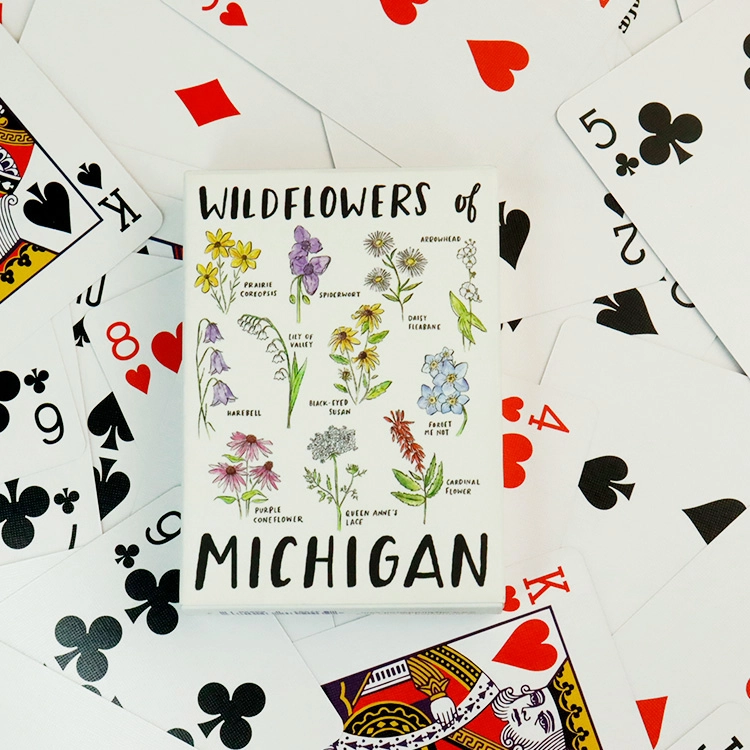
High Quality Eco-Friendly Durable Personalized Design Wildflowers Playing Cards with Custom Design Logo and Box
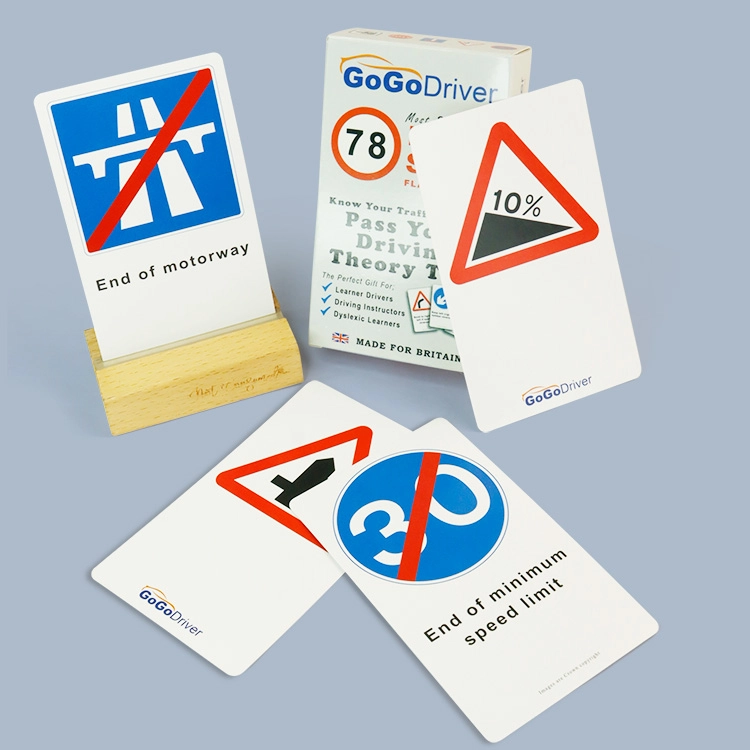
OEM Custom Driving Theory Cards | Personalized Traffic Rules & Test Prep Flashcards in Multiple Languages for Wholesale
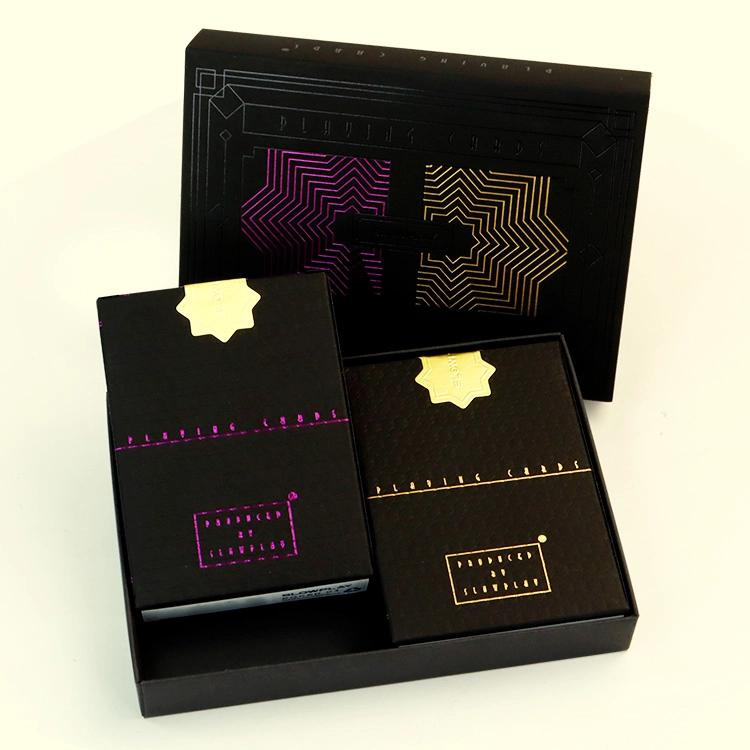
Custom Printing Luxury Two Sets Plastic Poker Playing Cards with Customized Packing
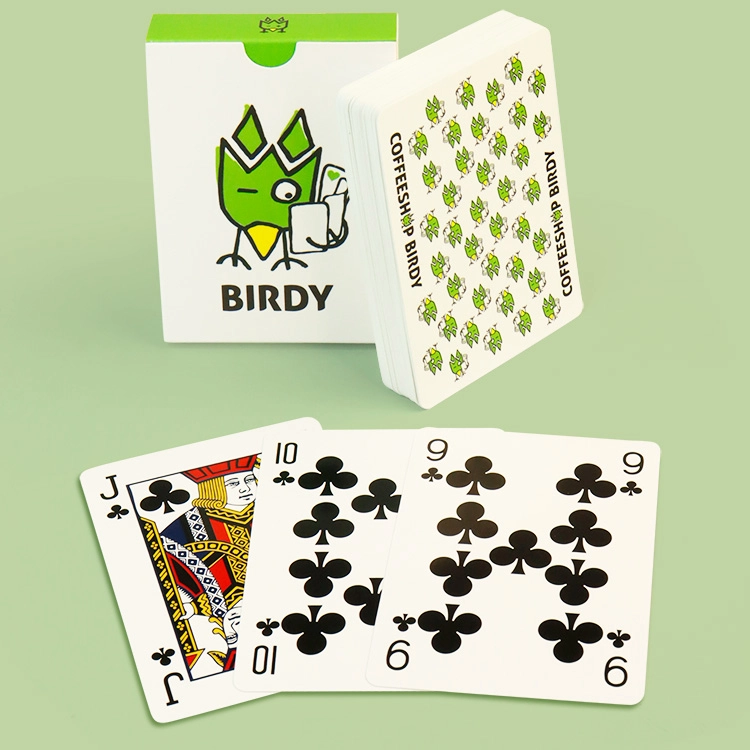
bbilaser
sq_AL