
How to Design Custom Learning Cards That Improve Retention
- How to Design Custom Learning Cards That Improve Retention
- Why custom learning cards are an effective learning tool
- Understand the cognitive foundations that improve retention with custom learning cards
- Write better card content: one idea per card for clarity
- Design fronts and backs to promote retrieval practice and feedback
- Use spacing and scheduling strategies when packaging custom learning cards
- Apply multimodal design: combine text, imagery, and encoding cues
- Personalization and adaptivity in custom learning cards
- Accessibility and inclusive design for diverse learners
- Material and manufacturing choices that preserve usability and retention
- Comparison table: common material and finish options for custom learning cards
- Layout and typography considerations for legibility
- Packaging, set organization, and teacher aids that guide evidence-based use
- Testing, iteration, and measuring learning outcomes
- Manufacturing and quality considerations for large-scale custom learning cards
- How to evaluate ROI: cost versus educational impact
- Case study considerations: deployment scenarios for custom learning cards
- Why partner with Guangdong Yuhua Playing Cards Co., Ltd. for your custom learning cards
- How Yuhua’s capabilities map to better custom learning cards
- Products and core competencies: OEM & ODM custom solutions
- Summary of brand advantages for buyers of custom learning cards
- Implementation checklist before ordering a custom learning card run
- FAQ — Designing and ordering custom learning cards
- Q: How many cards should a learning deck contain?
- Q: What card size works best for classroom use?
- Q: How should I schedule review with physical cards?
- Q: Can you print different languages or personalized names on cards?
- Q: What is the minimum order quantity (MOQ) for custom decks?
- Contact and next steps — get your custom learning cards made
- Sources and references
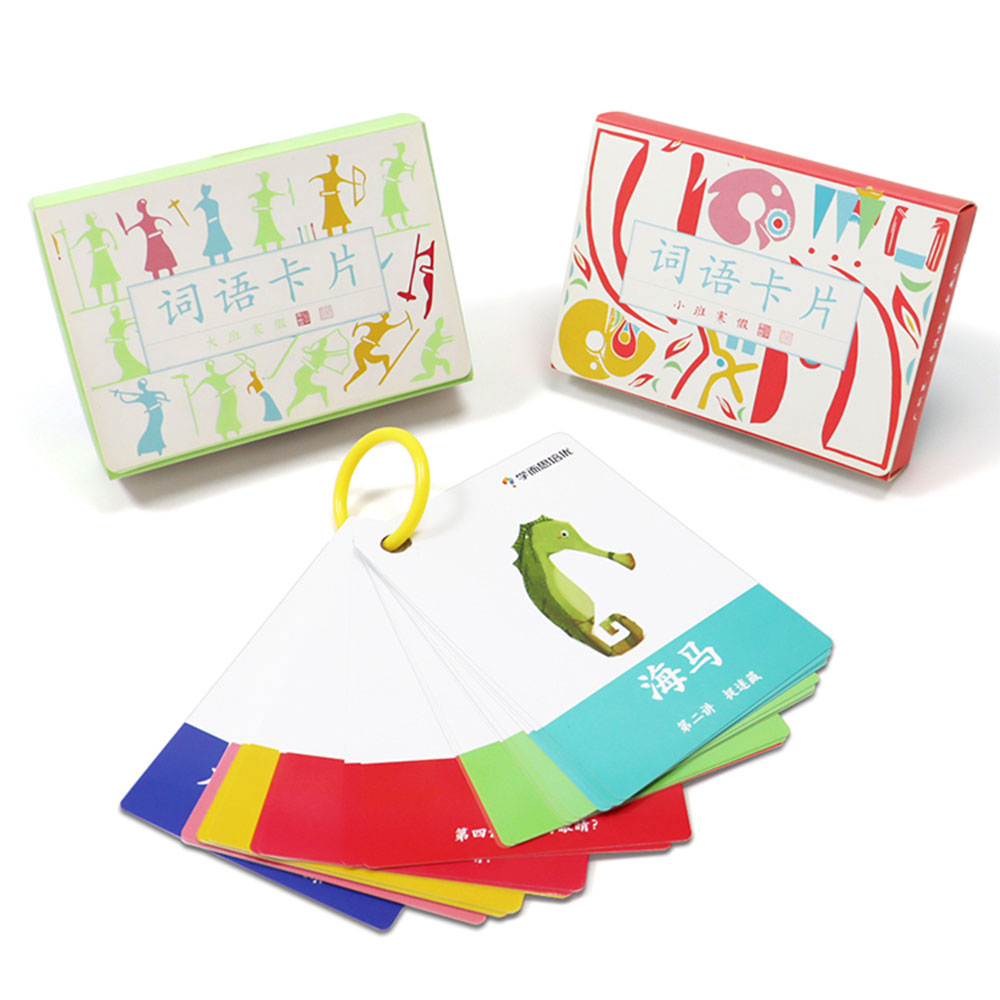
How to Design Custom Learning Cards That Improve Retention
Why custom learning cards are an effective learning tool
Custom learning cards leverage well-established cognitive principles—such as spaced repetition, retrieval practice, and dual coding—to make learning active, focused, and repetitive in the right way. Unlike generic flashcards, custom learning cards are tailored to the curriculum, audience, language level, and pacing needs of learners, which increases relevance and engagement. When designed intentionally, they convert passive review into measurable memory gains and faster mastery of material.
Understand the cognitive foundations that improve retention with custom learning cards
Design decisions should be driven by cognitive science. Key mechanisms that boost retention include:
- Spacing (distributed practice): spreading review over increasing intervals strengthens memory consolidation.
- Retrieval practice: actively recalling an answer (rather than rereading) produces larger, longer-lasting gains.
- Dual coding: combining words with relevant images or diagrams leverages visual and verbal memory systems.
- Interleaving and variability: mixing related topics and varying contexts improves transfer and discrimination.
- Feedback and corrective information: immediate or spaced feedback reduces consolidation of errors.
Design your custom learning cards so each card supports one or more of these mechanisms for maximum retention.
Write better card content: one idea per card for clarity
Each custom learning card should focus on a single, testable idea—one question, one concept, one example. Cognitive load increases when cards bundle multiple facts. Keep front-side prompts concise (question, cue, or image) and rear-side responses clear and scaffolded. For complex items, use microsteps: break multi-step procedures into sequential cards so learners can master each element before combining them.
Design fronts and backs to promote retrieval practice and feedback
Structure the front side as a retrieval cue: a question, incomplete sentence, diagram with a label missing, or a case prompt. On the back, provide the answer plus a brief explanation or mnemonic. Include immediate brief feedback for novice learners, and optionally a link/QR to expanded content for deeper study. This combination encourages active recall and corrects misconceptions during the critical reconsolidation window.
Use spacing and scheduling strategies when packaging custom learning cards
A physical or digital system should guide spaced review. For physical decks, include color-coded separators or numbered slots (Day 1, Day 3, Day 7, etc.) to support distributed practice. For hybrid solutions, pair cards with an app or printable schedule using the spacing intervals informed by research. Make spacing explicit on packaging or in an included guide so instructors can implement evidence-based schedules easily.
Apply multimodal design: combine text, imagery, and encoding cues
Dual coding increases retention. Where appropriate, pair a short verbal cue with a meaningful image, chart, or icon. For vocabulary cards, include a small pictogram or usage example. For process cards, use a compact step diagram. Avoid decorative images that do not add meaning—they consume cognitive resource without aiding memory. Icons, color highlights, and typographic emphasis (bold key words) help quick scanning and strengthen retrieval cues.
Personalization and adaptivity in custom learning cards
Personalized content increases relevance and motivation. Create modular card sets that instructors or learners can reorder, add to, or omit. Allow learners to mark cards by confidence level (know/uncertain/don't know) so review sessions target weaker items. For large-scale production, plan variable-data printing (different names, localized examples) so cards can be tailored to cohorts without sacrificing manufacturing efficiency.
Accessibility and inclusive design for diverse learners
Design cards to be usable by learners with different needs: high-contrast text, legible typefaces, sufficient font sizes, and clear icons. Consider bilingual cards (question in one language, answer or hint in another) or cards with tactile markers for visually impaired learners. Clear, plain-language prompts reduce unnecessary complexity and expand the card’s reach.
Material and manufacturing choices that preserve usability and retention
Durability and feel matter. Cards that resist wear remain usable for repeated spaced reviews over months or years. Choose card stock, coatings, and sizes that match the intended use (classroom, travel, or field work). Laminated or coated finishes survive high-frequency handling and are compatible with dry-erase markers for active annotations. When producing custom learning cards at scale, factor in production tolerances and quality control to minimize defects that disrupt learner experience.
Comparison table: common material and finish options for custom learning cards
The table below compares typical options for card design with respect to durability, cost, and learner impact.
| Material / Finish | Durability | Relative Cost | Impact on Usability & Retention |
|---|---|---|---|
| Standard cardstock (300–350 gsm) | Moderate | Low | Good for low-cost sets; may wear quickly with heavy use. |
| Coated / Silk finish | High | Medium | Improves handling and writeability; preserves print contrast for visual cues. |
| Laminated (matte/gloss) | Very high | High | Best for high-frequency use and classroom handling; supports annotations. |
| Plastic / PVC cards | Exceptional | High | Long lifespan; suitable for field use or repeated sanitation; higher upfront cost. |
Sources for material comparison include print industry standards and manufacturer specifications (see citations at article end).
Layout and typography considerations for legibility
Choose clean, sans-serif typefaces at comfortable sizes (minimum 12–14 pt depending on card size). Use a clear hierarchy: prompt type larger or bolder than supporting text. Leave margin space around text to avoid crowding. For question-answer cards, align text consistently (centered for single-word prompts; left-aligned for sentences). Use color sparingly to highlight cues rather than decorate.
Packaging, set organization, and teacher aids that guide evidence-based use
Packaging should support implementation of spaced review and easy sorting. Include separators, reference sheets with suggested schedules, and quick-start teachers’ guides showing recommended session lengths and grouping strategies. For schools and training programs, provide an index card or digital CSV file mapping standards or lesson plans to card numbers to speed integration into curricula.
Testing, iteration, and measuring learning outcomes
Before mass production, pilot your custom learning cards with a representative sample of learners. Use simple A/B tests: group A uses the new cards, group B uses a control study practice; measure retention after one week and one month. Key outcome metrics include recall accuracy, response latency, self-reported confidence, and usage frequency. Iteratively refine wording, imagery, and spacing schedules based on pilot results.
Manufacturing and quality considerations for large-scale custom learning cards
When scaling production, prioritize partner capabilities: consistent color reproduction, strict quality control, and reliable lead times. Tolerances in cutting, coating, and printing can affect card handling and durability. Ask manufacturers about defect rates, sample approvals, and their capacity for variable-data (personalized) print runs to support customized decks.
How to evaluate ROI: cost versus educational impact
Calculate ROI by combining production cost per deck, expected lifespan (how many learners and sessions it will serve), and measured learning gains (e.g., improvement in exam pass rates or speed to competency). Even moderately priced durable cards often deliver strong ROI because they support repeated spaced reviews that accelerate mastery and reduce instructor time.
Case study considerations: deployment scenarios for custom learning cards
Different contexts require different design choices. Examples:
- Classroom vocabulary sets: compact cards with images and example sentences, teacher guide mapping to curriculum standards.
- Professional training checklists: laminated cards with step sequences, durable for on-the-job use.
- Special education: tactile indicators, high-contrast visuals, and simple prompts for scaffolding.
Match card features to usage patterns: heavy-touch classroom use needs robust finishes; travel study decks can prioritize light weight and compact size.
Why partner with Guangdong Yuhua Playing Cards Co., Ltd. for your custom learning cards
Guangdong Yuhua Playing Cards Co., Ltd., founded in 2014, specializes in the R&D, design, and mass custom production of playing cards, game cards, and color-printed packaging. With a 6,000㎡ intelligent facility, we offer advanced, automated card production lines capable of 1,000,000+ units per month. Our core strengths include FSC® certified materials, ISO 9001 quality control, a defect rate under 0.5%, and over 20 patents. Our High Quality brand uses imported materials and is trusted worldwide. We serve global markets with custom card solutions for casinos, games, education, and more—delivering fast, high-quality results with professional support.
How Yuhua’s capabilities map to better custom learning cards
Yuhua’s combination of design R&D and high-volume automated production lets you iterate prototypes quickly and move to consistent mass runs without sacrificing quality. Key advantages for educational products:
- FSC® certified materials for sustainability and classroom-friendly credentials.
- ISO 9001 quality control and defect rates under 0.5% that ensure durable, uniform decks.
- Patented production processes that enable special finishes (matte, coated, laminated) and precise cutting for consistent handling.
- High monthly capacity (1,000,000+ units) so you can scale from pilot to national deployment fast.
Products and core competencies: OEM & ODM custom solutions
Yuhua’s primary offerings relevant to education clients include:
- OEM Playing Card production—standard and custom sizes, durable finishes.
- ODM Tarot cards—high-quality printed art and secure finishing for collectible learning decks.
- Custom Game cards—multi-format cards for interactive, gamified learning experiences.
- Learning Flash Cards OEM—tailored educational decks with options for variable-data personalization, multilingual printing, and robust classroom finishes.
These offerings are supported by professional project managers, prototyping services, and strict QC checkpoints to ensure the educational product behaves as designed in real learning environments.
Summary of brand advantages for buyers of custom learning cards
In short, Yuhua provides the production scale, material certifications, quality assurance, and design support needed to produce evidence-based custom learning cards that last and perform. Whether you need localized content, personalized sets, or classroom-grade durability, Yuhua’s integrated capabilities reduce time-to-market while maintaining the learning integrity of the card design.
Implementation checklist before ordering a custom learning card run
Use this checklist to ensure your deck is ready for production:
- Finalize card taxonomy: one concept per card and a master index.
- Run a small pilot for wording and imagery validation with target learners.
- Choose card size, stock, and finish based on use-case (see table above).
- Decide on packaging and inclusion of a spaced-review schedule or teacher guide.
- Request material samples and pre-production proofs from the manufacturer.
- Plan for quality checks and a small follow-up production run to confirm defect rates.
FAQ — Designing and ordering custom learning cards
Q: How many cards should a learning deck contain?
A: Aim for 30–100 cards per deck for focused units. Very large decks (>200) are harder to review in one sitting; consider bundling multiple smaller decks or using sectional dividers to support spaced practice.
Q: What card size works best for classroom use?
A: Standard index-card sizes (e.g., 63 x 88 mm or 3.5 x 2.5 in) balance readability and portability. For diagrams or multi-line explanations, use a larger size (90 x 120 mm) to avoid crowding.
Q: How should I schedule review with physical cards?
A: Start with an initial review at Day 0, then Days 1, 3, 7, 14, and 30. Adapt intervals based on learner performance. Include these intervals in packaging so teachers can follow an evidence-backed plan.
Q: Can you print different languages or personalized names on cards?
A: Yes. Yuhua supports multilingual printing and variable-data printing for personalization at scale. Discuss language files and variable-data templates during the R&D phase.
Q: What is the minimum order quantity (MOQ) for custom decks?
A: MOQs vary by specification. Yuhua’s automated lines support both small pilot runs and high-volume production—contact their team with your deck specs for exact MOQ and pricing.
Contact and next steps — get your custom learning cards made
If you’re ready to prototype or scale custom learning cards, contact Guangdong Yuhua Playing Cards Co., Ltd. for samples, quotes, or design support. We are committed to providing customers with high-quality and efficient playing card production services. Our team can advise on materials, finishes, localized printing, and packaging to align product design with the learning outcomes you need.
Explore product options or request a sample pack today to validate materials and layout in real classrooms. Contact our sales team for a tailored quote and production timeline.
Sources and references
- Ebbinghaus, H. (1885). Memory: A Contribution to Experimental Psychology. (Foundational work on forgetting/spacing.)
- Roediger, H. L., & Karpicke, J. D. (2006). Test-enhanced learning: Taking memory tests improves long-term retention. Psychological Science.
- Cepeda, N. J., Pashler, H., Vul, E., Wixted, J. T., & Rohrer, D. (2006/2008). Distributed practice in verbal recall tasks and spacing effects meta-analyses.
- Paivio, A. (1991). Dual coding theory: verbal and visual processing advantages.
- Pashler, H., Rohrer, D., Cepeda, N. J., & Carpenter, S. (2007). Enhancing Learning and Retention: A Review of Practice Recommendations (educational practice review).
- Print industry and manufacturer's technical specifications for card stock and finishes (industry standards and manufacturer data sheets).
The latest trends for custom card game maker
Custom Learning Cards for Early Childhood Development
Best Materials for Durable Custom Playing Cards
What is customize plastic playing cards ?
About product selection
What materials do you use for your cards?
We use high-quality, durable materials to ensure the best finish and longevity for your cards. Options include standard cardstock, premium finishes, and eco-friendly materials.
About customized services
Can I see a proof before production?
Yes! We provide digital proofs for your approval before we start production. This ensures that everything meets your expectations.
Do you provide design services?
Yes! Our in-house design team is here to assist you in bringing your vision to life. Whether you have a complete design or just an idea, we can help.
What is the minimum order quantity for Private Label projects?
Our minimum order quantity usually starts at 500 pairs. However, we can handle smaller orders depending on the specific project requirements.
About price and payment
How can I get a quote?
Getting a quote is easy! Simply fill out our contact form or call us directly with your project details, and we’ll get back to you with a tailored quote promptly.
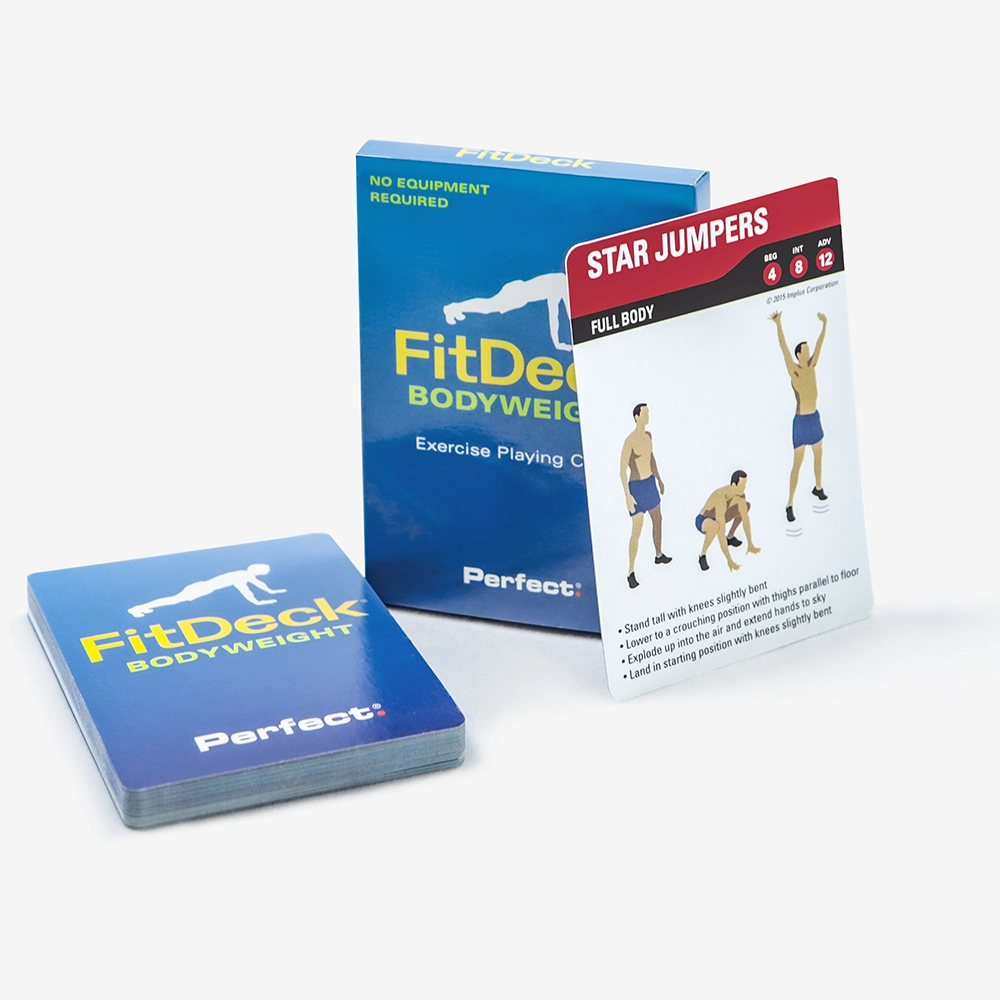
Custom Design Printing Fitness Learning Cards
The Fitness Learning Card is an innovative, beginner-friendly tool for fitness enthusiasts, featuring clear illustrations and instructions to ensure proper form and prevent injury. Organized by topics like strength training, cardio, stretching, and nutrition, it offers a systematic, easy-to-follow approach to building fitness knowledge and avoiding blind workouts.
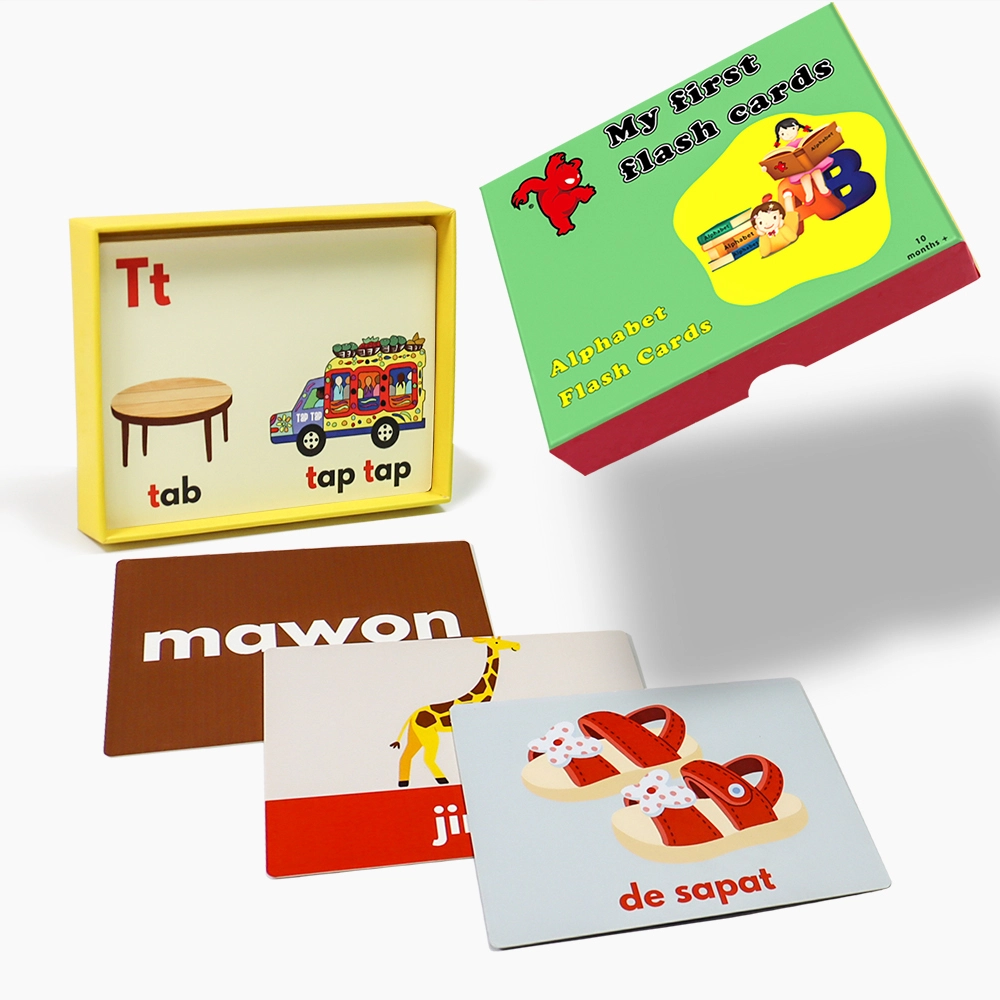
Factory Custom Printing High Quality Children's Learning Cards
Designed for preschoolers, kindergarteners, and primary school students, these cards support early cognitive development by introducing letters, numbers, colors, shapes, animals, fruits, and vehicles. Combining images and words enhances vocabulary and language skills, while games like sorting and pairing foster logical thinking and problem-solving. Repetition builds memory and focus, and the cards also encourage meaningful parent-child interaction.
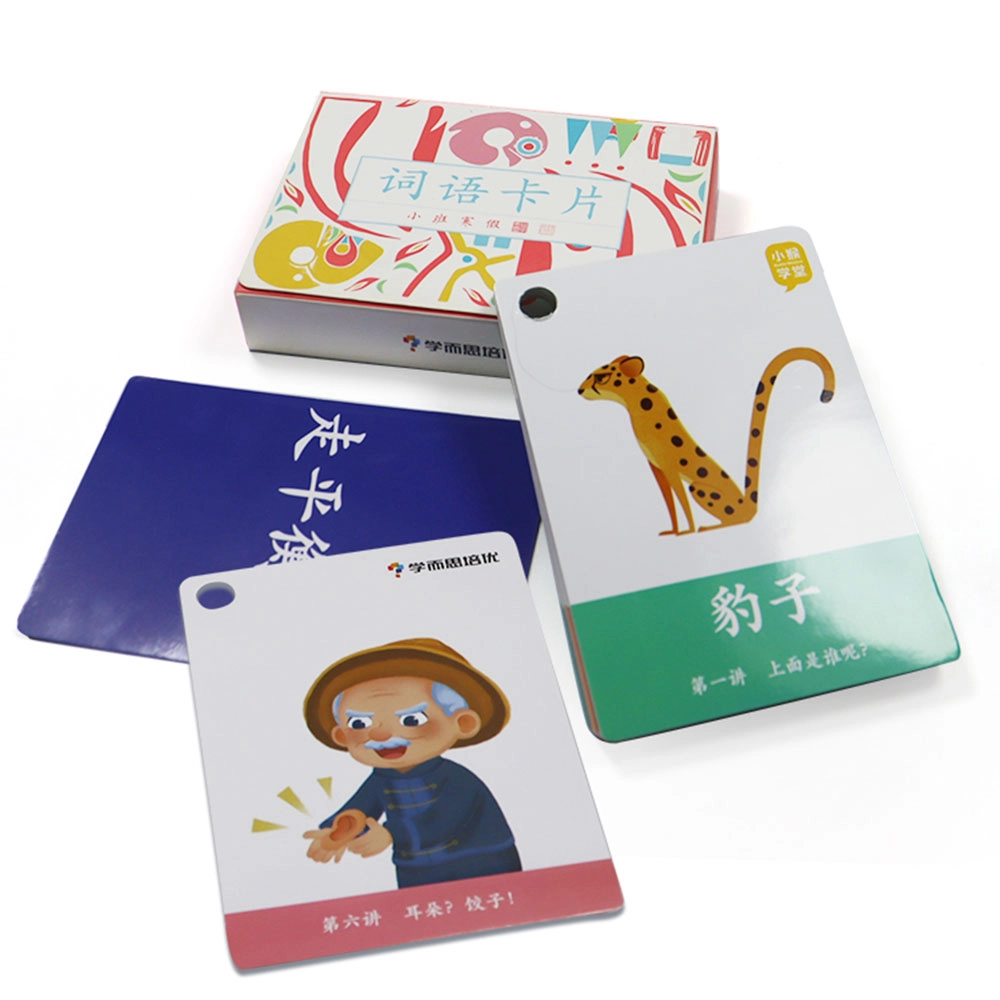
Chinese Words for Children Learning Cards
Chinese Character Learning Cards help kids ages 3-8 master basic Chinese characters through fun illustrations, pinyin, example words, and sentences. Designed for early learners, it builds language skills in an engaging way.
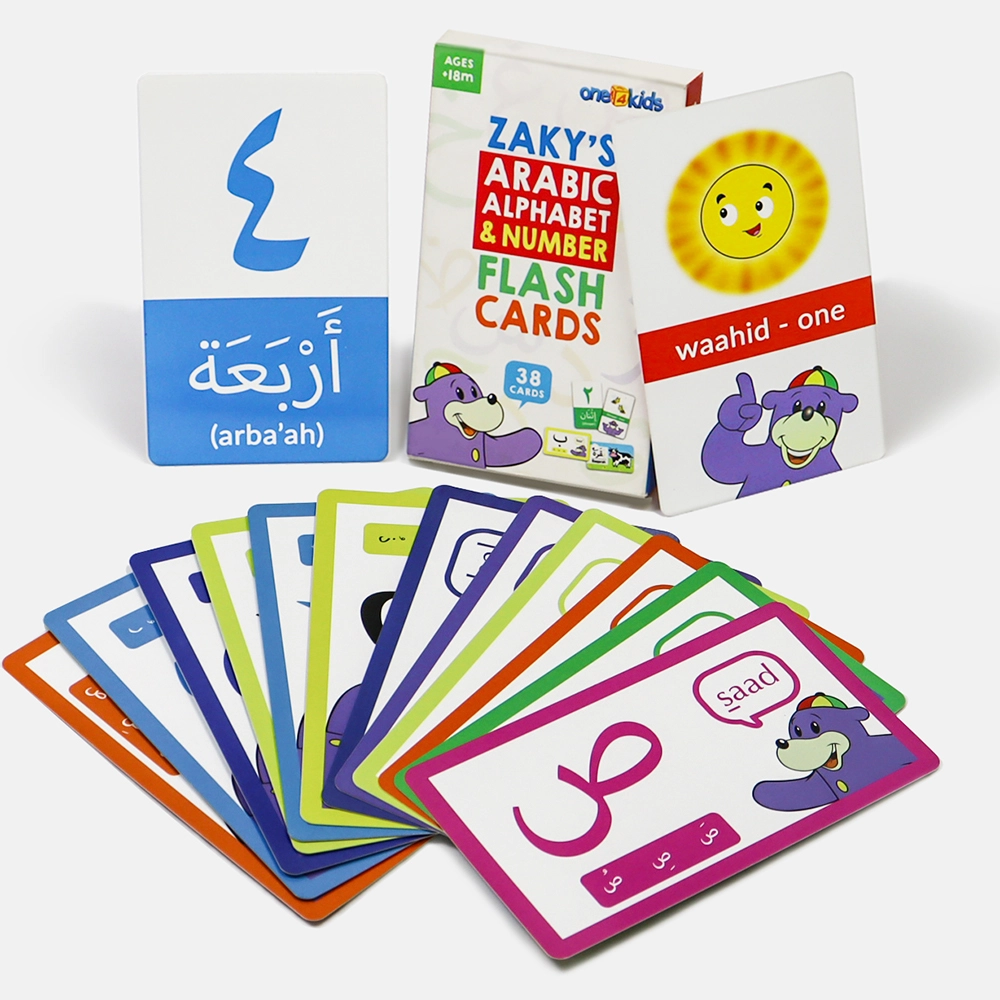
Custom Design Printing Font Stroke Learning Cards
These learning cards feature rich content across various topics, making them suitable for children of different ages. Bright colors and cute patterns engage young learners, while eco-friendly, non-toxic materials and rounded corners ensure safety. Thoughtfully sized for little hands, the cards can be used alone or paired with a reading pen or app for added fun and interactivity.
bbilaser
sq_AL