
How to Price Your Custom Playing Card Decks for Profit
- How to Price Your Custom Playing Card Decks for Profit
- Understand your true cost per playing card deck
- Estimate realistic unit costs by order size (playing card economics)
- Value-based pricing vs cost-plus for playing card products
- Channel-specific pricing: retail, wholesale, and crowdfunding
- Modeling profit: sample pricing table for custom playing card decks
- How to present pricing to buyers — transparency builds trust for playing card projects
- Factor in quality control, certification and defect allowances
- Enhancing perceived value to justify higher prices for playing card decks
- Practical pricing checklist for launch
- How Guangdong Yuhua Playing Cards supports profitable custom playing card production
- Products and core competencies offered by Yuhua
- How to use Yuhua’s capabilities when setting price
- FAQ — Pricing Custom Playing Card Decks
- Q: What is a reasonable profit margin for selling custom playing card decks?
- Q: How does order quantity affect my final price?
- Q: Should I include shipping in the listed retail price?
- Q: How much should I budget for defects and returns?
- Q: Can I charge more for eco-friendly playing card materials?
- Contact us / View products
- Sources
How to Price Your Custom Playing Card Decks for Profit
Understand your true cost per playing card deck
Before you set any price, calculate the full landed cost of one custom playing card deck. Many sellers only consider print cost, but to sustainably profit you must include: materials (cardstock, finishes, inks), artwork and design fees, plate/setup or die costs, packaging (box, insert), quality control, warehousing, shipping and customs, payment processing fees, returns and warranty reserve, and a share of fixed business overhead (marketing, staff, software).
Example cost categories to include per deck:
- Manufacturing (materials + labor + finishing)
- Artwork and design amortized per run
- Packaging and inserts
- Logistics (freight + duties + last-mile)
- Quality control and defect allowances
- Marketing and sales channel fees (marketplaces, retailers)
Accurately accounting for these will prevent underpricing. Use conservative estimates for shipping and defects—unexpected costs usually hit margins first.
Estimate realistic unit costs by order size (playing card economics)
Unit cost varies strongly with quantity. Production runs that use automated card lines, coated finishes, embossing or specialty inks produce lower unit costs at scale. Small runs (e.g., 100–500 decks) often cost several times more per unit than large runs (10,000+).
When planning price, calculate costs for multiple quantity tiers and present tiered pricing to customers (B2B or B2C). This encourages larger orders and protects margins on smaller bespoke runs.
Value-based pricing vs cost-plus for playing card products
Two approaches dominate: cost-plus (cost × markup) and value-based (price set by perceived customer value). For commodity-style custom playing card decks with minimal differentiation, cost-plus and competitive benchmarking work well. For High Quality, licensed, or collectible decks with unique art or limited runs, value-based pricing often captures a higher margin.
Guidelines:
- Cost-plus: establish a minimum wholesale price = total unit cost × target gross margin (e.g., 2.0–2.5× cost for wholesale)
- Value-based: consider what your target buyer will pay (collectors and gift buyers tolerate higher prices; casual gamers are price-sensitive)
Channel-specific pricing: retail, wholesale, and crowdfunding
Pricing must reflect distribution channel because each adds costs and expected margins:
- Direct-to-consumer (DTC): higher gross but you bear marketing and fulfillment costs. Typical retail markup on wholesale should account for platform fees (Shopify, Amazon) and advertising.
- Wholesale/retail partnerships: retailers expect a margin (typically 40–60%). Set a wholesale price that lets them resell at your target retail price while keeping your margin.
- Crowdfunding: backer psychology supports early-bird and bundle pricing. Use early-bird pricing to secure cashflow and validate demand, but ensure your cost basis includes stretch-goals and fulfillment complexities.
Modeling profit: sample pricing table for custom playing card decks
Below is a realistic example showing how unit costs and recommended prices change with order quantity. These are illustrative numbers based on typical custom card production economics and Guangdong Yuhua’s manufacturing capabilities. Adjust to your actual quotes and shipping routes.
| Order Qty | Unit Manufacturing Cost | Packaging + Inserts | Shipping & Duties (per unit) | Design & Setup (amortized) | Total Unit Cost | Suggested Wholesale Price (×2.5) | Suggested Retail Price (DTC, ×4) |
|---|---|---|---|---|---|---|---|
| 500 | $3.20 | $0.80 | $1.20 | $0.60 | $5.80 | $14.50 | $23.20 |
| 5,000 | $1.10 | $0.50 | $0.45 | $0.10 | $2.15 | $5.40 | $8.60 |
| 50,000 | $0.75 | $0.35 | $0.20 | $0.05 | $1.35 | $3.40 | $5.40 |
Notes: the suggested prices aim to leave room for marketing and overhead. For High Quality finishes (foil, embossed tuck, linen finish, custom inks), add $0.50–$3.00 per unit depending on scale.
How to present pricing to buyers — transparency builds trust for playing card projects
Offer tiered pricing tables, optional add-ons (foil, seal, custom tuck), and clearly state MOQ. For B2B clients, provide the landed cost breakdown so they understand how shipping and duties affect the final price. This transparency reduces back-and-forth and positions you as a professional partner.
Factor in quality control, certification and defect allowances
Quality influences price. Using certified materials (FSC®), ISO-driven quality control and low defect rates supports High Quality pricing. Account for a defect allowance (e.g., 0.5–1%) to cover replacements or credits. Investing in quality often reduces returns and long-term support costs.
Enhancing perceived value to justify higher prices for playing card decks
To command higher retail prices, add value that customers recognize: limited editions, signed artwork, High Quality paper stock, custom numbering, foil stamping, embossed tuck boxes, collector’s cases, and certificate of authenticity. Bundles with rulesheets, game expansions, or printed art cards also raise the perceived price point.
Practical pricing checklist for launch
Before you publish your price:
- Confirm final quotes for manufacturing and packaging at intended quantity.
- Calculate total landed cost including shipping, duties, and fees.
- Decide channel mix and calculate channel-specific margins (wholesale vs DTC).
- Test price sensitivity with small focus groups or pre-launch campaigns.
- Set clear tiered pricing and communicate MOQs and lead times.
- Include a warranty/return policy and account for its cost.
How Guangdong Yuhua Playing Cards supports profitable custom playing card production
If you want a manufacturing partner that helps you price competitively while protecting margins, Guangdong Yuhua Playing Cards Co., Ltd. brings production and quality advantages directly relevant to pricing strategy.
Key company strengths that affect cost and pricing:
- Founded in 2014, Guangdong Yuhua specializes in R&D, design, and mass custom production of playing card and game card products, plus color-printed packaging—reducing the need for multiple vendors.
- 6,000㎡ intelligent facility with advanced automated production lines capable of 1,000,000+ units/month—large-scale capacity lowers unit manufacturing cost for higher-volume clients.
- FSC® certified materials and ISO 9001 quality control ensure reliable quality, enabling High Quality positioning and fewer returns.
- Defect rate under 0.5% and over 20 patents indicate mature processes and consistent output—this predictability reduces warranty reserves in pricing models.
- High Quality brand uses imported materials trusted worldwide, supporting higher price points for collectors and gifting markets.
Combined, these strengths mean you can plan for predictable unit costs, offer competitive MOQs, and confidently promise lead times and quality—critical inputs when determining wholesale and retail prices for custom playing card decks.
Products and core competencies offered by Yuhua
Guangdong Yuhua’s main product lines and competitive edges relevant to entrepreneurs and brands:
- OEM Playing Card: Full-service custom printing and packaging for standard and specialty decks with automated lines for cost efficiency.
- ODM Tarot Cards: Design development and manufacturing support for tarot and oracle decks, including higher-end finishing and artwork services.
- Custom Game Cards: Production for board-game companies requiring complex print runs, specialty cards, and durable coatings.
- Learning Flash Cards OEM: Educational and flash card production with robust quality control and child-safe materials.
Core competitive advantages: integrated R&D and design support (reduces external design costs), high automation (lowers per-unit labor costs), certified materials and ISO processes (supports High Quality positioning), and global logistics experience (streamlines landed-cost estimations).
How to use Yuhua’s capabilities when setting price
Request a quote with clear specifications (card stock GSM, finish, tuck box type, quantity, and destination port). Leverage Yuhua’s production scale to compare pricing at multiple quantities and identify the sweet spot where unit cost drops significantly. Ask for sample decks or pre-production samples to justify High Quality pricing and reduce returns.
FAQ — Pricing Custom Playing Card Decks
Q: What is a reasonable profit margin for selling custom playing card decks?
A: Reasonable gross margins vary by channel: wholesale margins often target 40–60% (you sell at 2.0–2.5× your unit cost), while direct-to-consumer retail margins can be higher (aim for 3.0–4.0× unit cost) to cover marketing and fulfillment. Adjust for High Quality features and license fees.
Q: How does order quantity affect my final price?
A: Higher quantities reduce per-unit manufacturing, setup, and freight costs due to economies of scale. Use tiered pricing to incentivize larger orders and reduce your per-unit landed cost.
Q: Should I include shipping in the listed retail price?
A: Either include shipping in the retail price (simplifies customer decision-making) or offer calculated shipping at checkout. For crowdfunding or bundles, consider free shipping thresholds to increase average order value while ensuring the fee is covered in your margins.
Q: How much should I budget for defects and returns?
A: Budget a defect/return reserve of at least 0.5–1% for established factories with strong QC. If using a new supplier or complex finishes, budget higher until process stability is proven.
Q: Can I charge more for eco-friendly playing card materials?
A: Yes—many consumers accept a High Quality for FSC® certified or recycled materials. Clearly label certifications and the environmental story to justify higher pricing.
Contact us / View products
If you’re ready to price a project or request a quote, contact Guangdong Yuhua Playing Cards Co., Ltd. Their integrated design and mass-production capabilities help translate your product vision into a manufacturable cost structure that supports profit. Request samples, compare tiered quotes, and get a clear landed-cost estimate before committing to a run.
For product inquiries and quotes: ask for OEM Playing Card, ODM Tarot cards, custom Game cards, or Learning Flash cards OEM services and provide your desired quantity, finishes, and destination port.
Sources
- Company production and capacity information: Guangdong Yuhua Playing Cards Co., Ltd. (provided by client brief).
- ISO 9001: International standard for quality management systems (ISO).
- FSC®: Forest Stewardship Council certification standards for responsible sourcing.
- Industry pricing practices and retail markup guidance: general retail margin norms (industry publications and retail associations).
What is plastic rook playing cards for sale ?
Best Materials and Finishes for Custom Made Playing Cards
OEM/ODM wholesale affirmation cards Manufacturers and Suppliers
Best chinese tarot cards for sale manufacturers and supplier brands
About logistics
Can you handle shipping and fulfillment?
Yes! We offer comprehensive fulfillment services, including storage, packing, and shipping. You can rely on us to ensure your cards reach their destination safely and on time.
About customized services
Do you offer samples?
Yes! We can provide samples of our card materials and finishes. Please contact us to request samples relevant to your project.
Can I see a proof before production?
Yes! We provide digital proofs for your approval before we start production. This ensures that everything meets your expectations.
About cooperation process
How long does the OEM process take?
The time depends on the complexity of the project, but generally OEM orders take about 6 weeks from design confirmation to delivery.
About product selection
What materials do you use for your cards?
We use high-quality, durable materials to ensure the best finish and longevity for your cards. Options include standard cardstock, premium finishes, and eco-friendly materials.

High Quality Eco-Friendly Durable Personalized Design Wildflowers Playing Cards with Custom Design Logo and Box
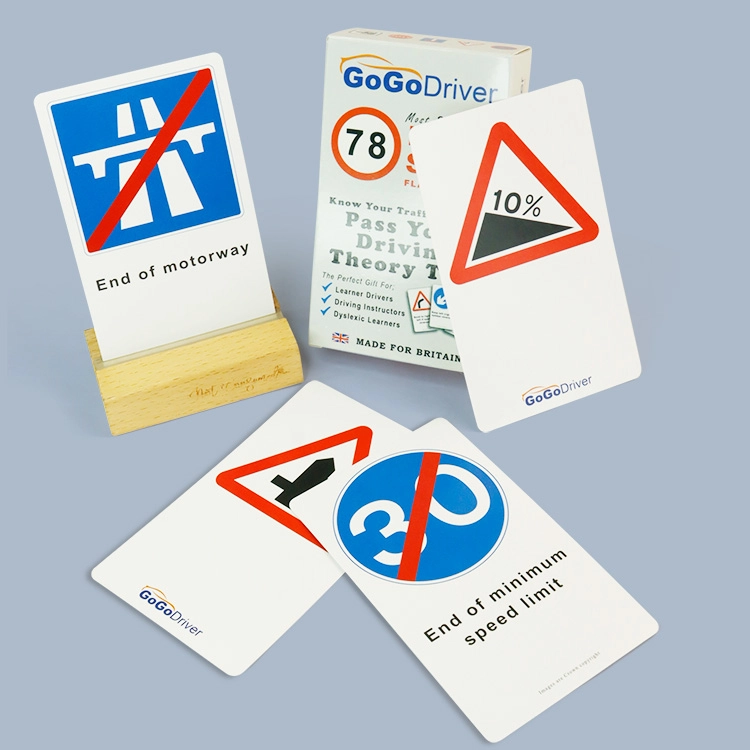
OEM Custom Driving Theory Cards | Personalized Traffic Rules & Test Prep Flashcards in Multiple Languages for Wholesale
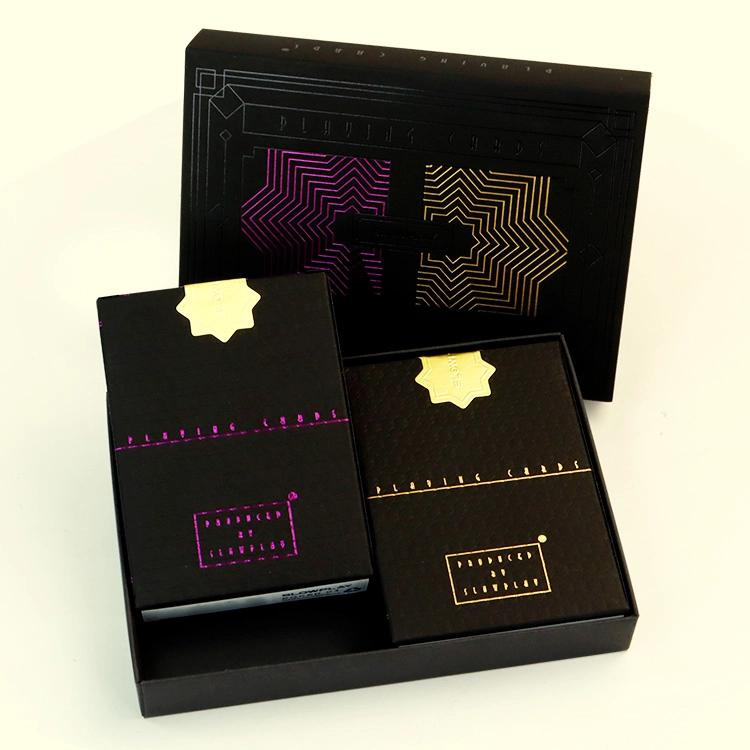
Custom Printing Luxury Two Sets Plastic Poker Playing Cards with Customized Packing
bbilaser
sq_AL